Raja Ratnam
- Women Characters
- July 27, 2026
- 169 views
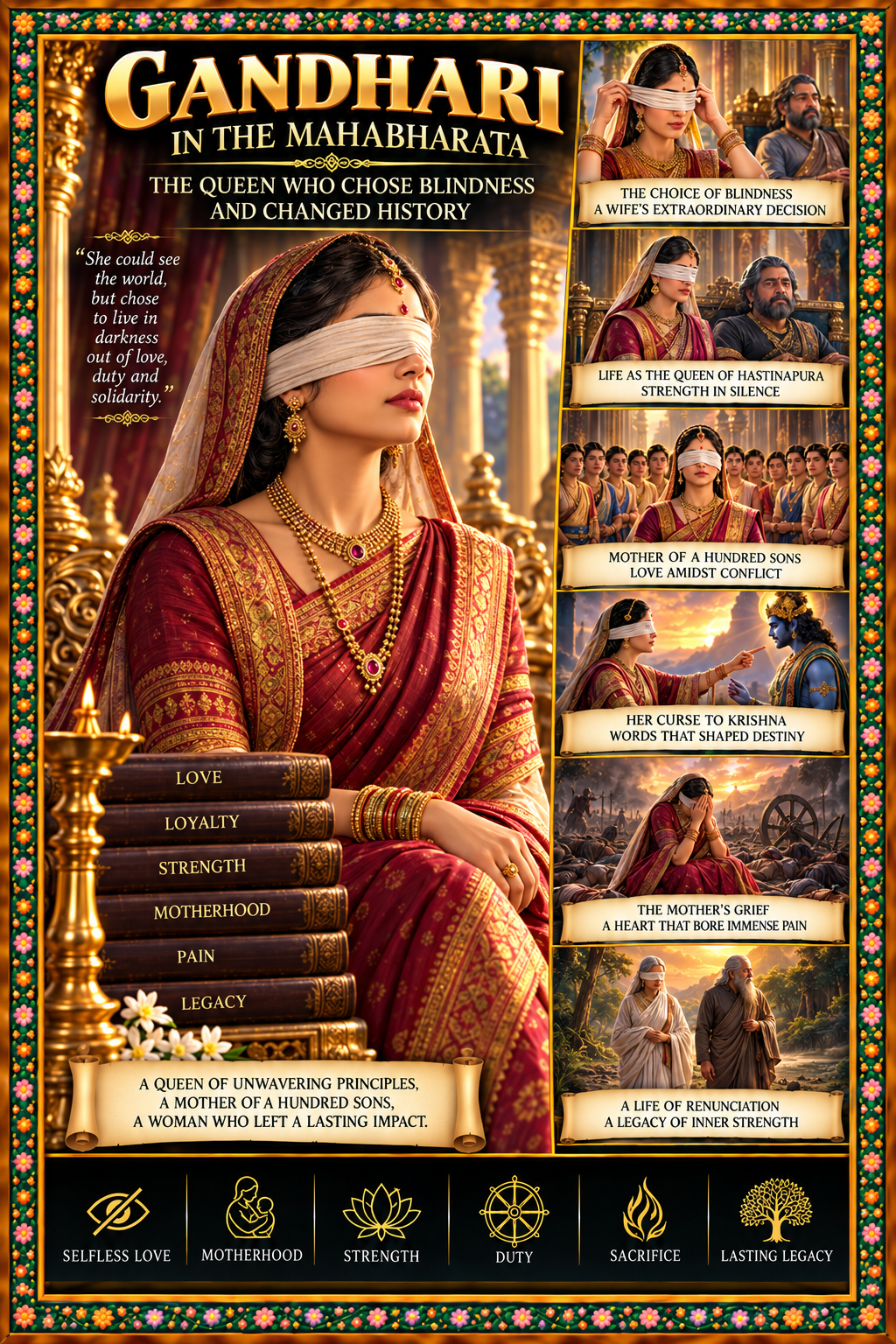
Gandhari in Mahabharata: Why She Blindfolded Herself & The Curse on Krishna’s Dynasty
The Mahabharata is filled with extraordinary characters whose decisions shaped one of the greatest epics ever written. Among them, Gandhari in the Mahabharata stands as one of the most respected and misunderstood women. She is remembered for voluntarily blindfolding herself for life, being the mother of the hundred Kauravas, and cursing Lord Krishna after the devastating Kurukshetra War. The story of Gandhari in the Mahabharata is not merely about sacrifice—it is about duty, motherhood, pain, and destiny. Gandhari’s life demonstrates how personal choices can influence generations and alter the course of history. Her unwavering devotion to her husband, her deep love for her children, and her commitment to Dharma make Gandhari in the Mahabharata one of the most inspiring and complex female characters in Indian mythology. This detailed guide explores the complete life of Gandhari in the Mahabharata, including her marriage to Dhritarashtra, the reason behind her blindfold, her role during the Kurukshetra War, her famous curse on Lord Krishna, and the timeless lessons her life continues to offer. Who Was Gandhari? Gandhari in the Mahabharata Gandhari was the princess of the Kingdom of Gandhara, ruled by King Subala. She was renowned for her beauty, wisdom, patience, and devotion to…
- Women Characters
- July 25, 2026
- 169 views
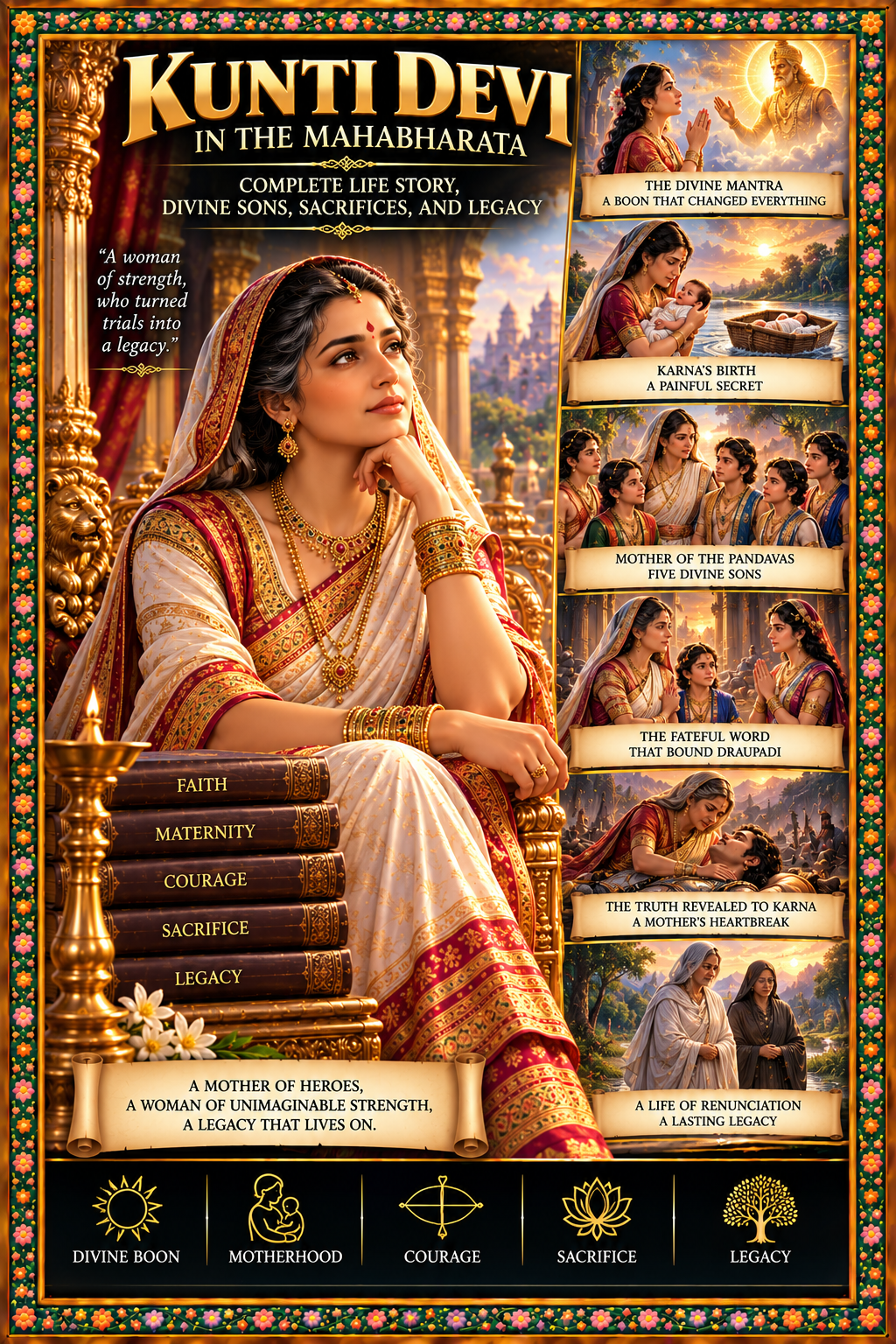
Kunti in Mahabharata: The Secret Boon of Sage Durvasa, Divine Sons & Sacrifices
Introduction – Kunti Devi in Mahabharata Kunti Devi is one of the most respected and influential women in the Mahabharata. She was not only the mother of the Pandavas but also a symbol of strength, devotion, sacrifice, wisdom, and unwavering faith in dharma. Throughout her life, she endured countless hardships yet never abandoned righteousness. Her life teaches us that courage, patience, and faith can overcome even the greatest challenges. From receiving a divine boon in her youth to witnessing the Kurukshetra War, Kunti’s journey remains one of the most inspiring stories in Hindu mythology. In this comprehensive guide by Ratnam Strategy, you’ll discover Kunti Devi’s birth, childhood, marriage, divine sons, greatest sacrifices, role in the Mahabharata, and timeless lessons. For official cultural and historical archives, visit the Ministry of Culture, Government of India. Who Was Kunti Devi? Pritha Kunti Devi was born into the Yadava dynasty as Kunti Devi.She was the daughter of King Shurasena and was later adopted by King Kuntibhoja, from whom she received the name Kunti. She was known for her humility, compassion, intelligence, and devotion to sages and elders. Her life changed forever when she served Sage Durvasa with great dedication. Birth and Early Life of…
- Festivals
- July 20, 2026
- 97 views
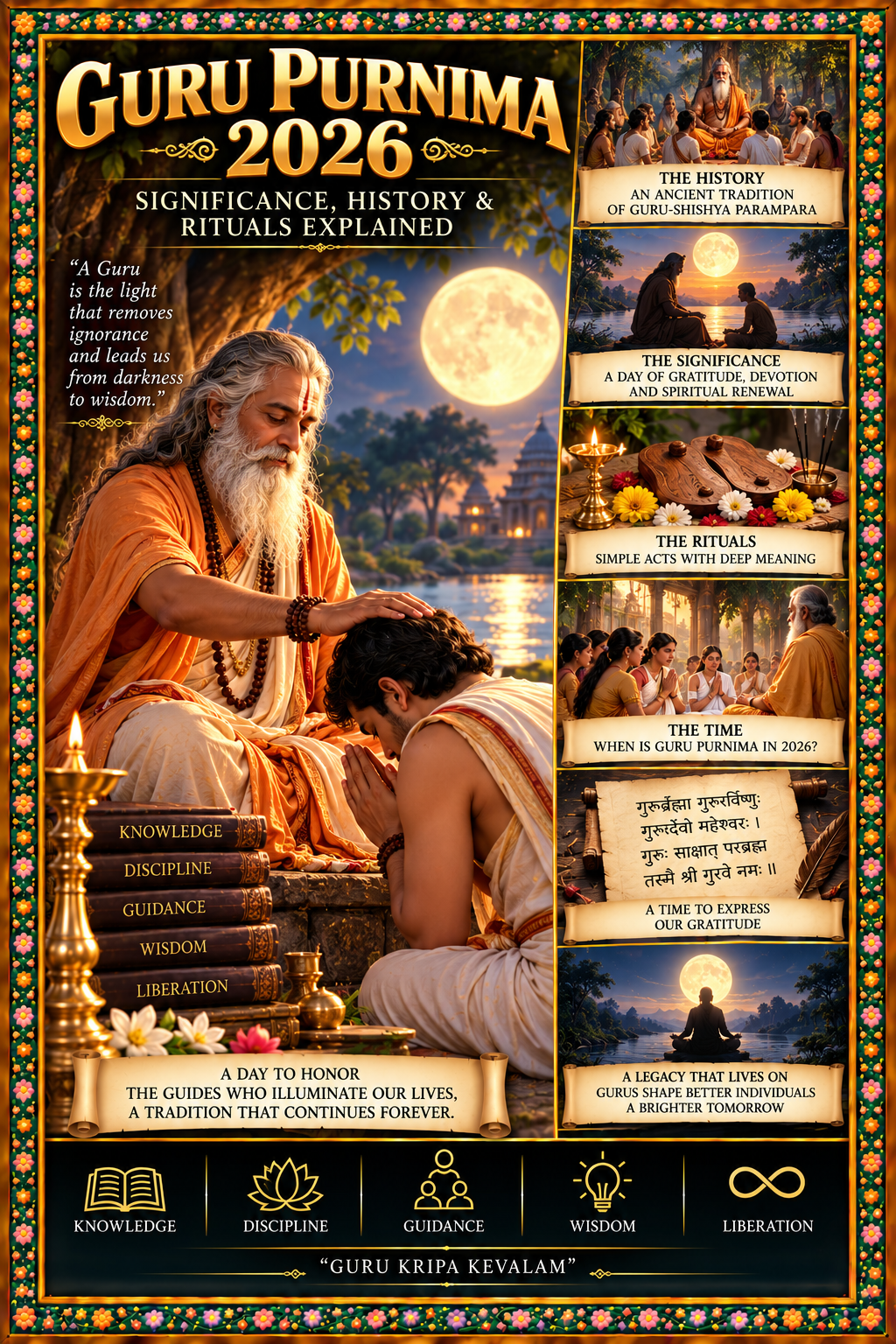
Guru Purnima: Date, Significance, Vyasa Puja Vidhi & Spiritual Importance
About the Author Raja Ratnam is a passionate researcher and writer specialising in Indian mythology and epic stories.With years of experience studying texts like the Ramayana, Mahabharata, Krishna in Mahabharata: The Divine Role of the Supreme Guide, Festivals, Guru Purnima – Significance, History, Rituals, Celebrations, and Spiritual Benefits, Navagrahas, Ketu Deva and other cultural scriptures,he brings insightful interpretations and practical lessons from these timeless stories. Raja Ratnam believes in making mythology accessible and meaningful for modern readers,helping them understand the moral, ethical, and cultural significance behind characters like Rama, Laxman, Shani Deva, and many more. Connect with the author: info@ratnamstrategy.com Introduction Guru Purnima is one of the most sacred festivals in the Hindu, Buddhist, and Jain traditions. Celebrated on the full moon day (Purnima) of the Hindu month of Ashadha, Guru Purnima is dedicated to honoring teachers, spiritual gurus, mentors, and guides who illuminate our lives with wisdom and knowledge. In Indian culture, a Guru is considered greater than even parents because while parents give birth to the body, a Guru awakens the soul. The festival reminds us to express gratitude towards those who shape our character, values, and spiritual journey. Whether your Guru is a spiritual master, a school teacher, a…
- Festivals
- July 11, 2026
- 101 views
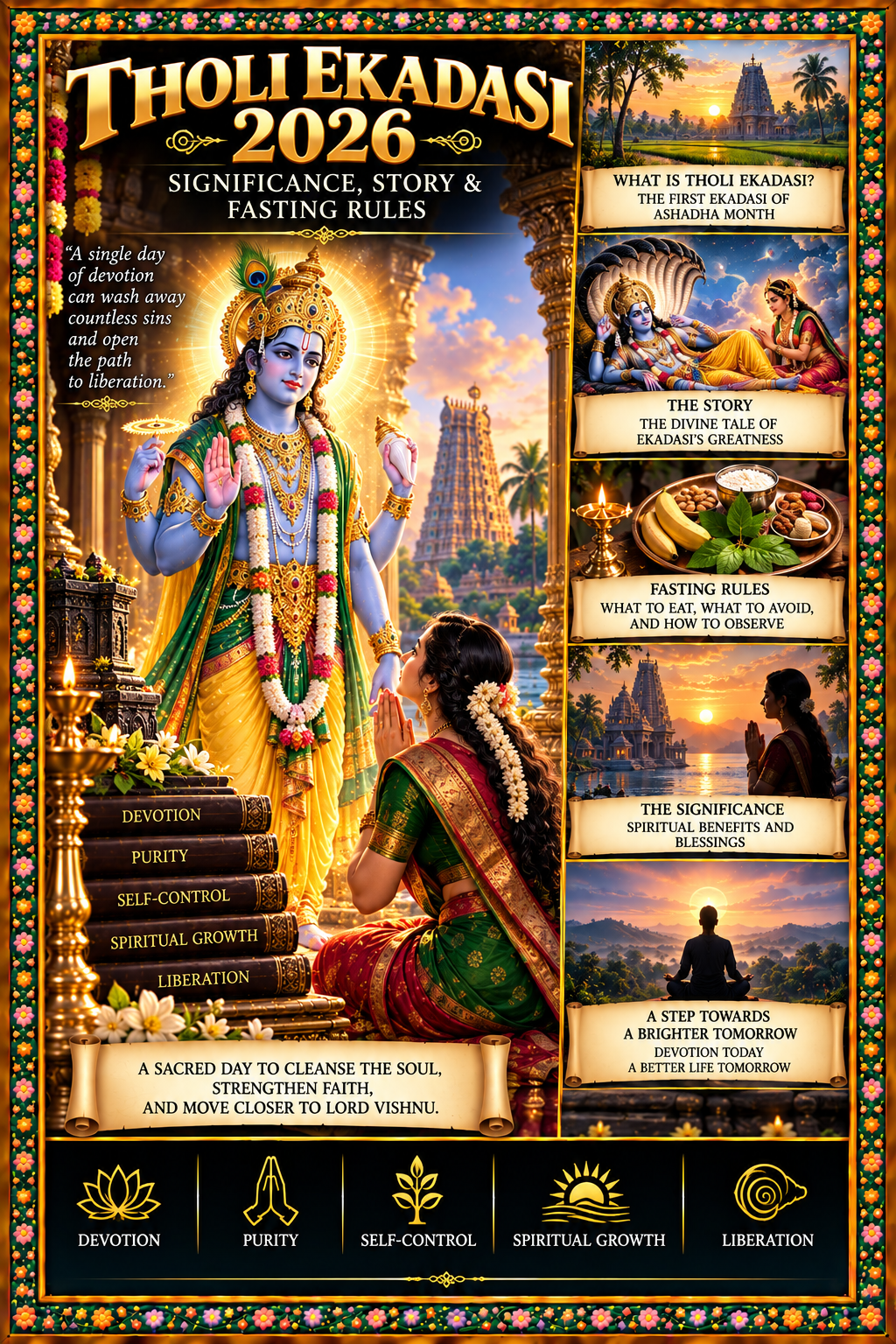
Tholi Ekadasi (Devshayani Ekadashi): Date, Vrat Katha, Fasting Rules & Chaturmas Start
Introduction Tholi Ekadasi is one of the most sacred Ekadasis celebrated by Hindus, especially in Andhra Pradesh, Telangana, Karnataka, and other parts of South India. Known as Shayani Ekadasi, Devshayani Ekadashi, or Ashadhi Ekadashi, this auspicious day marks the beginning of Lord Vishnu’s divine yogic sleep (Yoga Nidra), which lasts for four months, known as Chaturmasya. The festival is celebrated with immense devotion as devotees observe fasting, chant the names of Lord Vishnu, read sacred scriptures, and seek divine blessings for prosperity, peace, and liberation (Moksha). In many famous Vishnu temples, including Tirumala, Srirangam, and Pandharpur, grand celebrations take place. In this detailed guide by Ratnam Strategy, you will learn everything about Tholi Ekadasi, including its significance, mythology, fasting procedure, benefits, dos and don’ts, temple celebrations, and much more. For official cultural and historical archives, visit the Ministry of Culture, Government of India. What is Tholi Ekadasi? The word Tholi means “first” in Telugu, while Ekadasi refers to the eleventh lunar day (11th Tithi) of the waxing phase (Shukla Paksha) of the Ashadha month. It is considered the first important Ekadasi after the beginning of Dakshinayana, making it one of the most auspicious fasting days dedicated to Lord Vishnu. Other…
- Women Characters
- July 4, 2026
- 146 views
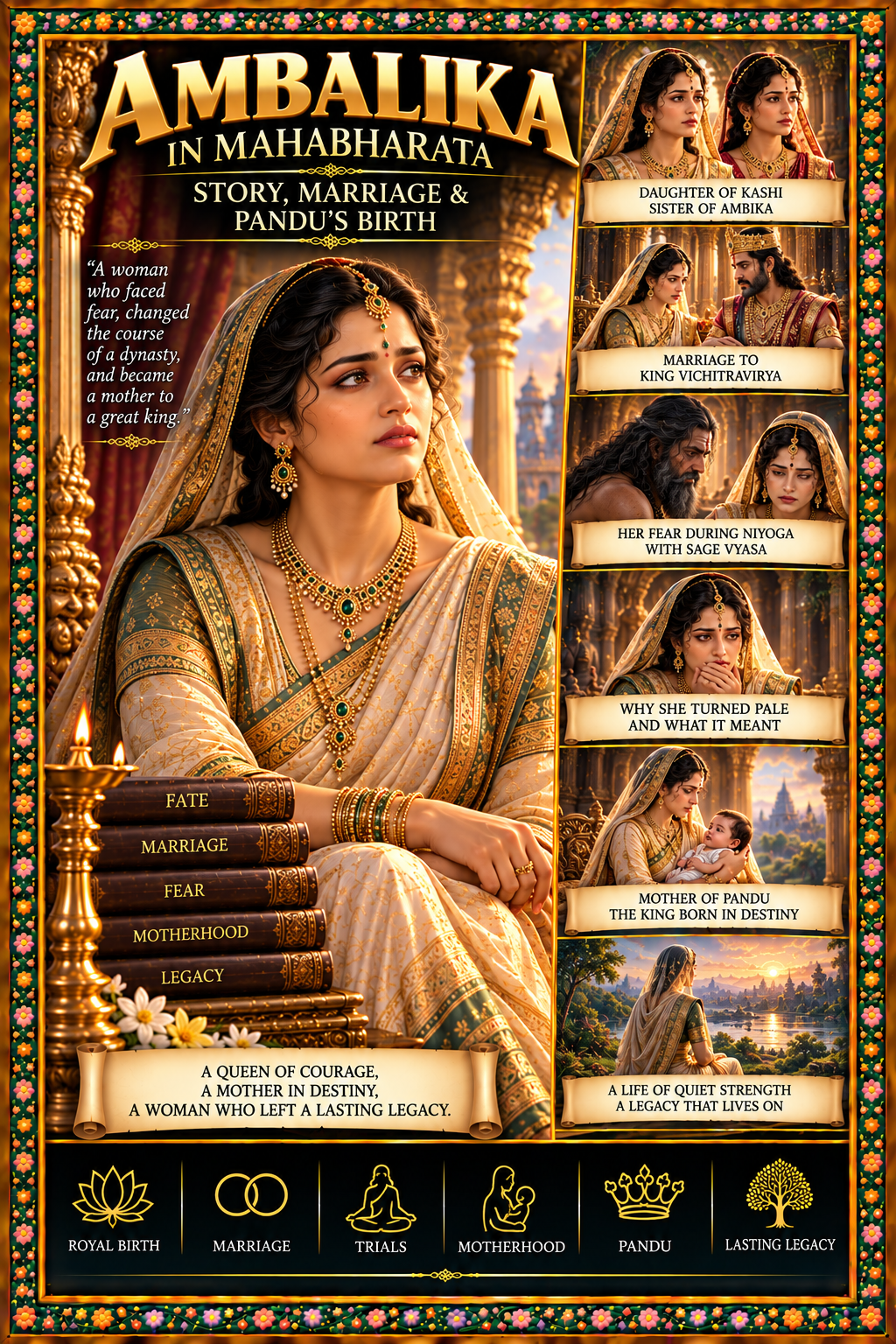
Ambalika in Mahabharata: Princess of Kashi & Mother of King Pandu
Ambalika in the Mahabharata: The Queen Who Became the Mother of Pandu The story of Ambalika in the Mahabharata is one of sacrifice, destiny, and courage. While the Mahabharata is filled with legendary warriors like Bhishma, Arjuna, Karna, and Krishna, several women quietly shaped the destiny of the Kuru dynasty. Among them, Ambalika occupies a special place because she became the mother of King Pandu, whose sons later became the famous Pandavas. The tale of Ambalika in the Mahabharata is deeply connected with the continuation of the Kuru lineage. Her life reflects the difficult choices royal women had to make for the welfare of their kingdom. Though she rarely appears in battle scenes or political debates, her role influenced the greatest war in Indian history. In this article, we will explore the complete story of Ambalika in the Mahabharata, from her birth and marriage to her motherhood, spiritual life, and lasting legacy. Who Was Ambalika? Ambalika in the Mahabharata Ambalika was one of the three princesses of the Kingdom of Kashi. She was the younger sister of Ambika and the sister of Amba. The three princesses were renowned for their extraordinary beauty, intelligence, and royal upbringing. Their lives changed forever…