 Raja Ratnam
Gajanana Avatar of Ganesha: In Hinduism, Lord Ganesha is revered as the remover of obstacles, the patron of wisdom, and the bringer of prosperity. Across traditions, Ganesha is venerated in nine unique forms, known as the Navavatars of Ganesha. Perhaps the most iconic and instantly recognizable is the Gajanana Avatar, the one with the elephant face.
The name Gajanana comes from two Sanskrit words: Gaja (elephant) and Anana (face), meaning “the one with the elephant face.” This avatar is deeply symbolic, representing wisdom, strength, and the ability to overcome life’s greatest challenges with intelligence and patience.
The Story of Gajanana
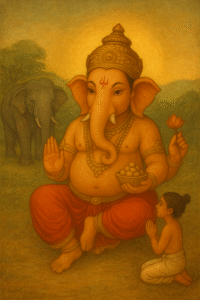
During the cosmic struggle with Lobhasura, the Gajanana avatar appeared, according to the Mudgala Purana. Lobhasura was born out of greed (lobha) and spread his influence across the worlds by making humans and even gods crave material possessions beyond measure. His reign brought disharmony and suffering, as even noble beings became obsessed with wealth and desire.
The gods turned to Lord Ganesha for help. Taking on the Gajanana form, with his mighty elephant face radiating divine brilliance, he confronted Lobhasura. But instead of destroying him outright, Gajanana used wisdom and compassion to defeat the demon.
Lobhasura, realizing his mistake in front of such a compassionate form, surrendered and was forgiven by Ganesha. This story highlights that greed can only be overcome through self-awareness, wisdom, and humility—not just brute force.
Symbolism of the Elephant Face
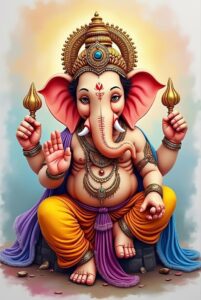
The elephant face of Gajanana carries profound symbolic meaning:
Wisdom & Intelligence—The elephant is a symbol of wisdom, memory, and intelligence. Gajanana teaches us to think deeply before acting.
The elephant is a creature of strength and gentleness. Gajanana shows the balance between strength and compassion.
Large Ears—His ears symbolize the importance of listening more and speaking less. True knowledge comes from observation and patience.
Small Eyes—Represent focus, concentration, and the ability to look beyond distractions.
Trunk—Flexible and powerful, the trunk shows adaptability in solving problems—whether small or massive.
Tusks – His single tusk (after breaking one) reminds us that sacrifice and imperfection can lead to spiritual perfection.
🙏 Worship of Gajanana Avatar of Ganesha
Devotees worship Gajanana for wisdom, peace, and the strength to overcome greed and material attachments.
Rituals and Offerings:
Day: Wednesdays and Ganesh Chaturthi are considered sacred.
Offerings:
Durva grass (symbolizing simplicity)
Coconut (symbol of ego-breaking)
Bananas and sugarcane (foods associated with elephants)
Modaks (Ganesha’s favorite sweet)
Mantra:
“Om Gajananaya Namah”
Reciting this mantra daily is said to bless devotees with sharp intellect and freedom from greed.
Gajanana Avatar of Ganesha :Festivals & Cultural Significance
In Maharashtra, Gajanana is especially invoked during Ganesh Chaturthi, where the elephant symbolism inspires large, majestic idols.
In South India, temples perform Gaja Puja (elephant worship) alongside Gajanana worship, symbolizing reverence for nature and wisdom.
In classical Indian art and sculpture, Gajanana is often shown riding a mighty mouse, symbolizing how even the smallest being can carry the weight of the universe when guided by wisdom.
Spiritual Lessons from Gajanana Avatar of Ganesha
Overcome Greed with Wisdom – Just as Gajanana subdued Lobhasura, we too must conquer greed through awareness and self-control.
Balance Power with Compassion – True strength is not aggression, but gentle control and understanding.
Listen More, Speak Less – His elephant ears teach the power of attentive listening in resolving conflicts.
Focus on the Greater Vision – Small eyes remind us to look inward and stay focused on higher spiritual goals.
Adaptability – The trunk shows that flexibility in life brings success in overcoming obstacles.
For official cultural and historical archives, visit the Incredible India Official Tourism Authority.
Related Sacred Topics & Cultural Heritage: For further spiritual exploration, read about Lord Rama’s ideal life story.
Conclusion: Gajanana Avatar of Ganesha
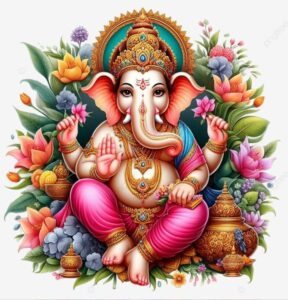
The Gajanana Avatar of Lord Ganesha is a beautiful reminder that wisdom, patience, and compassion can conquer even the strongest of negative forces. His elephant face symbolizes intelligence, strength, and the ability to live in harmony with the world.
By meditating upon Gajanana and worshipping him, devotees are blessed with clarity of mind, freedom from greed, and the strength to face challenges with calmness.
May Lord Gajanana guide you with wisdom and bless you with abundance, peace, and prosperity. 🙏
1. Who is Gajanana?
Gajanana means “Elephant-faced” form of Lord Ganesha.
2. What does the name Gajanana mean?
“Gaja” = elephant, “Anana” = face; elephant-faced deity.
3. Why does Gajanana have an elephant face?
It symbolizes wisdom, strength, and sharp memory.
4. What is the story of Gajanana?
He appeared to defeat the demon Lobhasura (greed).
5. Which quality does Gajanana represent?
He represents wisdom and the ability to overcome greed.
6. Why worship Gajanana?
For clarity of mind, strength, and removal of greed.
7. What lesson does Gajanana teach?
To use wisdom over materialistic desires.
8. When is Gajanana worshipped?
During Ganesh Chaturthi and daily prayers.
9. What does the elephant head symbolize?
Strength, loyalty, intelligence, and patience.
10. What is Gajanana’s mantra?
“Om Gajananaya Namah.”
11. What is Gajanana’s weapon?
He wields the axe and the lotus as divine weapons.
12. Is Gajanana linked to prosperity?
Yes, he removes obstacles to growth and prosperity.
13. Why is the elephant sacred in Hinduism?
It represents wisdom, power, and auspiciousness.
14. What is the significance of Lobhasura’s defeat?
It shows victory over greed and selfishness.
15. How does Gajanana bless devotees?
By granting wisdom, patience, and prosperity.
16. Where is Gajanana worshipped widely?
All over India, especially in Maharashtra and South India.
17. What does Gajanana’s big ears signify?
Listening deeply and absorbing knowledge.
18. What does Gajanana’s small eyes mean?
Focus, vision, and concentration.
19. What does Gajanana’s trunk represent?
Adaptability and strength in overcoming challenges.
20. Why is Gajanana important today?
He teaches wisdom, patience, and control over greed.







OM Jai Ganesha