 Raja Ratnam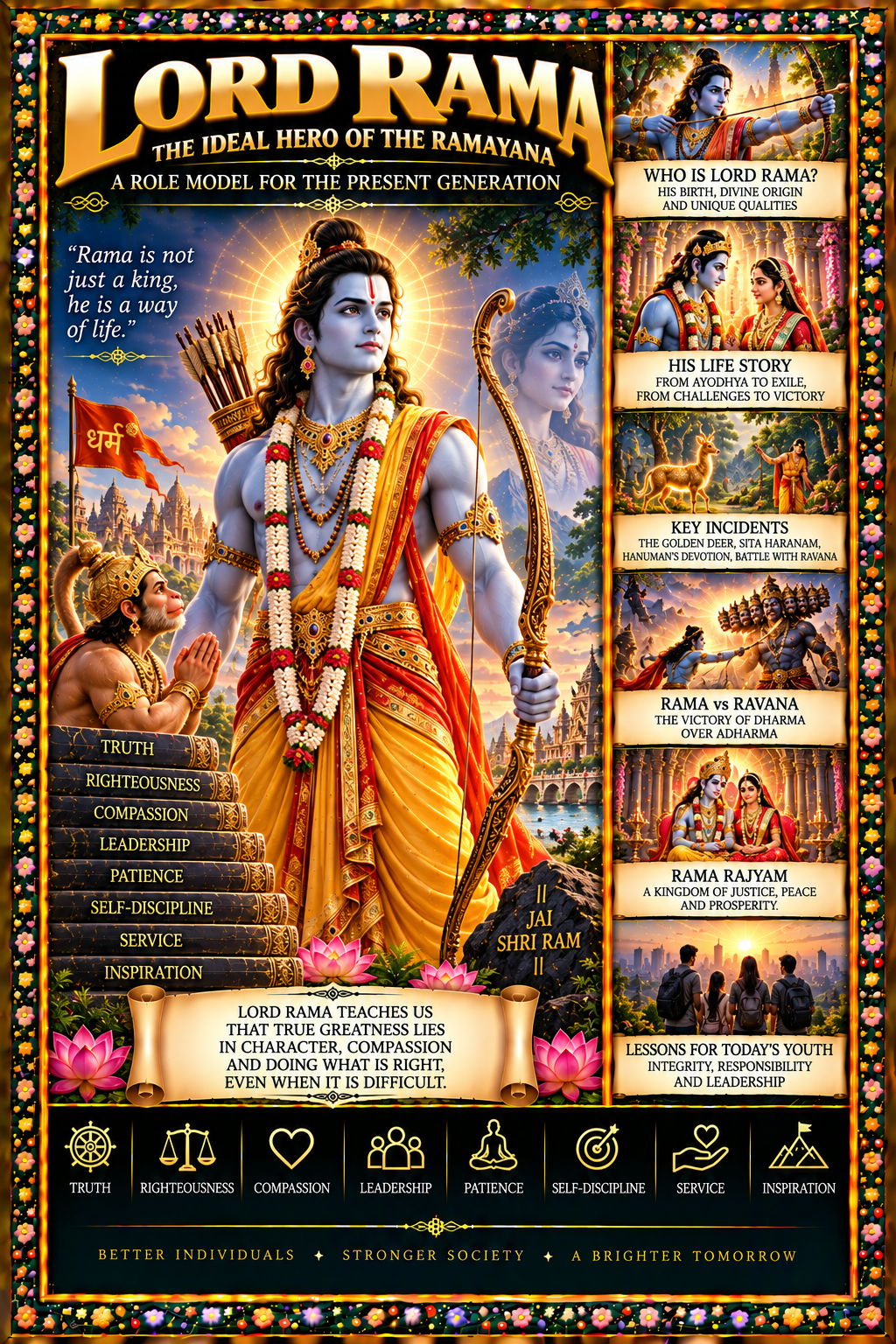
The Ideal Hero of the Ramayana: As the seventh avatar of Lord Vishnu, Lord Rama is more than just a mythological hero; he is a symbol of how to live with dharma (duty), values, and integrity.
But why should we still talk about Rama in the 21st century?
What makes his story relevant to today’s youth and society?
Lord Rama’s life and qualities offer inspiration and guidance for the present generation.
What is the story of Lord Rama?
Lord Rama is known for:
- His unwavering commitment to truth and duty
- Deep respect for family and elders
- Great compassion, leadership, and strength
The “Ramayana”, written by Valmiki, tells the story of Rama’s journey — from exile and hardship to defeating evil and upholding righteousness.
The Ideal Hero of the Ramayan : Why Lord Rama Still Matters Today?
Dharma Over Desire
He chose duty over comfort, truth over power.
Modern Lesson:
In today’s world of shortcuts and quick rewards, Rama teaches us the importance of doing the right thing, even when it’s hard.
The Ideal Hero of the Ramayana: Respect for Relationships
Lord Rama loved and respected his parents, stood by his brothers, and treated even the humblest citizens with kindness.
Modern Lesson:
In a fast-moving digital world, Lord Rama reminds us to value our family, friendships, and community ties.
The Ideal Hero of the Ramayana ::Calmness and Self-Control
Even when wronged or betrayed, Lord Rama responded with patience and restraint. He never acted out of anger or revenge.
Modern Lesson:
For a generation facing stress, pressure, and emotional burnout, Rama serves as a reminder of the power of inner peace and emotional resilience.
Defender of Justice
Lord Rama fought against evil not for revenge, but to protect what is right. His war against Ravana was about restoring balance and justice, not pride.
Modern Lesson:
In times of social injustice or inequality, Lord Rama’s story inspires us to stand up for fairness, but with humility.
Leader Who Listens
Even when it hurt him personally, he made decisions based on the “welfare of his kingdom”
Modern Lesson:
Today’s leaders — in politics, business, or community — can learn from Lord Rama about ethical leadership, empathy, and responsibility.
Is Lord Rama Relevant to Youth Today?
Rama doesn’t just represent a perfect man.
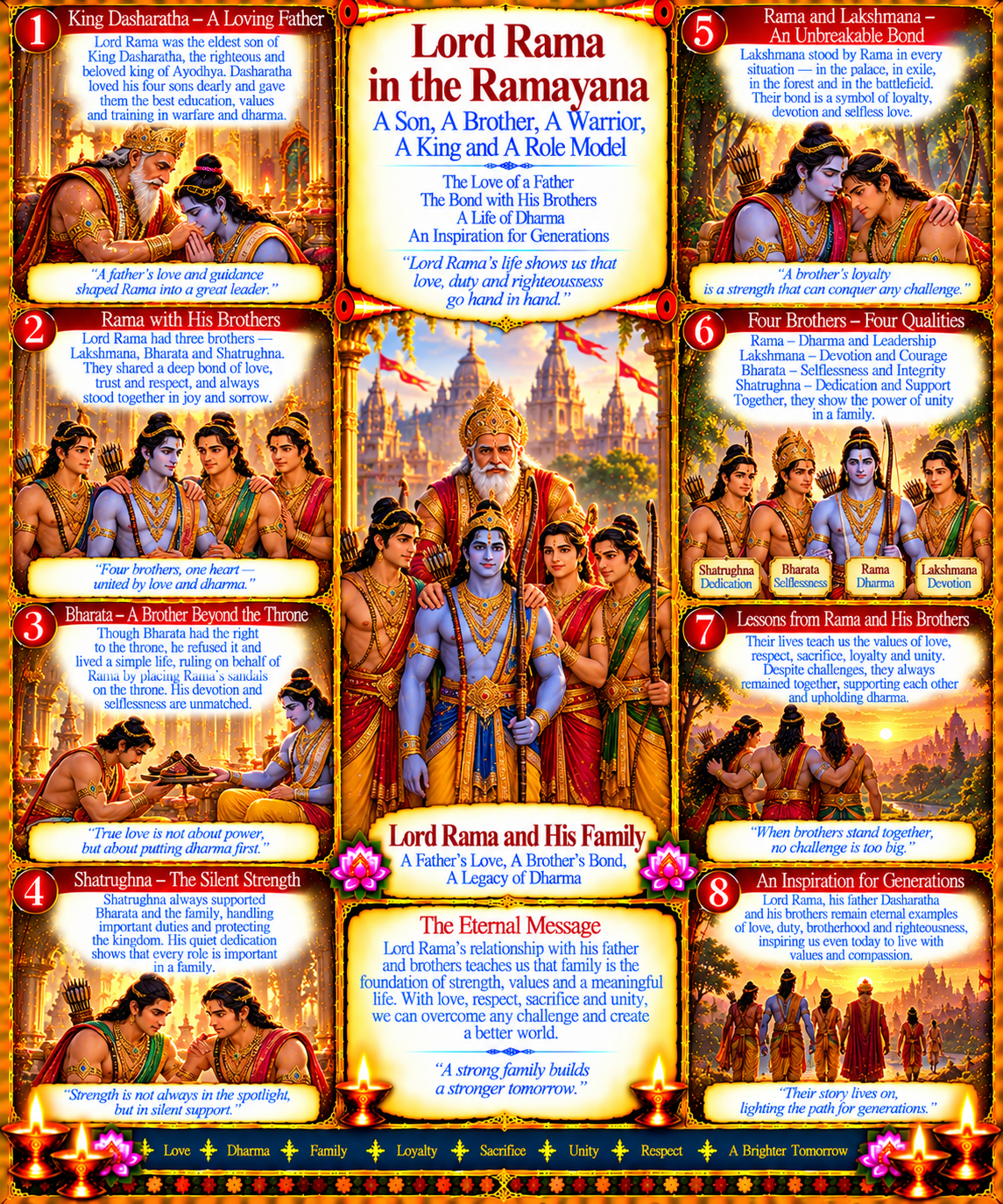
some beautiful and inspiring Lord Rama childhood stories from the Ramayana, perfect for blogs, storytelling, school activities, or kids’ books. These stories reflect Rama’s values of obedience, bravery, wisdom, and humility even as a child.
Hero of the Ramayana : Lord Rama’s Divine Birth
King Dasharatha had no children for a long time. He performed a sacred ritual called Putrakameshti Yagna, and from the fire came a bowl of divine nectar. He gave it to his three queens — Kausalya, Kaikeyi, and Sumitra.
As a result, they gave birth to four sons:
- Rama (Kausalya)
- Bharata (Kaikeyi)
- Lakshmana and Shatrughna (Sumitra)
It was a joyful time in Ayodhya, and Rama’s birth is celebrated even today as “Ram Navami”.
Rama and Lakshmana – Always Together
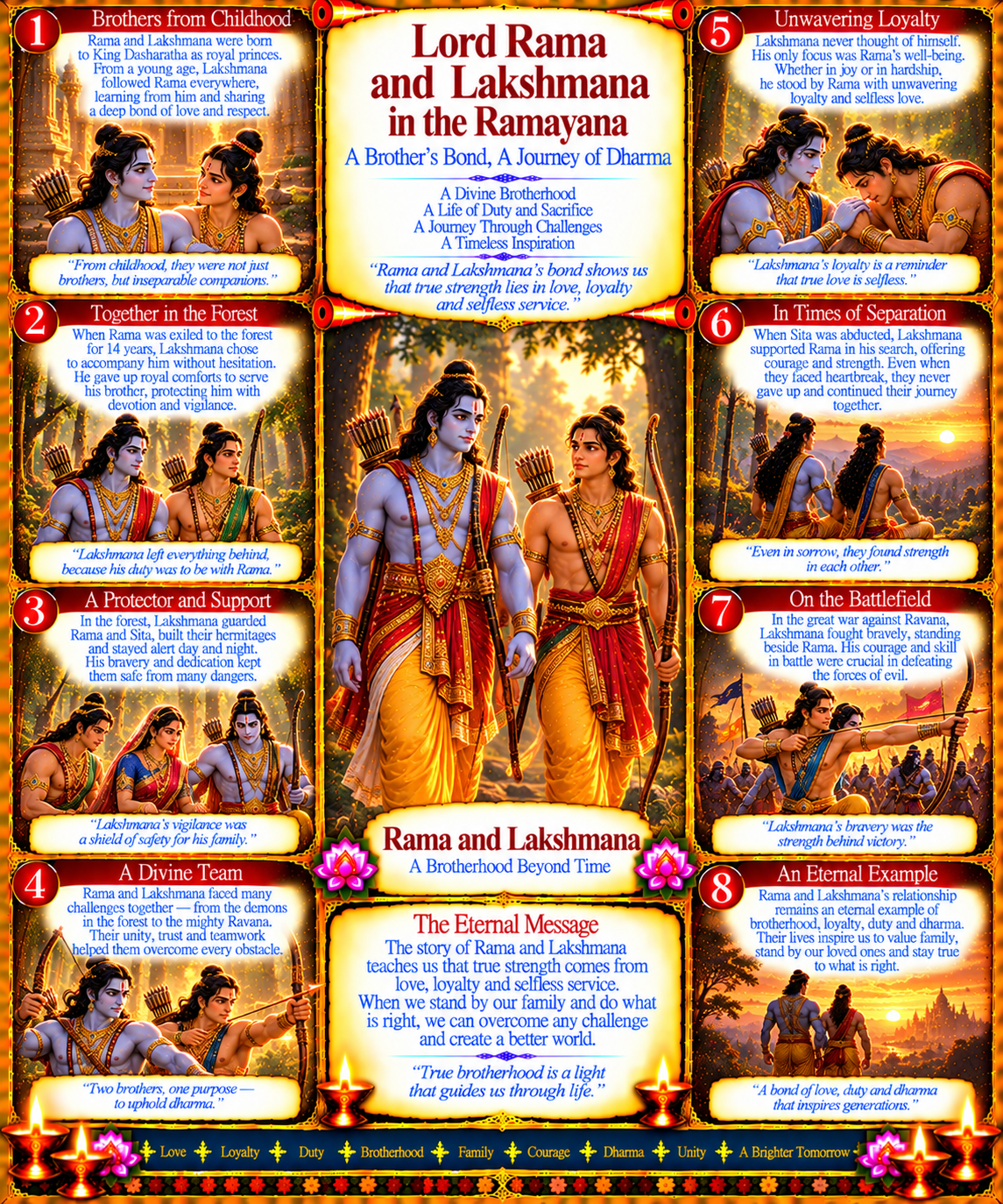
From a young age, Rama and Lakshmana were inseparable. Lakshmana would eat only if Rama did, sleep only after Rama, and followed him everywhere. Their bond as brothers became one of the most touching relationships in Indian mythology.
Moral: True love and loyalty exist in sibling bonds.
The Ideal Hero: Rama Learns Archery from Vishwamitra
As a teenager, Rama, along with Lakshmana, was sent to the forest with Sage Vishwamitra to protect his yajna (ritual) from demons. There, the sage taught them divine weapons and archery.
Lord Rama killed the demons Tataki and Subahu, proving his strength and obedience to his guru.
Moral: Respect for teachers and using strength for righteousness.
Rama Breaks Shiva’s Bow – Wins Sita’s Hand in Marriage
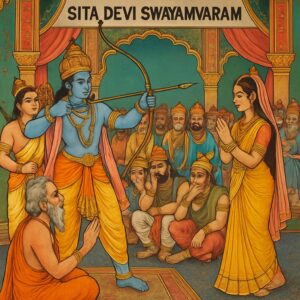
When King Janaka held a swayamvara (a contest to marry his daughter Sita), many princes failed to even lift Shiva’s mighty bow. But Rama, with humility and ease, lifted and broke the bow, winning Sita’s hand in marriage.
Moral: True power lies in grace and humility, not pride.
the Ideal Hero of the Ramayana: Rama’s Respect for His Dad’s Promise
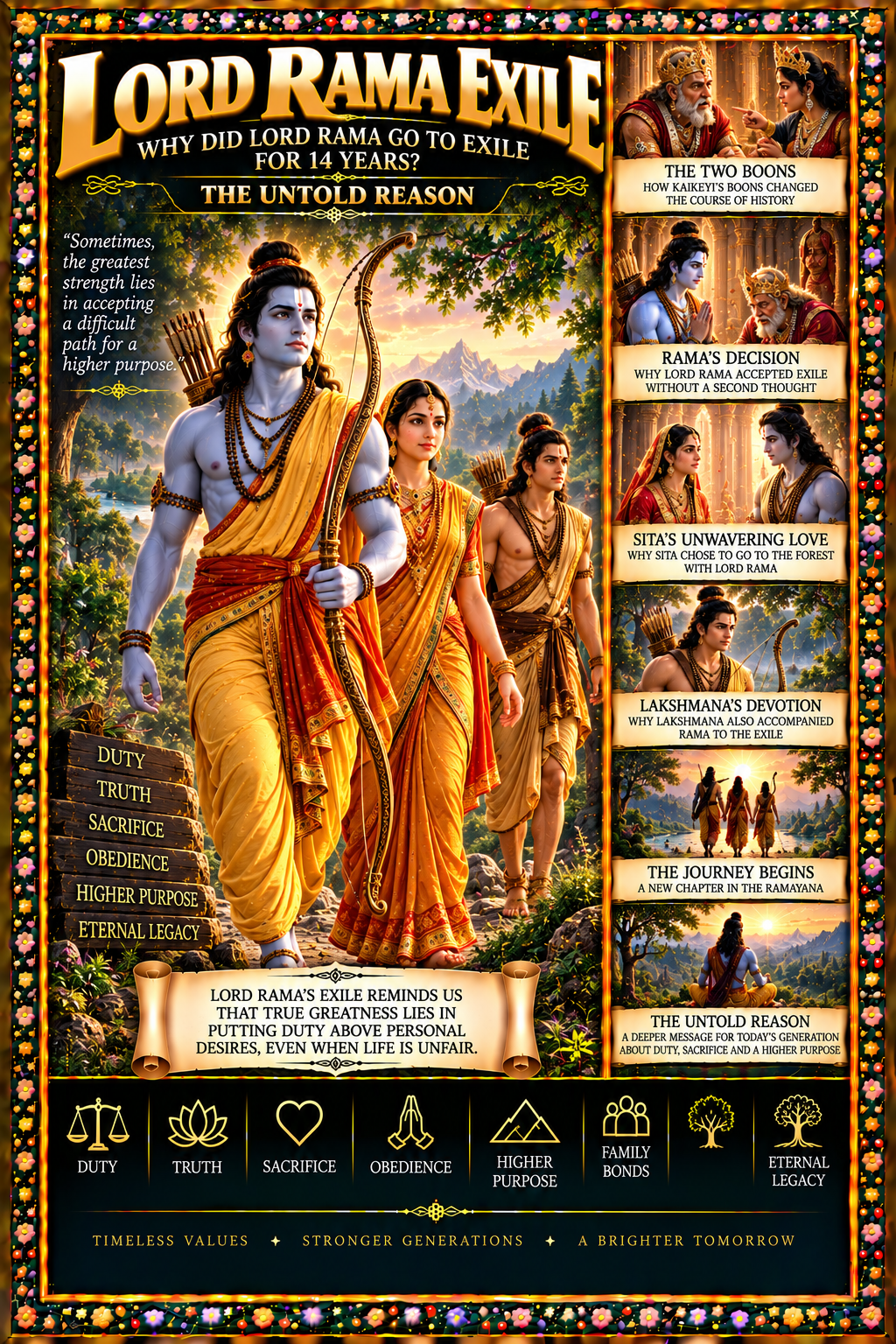
This isn’t from Rama’s childhood, but it’s one of the biggest moments of his early life. When his stepmom Kaikeyi asked King Dasharatha to send Rama to the forest for 14 years, Rama didn’t complain at all — even though he was about to become the king of Ayodhya.
He said, “A father’s word is greater than the throne.”
Moral: Obedience, selflessness, and respect for parents.
A short story of Lord Ramathe, the Ideal Hero of the Ramayana, and Badrudu(also known as Matanga or Shabari’s guru). Who was Badrudu?
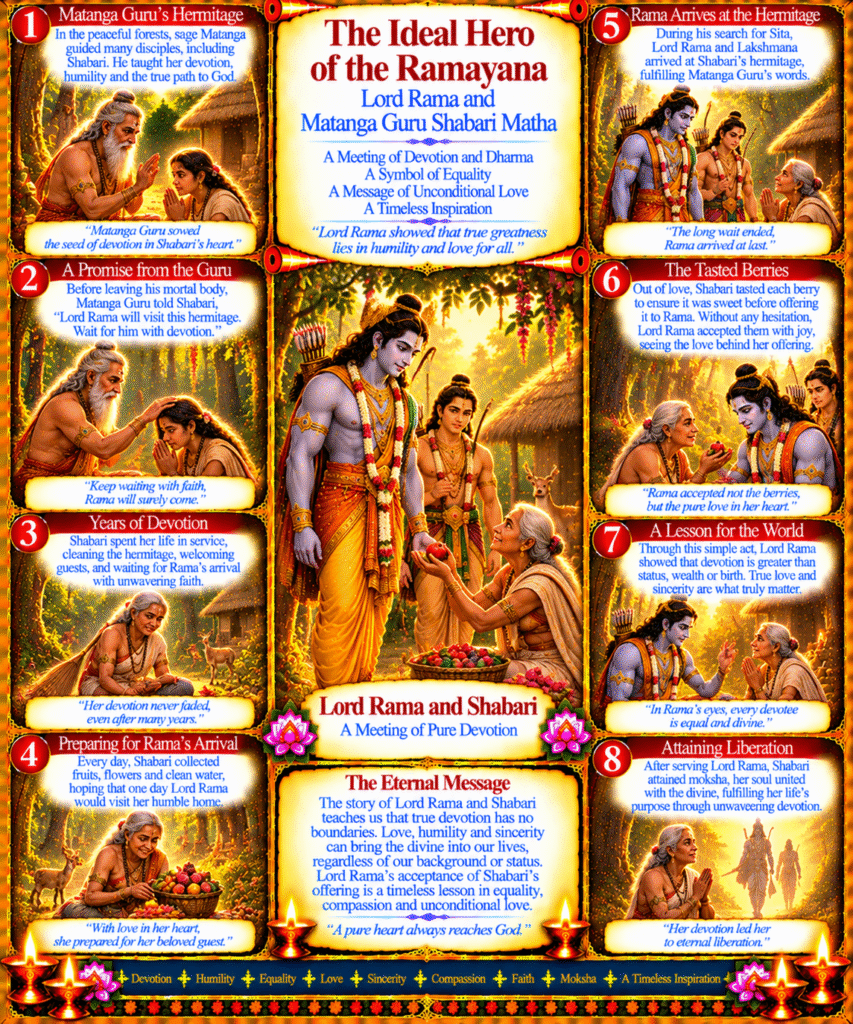
Badrudu, who’s often linked with Sage Matanga, was the spiritual guide of Shabari — a simple, tribal woman known for her deep devotion in the Ramayana. In many local stories, Badrudu is shown as a wise sage who taught Shabari about devotion and the right way to live. Shabari, coming from a very humble background, went to Sage Badrudu (Matanga Maharshi) looking for spiritual guidance. The sage didn’t judge her background — he saw her pure heart and accepted her as his student. He taught her bhakti and told her to wait patiently for Lord Rama, saying, “One day, Lord Vishnu’s avatar, Rama, will come to bless you. Stay here and keep serving the ashram.” Even after the sage died, Shabari stayed at the ashram in Panchavati. She lived on fruits, spent her days in prayer, and kept waiting faithfully for Rama — just as her guru had told her. During his search for Sita, Rama reached Shabari’s small hut. Out of pure love, she offered him fruits and even tasted them first to make sure they were sweet. Rama was moved by her innocent devotion and happily accepted them, saying they were the sweetest fruits he had ever tasted. In that moment, he fulfilled Sage Badrudu’s prophecy and granted Shabari moksha.
The Ideal Hero of the Ramayana: Final Thoughts: Lord Rama as a Guide for Our Times
In movies, media, and schoolbooks, we often see Rama as a warrior prince or a divine figure. But beyond that, “Rama is a human ideal” — someone who shows us how to live with “balance, fairness, and compassion”.
He is not just the hero of an old epic.
He is a “role model for the modern generation”, guiding us to live meaningful, value-driven lives in a chaotic world.
Hero of the Ramayana FAQs
1. Q: Who was Lord Rama’s father?
A: King Dasharatha.
2. Q: What was the name of the ritual that King Dasharatha performed to be blessed with children?
A: Putrakameshti Yagna.
3. Q: How many brothers did Lord Rama have?
A: Three – Bharata, Lakshmana, and Shatrughna.
4. Q: Who was Lord Rama’s mother?
A: Queen Kausalya.
5. Q: Who was always with Lord Rama during childhood and exile?
A: Lakshmana.
6. Q: Who was the guru who taught Lord Rama during his time in the forest?
A: Vishwamitra.
7. Q: Which demon did Lord Rama defeat as a young prince to protect Vishwamitra’s yajna?
A: Tataki.
8. Q: What was the name of the bow that Rama broke to marry Sita?
A: Shiva Dhanush (Lord Shiva’s Bow).
9. Q: In which city did Rama break the bow of Shiva?
A: Mithila.
10. Q: Why did Rama go into exile for 14 years?
A: To fulfill his father, Dasharatha’s, promise to Queen Kaikeyi.
11. Q: What value did Rama demonstrate by accepting exile calmly and without protest?
A: Obedience, self-sacrifice, and respect for his father’s word.
12. Q: Why is Lakshmana known for his devotion to Rama?
A: By accepting exile calmly and without protest, Rama demonstrated unwavering commitment to dharma (righteousness) and respect for his father’s word.
13. Q: What lesson do we learn from Rama breaking the bow of Shiva?
A: True strength comes with humility and purpose.
14. Q: How did Rama defeat Tataka, and why was it important?
A: With guidance from Sage Vishwamitra, he used divine weapons to protect the yajna.
15. Q: What made Rama the ideal student of Vishwamitra?
A: He was disciplined, obedient, and learned to use his powers wisely.
16. Q: What does the Putrakameshti Yagna symbolize in Rama’s birth story?
A: Divine blessings and the importance of sacred rituals.
17. Q: What qualities did Rama show during his childhood that made him an ideal human being?
A: Patience in adversity, obedience to duty, humility in conduct, courage in action, and unwavering devotion
18. Q: Why is Rama considered “Maryada Purushottam”?
A: Because he lived an ideal life with perfect behavior, even from a young age.
19. Q: What does Rama’s friendship with Hanuman later in life say about his character, as seen from childhood?
A: He always valued devotion and loyalty over status or background.
20. Q: What makes Rama’s childhood stories still relevant today?
A: They teach timeless values like respect, discipline, honesty, and humility.
21. Q: Did lord Rama have a sister?
A: Shanta
22. Q: Brothers of lord Rama The Ideal Hero?
A: Bharata, Lakshmana, Shatrughna
23. Q: Who is the Hero of the Ramayana?
A: Lord Rama
24. Q: What is the name of Rama’s bow?
A: Lord Rama’s bow is called Kodanda.
25 Q:Are Kodanda and Pinaka the same?
A: No. Kodanda is Rama’s own bow, while Pinaka was Lord Shiva’s bow, which Rama broke during the Swayamvar.
26. Q: Who is Jatayu in the Ramayana?
A: Jatayu is a brave and loyal vulture king who was a close friend of King Dasharatha, Lord Rama’s father.
27. Q: How did Jatayu try to save Sita?
A: Jatayu saw Ravana kidnapping Sita and immediately attacked him, using all his strength to stop the Ravana
28. Q: Why is Jatayu considered a symbol of devotion?
Because he risked his life to protect Sita without thinking of his safety and showing pure loyalty.
29. Q: Who is Jatayu’s brother?
A: Jatayu’s elder brother is Sampati
30. Q: Why are Jatayu and Sampati important in the Ramayana?
A: Jatayu fought Ravana to protect Sita.
Sampati guided the Vanaras to find Sita’s location.
For official cultural and historical archives, visit the Ministry of Culture, Government of India.

thank you
thank you
thank you very so much
Good blog
Impression
thank you very much
thank you
thank you