Raja Ratnam
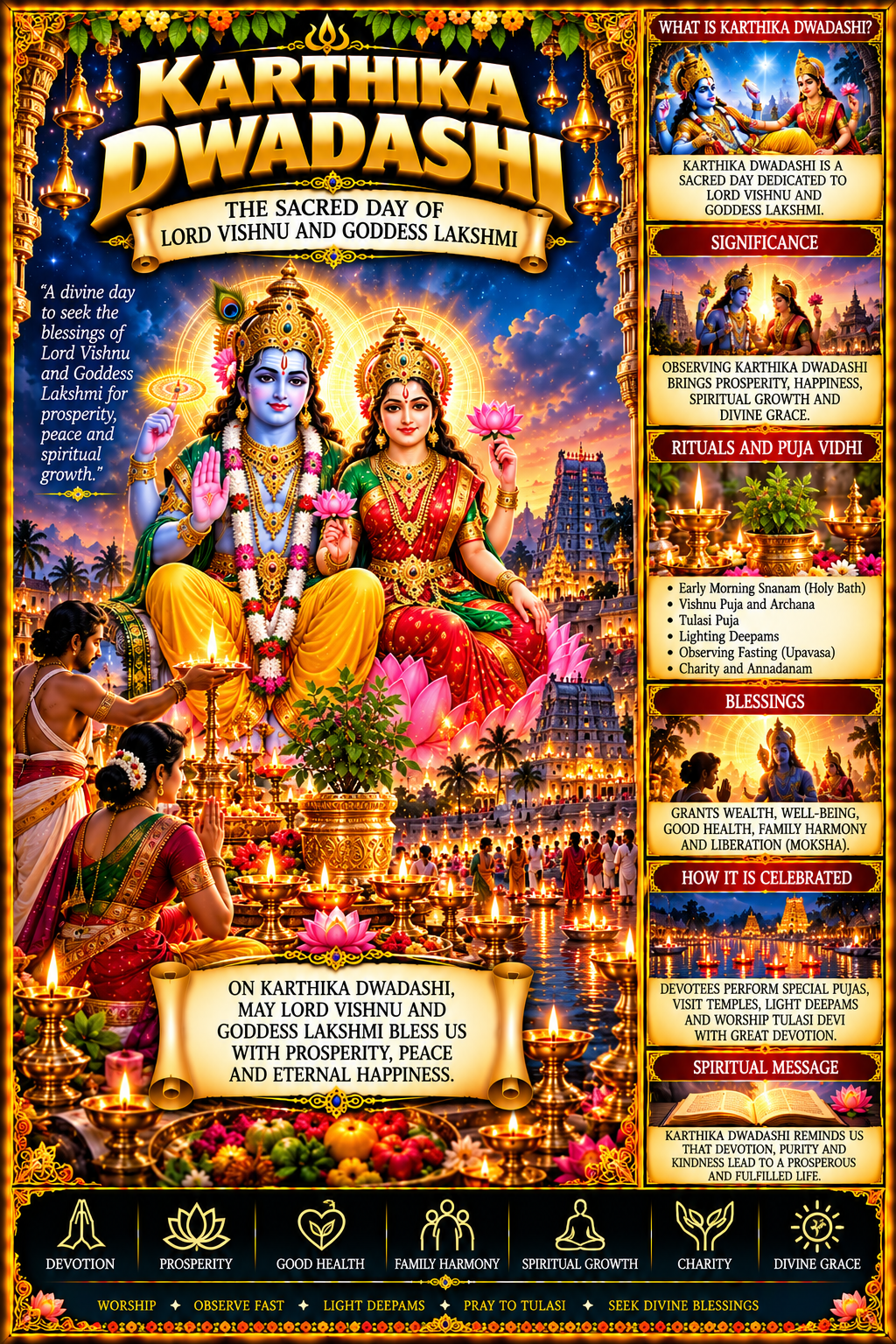
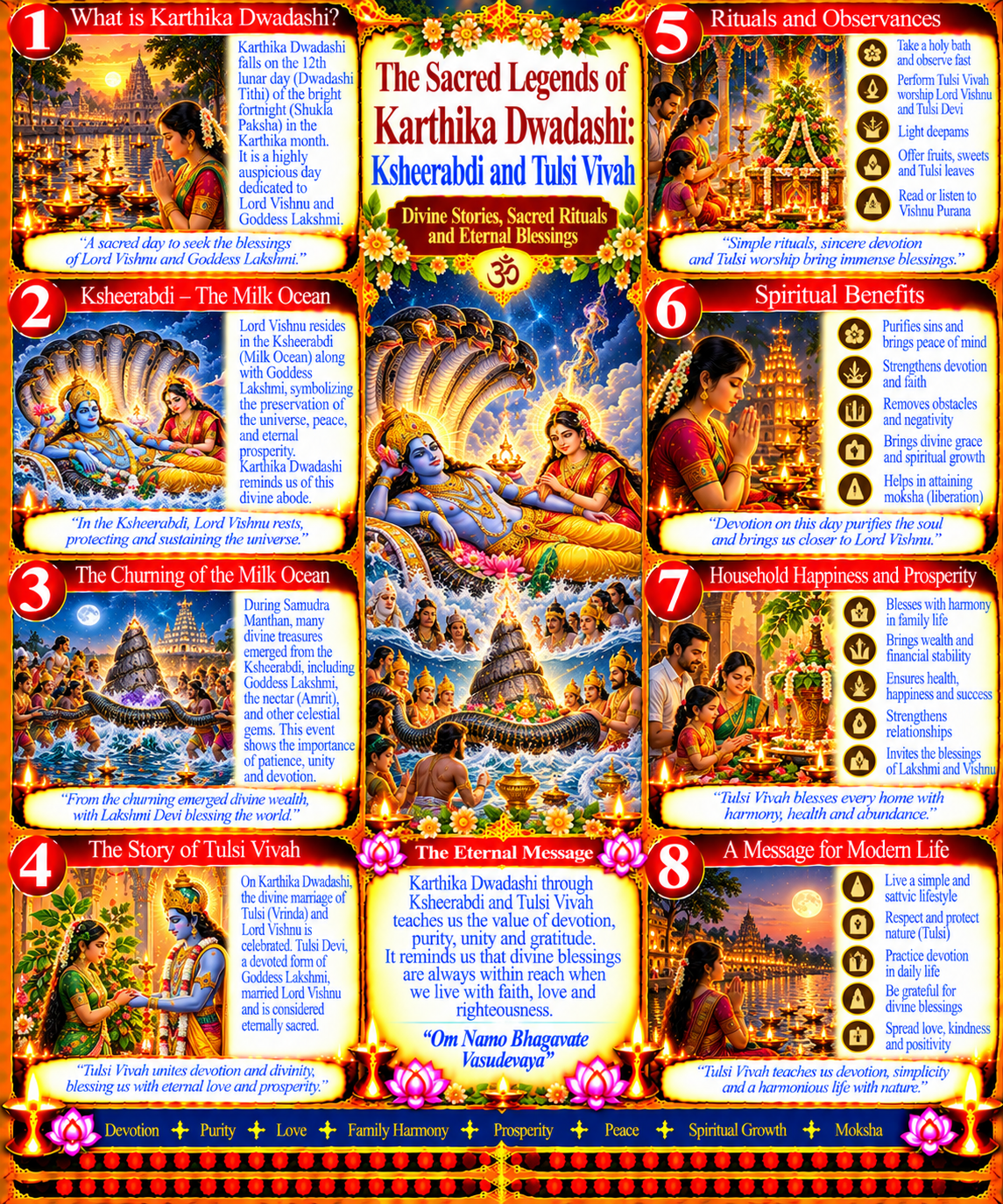
Among all the sacred days of the holiest lunar month, Karthika Dwadashi occupies an exalted pedestal in Sanatana Dharma. Celebrated on the twelfth lunar day (Dwadashi) of the bright fortnight (Shukla Paksha) in the sacred month of Karthika, Karthika Dwadashi is universally revered as Ksheerabdi Dwadashi, Damodara Dwadashi, and the divine wedding day of Tulsi Vivah. On this blessed day, the celestial preserver Lord Vishnu and the supreme goddess of auspiciousness, Goddess Lakshmi, bestow boundless grace upon devotees who illuminate the evening darkness with earthen lamps.
Occurring immediately following the grand awakening of Lord Vishnu on Prabodhini Ekadashi, observing Karthika Dwadashi marks the joyful conclusion of the four-month ascetic vow of Chaturmasya. Furthermore, participating in the divine marriage of the holy basil plant (Tulsi Devi) with the sacred Shaligram stone is believed to grant the spiritual merit of performing a thousand Ashwamedha Yagnas and Kanyadaan.
Astrological Alignment and Shubh Muhurat for Karthika Dwadashi 2026
According to the traditional Vedic Panchang outlined in the authoritative Hindu festival calendar guide, Karthika Dwadashi in 2026 falls on Saturday, November 21, 2026. Aligning family prayers during the evening twilight (Pradosh Kaal) activates the supreme divine vibrations of the celestial milk ocean:
- Karthika Shukla Dwadashi Tithi Begins: November 20, 2026, at 09:32 PM
- Karthika Shukla Dwadashi Tithi Ends: November 21, 2026, at 08:14 PM
- Auspicious Ksheerabdi Dwadashi Puja Muhurat: 05:28 PM to 07:46 PM (Pradosh Kaal)
- Tulsi Vivah Shubh Muhurat: 05:35 PM to 07:15 PM
- Parana Muhurat (Breaking Ekadashi Fast): 06:48 AM to 08:54 AM (Morning of November 21)
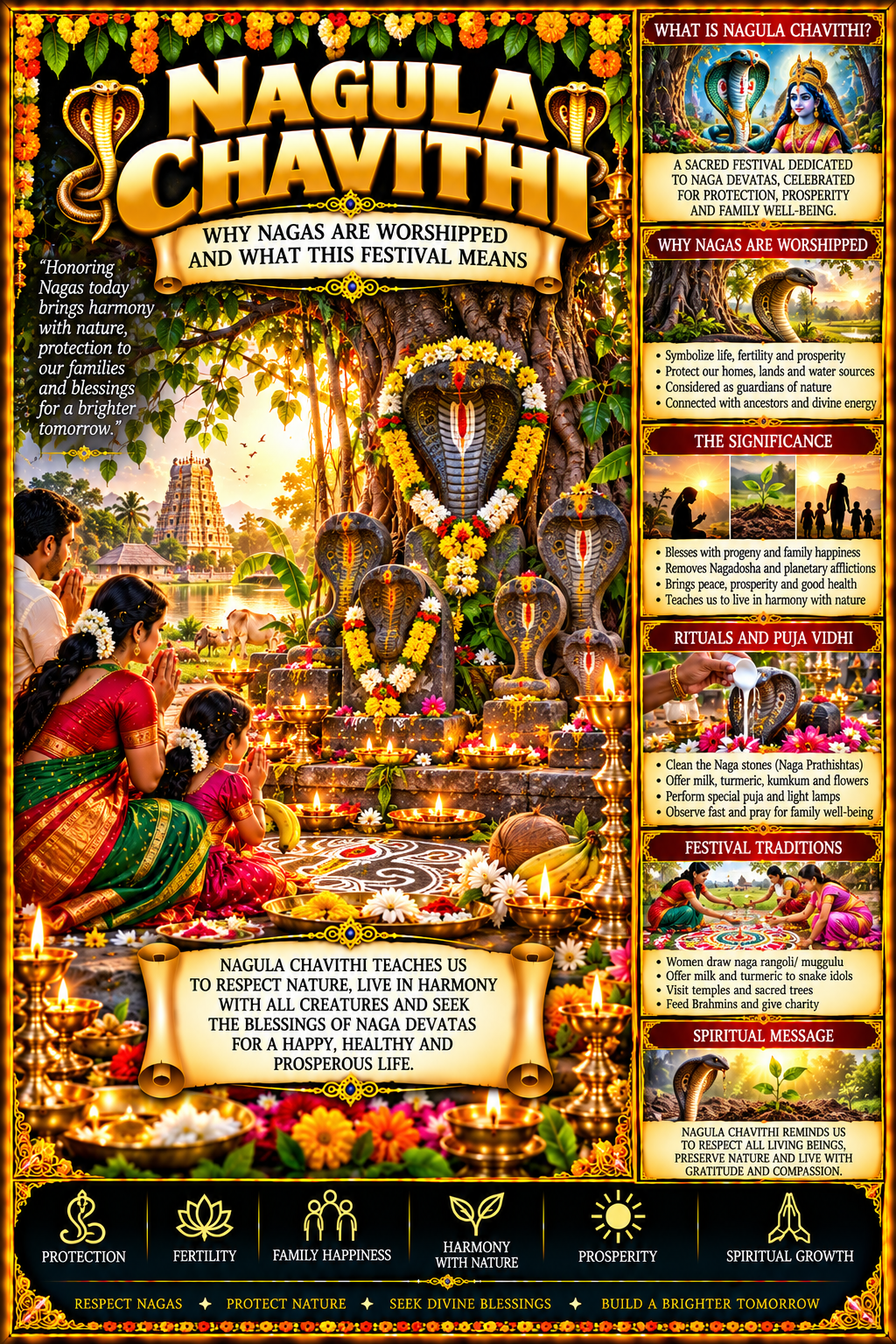
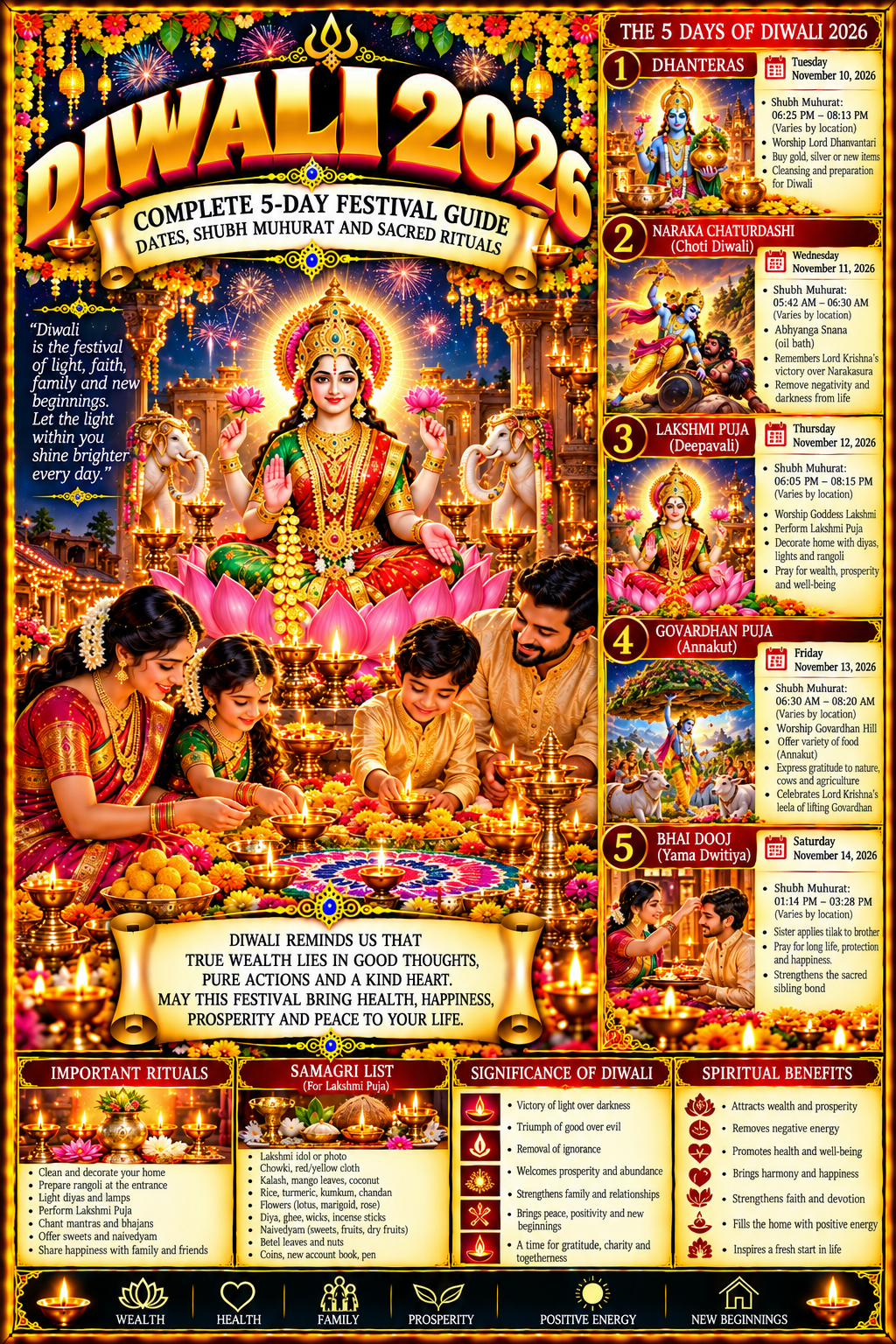
Because the Dwadashi Tithi prevails during the Pradosh twilight hours, performing Deepotsavam (lighting lamps) around the Tulsi Vrindavan during this window establishes perennial harmony, continuing the festive spiritual wave that began with Diwali 2026 celebrations and Nagula Chavithi serpent worship.
The Sacred Legends of Karthika Dwadashi: Ksheerabdi and Tulsi Vivah
To fully experience the profound grace of Karthika Dwadashi, one must explore the canonical chronicles preserved in the Padma Purana and Skanda Purana.
1. Ksheerabdi: The Churning of the Ocean of Milk
The name Ksheerabdi Dwadashi derives from two Sanskrit words: Ksheera (milk) and Abdhi (ocean). Scriptural tradition records that after resting in yoga-nidra for four months, Lord Vishnu arrived at the cosmic Ksheera Sagara (ocean of milk) along with Goddess Lakshmi and the celestial company of Devas, Rishis, and Gandharvas on this very Dwadashi evening.
Furthermore, ancient texts state that Goddess Lakshmi, who emerged from the foaming waters during the cosmic Samudra Manthan, was formally united with Lord Vishnu in celestial matrimonial glory on this sacred day. Consequently, conducting Lakshmi-Narayana Puja on Karthika Dwadashi invokes identical prosperity to the rituals performed during the auspicious Diwali Lakshmi Puja Vidhi.
2. The Transmutation of Vrinda into Holy Tulsi
The sublime spiritual core of Karthika Dwadashi is the wedding of Tulsi Devi (Tulsi Vivah). In an ancient cosmic era, Vrinda was a woman of supreme chastity and devotion, married to the formidable demon king Jalandhara. Born from the fiery wrath of Lord Shiva, Jalandhara could not be vanquished by any deity as long as Vrinda’s vow of chastity remained unbroken.
When Jalandhara wreaked havoc across the three realms, Lord Vishnu assumed the form of Jalandhara to enter Vrinda’s presence, thereby breaking her protective aura so Shiva could vanquish the demon. Upon discovering the deception, Vrinda cursed Vishnu to turn into a black stone (the sacred Shaligram) and immolated herself in yogic fire.
The Divine Redemption and the Shaligram Stone
Moved by her pure heart and grief, Lord Vishnu declared that Vrinda would be reborn from her ashes as the holy plant Tulsi, the supreme embodiment of devotion. Vishnu decreed: “Without Tulsi leaves, no offering made to Me will ever be complete. I shall accept the black Shaligram form from the holy Gandaki River and wed Tulsi annually on Karthika Shukla Dwadashi.”
Thus, the ceremonial union between Tulsi Devi and Lord Vishnu (represented as a Shaligram stone or an amla branch) inaugurates the traditional Hindu wedding season across India.
Why Karthika Dwadashi Is Uniquely Sacred for Lord Vishnu and Goddess Lakshmi
The theological significance of Karthika Dwadashi spans multiple metaphysical dimensions:
1. The Presence of All Sacred Tirthas in the Tulsi Plant
The Skanda Purana asserts that on Karthika Dwadashi evening, all sacred rivers (Ganga, Yamuna, Saraswati, Godavari, and Narmada) and all thirty-three crore celestial deities converge to reside within the Tulsi Vrindavan. Circumambulating the Tulsi plant on this evening equals visiting every sacred pilgrimage site on Earth.
2. Dhatri (Amla) Tree Worship Alongside Tulsi
Alongside Tulsi Devi, an Indian Gooseberry (Amla or Dhatri/Usiri) branch is placed within the holy planter. In Vedic tradition, the Amla tree is the direct manifestation of Lord Vishnu and Goddess Lakshmi. The union of the Tulsi plant (representing pure devotional Shakti) and the Dhatri branch (representing Vishnu’s cosmic preservation) creates a powerful vortex of healing energy.
Step-by-Step Puja Vidhi for Karthika Dwadashi (Ksheerabdi Vratam)
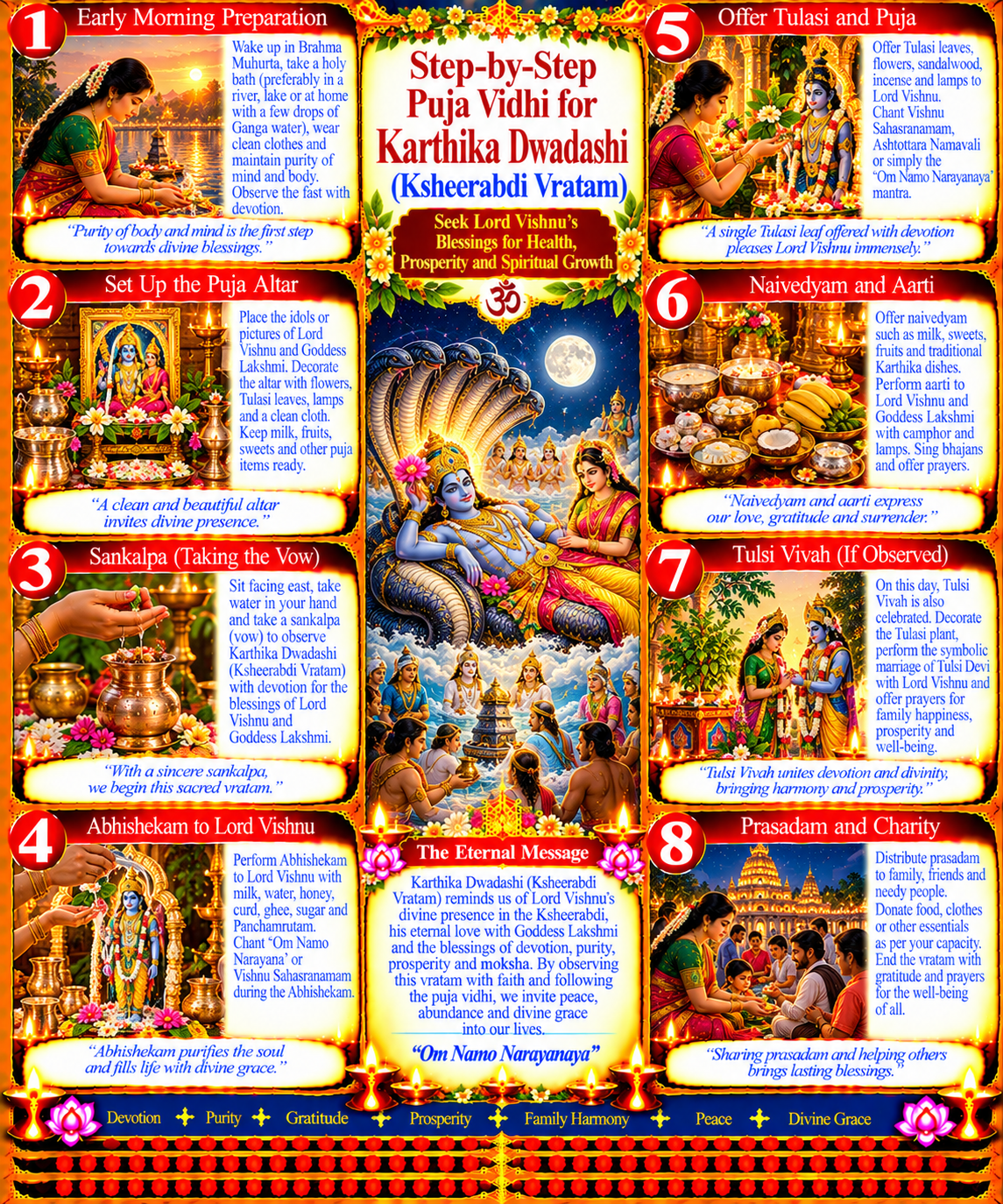
To invite uninterrupted divine grace on Karthika Dwadashi, follow this canonical ritual framework:
Phase 1: Morning Holy Snan and Ekadashi Fast Transition
Wake during the auspicious Brahma Muhurta. Take a purifying bath infused with Tulsi leaves and Gangajal. Devotees who observed the rigorous Ekadashi fast perform the sacred Parana (breaking of the fast) before Dwadashi tithi expires, partaking of amla or gooseberry before consuming a sattvic vegetarian meal.
Phase 2: Purifying and Beautifying the Tulsi Vrindavan
In the late afternoon, cleanse the courtyard around the Tulsi planter. Decorate the base with intricate geometric rice-flour rangolis (Kolam). Coat the Tulsi pot with fresh turmeric paste and vermilion (Pasupu and Kumkuma). Place an amla branch and a slender stalk of sugarcane (Cheruku) beside the Tulsi plant.
Phase 3: The Celestial Wedding Rituals (Tulsi Vivah)
Drape the Tulsi plant in a bright red silk cloth or saree, adorning her with bangles, a nose ring, and a garland of fragrant jasmine flowers as a blushing bride. Place a sacred Shaligram stone or an idol of Lord Krishna/Vishnu next to her, draped in yellow pitambara silk.
Tying the Sacred Mangalsutra and Akshat Shower
Tie a yellow cotton thread smeared with turmeric (representing the wedding Mangalsutra) around the Tulsi plant while chanting traditional wedding hymns (Mangalyam Tanthunanena). Devotees shower the divine couple with unbroken sanctified rice grains (Akshat) and flower petals.
Lighting the 365 Cotton Wicks (Mukkoti Vathulu)
A signature custom of Karthika Dwadashi in South India is lighting a bundle of 365 thin cotton wicks soaked in pure cow ghee (known as Mukkoti Vathulu) placed atop an amla fruit or clay lamp. This represents offering a burning lamp for every single day of the solar year, cleansing past karmas and dispelling spiritual darkness.
Vedic Tulsi Prarthana Mantra
Devotees recite the ancient verse: “Yenmoole Sarva Teerthani Yenmadhye Sarva Devatah | Yendagre Sarva Vedashcha Tulasi Tvam Namamyaham.”
According to cultural and spiritual research documented in historical records of Tulsi Vivah and Ksheerabdi Dwadashi (Wikipedia), this ceremony has served as the sacred threshold for seasonal matrimony and agrarian gratitude across centuries.
Astrological and Material Blessings of Karthika Dwadashi
Conducting the rituals of Karthika Dwadashi yields multi-fold benefits documented in the Puranas:
1. Removal of Marital Discord: Couples experiencing misunderstandings, emotional strain, or delays in marriage receive the unifying blessings of Lakshmi-Narayana, fostering lifelong devotion and mutual fidelity.
2. Merit of Performing Kanyadaan: Couples who do not have daughters can earn the supreme spiritual merit of Kanyadaan (the sacred gifting of a bride in marriage) by ceremonially giving away Tulsi Devi to Lord Vishnu.
3. Attaining Ashta Lakshmi Kataksham: By welcoming the awakened Vishnu and Lakshmi during the Pradosh Kaal, households are blessed with sustained ethical wealth, robust physical health, and freedom from crushing debts, continuing the spiritual blessings of Yama Vidiya and Bhai Dooj.
Frequently Asked Questions About Karthika Dwadashi (20 FAQs)
1. What is Karthika Dwadashi and why is it so significant?
Karthika Dwadashi is the twelfth lunar day of the bright fortnight in the month of Karthika. It marks the divine wedding of Tulsi Devi with Lord Vishnu (Tulsi Vivah) and commemorates Lord Vishnu’s presence in the milk ocean with Goddess Lakshmi.
2. What is Ksheerabdi Dwadashi?
Ksheerabdi Dwadashi is another name for Karthika Dwadashi. “Ksheera” means milk and “Abdhi” means ocean, signifying the day when Lord Vishnu arrived at the milky ocean accompanied by Goddess Lakshmi.
3. When is Karthika Dwadashi celebrated in 2026?
In 2026, Karthika Dwadashi will be observed on Saturday, November 21, 2026, with the most auspicious puja timing falling during Pradosh Kaal in the evening.
4. What is the story behind Tulsi Vivah on Karthika Dwadashi?
It commemorates the devotion of Vrinda, who was transformed into the holy Tulsi plant and eternally wed to Lord Vishnu in the form of the sacred Shaligram stone.
5. Why is an Amla (Usiri) branch placed in the Tulsi pot?
The Amla (Indian gooseberry) tree represents Lord Vishnu and Goddess Lakshmi. Placing the Amla branch in the Tulsi pot symbolizes the divine presence of the groom alongside the bride.
6. What is the significance of lighting 365 wicks on Karthika Dwadashi?
Lighting 365 wicks (Mukkoti Vathulu) soaked in cow ghee symbolizes offering a glowing prayer lamp for every day of the entire year, dissolving negative karmas and invoking cosmic protection.
7. Why is sugarcane (Cheruku) kept near the Tulsi plant?
Sugarcane stalks are erected as a festive marriage canopy (Mandapam) around the Tulsi plant, symbolizing sweetness, agricultural prosperity, and fertility.
8. Can unmarried individuals perform Tulsi Vivah?
Yes, unmarried men and women can perform or participate in Tulsi Vivah to remove astrological obstacles in their horoscopes and find an ideal, virtuous life partner.
9. What is the spiritual benefit of Kanyadaan performed on this day?
Parents who perform the ritual wedding of Tulsi Devi to Lord Vishnu earn the supreme spiritual merit of Kanyadaan, which purifies the ancestral lineage across generations.
10. What prasad is offered during Karthika Dwadashi puja?
Devotees offer sweet pongal, kheer, soaked chana dal mixed with jaggery, amla pieces, bananas, and coconut.
11. What is the Shaligram stone and why is it used in Tulsi Vivah?
The Shaligram is a sacred, self-manifested ammonite fossil stone found in the holy Gandaki River in Nepal, representing the eternal non-anthropomorphic form of Lord Vishnu.
12. Why does the wedding season start after Karthika Dwadashi?
During the four months of Chaturmasya, Lord Vishnu rests in yoga-nidra, so auspicious ceremonies like marriages are paused. After Vishnu awakens and weds Tulsi, the wedding season officially commences.
13. What should be done with the Amla branch after the puja?
After the puja concludes, the consecrated amla branch can be placed under a tree, immersed in sacred water, or kept respectfully in a clean garden space.
14. Why is Tulsi considered indispensable for Lord Vishnu’s worship?
Lord Vishnu granted Vrinda the boon that no food offering, naivedyam, or sacred bath given to Him would be accepted without the presence of a pure Tulsi leaf.
15. What are the rules for plucking Tulsi leaves?
Tulsi leaves must never be plucked on Sundays, Ekadashi, Dwadashi, Amavasya, Purnima, or after sunset. On Dwadashi, only leaves that have fallen naturally should be gathered.
16. What is the meaning of Damodara Dwadashi?
In the month of Karthika, Lord Krishna is worshipped as Damodara (the child bound with a rope by Mother Yashoda). Karthika Dwadashi is thus also revered as Damodara Dwadashi.
17. Why do women perform Parikrama around the Tulsi plant?
Circumambulating the Tulsi plant three or four times while chanting mantras dissolves mental restlessness, eliminates negative energies, and bestows good health.
18. Is Karthika Dwadashi celebrated differently in North and South India?
In North India, the festival is celebrated primarily as Tulsi Vivah. In Southern India, it is observed with equal prominence as Ksheerabdi Dwadashi with the lighting of 365 wicks and amla deepams.
19. What astrological doshas are pacified on Karthika Dwadashi?
Worshipping Vishnu and Tulsi pacifies afflictions related to Jupiter (Guru Dosha), Venus (Shukra Dosha), and matrimonial delays caused by malefic planetary aspects.
20. What is the ultimate spiritual teaching of Karthika Dwadashi?
Karthika Dwadashi teaches that pure, unwavering devotion (exemplified by Tulsi Devi) has the power to captivate the Supreme Lord Himself, elevating mortal consciousness to eternal divine communion.