Admin
- Mahabharatam
- August 30, 2026
- 43 views
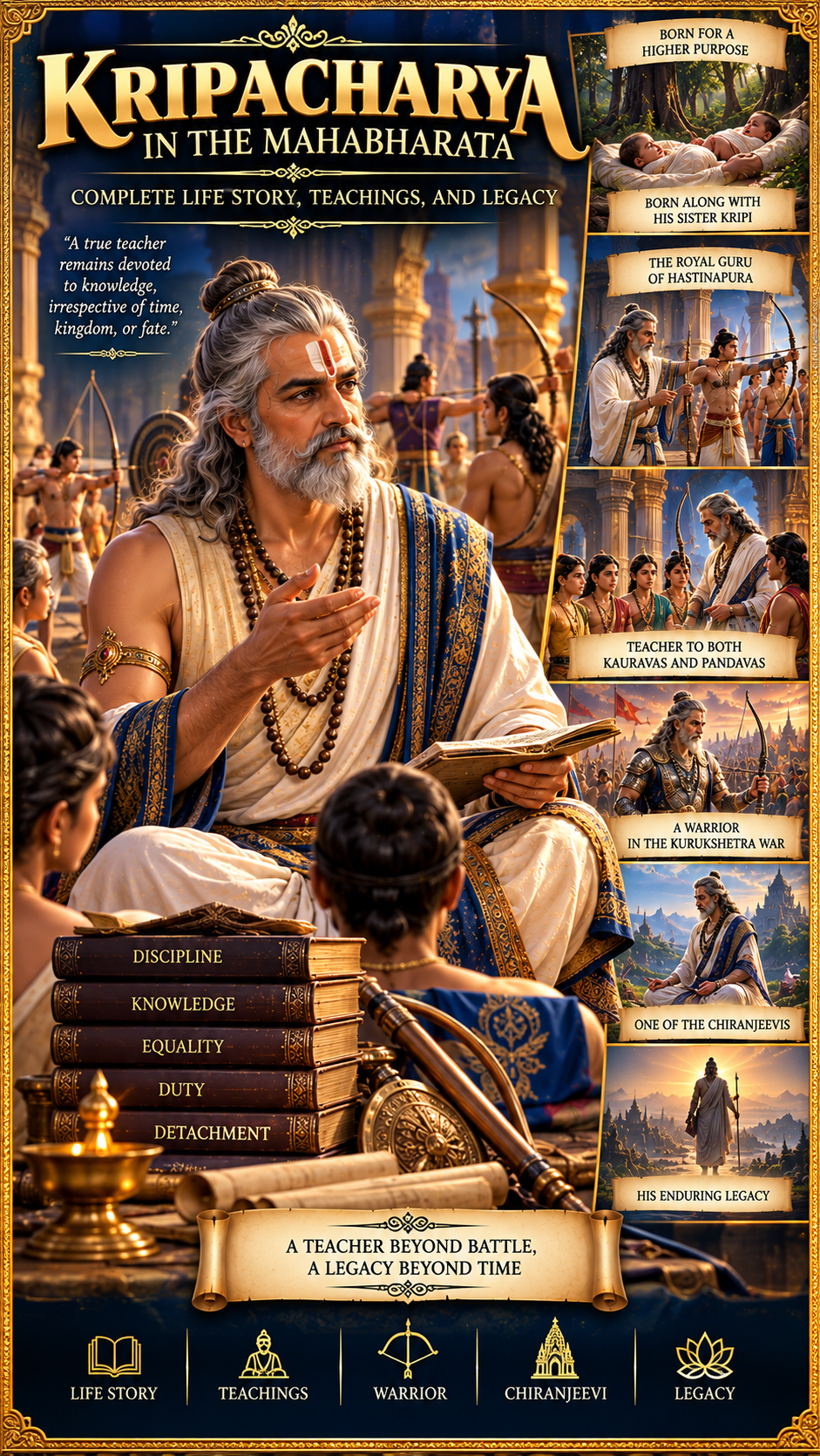
Kripacharya in the Mahabharata: Complete Life Story, Teachings, and Legacy
The Mahabharata is a grand tapestry of human values, heroic deeds, and ethical conflicts. Among the figures who guide the narrative, Kripacharya in the Mahabharata occupies a unique and highly respected position. Serving as the original royal preceptor (Guru) of Hastinapur, he trained the Pandava and Kaurava princes in Dhanurveda (archery) and the codes of righteous conduct before Dronacharya was appointed. As one of the few survivors of the Kurukshetra War and one of the seven immortals (Chiranjivis) in Hindu tradition, his life is a testament to longevity, wisdom, and devotion to duty. Unlike other warriors who were driven by ambition or revenge, Kripacharya in the Mahabharata represents stability, continuity, and the preservation of Kuru traditions. His role was not to instigate conflicts, but to provide steady, wise counsel to the throne of Hastinapur across three generations of kings. The Birth and Lineage of Kripacharya in the Mahabharata Kripacharya’s lineage begins with the great sage Gautama. His father was the sage Sharadvan, who was born with a natural talent for archery and performed intense penance to master all military arts. Alarmed by his growing power, Indra sent a beautiful Apsara named Janapadi to disrupt his meditation. Though Sharadvan resisted the…
- Mahabharatam
- August 23, 2026
- 36 views
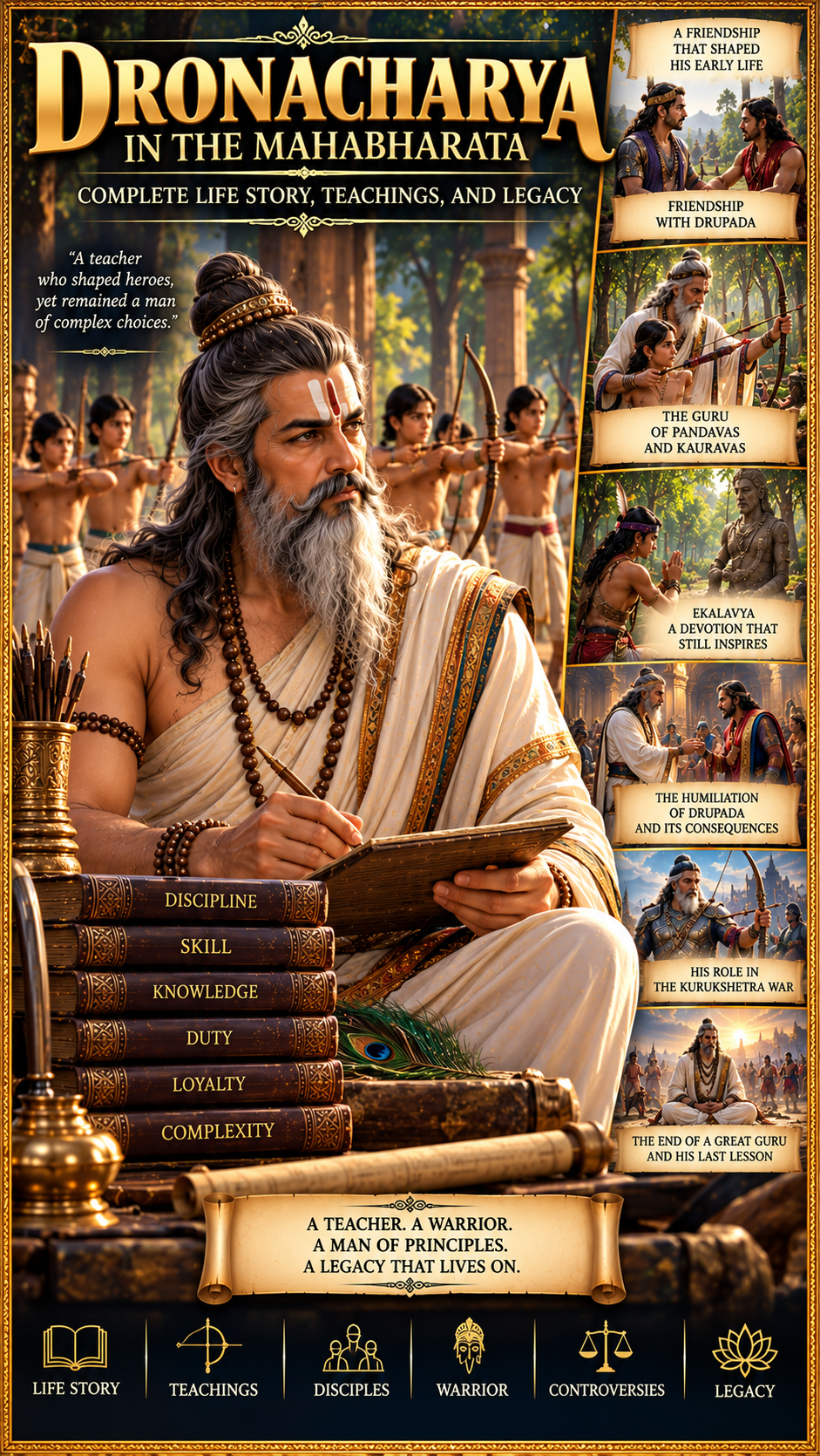
Dronacharya in the Mahabharata: Complete Life Story, Teachings, and Legacy
The Mahabharata is a monumental epic that serves as a profound guide to human behavior, politics, and duty (Dharma). Among its many central characters, Dronacharya in the Mahabharata stands as one of the most complex, revered, and controversial figures. As the royal preceptor (Guru) who trained both the Pandava and Kaurava princes in the military arts, he was a master of archery, advanced military formations, and divine weaponry. Yet, his life was a constant struggle between his duties as a teacher, his loyalty to the state of Hastinapur, and the heavy moral sacrifices he had to make. To truly understand Dronacharya in the Mahabharata, one must explore past his reputation as a master archer and examine the deep conflicts of interest, the tragic demands of his career, and his final days on the battlefield of Kurukshetra. His journey represents the light of knowledge combined with the shadows of political compromise. The Birth and Lineage of Dronacharya in the Mahabharata Dronacharya was not born in a conventional royal family. He was the son of the revered sage Bharadwaja. The story of his birth is unique: he was generated from a vessel or pot (known in Sanskrit as a *Drona*), which is…
- Mahabharatam , Women Characters
- August 16, 2026
- 38 views
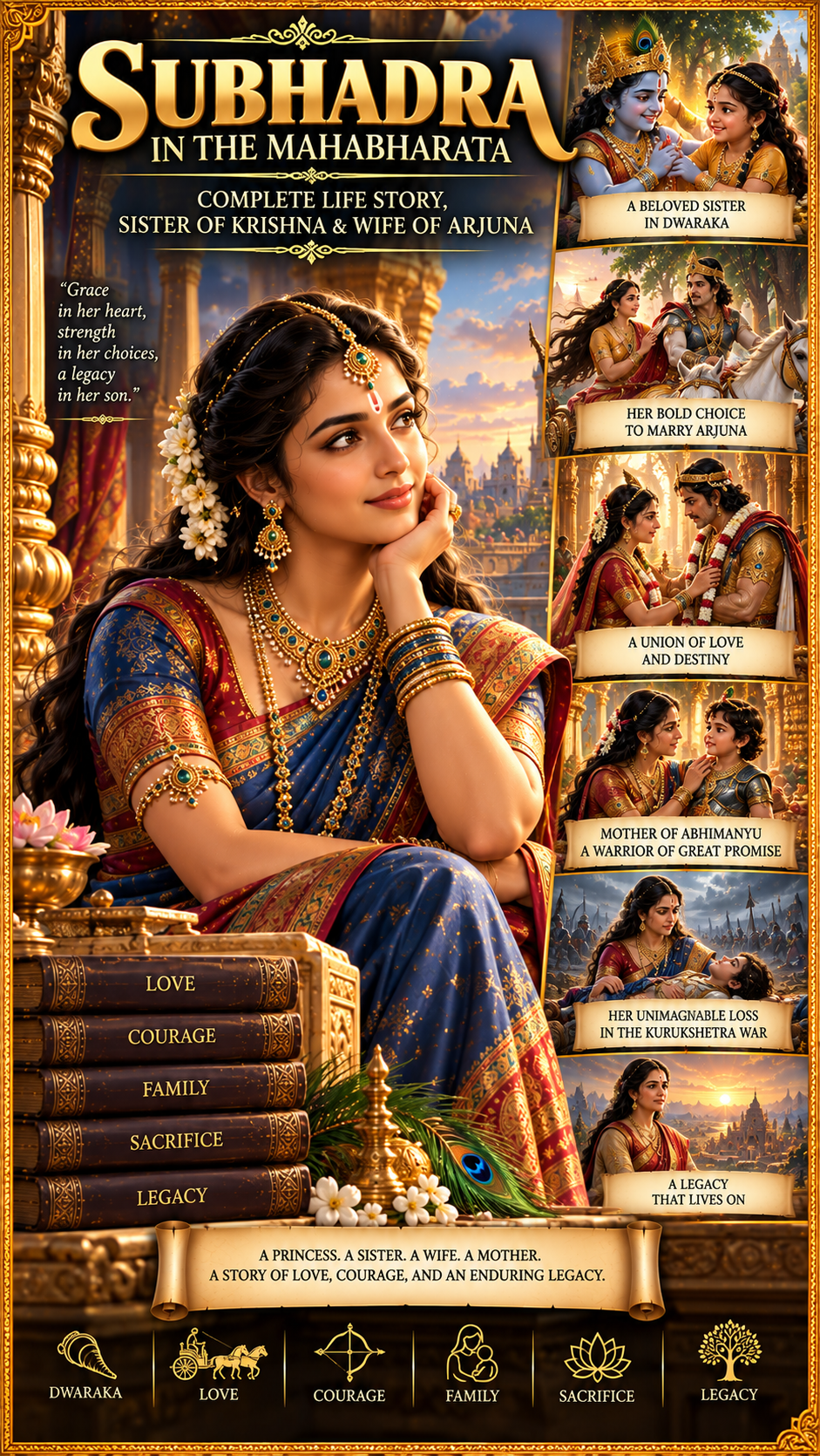
Subhadra in the Mahabharata: Complete Life Story, Sister of Krishna & Wife of Arjuna
The Mahabharata is a grand canvas of epic battles, political maneuvers, and moral dilemmas. Among the key women who shape the narrative of the Kuru dynasty, Subhadra in the Mahabharata occupies a central and highly revered position. Known as the sister of Lord Krishna and Balarama, the beloved wife of the Pandava warrior Arjuna, and the mother of the tragic hero Abhimanyu, Subhadra is a key figure whose presence bridges the powerful Vrishni clan of Dwaraka with the Pandavas of Indraprastha. Her story is one of royal grace, romantic choice, quiet strength, immense maternal sacrifice, and structural legacy. While characters like Draupadi are associated with public humiliation, vengeance, and the fiery initiation of war, Subhadra in the Mahabharata represents a different dimension of strength: the unifying thread of the family, a mother who instilled legendary courage in her son, and the woman whose direct descendant (Parikshit) saved the Pandava lineage from extinction. The Lineage and Childhood of Subhadra in the Mahabharata Subhadra was born into the Yadava clan (specifically the Vrishni branch) as the daughter of Vasudeva and Rohini. She was the younger sister of Balarama and Lord Krishna. Born in Dwaraka, a magnificent coastal city renowned for its wealth,…
- Mahabharatam , Women Characters
- August 9, 2026
- 64 views
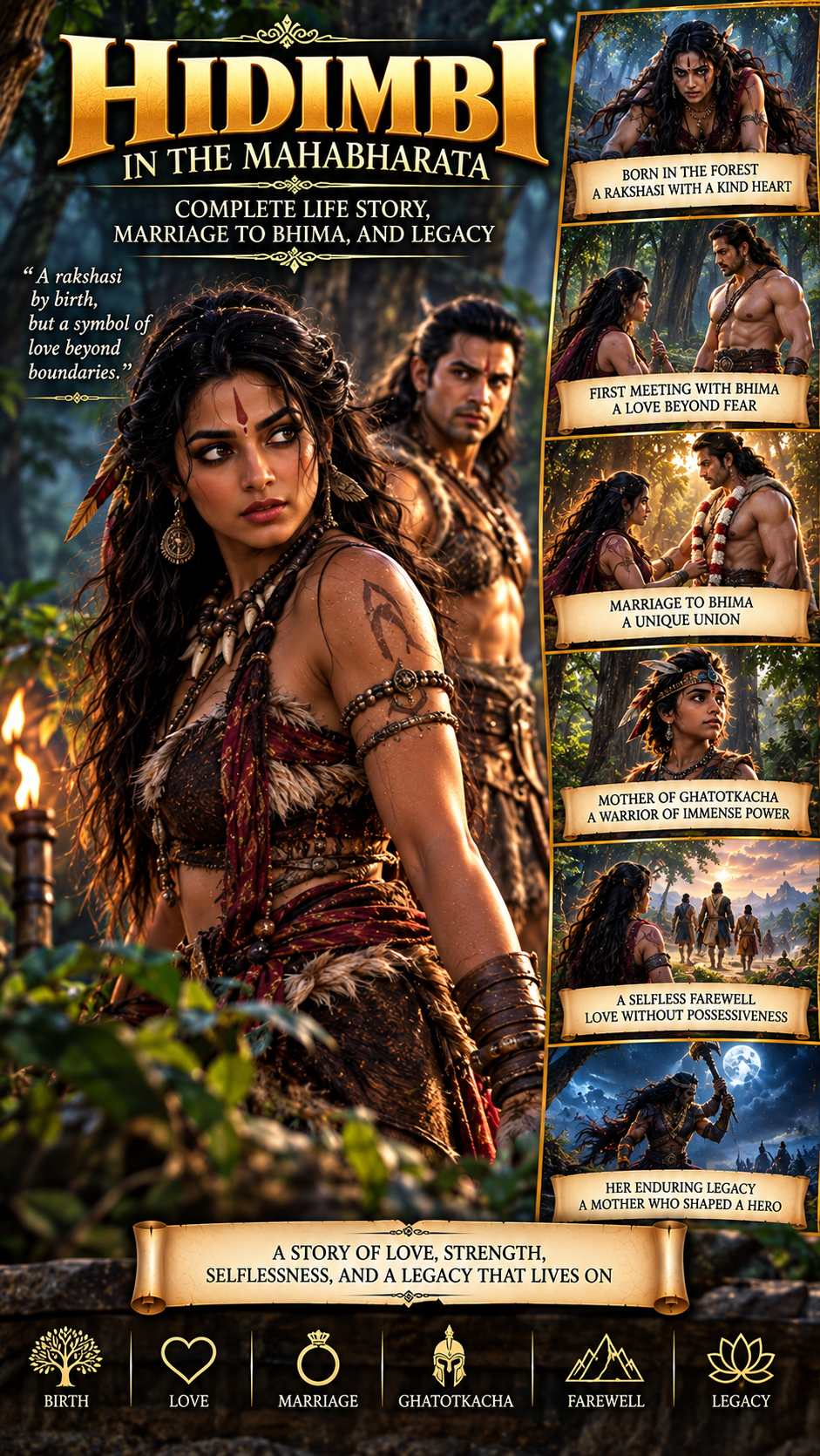
Hidimbi in the Mahabharata: Complete Life Story, Marriage to Bhima, and Legacy
The Mahabharata is a monument of classical literature, exploring the depths of righteousness, duty, and human emotion. Among the many women characters who leave a permanent mark on the epic, the story of Hidimbi in the Mahabharata is one of the most unique, touching, and spiritually significant. Unlike other royal queens who came from established dynasties, Hidimbi belonged to the Rakshasa clan—the forest-dwelling tribes of ancient India. Yet, her transformation from a forest dweller to the devoted wife of the Pandava prince Bhima, and the mother of the legendary warrior Ghatotkacha, stands as a testament to her noble character, high intelligence, and profound sacrifices. To truly understand Hidimbi in the Mahabharata, one must look past the superficial labels of “demoness” or “rakshasi” and analyze her choices, her devotion, and the critical role she played in helping the Pandavas survive their early trials. Her story teaches us that nobility is not defined by birth or lineage, but by actions, love, and adherence to Dharma. The Lineage and Identity of Hidimbi in the Mahabharata Hidimbi lived with her brother Hidimba in the dense, dark forests located in the northern region of ancient India (believed to be parts of modern-day Himachal Pradesh, where…
- Mahabharatam , Women Characters
- August 2, 2026
- 66 views
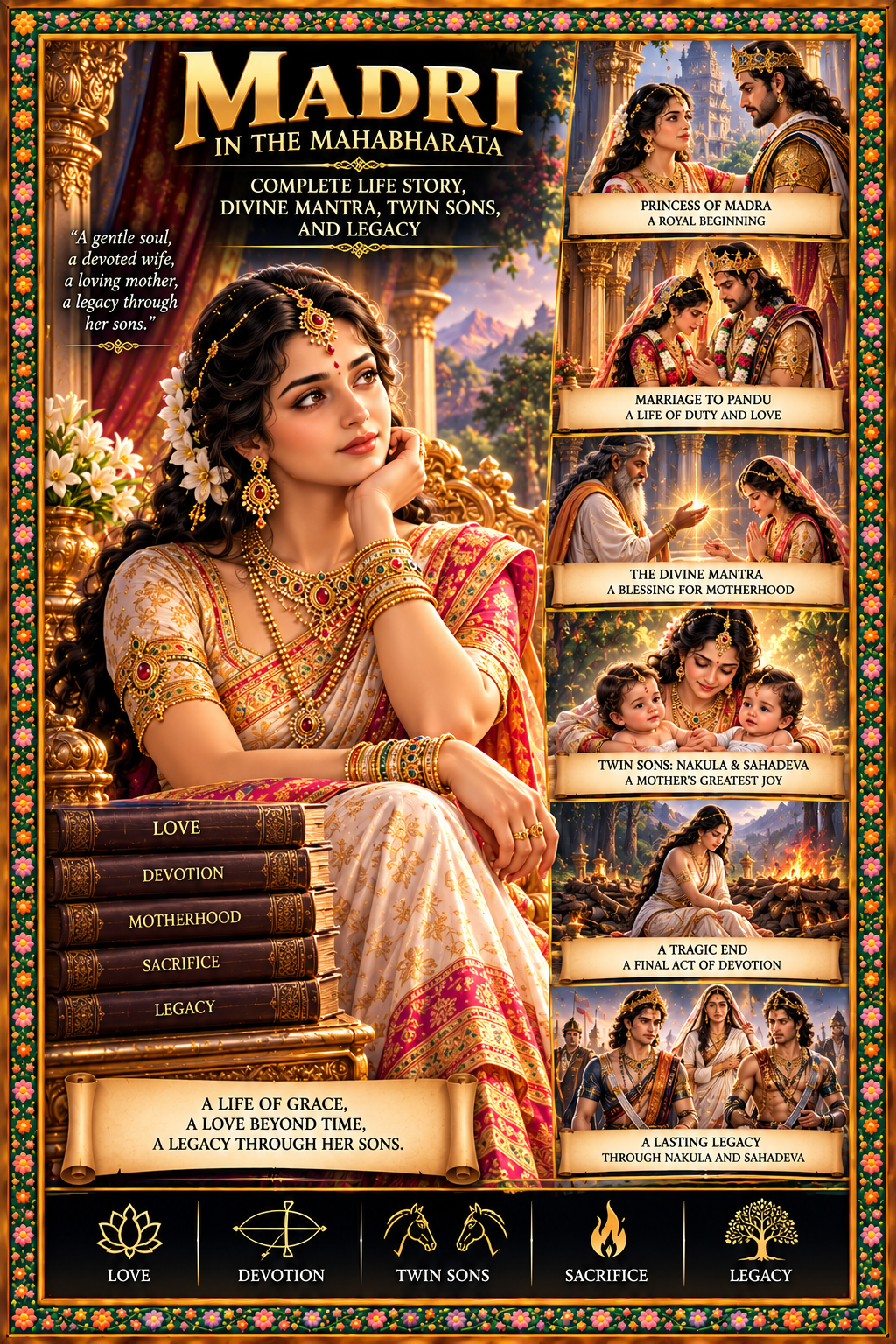
Madri in the Mahabharata: Complete Life Story, Divine Mantra, Twin Sons, and Legacy
The Mahabharata is a grand tapestry of duty, sacrifice, complex choices, and cosmic destiny. While much of the spotlight in the Kuru dynasty falls on key figures like Kunti, Draupadi, and Gandhari, the life and legacy of Madri in the Mahabharata is equally profound, tragic, and central to the epic’s unfolding. As the second wife of King Pandu, the Princess of Madra, and the mother of the twin Pandavas—Nakula and Sahadeva—Madri’s actions shaped the destiny of the entire lineage. Her story is one of beauty, rivalry, spiritual transformation, maternal love, and ultimate self-sacrifice. Understanding the character of Madri in the Mahabharata requires looking beyond the popular perception of her as simply the “second queen.” She represents a complex human journey: a princess who had to live in the shadow of a senior queen, a wife who shared her husband’s exile, a mother who brought divine children into the world, and a woman whose final decision changed the course of Hastinapur’s history. The Lineage of Madri in the Mahabharata: The Princess of Madra Madri was the princess of the Madra kingdom, a prosperous region located in the north-western part of ancient India (corresponding to modern-day Punjab and parts of Pakistan). She…