Raja Ratnam
Introduction – The Power and Mystery of Shani Deva (Saturn)
Among the Navagrahas, Shani Deva (Saturn) remains the most revered, feared, misunderstood, and ultimately transformative graha. Known as the Lord of Karma, Justice, Discipline, and Destiny, Shani acts as the cosmic judge who monitors the moral balance of the universe.
Shani’s influence is never meant to punish out of anger—rather, he guides souls through accountability, responsibility, restraint, and spiritual awakening. His lessons are deep, life-changing, and karmically precise.
Shani’s slow movement through the zodiac symbolizes patience, endurance, maturity, and long-term results. His blessings are slow but permanent; his teachings are tough but purifying.
For official cultural and historical archives, visit the Ministry of Culture, Government of India.
Mythological Origins of Shani Deva
1. Birth of Shani – Son of Surya and Chhaya
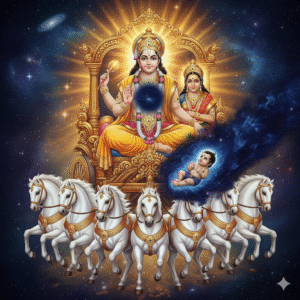
Shani is the son of Lord Surya (Sun) and Devi Chhaya, who was created as a shadow form of Surya’s wife Sanjana. From birth, Shani exhibited extraordinary powers. When Surya refused to accept him, Shani’s angry gaze caused Surya’s chariot horses to weaken, leading Surya to realize the divine strength of his son.
2. Relationship with Yama – God of Death
Shani and Yama are brothers. While Yama decides the moment of death and the type of next birth, Shani governs the quality of life based on karma.
3. Shani’s Tapasya – Becoming the Lord of Karma
Shani performed severe austerities and devotion to Lord Shiva. Pleased with his tapas, Shiva blessed him:
“From today, you will become the supreme judge of karma. None can escape your gaze.”
Thus Shani attained his cosmic role.
Shani Deva (Saturn) in Hindu Scriptures
Shani appears in several ancient texts:
- Skanda Purana – describes his birth and tapas.
- Brahma Vaivarta Purana – details his karmic responsibilities.
- Padma Purana – highlights Shani’s powers and his devotion to Shiva.
- Shani Mahatmya – stories of how Shani tests and blesses devotees.
Shani is worshipped not out of fear, but out of reverence for truth, justice, and righteousness.
Symbolism of Shani Deva
- Color: Black or dark blue
- Metal: Iron
- Vehicle: Crow or vulture
- Direction: West
- Day: Saturday (Shanivaar)
- Element: Air
- Energy: Slow, karmic, stabilizing, disciplinary
Shani represents:
- Delays
- Struggles
- Responsibilities
- Karma from past lives
- Maturity
- Detachment
- Justice
- Longevity
Shani in Astrology – The Planet of Karma
Shani rules two zodiac signs:
- Capricorn (Makara)
- Aquarius (Kumbha)
He governs the 10th and 11th houses:
- 10th House: Career, profession, leadership, duty, public image
- 11th House: Gains, income, desires, social networks
What Shani Blesses
When strong or well-placed:
- Authority
- Patience
- Wealth over time
- Stability
- Government jobs
- Engineering, iron, mining industries
- Discipline
- Wisdom
- Spiritual strength
What Shani Challenges
When weak or afflicted:
- Delays
- Hardships
- Legal issues
- Fear
- Job instability
- Health issues
- Loneliness
Major Shani Deva (Saturn) Periods in Life
1. Sade Sati (7.5-Year Saturn Cycle)
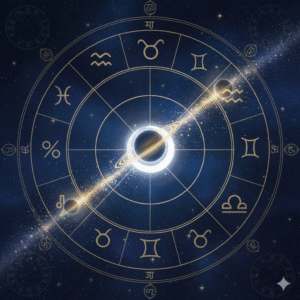
The most transformative period of a person’s life. It occurs when Saturn transits:
- 12th house from Moon
- 1st house from Moon
- 2nd house from Moon
Sade Sati brings:
- Testing
- Responsibilities
- Karma clearance
- Deep maturity
- Spiritual transformation
2. Shani Mahadasha (19 Years)
One of the longest planetary periods.
Brings:
- Career stability
- Grounding
- Slow but lasting progress
- Major karmic lessons
3. Shani Return (Around Age 28-30 & 58-60)
Life’s biggest turning points involving:
- Self-identity
- Career
- Relationships
- Purpose
Scientific Perspective – Saturn, the Lord of Rings
- Saturn is the second-largest planet after Jupiter.
- Known for its spectacular icy rings.
- Composed of hydrogen and helium.
- Its slow revolution around the Sun takes 29.5 years, mirroring Shani’s slow astrological influence.
- Symbolizes structure, gravitational stability, and long-term cycles.
Scientific parallels align beautifully with Shani’s astrological themes of time, patience, and structure.
Shani Dosha – When Saturn Is Afflicted

Signs of Shani Dosha:
- Chronic delays
- Frequent losses
- Legal issues
- Fear or anxiety
- Bone, joint, nerve issues
- Job instability
- Heavy responsibilities
Remedies are essential during this period.
Remedies for Shani Deva (Saturn)
Daily / Weekly Remedies
- Lighting sesame oil deepam on Saturdays
- Offering black sesame seeds
- Helping the poor and disabled
- Feeding crows
- Wearing iron rings (after consultation)
- Chanting:
- Shani Gayatri Mantra
- Shani Beej Mantra
Temple Remedies
- Visit Shani Shingnapur (Maharashtra)
- Thirunallar Shani Temple (Tamil Nadu)
- Kokilavan Dham (UP)
- Mandapalli Mandeshwara Swamy Temple (AP)
- Shani Dham Temple (Delhi)
Shani Deva (Saturn) Blessings – When You Walk the Path of Dharma
Shani grants:
- Exceptional success after struggle
- Inner strength
- Spiritual awakening
- Leadership
- Fame through integrity
- Long-term wealth
- Liberation from karmic cycles
Conclusion – Shani Deva (Saturn) as the Divine Teacher
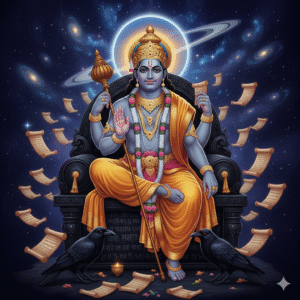
Shani Deva is not a destroyer; he is a purifier.
He removes illusion, ego, laziness, shortcuts, and misuse of power.
He shapes you into the highest version of yourself—wise, disciplined, humble, and spiritually grounded.
Those who follow dharma, truth, and hard work receive Shani’s most powerful blessings.
Related Sacred Topics & Cultural Heritage: For further spiritual exploration, read about Lord Rama’s ideal life story. For further spiritual exploration, read about the 14-year exile of Lord Rama.
20 FAQs About Shani Deva (Saturn)
- Is Shani always negative?
No. Shani is a strict teacher, not a destroyer. - Why do people fear Shani?
Because he exposes wrongdoing and forces accountability. - What is the best day for Shani worship?
Saturday. - What color pleases Shani?
Black and dark blue. - Can Shani give success?
Yes—lasting, stable, disciplined success. - What is Sade Sati?
A 7.5-year karmic purification period. - Is Shani responsible for accidents?
Only when karmic imbalance or negligence exists. - How to reduce Shani Dosha?
Charity, discipline, mantras, and temple visits. - Does Shani affect marriage?
Yes, especially when placed in the 7th house. - Can Shani give children?
Yes, but usually later in life. - Is Shani good in the 10th house?
Very powerful – excellent for career. - What metal is associated with Shani?
Iron. - Which deity controls Shani?
Lord Shiva and Hanuman. - Does Shani bless devotion?
Yes. Sincere devotion reduces karmic burdens. - Can Shani destroy ego?
Yes, completely. - What is Shani’s vehicle?
Crow. - What gemstone is associated with Shani?
Blue Sapphire – only after expert consultation. - Is Shani responsible for job loss?
If previous karmas or negligence exist. - Does Shani control justice?
Yes—he is the cosmic judge. - How to receive Shani’s blessings?
Honesty, discipline, humility, and seva.