Raja Ratnam
- Mythology , Ramayanam
- September 20, 2026
- 22 views
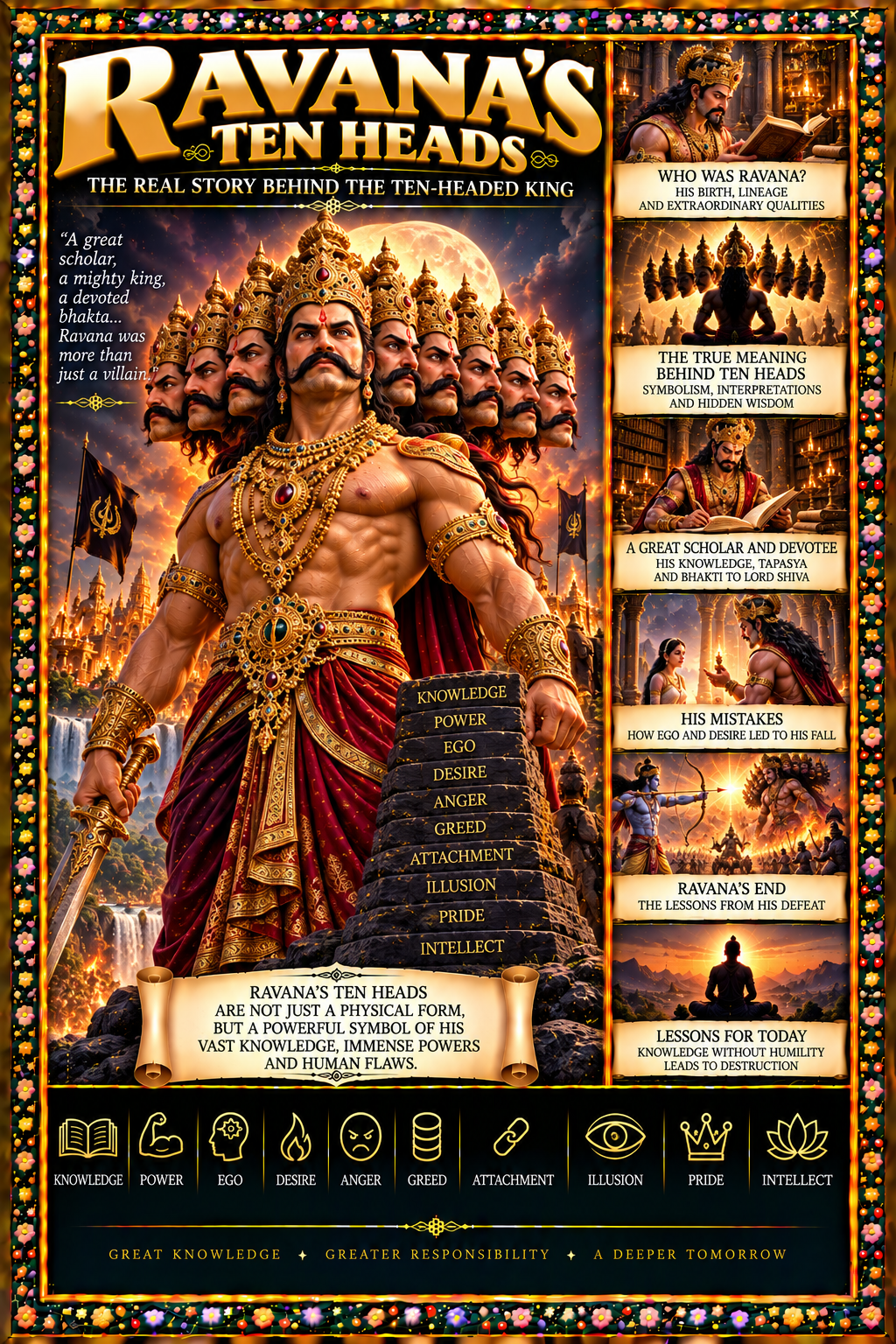
Ravana’s Ten Heads: The Real Story Behind the Ten-Headed King
The legend of Ravana’s Ten Heads (known in Sanskrit as Dashanana or Dashagriva) is one of the most intriguing, multi-layered stories in Hindu mythology. Ravana, the king of Lanka in the epic Ramayana, is widely depicted in temple sculptures, classical paintings, and Ramlila plays as a towering demon king with ten heads and twenty arms. Was Ravana literally born with ten biological heads, or did He manifest them through divine boons and illusive powers? Or does the imagery of Ravana’s Ten Heads carry a deep psychological, philosophical, and astrological symbolism representing human emotions, intellect, and spiritual vices? In this comprehensive guide, we uncover the real story, scriptural origins, 4 sacred images, and profound spiritual symbolism behind Ravana’s Ten Heads. The Mythological Origin of Ravana’s Ten Heads To understand the story of Ravana’s Ten Heads, one must explore his unique lineage and his extreme penance to Lord Brahma. The Divine Lineage of Ravana Ravana was not a typical demon. He was the son of Sage Vishrava (a revered Vedic Rishi and grandson of Lord Brahma) and Princess Kaikesi (an Asura princess). This unique lineage made Ravana half-Brahmin and half-Rakshasa. From his father, he inherited immense intellectual capacity, Vedic wisdom, and mastery…
- Mythology , Ramayanam
- September 13, 2026
- 39 views
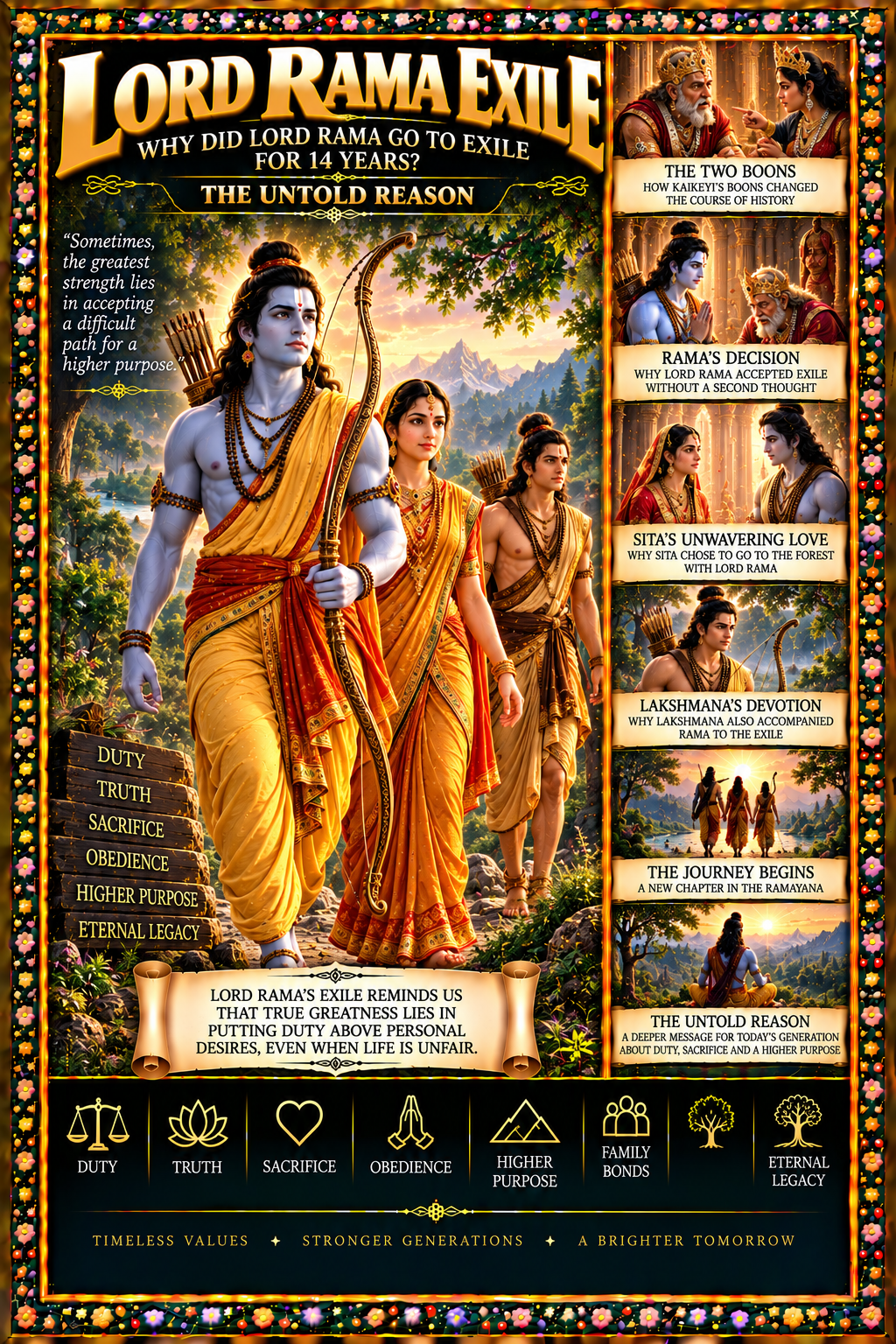
Lord Rama Exile: Why Did Lord Rama Go to Exile for 14 Years? The Untold Reason
The story of Lord Rama Exile is one of the most pivotal turning points in the epic Ramayana. On the very eve of Crown Prince Rama’s grand coronation as King of Ayodhya, He was suddenly banished to the dangerous Dandaka forest for 14 years. While most readers are familiar with the surface political drama involving Queen Kaikeyi’s two boons and the wicked instigation of the maid Manthara, ancient Vedic scriptures, Puranas, and astrological treatises reveal far deeper, cosmic, legal, and karmic reasons behind this divine Lord Rama Exile. Why was Lord Rama exiled? Why did He accept it without a single word of protest? And why was the duration of Lord Rama Exile set precisely to 14 years instead of 10 or 20? In this article, we uncover the untold cosmic secrets, ancient legal statutes, and divine curses that ordained the 14-year Lord Rama Exile. The Surface Story of Lord Rama Exile: Kaikeyi’s Boons To understand the deeper secret reasons, one must first recall the narrative context established in the Ayodhya Kanda of Valmiki Ramayana regarding Lord Rama Exile. The Battle Boon Given to Queen Kaikeyi Years before the coronation, King Dasharatha fought alongside the Devas against the demon Sambasura…

- Mythology , Ramayanam
- January 13, 2026
- 440 views
A Model of Ethical Governance: Rama Rajya Explained
Introduction: Rama Rajya Explained The idea of Rama Rajya has echoed through Indian civilization for centuries. Often referred to as the ideal form of governance, Rama Rajya represents a system where justice, morality, accountability, and compassion guide leadership. Rooted in the Ramayana, Rama Rajya is not merely a religious or mythological concept. It is a governance philosophy—one that continues to influence political thought, public administration, and ethical leadership even today. For students, professionals, administrators, and leaders, understanding Rama Rajya offers timeless lessons in ethical governance and responsible leadership. What Is Rama Rajya? Rama Rajya refers to the period of governance under Lord Rama, king of Ayodhya, where society functioned in harmony under the principles of dharma (righteousness). Key Characteristics of Rama Rajya: In Rama Rajya, the king was not above the law—he was its first servant. Core Principles of Rama Rajya Dharma as the Foundation of Governance In Rama Rajya, dharma guided every decision. Governance was not driven by power, personal gain, or political convenience but by moral responsibility. Lord Rama consistently chose duty over personal comfort—setting a benchmark for ethical leadership. Modern relevance:Ethical governance requires leaders to place constitutional values and public interest above personal or political agendas. Equality…

- Mythology , Ramayanam
- August 5, 2025
- 651 views
Hanuman: The Ramayana – The Unmatched Hero of the Ramayana
Hanuman: The Ramayana The Hindu god Hanuman, also known as Anjaneya, Bajrangbali, and Pavanputra, is one of the most beloved and revered figures in Hindu mythology. Celebrated for his unwavering devotion to Lord Rama, unparalleled strength, and selfless service, Hanuman plays a pivotal role in the epic Ramayana. From leaping across the ocean to Lanka in search of Sita to burning down the city of Ravana, his courage and loyalty continue to inspire millions. Hanuman: The Ramayana – In this comprehensive article, we explore Hanuman’s origins, key exploits, symbolism, and spiritual significance, uncovering why he remains a timeless symbol of devotion and heroism. Hanuman: The Ramayana in Modern Devotion The Hindu deity Hanuman is one of the most widely venerated in modern Hinduism. It is considered auspicious to perform special prayers and recite the Hanuman Chalisa on Tuesdays and Saturdays. Beyond religious rituals, Hanuman also inspires popular culture, from temple festivals to television adaptations of the Ramayana. His image carrying the mountain with Sanjeevani herb or leaping across the ocean continues to symbolize perseverance, service, and unwavering faith. Hanuman: The Ramayana Lessons from the Life Hanuman’s life imparts timeless lessons that resonate beyond religious boundaries: Hanuman: The Ramayana – His…
- Ramayanam
- July 21, 2025
- 515 views
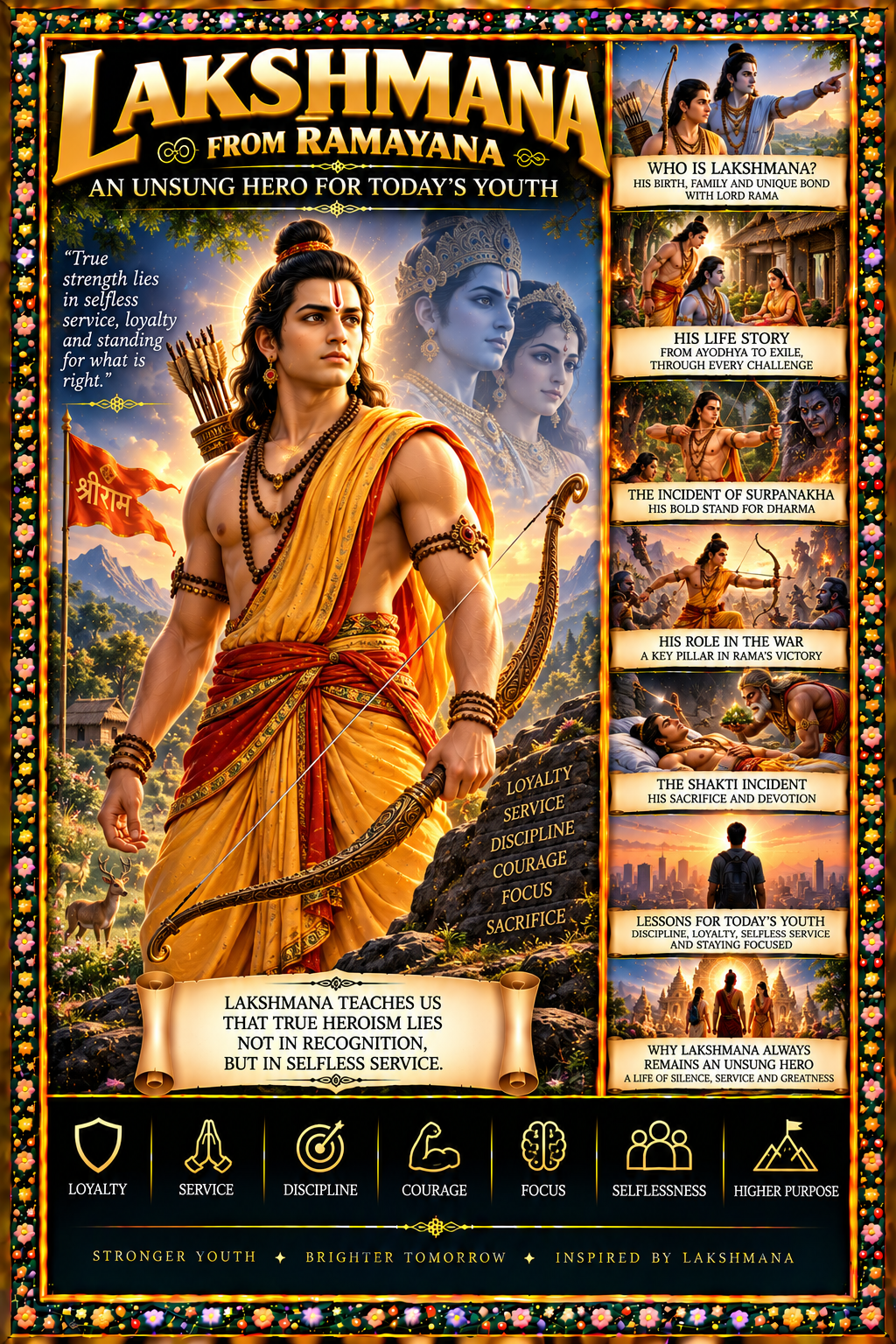
Lakshmana from Ramayana: An Unsung Hero for Today’s Youth
Lakshmana from Ramayana: In the timeless epic of the Ramayana, Lakshmana, the devoted younger brother of Lord Rama, stands not merely as a supporting figure but as a shining example of unwavering loyalty and selfless dedication, and courageous devotion. While Rama represents ideal kingship and dharma, Lakshmana represents ideal brotherhood and dedication. But how relevant is Lakshmana to today’s world, especially for the younger generation? Let’s explore. When Lord Rama was exiled for 14 years, Lakshmana voluntarily chose to go with him, leaving behind the luxuries of the palace. Inspiration:** Teaches us about selfless love, standing by our loved ones during difficult times, not just in good times. A forest home is built by Lakshmana from Ramayana In the forest, Lakshmana built a hut (Parnasala) for Rama and Sita with his own hands, serving them like a devoted son and brother. Inspiration:** Shows the dignity of labor, and how even princes can be humble when driven by love and duty. Drawing the Lakshmana Rekha Before leaving to look for Rama, Lakshmana drew a protective line (Lakshmana Rekha) around their home and warned Sita not to cross it. some changes now Inspiration:** A powerful metaphor for setting personal boundaries and safety…
- Ramayanam
- July 16, 2025
- 573 views
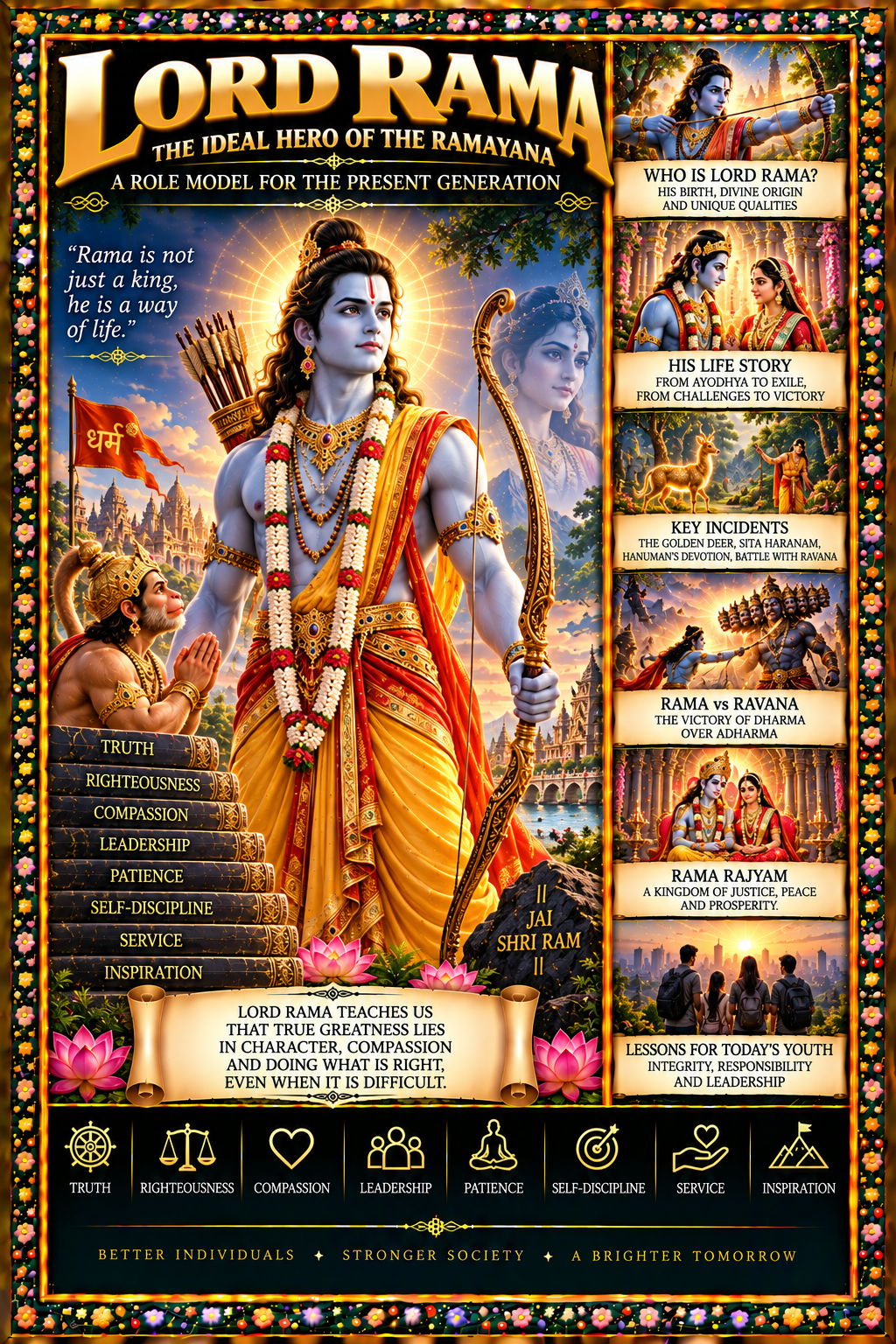
Lord Rama: The Ideal Hero of the Ramayana – A Role Model for the Present Generation
The Ideal Hero of the Ramayana: As the seventh avatar of Lord Vishnu, Lord Rama is more than just a mythological hero; he is a symbol of how to live with dharma (duty), values, and integrity. But why should we still talk about Rama in the 21st century? What makes his story relevant to today’s youth and society? Lord Rama’s life and qualities offer inspiration and guidance for the present generation. What is the story of Lord Rama? Lord Rama is known for: The “Ramayana”, written by Valmiki, tells the story of Rama’s journey — from exile and hardship to defeating evil and upholding righteousness. The Ideal Hero of the Ramayan : Why Lord Rama Still Matters Today? Dharma Over Desire He chose duty over comfort, truth over power. Modern Lesson: In today’s world of shortcuts and quick rewards, Rama teaches us the importance of doing the right thing, even when it’s hard. The Ideal Hero of the Ramayana: Respect for Relationships Lord Rama loved and respected his parents, stood by his brothers, and treated even the humblest citizens with kindness. Modern Lesson: In a fast-moving digital world, Lord Rama reminds us to value our family, friendships, and community ties.…