Raja Ratnam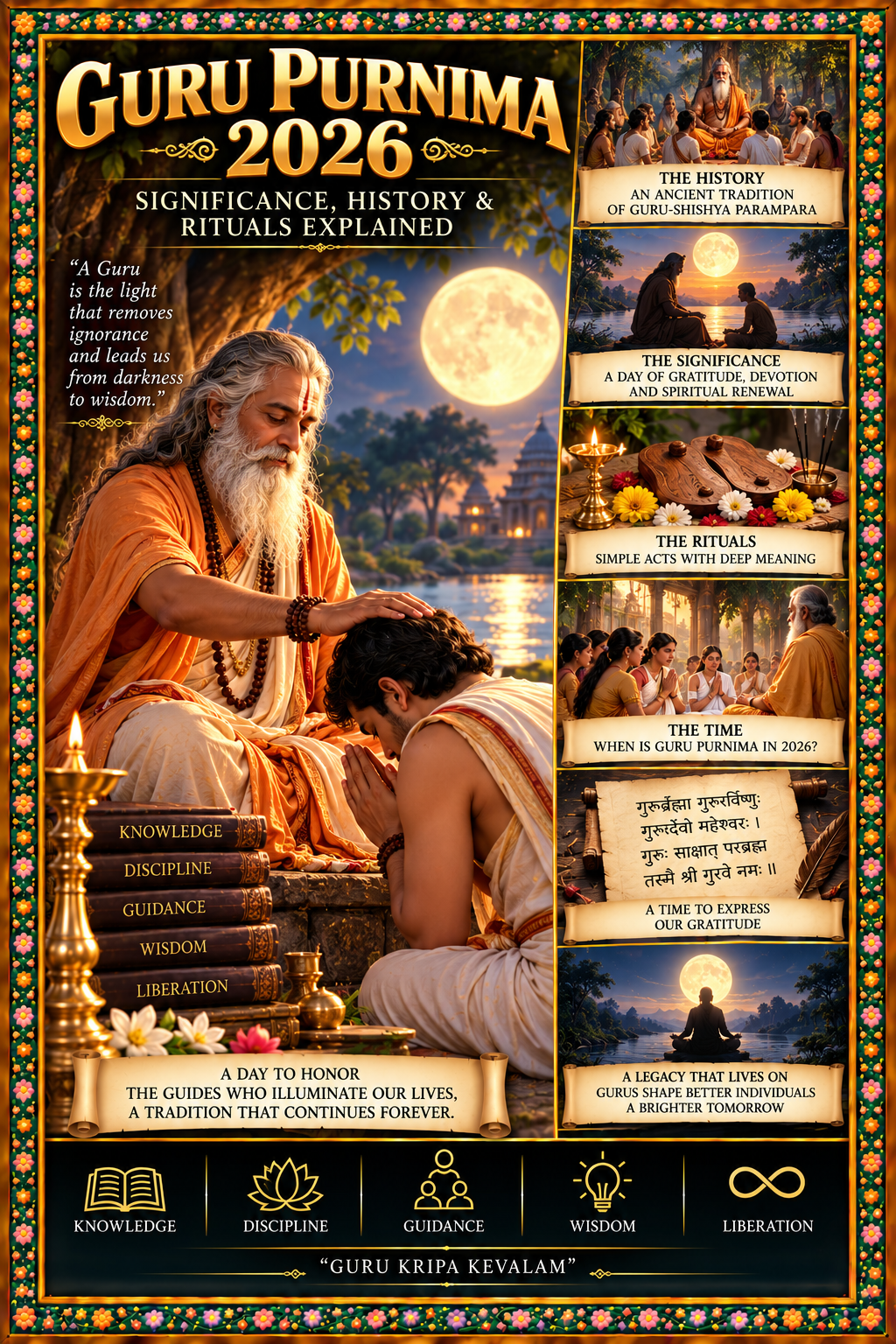
About the Author
Under the bright silver light of the full moon in the sacred month of Ashadha, disciples and seekers across India bow in gratitude before their spiritual teachers. Known as Guru Purnima or Vyasa Purnima, this auspicious day celebrates the birth of Sage Veda Vyasa, the great master who organized the four Vedas and composed the Mahabharata. In Indian tradition, a true Guru does not merely impart academic knowledge; they serve as a gentle light dispelling the darkness of ignorance, guiding young minds toward wisdom, humility, and purpose.
Raja Ratnam believes in making mythology accessible and meaningful for modern readers,
helping them understand the moral, ethical, and cultural significance behind characters like Rama, Laxman, Shani Deva, and many more.
Connect with the author: info@ratnamstrategy.com
Introduction
Guru Purnima is one of the most sacred festivals in the Hindu, Buddhist, and Jain traditions. Celebrated on the full moon day (Purnima) of the Hindu month of Ashadha, Guru Purnima is dedicated to honoring teachers, spiritual gurus, mentors, and guides who illuminate our lives with wisdom and knowledge.
In Indian culture, a Guru is considered greater than even parents because while parents give birth to the body, a Guru awakens the soul. The festival reminds us to express gratitude towards those who shape our character, values, and spiritual journey.
Whether your Guru is a spiritual master, a school teacher, a parent, or a mentor, Guru Purnima is a beautiful occasion to seek blessings and renew your commitment to learning and self-improvement.
What is Guru Purnima?
Guru Purnima is a traditional Hindu festival celebrated to pay respect to Gurus. The word “Guru” comes from Sanskrit:
- Gu means darkness.
- Ru means remover.
Thus, Guru means “the one who removes darkness and leads us toward knowledge.”
This auspicious day also commemorates the birth anniversary of Maharishi Ved Vyasa, the compiler of the Vedas and the author of the Mahabharata. Hence, Guru Purnima is also known as Vyasa Purnima.
For official cultural and historical archives, visit the Ministry of Culture, Government of India.
Why is Guru Purnima Celebrated?
Guru Purnima celebrates the eternal bond between teacher and disciple.
The day is observed for several important reasons:
- To honor spiritual Gurus.
- To remember Maharishi Ved Vyasa.
- To seek blessings for wisdom.
- To express gratitude toward teachers.
- To begin spiritual practices.
- To renew dedication toward learning.
It is believed that sincere prayers offered on Guru Purnima remove ignorance and open the path toward knowledge and enlightenment.
The Story Behind Guru Purnima
Maharishi Ved Vyasa and Guru Purnima
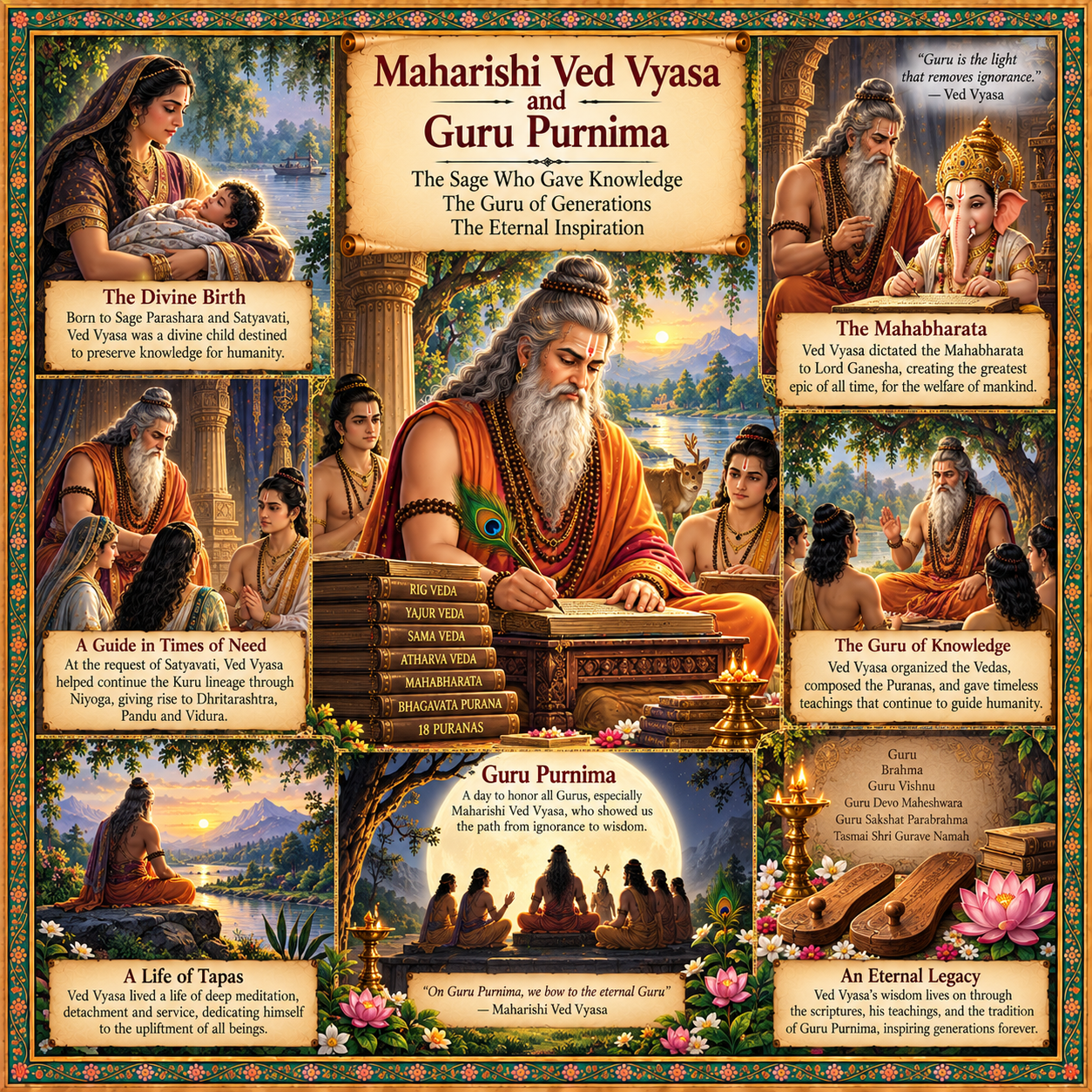
According to Hindu scriptures, Maharishi Ved Vyasa was born on Ashadha Purnima.
His contributions include:
- Dividing the Vedas into four parts.
- Writing the Mahabharata.
- Composing the eighteen Puranas.
- Authoring the Brahma Sutras.
Because of his immense contribution to Sanatana Dharma, he is regarded as the “Adi Guru” (First Guru). Therefore, devotees worship Vyasa on Guru Purnima.
First Guru – Lord Shiva
Another tradition believes Lord Shiva became the first Guru (Adi Yogi) on this day.
After attaining enlightenment, Lord Shiva shared yogic knowledge with the seven sages (Saptarishis), making them the first disciples.
This event marks the beginning of the Guru-Shishya tradition.
Spiritual Importance
Guru Purnima has immense spiritual significance.
A Guru helps us:
- Understand life’s purpose.
- Remove ignorance.
- Gain self-confidence.
- Practice meditation.
- Follow Dharma.
- Attain inner peace.
- Move closer to liberation (Moksha).
The Guru is considered a bridge between the devotee and the Divine.
Importance of Guru in Hinduism
The famous Sanskrit verse beautifully explains the greatness of a Guru:
Guru Brahma Guru Vishnu
Guru Devo Maheshwara
Guru Sakshat Parabrahma
Tasmai Shri Gurave Namah
Meaning:
The Guru represents Brahma, Vishnu, and Shiva. The Guru is the Supreme Reality itself. Salutations to that revered Guru.
This verse is recited during Guru Purnima prayers across India.
Guru Purnima Rituals
Wake Up Early
Before sunrise, devotees take holy baths.
Clean the House and Prayer Room
The house and puja area are cleaned to welcome divine blessings.
Worship the Guru
Offer:
- Flowers
- Fruits
- Incense
- Sandalwood paste
- Garland
- Dakshina (offering)
Touch the Guru’s feet and seek blessings.
Worship Maharishi Ved Vyasa
Many devotees perform Vyasa Puja by offering flowers and chanting prayers.
Chant Mantras
Popular chants include:
- Guru Mantra
- Om Gurave Namah
- Guru Gita
- Vishnu Sahasranama
Read Sacred Scriptures
Reading spiritual texts like:
- Bhagavad Gita
- Mahabharata
- Ramayana
- Bhagavata Purana
is considered highly auspicious.
Charity and Donation
Donating food, clothes, books, or educational materials earns immense spiritual merit.
Guru Purnima Fasting Rules
Many devotees observe fasting throughout the day.
Common fasting practices include:
- Fruit-only diet
- Milk and nuts
- Water fasting
- Satvik meals after moonrise
Avoid:
- Onion
- Garlic
- Alcohol
- Non-vegetarian food
- Negative thoughts
The real essence of fasting lies in self-discipline and devotion.
Puja Procedure
Step 1
Take a bath and wear clean clothes.
Step 2
Light a lamp before the deity.
Step 3
Offer flowers to Guru’s picture or feet.
Step 4
Recite Guru Mantra.
Step 5
Read Guru Gita or Bhagavad Gita.
Step 6
Meditate for at least 15 minutes.
Step 7
Seek blessings from elders and teachers.
What are the ways in which India celebrates Guru Purnima?
Different regions celebrate Guru Purnima in unique ways.
North India
Ashrams organize satsangs, bhajans, and spiritual discourses.
South India
Vyasa Puja and Vedic chanting are common.
Maharashtra
Devotees visit temples dedicated to Dattatreya and Sai Baba.
Buddhist Monasteries
Monks deliver sermons and meditation sessions.
Jain Temples
Followers remember Lord Mahavira’s first disciple Gautam Swami.
Guru Purnima in Buddhism
The day Guru Purnima is celebrated is the day Lord Buddha first preached at Sarnath after enlightenment.
During this event, the “Wheel of Dharma” turns.
Monasteries conduct meditation, chanting, and teachings on this day.
Guru Purnima in Jainism
Jains celebrate Guru Purnima in remembrance of Gautam Swami, who became the first disciple of Lord Mahavira.
The day emphasizes humility, discipline, and spiritual learning.
Benefits of Celebrating Guru Purnima
Observing Guru Purnima brings numerous spiritual and personal benefits:
- Enhances wisdom.
- Removes ignorance.
- Improves concentration.
- Brings peace of mind.
- Strengthens Guru-disciple relationship.
- Encourages lifelong learning.
- Inspires discipline.
- Attracts divine blessings.
- Develops humility.
- Promotes gratitude.
Life Lessons
Guru Purnima teaches timeless values:
- Respect knowledge.
- Be grateful to your teachers.
- Continue learning throughout life.
- Practice humility.
- Serve society.
- Live with compassion.
- Seek truth over ego.
- Follow Dharma.
- Share knowledge with others.
- Stay connected to your spiritual path.
Modern Relevance
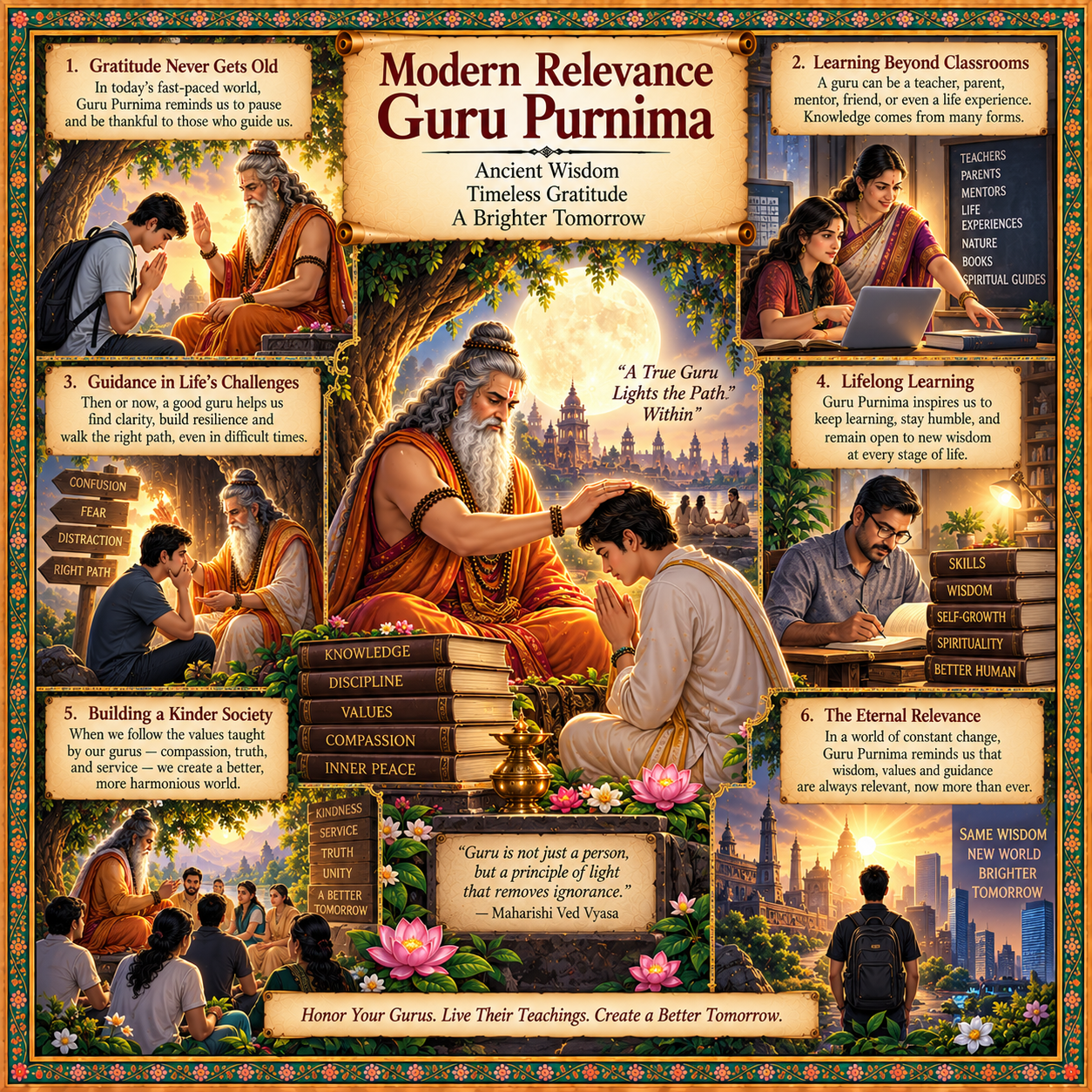
In today’s fast-paced world, Guru Purnima reminds us that true success is incomplete without wisdom and values. A Guru can be anyone who inspires positive transformation – teachers, parents, mentors, coaches, or spiritual guides.
The festival encourages lifelong learning, ethical living, and gratitude toward those who help us grow intellectually, emotionally, and spiritually.
Conclusion
Guru Purnima is much more than a religious festival; it is a celebration of wisdom, humility, gratitude, and lifelong learning. By honoring our Gurus and mentors, we acknowledge the light they bring into our lives. Whether through prayers, meditation, charity, or simply expressing heartfelt thanks, celebrating Guru Purnima strengthens our connection with knowledge and spirituality.
May this sacred occasion inspire everyone to walk the path of truth, compassion, and self-realization under the guidance of enlightened teachers.
Related Sacred Topics & Cultural Heritage: For further spiritual exploration, read about Lord Rama’s ideal life story. For further spiritual exploration, read about the 14-year exile of Lord Rama. For further spiritual exploration, read about Ravana’s story in the Ramayana.
Frequently Asked Questions (FAQs)
1. What is Guru Purnima?
Guru Purnima is a festival dedicated to honoring teachers, spiritual Gurus, and mentors.
2. Why is Guru Purnima celebrated?
It is celebrated to express gratitude to Gurus and commemorate Maharishi Ved Vyasa.
3. Who was Maharishi Ved Vyasa?
He compiled the Vedas and authored the Mahabharata.
4. Why is Guru called greater than God?
Because a Guru shows the path to realizing God through wisdom.
5. What is another name for Guru Purnima?
Vyasa Purnima.
6. Which month is Guru Purnima celebrated?
Ashadha month on the full moon day.
7. Can students celebrate Guru Purnima?
Yes, students honor their teachers and mentors.
8. Is fasting compulsory?
No, fasting is optional and based on personal devotion.
9. Which mantra is recited on Guru Purnima?
“Guru Brahma Guru Vishnu…” and “Om Gurave Namah.”
10. What should be offered during Guru Puja?
Flowers, fruits, incense, sweets, and Dakshina.
11. Is Guru Purnima celebrated by Buddhists?
Yes, it commemorates Buddha’s first sermon.
12. Do Jains celebrate Guru Purnima?
Yes, they honor Gautam Swami.
13. Why does Guru Purnima have spiritual benefits?
Wisdom, inner peace, discipline, and divine blessings.
14. Can parents be considered Gurus?
Yes, parents are regarded as the first teachers in life.
15. Is Guru Purnima a public holiday?
It depends on the state and local government regulations.
16. Which scriptures are read on Guru Purnima?
Bhagavad Gita, Guru Gita, Ramayana, and Bhagavata Purana.
17. Can I celebrate Guru Purnima without a spiritual Guru?
Yes, you can honor teachers, parents, mentors, and guides.
18. What charity is recommended on Guru Purnima?
Donating books, food, clothes, or educational materials.
19. What color clothes are ideal for Guru Purnima?
Traditional white, yellow, or saffron attire is considered auspicious.
20. What is the main message of Guru Purnima?
To respect knowledge, express gratitude, and follow the path of wisdom.