Raja Ratnam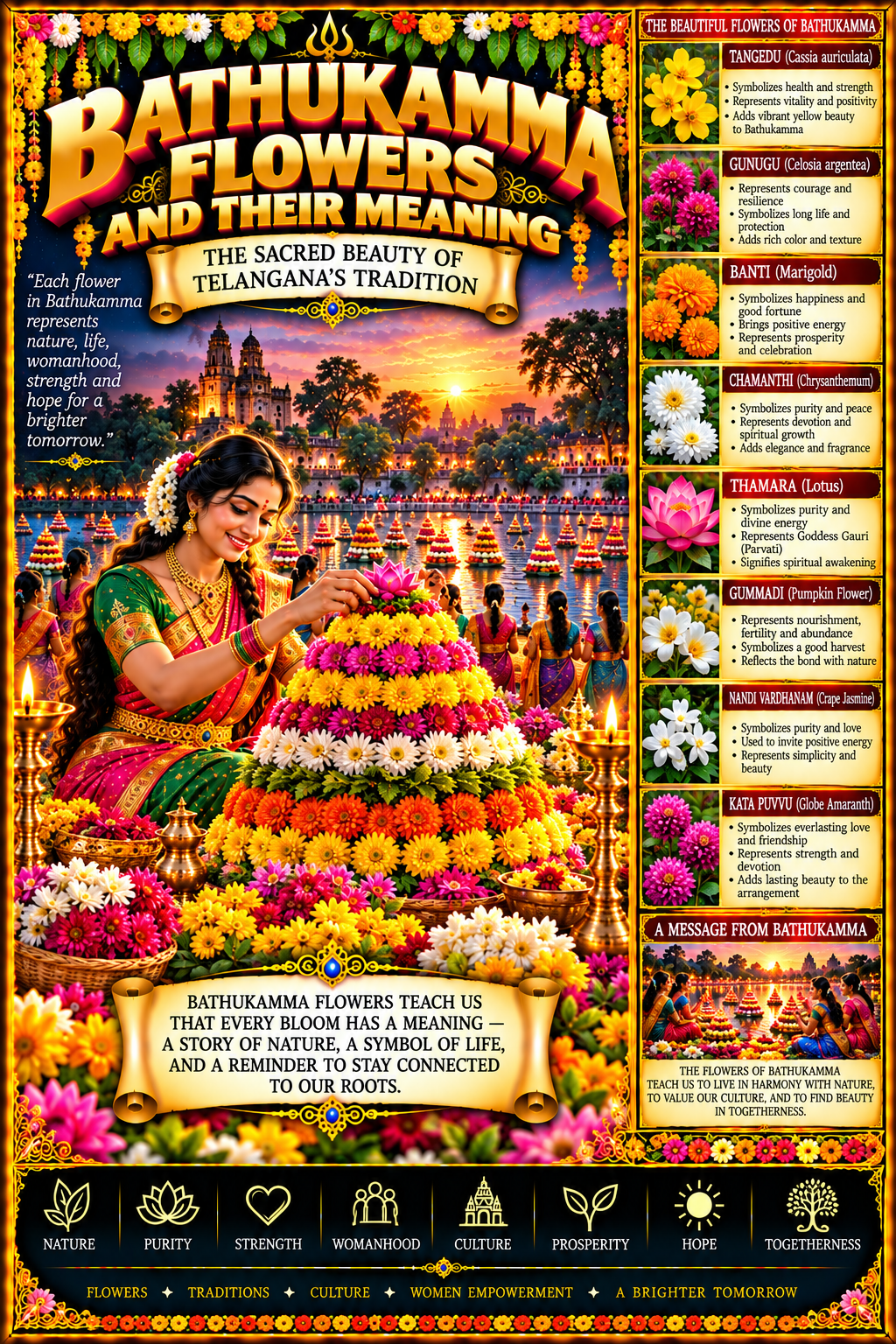
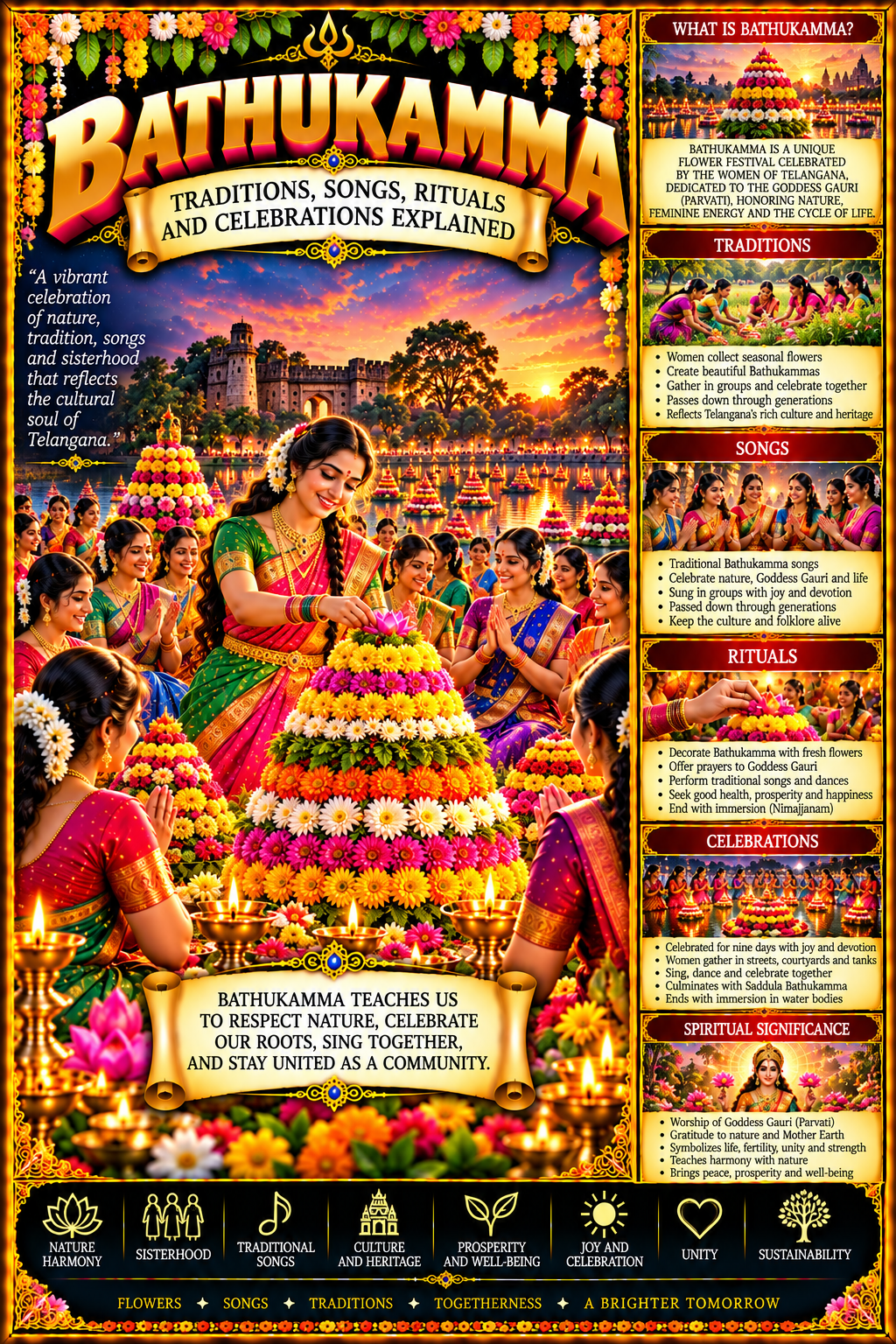
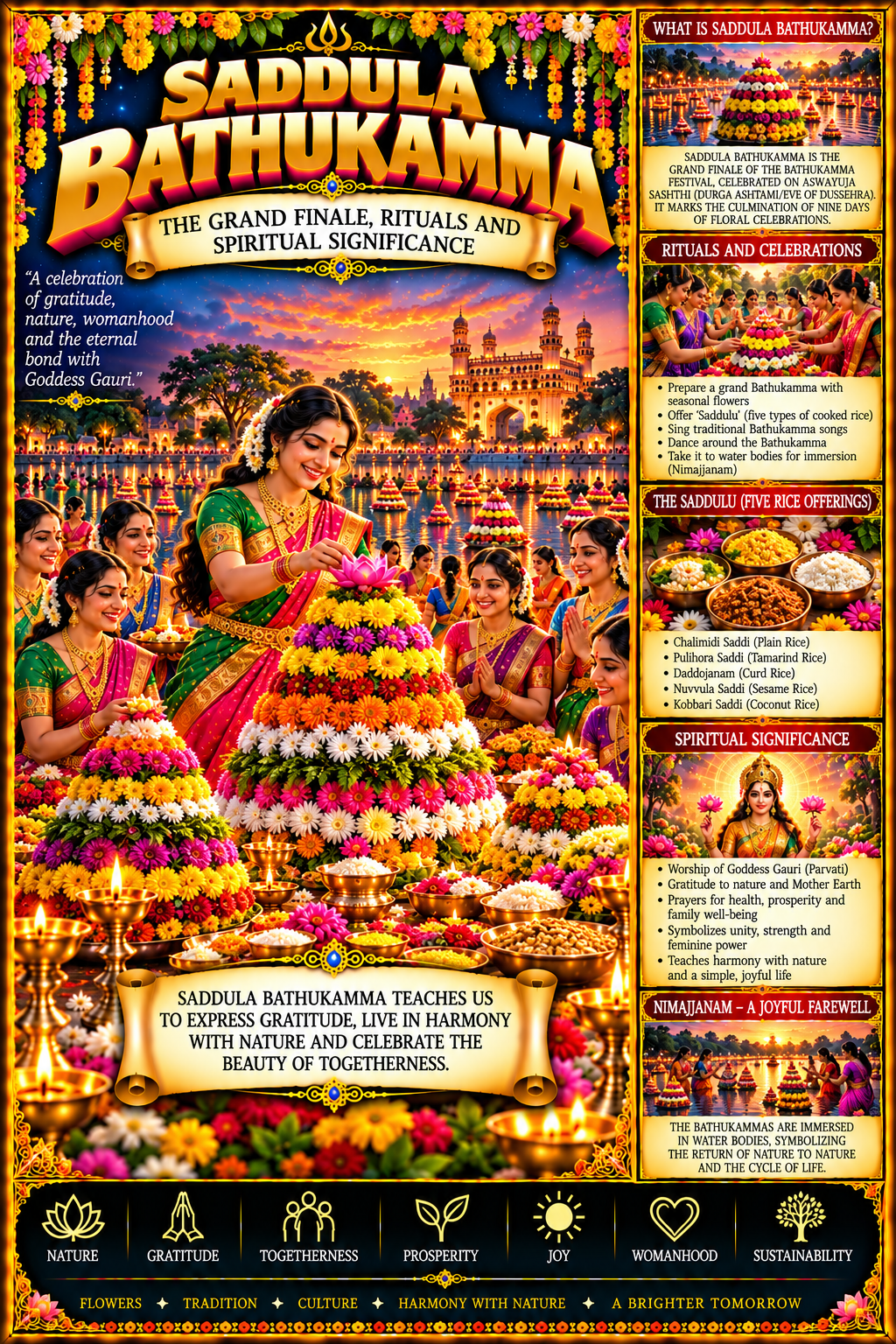
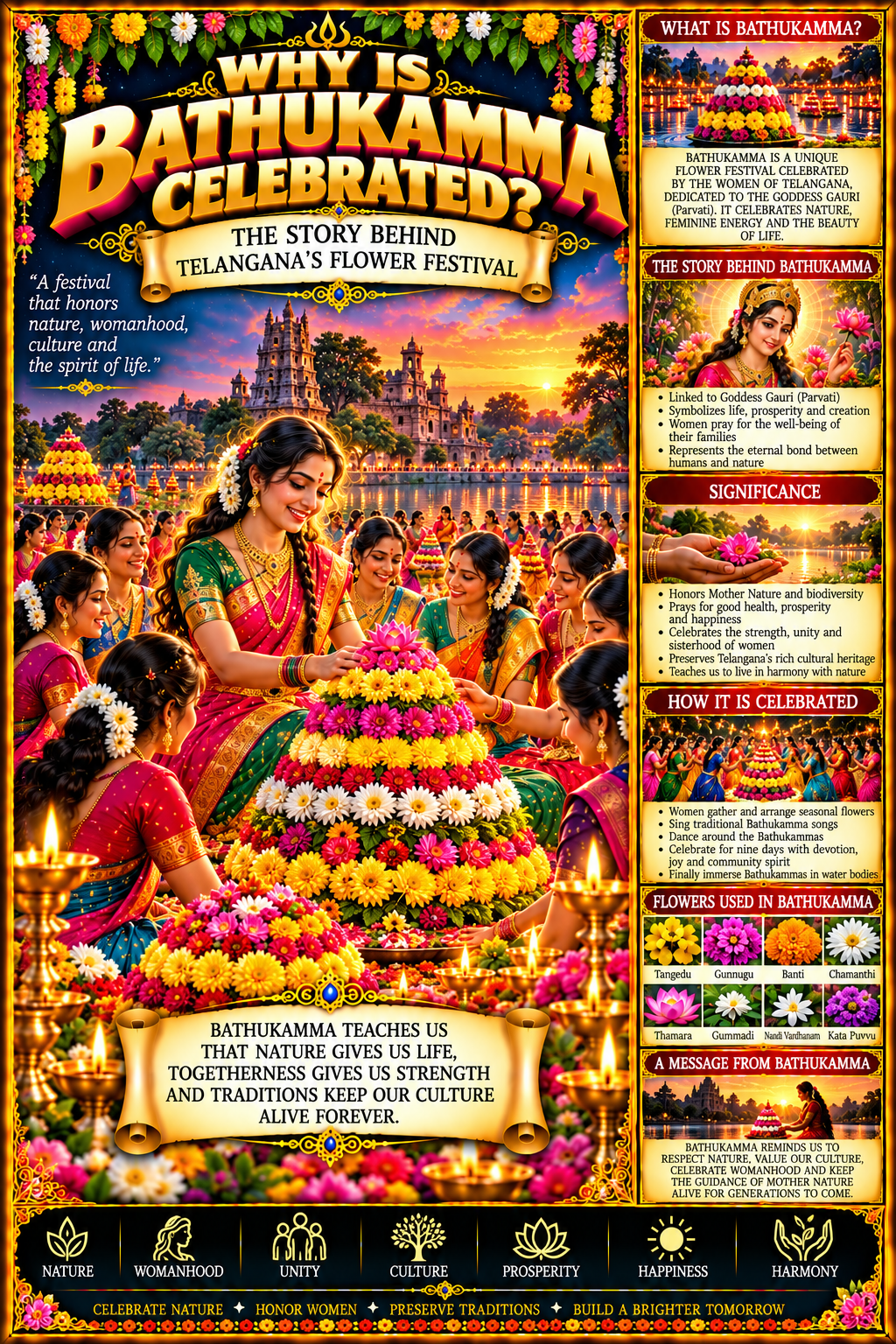
Telangana’s Tradition: In the vibrant cultural heritage of Southern India, exploring Bathukamma Flowers and Their Meaning unveils an awe-inspiring synthesis of botanical science, spiritual symbolism, and community sisterhood. celebrated predominantly across Telangana during the glorious autumn season, Bathukamma is the world’s premier floral festival where living blossoms—rather than inanimate stones or metals—embody the Supreme Mother Goddess. As explained in our deep-dive into why Bathukamma is celebrated in Telangana, every blossom gathered from the scrub jungles and agrarian fields of the Deccan plateau holds specific mythological sanctity and medicinal healing potency.
Celebrated over nine days during Sharad Navratri, detailed in our Hindu festival calendar guide, the floral pyramid mirrors the cosmic temple (Gopuram) or Mount Meru. From the bright yellow petals of Tangedu to the feathery white plumes of Gunugu, understanding Bathukamma Flowers and Their Meaning allows devotees and seekers to appreciate how Telangana’s ancestors designed an eco-restorative ritual that cleanses lakes, shields human health from seasonal autumn fevers, and honors feminine divinity.
According to cultural archives preserved by the official cultural portal of Telangana Tourism, Bathukamma honors nature’s bountiful wild harvest, offering flowers back to the water reservoirs in an unbroken cycle of ecological gratitude.
Telangana’s Tradition : Bathukamma Flowers and Their Meaning: Spiritual Symbolism and Healing Power
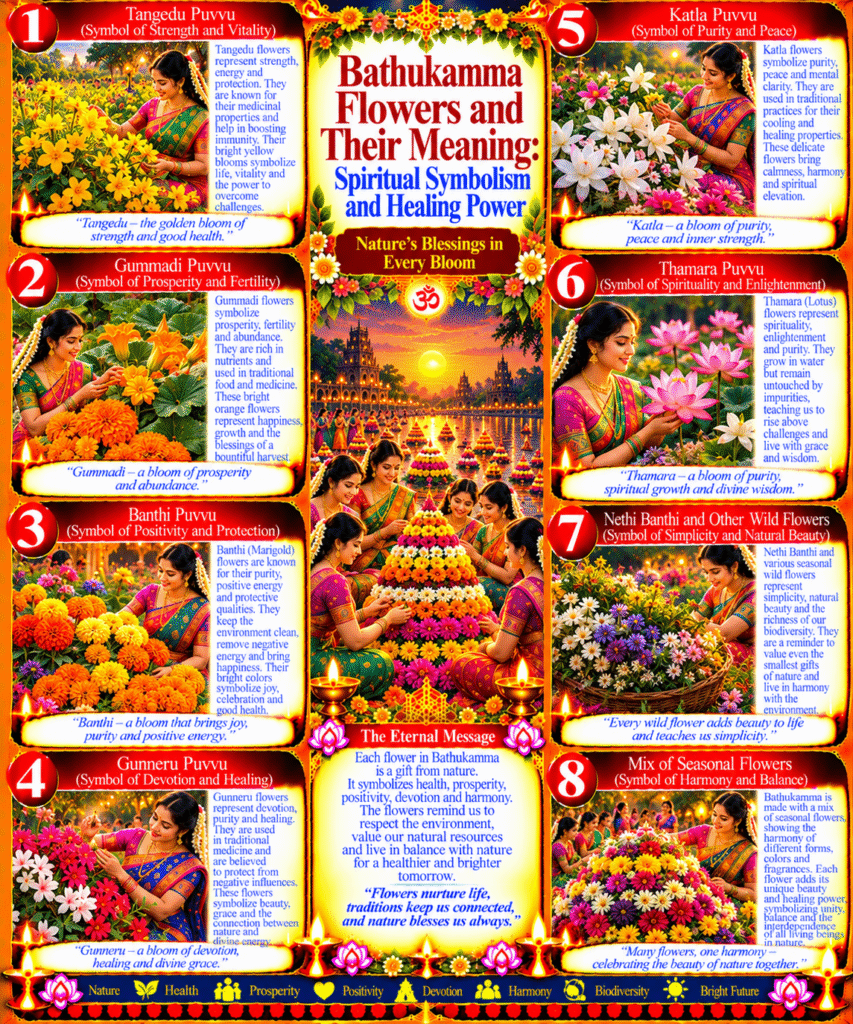
Each blossom woven into the concentric circular tiers of the Bathukamma pyramid carries profound metaphysical, cosmological, and Ayurvedic significance. Here is the canonical exploration of Bathukamma Flowers and Their Meaning:
Telangana’s Tradition : 1. The Sacred Wild Flowers of the Deccan Plateau
Tangedu Puvvu (Senna auriculata / Tanner’s Cassia)
Tangedu is universally revered as the soul of Bathukamma and was officially designated the State Flower of Telangana. Blooming in rich golden-yellow clusters across dry arid soils, Tangedu represents divine feminine radiance, maternal compassion, and spiritual illumination.
Spiritual Meaning: Tangedu embodies Goddess Mahalakshmi’s golden glow. It signifies spiritual wealth, protection of the household, and the resilient ability to flourish even in harsh climatic environments.
Medicinal and Pharmacological Properties
In classical Ayurveda, Tangedu is considered a divine panacea (Rasayana). The flowers, bark, and leaves regulate blood sugar levels, treat chronic skin disorders, and soothe urinary tract inflammations.
Aquatic Tannins and Water Disinfection
Submerging massive quantities of Tangedu blossoms into communal lakes during the final immersion ritual releases soluble tannins and polyphenols that naturally disinfect water, eradicating fungal spore blooms and seasonal pathogens.
Gunugu Puvvu (Celosia argentea / Silver Cock’s Comb)
Gunugu is a wild feathery blossom growing prolifically along paddy bunds and open pastures. Its tall, silvery-white spikes crowned with soft pink tips form the essential architectural framework of the stepped Bathukamma pyramid.
Spiritual Meaning: Gunugu signifies selfless humility, community solidarity, and spiritual steadfastness. Its unyielding stem provides structure that holds diverse blossoms together, symbolizing the matriarch who unites her family.
Bio-Absorbent and Healing Virtues
Traditionally, rural women soak Gunugu in organic vegetable dyes extracted from turmeric and indigo to produce dazzling purple, green, and crimson tones.
Ecological Soil and Wetland Cleansing
Botanical studies show Celosia argentea possesses phytoremediation capabilities, absorbing excess nitrogen and heavy metals from soil and gently biodegrading without releasing toxicity into aquatic food chains.
Gummadi Puvvu (Pumpkin Blossom / Cucurbita)
The luminous golden-orange pumpkin flower occupies the crowning position at the absolute summit of the Bathukamma floral tower.
Spiritual Meaning: Gummadi Puvvu symbolizes fertility, cosmic solar energy, and abundant agricultural harvest. Because it forms a chalice-like cup, it is chosen to seat the sacred Gouramma (a conical idol of Goddess Gauri crafted lovingly from pure turmeric paste).
Ayurvedic and Nutritional Significance
Pumpkin blossoms are loaded with lutein, beta-carotene, and vitamin A, traditionally prepared in postpartum convalescent broths to restore maternal vitality.
Symbolic Enthronement of Goddess Gauri
Enshrining Gouramma within the blooming petals of Gummadi represents the Mother of the Universe taking her royal seat at the epicenter of worldly creation.
Telangana’s Tradition : 2. The Cultivated Fragrant Blossoms
Alongside wild agrarian flora documented in botanical documentation of Bathukamma (Wikipedia), several garden-cultivated flowers are woven into alternate concentric bands:
Banthi Puvvu (Marigold / Tagetes)
Ranging from fiery saffron to golden yellow, Marigolds provide dramatic visual contrast and structure. Spiritually, Banthi signifies surrender of the ego, courage, and divine surrender to Shakti.
Aromatic Defense: Essential oils from marigold petals contain natural terpenes and limonene that repel mosquitoes, gnats, and flies, naturally shielding thousands of women gathered outdoors for dusk dances.
Chamanthi Puvvu (Chrysanthemum)
With its symmetrical petals and cooling floral perfume, Chamanthi is available in pristine white, cream, and yellow varieties. Spiritually, it symbolizes longevity, mental serenity, and domestic peace.
Therapeutic Calming: The subtle aroma of Chrysanthemum calms agitated nervous systems, counteracting emotional fatigue and promoting deep mental tranquility.
Katla, Ganneru, and Mandhara Blossoms
Wild morning glory (Katla Puvvu) with its deep purple hues represents unconditional devotion (Bhakti). Crimson Hibiscus (Mandhara Puvvu) represents primordial Shakti, courage, and circulatory health. Oleander (Ganneru) embodies divine protection against negative planetary vibrations.
Concentric Geometry: The Sacred Mandala Architecture of Bathukamma
Making a Bathukamma is not an arbitrary floral heap; it is an exacting sacred geometry that mirrors the Sri Yantra and traditional Hindu temple architecture:
- The Foundation (Peetham): Constructed on a wide bronze or brass platter called a Tambalam, covered with broad pumpkin or lotus leaves that insulate the floral moisture.
- Concentric Lower Rings: Broad circular rings of hardy Tangedu and Gunugu are arranged facing outward with stems oriented toward the central axis.
- Ascending Gradations: Layer upon layer of contrasting floral colors ascend in diminishing diameters, creating a stepped stepped pyramid reminiscent of Dravidian temple vimanas.
- The Apex (Shikharam): Crowning the top layer is the golden Gummadi flower cradling the turmeric Gouramma, consecrated with vermilion (Kumkum) and akshatas.
This stepped architecture echoes the nine nights of Navratri, mirroring the devotee’s spiritual ascent culminating in the worship of Maa Mahagauri during Navratri and the glorious celebration of Dasara and Vijayadashami.
Ecological Purification: Why Floral Immersion Heals Village Lakes

Research published by the Ministry of Culture, Government of India highlights that Bathukamma is perhaps India’s most scientifically sophisticated eco-festival. Unlike chemical idols that contaminate aquatic ecosystems, Bathukamma performs vital post-monsoon water treatment.
Much like the bio-reverence seen in the eco-friendly water immersion rituals of Ganesh Chaturthi, Bathukamma’s immersion (Nimajjanam) restores ecological vitality:
- Algae Bloom Suppression: Active bio-flavonoids in Senna auriculata retard rapid blue-green algae growth that suffocates fish in stagnant ponds.
- Heavy Metal Bio-Sorption: Fibrous stalks of Celosia bind trace heavy metal sediments, settling them harmlessly into lake mud beds.
- Natural Mosquito Control: Essential terpene oils floating on the water surface create an organic barrier that suffocates anopheles and aedes mosquito larvae.
- Nutrient Enrichment: The organic breakdown of leaves and petals replenishes organic matter, nourishing post-monsoon wetland micro-organisms.
Frequently Asked Questions About Bathukamma Flowers (20 Detailed FAQs)
1. What is the most important flower used in Bathukamma?
Tangedu Puvvu (Senna auriculata / Tanner’s Cassia) is the most sacred flower. It is the official State Flower of Telangana, symbolizing Goddess Lakshmi and possessing powerful antibacterial properties.
2. What does Gunugu flower symbolize in the festival?
Gunugu (Celosia argentea) symbolizes humility, resilience, and unity. Its sturdy silvery-pink plumes form the architectural base that holds the entire floral pyramid upright.
3. Why is a pumpkin flower placed at the pinnacle of Bathukamma?
Gummadi Puvvu (Pumpkin flower) represents fertility, prosperity, and solar energy. Its open cup-like shape serves as the throne for the sacred turmeric Gouramma idol.
4. Why are Bathukamma flowers dyed in different colors?
Historically, rural women used natural organic dyes derived from turmeric, indigo, and forest bark to tint white Gunugu blossoms, enhancing the aesthetic contrast of the mandala without synthetic toxins.
5. What is the spiritual meaning behind using wild flowers instead of cultivated ones?
Wild flowers bloom naturally without artificial chemicals or pruning, signifying pure, untamed, unadulterated devotion offered directly to Mother Nature.
6. How do Bathukamma flowers purify lake water during immersion?
Blossoms like Tangedu and Gunugu release natural tannins and flavonoids into the water that inhibit bacterial pathogens, suppress mosquito larvae, and prevent algae blooms.
7. What is Gouramma, and what is it made of?
Gouramma is a small conical idol representing Goddess Gauri, handcrafted purely from natural turmeric powder and sanctified water, placed atop the floral tower.
8. Why are Marigolds (Banthi) included in Bathukamma?
Marigolds symbolize ego-surrender and spiritual sacrifice. Their pungent essential oils naturally repel mosquitoes and flies during outdoor evening community gatherings.
9. What does Chamanthi (Chrysanthemum) signify?
Chamanthi symbolizes longevity, mental tranquility, and marital harmony. Its cooling aroma soothes the mind and reduces stress.
10. Can any flower be used to make a Bathukamma?
Traditional customs prescribe only non-toxic, non-thorny wild and cultivated blooms. Thorny or poisonous flora are strictly avoided.
11. What is Katla Puvvu, and what is its significance?
Katla Puvvu is wild morning glory (Ipomoea). Its deep violet trumpet blossoms represent unconditional devotion and surrender to the Divine Mother.
12. What role does Mandhara (Hibiscus) play in Bathukamma?
Crimson Hibiscus represents the fierce protective energy of Goddess Durga / Kali, associated with blood circulation, vitality, and courage.
13. Why is the floral tower shaped like a stepped pyramid?
The stepped pyramid mirrors temple Gopurams and cosmic Mount Meru, symbolizing the spiritual evolution of the human soul reaching toward higher consciousness.
14. Who collects the flowers for Bathukamma?
Men, young boys, and farm hands venture into local fields, scrublands, and lakeshores to harvest the wild flowers, while women assemble the artistic pyramids.
15. What is the base tray used for arranging Bathukamma?
Women use a broad, circular brass or bronze plate called a Tambalam, lined with tender pumpkin or lotus leaves to retain floral moisture.
16. What happens to the turmeric Gouramma after lake immersion?
Women respectfully retrieve the wet turmeric Gouramma from the water before the flowers float away, applying the sanctified paste to their foreheads and necks as a protective blessing.
17. Why is Tangedu flower considered anti-diabetic in Ayurveda?
Senna auriculata contains active polyphenol glycosides that improve pancreatic insulin sensitivity and reduce oxidative stress in the bloodstream.
18. What sweet prasad is exchanged after flower immersion?
Women lovingly exchange Maleeda—a wholesome confectionery made from crushed whole wheat rotis, jaggery, pure ghee, sesame, and cardamom.
19. How many concentric floral tiers are built on Saddula Bathukamma?
On the grand 9th day, elaborate towers feature between five to eleven concentric tiers, often reaching towering heights of three to four feet.
20. What is the lasting ecological lesson of Bathukamma flowers?
Bathukamma proves that human cultural celebrations can actively enrich, heal, and detoxify nature rather than exploit or pollute it.