Raja Ratnam
- Kuru Dynasty
- April 18, 2026
- 218 views
King Kuru in Mahabharata: Ancestor of Kurus & The Legend of Kurukshetra Field
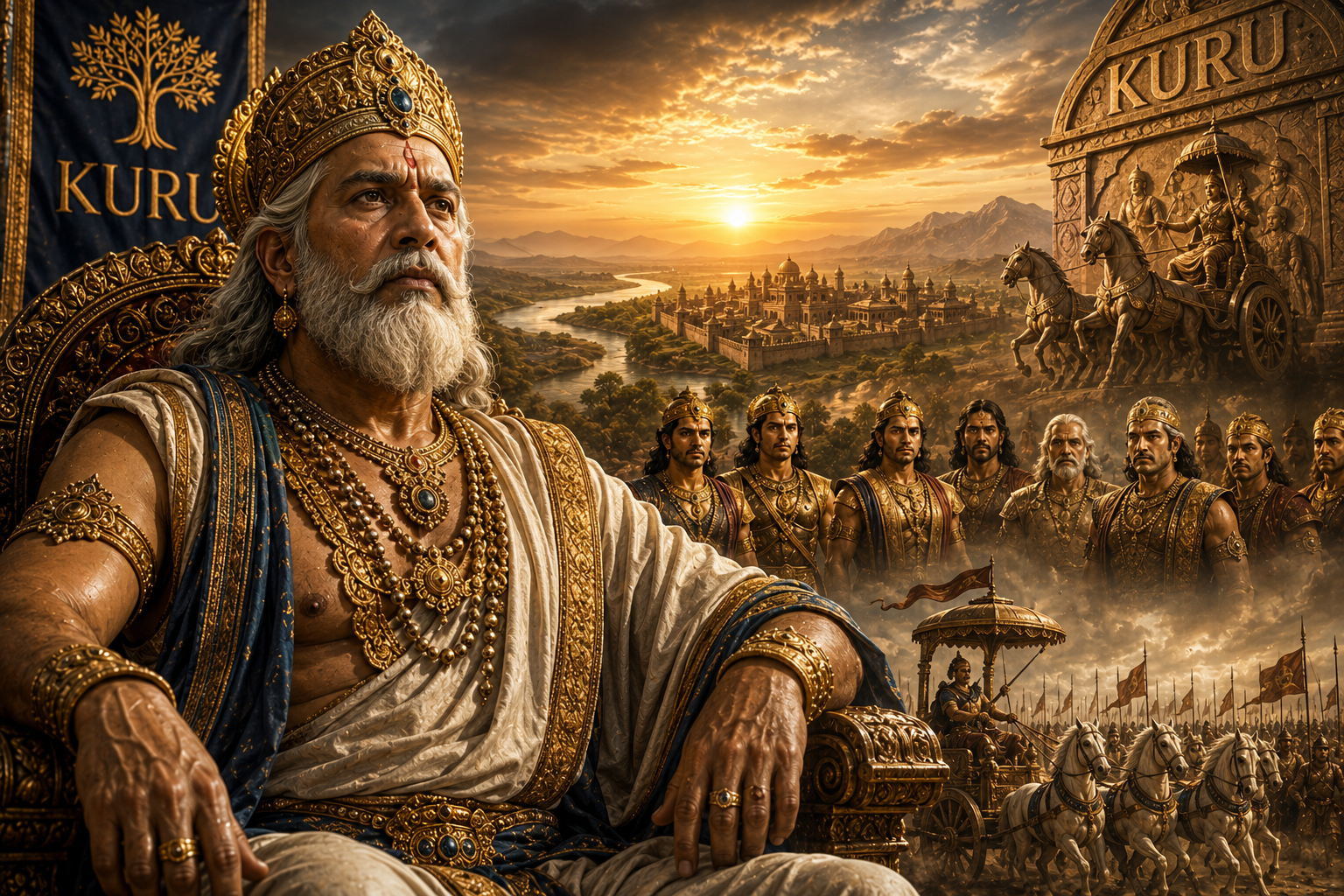
King Kuru in the Mahabharata – The Sacred King Who Shaped Destiny Introduction to King Kuru – King Kuru in Mahabharata In the vast and profound epic of the Mahabharata, many kings and warriors shaped destiny—but few left a legacy as enduring as King Kuru. Though not as widely discussed as Arjuna or Karna, King Kuru’s influence runs deep through the veins of the entire epic. He was not just a ruler—he was a visionary, a तपस्वी (ascetic king), and the founder of the legendary Kuru dynasty. Most importantly, he is the reason why the battlefield of the great war came to be known as Kurukshetra. For official cultural and historical archives, visit the Ministry of Culture, Government of India. Who Was King Kuru? – King Kuru in Mahabharata Lineage and Family Background King Kuru belonged to the lunar dynasty (Chandravansha), one of the most prestigious royal lineages in ancient India. He was the son of King Samvarana and Queen Tapati, the daughter of the Sun God. His lineage later gave rise to legendary figures like: Thus, King Kuru was the root of one of the most powerful dynasties in Indian mythology. The Great Vision of King Kuru – King…

- Kuru Dynasty , Mahabharatam , Mythology , Women Characters
- January 6, 2026
- 560 views
Satyavati in Mahabharata: Matsyagandha, Queen Mother & Architect of Kuru Destiny
Introduction Satyavati in the Mahabharatam popularly known as Sathavai in regional traditions, is one of the most powerful and influential women in the Mahabharatam. Though she does not fight on the battlefield of Kurukshetra, her decisions, ambitions, and maternal instincts shape the destiny of the Kuru dynasty and ultimately lead to the great war itself. Her life is a remarkable journey—from a humble fisherwoman to the Queen of Hastinapura, from a young girl cursed with a foul smell to the revered Queen Mother of one of India’s greatest epics. Birth and Early Life of Satyavati She was born to Uparichara Vasu, the king of Chedi, and a celestial nymph (apsara). Due to circumstances, she was abandoned at birth and later adopted by a fisherman chief named Dasharaja. In her early years, she was known as Matsyagandha, meaning “one who smells of fish”, because of her association with the fishing community. Despite her humble upbringing, possessed: These traits would later transform her destiny. Meeting Sage Parashara and the Birth of Vyasa One of the most crucial events in the Mahabharatam occurs when Satyavati meets Sage Parashara while ferrying him across a river. The Divine Boons Parashara, impressed by her beauty and…

- Kuru Dynasty
- January 4, 2026
- 555 views
King Shantanu in Mahabharata: Love for Ganga, Satyavati’s Vow & Legacy
Introduction King Shantanu is one of the most pivotal ancestral figures in the epic Mahabharata. Though he does not fight in the Kurukshetra war, his life decisions—rooted in love, fate, and dharma—shape the destiny of the Kuru dynasty. From his divine marriage with Goddess Ganga to his later union with Satyavati, Shantanu’s story explains the origins of Bhishma, the Kauravas, and the Pandavas. This full-length blog explores King Shantanu’s life, character, marriages, moral dilemmas, and lasting impact on the Mahabharata. Who Was King Shantanu? King Shantanu was the ruler of Hastinapura, descending from the illustrious Kuru lineage. Renowned for his compassion, righteousness, and humility, Shantanu was beloved by his subjects. His reign symbolized peace and prosperity, yet his personal life was marked by divine trials and emotionally difficult choices. Shantanu’s greatness lies not only in his kingship but also in how his personal vows and relationships shaped the future of Bharata’s greatest epic. King Shantanu and Goddess Ganga: A Divine Union While hunting near the river Ganga, Shantanu encountered a celestial woman of extraordinary beauty—Ganga Devi, the river goddess. He fell deeply in love, and she agreed to marry him on one strict condition:He must never question her actions. The…