Raja Ratnam
- Mythology , Ramayanam
- September 20, 2026
- 23 views
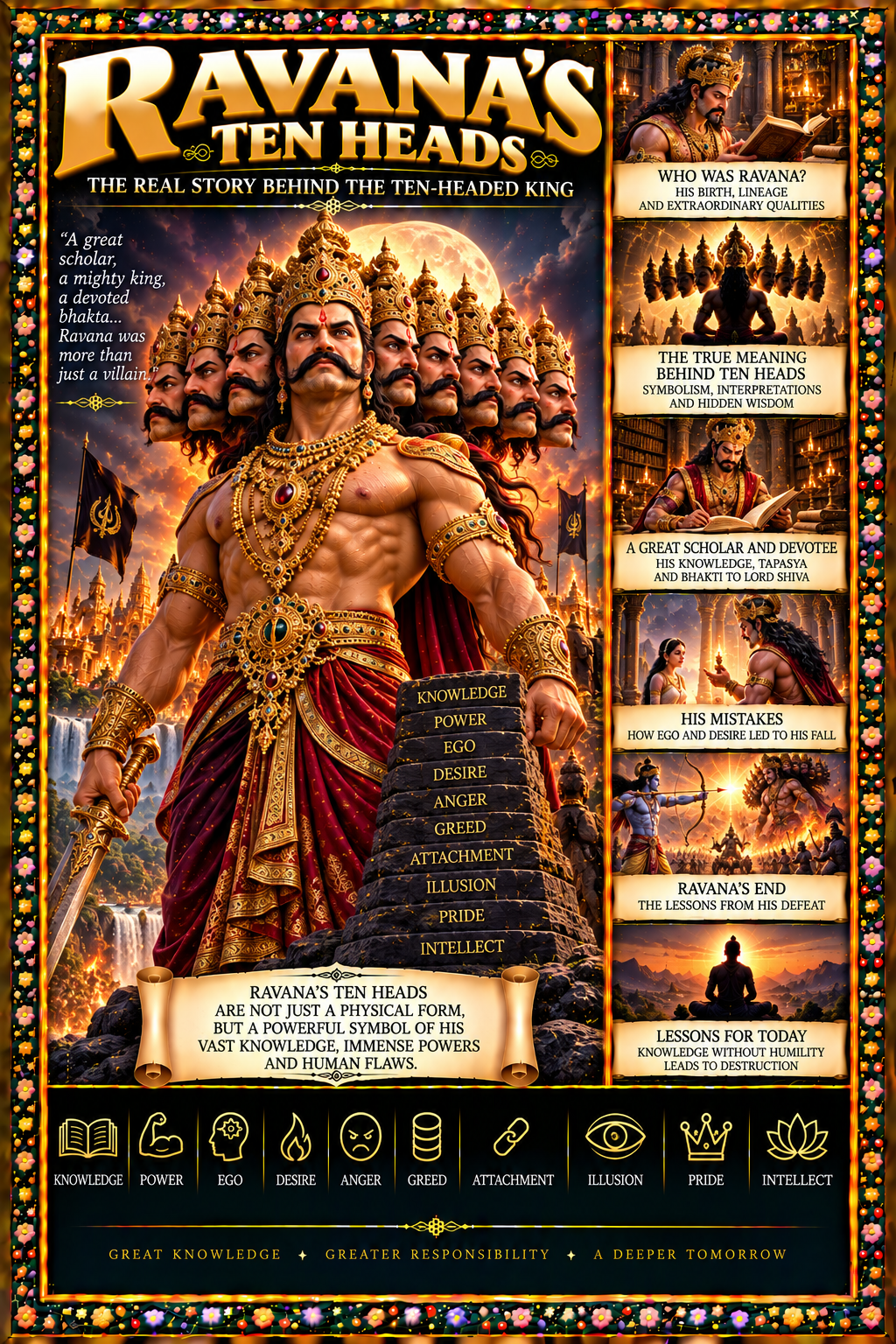
Ravana’s Ten Heads: The Real Story Behind the Ten-Headed King
The legend of Ravana’s Ten Heads (known in Sanskrit as Dashanana or Dashagriva) is one of the most intriguing, multi-layered stories in Hindu mythology. Ravana, the king of Lanka in the epic Ramayana, is widely depicted in temple sculptures, classical paintings, and Ramlila plays as a towering demon king with ten heads and twenty arms. Was Ravana literally born with ten biological heads, or did He manifest them through divine boons and illusive powers? Or does the imagery of Ravana’s Ten Heads carry a deep psychological, philosophical, and astrological symbolism representing human emotions, intellect, and spiritual vices? In this comprehensive guide, we uncover the real story, scriptural origins, 4 sacred images, and profound spiritual symbolism behind Ravana’s Ten Heads. The Mythological Origin of Ravana’s Ten Heads To understand the story of Ravana’s Ten Heads, one must explore his unique lineage and his extreme penance to Lord Brahma. The Divine Lineage of Ravana Ravana was not a typical demon. He was the son of Sage Vishrava (a revered Vedic Rishi and grandson of Lord Brahma) and Princess Kaikesi (an Asura princess). This unique lineage made Ravana half-Brahmin and half-Rakshasa. From his father, he inherited immense intellectual capacity, Vedic wisdom, and mastery…
- Mythology , Ramayanam
- September 13, 2026
- 40 views
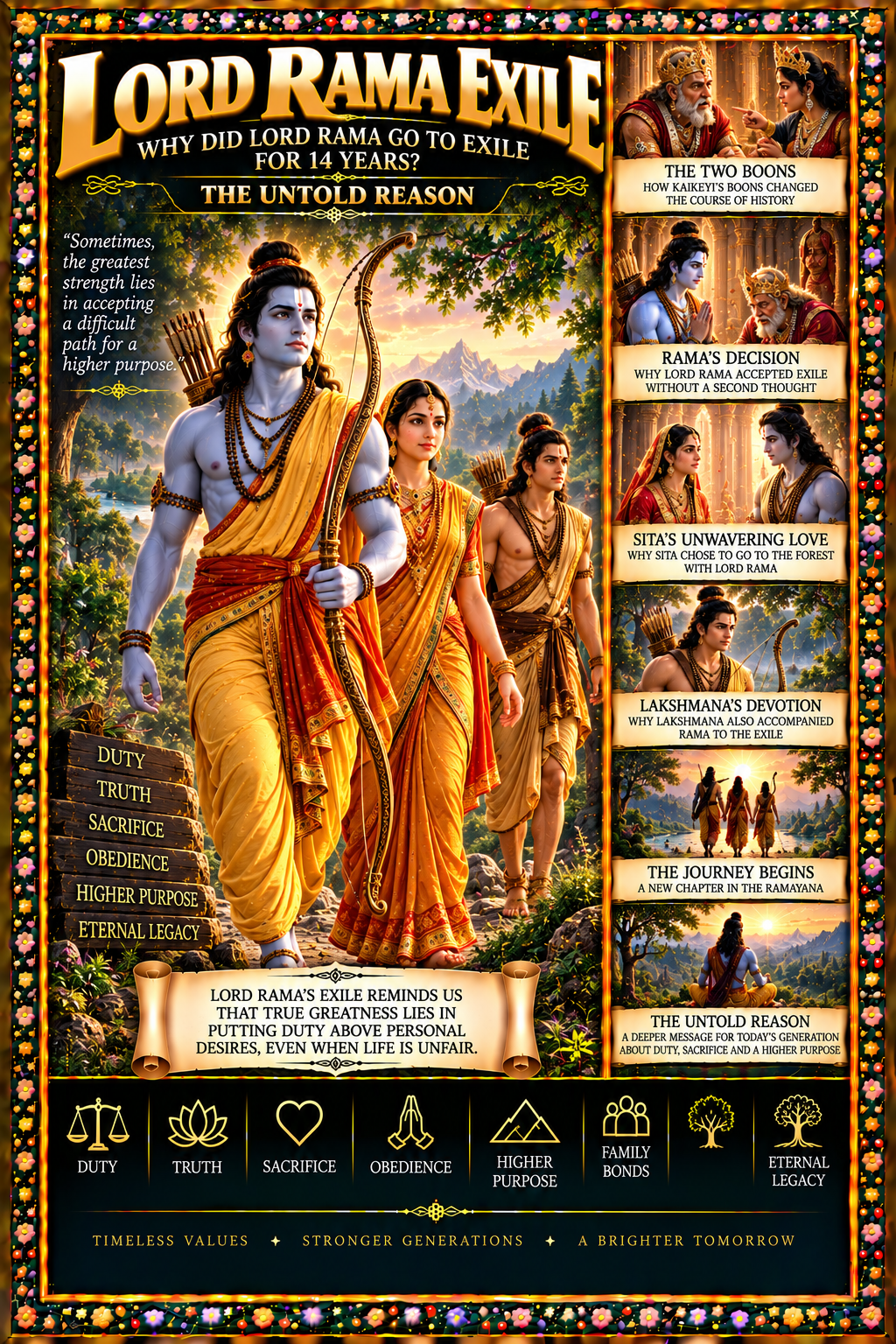
Lord Rama Exile: Why Did Lord Rama Go to Exile for 14 Years? The Untold Reason
The story of Lord Rama Exile is one of the most pivotal turning points in the epic Ramayana. On the very eve of Crown Prince Rama’s grand coronation as King of Ayodhya, He was suddenly banished to the dangerous Dandaka forest for 14 years. While most readers are familiar with the surface political drama involving Queen Kaikeyi’s two boons and the wicked instigation of the maid Manthara, ancient Vedic scriptures, Puranas, and astrological treatises reveal far deeper, cosmic, legal, and karmic reasons behind this divine Lord Rama Exile. Why was Lord Rama exiled? Why did He accept it without a single word of protest? And why was the duration of Lord Rama Exile set precisely to 14 years instead of 10 or 20? In this article, we uncover the untold cosmic secrets, ancient legal statutes, and divine curses that ordained the 14-year Lord Rama Exile. The Surface Story of Lord Rama Exile: Kaikeyi’s Boons To understand the deeper secret reasons, one must first recall the narrative context established in the Ayodhya Kanda of Valmiki Ramayana regarding Lord Rama Exile. The Battle Boon Given to Queen Kaikeyi Years before the coronation, King Dasharatha fought alongside the Devas against the demon Sambasura…
- Festivals , Lord Ganesha , Mythology
- September 8, 2026
- 60 views
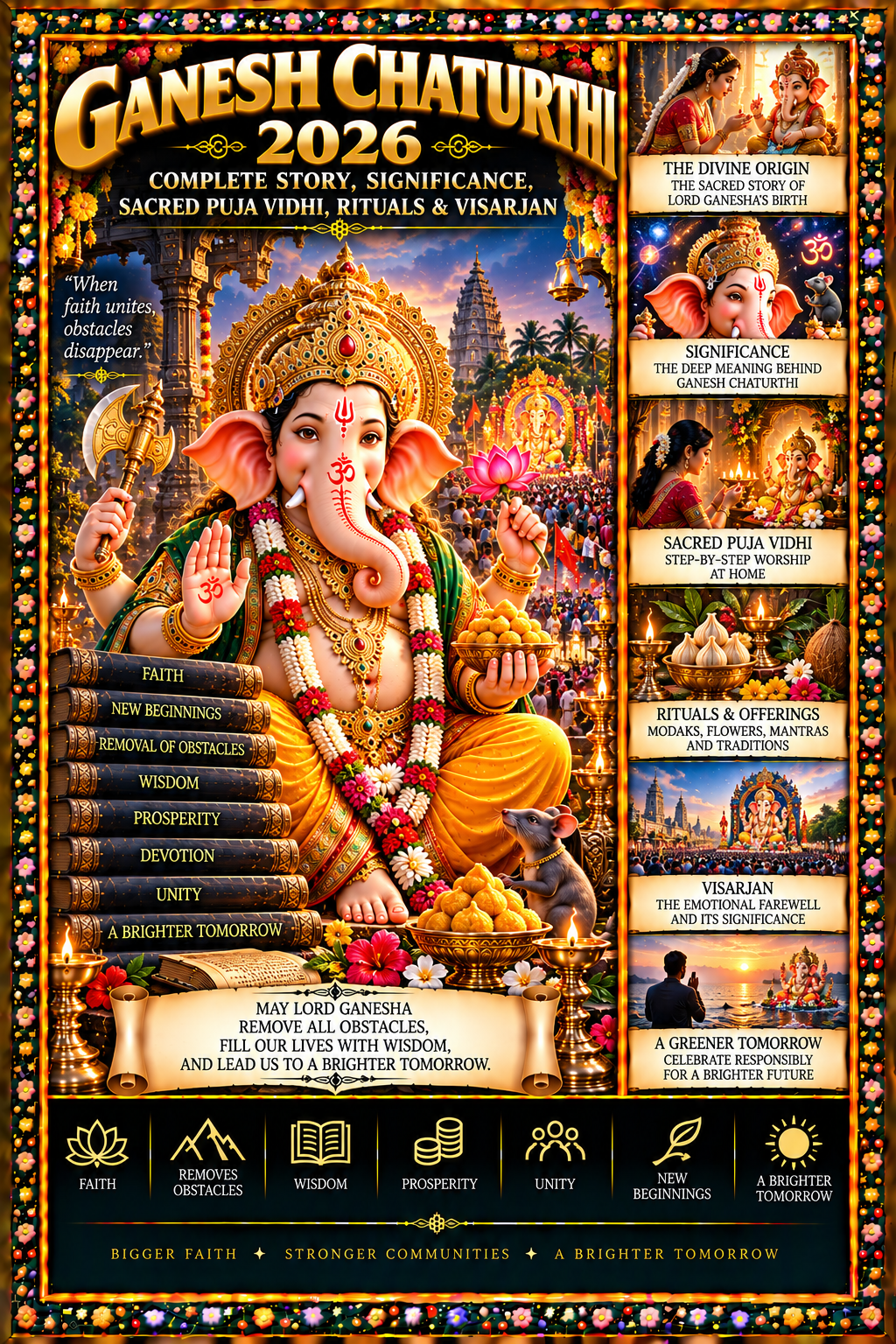
Ganesh Chaturthi 2026: Complete Story, Significance, Sacred Puja Vidhi, Rituals & Visarjan
Ganesh Chaturthi, also affectionately known as Vinayaka Chaturthi or Ganeshotsav, is one of the most vibrant, joyous, and spiritually profound festivals celebrated in India and across the globe. Falling on the fourth day (Chaturthi) of the waxing moon phase (Shukla Paksha) in the Hindu lunar month of Bhadrapada, this auspicious festival commemorates the rebirth and grand arrival of Lord Ganesha—the elephant-headed deity of wisdom, prosperity, intellect, and good fortune—from Kailash Parvat to earth. Lord Ganesha is universally revered as Pratham Pujya (the first worshipped deity), meaning no sacred ritual, wedding, new business venture, or housewarming ceremony begins without invoking His divine blessings. During Ganesh Chaturthi, millions of homes, public pandals, and community centers welcome elaborate idols of Ganesha, filling the atmosphere with sacred mantras, beating dhol-tasha drums, fragrant flowers, and the irresistible aroma of freshly steamed modaks. To truly immerse in the festival of Ganesh Chaturthi, one must explore its deep mythological origins, understand the profound symbolism behind Ganesha’s unique physical form, follow the sacred step-by-step Puja Vidhi, and reflect on the philosophical spiritual wisdom of Ganesh Visarjan. The Divine Birth and Origin Story Behind Ganesh Chaturthi The timeless story of Lord Ganesha’s birth is narrated in several Puranas, including…
- Festivals , Mythology
- September 4, 2026
- 50 views
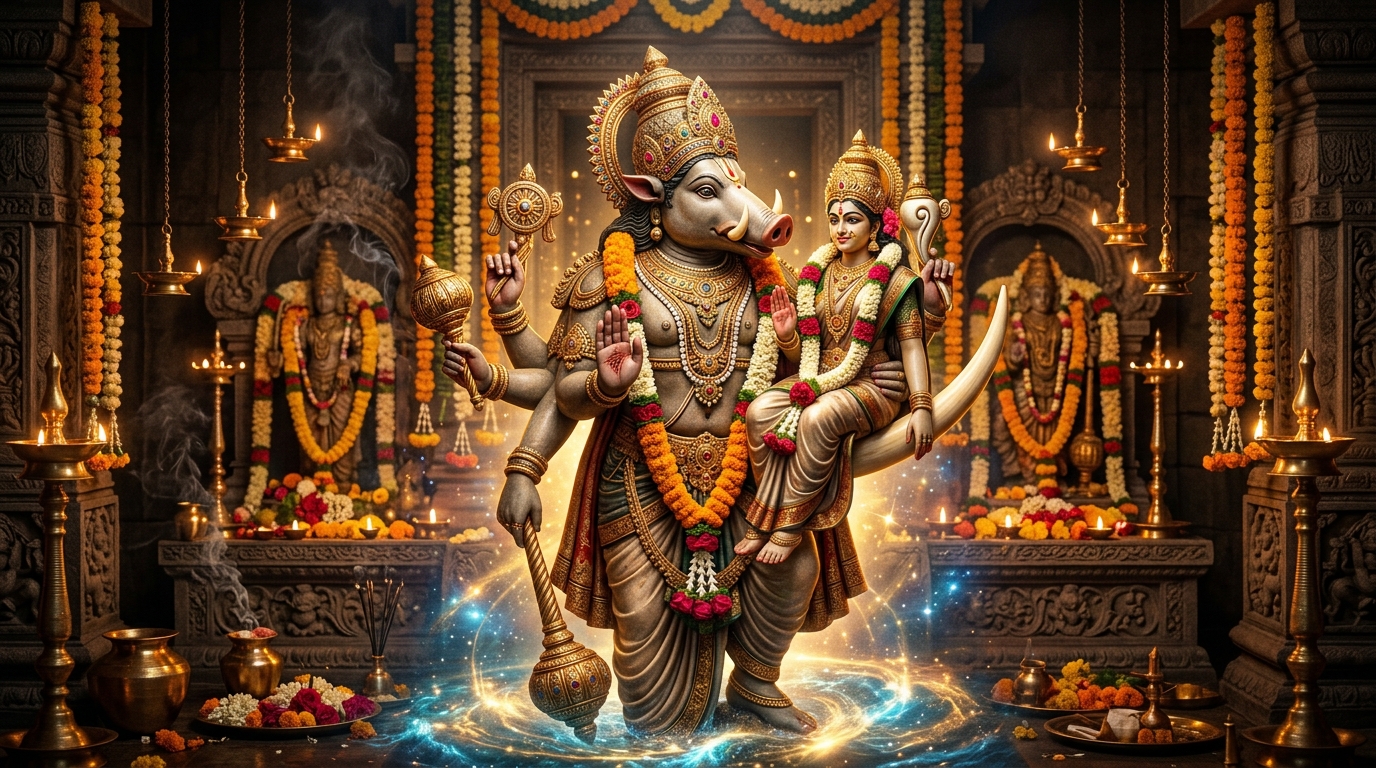
Varaha Jayanti 2026: Complete Story, Significance, Sacred Puja Vidhi & Powerful Mantras
Varaha Jayanti is one of the most sacred and spiritually significant Hindu festivals, commemorating the birth anniversary and divine incarnation of Lord Varaha—the third avatar of Lord Vishnu. Taking the cosmic form of a mighty boar, Lord Vishnu descended to cosmic ocean depths to defeat the terrifying demon Hiranyaksha and rescue Mother Earth (Bhudevi), raising her safely above the cosmic waters upon His divine tusks. Observed on the third day (Tritiya) of the waxing moon phase (Shukla Paksha) in the Hindu lunar month of Bhadrapada, Varaha Jayanti celebrates the victory of righteousness (Dharma) over cosmic chaos, environmental restoration, and divine protection. Worshipping Lord Varaha on this auspicious day brings immense courage, spiritual purity, freedom from obstacles, and lasting prosperity. In this comprehensive guide, explore the detailed mythological story of Lord Varaha, the profound spiritual symbolism of His incarnation, step-by-step Puja Vidhi rituals, powerful Varaha mantras, and frequently asked questions. The Divine Story of Varaha Avatar Celebrated on Varaha Jayanti The legend of Varaha Avatar is narrated in several ancient texts, including the Vishnu Purana, Bhagavata Purana, and Matsya Purana. The story highlights how unchecked ego and tyranny threaten cosmic balance, requiring divine intervention to preserve existence. The Tyranny of the…
- Mahabharatam , Mythology
- January 29, 2026
- 612 views
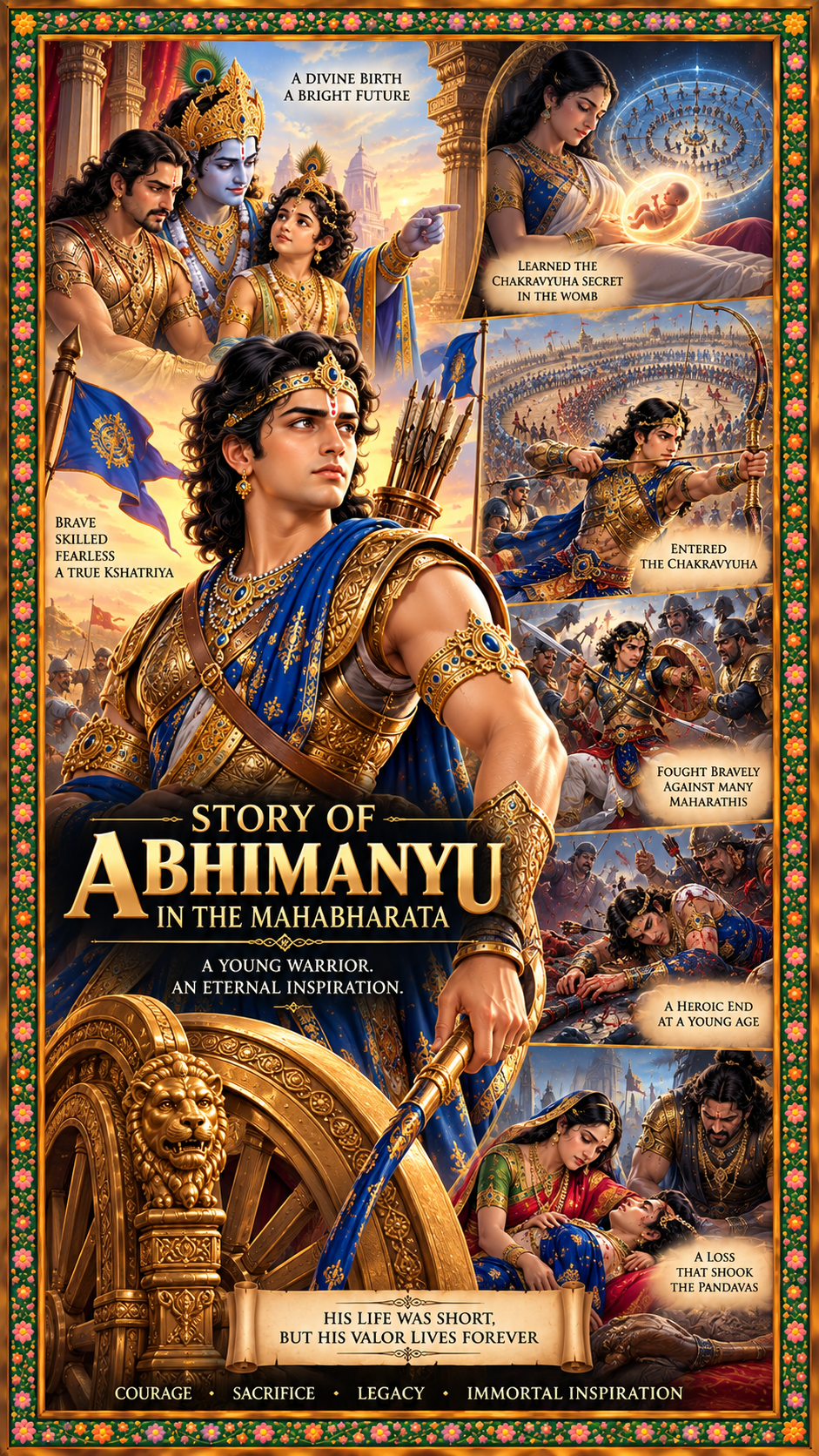
Story of Abhimanyu in the Mahabharata
Introduction The story of Abhimanyu in the Mahabharata stands as one of the most emotional and heroic episodes in the great Indian epic. Though young in age, Abhimanyu displayed extraordinary courage, wisdom, and devotion to dharma. His sacrifice during the Kurukshetra war became a symbol of supreme bravery and righteous struggle. For official cultural and historical archives, visit the Ministry of Culture, Government of India. Who Was Abhimanyu in the Mahabharata? Abhimanyu was the son of Arjuna, the greatest archer among the Pandavas, and Subhadra, the sister of Lord Krishna. From birth, he carried divine qualities and warrior instincts. Despite his young age, Abhimanyu was regarded as a powerful warrior equal to seasoned kings. Lineage and Family Background Abhimanyu was born into the noble Chandravanshi (Lunar Dynasty), one of the most respected royal lineages in the Mahabharata. He was the son of Arjuna, the greatest archer among the Pandavas, known for his courage, discipline, and devotion to dharma. His mother Subhadra was the sister of Lord Krishna, giving Abhimanyu a divine connection from birth. Through Arjuna’s warrior lineage and Krishna’s guidance, Abhimanyu inherited extraordinary bravery and wisdom. According to the scriptures, Abhimanyu was also believed to be the incarnation of…
- Mahabharatam , Mythology
- January 27, 2026
- 738 views
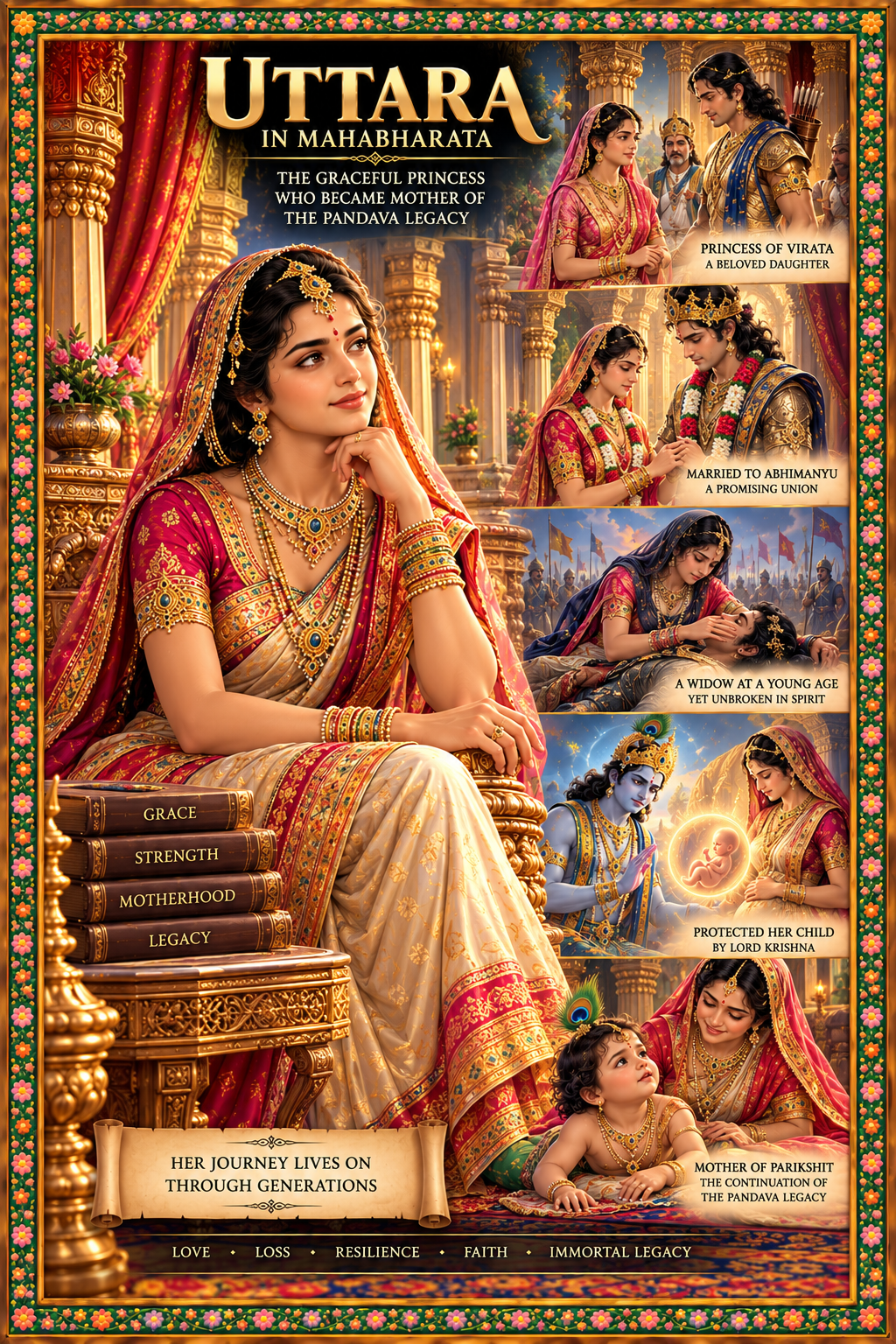
Uttara in Mahabharata: The Graceful Princess Who Became Mother of the Pandava Legacy
Introduction The Mahabharata is filled with warriors, kings, and divine heroes—but behind the battlefield glory lie equally powerful stories of courage, devotion, and legacy. One such underrated yet significant character is Uttara, the princess of the Matsya Kingdom. Though not a warrior on the battlefield, Uttara’s role shaped the future of the Pandava lineage. She became the mother of Parikshit, the sole surviving heir of the Pandavas, ensuring the continuation of the Kuru dynasty after the devastating Kurukshetra War. This blog explores who Uttara was, her life, her marriage, her struggles, and her historical importance in the Mahabharata. For official cultural and historical archives, visit the Ministry of Culture, Government of India. Who Was Uttara in Mahabharata? Uttara was the daughter of King Virata of Matsya Kingdom and Queen Sudeshna. She was the princess of the kingdom where the Pandavas spent their final year of exile in disguise (Agyatavas). She later married Abhimanyu, the brave son of Arjuna and Subhadra, becoming closely connected to the Pandava family. Uttara in Mahabharata and Her Royal Birth Uttara was born into the noble Matsya dynasty as the daughter of King Virata and Queen Sudeshna. Raised in a palace filled with discipline, culture, and…
- Mahabharatam , Mythology
- January 25, 2026
- 895 views
Shikhandi in Mahabharata: The Warrior Who Changed the Fate of Kurukshetra
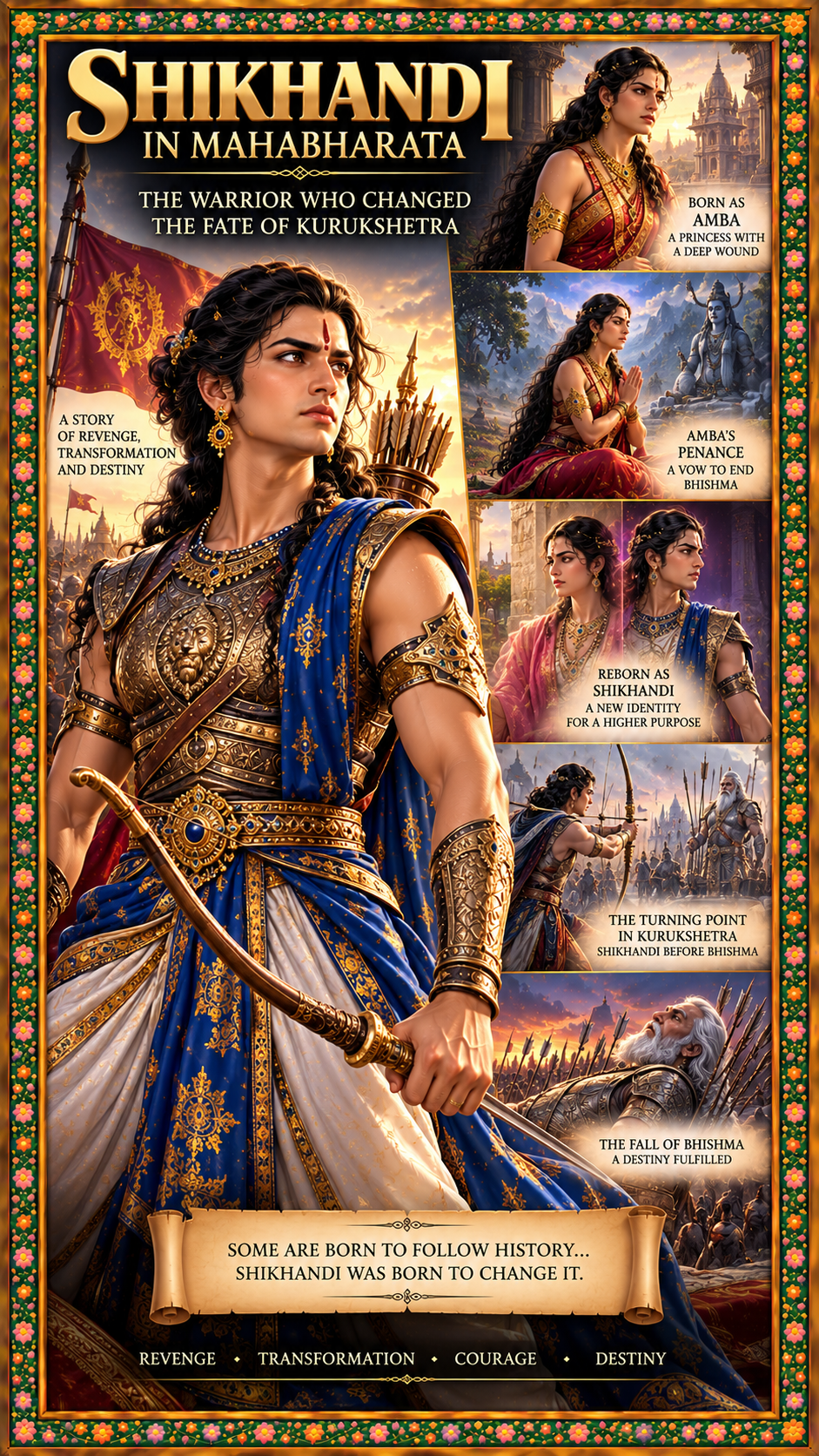
Introduction The Mahabharata is not just a tale of war but a profound epic filled with complex characters, moral dilemmas, and destiny-driven events. Among these powerful figures, Shikhandi stands out as one of the most unique and influential characters. Often misunderstood and sometimes overlooked, Shikhandi played a crucial role in the fall of Bhishma, one of the greatest warriors of all time. This blog explores who Shikhandi was, the story behind their birth, their transformation, and their importance in the Mahabharata war. For official cultural and historical archives, visit the Ministry of Culture, Government of India. Who Was Shikhandi? Shikhandi was a warrior in the Mahabharata who fought on the side of the Pandavas during the Kurukshetra War. However, Shikhandi’s identity goes beyond a simple warrior role. Their life story involves themes of rebirth, destiny, gender identity, revenge, and divine justice. Shikhandi was born as Shikhandini, the daughter of King Drupada of Panchala, and later became Shikhandi through divine intervention. The Past Life of Shikhandi – Amba’s Story To understand Shikhandi, we must first understand Amba. Amba was a princess who was abducted by Bhishma along with her sisters Ambika and Ambalika for the prince of Hastinapura. However, Amba revealed that she loved another king and wanted to marry him. Bhishma released…
- Festivals , Mythology
- January 22, 2026
- 358 views
Ratha Saptami 2026: Meaning, Significance, Rituals, Benefits & Lord Surya Worship
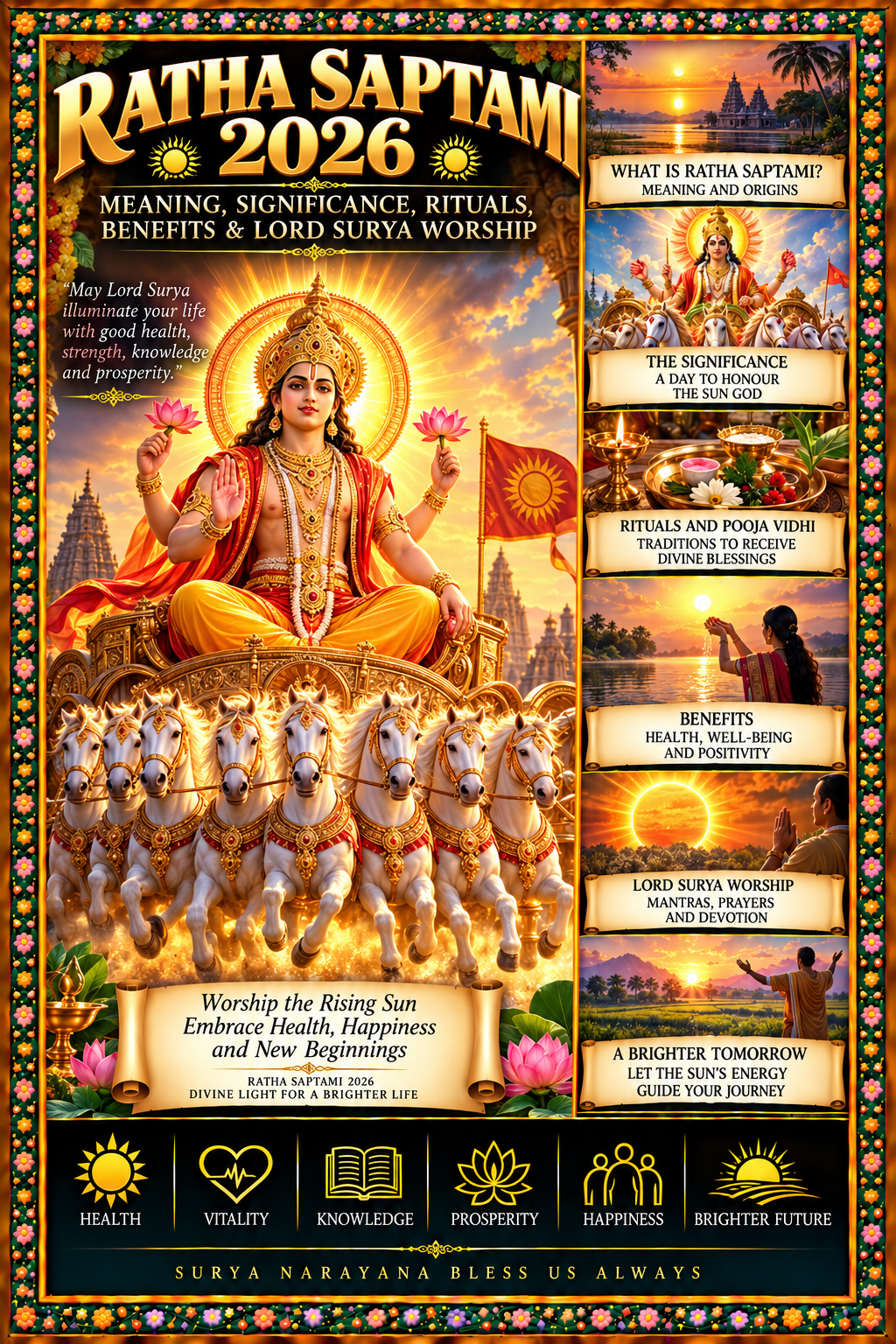
Introduction Ratha Saptami is one of the most auspicious Hindu festivals dedicated to Lord Surya (the Sun God). Celebrated on the seventh day (Saptami) of the bright fortnight (Shukla Paksha) in the month of Magha, this festival holds deep spiritual, cultural, and scientific importance in Indian tradition. It marks the symbolic beginning of the Sun’s northward journey (Uttarayana) and is considered highly beneficial for health, prosperity, and spiritual growth. What is Ratha Saptami? (Meaning of Ratha Saptami Festival) The word Ratha means chariot and Saptami means seventh day. According to Hindu belief, on this sacred day, Lord Surya rides his divine chariot drawn by seven horses, symbolizing the seven colors of light, seven days of the week, and seven chakras of the human body. Ratha Saptami is also known as: This day signifies the awakening of solar energy on Earth and is considered ideal for new beginnings. Significance of Ratha Saptami in Hinduism Spiritual Significance of Ratha Saptami Ratha Saptami is believed to destroy sins, remove negative energies, and bring divine blessings. Worshipping the Sun God on this day is said to improve clarity of mind, inner strength, and spiritual awareness. Many devotees perform: These practices help purify the soul and enhance positive vibrations. Scientific & Health Benefits of Ratha…
- Mahabharatam , Mythology
- January 20, 2026
- 447 views
Mahabharata: Ghatotkacha and Kurukshetra War: The Mighty Rakshasa
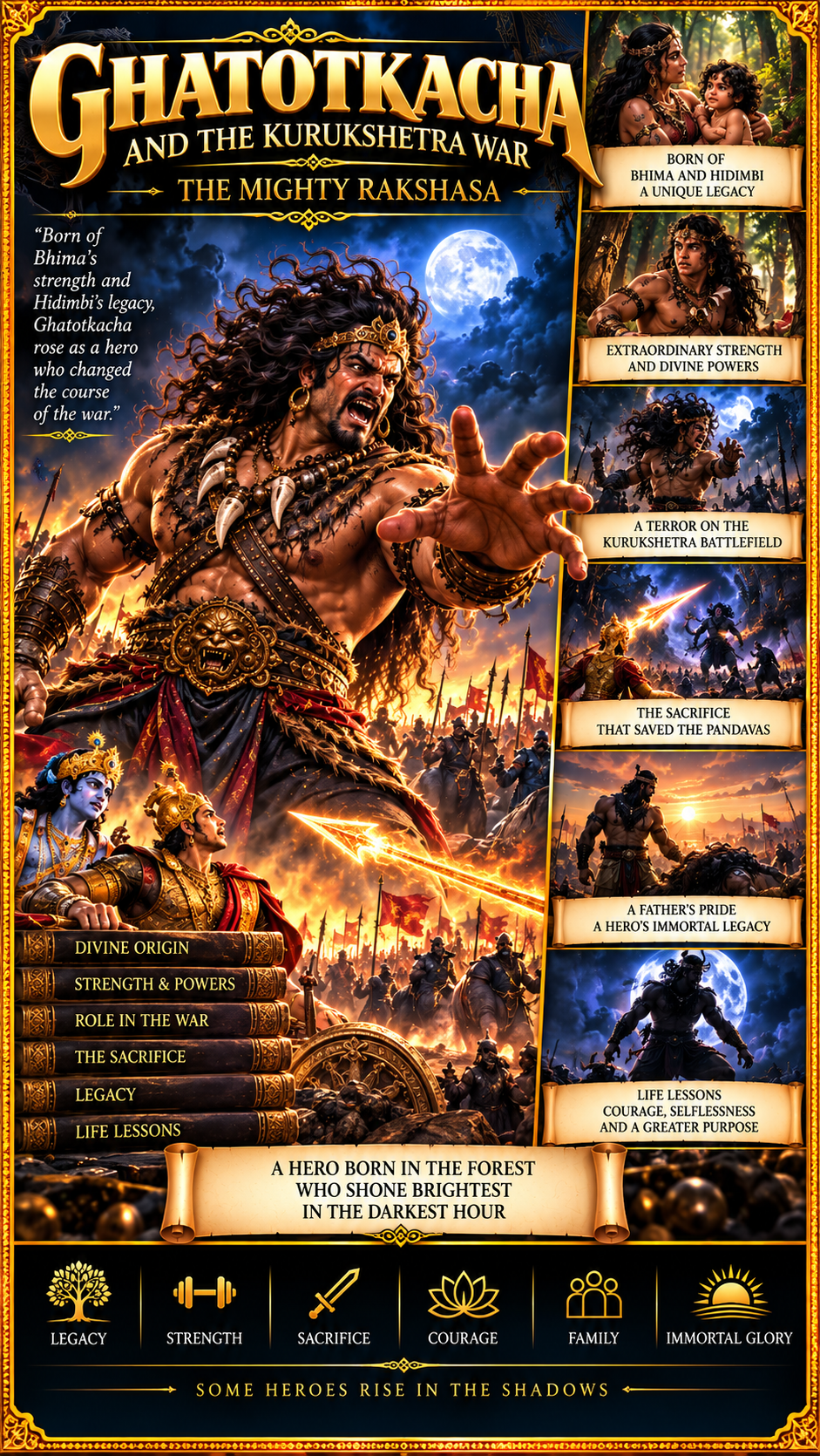
Introduction Among the many powerful warriors of the Mahabharata, few left an impact as dramatic and decisive as Ghatotkacha. Though he appears mainly in the later part of the epic, his role becomes one of the most critical turning points of the Kurukshetra war. Born as the son of Bhima and the Rakshasi Hidimba, Ghatotkacha possessed extraordinary strength, magical powers, and unmatched night-war abilities. His heroic sacrifice not only changed the fate of the war but also saved Arjuna’s life indirectly. Ghatotkacha stands as a symbol of selfless sacrifice, destiny, and divine strategy in the Mahabharata. Birth of Ghatotkacha After the Pandavas escaped from the House of Lac (Lakshagriha), they traveled through dense forests. During this time, Bhima encountered Hidimba, a Rakshasi who fell in love with him. With Kunti’s permission, Bhima married Hidimba under Gandharva tradition. From this union was born Ghatotkacha. Meaning of the Name “Ghatotkacha” According to legend, he was born with a powerful body and fearsome appearance, typical of Rakshasas. Yet beneath his terrifying form lived a heart filled with loyalty, righteousness, and devotion to the Pandavas. Childhood and Extraordinary Powers From birth itself, Ghatotkacha displayed supernatural strength. Hidimba raised him among Rakshasas, where he learned:…

- Mythology , Ramayanam
- January 13, 2026
- 440 views
A Model of Ethical Governance: Rama Rajya Explained
Introduction: Rama Rajya Explained The idea of Rama Rajya has echoed through Indian civilization for centuries. Often referred to as the ideal form of governance, Rama Rajya represents a system where justice, morality, accountability, and compassion guide leadership. Rooted in the Ramayana, Rama Rajya is not merely a religious or mythological concept. It is a governance philosophy—one that continues to influence political thought, public administration, and ethical leadership even today. For students, professionals, administrators, and leaders, understanding Rama Rajya offers timeless lessons in ethical governance and responsible leadership. What Is Rama Rajya? Rama Rajya refers to the period of governance under Lord Rama, king of Ayodhya, where society functioned in harmony under the principles of dharma (righteousness). Key Characteristics of Rama Rajya: In Rama Rajya, the king was not above the law—he was its first servant. Core Principles of Rama Rajya Dharma as the Foundation of Governance In Rama Rajya, dharma guided every decision. Governance was not driven by power, personal gain, or political convenience but by moral responsibility. Lord Rama consistently chose duty over personal comfort—setting a benchmark for ethical leadership. Modern relevance:Ethical governance requires leaders to place constitutional values and public interest above personal or political agendas. Equality…