Raja Ratnam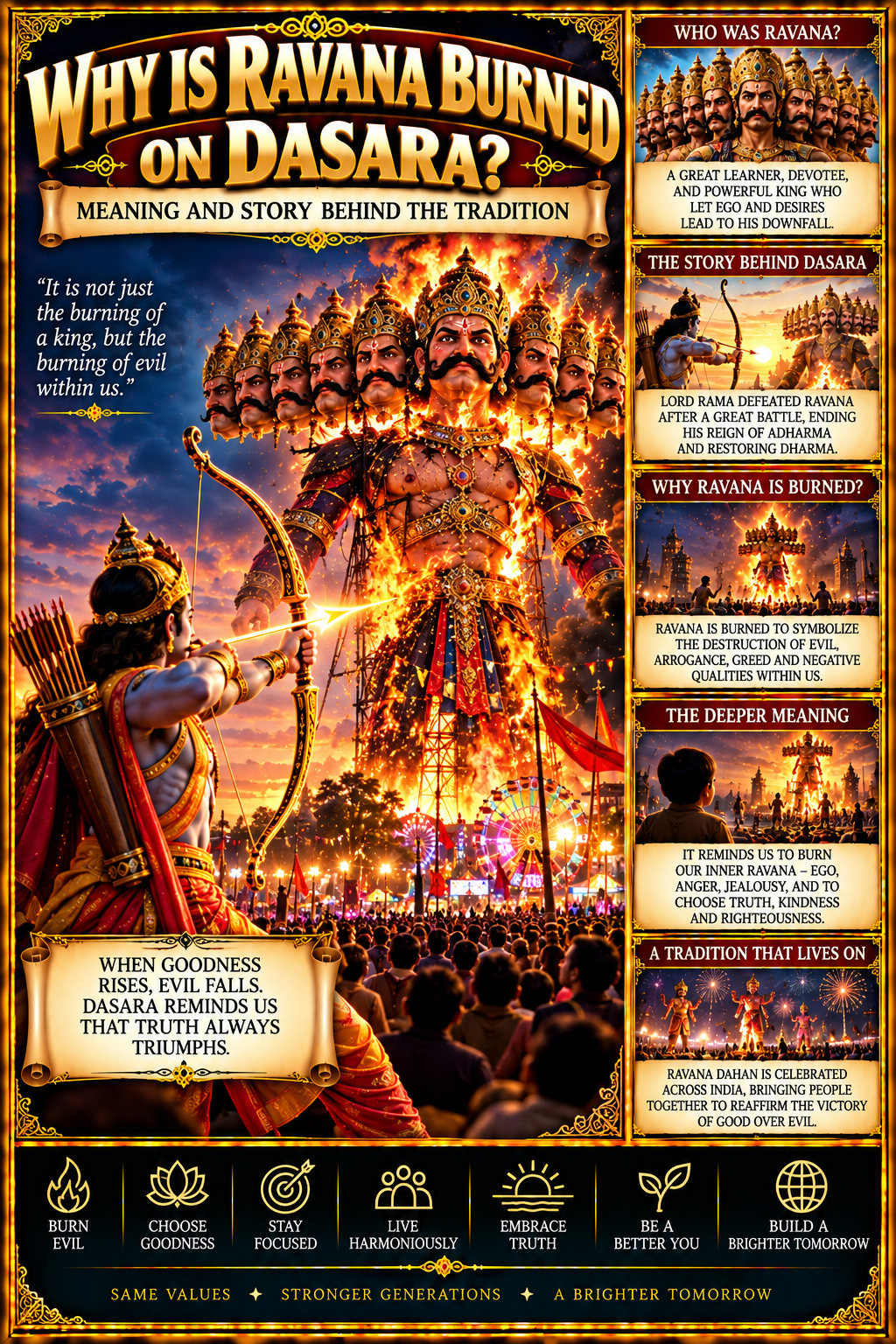
Every year on Vijayadashami, also known as Dasara, millions of people across India gather on open grounds to witness a grand spectacle: giant effigies of the demon king Ravana, his brother Kumbhakarna, and his son Meghnada are set ablaze amidst fireworks, cheering crowds, and traditional music. This ritual, known as Ravan Dahan, is one of the most iconic and emotionally charged events of the Hindu festival calendar.
But why is Ravana burned on Dasara every year? Is it simply a dramatic theatrical re-enactment of an ancient battlefield victory from the Ramayana, or does this tradition carry a deeper spiritual, moral, and philosophical lesson for modern humanity? To understand the profound meaning of burning Ravana on Vijayadashami, we must look at both the sacred story of the Ramayana and the symbolic burning of inner human vices. You can also explore our detailed guide on Why Do We Celebrate Dasara? The Story Behind Vijayadashami to understand the broader festival context.
The Ramayana Story: How Lord Rama Defeated Ravana on Vijayadashami
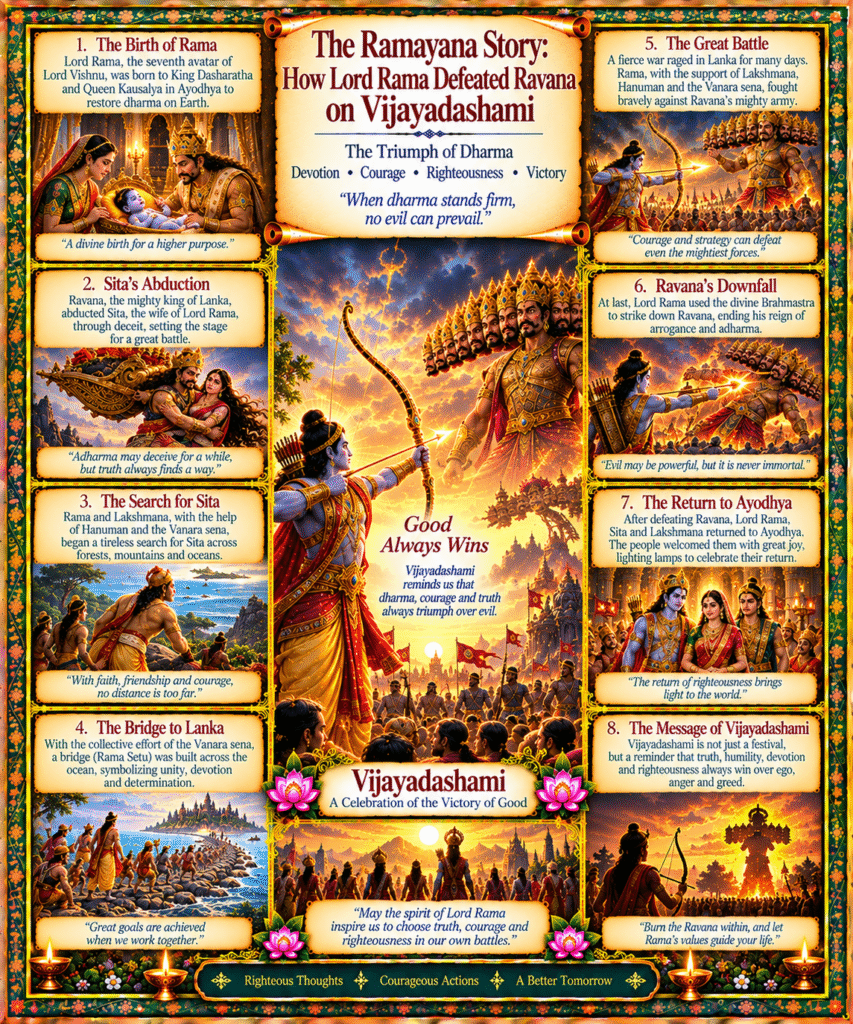
The historical and scriptural origin of burning Ravana on Dasara lies in the climactic war of the epic Ramayana. After Ravana abducted Mata Sita through trickery and carried her away to his golden kingdom of Lanka, Lord Rama embarked on a heroic journey to rescue her and restore cosmic order (Dharma).
Accompanied by his devoted brother Lakshmana, the mighty warrior Hanuman, and an army of Vanaras, Lord Rama built the sacred Ram Setu bridge across the ocean and confronted Ravana’s forces in Lanka. For detailed context on the events leading to the war, read our full article on Lord Rama’s 14-Year Exile.
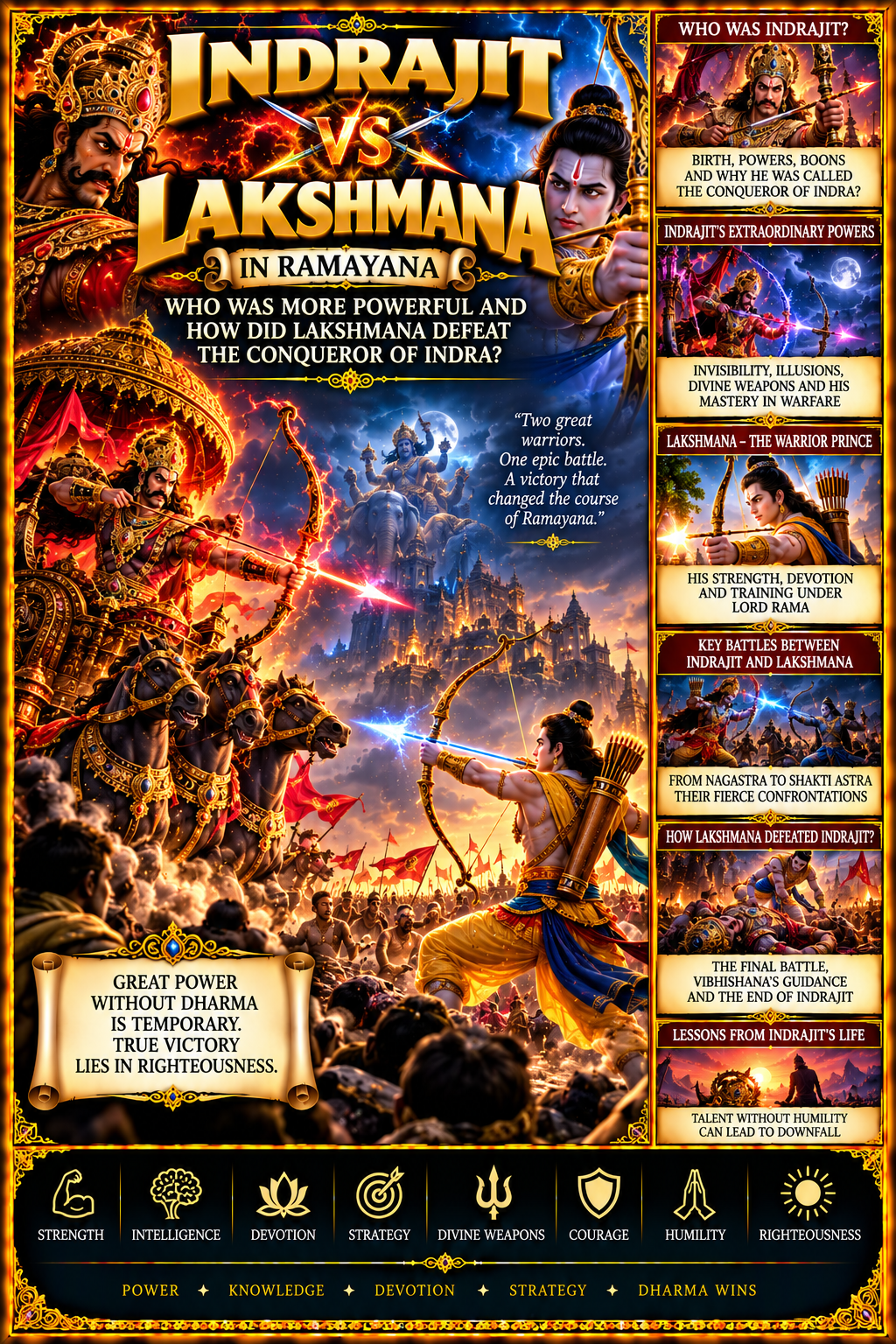
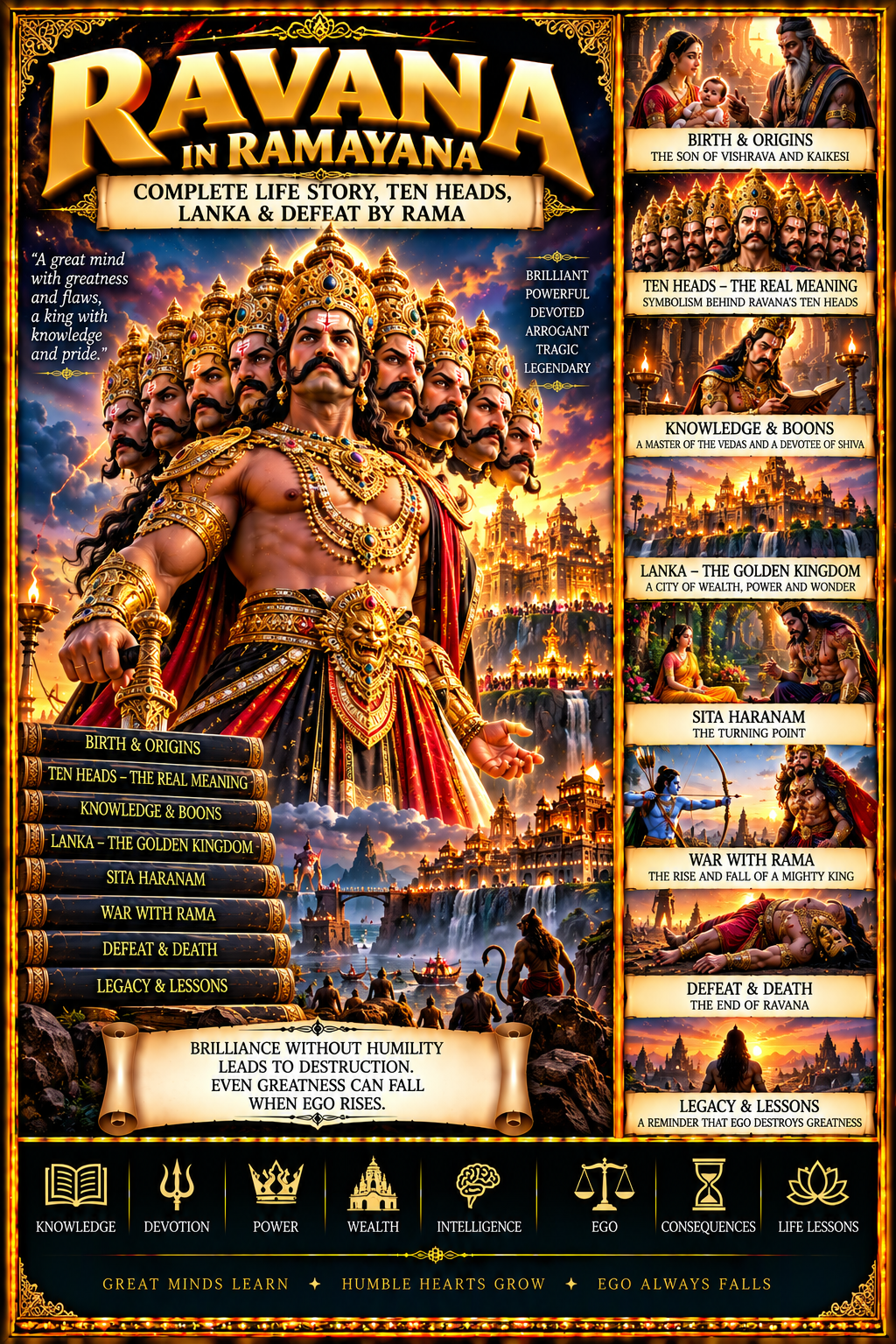
The battle between Rama and Ravana raged fiercely for ten days. Despite losing his invincible commanders, his brother Kumbhakarna, and his formidable son Meghnada (Indrajit), Ravana refused to surrender Sita or acknowledge his unrighteousness. On the tenth day—Vijayadashami—Lord Rama invoked the divine blessings of Goddess Chandi and released the sacred Brahmastra arrow, piercing Ravana’s navel and ending the reign of the Lanka king. To learn more about Ravana’s life and royal lineage, read Ravana in Ramayana: Complete Life Story.
The Deeper Spiritual Meaning: What Burning Ravana Represents
While the physical burning of effigies marks Lord Rama’s victory, Indian spiritual philosophy interprets Ravan Dahan on a deeper psychological and moral level. Fire (Agni) in Vedic tradition is the supreme purifier. Burning the effigy of Ravana is not an act of hatred against a historical figure, but a symbolic purification of negative qualities within ourselves.
Ravana was not an uneducated demon; he was a great scholar, a master of the Vedas, an accomplished musician, and a devout worshiper of Lord Shiva. Yet, despite his vast knowledge, his unchecked ego, arrogance, and desire caused his ruin. According to Hindu traditions documented by the Ministry of Culture, Government of India, Ravana’s ten heads symbolize ten negative psychological traits that every human being must conquer:
- Ahankara (Ego & Pride): Believing oneself superior to divine law.
- Krodha (Anger): Uncontrolled wrath that destroys judgment.
- Kama (Lust & Unlawful Desire): Coveting what belongs to others.
- Lobha (Greed): Insatiable desire for wealth and power.
- Mada (Arrogance & Vanity): Pride in one’s talents and possessions.
- Matsarya (Envy & Jealousy): Inability to see others prosper.
- Manas (Restless Mind): Lack of internal control.
- Buddhi (Perverted Intellect): Using intelligence for unethical goals.
- Chitta (Obsessive Memory): Holding grudges and past grievances.
- Aham (Self-Centeredness): Ignoring the welfare of society.
To understand the full spiritual symbolism behind his physical form, read our in-depth analysis of Ravana’s Ten Heads: The Real Story Behind the Ten-Headed King.
How Ravan Dahan Is Celebrated Across India
The tradition of burning Ravana on Dasara is celebrated with immense joy and cultural richness across different regions of India, as highlighted by official heritage archives at Incredible India and Encyclopaedia Britannica.
In northern and central India, local communities stage Ramlila—a dramatic folk performance depicting the life of Lord Rama over the ten days of Navratri. On Dasara evening, actors dressed as Lord Rama and Lakshmana shoot flaming arrows at towering effigies stuffed with firecrackers. As the effigies burn down, thousands of spectators cheer “Jai Shree Ram”, celebrating the victory of Dharma over Adharma.
In cities like Delhi, Varanasi, Mysore, and Kullu, Ravan Dahan is attended by grand public processions, royal pageants, and cultural fairs, attracting tourists and devotees from around the world.
Why Are Effigies of Kumbhakarna and Meghnada Burned Alongside Ravana?
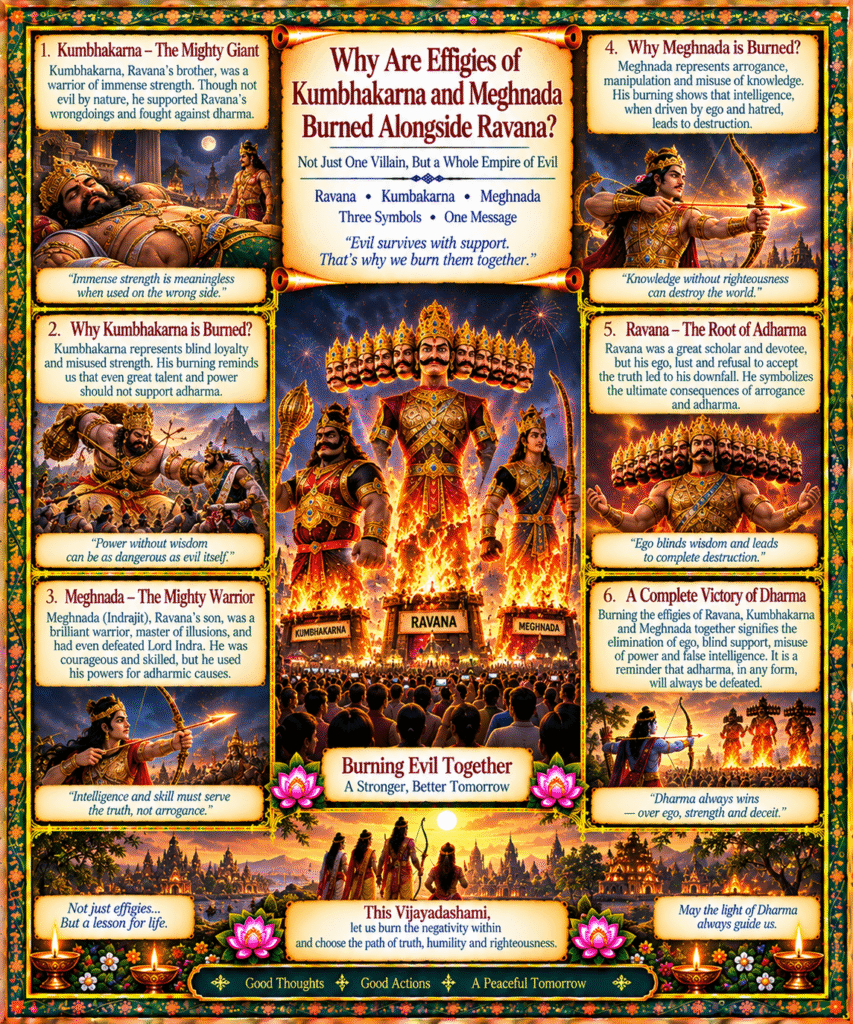
In addition to Ravana, traditions across India burn effigies of his brother Kumbhakarna and his son Meghnada (Indrajit). Each character represents a specific moral warning:
- Kumbhakarna: Symbolizes Tamas—sloth, physical ignorance, and blind loyalty to an evil ruler even when knowing it is wrong.
- Meghnada (Indrajit): Symbolizes Deceit and Misused Power—using extraordinary talents and invincibility for destructive and selfish purposes.
By burning all three effigies together, the tradition emphasizes eradicating all forms of negative influence—whether born of ignorance, misused intelligence, or supreme arrogance.
Key Lessons for Modern Life: Why Ravan Dahan Matters Today
The annual ritual of burning Ravana on Dasara carries timeless practical lessons for our daily lives:
- Knowledge Without Character Is Dangerous: Ravana possessed immense wisdom, yet his lack of moral character led to his destruction. Knowledge must always be guided by humility and ethics.
- Ego Blinds Even the Mightiest: No matter how powerful or successful an individual becomes, hubris and pride eventually bring downfall.
- Annual Renewal of Moral Commitment: Ravan Dahan is a annual reminder to reflect on our own character, burn our inner flaws, and resolve to walk the path of truth, compassion, and righteousness.
Frequently Asked Questions About Burning Ravana on Dasara (20 Questions & Answers)
1. Why is Ravana burned on Dasara every year?
Ravana is burned on Dasara to commemorate Lord Rama’s victory over the demon king of Lanka on Vijayadashami, symbolizing the ultimate victory of good (Dharma) over evil (Adharma) and the burning of negative human traits.
2. What is the ritual of Ravan Dahan?
Ravan Dahan is the ritual burning of giant paper-and-bamboo effigies of Ravana, Kumbhakarna, and Meghnada filled with fireworks on Dasara evening, accompanied by Ramlila performances and community celebrations.
3. When did the tradition of burning Ravana effigies begin?
The tradition of Ravan Dahan originated centuries ago as part of the public Ramlila folk theater traditions in northern and central India, evolving into a major national cultural celebration.
4. What do the ten heads of Ravana symbolize during Ravan Dahan?
The ten heads symbolize ten inner human vices: ego (Ahankara), anger (Krodha), lust (Kama), greed (Lobha), pride (Mada), envy (Matsarya), restless mind (Manas), perverted intellect (Buddhi), obsessive memory (Chitta), and self-centeredness (Aham).
5. Why are effigies of Kumbhakarna and Meghnada burned alongside Ravana?
Kumbhakarna represents sloth and blind loyalty to unrighteousness, while Meghnada represents deceit and misused power. Burning all three together symbolizes destroying all forms of negative influence.
6. What materials are traditionally used to build Ravan Dahan effigies?
Effigies are constructed using bamboo frames, eco-friendly paper, cloth, paint, and firecrackers, often reaching heights of 50 to 100 feet in major Dussehra grounds.
7. What is the spiritual symbolism of fire (Agni) in Ravan Dahan?
In Vedic philosophy, Agni is the divine purifier. Fire in Ravan Dahan signifies consuming negative thoughts and transforming human consciousness through spiritual awareness.
8. How is Ravan Dahan connected to the Ramlila folk performances?
Ramlila is a 10-day theatrical enactment of the Ramayana. Ravan Dahan serves as the grand climax on the tenth evening when the actor portraying Lord Rama shoots a flaming arrow to ignite the effigies.
9. Where are the largest Ravan Dahan celebrations held in India?
Iconic Ravan Dahan events take place at Ramlila Maidan and Red Fort grounds in Delhi, Ramnagar in Varanasi, Subhash Park in Kota, and major Dussehra grounds across Uttar Pradesh, Punjab, and Haryana.
10. Why is Ravan Dahan performed at sunset on Vijayadashami?
Sunset marks Pradosh Kaal on Vijayadashami, the auspicious time when Lord Rama defeated Ravana as day triumphed over twilight darkness.
11. Does burning Ravana mean hating a historical character?
No, Ravan Dahan is not an act of personal hatred against Ravana, but a symbolic ceremony urging every individual to conquer their own internal vices and align with Dharma.
12. How does Ravan Dahan teach us to destroy our inner negative traits?
Ravan Dahan reminds us that no matter how educated, wealthy, or powerful we become, allowing ego or greed to control our actions will inevitably cause our moral destruction.
13. Which ten human vices are represented by Ravana’s ten heads?
The ten vices are Ego, Wrath, Unlawful Desire, Greed, Vanity, Envy, Restlessness, Deceitful Logic, Malice, and Selfishness.
14. What is the role of Lakshmana and Hanuman during Ramlila and Ravan Dahan?
Lakshmana symbolizes steadfast loyalty and duty, while Hanuman represents selfless devotion and courage. Both accompany Lord Rama on the chariot during the Ravan Dahan climax.
15. Why does Lord Rama shoot a flaming arrow to ignite the effigies?
The flaming arrow represents the divine Brahmastra empowered by truth, spiritual wisdom, and divine blessings that pierces through the illusion and arrogance of evil.
16. How do children and families participate in Dasara Ravan Dahan events?
Families attend community fairs (Mela), buy toy bows and arrows, enjoy festive foods, and watch the cultural reenactments to pass down Ramayana values to younger generations.
17. Is Ravan Dahan celebrated outside India in the diaspora?
Yes, Indian diaspora communities in the United States, United Kingdom, Canada, Australia, Singapore, and Fiji organize annual Dussehra festivals with Ravan Dahan and Ramlila plays.
18. How does Ravan Dahan differ from South Indian Dasara traditions?
While northern India focuses on Ravan Dahan and Ramlila, southern India emphasizes Golu doll displays, Mysore Dasara processions, Ayudha Puja, and Shami tree worship on Vijayadashami.
19. What safety and eco-friendly measures are being adopted for Ravan Dahan today?
Modern celebrations increasingly use green fireworks, eco-friendly natural dyes, light-emitting diode (LED) effigies, and strict safety barriers to protect crowds and environment.
20. How does Ratnam Strategy analyze the philosophical message of Ravan Dahan?
Ratnam Strategy explains Ravan Dahan as an annual moral reset button—inspiring readers to burn personal shortcomings and cultivate truth, humility, and compassion.