Raja Ratnam
- Festivals , Lord Ganesha , Mythology
- September 8, 2026
- 59 views
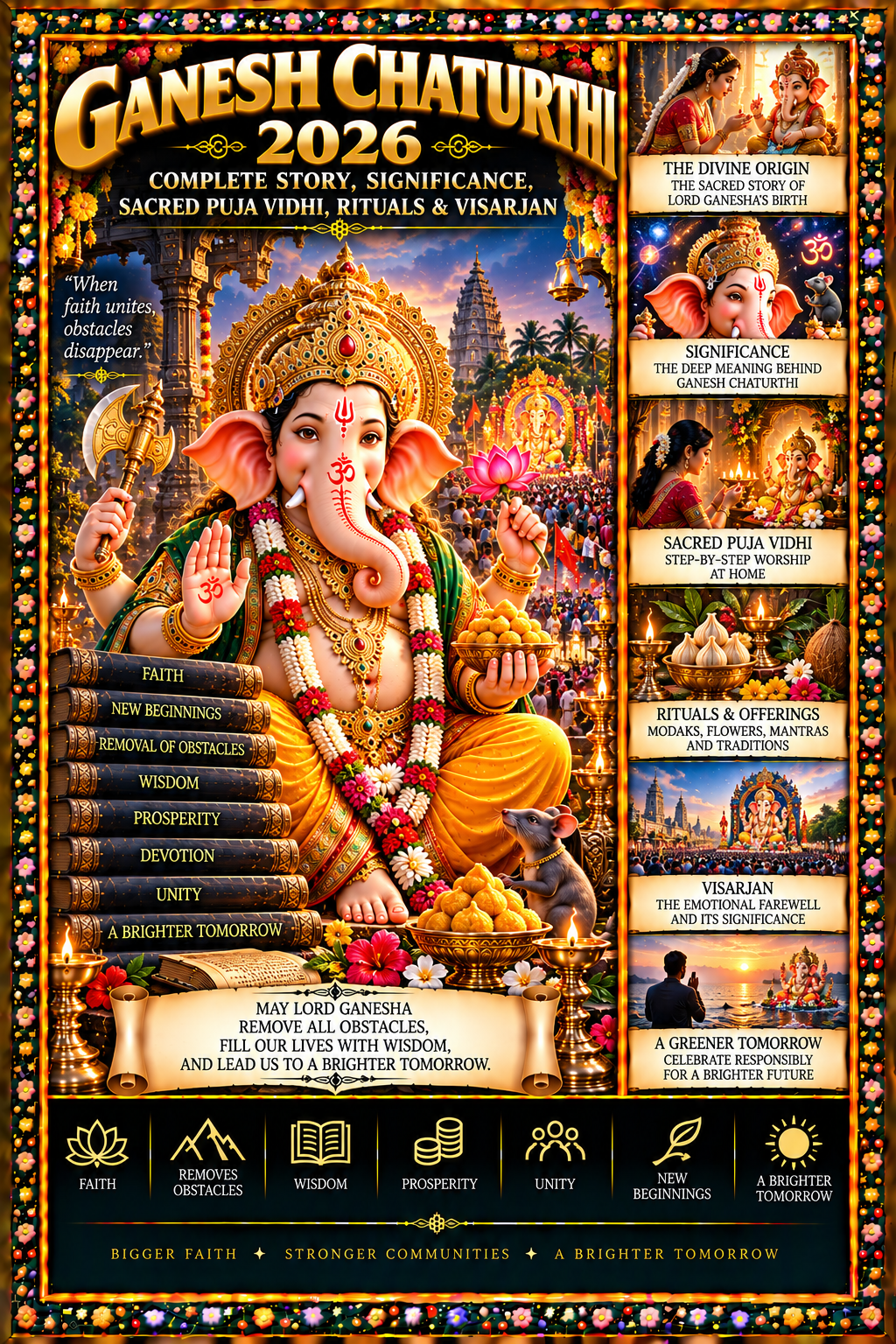
Ganesh Chaturthi 2026: Complete Story, Significance, Sacred Puja Vidhi, Rituals & Visarjan
Ganesh Chaturthi, also affectionately known as Vinayaka Chaturthi or Ganeshotsav, is one of the most vibrant, joyous, and spiritually profound festivals celebrated in India and across the globe. Falling on the fourth day (Chaturthi) of the waxing moon phase (Shukla Paksha) in the Hindu lunar month of Bhadrapada, this auspicious festival commemorates the rebirth and grand arrival of Lord Ganesha—the elephant-headed deity of wisdom, prosperity, intellect, and good fortune—from Kailash Parvat to earth. Lord Ganesha is universally revered as Pratham Pujya (the first worshipped deity), meaning no sacred ritual, wedding, new business venture, or housewarming ceremony begins without invoking His divine blessings. During Ganesh Chaturthi, millions of homes, public pandals, and community centers welcome elaborate idols of Ganesha, filling the atmosphere with sacred mantras, beating dhol-tasha drums, fragrant flowers, and the irresistible aroma of freshly steamed modaks. To truly immerse in the festival of Ganesh Chaturthi, one must explore its deep mythological origins, understand the profound symbolism behind Ganesha’s unique physical form, follow the sacred step-by-step Puja Vidhi, and reflect on the philosophical spiritual wisdom of Ganesh Visarjan. The Divine Birth and Origin Story Behind Ganesh Chaturthi The timeless story of Lord Ganesha’s birth is narrated in several Puranas, including…
- Festivals , Mythology
- September 4, 2026
- 49 views
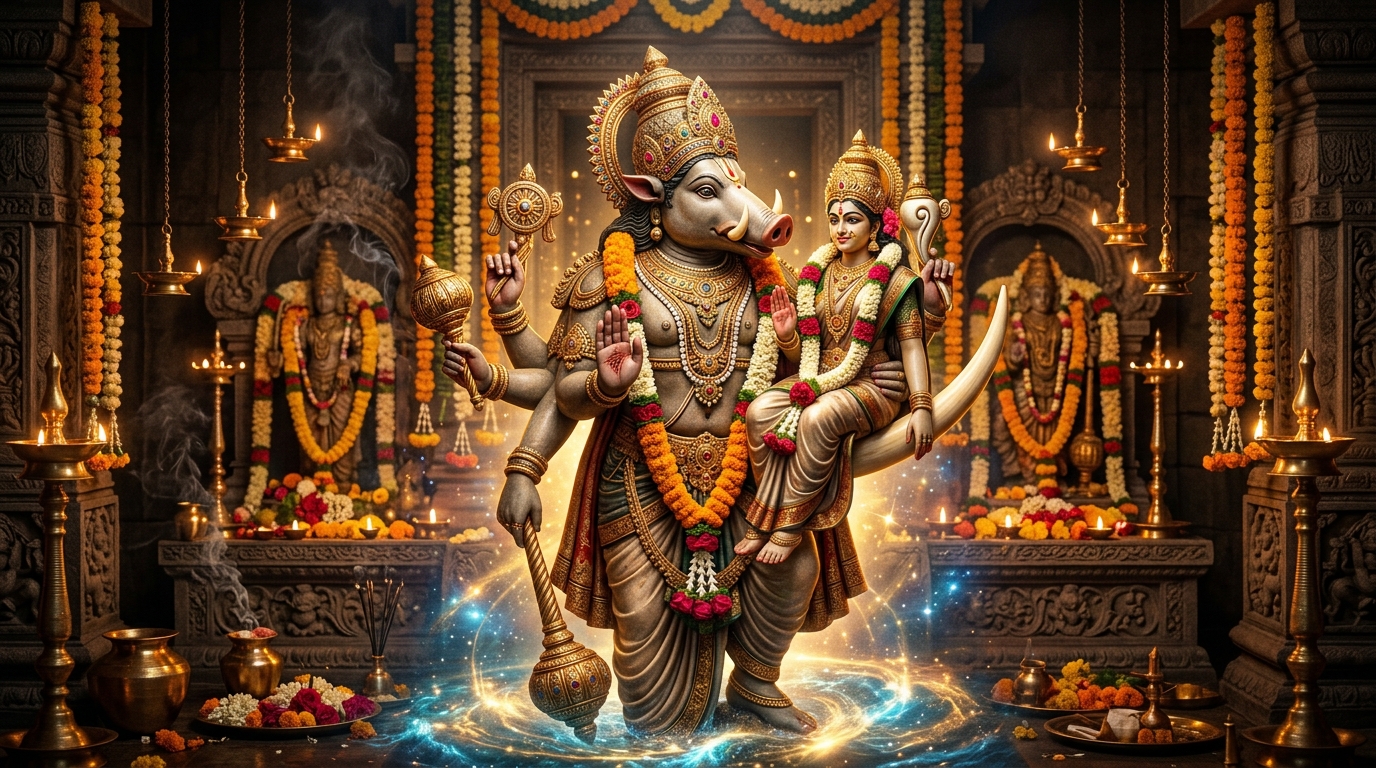
Varaha Jayanti 2026: Complete Story, Significance, Sacred Puja Vidhi & Powerful Mantras
Varaha Jayanti is one of the most sacred and spiritually significant Hindu festivals, commemorating the birth anniversary and divine incarnation of Lord Varaha—the third avatar of Lord Vishnu. Taking the cosmic form of a mighty boar, Lord Vishnu descended to cosmic ocean depths to defeat the terrifying demon Hiranyaksha and rescue Mother Earth (Bhudevi), raising her safely above the cosmic waters upon His divine tusks. Observed on the third day (Tritiya) of the waxing moon phase (Shukla Paksha) in the Hindu lunar month of Bhadrapada, Varaha Jayanti celebrates the victory of righteousness (Dharma) over cosmic chaos, environmental restoration, and divine protection. Worshipping Lord Varaha on this auspicious day brings immense courage, spiritual purity, freedom from obstacles, and lasting prosperity. In this comprehensive guide, explore the detailed mythological story of Lord Varaha, the profound spiritual symbolism of His incarnation, step-by-step Puja Vidhi rituals, powerful Varaha mantras, and frequently asked questions. The Divine Story of Varaha Avatar Celebrated on Varaha Jayanti The legend of Varaha Avatar is narrated in several ancient texts, including the Vishnu Purana, Bhagavata Purana, and Matsya Purana. The story highlights how unchecked ego and tyranny threaten cosmic balance, requiring divine intervention to preserve existence. The Tyranny of the…
- Festivals
- July 20, 2026
- 89 views
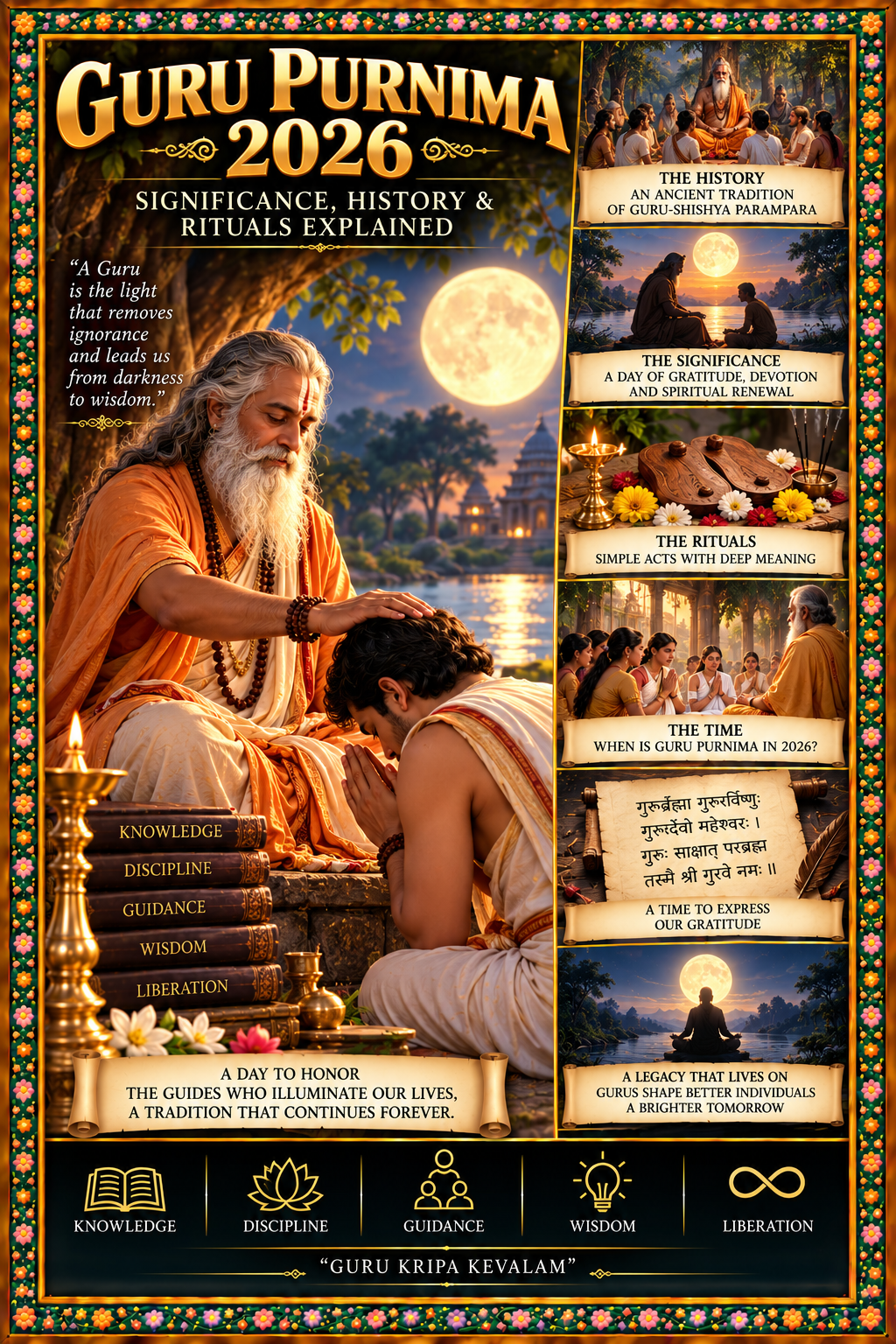
Guru Purnima 2026: Significance, History & Rituals Explained
About the Author Raja Ratnam is a passionate researcher and writer specialising in Indian mythology and epic stories.With years of experience studying texts like the Ramayana, Mahabharata, Krishna in Mahabharata: The Divine Role of the Supreme Guide, Festivals, Guru Purnima – Significance, History, Rituals, Celebrations, and Spiritual Benefits, Navagrahas, Ketu Deva and other cultural scriptures,he brings insightful interpretations and practical lessons from these timeless stories. Raja Ratnam believes in making mythology accessible and meaningful for modern readers,helping them understand the moral, ethical, and cultural significance behind characters like Rama, Laxman, Shani Deva, and many more. Connect with the author: info@ratnamstrategy.com Introduction Guru Purnima is one of the most sacred festivals in the Hindu, Buddhist, and Jain traditions. Celebrated on the full moon day (Purnima) of the Hindu month of Ashadha, Guru Purnima is dedicated to honoring teachers, spiritual gurus, mentors, and guides who illuminate our lives with wisdom and knowledge. In Indian culture, a Guru is considered greater than even parents because while parents give birth to the body, a Guru awakens the soul. The festival reminds us to express gratitude towards those who shape our character, values, and spiritual journey. Whether your Guru is a spiritual master, a school teacher, a…
- Festivals
- July 11, 2026
- 95 views
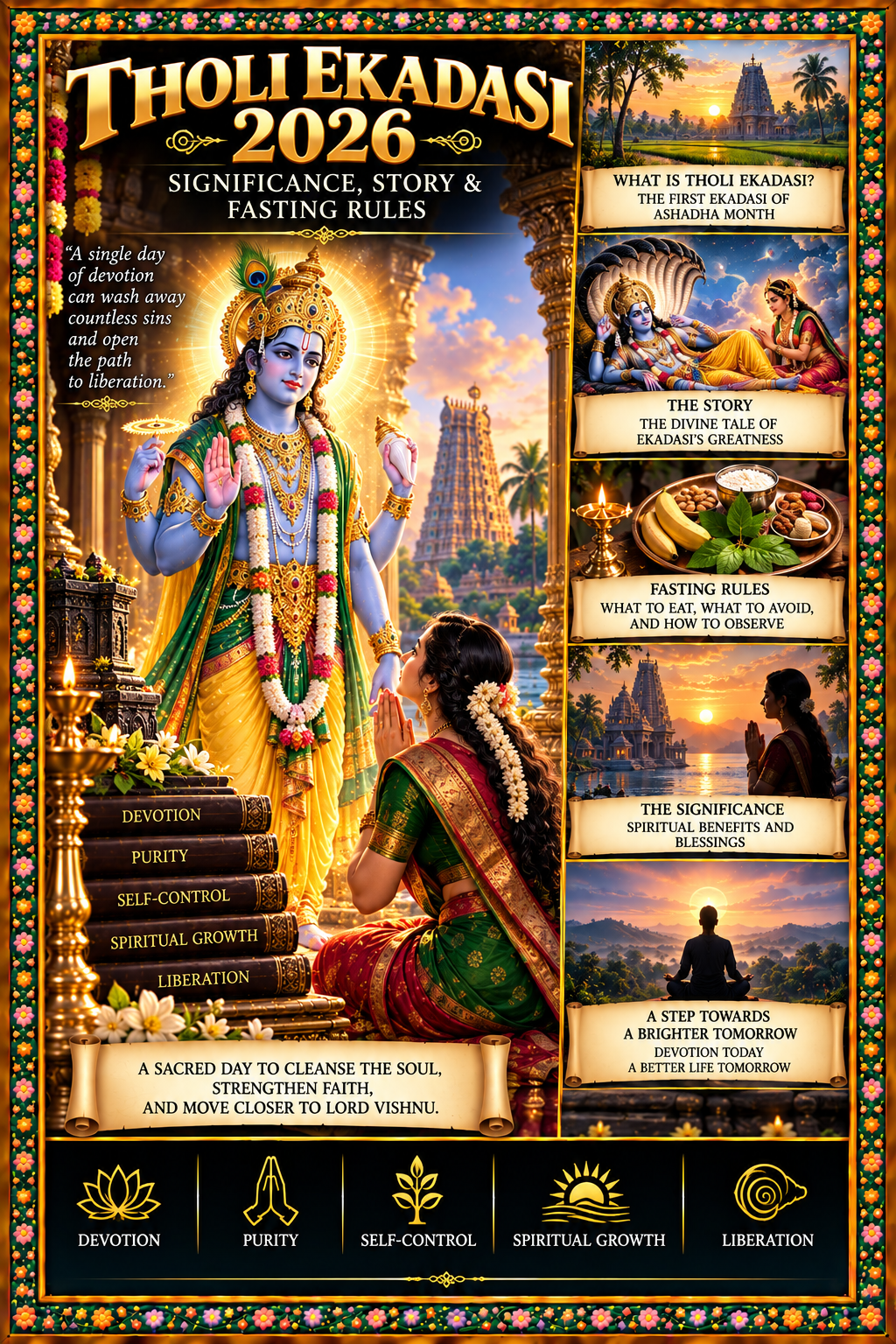
Tholi Ekadasi 2026: Significance, Story & Fasting Rules
Introduction Tholi Ekadasi is one of the most sacred Ekadasis celebrated by Hindus, especially in Andhra Pradesh, Telangana, Karnataka, and other parts of South India. Known as Shayani Ekadasi, Devshayani Ekadashi, or Ashadhi Ekadashi, this auspicious day marks the beginning of Lord Vishnu’s divine yogic sleep (Yoga Nidra), which lasts for four months, known as Chaturmasya. The festival is celebrated with immense devotion as devotees observe fasting, chant the names of Lord Vishnu, read sacred scriptures, and seek divine blessings for prosperity, peace, and liberation (Moksha). In many famous Vishnu temples, including Tirumala, Srirangam, and Pandharpur, grand celebrations take place. In this detailed guide by Ratnam Strategy, you will learn everything about Tholi Ekadasi, including its significance, mythology, fasting procedure, benefits, dos and don’ts, temple celebrations, and much more. For official cultural and historical archives, visit the Ministry of Culture, Government of India. What is Tholi Ekadasi? The word Tholi means “first” in Telugu, while Ekadasi refers to the eleventh lunar day (11th Tithi) of the waxing phase (Shukla Paksha) of the Ashadha month. It is considered the first important Ekadasi after the beginning of Dakshinayana, making it one of the most auspicious fasting days dedicated to Lord Vishnu. Other…

- Festivals
- March 11, 2026
- 251 views
Ugadi 2026 Celebrations at Pavani Pleasant, Bangalore
Pavani Pleasant Bangalore celebrates Ugadi 2026 Introduction : Ugadi Celebration 2026 The Ugadi Celebration 2026 at Pavani Pleasant Bangalore was a vibrant community event where residents welcomed the Telugu New Year with traditional rituals, cultural programs, and joyful gatherings. Ugadi is one of the most important festivals celebrated by Telugu and Kannada communities and symbolizes the beginning of a new year filled with hope and prosperity. At Pavani Pleasant, families gathered together in traditional attire, decorated their surroundings with colorful rangoli and mango leaves, and participated in cultural activities that brought the entire community together. The Ugadi Celebration 2026 at Pavani Pleasant Bangalore became a beautiful reminder of how festivals strengthen community bonds and preserve cultural traditions. For official cultural and historical archives, visit the Ministry of Culture, Government of India. Ugadi 2026 Date – In 2026, Ugadi will be celebrated on March 19, Thursday. Ugadi marks the first day of the Chaitra month in the Hindu lunisolar calendar and is celebrated as the Telugu and Kannada New Year. The festival usually falls in March or April, depending on the lunar cycle. For the residents of Pavani Pleasant in Bangalore, the Ugadi Celebration 2026 at Pavani Pleasant Bangalore was a…

- Festivals
- March 3, 2026
- 482 views
Holi 2026 Celebrations at Pavani Pleasant, Whitefield
Holi 2026 at Pavani Pleasant: When Whitefield Turned into a Rainbow! Introduction : Holi celebration at Pavani Pleasant Holi celebration at Pavani Pleasant : If you think Holi is just about colors, you haven’t celebrated it at Pavani Pleasant in Whitefield! Let me tell you, this year’s Holi was absolutely EPIC – and I’m not just saying that because I’m still finding gulal in my hair three days later! 😂 Holi is that one festival where adults turn into kids, kids go absolutely wild, and everyone ends up looking like a walking rainbow. And this year? It was a whole new experience for us. So buckle up, grab some thandai (or coffee if you’re not into that), and let me take you through the most colourful day of the year at our beloved Pavani Pleasant! The Night Before: Preparations in Full Swing – Holi celebration at Pavani Pleasant The real fun started the night before! Mr. Sharma from 302 (our unofficial event czar) was running around like a headless chicken, making sure everything was perfect. “We need more water balloons! More colors! More everything!” – classic Mr. Sharma energy. Priya Aunty from 501 had organized a natural color-making session in…
- Festivals
- February 3, 2026
- 362 views
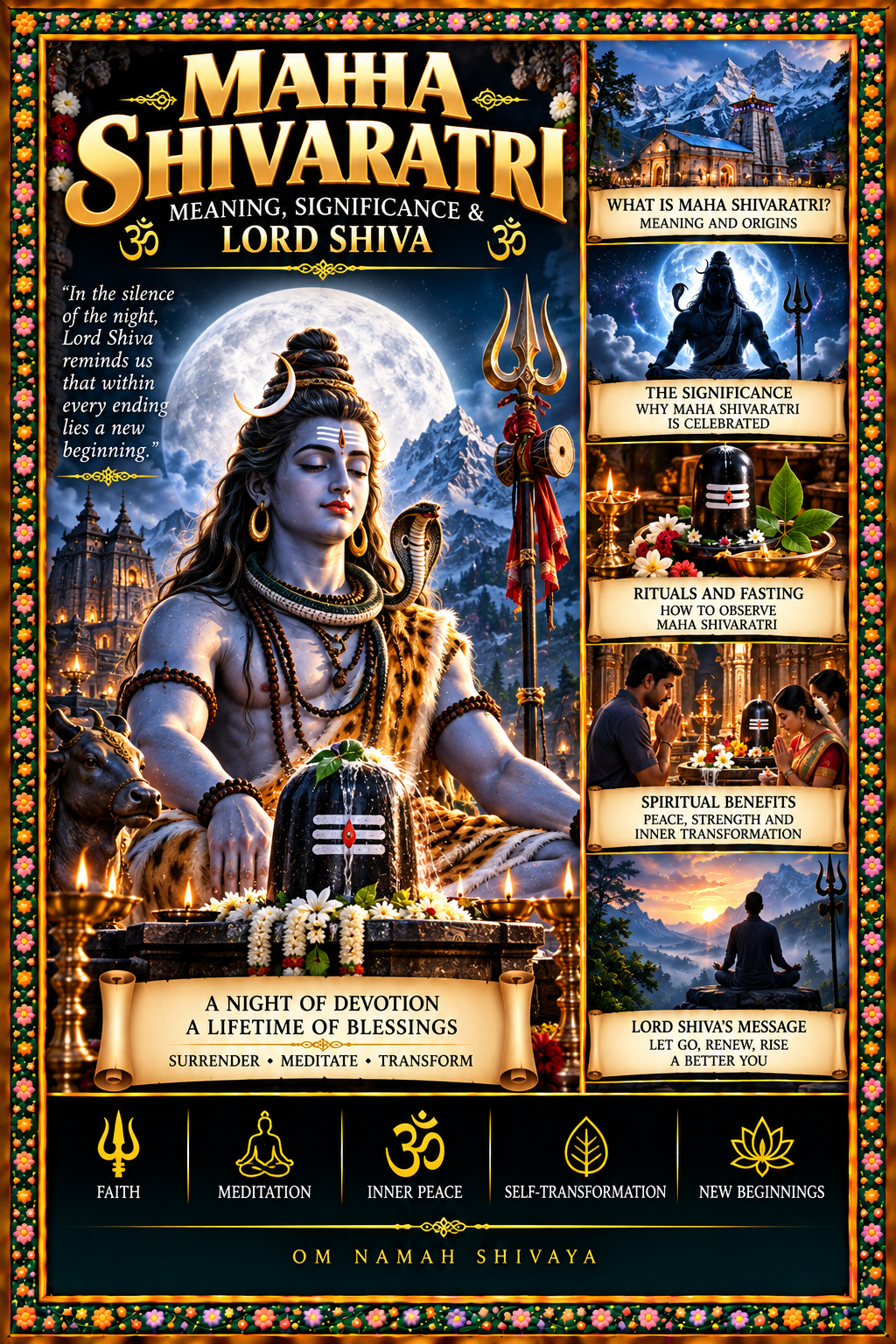
Maha Shivaratri: Meaning, Significance & Lord Shiva
Meaning and Significance of Maha Shivaratri Maha Shivaratri, meaning “The Great Night of Shiva,” is one of the most sacred festivals in Hindu spirituality. It symbolizes the cosmic union of consciousness and energy, where Lord Shiva represents supreme awareness and inner transformation. Observed on the 14th night of the dark fortnight in the month of Phalguna, this night is considered spiritually powerful for self-realization and liberation. For official cultural and historical archives, visit the Incredible India Official Tourism Authority. Lord Shiva — The Auspicious One Lord Shiva is known as Mahadeva, Bholenath, and The Destroyer—not of the world, but of ignorance and ego. He is the embodiment of stillness, compassion, renunciation, and infinite cosmic power. Shiva is: Why Maha Shivaratri Is Spiritually Powerful Unlike other festivals celebrated during the day, Maha Shivaratri is observed at night. Spiritually, this night: Ancient yogic traditions believe that on this night, planetary alignments support spiritual growth and meditation. Shiva Marriage Day — The Sacred Union Maha Shivaratri is also celebrated as the divine marriage of Lord Shiva and Goddess Parvati. This union represents: For married couples, it symbolizes marital harmony; for seekers, it represents inner completeness. Rituals and Observances of Maha Shivaratri Fasting (Upavasa)…
- Festivals , Mythology
- January 22, 2026
- 358 views
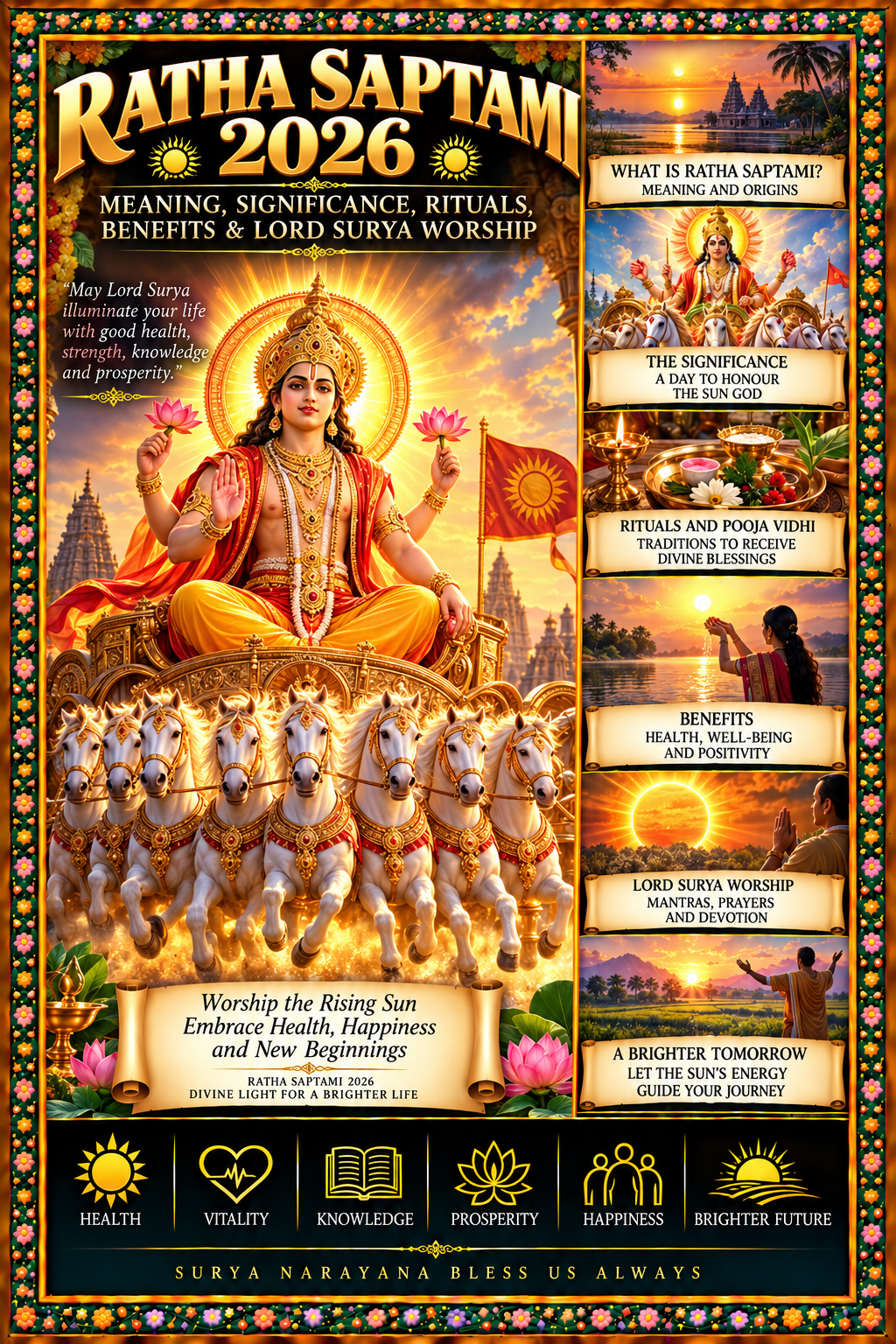
Ratha Saptami 2026: Meaning, Significance, Rituals, Benefits & Lord Surya Worship
Introduction Ratha Saptami is one of the most auspicious Hindu festivals dedicated to Lord Surya (the Sun God). Celebrated on the seventh day (Saptami) of the bright fortnight (Shukla Paksha) in the month of Magha, this festival holds deep spiritual, cultural, and scientific importance in Indian tradition. It marks the symbolic beginning of the Sun’s northward journey (Uttarayana) and is considered highly beneficial for health, prosperity, and spiritual growth. What is Ratha Saptami? (Meaning of Ratha Saptami Festival) The word Ratha means chariot and Saptami means seventh day. According to Hindu belief, on this sacred day, Lord Surya rides his divine chariot drawn by seven horses, symbolizing the seven colors of light, seven days of the week, and seven chakras of the human body. Ratha Saptami is also known as: This day signifies the awakening of solar energy on Earth and is considered ideal for new beginnings. Significance of Ratha Saptami in Hinduism Spiritual Significance of Ratha Saptami Ratha Saptami is believed to destroy sins, remove negative energies, and bring divine blessings. Worshipping the Sun God on this day is said to improve clarity of mind, inner strength, and spiritual awareness. Many devotees perform: These practices help purify the soul and enhance positive vibrations. Scientific & Health Benefits of Ratha…

- Festivals
- January 9, 2026
- 388 views
Makar Sankranti: Significance, Traditions, Rituals, and Celebrations Across India
Introduction of Makar Sankranti Sankranti is one of India’s most auspicious and widely celebrated festivals, deeply rooted in astronomy, agriculture, and spirituality. Observed every year in mid-January, this harvest festival marks the Sun’s transition into the zodiac sign Capricorn (Makara), symbolising a shift toward positivity, growth, and renewal. Unlike many Indian festivals that follow the lunar calendar, Makar Sankranti is governed by the solar cycle, making its date relatively fixed—usually January 14 or 15. Across the country, Makar Sankranti is celebrated with immense joy under different regional names and customs. At its heart, the festival expresses gratitude to nature, honours farmers and the harvest, and welcomes longer, brighter days. Astronomical & Spiritual Significance of Makar Sankranti On Makar Sankranti, the Sun begins its northward journey, Uttarayan.In Hindu philosophy, Uttarayan is considered highly auspicious and spiritually elevating. It is believed that deeds performed during this period yield positive outcomes and spiritual merit. Ancient scriptures describe the Sun as the visible form of the divine—an eternal source of life and energy. Worshipping the Sun on Sankranti symbolises enlightenment, discipline, and inner strength. This transition also signifies the gradual end of winter and the arrival of a season filled with warmth and hope.…

- Festivals
- October 12, 2025
- 491 views
Karthika Poornima 2025 – Significance, Rituals, and Celebration of the Sacred Full Moon Day
Introduction Karthika Poornima 2025 : Poornima, also known as Tripuri Poornima or Deva Diwali, is one of the most sacred full moon days in the Hindu calendar. It is celebrated on the full moon (Poornima) day of the Karthika Masam — a month deeply revered for its divine energy and spiritual merit This auspicious day marks the celebration of Lord Shiva’s victory over the demon Tripurasura and also holds significance for devotees of Lord Vishnu, who celebrate it as Vaikuntha Poornima. Lighting lamps, performing deepa daanam, fasting, and bathing in sacred rivers are the core rituals of this day. In 2025, Karthika Poornima falls on November 5 (Wednesday). Mythological Significance of Karthika Poornima 2025 Karthika Poornima is associated with multiple divine events in Hindu mythology. The most well-known is the story of Lord Shiva as Tripurantaka. According to the Shiva Purana, three demon brothers—Tarakasura, Kamalaksha, and Vidyunmali—had constructed three flying cities known as Tripura. They caused great destruction in the universe. The gods prayed to Lord Shiva, who destroyed the three cities with a single arrow on Karthika Poornima day, symbolizing the destruction of arrogance, ignorance, and evil. Hence, this day is known as Tripuri Poornima and signifies the victory…