Raja Ratnam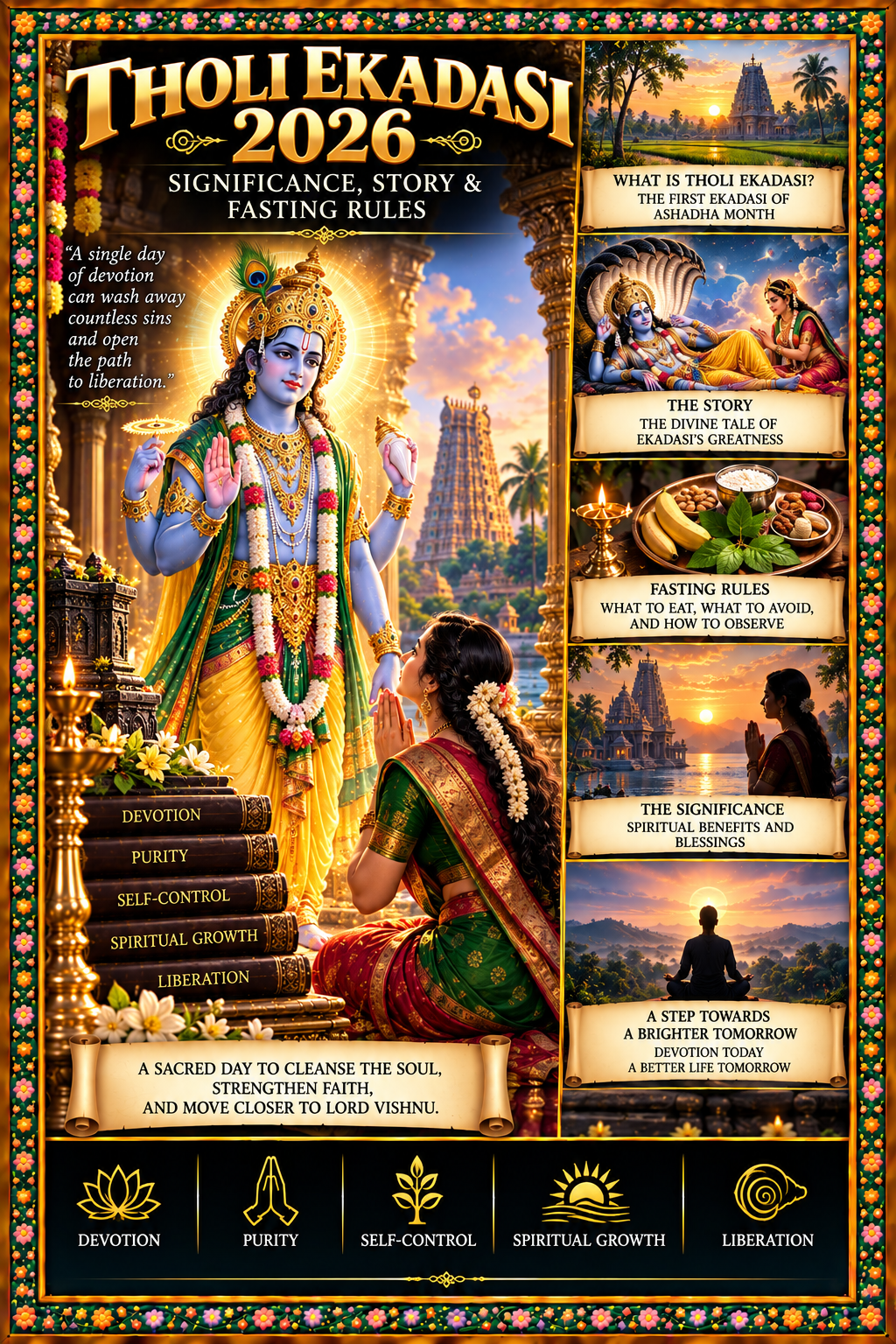
Introduction
Tholi Ekadasi is one of the most sacred Ekadasis celebrated by Hindus, especially in Andhra Pradesh, Telangana, Karnataka, and other parts of South India. Known as Shayani Ekadasi, Devshayani Ekadashi, or Ashadhi Ekadashi, this auspicious day marks the beginning of Lord Vishnu’s divine yogic sleep (Yoga Nidra), which lasts for four months, known as Chaturmasya.
The festival is celebrated with immense devotion as devotees observe fasting, chant the names of Lord Vishnu, read sacred scriptures, and seek divine blessings for prosperity, peace, and liberation (Moksha). In many famous Vishnu temples, including Tirumala, Srirangam, and Pandharpur, grand celebrations take place.
In this detailed guide by Ratnam Strategy, you will learn everything about Tholi Ekadasi, including its significance, mythology, fasting procedure, benefits, dos and don’ts, temple celebrations, and much more.
For official cultural and historical archives, visit the Ministry of Culture, Government of India.
What is Tholi Ekadasi?
The word Tholi means “first” in Telugu, while Ekadasi refers to the eleventh lunar day (11th Tithi) of the waxing phase (Shukla Paksha) of the Ashadha month.
It is considered the first important Ekadasi after the beginning of Dakshinayana, making it one of the most auspicious fasting days dedicated to Lord Vishnu.
Other names include:
- Devshayani Ekadashi
- Shayani Ekadashi
- Ashadhi Ekadashi
- Maha Ekadashi
Millions of devotees observe Tholi Ekadasi to receive the blessings of Lord Maha Vishnu.
Why is Tholi Ekadasi Celebrated?
According to Hindu scriptures, on this sacred day Lord Vishnu enters Yoga Nidra (cosmic sleep) on the serpent Adishesha in Ksheera Sagara (Ocean of Milk).
This marks the beginning of the holy period called Chaturmasya, during which devotees increase spiritual practices, perform charity, and avoid unnecessary luxuries.
Lord Vishnu awakens four months later on Prabodhini Ekadashi (Karthika Ekadasi).
The Story Behind Tholi Ekadasi
Lord Vishnu’s Divine Sleep
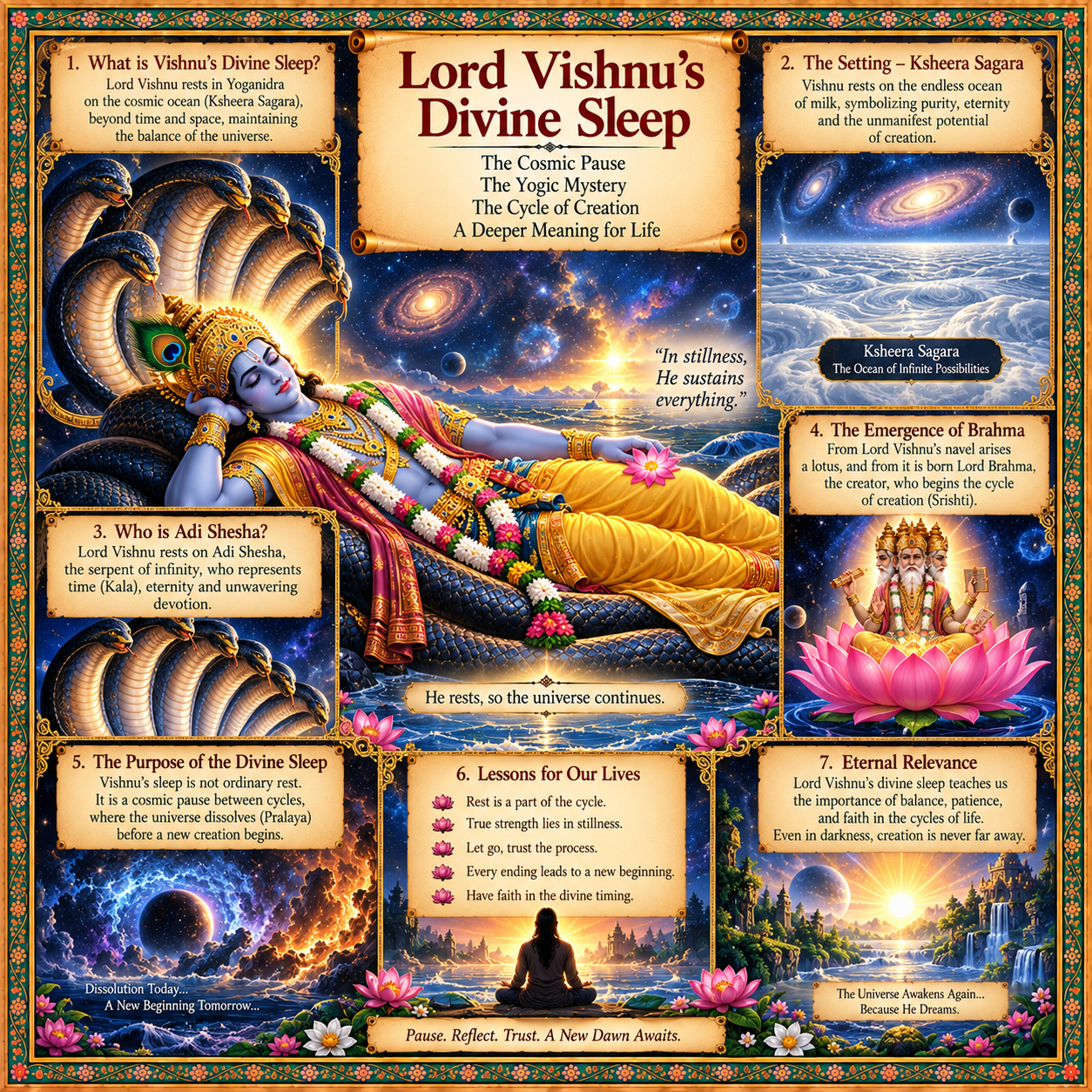
Ancient scriptures narrate that after protecting the universe continuously, Lord Vishnu decided to enter a divine yogic sleep for four months.
During this period:
- Lord Shiva governs spiritual transformation.
- Devotees focus on prayers and self-discipline.
- Saints perform penance.
- Pilgrimages become highly auspicious.
This divine sleep symbolizes inner meditation rather than ordinary sleep.
King Mandata’s Story
Another legend from the Padma Purana tells the story of King Mandata.
His kingdom suffered from severe drought for years.
The king approached sages seeking a solution.
The sages advised him to observe Tholi Ekadasi Vratam sincerely.
The king, along with his entire kingdom, observed fasting and worshipped Lord Vishnu.
Pleased with their devotion, Lord Vishnu blessed the kingdom with abundant rains, prosperity, and happiness.
This story teaches that sincere devotion removes difficulties and brings divine grace.
Spiritual Significance of Tholi Ekadasi
Observing Tholi Ekadasi is believed to:
- Remove accumulated sins.
- Purify the mind.
- Improve concentration.
- Bring prosperity.
- Remove obstacles.
- Grant peace and happiness.
- Help attain Moksha.
- Increase devotion towards Lord Vishnu.
Many devotees stay awake throughout the night singing bhajans and chanting the Vishnu Sahasranama.
Tholi Ekadasi Vratam Procedure
Preparation
One day before Ekadasi:
- Eat light and sattvic food.
- Avoid onion, garlic, and non-vegetarian food.
- Maintain purity in thoughts.
Early Morning Rituals
Wake up during Brahma Muhurta.
Take a holy bath.
Wear clean traditional clothes.
Decorate the puja room.
Offer fresh flowers to Lord Vishnu.
Light a ghee lamp.
Sankalpa
Take a vow to observe the Ekadasi fast with sincerity and devotion.
Worship
Offer:
- Tulsi leaves
- Fruits
- Milk
- Panchamrit
- Incense
- Sandal paste
Recite:
- Vishnu Sahasranama
- Bhagavad Gita
- Narayana Kavacham
- Om Namo Narayanaya mantra
Fasting Rules
Depending on one’s health:
Nirjala Fast
No food or water.
Water Fast
Only water.
Fruit Fast
Fruits and milk.
Satvik Ekadasi Diet
Sabudana, fruits, milk, coconut water, dry fruits.
Foods to Avoid
Do not consume:
- Rice
- Wheat (traditional followers)
- Lentils
- Beans
- Onion
- Garlic
- Meat
- Alcohol
Importance of Tulsi During Tholi Ekadasi
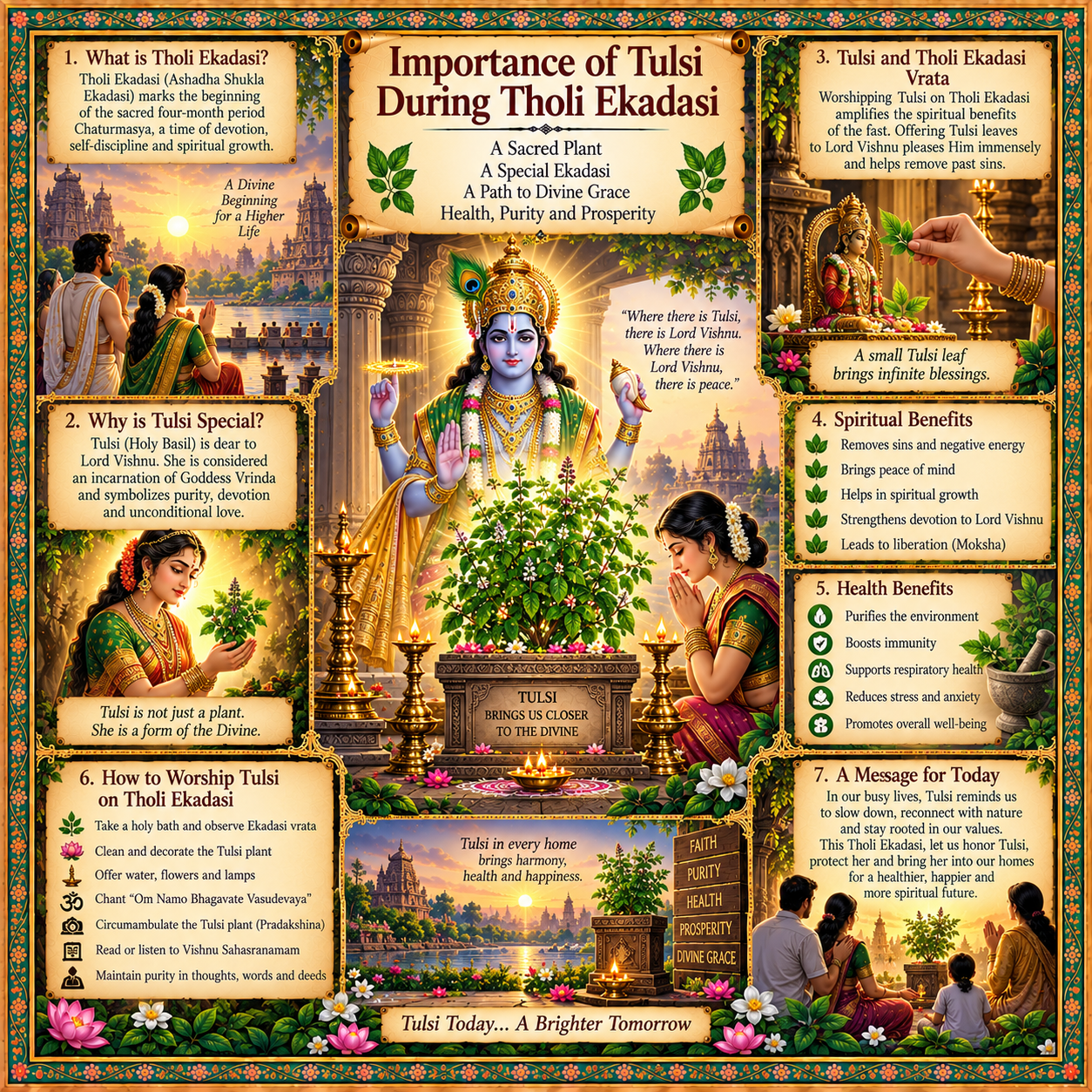
.Lord Vishnu places a great deal of value on Tulsi
Offering even a single Tulsi leaf with devotion is believed to grant immense spiritual merit.
Many devotees also perform Tulsi Pradakshina and chant Vishnu mantras.
Famous Temples Celebrating Tholi Ekadasi
Several temples conduct grand celebrations.
Tirumala Tirupati
Special darshan, Vishnu Sahasranama parayanam, and devotional programs.
Srirangam
Special pujas for Lord Ranganatha.
Pandharpur
Lakhs of devotees complete the famous Ashadhi Wari pilgrimage.
Yadadri
Thousands observe fasting and special Vishnu worship.
Bhadrachalam
Special prayers dedicated to Lord Rama.
: Benefits of Observing Tholi Ekadasi
Scriptures mention numerous benefits:
- Spiritual purification
- Prosperity
- Mental peace
- Good health
- Removal of sins
- Family harmony
- Financial stability
- Success in life
- Positive karma
- Divine blessings
- Protection from negativity
- Progress in spiritual life
Do’s and Don’ts
Do’s
- Chant Vishnu mantras.
- Visit Vishnu temples.
- Read Bhagavad Gita.
- Donate food and clothes.
- Stay positive.
- Perform charity.
Don’ts
- Consume tamasic food.
- Speak harsh words.
- Lie.
- Waste food.
- Harm animals.
- Engage in negative activities.
Importance of Charity
Donating on Tholi Ekadasi multiplies spiritual merit.
Popular donations include:
- Food
- Clothes
- Cow feeding
- Fruits
- Water
- Holy books
- Financial assistance
Scientific Perspective
Although primarily a spiritual observance, fasting may also:
- Support digestive rest.
- Encourage mindful eating.
- Improve self-discipline.
- Promote mental clarity.
- Reduce overeating.
These potential health effects vary by individual and fasting should be adapted according to age, health conditions, and medical advice.
Why Millions Observe Tholi Ekadasi Every Year
It is not just about abstaining from food at the festival
It teaches:
- Self-control
- Compassion
- Devotion
- Simplicity
- Gratitude
- Inner purification
- Faith in Lord Vishnu
This is why Tholi Ekadasi continues to inspire millions of devotees across generations.
Conclusion
Tholi Ekadasi is one of the holiest observances dedicated to Lord Vishnu. It marks the sacred beginning of Chaturmasya and reminds devotees to cultivate devotion, discipline, and righteousness. Whether you observe a complete fast or worship with sincere faith according to your ability, the essence of this Ekadasi lies in purity of heart, prayer, charity, and remembrance of Lord Vishnu. By following the traditions with devotion, devotees seek divine grace, inner peace, and spiritual progress.
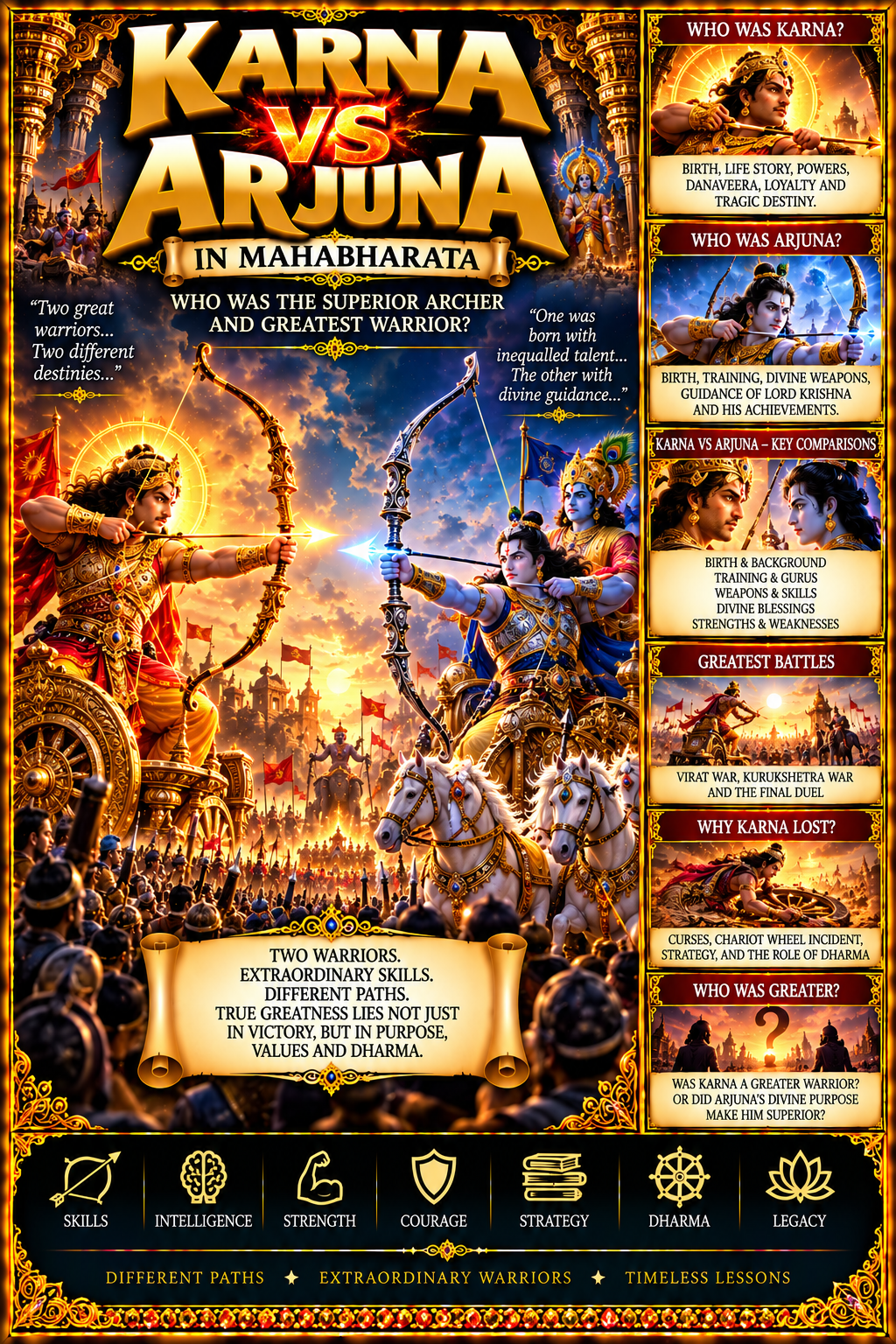
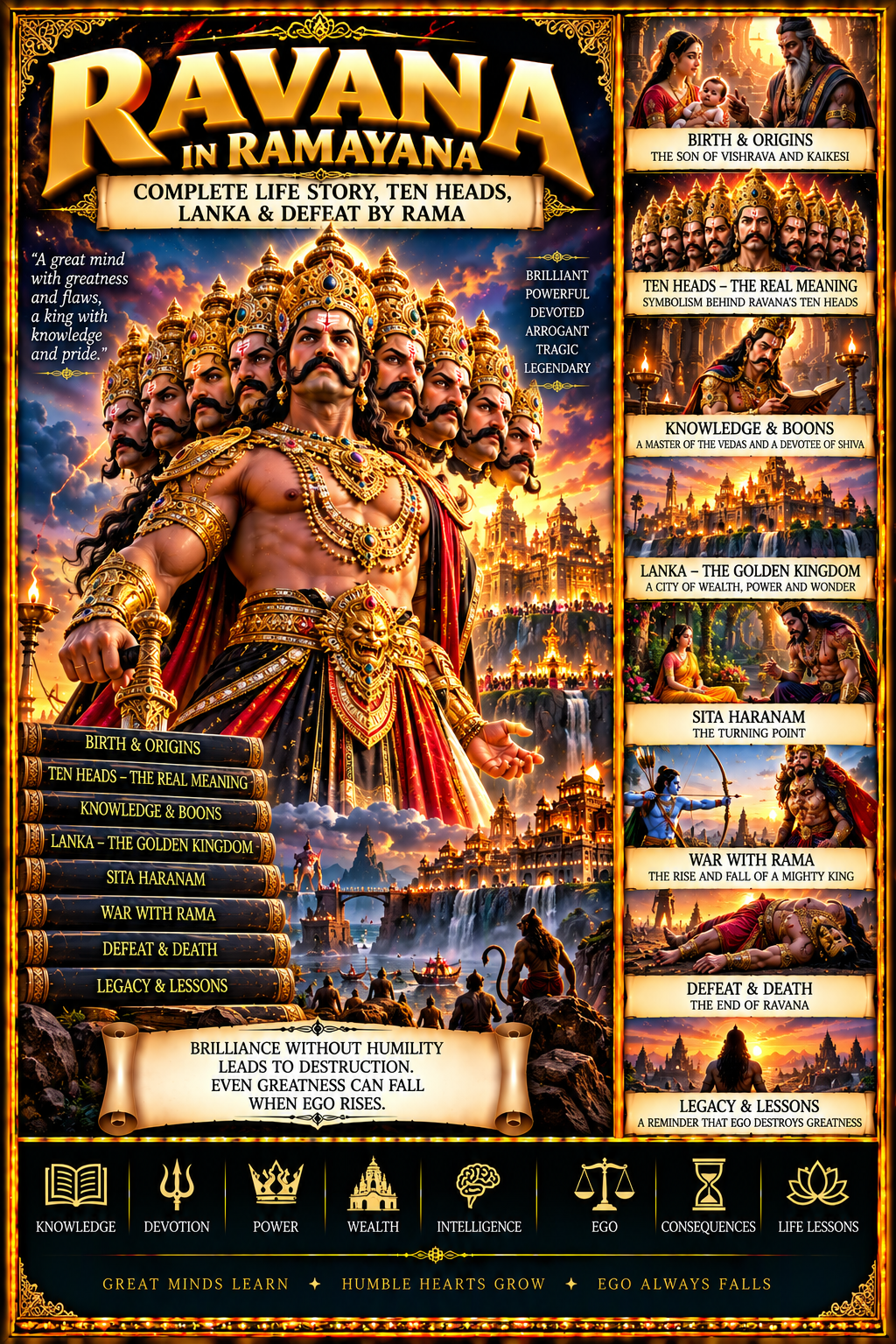
Related Sacred Topics & Cultural Heritage: For further spiritual exploration, read about the 14-year exile of Lord Rama. For further spiritual exploration, read about Ravana’s story in the Ramayana.
Frequently Asked Questions (FAQs)
1. What is Tholi Ekadasi?
It is the Ashadha Shukla Ekadasi dedicated to Lord Vishnu and marks the beginning of Chaturmasya.
2. Why is it called Tholi Ekadasi?
“Tholi” means “first” in Telugu, signifying the first major Ekadasi of the sacred period.
3. Which deity is worshipped on Tholi Ekadasi?
Lord Maha Vishnu.
4. What is another name for Tholi Ekadasi?
Shayani Ekadashi or Devshayani Ekadashi.
5. Why does Lord Vishnu sleep on this day?
According to tradition, He enters Yoga Nidra for four months during Chaturmasya.
6. Is fasting compulsory?
No. Devotion and sincerity are considered more important than the type of fast.
7. Can elderly people avoid strict fasting?
Yes. They may follow a simple sattvic diet based on their health.
8. What foods are allowed?
Fruits, milk, dry fruits, coconut water, and Ekadasi-approved foods.
9. Can rice be eaten?
Traditionally, rice is avoided on Ekadasi.
10. Which mantra is best?
Om Namo Narayanaya.
11. Which scripture should be read?
Vishnu Sahasranama and the Bhagavad Gita are commonly recited.
12. What is Chaturmasya?
A four-month sacred period beginning with Tholi Ekadasi and ending on Prabodhini Ekadashi.
13. Can women observe the vratam?
Yes, women can observe it according to their health and family traditions.
14. Is charity important on this day?
Yes. Charity is considered highly meritorious.
15. What flowers are offered?
Fresh, fragrant flowers along with Tulsi leaves.
16. Why is Tulsi important?
Tulsi is regarded as especially dear to Lord Vishnu.
17. Which temples celebrate Tholi Ekadasi grandly?
Tirumala, Srirangam, Pandharpur, Yadadri, and Bhadrachalam.
18. What are the spiritual benefits?
Inner peace, devotion, purification, and progress toward Moksha.
19. When is the fast broken?
On Dwadashi, after completing the prescribed worship and following the appropriate Parana time.
20. Can children observe Tholi Ekadasi?
Yes, they can participate through simple prayers, chanting, and a light sattvic diet under parental guidance.