Raja Ratnam
- Children of King Shantanu , Kuru Dynasty , Ramayanam
- October 11, 2026
- 98 views
Why Is Ravana Burned on Dasara? The History of Ramlila Effigies & Conquering Inner Vices
Discover why Ravana effigies (Ravan Dahan) are burned on Dasara. Learn the Ramayana story, symbolic meaning of Ravana’s 10 heads, and spiritual significance of Vijayadashami.
- Children of King Shantanu
- May 2, 2026
- 256 views
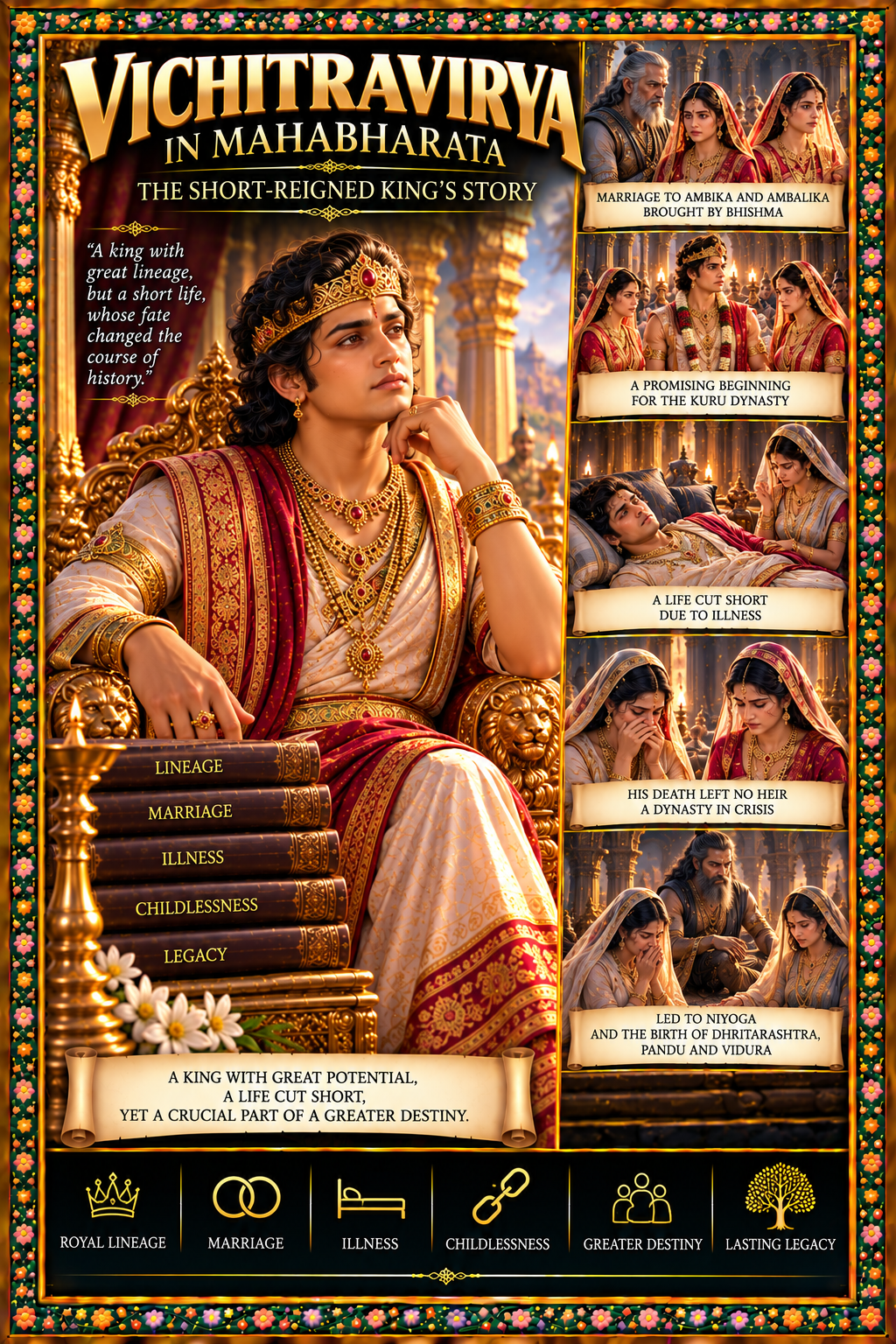
Vichitravirya in Mahabharata: The Hastinapur King & Father of Dhritarashtra and Pandu
Vichitravirya in the Mahabharata – The Short-Reigned King Who Changed Destiny Vichitravirya in Mahabharata Ascending the throne of Hastinapur as a fragile youth after his elder brother Chitrangada fell in battle, Prince Vichitravirya carried the immense weight of royal expectations on young shoulders. Protected by his formidable half-brother Bhishma, he was wedded to princesses Ambika and Ambalika. Though his reign was cut short by illness before he could sire an heir, Vichitravirya’s untimely passing set off the chain of events that brought Sage Vyasa to the palace, forever altering the royal lineage of India. Vichitravirya was the son of King Shantanu and Queen Satyavati, and the younger half-brother of the mighty Bhishma. His life, marked by royal privilege, fragile health, and untimely death, set in motion events that eventually led to the great Kurukshetra war. For official cultural and historical archives, visit the Ministry of Culture, Government of India. Birth and Lineage of Vichitravirya – Vichitravirya in Mahabharata Vichitravirya was born into the illustrious Kuru dynasty, one of the most powerful royal families in the Mahabharata. His parents were: He had an elder brother, Chitrangada, who initially ascended the throne. However, after Chitrangada’s untimely death in battle, the young Vichitravirya…
- Children of King Shantanu , Mahabharatam
- April 25, 2026
- 294 views
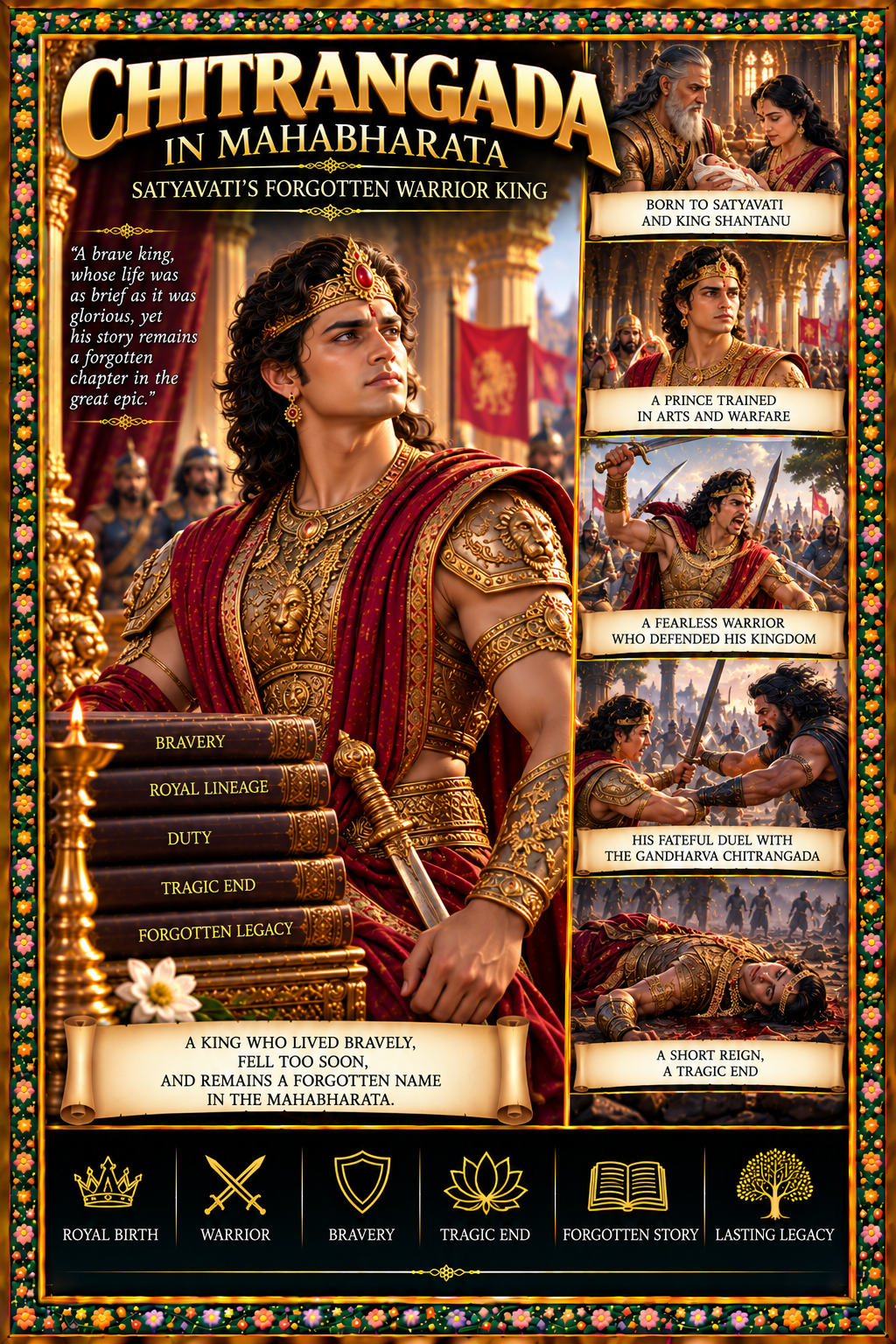
Chitrangada in Mahabharata: The Warrior King Killed by His Gandharva Namesake
Chitrangada in the Mahabharata – The Forgotten Kuru King When King Shantanu passed away, the first son of Queen Satyavati to ascend the golden throne of Hastinapur was young Chitrangada. Brave, fiery, and fiercely proud of his royal lineage, he was a formidable warrior who defeated rival kings far and wide. Yet his reign ended abruptly during an epic three-year duel on the banks of the Saraswati river against a Gandharva king of the same name. His short, dramatic life was an early warning of how pride can cut short even the most promising rulers. One such figure is Chitrangada – the elder son of Satyavati and Shantanu. Though his life was short, his story carries deep lessons about pride, destiny, and the fragile nature of power. Birth and Royal Lineage of Chitrangada Son of a Legendary Queen Chitrangada was born into the royal Kuru dynasty, one of the most powerful lineages in ancient India. His mother, Satyavati, was a woman of remarkable destiny who rose from humble beginnings to become the queen of Hastinapura. His father, Shantanu, was a noble and respected ruler. Through this union, Chitrangada inherited both royal authority and immense responsibility. Brother of Vichitravirya Chitrangada had…
- Children of King Shantanu
- January 3, 2026
- 638 views
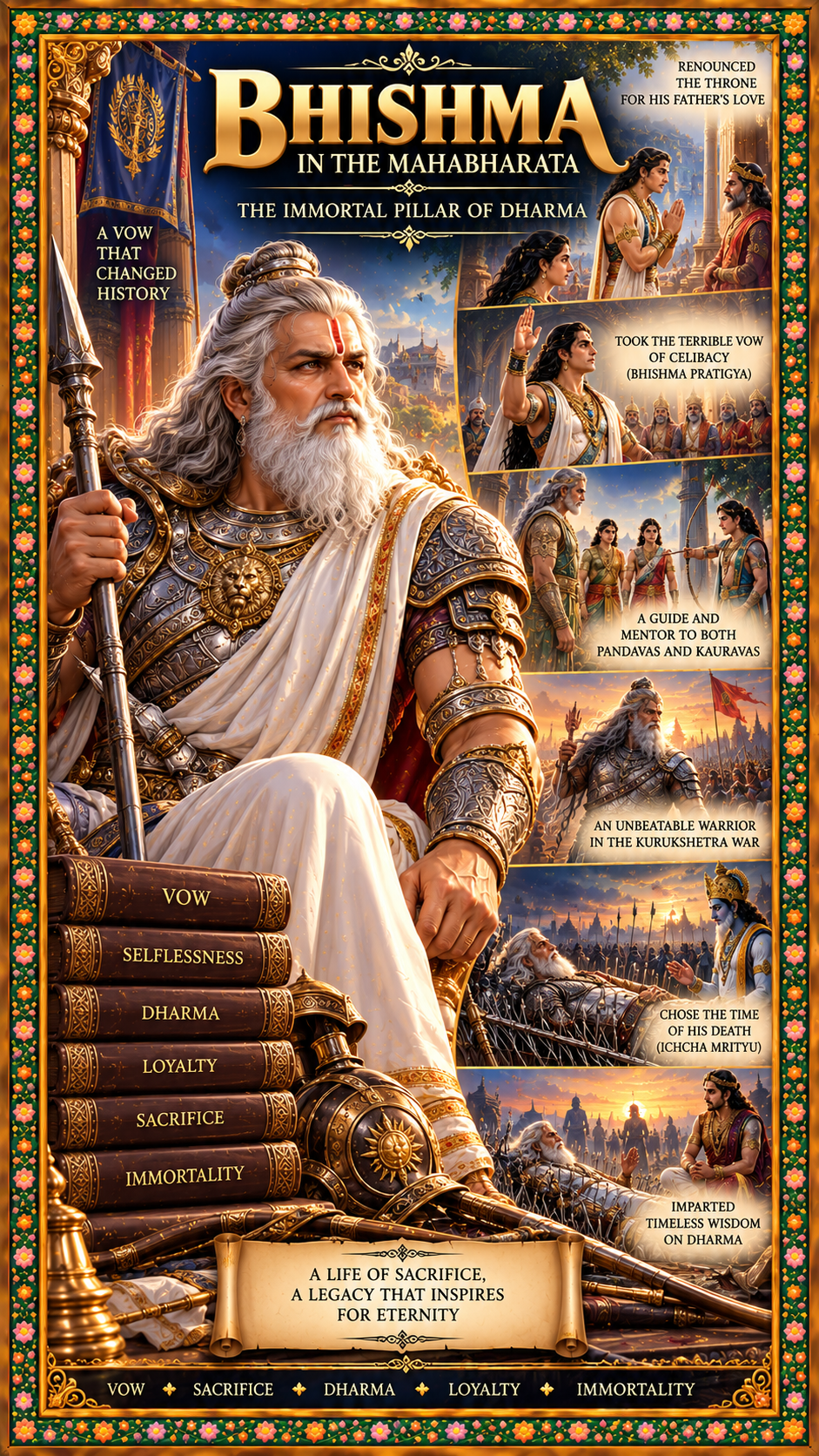
Bhishma in Mahabharata: The Terrible Vow (Pratigya), Powers & Bed of Arrows
Introduction Few figures in human literature command as much respect, sorrow, and awe as Bhishma Pitamaha. Renouncing his royal birthright and taking a solemn vow of lifelong celibacy to grant his father happiness, Prince Devavrata became ‘Bhishma’ – the one of the terrible vow. Blessed with the power to choose the moment of his own death, he stood for decades as the invincible guardian of Hastinapur, enduring a tragic destiny that saw him lying on a bed of arrows as teacher to the next generation. Birth of Bhishma – Devavrata, the Son of Destiny Devavrata, the son of King Shantanu, ruler of the Kuru dynasty, and Ganga, the goddess of the River Ganga, was Bhishma’s birth name. Devavrata was no ordinary child. Trained by great sages and blessed by celestial beings, he mastered: From a young age, he was destined to become a legendary protector of the Kuru dynasty. The Terrible Vow – Why He Is Called Bhishma The turning point of Devavrata’s life came when King Shantanu wished to marry Satyavati. In order to inherit the throne, her father demanded that only her children inherit it. To fulfill his father’s happiness, Devavrata took a terrible (bhīṣaṇa) vow: The gods…