Admin
Admin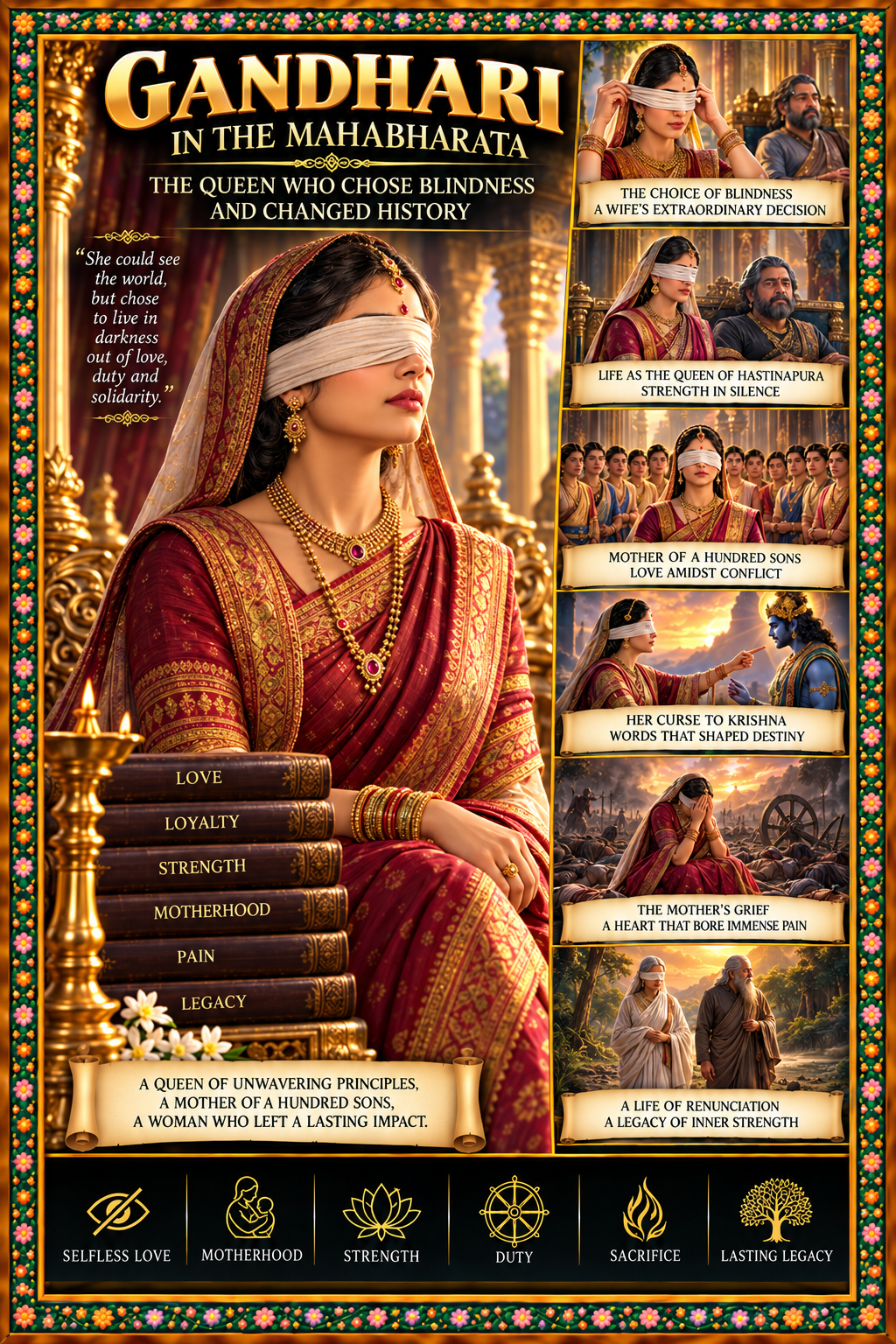
The Mahabharata is filled with extraordinary characters whose decisions shaped one of the greatest epics ever written. Among them, Gandhari in the Mahabharata stands as one of the most respected and misunderstood women. She is remembered for voluntarily blindfolding herself for life, being the mother of the hundred Kauravas, and cursing Lord Krishna after the devastating Kurukshetra War.
The story of Gandhari in the Mahabharata is not merely about sacrifice—it is about duty, motherhood, pain, and destiny. Gandhari’s life demonstrates how personal choices can influence generations and alter the course of history. Her unwavering devotion to her husband, her deep love for her children, and her commitment to Dharma make Gandhari in the Mahabharata one of the most inspiring and complex female characters in Indian mythology.
This detailed guide explores the complete life of Gandhari in the Mahabharata, including her marriage to Dhritarashtra, the reason behind her blindfold, her role during the Kurukshetra War, her famous curse on Lord Krishna, and the timeless lessons her life continues to offer.
Who Was Gandhari? Gandhari in the Mahabharata
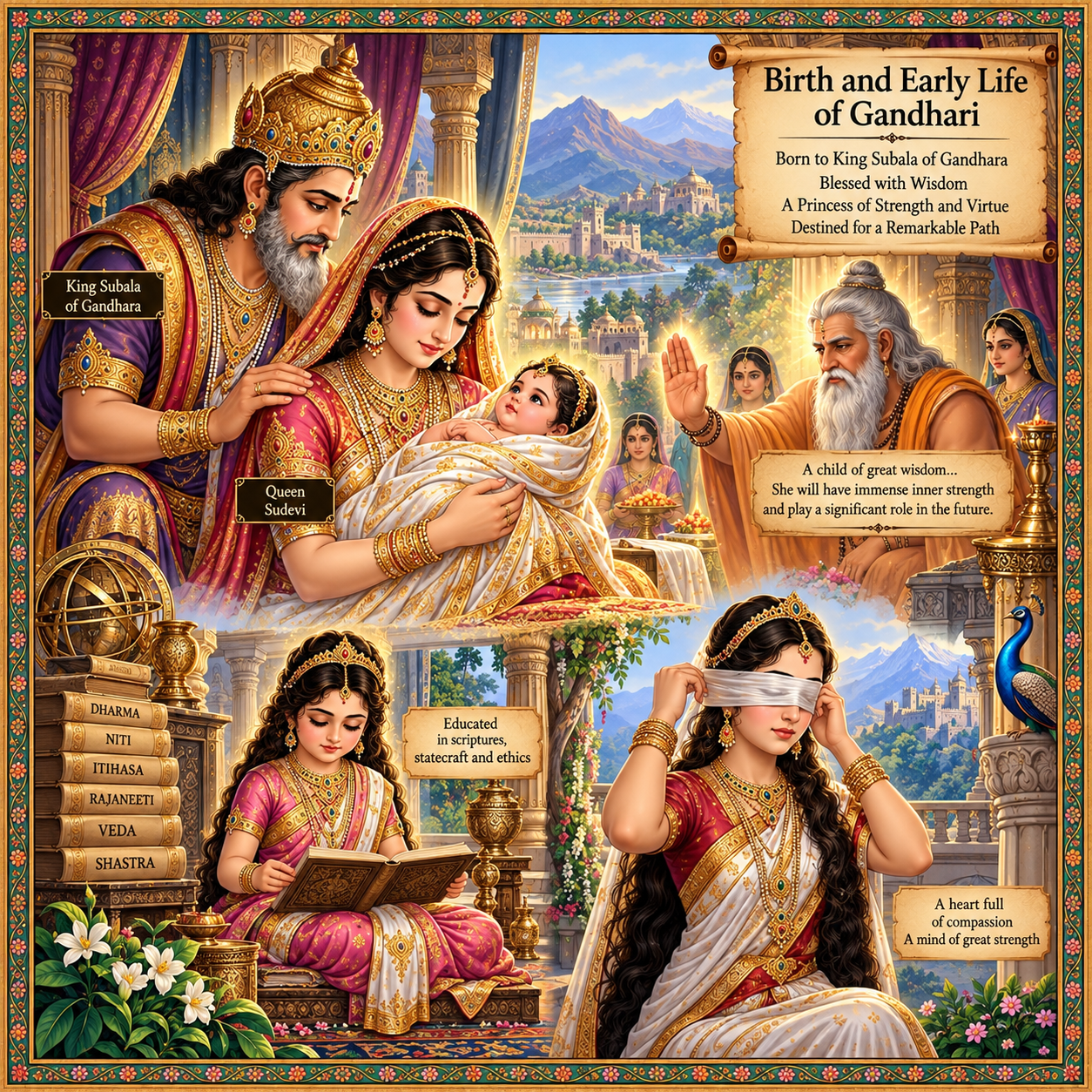
Gandhari was the princess of the Kingdom of Gandhara, ruled by King Subala. She was renowned for her beauty, wisdom, patience, and devotion to Dharma.
She later became the wife of King Dhritarashtra of Hastinapura, who was born blind. Gandhari is best known as the mother of the Kauravas, including Duryodhana and Dushasana.
She played a crucial role throughout the Mahabharata, even though she rarely appeared on the battlefield. Her words and decisions carried enormous moral weight.
Birth and Early Life of Gandhari
Princess of Gandhara
Gandhari was born into the royal family of Gandhara. From childhood, she received education in scriptures, politics, ethics, and royal administration.
She was known for:
- Exceptional intelligence
- Strong devotion to spirituality
- Compassion for others
- Calm and disciplined nature
Many kings sought her hand in marriage due to her virtues.
Marriage to Dhritarashtra-Gandhari in the Mahabharata
Bhishma arranged Gandhari’s marriage with Dhritarashtra, the eldest prince of Hastinapura.
However, Gandhari soon learned that her husband had been blind since birth.
Instead of feeling cheated or refusing the marriage, she made a decision that became one of the most famous acts in Indian mythology.
Why Did Gandhari Wear a Blindfold? Gandhari in the Mahabharata
The Greatest Sacrifice – Gandhari in the Mahabharata
After marrying Dhritarashtra, Gandhari tied a cloth over her own eyes.
She declared that if her husband could never experience the beauty of the world, she too would not enjoy what he could not.
This decision symbolized:
- Loyalty
- Equality in marriage
- Self-sacrifice
- Compassion
For the rest of her life, Gandhari remained voluntarily blind.
Different Interpretations of Gandhari’s Blindfold – Gandhari in the Mahabharata
Scholars interpret Gandhari’s blindfold in different ways. Symbol of Devotion
Many believe it represented absolute dedication to her husband.
Silent Protest – Gandhari in the Mahabharata
Some scholars suggest it was Gandhari’s way of protesting against a marriage arranged without her consent.
Spiritual Discipline – Gandhari in the Mahabharata
Some believe she chose blindness so she could focus on her inner wisdom rather than the pleasures of the world.
The Mahabharata allows readers to reflect on these interpretations without giving a single definitive answer.
Birth of the Kauravas – Gandhari in the Mahabharata
One of the most unusual episodes in the Mahabharata concerns Gandhari’s motherhood.
A Long Pregnancy – Gandhari in the Mahabharata
Gandhari remained pregnant for nearly two years.
Meanwhile, Kunti gave birth to Yudhishthira, making him the first heir to the throne.
Frustrated and heartbroken, Gandhari struck her womb, resulting in the birth of a hard lump of flesh.
Sage Vyasa’s Miracle – Gandhari in the Mahabharata
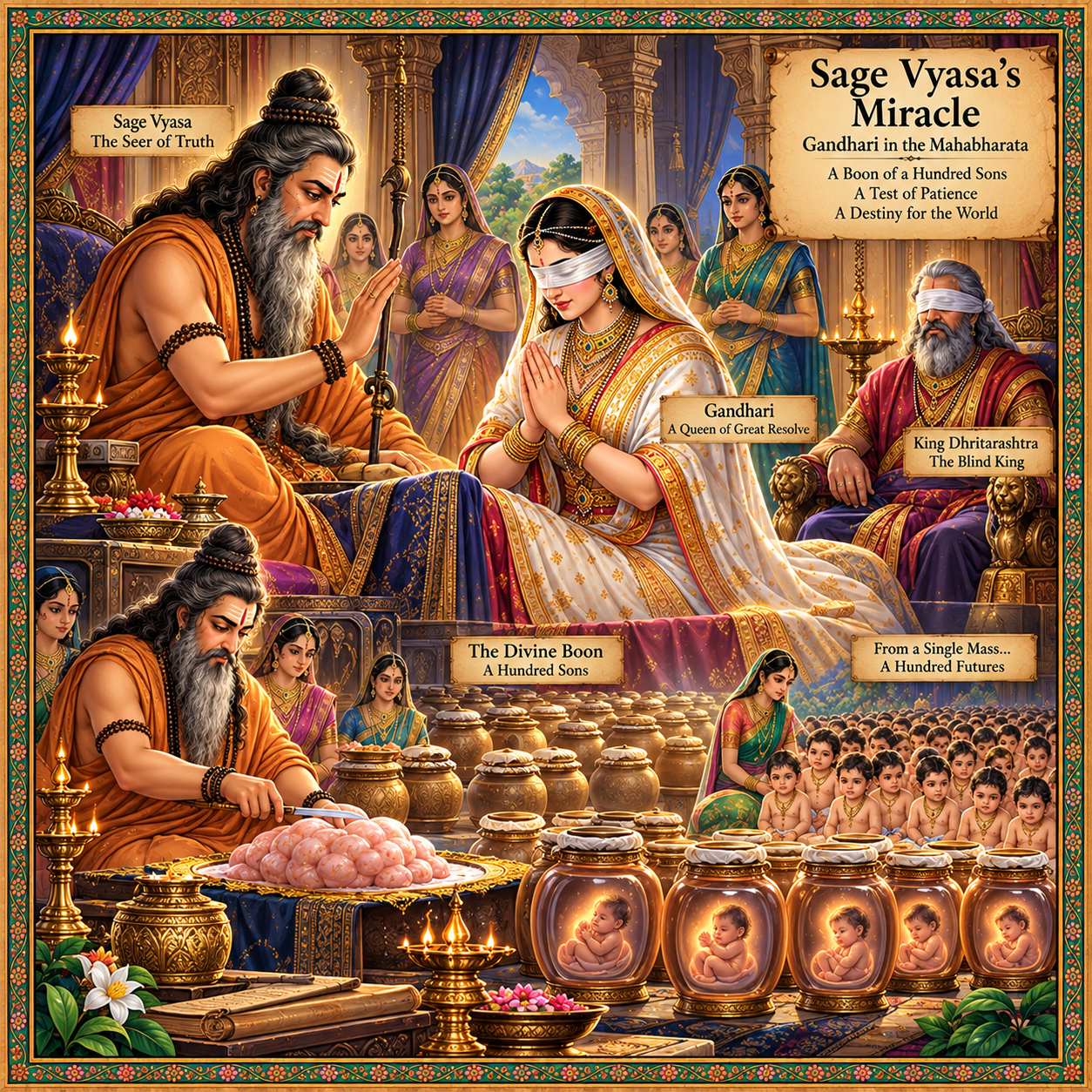
Sage Vyasa instructed that the lump be divided into 101 pieces.
Each piece was placed in a pot filled with clarified butter.
After some time:
- 100 sons were born.
- One daughter, Dushala, was also born.
Thus Gandhari became the mother of the hundred Kauravas.
Gandhari as a Mother – Gandhari in the Mahabharata
Gandhari deeply loved all her children.
However, she repeatedly warned Duryodhana against:
- Jealousy
- Pride
- Greed
- Hatred toward the Pandavas
Despite her advice, Duryodhana ignored her counsel and continued down the path of destruction.
Gandhari and the Pandavas – Gandhari in the Mahabharata
Although she was the mother of the Kauravas, Gandhari never hated the Pandavas.
She respected them as members of the Kuru family.
She particularly admired:
- Yudhishthira’s righteousness
- Arjuna’s discipline
- Bhima’s strength
- Nakula and Sahadeva’s humility
Her greatest sorrow was witnessing the division within her own family.
Gandhari During the Dice Game – Gandhari in the Mahabharata
One of the darkest moments in the Mahabharata was the gambling match.
When Draupadi was humiliated in the royal court, Gandhari strongly disapproved of the events.
Although she could not prevent the injustice completely, she later advised Dhritarashtra to restore Draupadi’s honor and return the Pandavas’ kingdom.
This reflects her commitment to justice despite family loyalties.
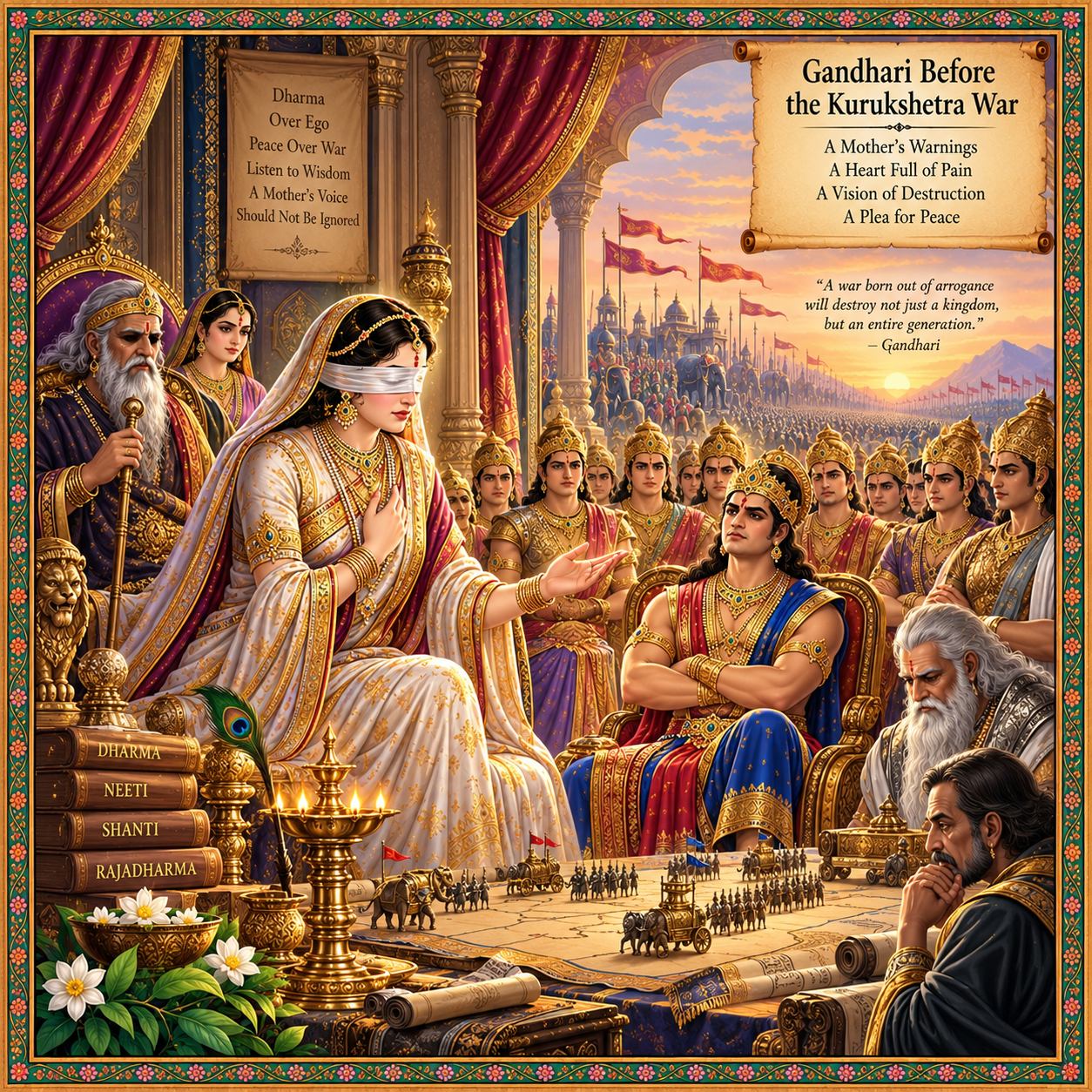
Gandhari Before the Kurukshetra War – Gandhari in the Mahabharata
Efforts to Prevent War – Gandhari in the Mahabharata
Before the war began, Gandhari pleaded with Duryodhana to seek peace.
She knew war would destroy both sides.
Unfortunately, Duryodhana refused every opportunity for reconciliation.
Gandhari’s Divine Power – Gandhari in the Mahabharata
Years of discipline and penance gave Gandhari immense spiritual energy.
Before Bhima’s final battle with Duryodhana, Gandhari wished to make her son’s body invincible.
She asked him to appear before her without clothes.
However, Lord Krishna advised Duryodhana to cover his thighs with banana leaves.
When Gandhari removed her blindfold after decades, her powerful gaze strengthened every exposed part of Duryodhana’s body except his thighs.
Later, Bhima defeated Duryodhana by striking that vulnerable area.
Gandhari’s Curse on Lord Krishna – Gandhari in the Mahabharata
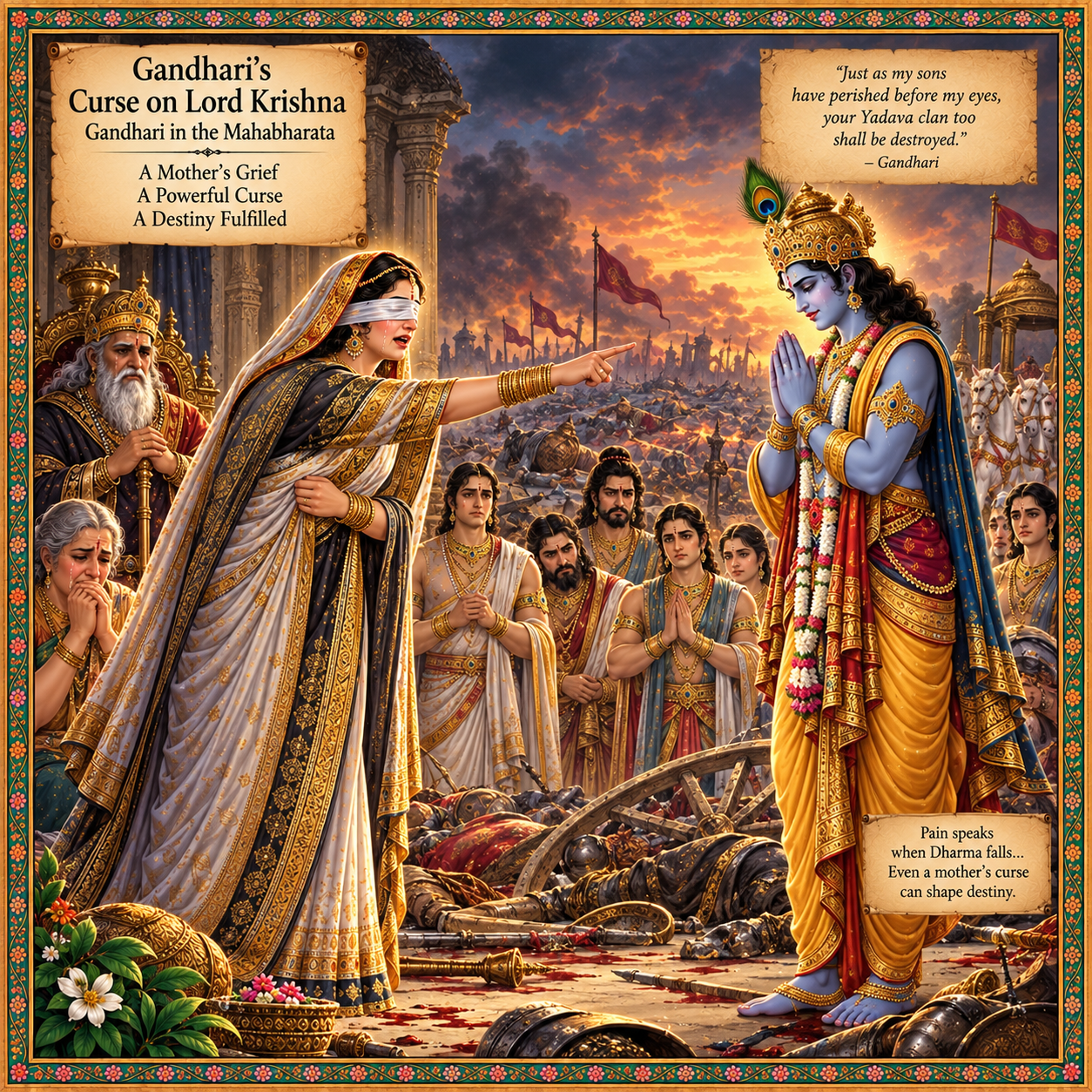
After the Kurukshetra War, Gandhari saw the bodies of her hundred sons lying on the battlefield.
Her grief was beyond words.
Although she acknowledged Krishna’s divinity, she believed He could have prevented the war.
In deep sorrow, Gandhari cursed Krishna that:
- The Yadava dynasty would destroy itself.
- Krishna’s earthly life would eventually come to an end.
- Dwaraka would perish.
Years later, the Mahabharata records that these events came to pass.
Gandhari After the War – Gandhari in the Mahabharata
Following the war:
- Gandhari forgave the Pandavas.
- She blessed Yudhishthira.
- She accepted destiny with remarkable dignity.
She later retired to the forest with:
- Dhritarashtra
- Kunti
- Vidura (during part of this period)
They spent their remaining years in spiritual contemplation.
Gandhari’s Death – Gandhari in the Mahabharata
According to the Mahabharata, Gandhari died in a forest fire alongside Dhritarashtra after renouncing royal life.
Her death symbolizes detachment from worldly suffering and acceptance of fate.
Character Analysis of Gandhari -Gandhari in the Mahabharata
Strengths
- Extraordinary patience
- Loyalty to family
- Deep spirituality
- Wise counselor
- Moral courage
- Compassion
Weaknesses
- Excessive attachment to her sons
- Inability to stop Duryodhana decisively
- Remaining silent at certain critical moments
These complexities make Gandhari one of the most realistic and relatable characters in the Mahabharata.
Life Lessons from Gandhari – Gandhari in the Mahabharata
Sacrifice Should Be Balanced with Wisdom
Selflessness is admirable, but it should never prevent one from confronting injustice.
Parents Must Correct Their Children
Love should include discipline and moral guidance.
Silence Can Be Costly
Remaining silent in the face of wrongdoing may contribute to greater suffering.
Anger Can Lead to Regret
Even Gandhari’s curse emerged from overwhelming grief, reminding us of the consequences of emotional decisions.
Gandhari’s Legacy
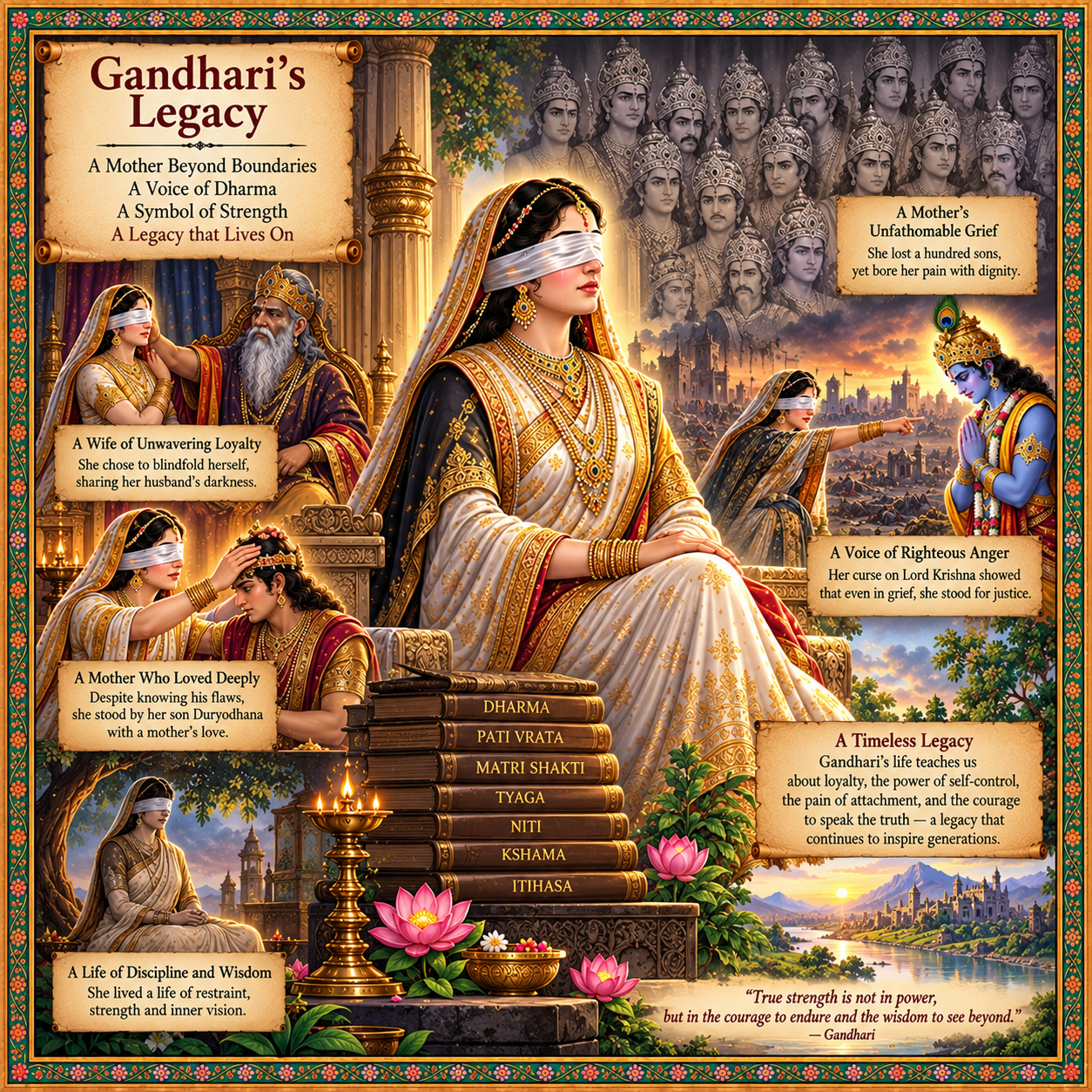
Even thousands of years later, Gandhari continues to inspire discussions about:
- Women’s strength
- Moral responsibility
- Motherhood
- Leadership
- Dharma
- Family values
She remains one of the most powerful female figures in Indian literature.
Conclusion
Gandhari’s story is one of profound sacrifice, unwavering devotion, and heartbreaking tragedy. Her decision to blindfold herself has been interpreted as loyalty, protest, and spiritual discipline. As the mother of the Kauravas, she endured unimaginable loss, yet she remained committed to Dharma and truth.
Her life reminds us that wisdom must accompany love, courage must accompany duty, and silence in the face of injustice can have lasting consequences. Gandhari’s legacy continues to resonate with readers of the Mahabharata, offering timeless lessons about family, leadership, sacrifice, and the complexities of human nature.
Frequently Asked Questions (FAQs)
1. Who was Gandhari in the Mahabharata?
Gandhari was the princess of Gandhara, wife of Dhritarashtra, and mother of the hundred Kauravas.
2. Why did Gandhari wear a blindfold?
She voluntarily blindfolded herself to share her blind husband’s condition and symbolize loyalty and equality.
3. Who were Gandhari’s parents?
Her father was King Subala of Gandhara.
4. Who was Gandhari’s husband?
King Dhritarashtra of Hastinapura.
5. How many children did Gandhari have?
She had 100 sons and one daughter named Dushala.
6. Who was Gandhari’s eldest son?
Duryodhana.
7. Why was Gandhari pregnant for so long?
The Mahabharata states that her pregnancy lasted nearly two years before Sage Vyasa intervened.
8. How were the Kauravas born?
A lump of flesh was divided into 101 pieces and developed in pots of clarified butter under Sage Vyasa’s guidance.
9. Did Gandhari support Duryodhana?
She loved him as a mother but repeatedly advised him to choose peace and righteousness.
10. Did Gandhari hate the Pandavas?
No. She respected them and wished for unity within the Kuru family.
11. What role did Gandhari play in the dice game?
She condemned the injustice and later supported restoring Draupadi’s honor.
12. Why did Gandhari curse Krishna?
She believed Krishna could have prevented the Kurukshetra War and acted out of immense grief after losing her sons.
13. What was Gandhari’s curse?
She cursed the destruction of the Yadava dynasty and foretold Krishna’s earthly end.
14. Did Gandhari have spiritual powers?
Yes. Years of penance were said to have given her a powerful spiritual gaze.
15. Why was Duryodhana’s thigh vulnerable?
He covered it before receiving Gandhari’s empowering gaze, leaving it unprotected.
16. What happened to Gandhari after the war?
She retired to the forest with Dhritarashtra and later died during a forest fire.
17. Was Gandhari a symbol of sacrifice?
Yes. She is widely regarded as a symbol of devotion, sacrifice, and resilience.
18. What are the main lessons from Gandhari’s life?
Balance sacrifice with wisdom, correct wrongdoing, uphold justice, and practice compassion.
19. Why is Gandhari important in the Mahabharata?
Her choices, guidance, and curse significantly influenced the epic’s moral and historical narrative.
20. What makes Gandhari relevant today?
Her story continues to inspire discussions on ethical leadership, parenting, personal sacrifice, and the responsibilities of speaking against injustice.