Raja Ratnam
- Festivals , Mythology
- September 27, 2026
- 57 views
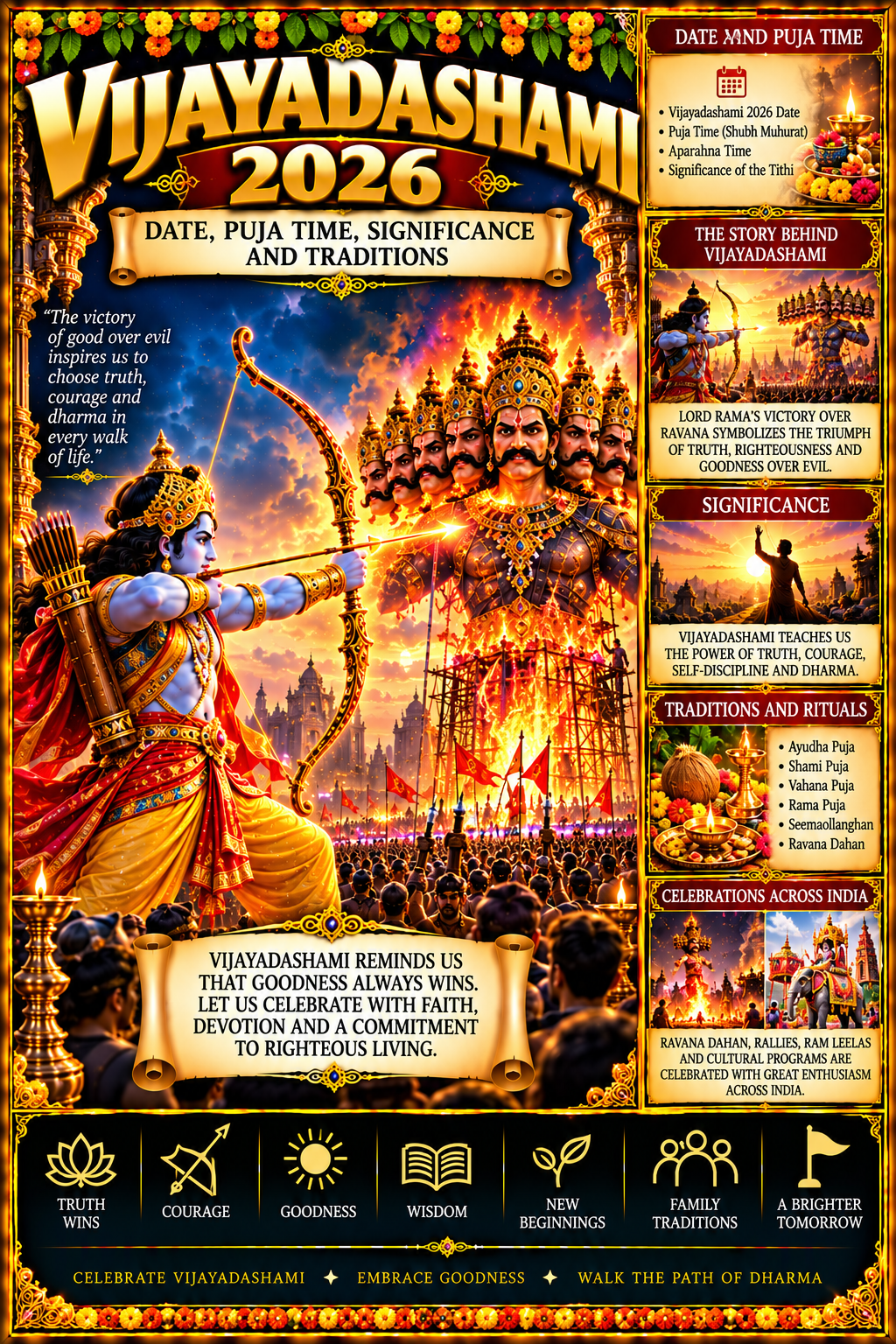
Why Do We Celebrate Dussehra (Vijayadashami)? Story, Shami Puja & Rituals
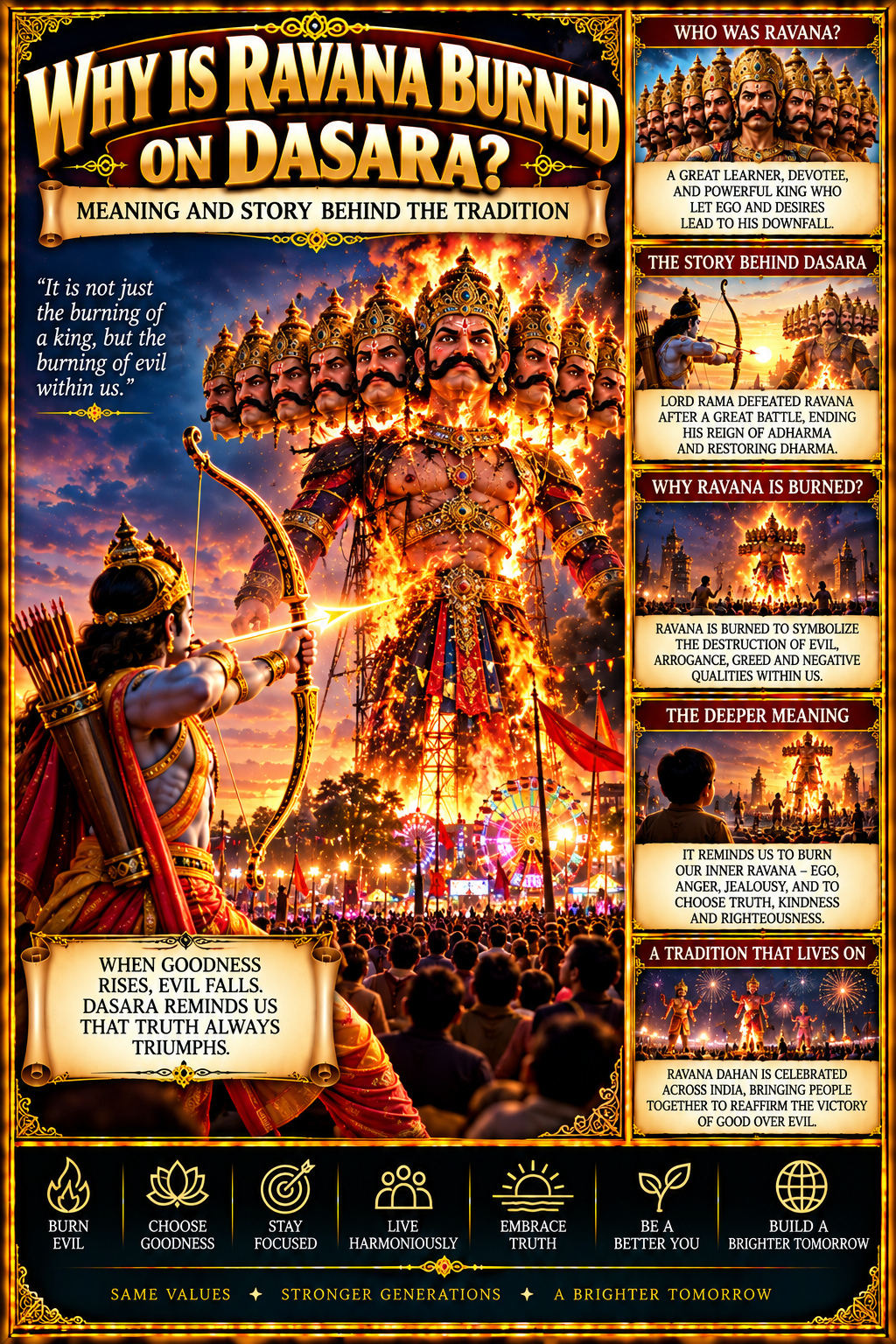
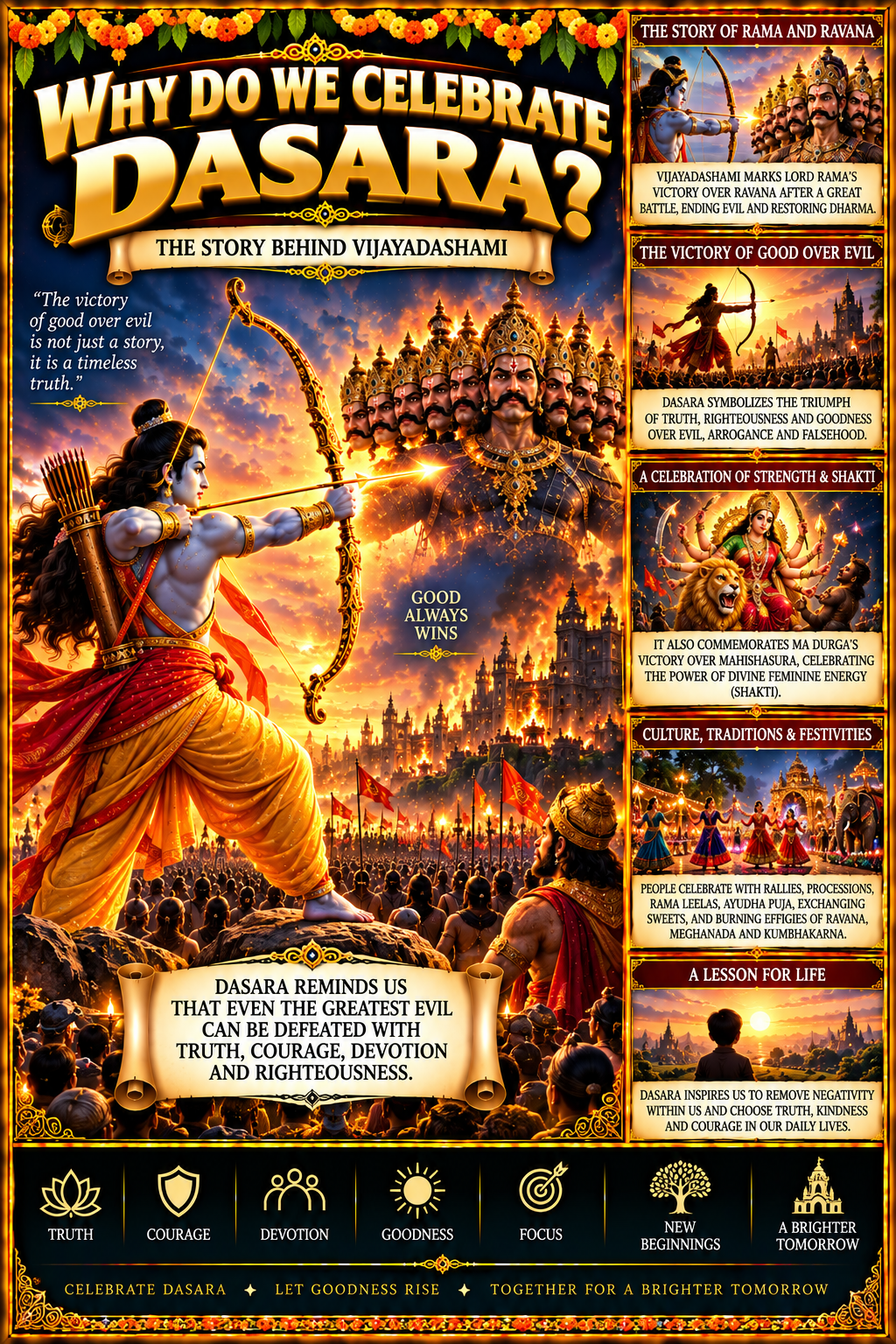
As the autumn sun sets on the tenth day of Ashvin, the evening sky across India lights up with torches, music, and festive joy. The celebration of Dussehra (Vijayadashami) marks one of the most auspicious days on the Hindu liturgical calendar, uniting communities in honoring the triumph of righteousness over injustice. While the theatrical tradition of burning effigies is explored in our guide to why Ravana is burned on Dasara, this complete guide examines the religious meaning of Vijayadashami, the sacred Shami Puja, Ayudha Puja, and celebrations across India. Astronomical Timing: Ashvin Shukla Dashami Dussehra falls on the tenth day (Dashami) of the waxing moon phase (Shukla Paksha) in the Hindu lunar month of Ashvin. The word Vijayadashami combines two Sanskrit terms: Vijaya (Victory) and Dashami (Tenth lunar day) – the Day of Victory. It concludes the nine sacred nights of Sharad Navratri, transitioning from penance into joyful celebration. The Sacred Shami Puja: The Legend of the Sami Tree and Golden Leaves One of the most profound traditions observed on Dasara across Central and Southern India is Shami Puja (worshipping the Prosopis cineraria tree). According to the Mahabharata, when the Pandavas were sentenced to their thirteenth year of exile in…
- Mythology , Ramayanam
- September 20, 2026
- 80 views
The Mystery of Ravana’s 10 Heads: What Each Head Symbolizes & The Scriptural Meaning
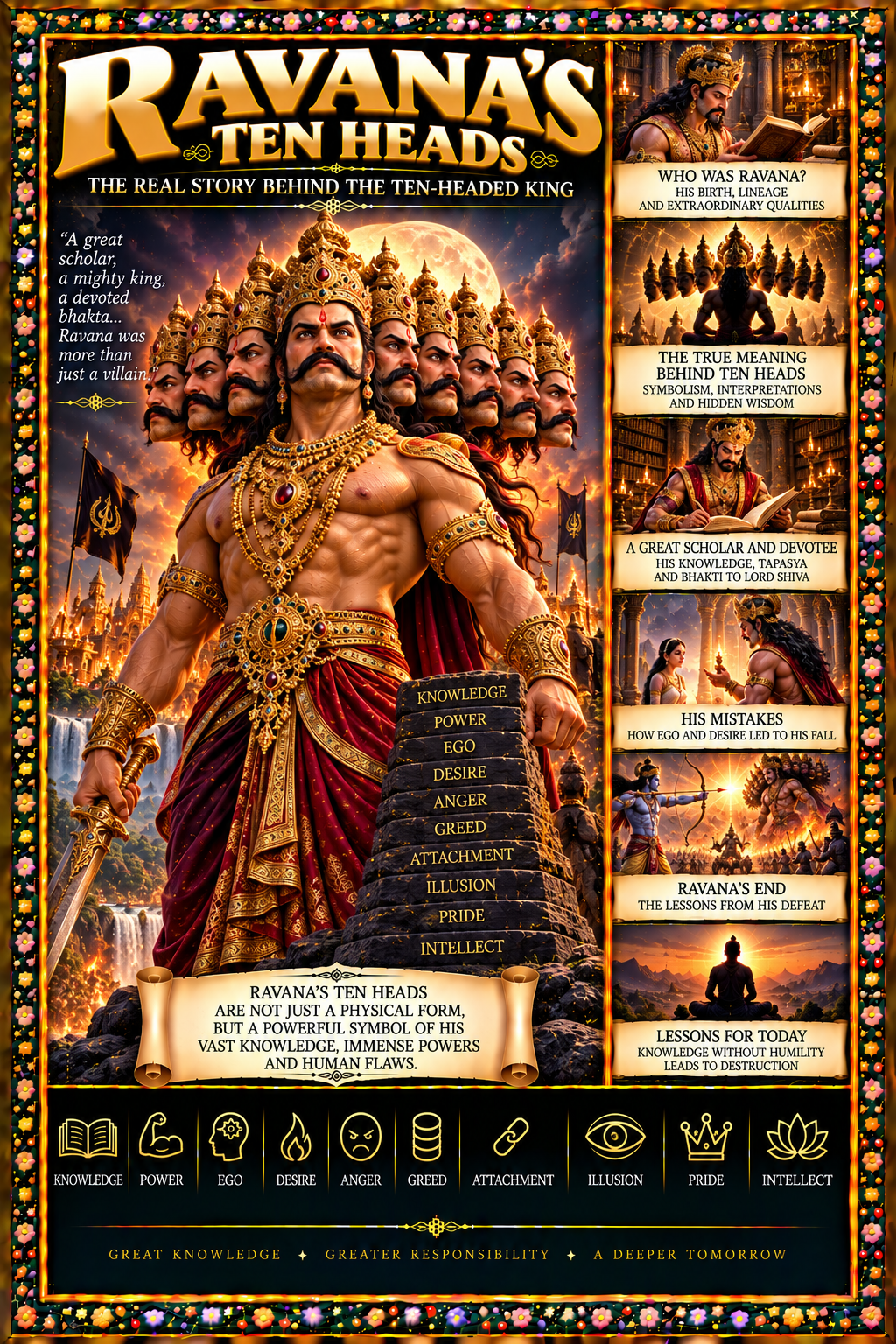
In classical paintings, temple carvings, and festive theater, few sights captivate the imagination like the ten crowned heads of Ravana gazing out across the battlefield of Lanka. But why does the Ramayana depict the king of Lanka with ten heads? In ancient storytelling, these ten heads were far more than a physical curiosity. They symbolized unmatched intellectual mastery – deep knowledge of the four Vedas and six Shastras – while simultaneously serving as a cautionary mirror for humanity: the ten dangerous emotional impulses, including anger, pride, lust, and greed, that can consume even the wisest mind when left unchecked. Was Ravana literally born with ten biological heads, or did He manifest them through divine boons and illusive powers? Or does the imagery of Ravana’s Ten Heads carry a deep psychological, philosophical, and astrological symbolism representing human emotions, intellect, and spiritual vices? In this comprehensive guide, we uncover the real story, scriptural origins, 4 sacred images, and profound spiritual symbolism behind Ravana’s Ten Heads. The Mythological Origin of Ravana’s Ten Heads To understand the story of Ravana’s Ten Heads, one must explore his unique lineage and his extreme penance to Lord Brahma. The Divine Lineage of Ravana Ravana was not a…
- Mythology , Ramayanam
- September 13, 2026
- 78 views
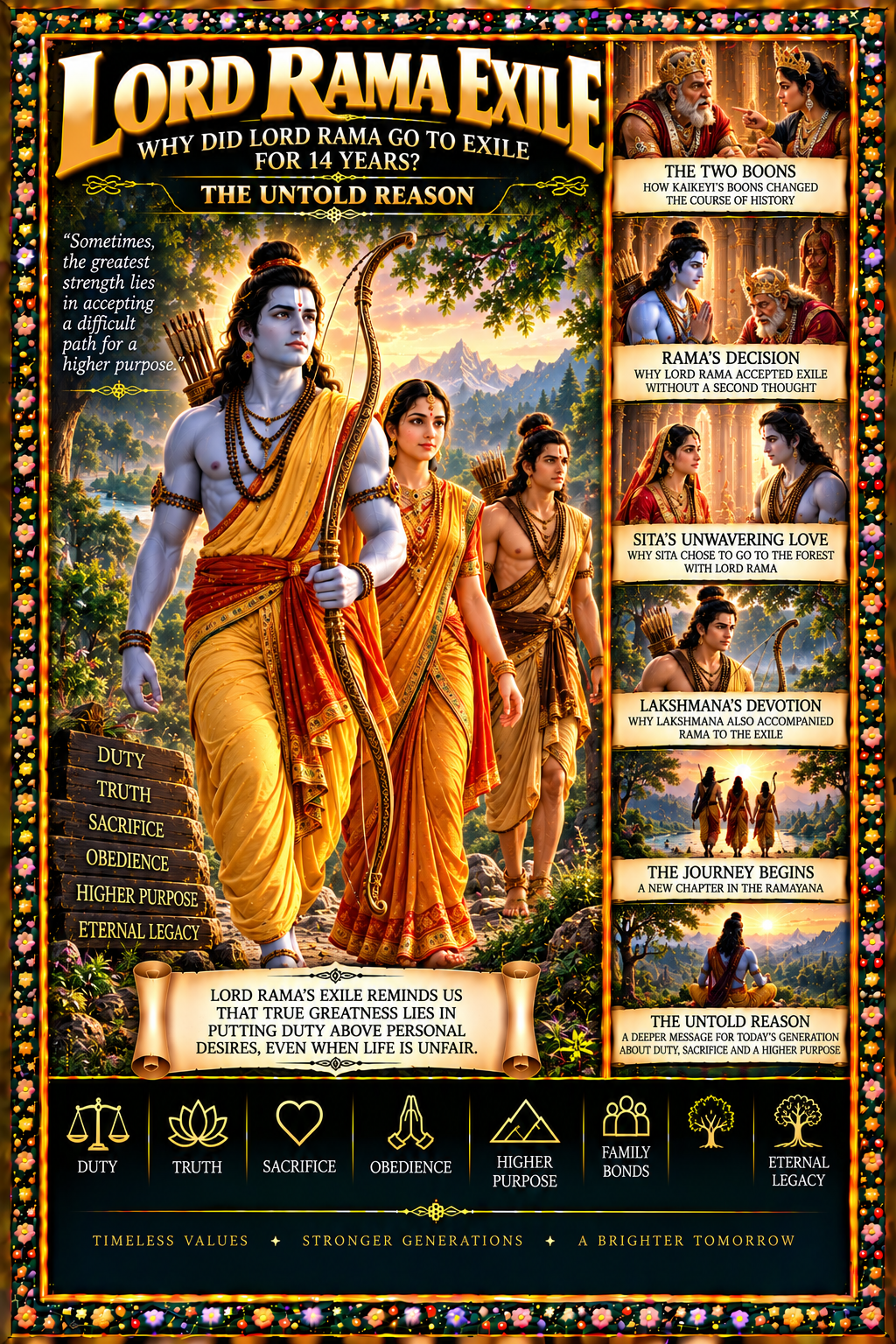
Why Did Lord Rama Go to 14 Years Exile? The Real Scriptural Reason & Kaikeyi’s Boons
Ayodhya had gone to sleep adorned with fragrant flower garlands, festive banners, and illuminated streets, eagerly waiting to crown Prince Rama as their beloved king at sunrise. But by dawn, celebration turned into heartbreak. Bound by ancient promises made to Queen Kaikeyi, King Dasharatha wept in anguish as he had to command his eldest son to leave the palace for fourteen years of exile in the deep Dandaka forest. Rama did not protest, argue, or grieve; with a calm smile, he removed his royal silks, donned simple tree bark, and walked out of the capital to uphold his father’s honor. While most readers are familiar with the surface political drama involving Queen Kaikeyi’s two boons and the wicked instigation of the maid Manthara, ancient Vedic scriptures, Puranas, and astrological treatises reveal far deeper, cosmic, legal, and karmic reasons behind this divine Lord Rama Exile. Why was Lord Rama exiled? Why did He accept it without a single word of protest? And why was the duration of Lord Rama Exile set precisely to 14 years instead of 10 or 20? In this article, we uncover the untold cosmic secrets, ancient legal statutes, and divine curses that ordained the 14-year Lord Rama…
- Festivals , Lord Ganesha , Mythology
- September 8, 2026
- 83 views
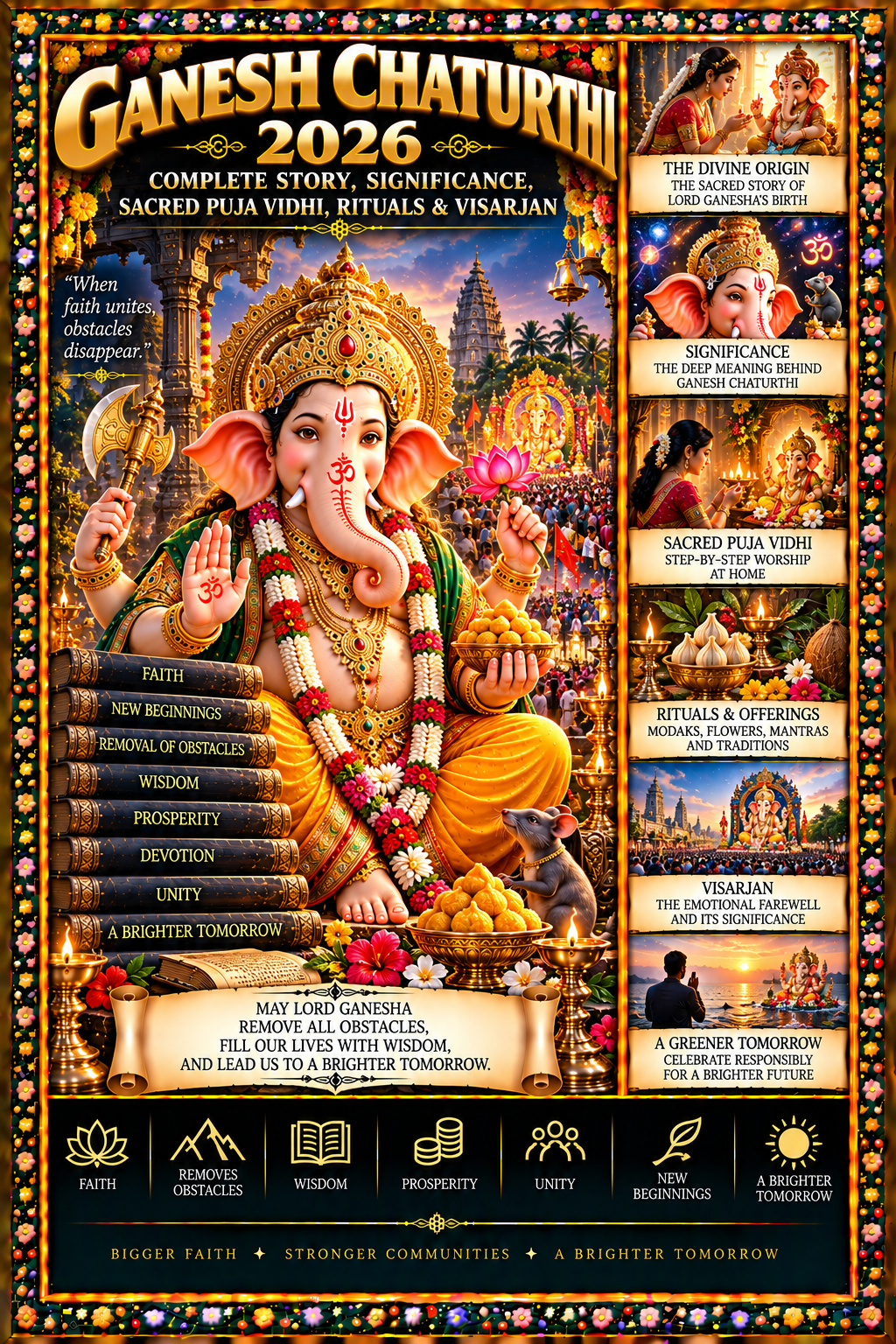
Ganesh Chaturthi: Sthapana Muhurat, Complete Puja Vidhi, Vrat Katha & Visarjan Rules
Every year as the monsoon recedes in the month of Bhadrapada, neighborhoods and homes fill with the sweet aroma of freshly steamed modaks and the joyful ringing of brass bells. Families welcome clay idols of the beloved elephant-headed deity into their living rooms, singing praises to the remover of obstacles. Ganesh Chaturthi is a joyful family homecoming, celebrating the arrival of Lord Ganesha from Mount Kailash to bring wisdom, laughter, and fresh beginnings into every household. Lord Ganesha is universally revered as Pratham Pujya (the first worshipped deity), meaning no sacred ritual, wedding, new business venture, or housewarming ceremony begins without invoking His divine blessings. During Ganesh Chaturthi, millions of homes, public pandals, and community centers welcome elaborate idols of Ganesha, filling the atmosphere with sacred mantras, beating dhol-tasha drums, fragrant flowers, and the irresistible aroma of freshly steamed modaks. To truly immerse in the festival of Ganesh Chaturthi, one must explore its deep mythological origins, understand the profound symbolism behind Ganesha’s unique physical form, follow the sacred step-by-step Puja Vidhi, and reflect on the philosophical spiritual wisdom of Ganesh Visarjan. The Divine Birth and Origin Story Behind Ganesh Chaturthi The timeless story of Lord Ganesha’s birth is narrated in…
- Mahabharatam
- September 6, 2026
- 75 views
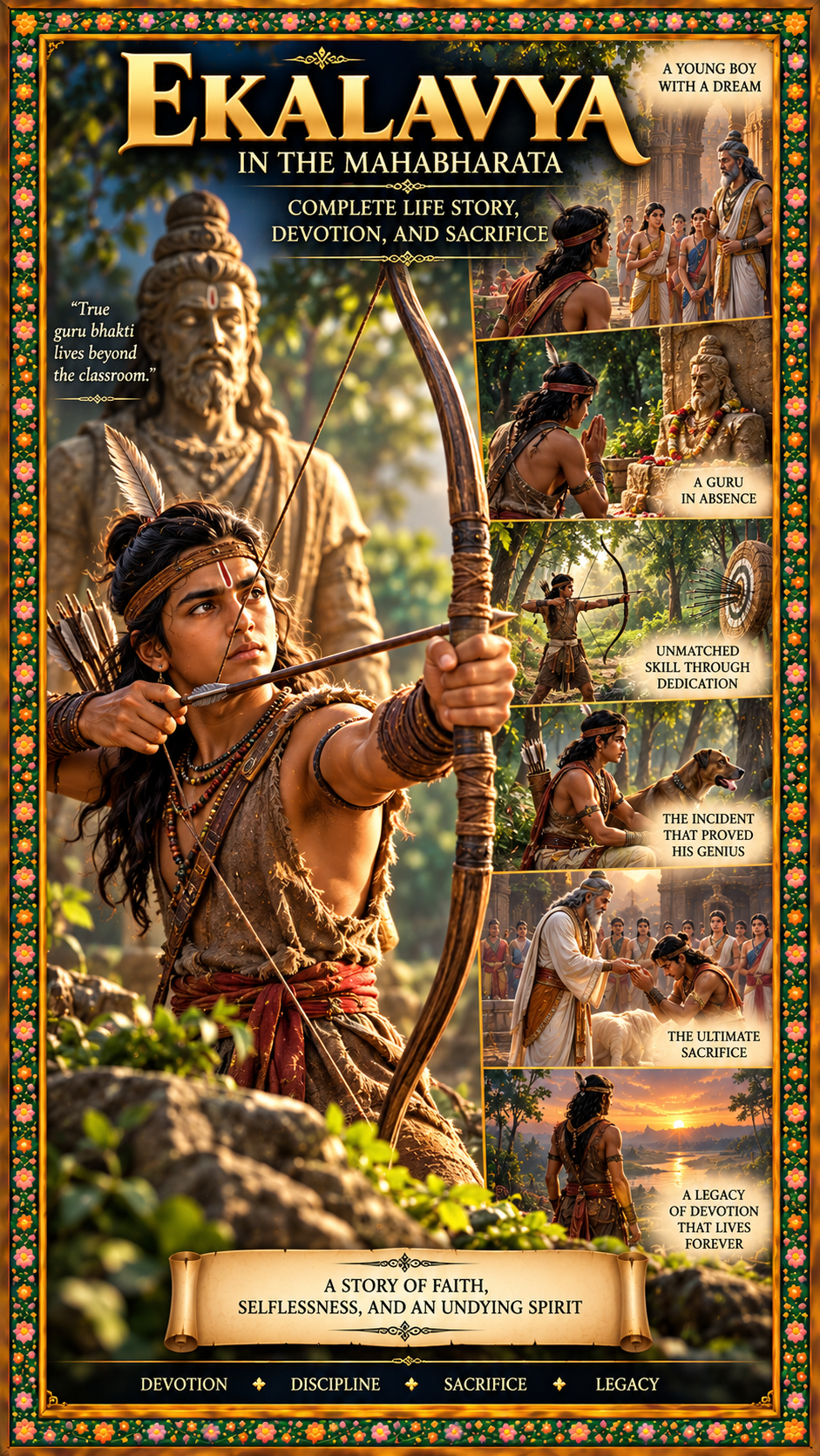
Ekalavya in Mahabharata: Story of Supreme Guru Bhakti & The Guru Dakshina Sacrifice
In the quiet shadows of the Hastinapur forest, far away from the royal archery grounds, a young Nishadha boy stood alone before a humble statue sculpted from clay. Without a master to correct his grip or praise his stance, Ekalavya practiced day and night with pure devotion, shooting arrows until his fingers bled. His extraordinary discipline made him one of the greatest archers of his generation, rivaling the royal prince Arjuna. Yet his story remains one of the most touching in the Mahabharata – a testament to what absolute dedication can achieve, and the heavy price an outsider paid to honor his silent teacher. While most readers know about Ekalavya’s legendary sacrifice of his right thumb, there are many lesser-known aspects of his life, his hidden royal lineage, and his post-sacrifice career as a formidable warrior that are rarely discussed. Exploring the life of Ekalavya in the Mahabharata reveals a narrative that challenges the boundaries of traditional caste structures and explores the true nature of the teacher-student relationship (Guru-Shishya Parampara). The Birth and Lineage of Ekalavya in the Mahabharata Ekalavya is commonly described as a forest-dwelling tribal boy belonging to the Nishada community. His father, Hiranyadhanus, was the king of…
- Festivals , Mythology
- September 4, 2026
- 77 views
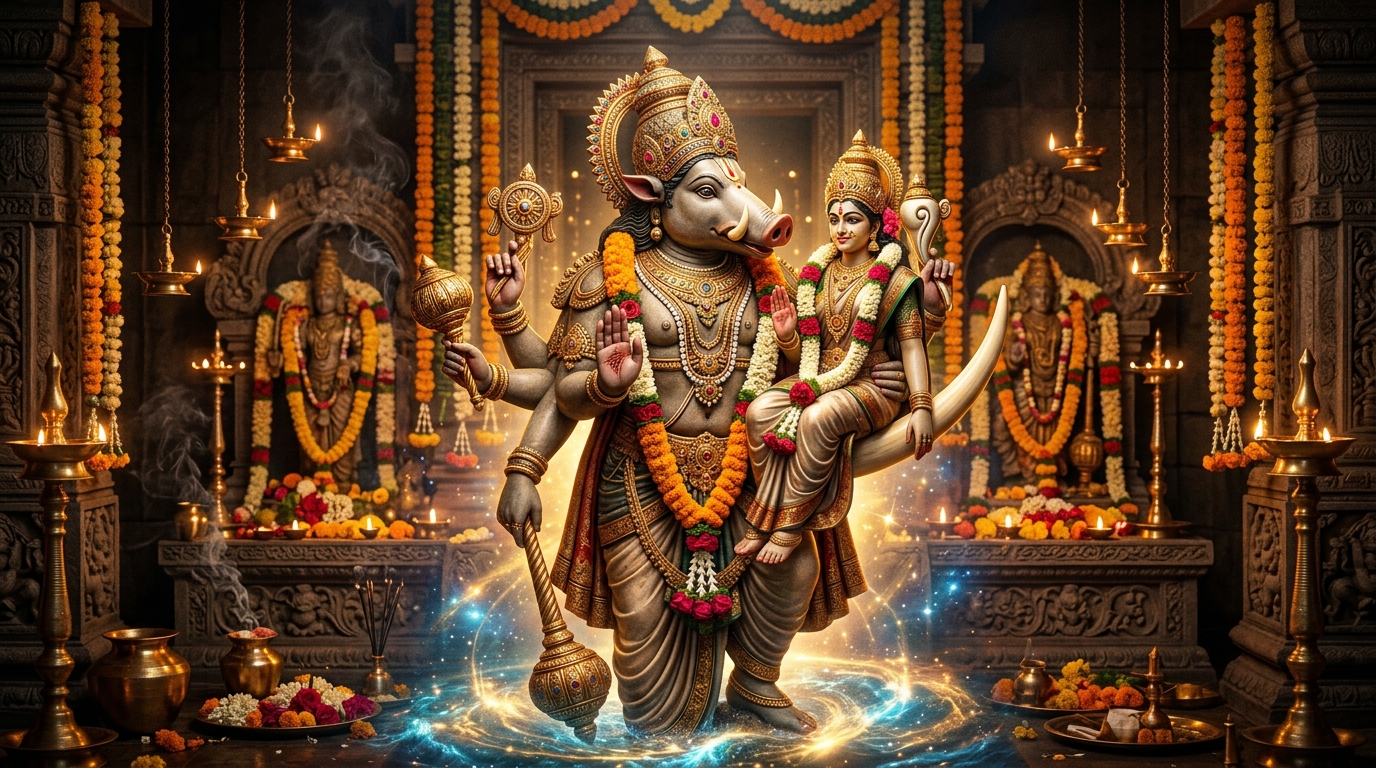
Varaha Jayanti: Lord Vishnu’s Boar Avatar Story, Puja Vidhi & Powerful Mantras
When the demon Hiranyaksha dragged the earth into the murky depths of the cosmic ocean, the universe trembled in darkness. In that critical hour, Lord Vishnu assumed the form of Lord Varaha – a colossal, radiant boar possessing unbreakable strength. Plunging fearlessly into the dark abyss, He defeated the demon and gently lifted Mother Earth (Bhudevi) upon His gleaming white tusks, restoring balance and life to creation. Celebrated as Varaha Jayanti, this sacred day reminds us that no matter how deep the darkness appears, divine protection always rises to safeguard the earth. Observed on the third day (Tritiya) of the waxing moon phase (Shukla Paksha) in the Hindu lunar month of Bhadrapada, Varaha Jayanti celebrates the victory of righteousness (Dharma) over cosmic chaos, environmental restoration, and divine protection. Worshipping Lord Varaha on this auspicious day brings immense courage, spiritual purity, freedom from obstacles, and lasting prosperity. In this comprehensive guide, explore the detailed mythological story of Lord Varaha, the profound spiritual symbolism of His incarnation, step-by-step Puja Vidhi rituals, powerful Varaha mantras, and frequently asked questions. The Divine Story of Varaha Avatar Celebrated on Varaha Jayanti The legend of Varaha Avatar is narrated in several ancient texts, including the Vishnu…