Raja Ratnam
- Festivals , Mythology , Navratri [ Day 1 To Day 9 }
- October 10, 2026
- 13 views
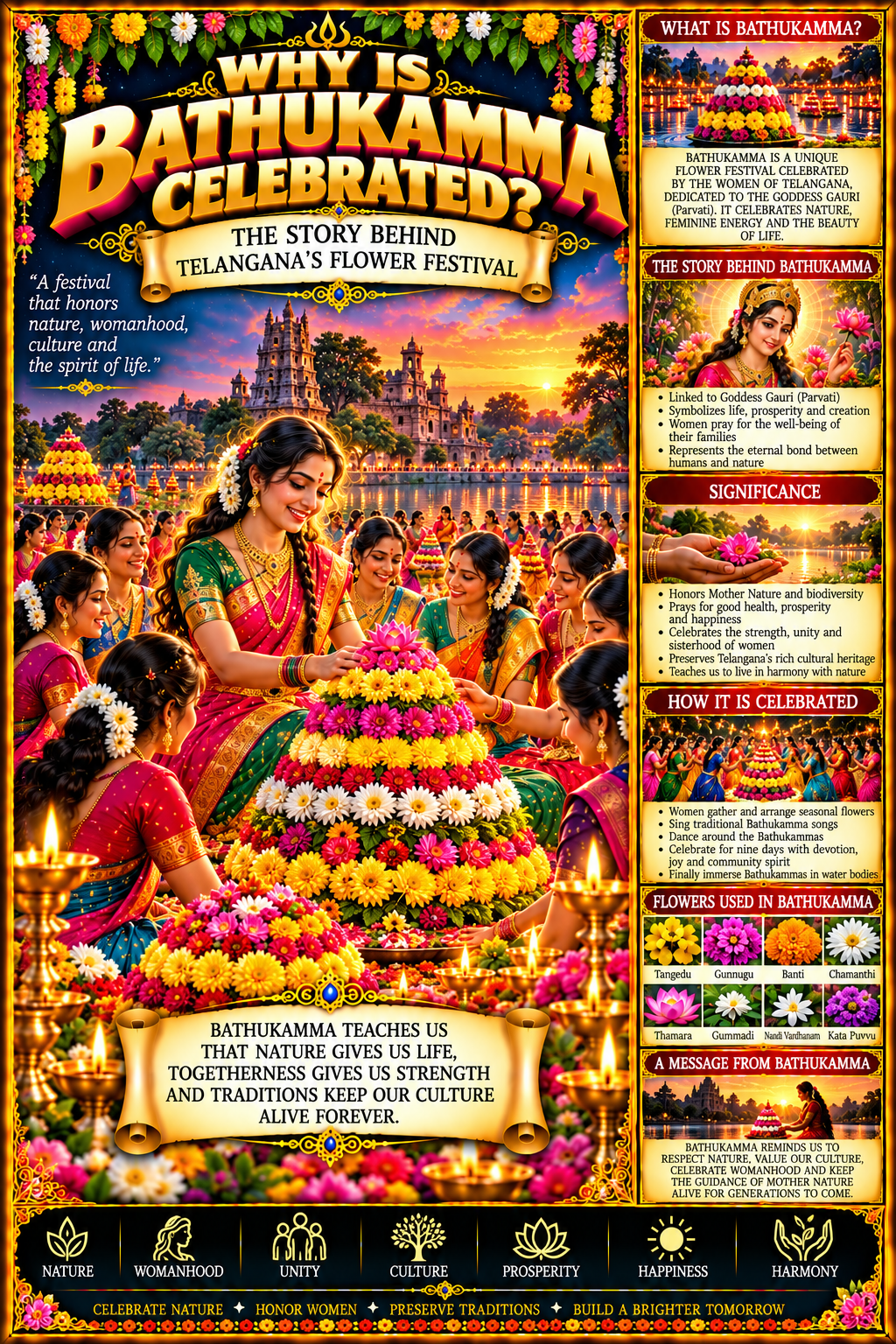
Why Is Bathukamma Celebrated? The Story Behind Telangana’s Flower Festival
Discover why is Bathukamma celebrated: explore the sacred legends of Goddess Gauri, the 9 days of floral devotion in Telangana, eco-rituals, and 20 FAQs.
- Festivals , Mythology , Navratri [ Day 1 To Day 9 }
- October 10, 2026
- 13 views
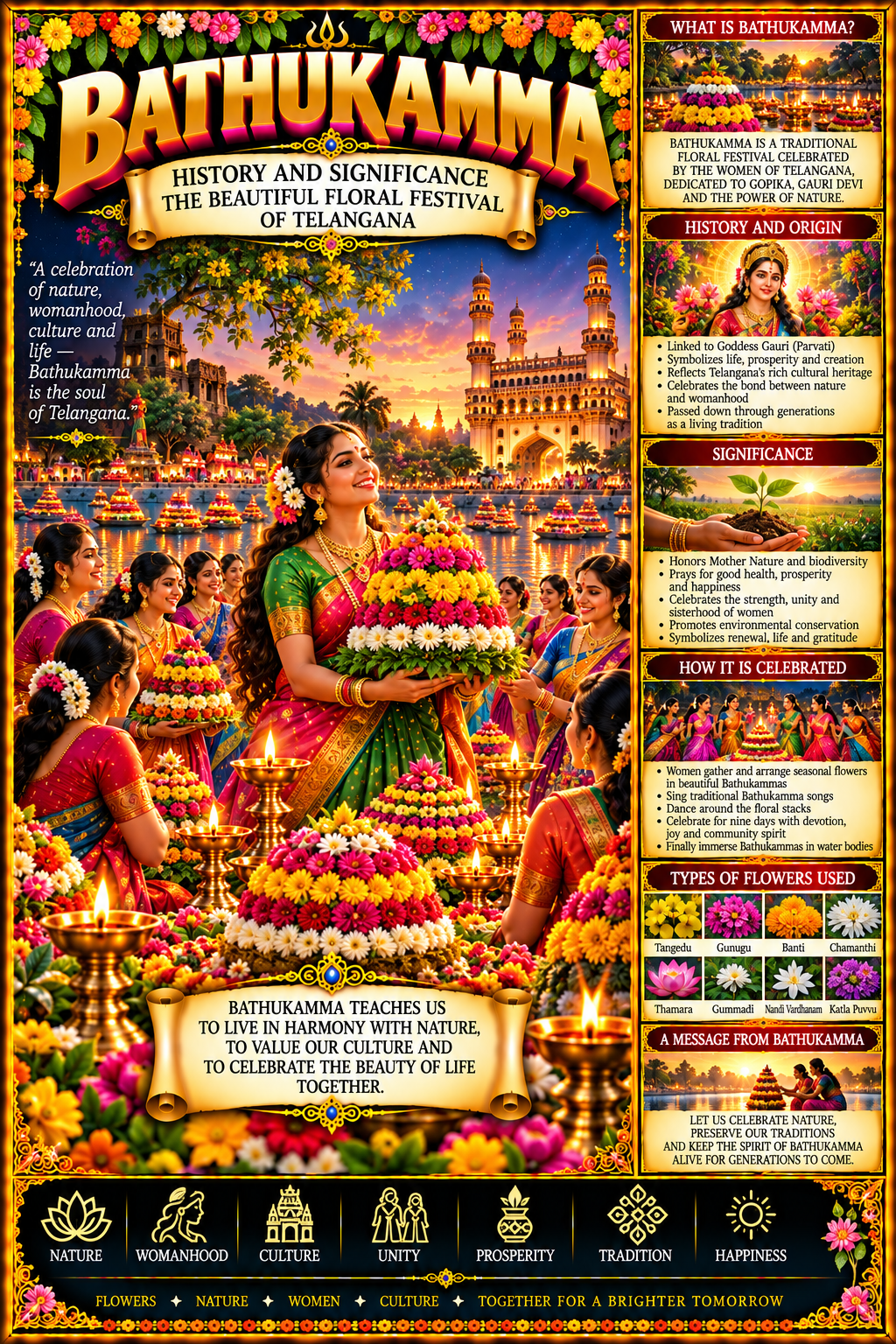
Bathukamma History and Significance: The Beautiful Floral Festival of Telangana
Explore Bathukamma History and Significance: discover Telangana’s 9-day floral festival, sacred legends, healing flowers, daily rituals, and 20 detailed FAQs.
- Festivals , Mythology
- October 5, 2026
- 36 views
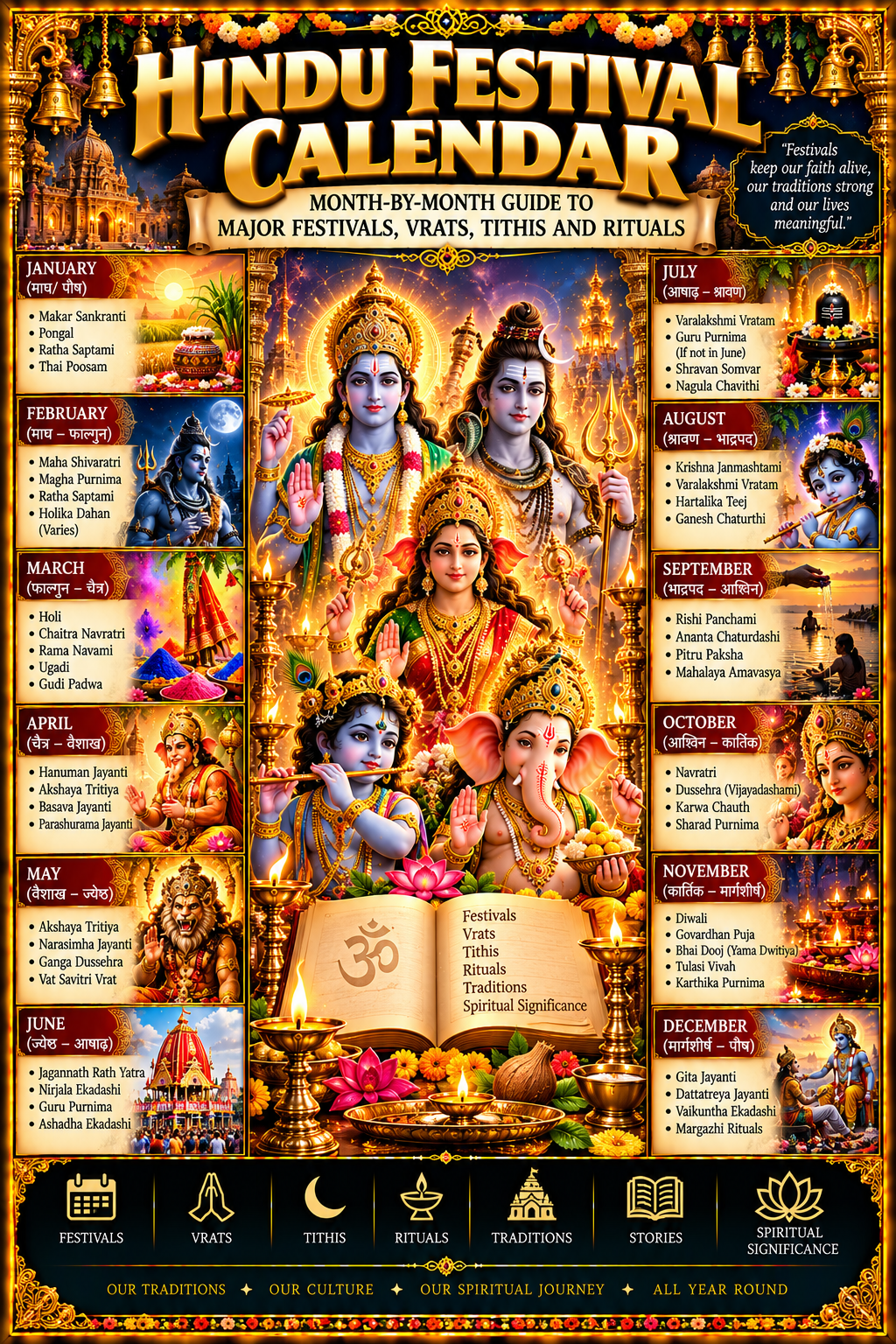
Hindu Festival Calendar: Month-by-Month Guide to Major Festivals, Vrats, Tithis and Rituals
The Hindu calendar (Panchangam) is one of humanity’s most sophisticated astronomical and spiritual systems. Rather than viewing time as a flat, linear ticking of clocks, Sanatana Dharma views time as a sacred cosmic dance governed by the movements of the Sun (Surya), Moon (Chandra), and constellations (Nakshatras). Every lunar month brings unique energetic frequencies, observed through sacred festivals (Utsavas) and disciplined penances (Vrats). Whether you are seeking auspicious dates for worship, fasting rules for sacred tithis like Ekadashi and Pradosham, or the spiritual symbolism behind celebrations like Diwali, Navratri, and Maha Shivaratri, this comprehensive month-by-month guide serves as the ultimate perennial reference for the Hindu liturgical year. Understanding the Hindu Calendar: Solar vs. Lunar and Amanta vs. Purnimanta Before exploring individual festivals, it is essential to understand how traditional Hindu dates are determined. The calendar incorporates both solar and lunar mechanics: Month-by-Month Hindu Festivals & Vrat Calendar Below is the complete cycle of the twelve sacred lunar months, their presiding planetary energies, and the foundational festivals celebrated across India: 1. Chaitra (March – April): The Dawn of the Cosmic Year Chaitra marks the beginning of the Hindu New Year in many traditions. It begins with the Shukla Pratipada following the…
- Mythology , Ramayanam
- October 5, 2026
- 21 views
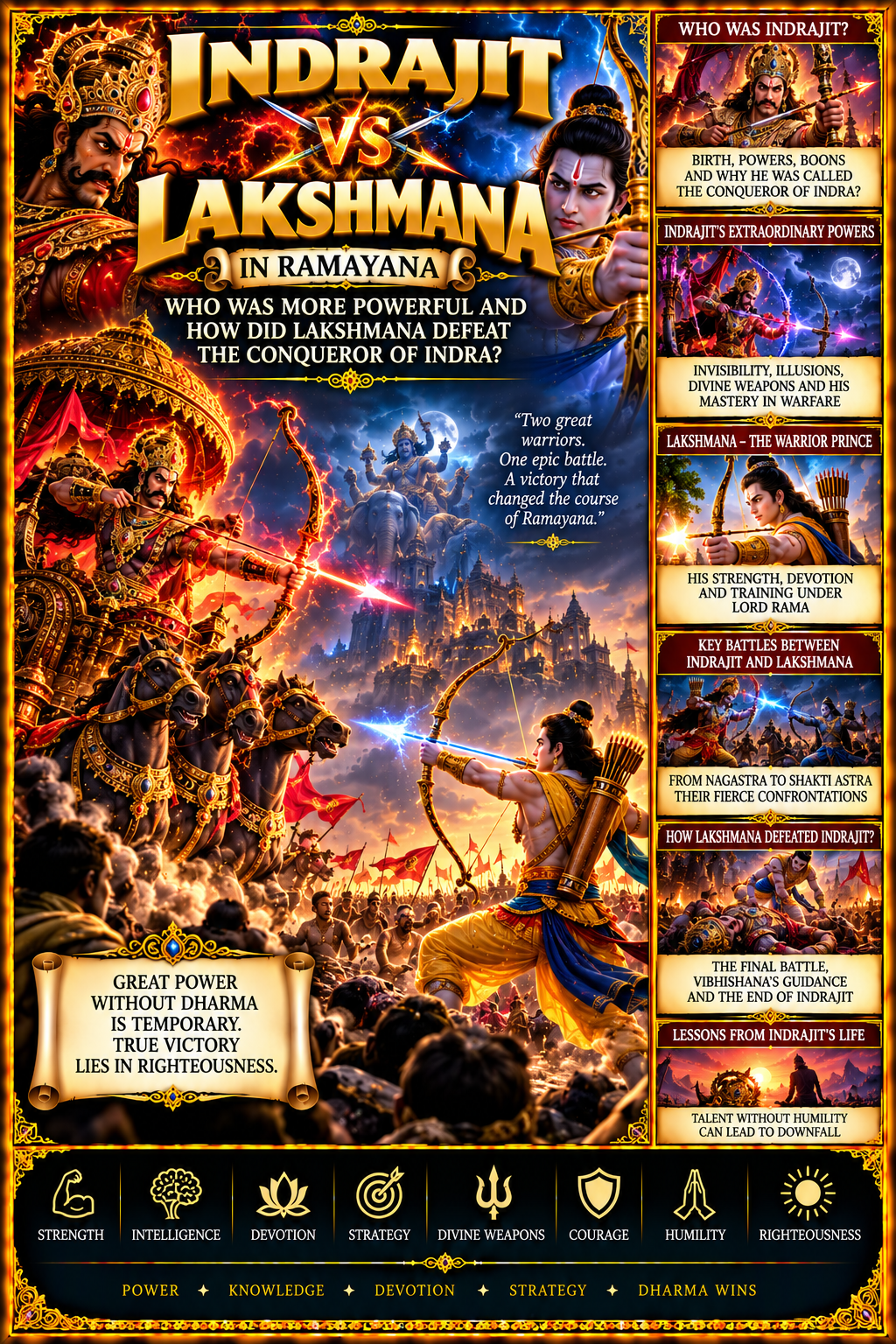
Indrajit vs Lakshmana in Ramayana: Who Was More Powerful and How Did Lakshmana Defeat the Conqueror of Indra?
In the grand canvas of the Valmiki Ramayana, while the ultimate philosophical showdown is fought between Lord Rama and Ravana, the most ferocious, technically terrifying martial confrontation unfolds between their respective champions: Meghnada (Indrajit), the crown prince of Lanka, and Lakshmana, the devoted younger brother of Rama and earthly avatar of Adi Shesha. This monumental duel has fascinated scholars, military tacticians, and spiritual seekers across millennia: between the master of celestial sorcery and the master of ascetic self-conquest, who was truly the superior warrior? To understand the depth of this war within a war, one must explore not just physical archery, but the metaphysical layers of destiny, divine boons, moral virtue, and the pivotal sacrifice of 14 sleepless years. For readers exploring our deep dives into Ravana in Ramayana: The Great Ruler of Lanka and the overarching epic of The Journey of Rama, Sita, and Lakshmana, this definitive comparison provides an authentic, scripture-backed analysis of the deadliest battle fought under the skies of Lanka. Who Was Meghnada? The Rise of Indrajit, the Supreme Mahamaharathi Meghnada was the eldest son of Ravana and Queen Mandodari. At the moment of his birth, his father forced the planetary deities (Navagrahas) into the eleventh…
- Mahabharatam , Mythology
- October 5, 2026
- 19 views
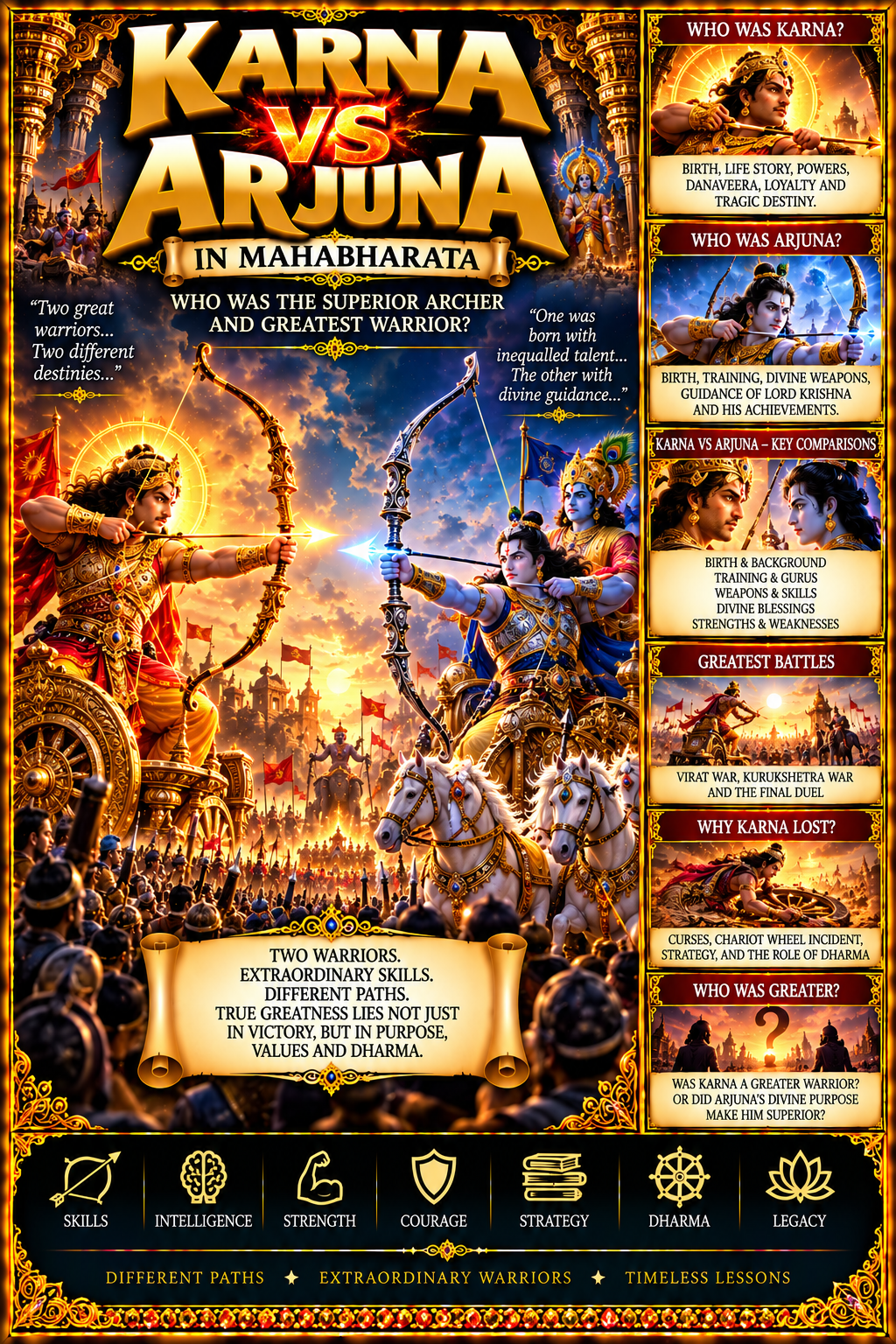
Karna vs Arjuna in Mahabharata: Who Was the Superior Archer and Greatest Warrior?
The rivalry between Karna and Arjuna in the epic Mahabharata stands as one of the most intense, passionate, and enduring debates in world literature. For thousands of years, scholars, devotees, and casual readers have passionately argued over a singular question: Who was truly the superior archer—Karna or Arjuna? Both warriors possessed divine parentage, peerless martial training, celestial weapons (Divyastras), and unwavering courage on the battlefield of Kurukshetra. Karna, the son of the Sun God Surya, is revered as Daanveer—a tragic hero whose loyalty, generosity, and resilience matched his fearsome archery. On the other side stood Arjuna, the son of Indra, the favorite disciple of Dronacharya, and the supreme warrior of Dharma guided by none other than Lord Krishna. To definitively understand the clash between Karna vs Arjuna, one must move past emotional retellings and analyze the authentic verses of the Vyasa Mahabharata. In this definitive guide, we compare their divine origins, gurus, celestial weapons, pre-war clashes, the climatic 17th day duel of Kurukshetra, a head-to-head comparison table, and 20 detailed frequently asked questions. 1. Divine Birth and Early Upbringing: Surya Putra vs. Indra Putra To understand the fundamental nature of their rivalry, one must first look at the divine forces…
- Mythology , Ramayanam
- October 4, 2026
- 23 views
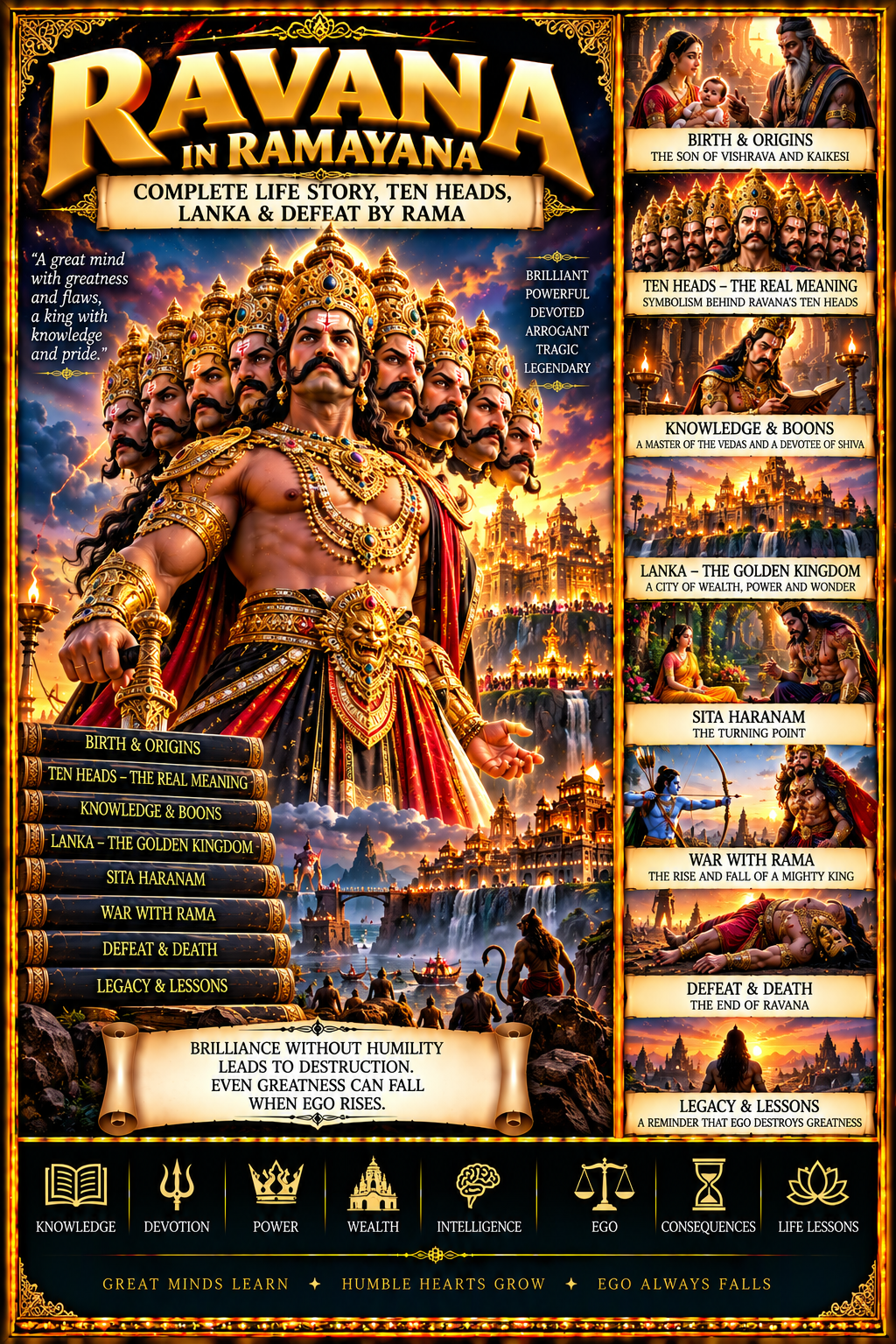
Ravana in Ramayana: Complete Biography, Shiva Bhakti, Golden Lanka & Downfall
The story of Ravana in Ramayana presents one of the most complex, formidable, and multi-dimensional figures in world mythology. Known as the King of Lanka, a devout worshipper of Lord Shiva, a master of the Veena, and a great scholar of the Vedas, Ravana possessed extraordinary intelligence, royal wealth, and cosmic power. Yet, despite his immense virtues, scholarship, and spiritual penance, Ravana allowed his uncontrollable ego, lust, and arrogance to govern his destiny. His unlawful abduction of Goddess Sita set into motion the final battle of Lanka and his ultimate defeat at the hands of Lord Rama. In this ultimate guide, explore the complete life story of Ravana in Ramayana, his divine birth, the secret of his ten heads (Dashanana), the golden empire of Lanka, his scholars’ achievements, the epic war, and 20 detailed frequently asked questions. The Birth, Ancestry, and Lineage of Ravana in Ramayana To understand the character of Ravana in Ramayana, one must trace his unique dual heritage. Half-Brahmin and Half-Rakshasa Lineage Ravana was the son of Sage Vishrava (a great Vedic Rishi and grandson of Lord Brahma) and Princess Kaikesi (an Asura princess). Because of his lineage, Ravana was half-Brahmin and half-Asura: Ravana grew up alongside…
- Festivals , Mythology
- September 27, 2026
- 33 views
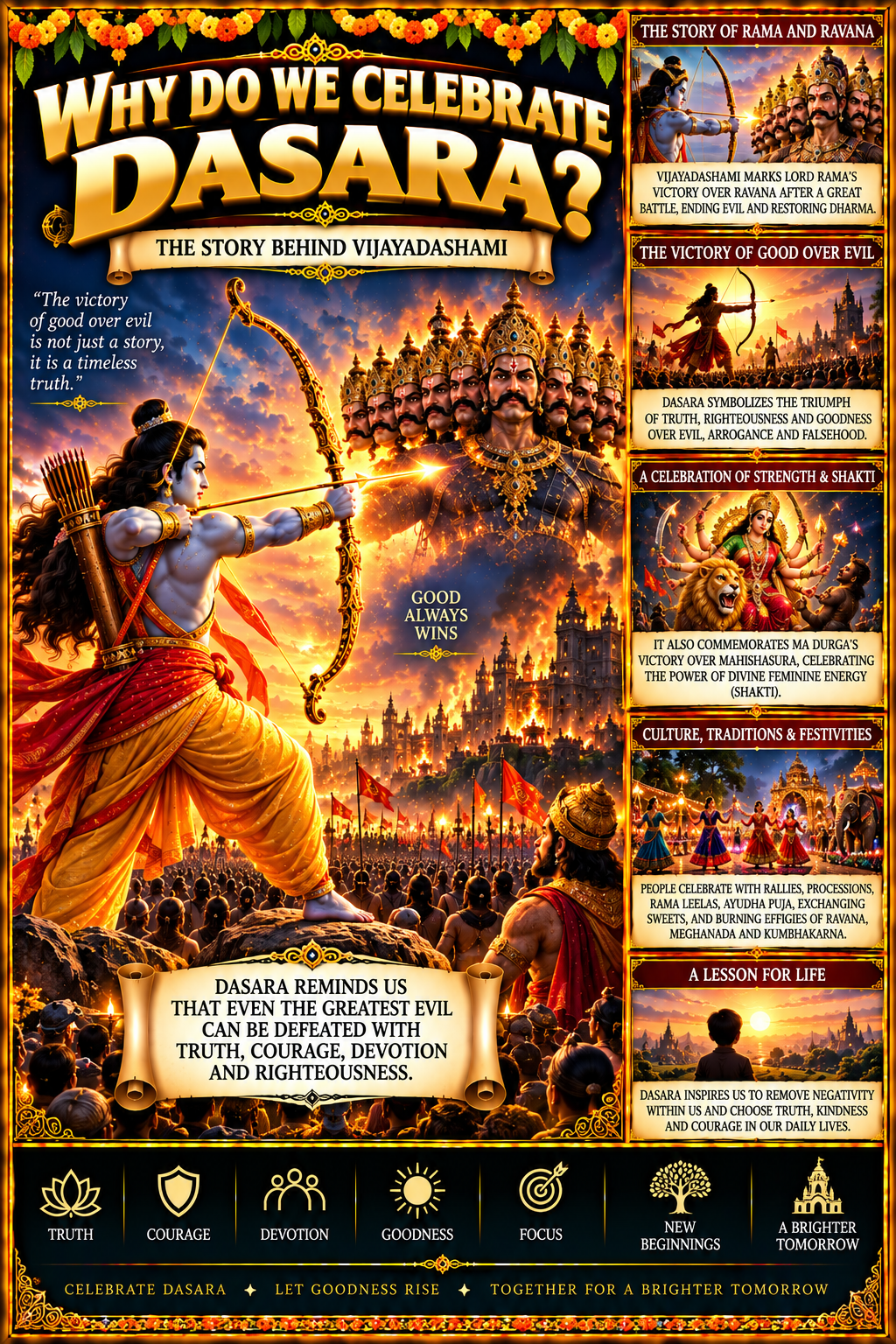
Why Do We Celebrate Dussehra (Vijayadashami)? Story, Shami Puja & Rituals
The question why do we celebrate Dasara (also known as Vijayadashami or Dussehra) touches the very heart of Indian culture, spiritual philosophy, and ancient traditions. Falling on the tenth day (Dashami) of the waxing moon phase (Shukla Paksha) in the Hindu lunar month of Ashvin, Dasara is one of the most widely celebrated festivals across India and the global Hindu diaspora. The word Dasara originates from the Sanskrit word Dasha-hara, which literally means “removal of the ten” (referring either to the ten heads of Ravana or the ten bad qualities within human nature). The term Vijayadashami combines Vijaya (Victory) and Dashami (Tenth Day), signifying the grand triumph of righteousness (Dharma) over evil (Adharma). Why do we celebrate Dasara with such grand processions, Ramlila plays, illuminated palaces, and effigy burnings? In this comprehensive guide, we explore the dual mythological legends behind Vijayadashami, the spiritual significance of Shami tree worship, regional celebrations, and 20 frequently asked questions. The Dual Legend Explaining Why Do We Celebrate Dasara Unlike festivals associated with a single event, the celebration of Dasara is rooted in multiple profound legends from sacred Hindu epics and Puranas. For official cultural and historical archives, visit the Incredible India Official Tourism Authority.…
- Mythology , Ramayanam
- September 20, 2026
- 66 views
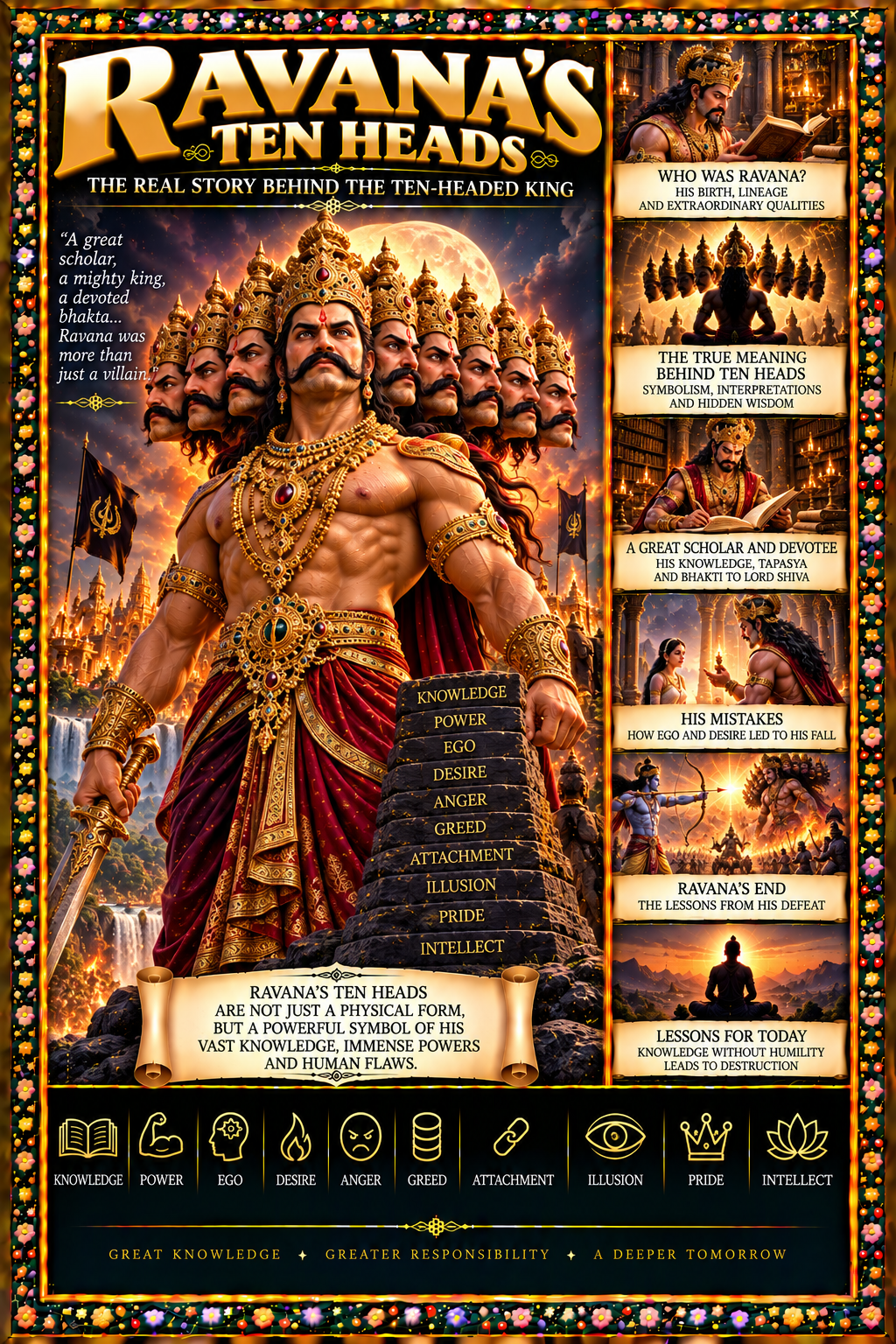
The Mystery of Ravana’s 10 Heads: What Each Head Symbolizes & The Scriptural Meaning
The legend of Ravana’s Ten Heads (known in Sanskrit as Dashanana or Dashagriva) is one of the most intriguing, multi-layered stories in Hindu mythology. Ravana, the king of Lanka in the epic Ramayana, is widely depicted in temple sculptures, classical paintings, and Ramlila plays as a towering demon king with ten heads and twenty arms. Was Ravana literally born with ten biological heads, or did He manifest them through divine boons and illusive powers? Or does the imagery of Ravana’s Ten Heads carry a deep psychological, philosophical, and astrological symbolism representing human emotions, intellect, and spiritual vices? In this comprehensive guide, we uncover the real story, scriptural origins, 4 sacred images, and profound spiritual symbolism behind Ravana’s Ten Heads. The Mythological Origin of Ravana’s Ten Heads To understand the story of Ravana’s Ten Heads, one must explore his unique lineage and his extreme penance to Lord Brahma. The Divine Lineage of Ravana Ravana was not a typical demon. He was the son of Sage Vishrava (a revered Vedic Rishi and grandson of Lord Brahma) and Princess Kaikesi (an Asura princess). This unique lineage made Ravana half-Brahmin and half-Rakshasa. From his father, he inherited immense intellectual capacity, Vedic wisdom, and mastery…
- Mythology , Ramayanam
- September 13, 2026
- 64 views
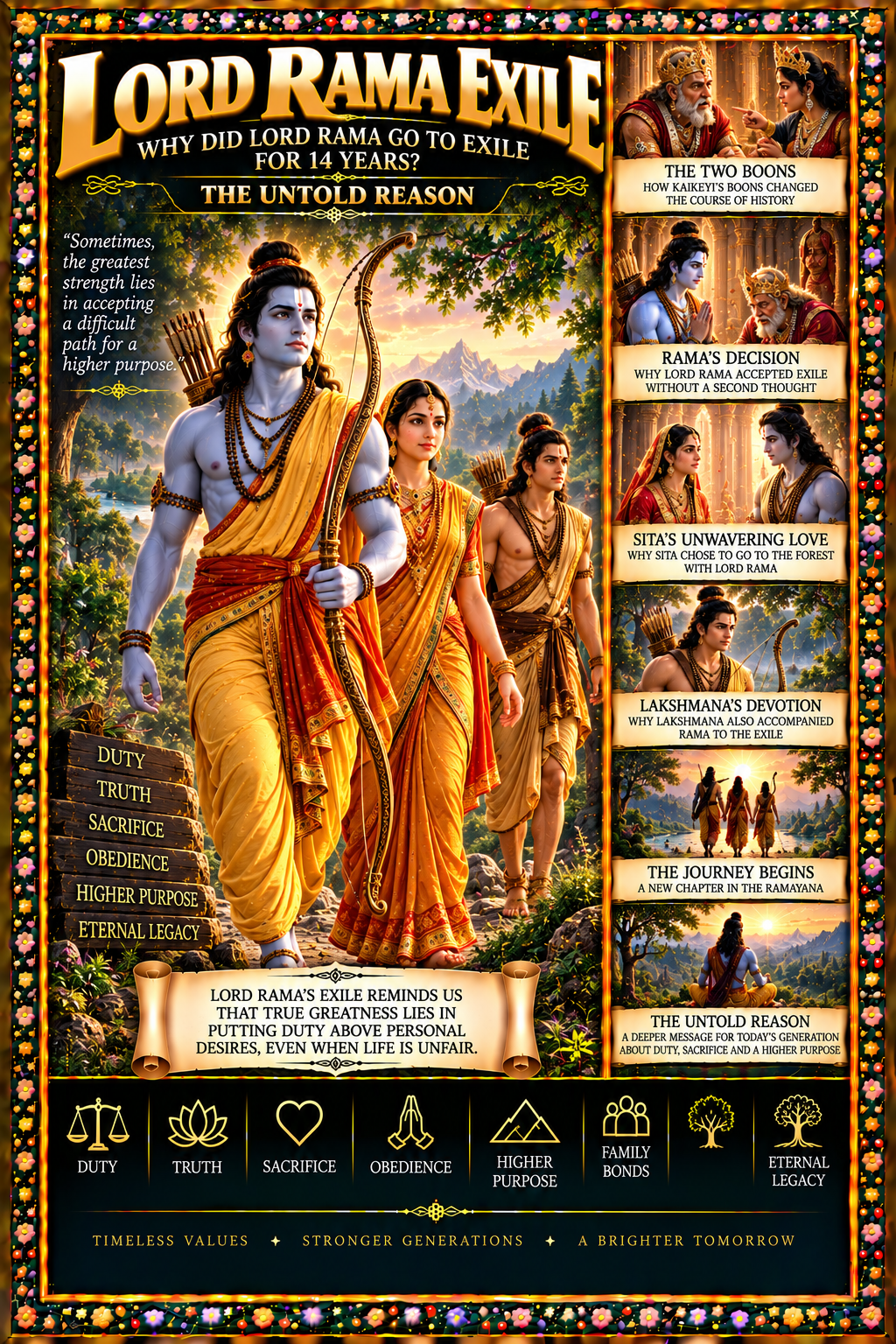
Why Did Lord Rama Go to 14 Years Exile? The Real Scriptural Reason & Kaikeyi’s Boons
The story of Lord Rama Exile is one of the most pivotal turning points in the epic Ramayana. On the very eve of Crown Prince Rama’s grand coronation as King of Ayodhya, He was suddenly banished to the dangerous Dandaka forest for 14 years. While most readers are familiar with the surface political drama involving Queen Kaikeyi’s two boons and the wicked instigation of the maid Manthara, ancient Vedic scriptures, Puranas, and astrological treatises reveal far deeper, cosmic, legal, and karmic reasons behind this divine Lord Rama Exile. Why was Lord Rama exiled? Why did He accept it without a single word of protest? And why was the duration of Lord Rama Exile set precisely to 14 years instead of 10 or 20? In this article, we uncover the untold cosmic secrets, ancient legal statutes, and divine curses that ordained the 14-year Lord Rama Exile. The Surface Story of Lord Rama Exile: Kaikeyi’s Boons To understand the deeper secret reasons, one must first recall the narrative context established in the Ayodhya Kanda of Valmiki Ramayana regarding Lord Rama Exile. The Battle Boon Given to Queen Kaikeyi Years before the coronation, King Dasharatha fought alongside the Devas against the demon Sambasura…
- Festivals , Lord Ganesha , Mythology
- September 8, 2026
- 73 views
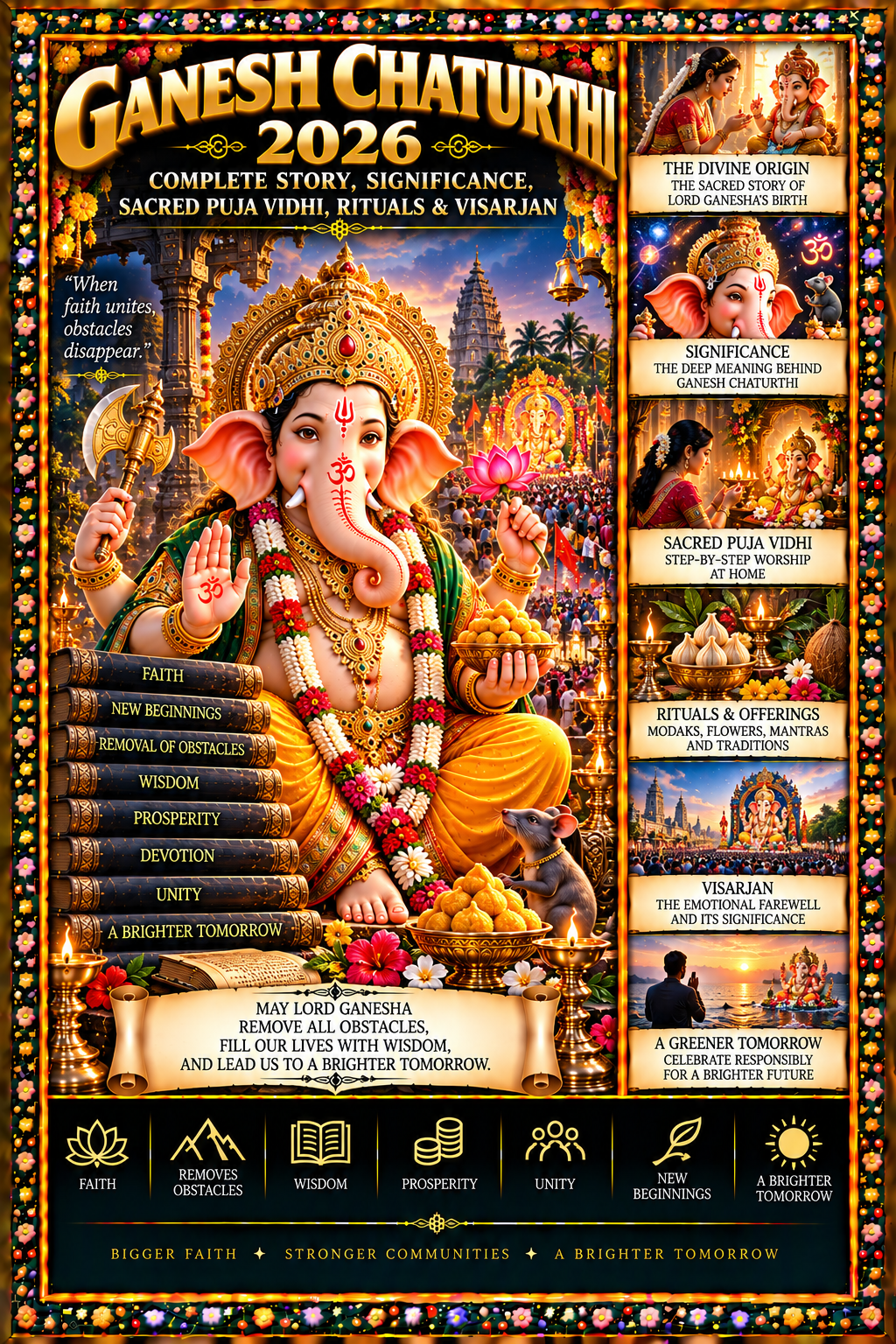
Ganesh Chaturthi: Sthapana Muhurat, Complete Puja Vidhi, Vrat Katha & Visarjan Rules
Ganesh Chaturthi, also affectionately known as Vinayaka Chaturthi or Ganeshotsav, is one of the most vibrant, joyous, and spiritually profound festivals celebrated in India and across the globe. Falling on the fourth day (Chaturthi) of the waxing moon phase (Shukla Paksha) in the Hindu lunar month of Bhadrapada, this auspicious festival commemorates the rebirth and grand arrival of Lord Ganesha—the elephant-headed deity of wisdom, prosperity, intellect, and good fortune—from Kailash Parvat to earth. Lord Ganesha is universally revered as Pratham Pujya (the first worshipped deity), meaning no sacred ritual, wedding, new business venture, or housewarming ceremony begins without invoking His divine blessings. During Ganesh Chaturthi, millions of homes, public pandals, and community centers welcome elaborate idols of Ganesha, filling the atmosphere with sacred mantras, beating dhol-tasha drums, fragrant flowers, and the irresistible aroma of freshly steamed modaks. To truly immerse in the festival of Ganesh Chaturthi, one must explore its deep mythological origins, understand the profound symbolism behind Ganesha’s unique physical form, follow the sacred step-by-step Puja Vidhi, and reflect on the philosophical spiritual wisdom of Ganesh Visarjan. The Divine Birth and Origin Story Behind Ganesh Chaturthi The timeless story of Lord Ganesha’s birth is narrated in several Puranas, including…