Raja Ratnam
- Pandeva's , Sons of Kunti (From Different Devas)
- March 11, 2026
- 496 views
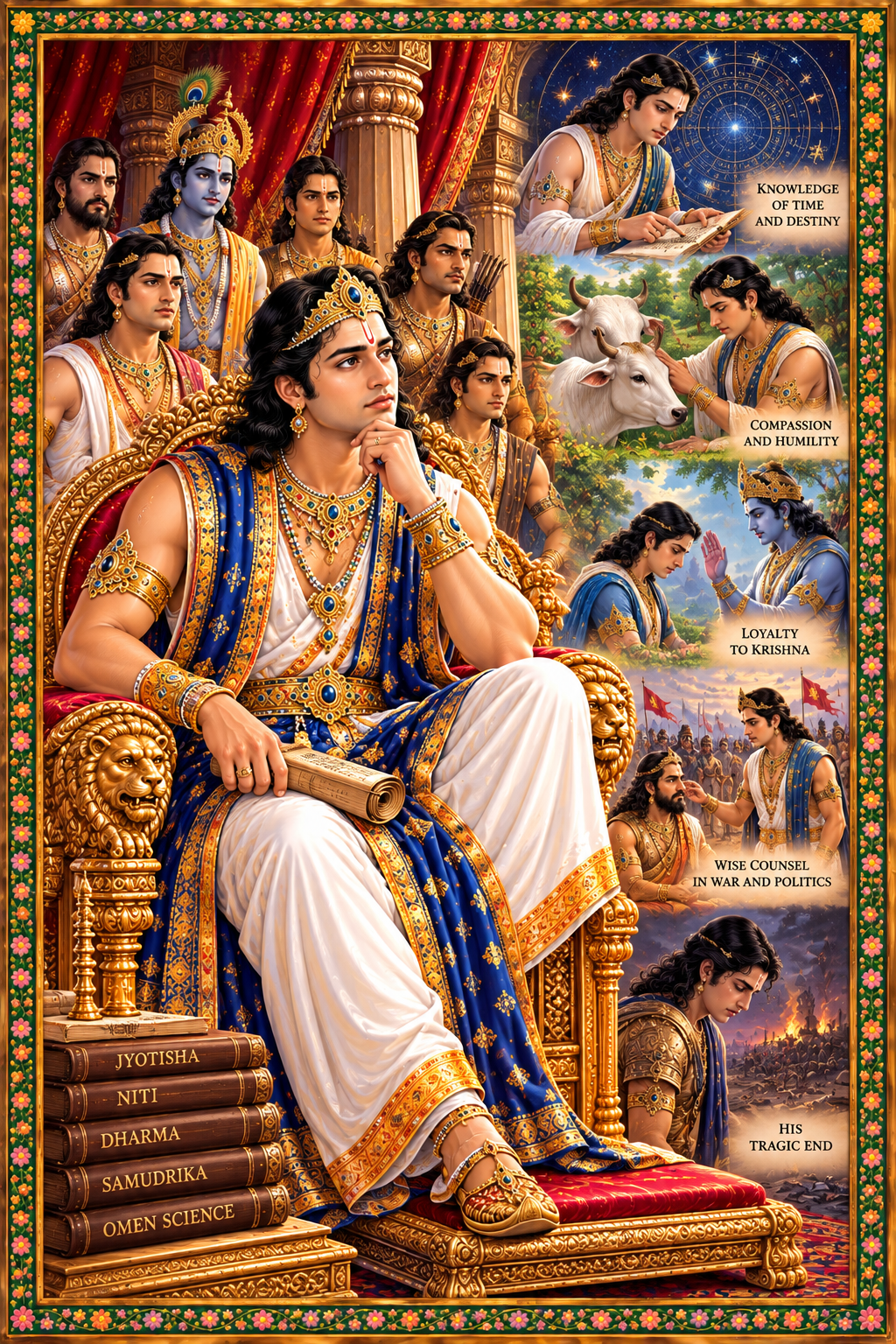
Sahadeva in Mahabharata: The Astrologer Pandava Who Knew the Future of Kurukshetra
A wise Pandava prince in the Mahabharata – Sahadeva Introduction – Sahadeva in Mahabharata While Bhima conquered with unmatched physical strength and Arjuna with peerless archery, the youngest Pandava, Sahadeva, possessed a power far rarer: the gift of foreknowledge. A master of the stars and ancient medicine, Sahadeva knew the tragic outcome of the Kurukshetra war long before the conch shells were blown. Bound by a vow never to reveal the future unless asked, he was the quiet, introspective brother whose advice King Yudhishthira sought in the darkest hours of decision. Sahadeva was the youngest of the Pandavas and the twin brother of Nakula. Even though he did not speak much, he understood many things that others could not. Many stories say that Sahadeva knew the future but chose to remain silent because of his promise and his respect for dharma. His character teaches us that true knowledge does not always need loud words. Sometimes, silence itself shows greatness. Birth of Sahadeva -Sahadeva in Mahabharata Sahadeva and Nakula were born to King Pandu’s second wife, Madri. Since Pandu was cursed and could not have children, Kunti shared a divine mantra with Madri. By using that mantra, Madri prayed to the…
- Pandeva's , Sons of Kunti (From Different Devas)
- March 6, 2026
- 440 views
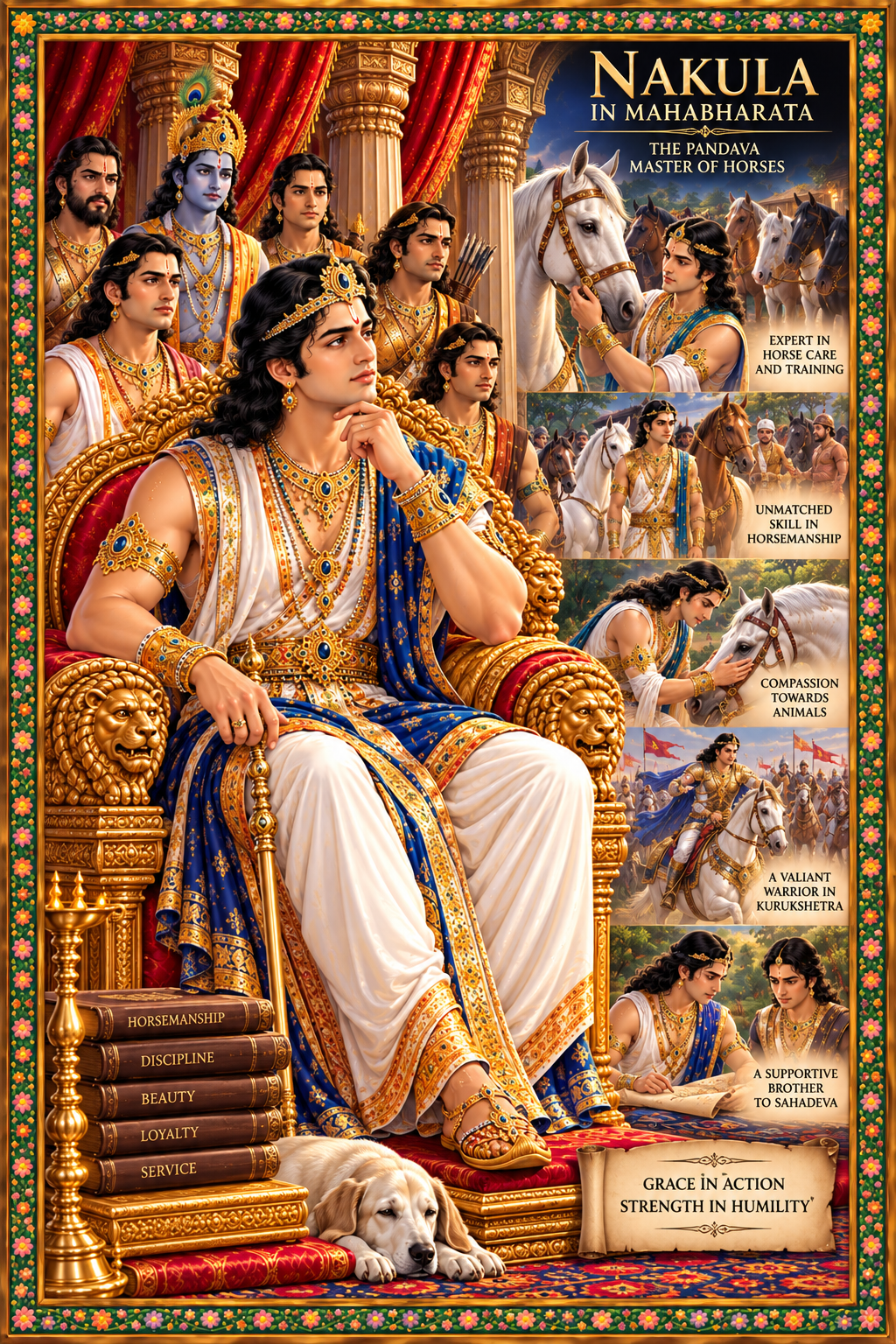
Nakula in Mahabharata: The Handsome Pandava, Master of Horses & Ayurveda
Nakula is the handsome warrior who is master of horses? Introduction – Nakula in Mahabharata Renowned across kingdoms for his radiant charm and athletic grace, Nakula was the fourth Pandava brother and the elder of the Madri twins. Beyond his striking presence, Nakula was one of the finest swordsmen of his era and an intuitive master of horses, able to heal wounded animals and understand their moods like no one else. Unfailingly humble, loyal, and brave, his devotion to his elder brothers and his heroic deeds in battle made him an indispensable pillar of the Pandava family. He was the fourth Pandava and the twin brother of Sahadeva. Nakula is remembered for his loyalty, courage, and humility, which made him a respected warrior and noble prince. For official cultural and historical archives, visit the Ministry of Culture, Government of India. Birth and Divine Origin – Nakula in Mahabharata Nakula was born to Queen Madri, the second wife of King Pandu. Through a divine blessing, Madri invoked the Ashwini Kumaras, the twin celestial physicians of the gods. As a result, she gave birth to twin sons – Nakula and Sahadeva. Because of this divine origin, Nakula possessed: Among the Pandavas, Nakula…
- Mahabharatam , Pandeva's , Sons of Kunti (From Different Devas)
- February 22, 2026
- 649 views
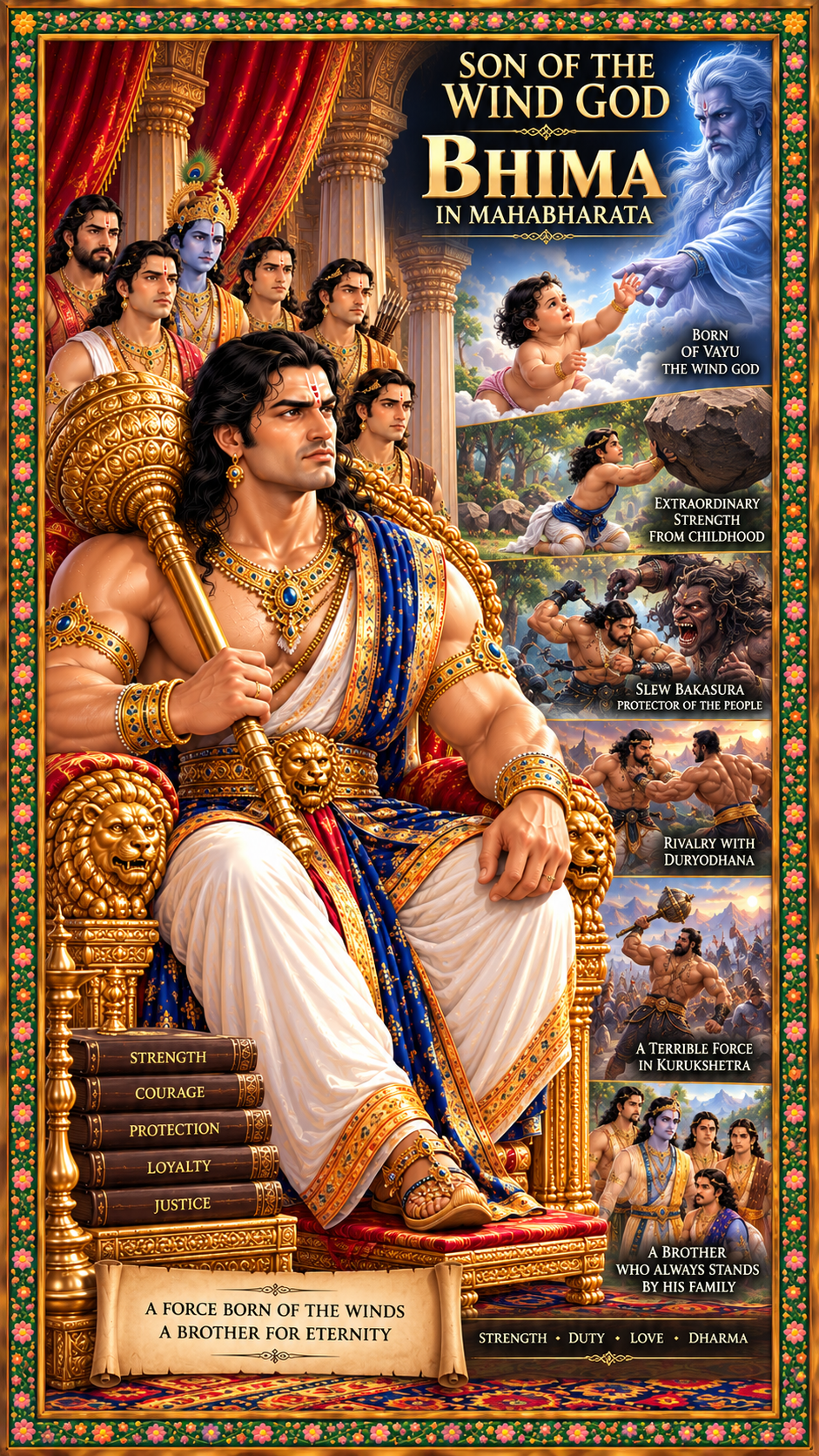
Bhima in Mahabharata: Story of the Strongest Pandava, Mighty Feats & Vows
Life of Bhima in Mahabharata – The Strongest Pandava Introduction : Bhima in Mahabharata Blessed by Vayu, the wind god, with the immense strength of ten thousand elephants, Bhima was the unstoppable guardian of the Pandava family. Whether wrestling forest demons, tearing through enemy battle formations, or preparing delicious feasts during their year in disguise, his appetite for life was as gigantic as his mace. Yet beneath his towering, thunderous presence lay a deeply protective heart that swore to defend his brothers and Draupadi at any cost. Bhima‘s life is filled with heroic deeds, fierce battles, and unwavering dedication to justice. For official cultural and historical archives, visit the Ministry of Culture, Government of India. Birth of Bhima – Bhima in Mahabharata Bhima was one of the five Pandavas in the Mahabharata. He was born to Kunti through the blessings of Vayu, the Wind God. After King Pandu was cursed that he would die if he touched his wives, Kunti used a divine mantra given by Sage Durvasa. By chanting the mantra and invoking Vayu, she gave birth to Bhima. From birth, Bhima was extremely strong. It is said that when he accidentally fell from his mother’s hands as a…
- Pandeva's , Sons of Kunti (From Different Devas)
- February 22, 2026
- 519 views
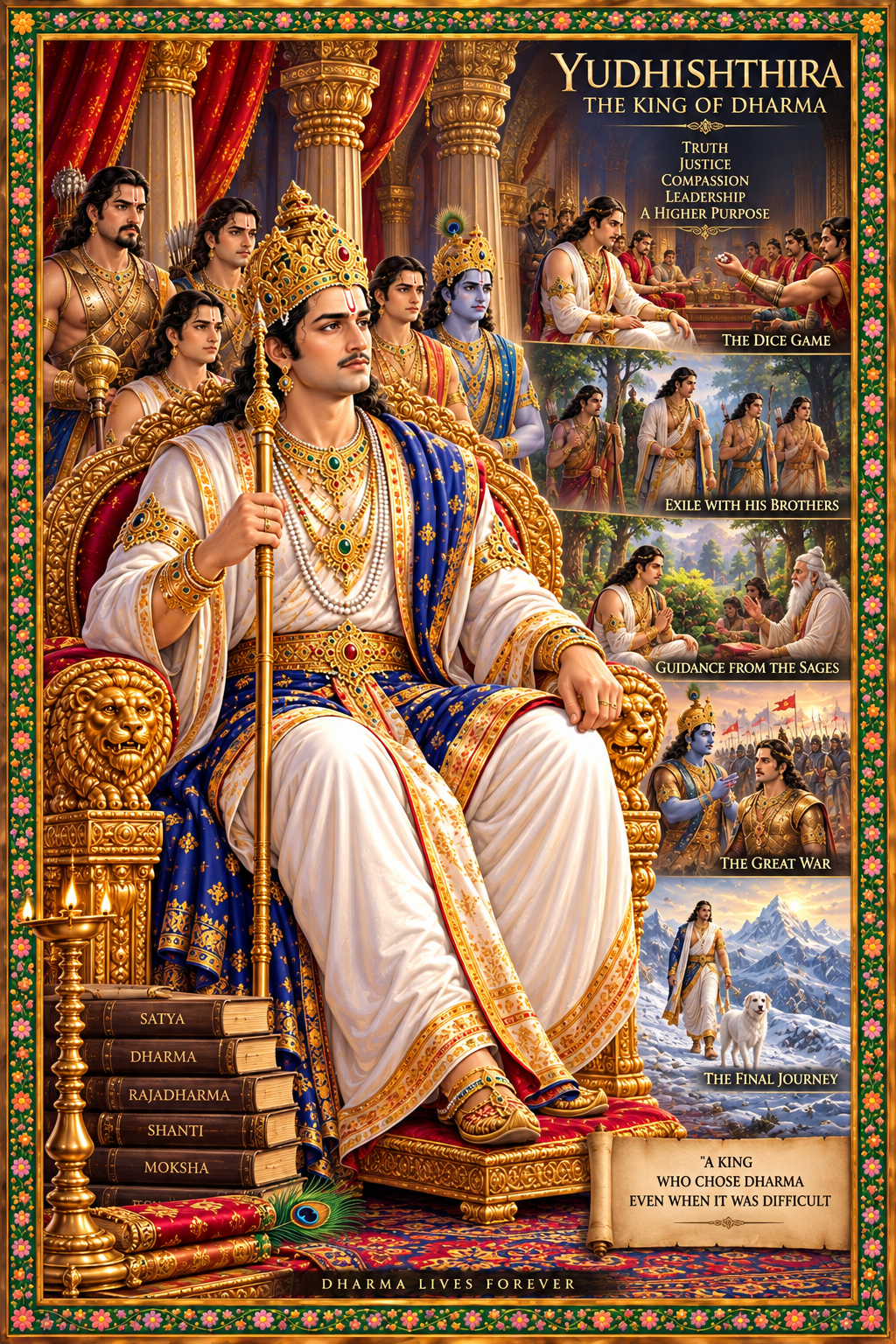
Yudhishthira in Mahabharata: The King of Dharma, Yaksha Prashna & Dice Game
King Dharma Raju in the Mahabharata Introduction – Dharma Raju(Yudhishthira) in Mahabharata In a world torn by political ambition and vengeance, King Yudhishthira, affectionately called Dharma Raju, stood as the living embodiment of moral integrity. The eldest son of King Pandu and Kunti, born of Lord Dharma himself, he was renowned for speaking only the truth. Even when faced with the terrifying Yaksha at the enchanted lake or walking toward heaven with a faithful stray dog, Yudhishthira proved that compassion and righteousness are the highest virtues a leader can possess. As the eldest of the Pandavas, Dharma Raju symbolized justice, patience, forgiveness, and moral strength. His life journey – from royal heir to exile, from gambler to emperor – teaches timeless lessons on leadership, responsibility, and ethical governance. This detailed blog on RatnamStrategy explores his birth, virtues, challenges, leadership, Kurukshetra war role, and spiritual legacy Dharma Raju’s Divine Origin and Birth Dharma Raju, also known as Yudhishthira, was the eldest of the Pandavas in the Mahabharata. He was born to Queen Kunti through the divine blessing of Lord Dharma (Yama). Before marriage, Kunti received a sacred mantra from Sage Durvasa that allowed her to invoke any god and receive a…
- Mahabharatam , Pandeva's , Sons of Kunti (From Different Devas)
- January 30, 2026
- 558 views
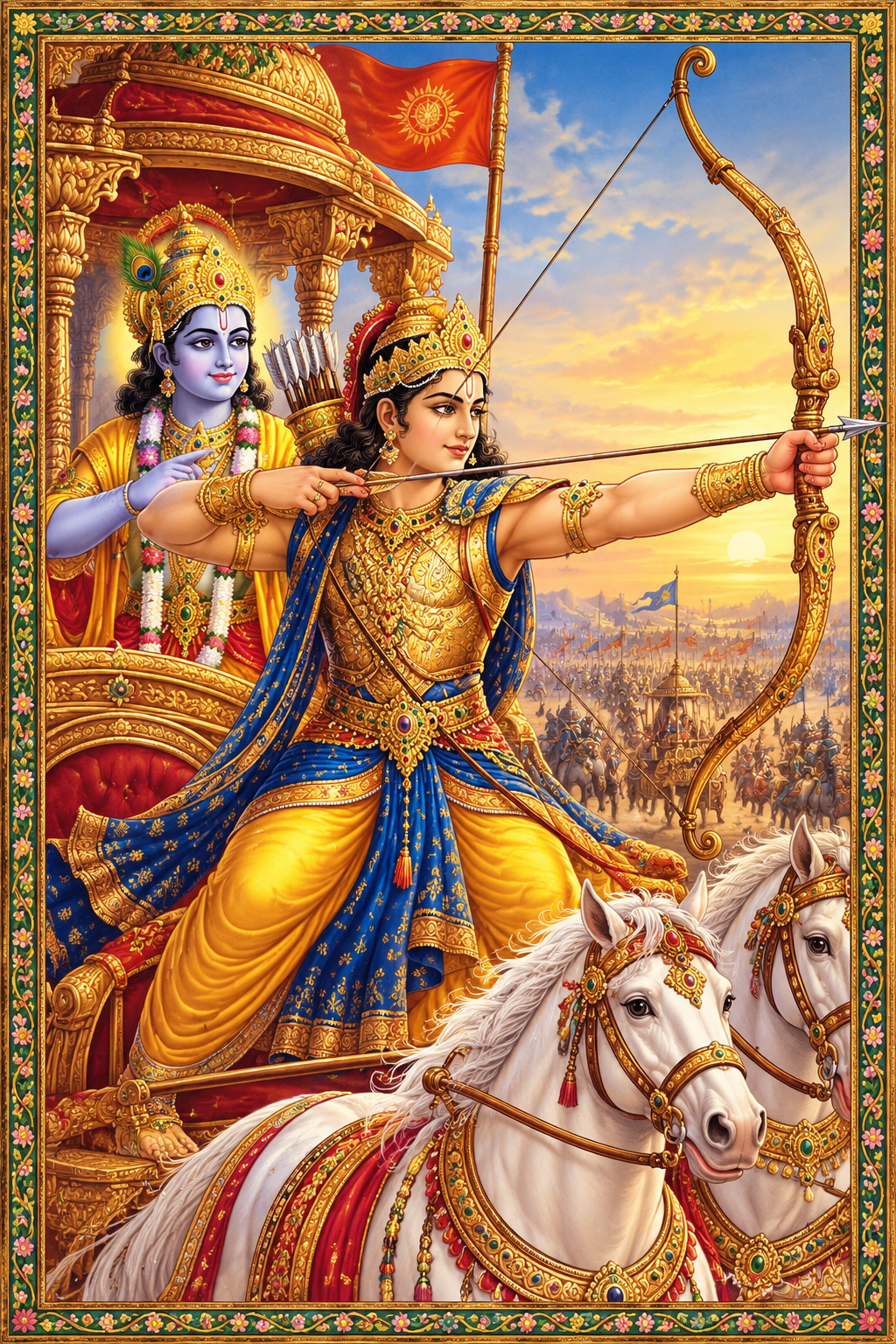
Arjuna in Mahabharata: The Greatest Archer, Gandiva Bow & Role in Kurukshetra
Arjuna in Mahabharata: The Greatest Archer and Hero of Dharma When Guru Dronacharya placed a wooden bird high up in a forest tree and asked his royal pupils what they could see, only one young prince answered: ‘I see only the eye of the bird.’ That focused young archer was Arjuna, third of the Pandavas and bearer of the celestial Gandiva bow. Blessed with divine weapons from Lord Shiva and guided by his dearest friend and charioteer, Lord Krishna, Arjuna’s life was a masterclass in single-minded focus, discipline, and standing up for righteousness. Introduction to Arjuna in Mahabharata Arjuna is the third of the five Pandava brothers and the son of King Pandu and Queen Kunti. He was born through the blessings of Lord Indra, the king of gods, which is why Arjuna possessed divine strength, courage, and extraordinary skill in warfare. Among all warriors of the Mahabharata, Arjuna is considered the finest archer and a symbol of discipline, focus, and devotion. The story of Arjuna in the Mahabharata is not just about war, but about life lessons, duty, self-doubt, inner strength, and ultimate spiritual wisdom through the Bhagavad Gita. For official cultural and historical archives, visit the Ministry of…