Raja Ratnam
- Mahabharatam , Pandeva's , Sons of Kunti (From Different Devas)
- January 30, 2026
- 526 views
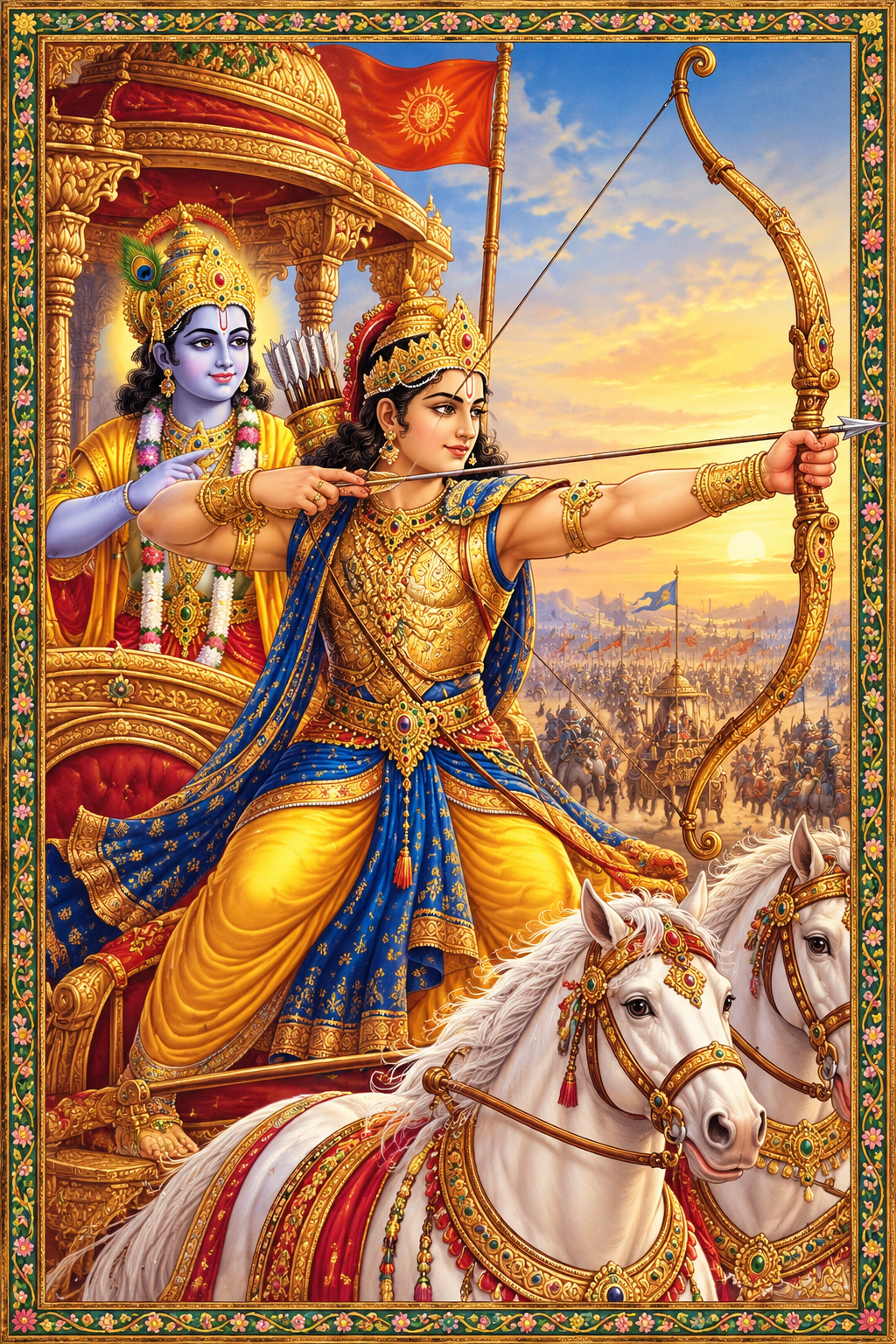
Arjuna in Mahabharata: The Greatest Archer, Gandiva Bow & Role in Kurukshetra
Arjuna in Mahabharata: The Greatest Archer and Hero of Dharma Arjuna in Mahabharata is one of the most celebrated warriors in Indian history and Hindu mythology. Known for his unmatched archery skills, deep devotion to Lord Krishna, and strong commitment to dharma (righteousness), Arjuna’s life is filled with inspiration, struggle, devotion, and victory. This full-length SEO-optimized blog is specially crafted for Ratnam Strategy in the same format as Uttara and Abhimanyu content. Introduction to Arjuna in Mahabharata Arjuna is the third of the five Pandava brothers and the son of King Pandu and Queen Kunti. He was born through the blessings of Lord Indra, the king of gods, which is why Arjuna possessed divine strength, courage, and extraordinary skill in warfare. Among all warriors of the Mahabharata, Arjuna is considered the finest archer and a symbol of discipline, focus, and devotion. The story of Arjuna in the Mahabharata is not just about war, but about life lessons, duty, self-doubt, inner strength, and ultimate spiritual wisdom through the Bhagavad Gita. For official cultural and historical archives, visit the Ministry of Culture, Government of India. Birth and Early Life of Arjuna in Mahabharata Arjuna was born after Kunti invoked Lord Indra using…
- Mahabharatam , Mythology
- January 29, 2026
- 646 views
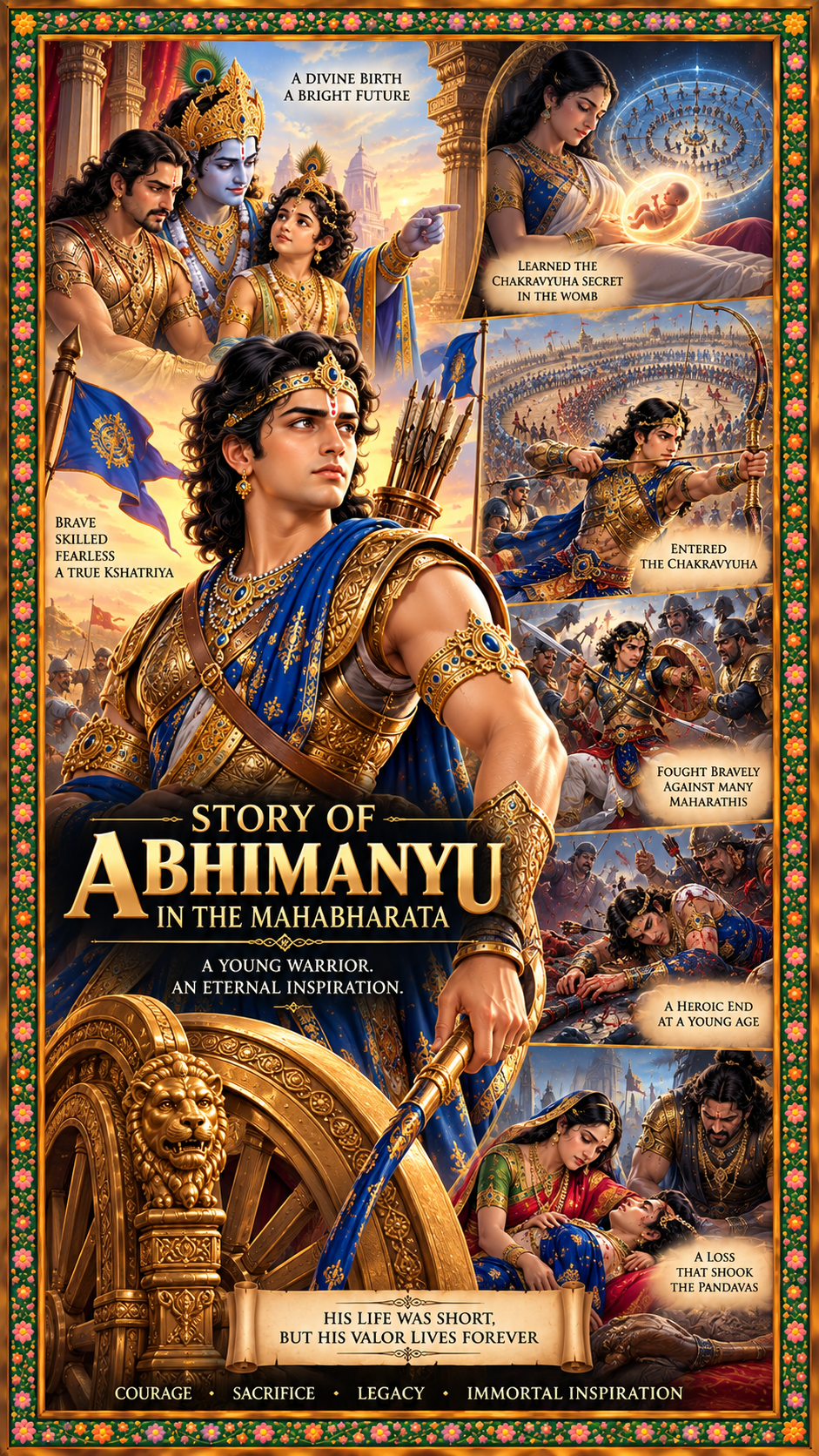
Abhimanyu in Mahabharata: Breaking the Chakravyuha & The Heroic Martyrdom
Introduction The story of Abhimanyu in the Mahabharata stands as one of the most emotional and heroic episodes in the great Indian epic. Though young in age, Abhimanyu displayed extraordinary courage, wisdom, and devotion to dharma. His sacrifice during the Kurukshetra war became a symbol of supreme bravery and righteous struggle. For official cultural and historical archives, visit the Ministry of Culture, Government of India. Who Was Abhimanyu in the Mahabharata? Abhimanyu was the son of Arjuna, the greatest archer among the Pandavas, and Subhadra, the sister of Lord Krishna. From birth, he carried divine qualities and warrior instincts. Despite his young age, Abhimanyu was regarded as a powerful warrior equal to seasoned kings. Lineage and Family Background Abhimanyu was born into the noble Chandravanshi (Lunar Dynasty), one of the most respected royal lineages in the Mahabharata. He was the son of Arjuna, the greatest archer among the Pandavas, known for his courage, discipline, and devotion to dharma. His mother Subhadra was the sister of Lord Krishna, giving Abhimanyu a divine connection from birth. Through Arjuna’s warrior lineage and Krishna’s guidance, Abhimanyu inherited extraordinary bravery and wisdom. According to the scriptures, Abhimanyu was also believed to be the incarnation of…

- Mahabharatam , Mythology
- January 27, 2026
- 781 views
Uttara in Mahabharata: Princess of Matsya & Mother of King Parikshit
Introduction The Mahabharata is filled with warriors, kings, and divine heroes—but behind the battlefield glory lie equally powerful stories of courage, devotion, and legacy. One such underrated yet significant character is Uttara, the princess of the Matsya Kingdom. Though not a warrior on the battlefield, Uttara’s role shaped the future of the Pandava lineage. She became the mother of Parikshit, the sole surviving heir of the Pandavas, ensuring the continuation of the Kuru dynasty after the devastating Kurukshetra War. This blog explores who Uttara was, her life, her marriage, her struggles, and her historical importance in the Mahabharata. For official cultural and historical archives, visit the Ministry of Culture, Government of India. Who Was Uttara in Mahabharata? Uttara was the daughter of King Virata of Matsya Kingdom and Queen Sudeshna. She was the princess of the kingdom where the Pandavas spent their final year of exile in disguise (Agyatavas). She later married Abhimanyu, the brave son of Arjuna and Subhadra, becoming closely connected to the Pandava family. Uttara in Mahabharata and Her Royal Birth Uttara was born into the noble Matsya dynasty as the daughter of King Virata and Queen Sudeshna. Raised in a palace filled with discipline, culture, and…
- Mahabharatam , Mythology
- January 25, 2026
- 967 views
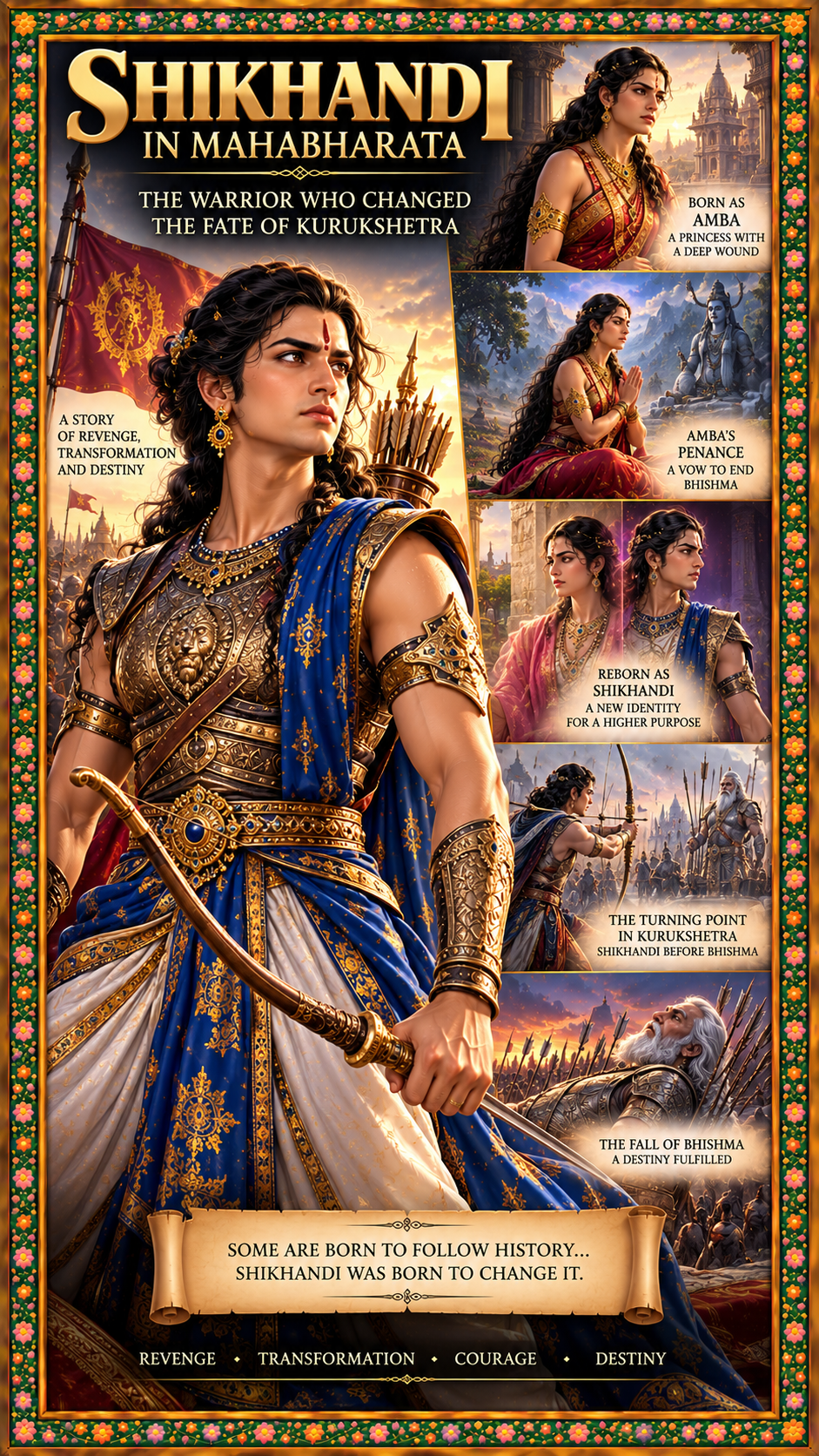
Shikhandi in Mahabharata: Amba’s Rebirth, Gender Transformation & Fall of Bhishma
Introduction The Mahabharata is not just a tale of war but a profound epic filled with complex characters, moral dilemmas, and destiny-driven events. Among these powerful figures, Shikhandi stands out as one of the most unique and influential characters. Often misunderstood and sometimes overlooked, Shikhandi played a crucial role in the fall of Bhishma, one of the greatest warriors of all time. This blog explores who Shikhandi was, the story behind their birth, their transformation, and their importance in the Mahabharata war. For official cultural and historical archives, visit the Ministry of Culture, Government of India. Who Was Shikhandi? Shikhandi was a warrior in the Mahabharata who fought on the side of the Pandavas during the Kurukshetra War. However, Shikhandi’s identity goes beyond a simple warrior role. Their life story involves themes of rebirth, destiny, gender identity, revenge, and divine justice. Shikhandi was born as Shikhandini, the daughter of King Drupada of Panchala, and later became Shikhandi through divine intervention. The Past Life of Shikhandi – Amba’s Story To understand Shikhandi, we must first understand Amba. Amba was a princess who was abducted by Bhishma along with her sisters Ambika and Ambalika for the prince of Hastinapura. However, Amba revealed that she loved another king and wanted to marry him. Bhishma released…
- Festivals , Mythology
- January 22, 2026
- 379 views
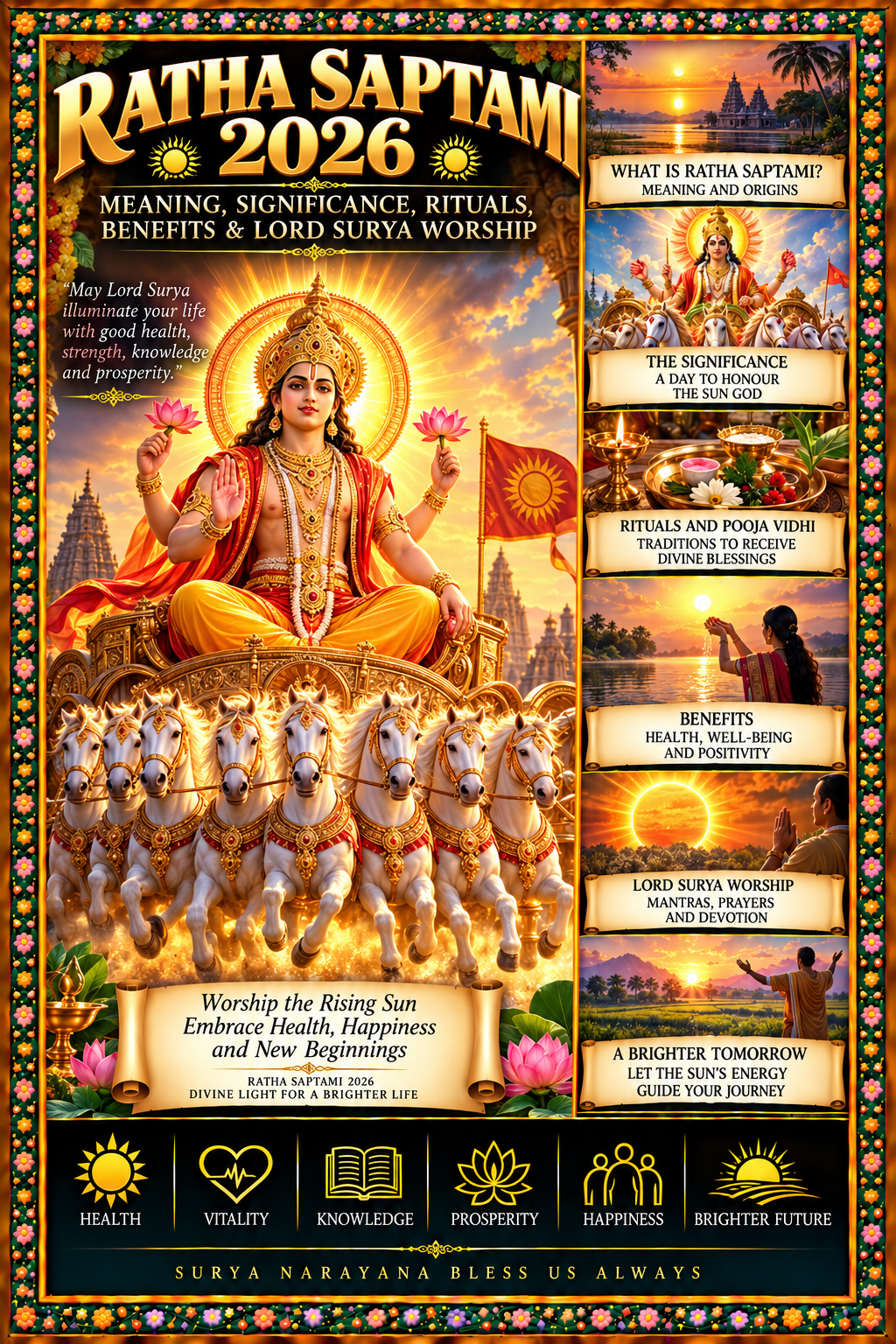
Ratha Saptami: Surya Jayanti Snanam, Milk Offering Rituals, Arghya & Benefits
Introduction Ratha Saptami is one of the most auspicious Hindu festivals dedicated to Lord Surya (the Sun God). Celebrated on the seventh day (Saptami) of the bright fortnight (Shukla Paksha) in the month of Magha, this festival holds deep spiritual, cultural, and scientific importance in Indian tradition. It marks the symbolic beginning of the Sun’s northward journey (Uttarayana) and is considered highly beneficial for health, prosperity, and spiritual growth. What is Ratha Saptami? (Meaning of Ratha Saptami Festival) The word Ratha means chariot and Saptami means seventh day. According to Hindu belief, on this sacred day, Lord Surya rides his divine chariot drawn by seven horses, symbolizing the seven colors of light, seven days of the week, and seven chakras of the human body. Ratha Saptami is also known as: This day signifies the awakening of solar energy on Earth and is considered ideal for new beginnings. Significance of Ratha Saptami in Hinduism Spiritual Significance of Ratha Saptami Ratha Saptami is believed to destroy sins, remove negative energies, and bring divine blessings. Worshipping the Sun God on this day is said to improve clarity of mind, inner strength, and spiritual awareness. Many devotees perform: These practices help purify the soul and enhance positive vibrations. Scientific & Health Benefits of Ratha…
- Mahabharatam , Mythology
- January 20, 2026
- 488 views
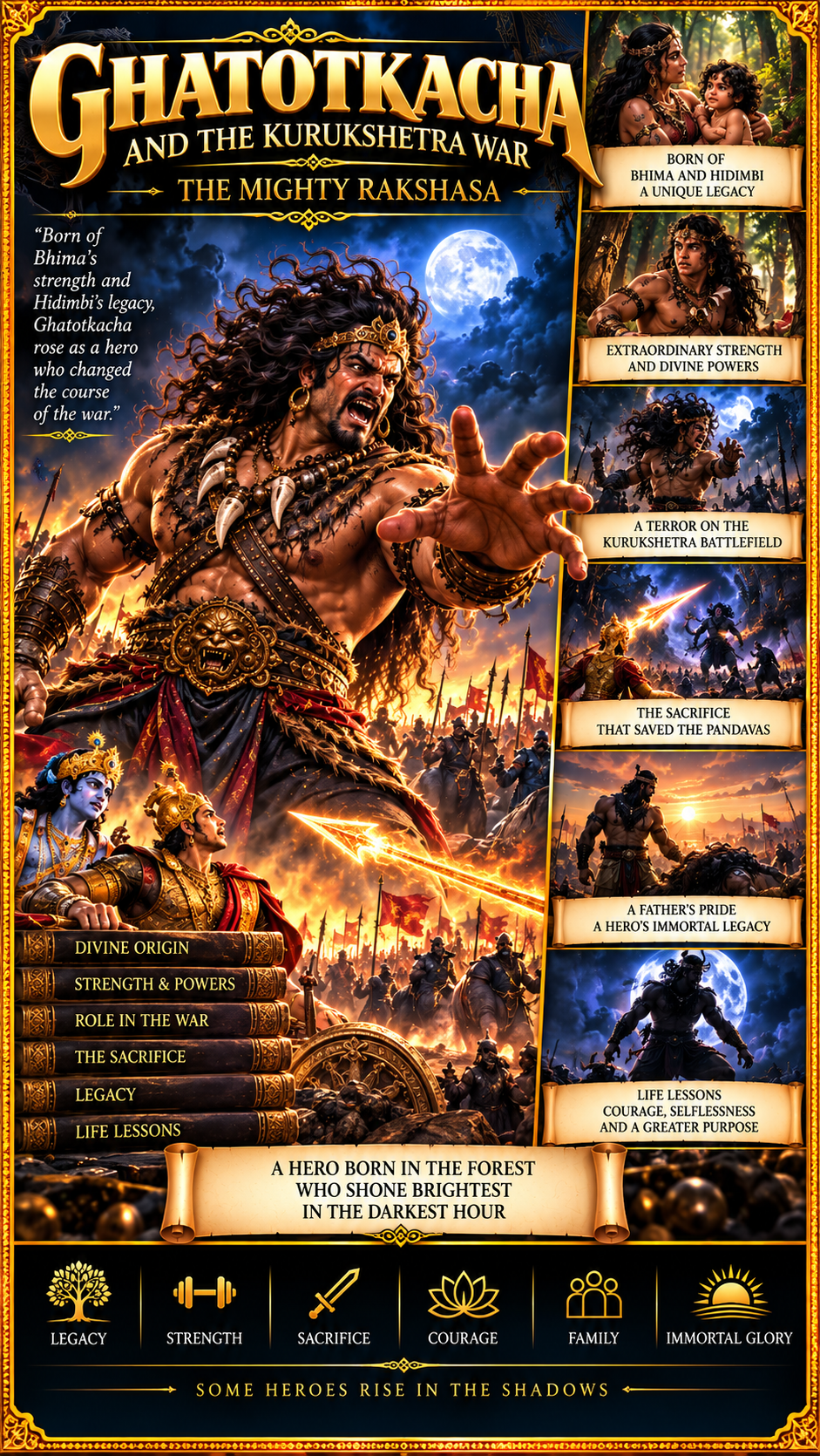
Ghatotkacha in Mahabharata: The Nocturnal Titan of Kurukshetra & The Vasavi Shakti
Introduction Among the many powerful warriors of the Mahabharata, few left an impact as dramatic and decisive as Ghatotkacha. Though he appears mainly in the later part of the epic, his role becomes one of the most critical turning points of the Kurukshetra war. Born as the son of Bhima and the Rakshasi Hidimba, Ghatotkacha possessed extraordinary strength, magical powers, and unmatched night-war abilities. His heroic sacrifice not only changed the fate of the war but also saved Arjuna’s life indirectly. Ghatotkacha stands as a symbol of selfless sacrifice, destiny, and divine strategy in the Mahabharata. Birth of Ghatotkacha After the Pandavas escaped from the House of Lac (Lakshagriha), they traveled through dense forests. During this time, Bhima encountered Hidimba, a Rakshasi who fell in love with him. With Kunti’s permission, Bhima married Hidimba under Gandharva tradition. From this union was born Ghatotkacha. Meaning of the Name “Ghatotkacha” According to legend, he was born with a powerful body and fearsome appearance, typical of Rakshasas. Yet beneath his terrifying form lived a heart filled with loyalty, righteousness, and devotion to the Pandavas. Childhood and Extraordinary Powers From birth itself, Ghatotkacha displayed supernatural strength. Hidimba raised him among Rakshasas, where he learned:…

- Mythology , Ramayanam
- January 13, 2026
- 475 views
What is Rama Rajya? Principles of Ideal Governance, Justice & Modern Relevance
Introduction: Rama Rajya Explained The idea of Rama Rajya has echoed through Indian civilization for centuries. Often referred to as the ideal form of governance, Rama Rajya represents a system where justice, morality, accountability, and compassion guide leadership. Rooted in the Ramayana, Rama Rajya is not merely a religious or mythological concept. It is a governance philosophy—one that continues to influence political thought, public administration, and ethical leadership even today. For students, professionals, administrators, and leaders, understanding Rama Rajya offers timeless lessons in ethical governance and responsible leadership. What Is Rama Rajya? Rama Rajya refers to the period of governance under Lord Rama, king of Ayodhya, where society functioned in harmony under the principles of dharma (righteousness). Key Characteristics of Rama Rajya: In Rama Rajya, the king was not above the law—he was its first servant. Core Principles of Rama Rajya Dharma as the Foundation of Governance In Rama Rajya, dharma guided every decision. Governance was not driven by power, personal gain, or political convenience but by moral responsibility. Lord Rama consistently chose duty over personal comfort—setting a benchmark for ethical leadership. Modern relevance:Ethical governance requires leaders to place constitutional values and public interest above personal or political agendas. Equality…

- Festivals
- January 9, 2026
- 401 views
Makar Sankranti: Date, Surya Transit Meaning, Sacred Rituals & Celebrations in India
Introduction of Makar Sankranti Sankranti is one of India’s most auspicious and widely celebrated festivals, deeply rooted in astronomy, agriculture, and spirituality. Observed every year in mid-January, this harvest festival marks the Sun’s transition into the zodiac sign Capricorn (Makara), symbolising a shift toward positivity, growth, and renewal. Unlike many Indian festivals that follow the lunar calendar, Makar Sankranti is governed by the solar cycle, making its date relatively fixed—usually January 14 or 15. Across the country, Makar Sankranti is celebrated with immense joy under different regional names and customs. At its heart, the festival expresses gratitude to nature, honours farmers and the harvest, and welcomes longer, brighter days. Astronomical & Spiritual Significance of Makar Sankranti On Makar Sankranti, the Sun begins its northward journey, Uttarayan.In Hindu philosophy, Uttarayan is considered highly auspicious and spiritually elevating. It is believed that deeds performed during this period yield positive outcomes and spiritual merit. Ancient scriptures describe the Sun as the visible form of the divine—an eternal source of life and energy. Worshipping the Sun on Sankranti symbolises enlightenment, discipline, and inner strength. This transition also signifies the gradual end of winter and the arrival of a season filled with warmth and hope.…
- Mahabharatam , Mythology , Sons of Vichitravirya (via Sage Vyasa)
- January 8, 2026
- 453 views
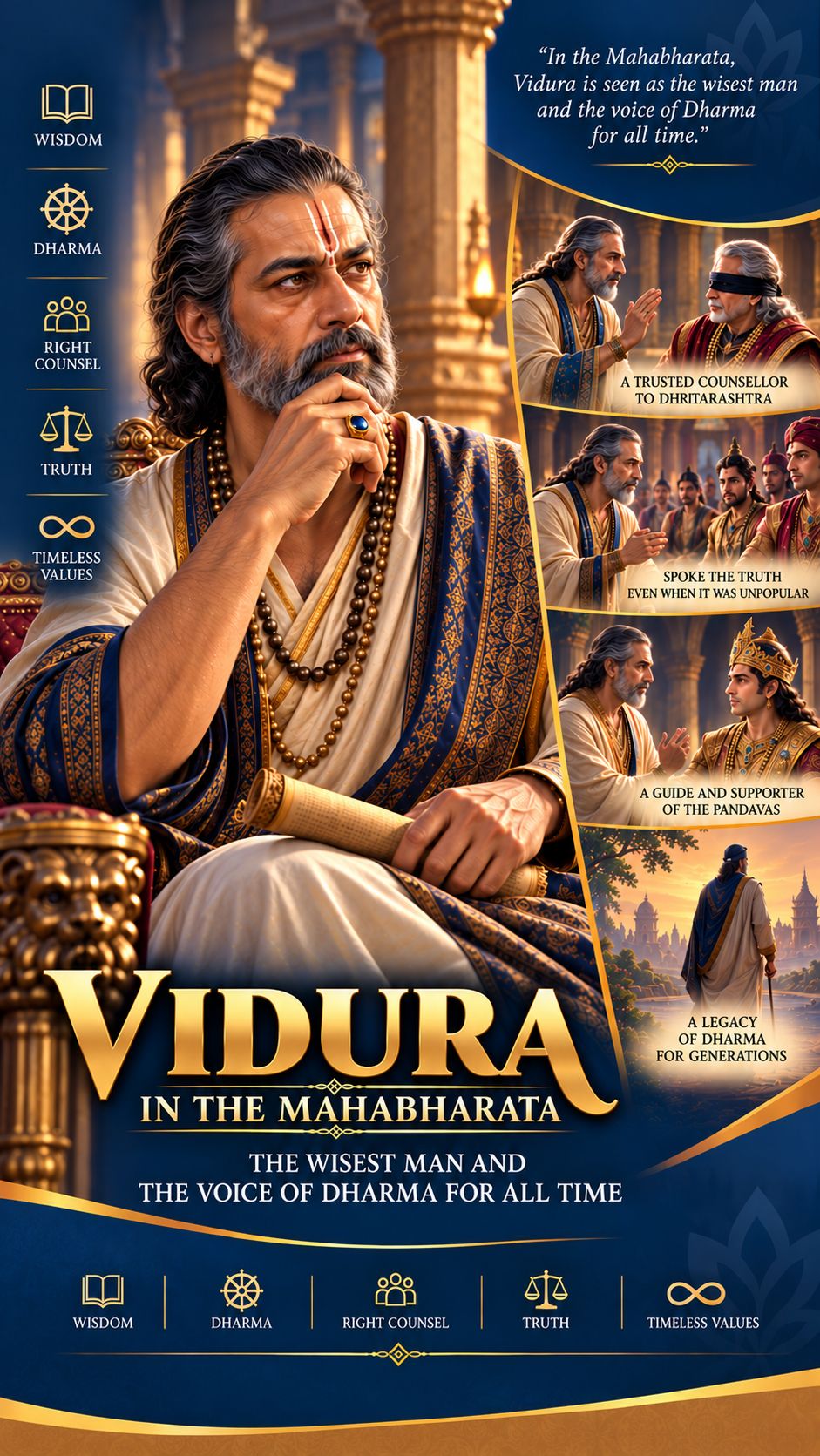
Vidura in Mahabharata: Life Story, Vidura Niti, Wisdom & Teachings
Introduction In the vast and complex epic of the Mahabharata, filled with mighty warriors, divine incarnations, and powerful kings, one man stands apart—not for his strength or royal birth, but for his unmatched wisdom, moral clarity, and unwavering commitment to dharma. That man is Vidura. Widely regarded as the wisest man in the epic, Vidura served as the chief advisor to King Dhritarashtra and the moral compass of the Kuru kingdom. Time and again, he warned against injustice, greed, and the catastrophic war of Kurukshetra. Yet, his wise counsel often fell on deaf ears. This blog explores Vidura’s life, wisdom, role in the Mahabharata, and timeless relevance in leadership, governance, and ethics. Who Was Vidura? Vidura was born to Vyasa, the great sage and author of the Mahabharata, and a maidservant of the Kuru palace. Despite his humble maternal origin, Vidura was endowed with extraordinary intelligence, integrity, and spiritual insight. According to tradition, Vidura was an incarnation of Yama (Dharma Devata)—the god of righteousness and justice—sent to guide humanity during a time of moral decline. Though denied the throne due to social conventions, Vidura became the most respected statesman in Hastinapura. The Wisest Man in the Epic Vidura’s wisdom was…

- Kuru Dynasty , Mahabharatam , Mythology , Women Characters
- January 6, 2026
- 570 views
Satyavati in Mahabharata: Matsyagandha, Queen Mother & Architect of Kuru Destiny
Introduction Satyavati in the Mahabharatam popularly known as Sathavai in regional traditions, is one of the most powerful and influential women in the Mahabharatam. Though she does not fight on the battlefield of Kurukshetra, her decisions, ambitions, and maternal instincts shape the destiny of the Kuru dynasty and ultimately lead to the great war itself. Her life is a remarkable journey—from a humble fisherwoman to the Queen of Hastinapura, from a young girl cursed with a foul smell to the revered Queen Mother of one of India’s greatest epics. Birth and Early Life of Satyavati She was born to Uparichara Vasu, the king of Chedi, and a celestial nymph (apsara). Due to circumstances, she was abandoned at birth and later adopted by a fisherman chief named Dasharaja. In her early years, she was known as Matsyagandha, meaning “one who smells of fish”, because of her association with the fishing community. Despite her humble upbringing, possessed: These traits would later transform her destiny. Meeting Sage Parashara and the Birth of Vyasa One of the most crucial events in the Mahabharatam occurs when Satyavati meets Sage Parashara while ferrying him across a river. The Divine Boons Parashara, impressed by her beauty and…