 Raja Ratnam
Introduction
In the vast and profound epic Mahabharata, Goddess Ganga stands as more than a river—she is a celestial being, a compassionate mother, and a divine force of purification. Revered as Ganga Devi, she flows through the narrative as a bridge between heaven and earth, karma and liberation, sorrow and salvation. Her presence in Mahabharatam is deeply tied to destiny, sacrifice, and dharma.
Origin of Goddess Ganga
Ganga is described in Hindu scriptures as a celestial river (Akasha Ganga) flowing in the heavens. She descends to Earth to cleanse humanity of sins and grant moksha (liberation). In the Mahabharata, she is both a goddess and a queen, assuming a human form to fulfill divine purposes.
Ganga is known for her purity, compassion, and power—capable of washing away even the gravest sins. Her descent itself symbolizes divine grace entering the mortal realm.
Goddess Ganga and King Shantanu
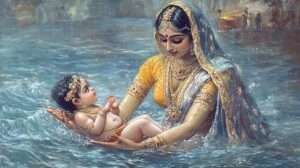
One of the most touching episodes involving Ganga in the Mahabharata is her marriage to Shantanu, the king of Hastinapura. Their union was destined, yet bound by a mysterious condition: Shantanu must never question Ganga’s actions.
Ganga gave birth to seven sons and, each time, immersed the newborns in the river—returning them to the heavens. Though heartbroken, Shantanu remained silent. When the eighth child was about to be drowned, Shantanu stopped her, breaking the vow.
This eighth child was Bhishma, born as Devavrata.
The Divine Purpose Behind Ganga’s Actions
The seven sons were actually the Ashta Vasus, celestial beings cursed to be born on Earth. Ganga released them early from mortal life by immersing them in her sacred waters. Bhishma, however, had to live a long life on Earth to fulfill a greater destiny.
This episode reflects Ganga’s role not as a cruel mother, but as a divine liberator, acting according to cosmic law.
Ganga as the Mother of Bhishma
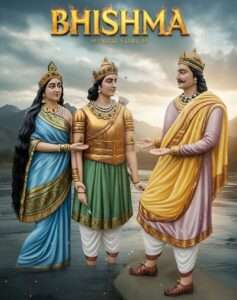
Ganga raised Bhishma with immense care and divine wisdom. She ensured he received celestial training in warfare, scriptures, and dharma. Under her guidance, Bhishma grew into one of the greatest warriors and moral pillars of the Mahabharata.
Even after leaving Shantanu, Ganga continued to protect Bhishma spiritually, watching over his destiny until the end.
Spiritual Symbolism of Goddess Ganga
In Mahabharatam, Ganga symbolizes:
- Purification of karma
- Compassion beyond human emotion
- Detachment and sacrifice
- Flow of time and destiny
- Divine motherhood
Her flowing nature reminds humanity that life, sorrow, joy, and death are all part of an eternal cycle.
Goddess Ganga and Dharma
Ganga’s actions may seem harsh on the surface, but they are rooted in dharma and cosmic justice. She acts without attachment, embodying higher wisdom beyond human judgment. This teaches that divine actions often transcend human understanding.
For official cultural and historical archives, visit the Ministry of Culture, Government of India.
Ganga’s Presence Beyond Shantanu’s Story
Though her most prominent role is in Bhishma’s birth, Ganga is frequently invoked throughout the Mahabharata as a sacred river, a witness to vows, battles, and final rites. Many warriors attain peace and liberation through her waters.
Philosophical Meaning of Ganga in Mahabharata
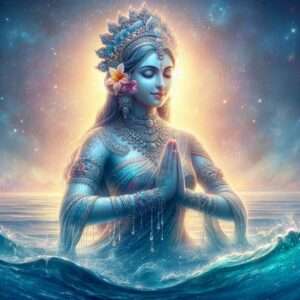
Ganga represents the flow of consciousness, washing away ego and illusion. Her descent from heaven to earth signifies divine knowledge entering human life. She teaches surrender, purity, and acceptance of destiny.
Goddess Ganga in Hindu Worship
Inspired by her Mahabharata legacy, devotees worship Ganga as Ganga Mata. Bathing in the river, chanting her name, and performing rituals on her banks are believed to grant spiritual merit and liberation.
Conclusion
In Mahabharatam, Goddess Ganga is not merely a river goddess—she is a divine mother, a karmic purifier, and a silent architect of destiny. Through her love for Bhishma, her sacrifice with Shantanu, and her eternal flow, Ganga teaches humanity profound lessons on dharma, detachment, and divine grace. Her story continues to inspire devotion, reverence, and spiritual awakening.
Related Sacred Topics & Cultural Heritage: For further spiritual exploration, read about Lord Rama’s ideal life story. For further spiritual exploration, read about the 14-year exile of Lord Rama.
FAQs on Goddess Ganga in Mahabharatam
Why is Ganga important in Mahabharata?
She connects divine will with human destiny.
Who is Goddess Ganga in Mahabharata?
Goddess Ganga is a celestial river goddess who plays a key role as Bhishma’s mother.
Why did Ganga drown her children?
They were cursed celestial beings, and immersion freed them from earthly bondage.
Who was Ganga’s husband in Mahabharata?
King Shantanu of Hastinapura.
How many children did Ganga have with Shantanu?
Eight sons.
Who was Ganga’s eighth son?
Bhishma (Devavrata).
Why did Ganga leave Shantanu?
He questioned her actions, breaking their vow.
Is Ganga cruel or compassionate?
She is compassionate, acting according to divine law.
What is Ganga’s role in Bhishma’s life?
She trained and spiritually protected him.
What do the seven drowned sons represent?
The Ashta Vasus released from a curse.
Is Ganga a human or divine in Mahabharata?
She is divine, assuming human form.
What does Ganga symbolize spiritually?
Purity, liberation, detachment, and divine flow.
Is Ganga worshipped in Mahabharata?
Yes, as a sacred and purifying river.
What lesson does Ganga teach?
Acceptance of destiny and higher wisdom.
Is Ganga mentioned after Bhishma’s birth?
Yes, symbolically throughout the epic.
Why is Ganga called Mother Ganga?
She nurtures and liberates all beings.
Does Ganga grant moksha?
Yes, spiritually and symbolically.
How is Ganga connected to karma?
She purifies karmic burdens.
Is Ganga eternal?
Yes, she is timeless and divine.
What is Ganga’s celestial origin?
She flows originally in the heavens.
Frequently Asked Questions About Goddess Ganga
Why did Goddess Ganga descend to Earth?
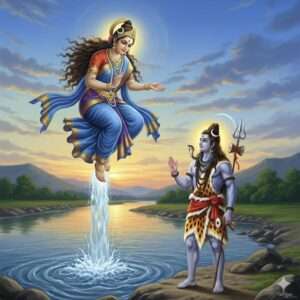
Goddess Ganga descended to Earth through the intense penance of King Bhagiratha to liberate the souls of the 60,000 sons of King Sagara.
What was Goddess Ganga’s role in the Mahabharata?
Ganga married King Shantanu of Hastinapur and gave birth to Devavrata, who later became the revered patriarch Bhishma.


“…in her later years, Satyavati becomes the Queen Mother—the respected matriarch of Hastinapura. Though powerful, she remains bound by fate and the consequences of her earlier decisions. Her life reflects the complex themes of ambition, destiny, sacrifice, and responsibility, making her one of the most influential and tragic figures in the Mahabharata.”