Raja Ratnam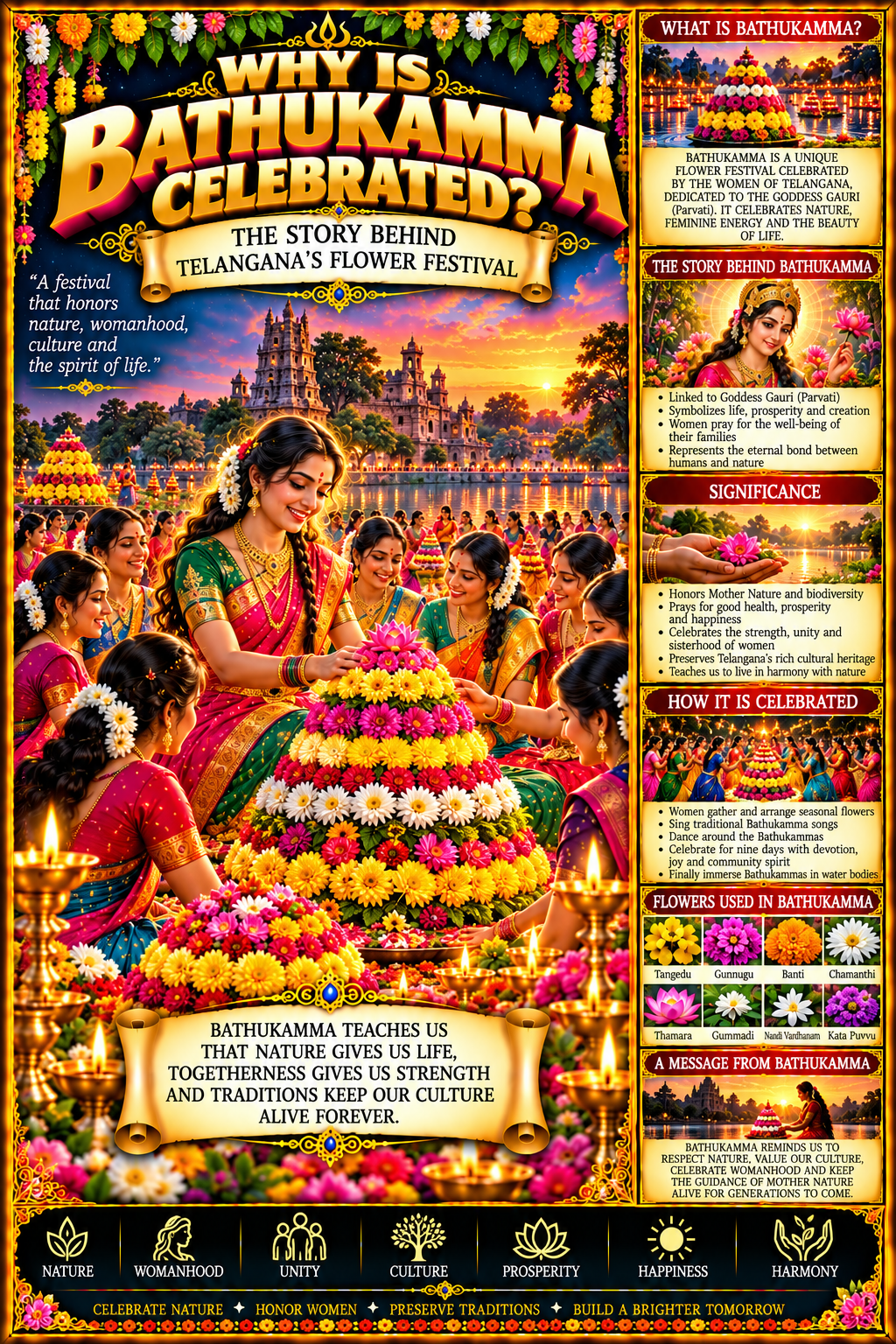
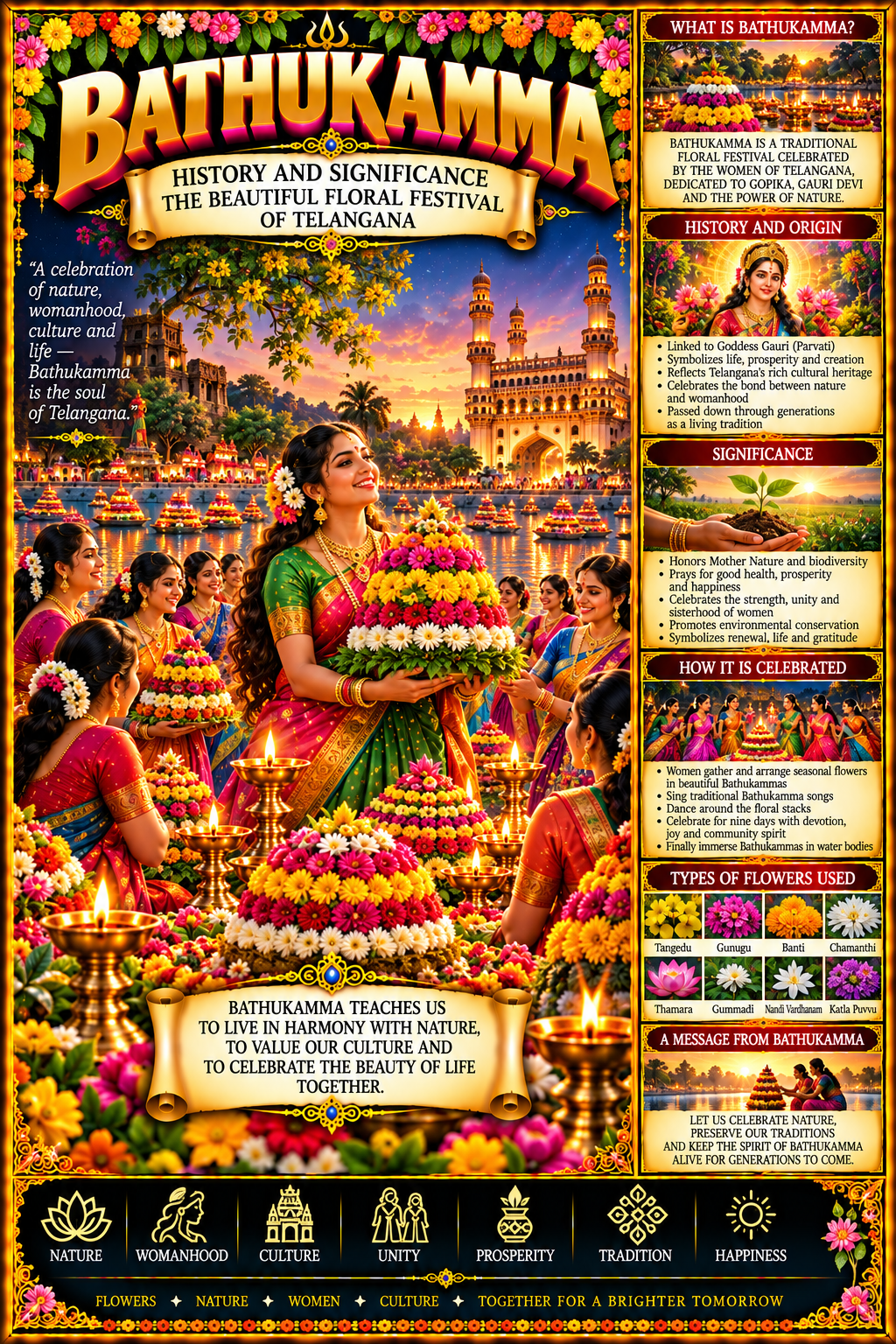
Every autumn, as the monsoon rains recede and golden sunshine sweeps across the Deccan plateau, millions of women across Southern India partake in a radiant celebration of nature, womanhood, and life itself. Yet, curious seekers and cultural enthusiasts frequently ask: Why Is Bathukamma Celebrated, and what makes this unique floral festival so deeply revered in Telangana? Unlike conventional Hindu festivals centered on stone or metal murtis, Bathukamma honors the Divine Mother through concentric, multi-tiered towers of healing wild flowers gathered directly from lush agrarian fields.
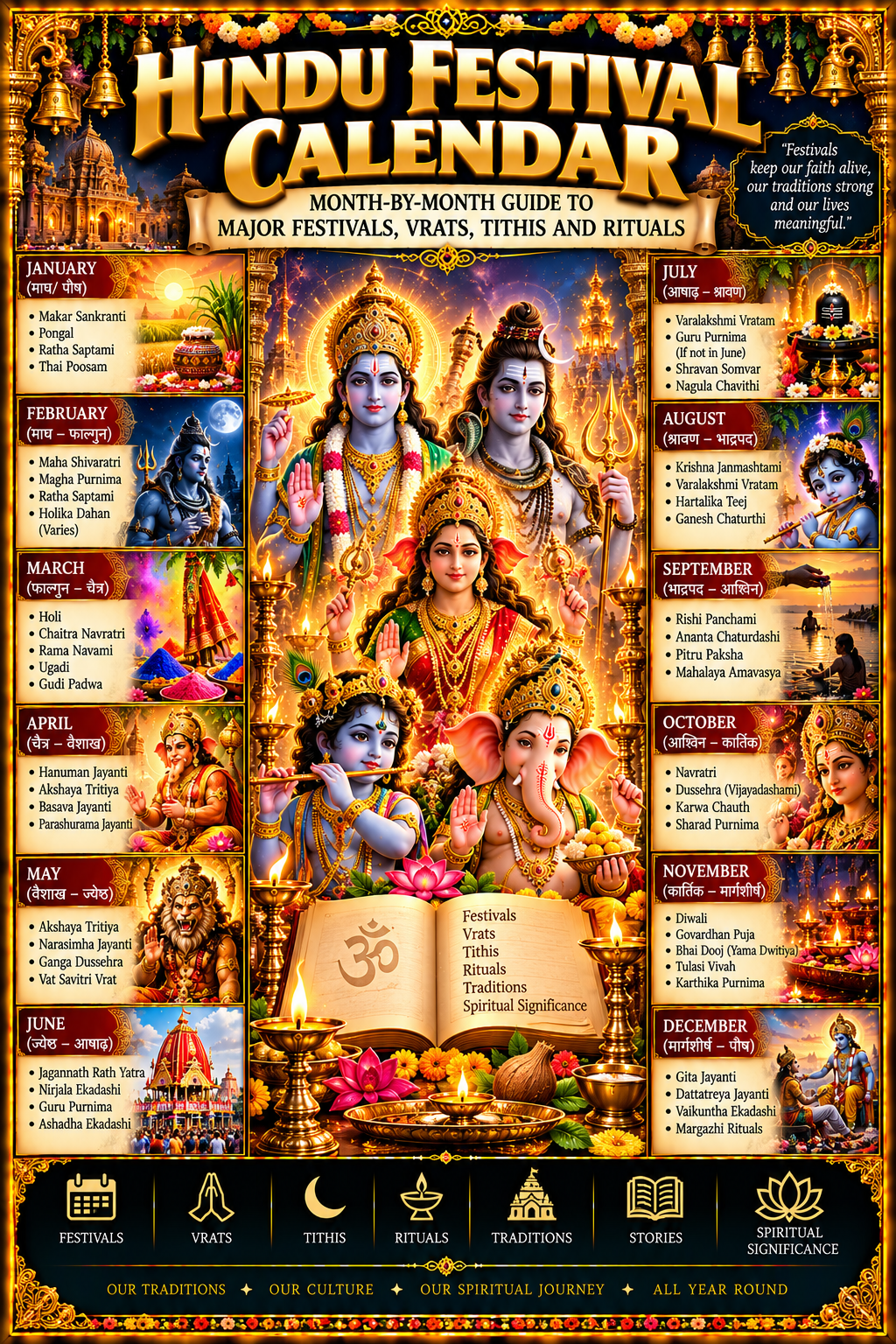
Spanning nine joyful days during the auspicious Sharad Navratri season described in our Hindu festival calendar guide, Bathukamma begins on Mahalaya Amavasya (known regionally as Engili Pula Bathukamma) and reaches its grand zenith on Durgashtami (Saddula Bathukamma). Understanding Why Is Bathukamma Celebrated requires immersing oneself into ancient Puranic epics, agrarian gratitude, female solidarity, and the profound environmental wisdom of the Telangana civilization.
According to cultural documentations maintained by the official cultural heritage portal of Telangana Tourism, Bathukamma is a living celebration of life (Bathuku = Life, Amma = Mother), where nature’s biodiversity is offered directly back to water reservoirs, purifying communal tanks while reaffirming the timeless bond between humankind and Mother Earth.
Why Is Bathukamma Celebrated? The Sacred Legends Behind the Festival
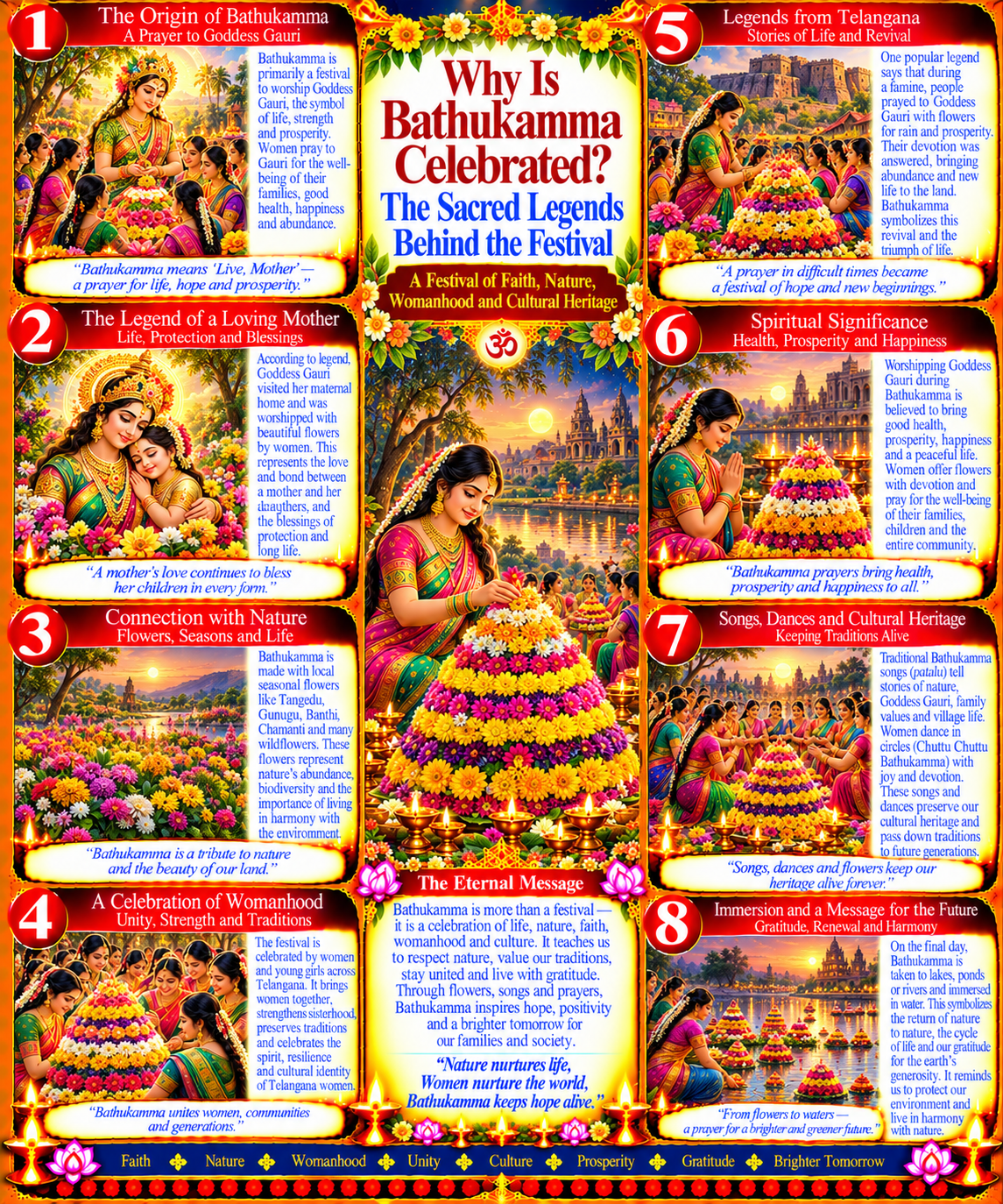
The philosophical and spiritual foundations explaining Why Is Bathukamma Celebrated are chronicled in cherished folklore and Puranic narratives passed down through songs sung by generations of Telangana mothers and daughters.
1. The Royal Penance of King Dharmangada and Princess Bathukamma
The most famous story associated with the festival belongs to the Chola Dynasty. King Dharmangada and his queen Satyavathi were renowned for their righteousness, justice, and devotion. However, grief clouded their royal palace after all one hundred of their valorous sons died fighting on battlefields. Heartbroken and facing the extinction of their lineage, the king and queen retired into deep forest meditation, performing arduous penance (Tapasya) to propitiate Goddess Mahalakshmi.
Moved by their tears and unwavering faith, Goddess Lakshmi incarnated as their divine daughter. When celestial sages and Munis visited the palace to bestow their blessings upon the infant, they perceived her supreme immortality and exclaimed in unison: “Bathukamma!”—a Telugu benediction translating to “May you live forever, Mother!” or “O Mother Goddess, stay alive to protect us!”
The young princess survived numerous childhood adversities through divine grace, bringing everlasting prosperity to the kingdom. In remembrance of this miraculous birth and preservation of life, women continue to craft floral pyramids representing Goddess Gauri, praying that their own children and families are blessed with health and longevity.
2. The Slumber and Awakening of Goddess Durga Post-Mahishasuramardini
Another deeply venerated mythological account ties Bathukamma to the nine-day cosmic warfare between Goddess Durga and the tyrannical buffalo-demon Mahishasura. After unleashing celestial weapons and annihilating the demon on Ashwayuja Ashtami, the Mother Goddess collapsed into a state of profound yogic exhaustion.
Alarmed by her motionless state, celestial maidens and earthly women gathered the most fragrant, therapeutic wild blossoms of the autumn season—including Tangedu, Gunugu, Banthi, and Chamanthi. Arranging these healing flowers around the resting Goddess, they clapped their hands in synchronized rhythm and sang melodious revival songs to awaken her spirit gently. This sacred revival aligns seamlessly with the worship of Maa Mahagauri on Day 8 of Navratri and transitions triumphantly into the significance of Dasara and Vijayadashami.
3. The Eternal Devotion of Goddess Parvati and Lord Shiva
In the Shaivite traditions prevalent across the Deccan plateau, Bathukamma also symbolizes the triumphant rebirth of Goddess Sati as Goddess Parvati (Gauri). After self-immolating in Daksha’s sacrificial fire due to the disrespect shown to Lord Shiva, the Mother of the Universe took birth as the daughter of King Himavan. Through unwavering tapasya, she reunited with Lord Shiva, as reflected in our exploration of Maha Shivaratri and Lord Shiva’s eternal grace.
During Bathukamma, women celebrate Goddess Gauri returning to her maternal home for nine days before returning to Mount Kailash. The turmeric idol (Gouramma) placed atop the flowers symbolizes Gauri Devi herself, surrounded by affectionate familial warmth.
Why Flowers? The Ecological and Agrarian Wisdom of the Deccan
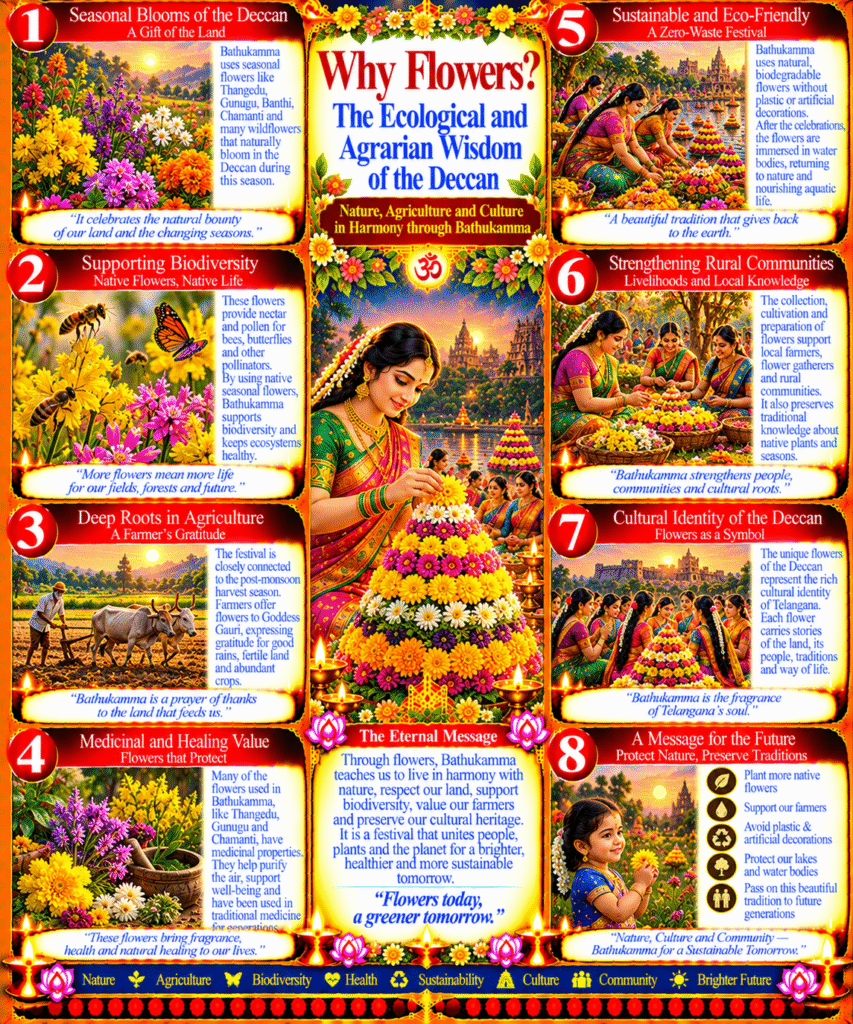
Beyond spiritual legends, answering Why Is Bathukamma Celebrated with wild flowers instead of clay or metal idols reveals the profound ecological genius of ancient Telangana ancestors. Documented in the historical archives of Bathukamma (Wikipedia), the festival represents an unbroken cycle of agrarian harmony.
1. Post-Monsoon Wetland and Lake Water Cleansing
Telangana historically relied on a massive chain of interconnected village tanks (Cheruvulu) engineered during the Kakatiya dynasty. At the close of the monsoon season, stagnant rainwater in these tanks frequently became breeding grounds for bacteria, fungi, and mosquito larvae.
The specific wild flowers harvested for Bathukamma are rich in natural medicinal phytochemicals. When millions of floral towers are gently released into village lakes during the final immersion ritual (Nimajjanam), these flowers act as natural bio-filters, releasing tannins that disinfect the water bodies without leaving toxic chemical residues.
The Therapeutic Chemistry of Bathukamma Blossoms
Each flower selected for the conical pyramid serves an active medicinal purpose:
Tangedu Puvvu (Senna auriculata / Tanner’s Cassia)
The bright yellow Tangedu blossom is the official State Flower of Telangana. In Ayurvedic pharmacopeia, it is celebrated for its powerful antimicrobial, astringent, and anti-diabetic attributes.
Aquatic Purification and Anti-Larval Activity
Tannins released by submerged Senna auriculata suppress fungal blooms and prevent mosquito vectors from multiplying across village water supplies.
Gunugu Puvvu (Celosia argentea / Silver Cock’s Comb)
Growing wild in fallow crop fields, the feathery white and pink spikes of Gunugu provide the sturdy structural layers of the conical Bathukamma tower.
Phytoremediation and Bio-Absorbent Qualities
Celosia plants naturally absorb excess nitrogen and soil contaminants, completing a beneficial ecological remediation cycle when returned to wetlands.
Gummadi, Banthi, and Chamanthi Blossoms
The pumpkin flower (Gummadi Puvvu) represents fertility and agricultural yield, while Marigold (Banthi) and Chrysanthemum (Chamanthi) emit aromatic terpenes that naturally repel insects during evening gatherings.
The Social Significance: Women’s Empowerment, Resistance, and Solidarity
Research preserved by the Ministry of Culture, Government of India underscores that Bathukamma holds extraordinary sociological importance. For centuries, women across different social strata and rural backgrounds have found in Bathukamma an uninhibited platform for artistic expression, emotional liberation, and community solidarity.
1. Returning to the Maternal Hearth
In traditional Telugu culture, married daughters return to their parents’ home (Puttillu) for the nine days of Bathukamma. Relieved from the daily domestic rigors of their in-laws’ residences, young women reconnect with childhood friends, sisters, and mothers, dressing in vibrant silk Pattu Sarees and traditional Langa Voni (half-sarees).
2. Folk Songs as Living History and Social Dialogue
As women form expansive concentric circles around the floral pyramids, clapping rhythmically in unison, the folk songs they chant are not merely religious hymns; they are oral historical records. The ballads narrate tales of women’s courage, marital struggles, the challenges of rural drought, resistance against feudal exploitation (such as the historic Telangana Peasant Rebellion), and prayers for collective well-being.
“Okkesi Puvvesi Sandamama… Okkate Bathukamma Sandamama… Rendeesi Puvvesi Sandamama… Rendo Bathukamma Sandamama…”
— Traditional Folk Ballad Celebrating Unity and Seasonal Bounty
The Nine Sacred Phases: How the Celebration Progresses
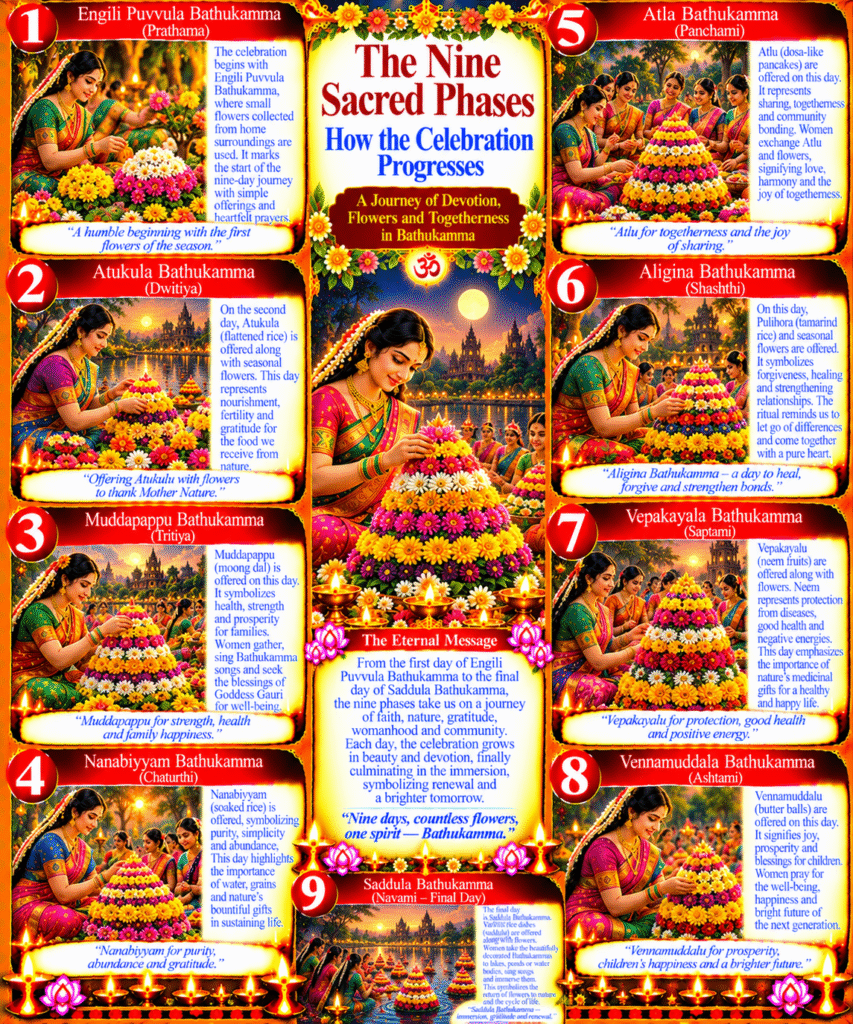
Much like the disciplined vows observed during the sacred traditions of Varalakshmi Vratam, each day of Bathukamma progresses with dedicated floral structures and carefully calibrated nutritional Naivedyam:
Chronology of the Nine Festival Days
- Day 1: Engili Pula Bathukamma (Mahalaya Amavasya): Commences with ancestral homage (Pitru Tarpana). Floral offerings are assembled using wild flowers; naivedyam includes sesame (Nuvvulu) and rice flour (Biyyam Pindi).
- Day 2: Atukula Bathukamma (Ashwayuja Padyami): Symbolizes fresh beginnings; naivedyam consists of beaten rice flakes (Atukulu) mixed with raw jaggery.
- Day 3: Muddappappu Bathukamma (Ashwayuja Vidiya): Represents gentle maternal nourishment; naivedyam is boiled lentils (Muddapappu), milk, and jaggery.
- Day 4: Nanabiyyam Bathukamma (Ashwayuja Tadiya): Celebrates seed germination; naivedyam features soaked raw unpolished rice (Nanabiyyam) sweetened with jaggery.
- Day 5: Atla Bathukamma (Ashwayuja Chavithi): Features miniature crispy rice crepes/dosas (Atlu) prepared to invigorate bodily energy.
- Day 6: Aligina Bathukamma (Ashwayuja Panchami): The day of quiet affection. No public floral dances occur; Goddess Gauri is gently pacified at home, offering women rest.
- Day 7: Vepakayala Bathukamma (Ashwayuja Sashti): Festive momentum returns with fried sweet morsels shaped like neem fruits (Vepakayalu).
- Day 8: Vennamuddala Bathukamma (Ashwayuja Sapthami): Honors dairy wealth; naivedyam consists of fresh hand-churned butter balls (Vennamuddalu) with sesame seeds.
- Day 9: Saddula Bathukamma (Ashwayuja Ashtami / Durgashtami): The magnificent grand finale featuring towering floral pyramids, community processions, and five varieties of seasoned rice offerings (Saddulu).
The Culinary Wisdom of Saddulu (The Five Rice Delicacies)
The grand finale features five distinct preparations offered to Goddess Gauri before distribution among families:
Perugannam (Curd Rice) and Nuvvula Annam (Sesame Rice)
Curd rice stabilizes the gut microbiome during seasonal shifts, while roasted sesame rice supplies concentrated essential fats and calcium for bone health.
Microbiome Support During Seasonal Transitions
Natural probiotics in fermented curd counteract autumn indigestion, supporting healthy vitality during nighttime dampness.
Chitrannam (Lemon Rice) and Pulihora (Tamarind Rice)
Fresh lime and antioxidant-rich tamarind, tempered with turmeric and peanuts, boost natural immunity against viral flu.
Ayurvedic Pitta and Kapha Pacification
The combination of turmeric curcumin and tamarind tartaric acid stimulates bile secretion, revitalizing digestion after heavy monsoons.
Avala Annam (Mustard Infused Rice)
Ground mustard seeds provide thermo-regulating energy, shielding women as they stand along chilly lake shores during sunset immersions.
Thermal Equilibrium in Deccan Weather
Mustard isothiocyanates warm peripheral circulation, preventing evening chills during autumn water rituals.
The Sunset Immersion (Nimajjanam) and Exchange of Maleeda
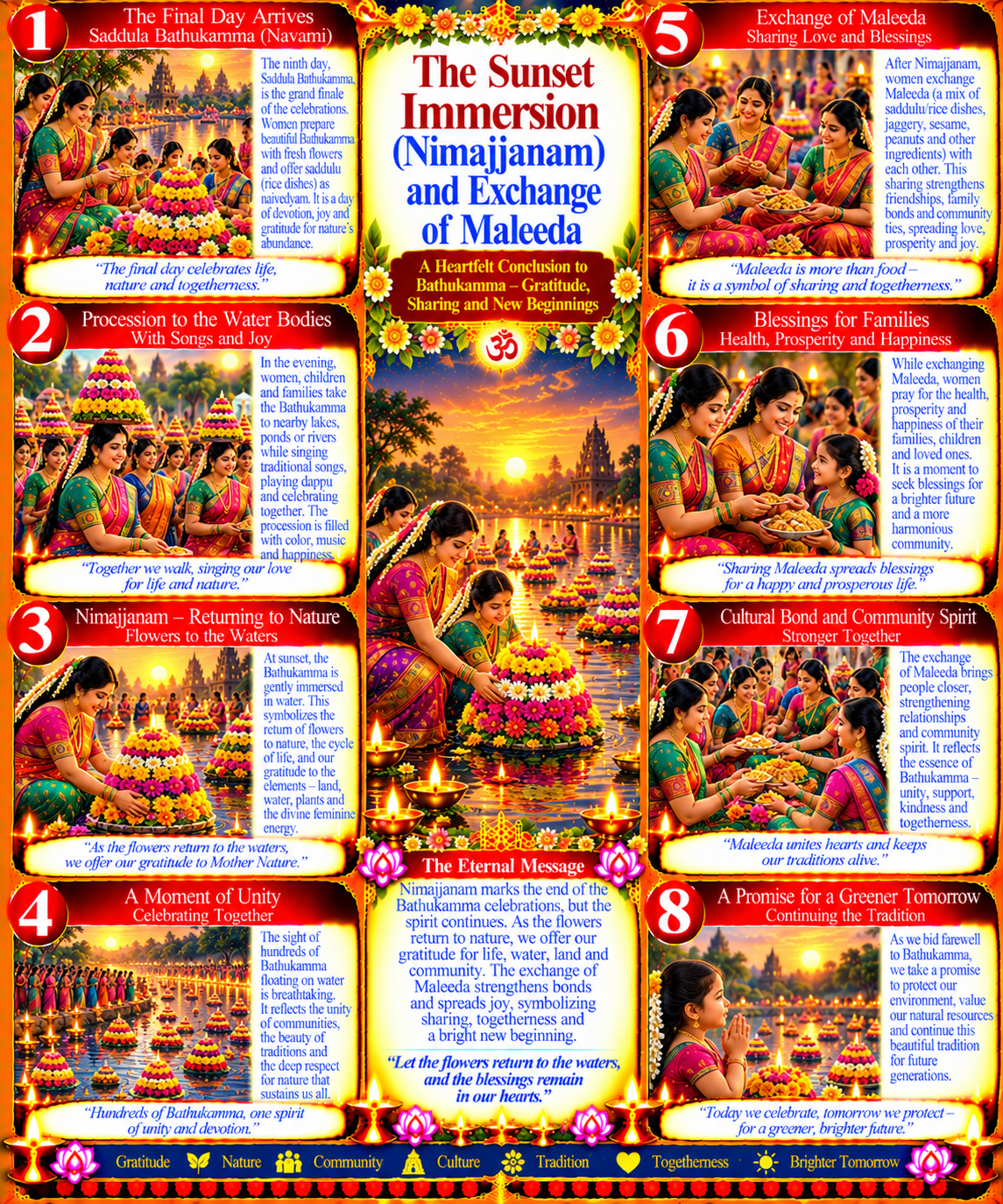
As dusk paints the sky in shades of crimson and violet, women lift the heavy floral platters onto their heads and walk in grand festive processions toward the local lakes or rivers. Mirroring the ecological principles celebrated in Ganesh Chaturthi water immersion rituals, the Nimajjanam of Bathukamma is totally non-polluting.
With tearful affection and gratitude, women gently slide the floating floral towers into the water, watching ghee lamps float serenely across the ripples. Before departing, they respectfully retrieve the turmeric Gouramma idol, applying the sanctified paste to their foreheads and mangalsutras for lifelong marital auspiciousness.
The festival concludes with the affectionate sharing of Maleeda—a delicious sweet prepared by crumbling whole wheat chapatis and mixing them with pure cow ghee, powdered jaggery, cardamom, and roasted sesame seeds. Exchanging Maleeda and applying vermilion (Kumkum) to one another’s foreheads cements bonds of friendship, mutual affection, and community harmony.
Frequently Asked Questions: Why Is Bathukamma Celebrated? (20 FAQs)
1. Why is Bathukamma celebrated primarily in Telangana?
Bathukamma is uniquely rooted in the geographical terrain, agrarian flora, and cultural identity of Telangana. In 2014, it was officially designated the State Festival to preserve the region’s indigenous heritage.
2. What does the name Bathukamma mean in Telugu?
Bathuku translates to “life” or “to live,” and Amma means “mother.” Bathukamma literally translates to “Mother Goddess, Come Alive!” or “Mother, Grant Us Life.”
3. Why are wild flowers used instead of clay idols?
Wild seasonal flowers of the Deccan (such as Tangedu and Gunugu) possess natural medicinal and antibacterial properties. Immersing them into village lakes purifies rainwater post-monsoon without causing pollution.
4. What is the legend of King Dharmangada associated with Bathukamma?
King Dharmangada and Queen Satyavathi lost 100 sons and performed penance to Goddess Lakshmi, who was born as their daughter. Sages blessed the child with the invocation “Bathukamma” (Live long, Mother!).
5. How does Bathukamma connect to Goddess Durga slaying Mahishasura?
After destroying the demon Mahishasura, Goddess Durga collapsed into deep exhaustion. Women gathered therapeutic wild flowers and sang melodious stotrams to awaken her gently on Durgashtami.
6. What is the significance of the turmeric Gouramma idol?
Gouramma is a conical idol of Goddess Gauri fashioned from pure turmeric paste, placed at the summit of the floral pyramid on an open pumpkin flower to symbolize divine maternal protection.
7. Why is the sixth day called Aligina Bathukamma?
Aligina means to playfully sulk. According to folklore, Goddess Gauri is gently pacified at home without floral dancing, giving women a day of physical rest before the grand finale.
8. Why do married daughters return to their maternal home for Bathukamma?
Returning to their parents’ home (Puttillu) allows married women to take a joyful break from household responsibilities, reunite with childhood peers, and celebrate sisterhood freely.
9. What is Saddula Bathukamma?
Saddula Bathukamma is the grand 9th day celebrated on Durgashtami. Women build multi-tiered floral towers, prepare five flavored rice dishes (Saddulu), perform community dances, and conduct lake immersion.
10. What are the five varieties of Saddulu?
The five sacred rice delicacies are Perugannam (curd rice), Chitrannam (lemon rice), Pulihora (tamarind rice), Nuvvula annam (sesame rice), and Avala annam (mustard seed rice).
11. Why is Tangedu flower considered so important in the festival?
Tangedu (Senna auriculata) is the official State Flower of Telangana. It has proven astringent and antibacterial properties that disinfect lake water during immersion.
12. What is Maleeda and why is it shared among women?
Maleeda is a wholesome sweet made from crushed rotis, ghee, jaggery, cardamom, and sesame seeds. Exchanging Maleeda after lake immersion expresses love, mutual support, and communal harmony.
13. What traditional attire do women wear for Bathukamma?
Young girls wear colorful Langa Voni (half-sarees), while married women dress in handloom silk Pattu Sarees adorned with traditional jewelry and flowers.
14. What themes are explored in traditional Bathukamma folk songs?
The songs narrate mythological episodes of Parvati and Shiva, stories of heroic historical women, tales of familial relationships, and gratitude to mother nature.
15. What role did the Kakatiya dynasty play in popularizing Bathukamma?
The Kakatiya rulers of Warangal, including Queen Rudrama Devi, promoted Bathukamma to encourage community unity and ecological maintenance of the extensive village lake systems they built.
16. What is the first day of Bathukamma called, and why?
The first day is called Engili Pula Bathukamma because flowers are collected a day earlier or before morning meals, coinciding with Mahalaya Amavasya.
17. How does the immersion ritual (Nimajjanam) benefit local ecosystems?
Because all materials are 100% natural and biodegradable, the immersion of medicinal flowers cleanses aquatic algae, suppresses mosquito larvae, and enriches soil nutrients.
18. Do men participate in Bathukamma celebrations?
Yes, men play an active support role by traveling to fields and forests to harvest wild flowers and escorting women safely during evening lake processions.
19. How does Bathukamma promote female empowerment?
The festival places women at the absolute center of socio-cultural and spiritual leadership, celebrating feminine grace, maternal vitality, and collective decision-making.
20. What is the ultimate message of the Bathukamma festival?
Bathukamma conveys that divinity resides in living nature, demonstrating that true spiritual devotion is inseparable from ecological reverence, community harmony, and gratitude for life.