Raja Ratnam
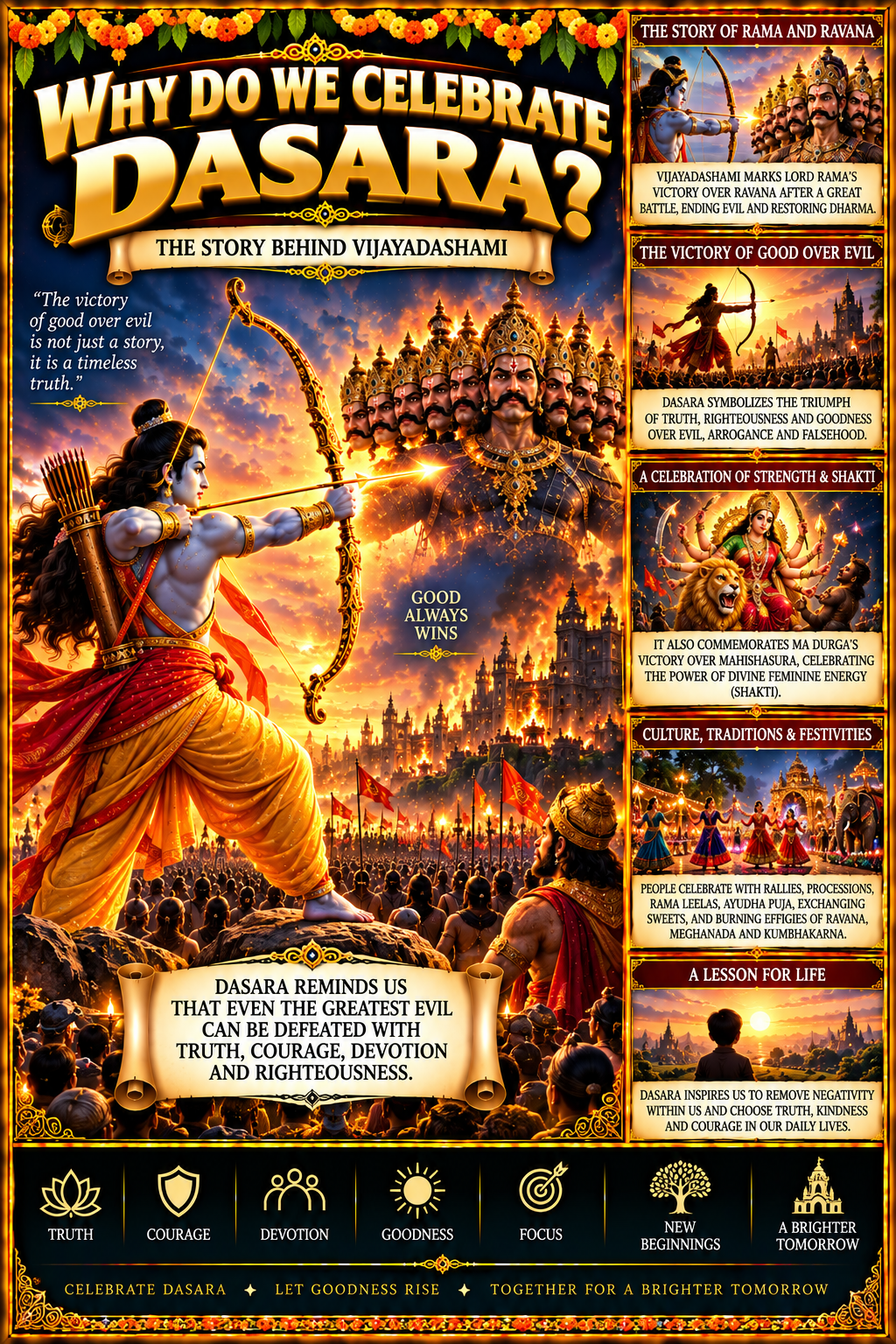
As the autumn sun sets on the tenth day of Ashvin, the evening sky across India lights up with torches, music, and festive joy. The celebration of Dussehra (Vijayadashami) marks one of the most auspicious days on the Hindu liturgical calendar, uniting communities in honoring the triumph of righteousness over injustice. While the theatrical tradition of burning effigies is explored in our guide to why Ravana is burned on Dasara, this complete guide examines the religious meaning of Vijayadashami, the sacred Shami Puja, Ayudha Puja, and celebrations across India.
Astronomical Timing: Ashvin Shukla Dashami
Dussehra falls on the tenth day (Dashami) of the waxing moon phase (Shukla Paksha) in the Hindu lunar month of Ashvin. The word Vijayadashami combines two Sanskrit terms: Vijaya (Victory) and Dashami (Tenth lunar day) – the Day of Victory. It concludes the nine sacred nights of Sharad Navratri, transitioning from penance into joyful celebration.
The Sacred Shami Puja: The Legend of the Sami Tree and Golden Leaves
One of the most profound traditions observed on Dasara across Central and Southern India is Shami Puja (worshipping the Prosopis cineraria tree). According to the Mahabharata, when the Pandavas were sentenced to their thirteenth year of exile in disguise, they concealed their divine weapons in the hollow branches of a sacred Shami tree near Viratnagar.
On Vijayadashami, the year completed, the Pandavas retrieved their bows and arrows from the tree and worshipped it with prayers of gratitude before embarking on their victorious campaigns. Families visit Shami trees on Dasara evening, offering prayers for courage and victory. In Maharashtra, Telangana, and Karnataka, leaves of the Shami and Aapta trees are exchanged with elders and friends as symbolic ‘gold’ (Bangaaram), wishing each other prosperity and abundance.
Ayudha Puja: Sanctifying the Tools of Livelihood
Occurring on the ninth and tenth days of Navratri, Ayudha Puja honors the instruments through which human beings earn their livelihood. Artisans clean their chisels, farmers decorate their ploughs, scholars arrange their books, and drivers wash and garland their vehicles with flowers, vermilion, and sandalwood paste.
In Indian philosophy, labor and knowledge are sacred. By bowing to one’s tools of work, individuals acknowledge that skills, technology, and honest effort are divine blessings that sustain life and society.
Eastern Traditions: Durga Visarjan and Sindoor Khela
In Bengal, Assam, and Odisha, Vijayadashami marks the emotional farewell to Goddess Durga. After five days of elaborate worship, married women participate in Sindoor Khela, gently applying red vermilion to the Goddess’s feet and forehead, and then to each other, wishing long life and happiness for their families. The towering clay murtis are then carried in joyous processions for water immersion (Visarjan), accompanied by the rhythmic beat of the traditional Dhak drums.
Explore the Ravan Dahan Theatrical Guide
To understand the craftsmanship of giant festival effigies and the inner moral symbolism of burning Ravana, explore our specialized guide: Why Is Ravana Burned on Dasara? Meaning and Story Behind the Tradition.
Frequently Asked Questions: Dussehra & Vijayadashami
1. What is the difference between Dasara and Vijayadashami?
Dasara and Vijayadashami refer to the same sacred tenth day. Dussehra is derived from ‘Dasha-Hara’ (defeating the ten-headed Ravana), while Vijayadashami celebrates the universal victory of righteousness over negative forces.
2. Why are Shami tree leaves exchanged on Dasara?
Shami leaves symbolize gold and endurance. Exchanging them with elders and neighbors is an ancient custom expressing wishes for mutual health, goodwill, and material abundance.
3. What is the spiritual purpose of Ayudha Puja?
Ayudha Puja reminds humanity that our profession, tools, vehicles, and books are sacred instruments of divine purpose, cultivating humility and respect for daily labor.
4. What is Sindoor Khela during Durga Visarjan?
Sindoor Khela is a vibrant tradition where married women apply vermilion to Goddess Durga and each other, celebrating sisterhood, marital blessings, and joyful farewell to the Divine Mother.
5. How does Vijayadashami connect to the epic Mahabharata?
Vijayadashami is the auspicious day when the Pandavas retrieved their concealed divine weapons from the Shami tree after completing their year in disguise in the Matsya Kingdom.