Raja Ratnam
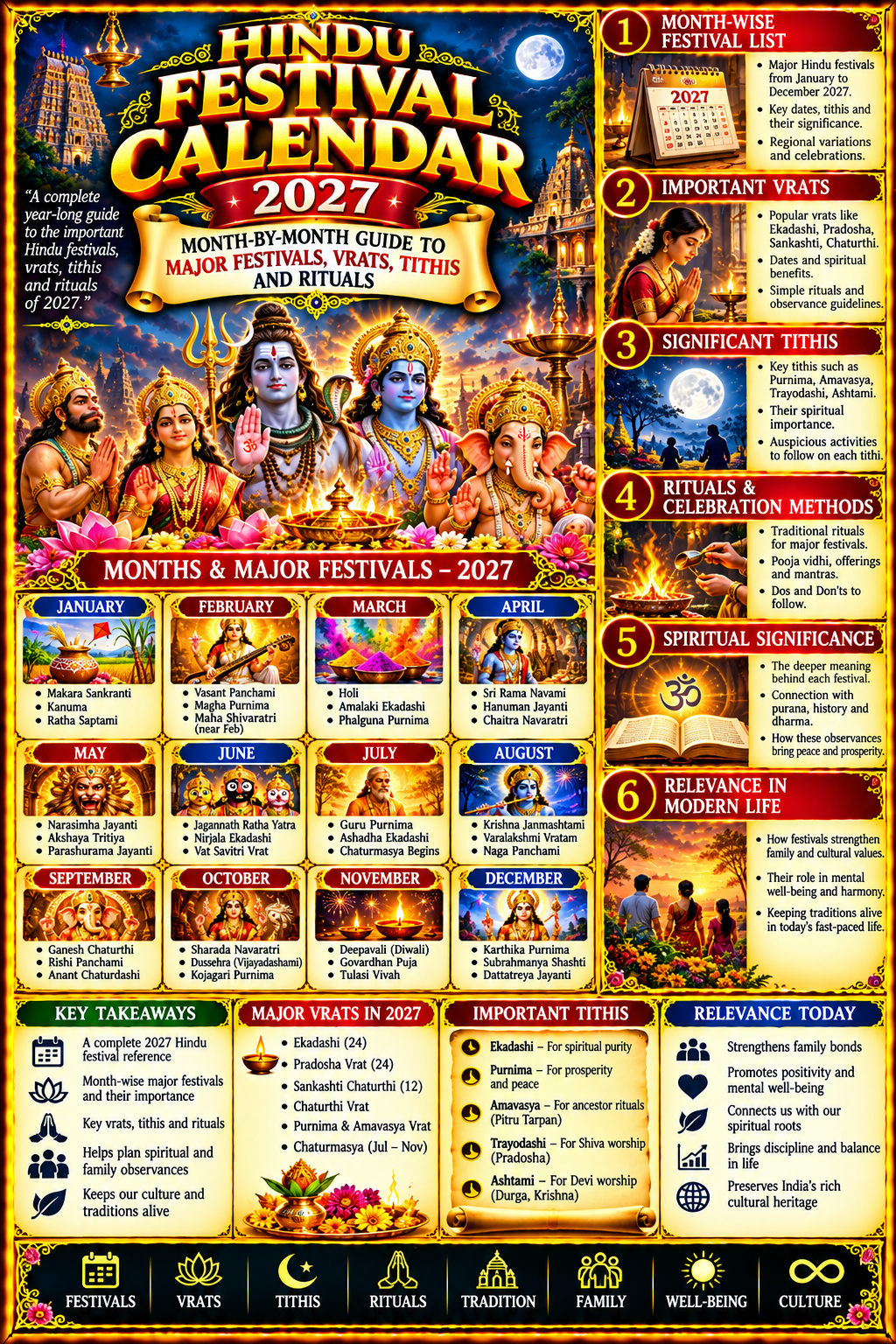
Hindu Festival Calendar: Month-by-Month Guide to Major Festivals, Vrats, Tithis and Rituals 2027
Welcome to our comprehensive reference for the Hindu Festival Calendar 2027. In Sanatana Dharma, time flows as an eternal divine cycle. Furthermore, ancient seers calculated every sacred festival according to celestial planetary movements. Devotees observe sacred festivals (Utsavas) to celebrate cosmic renewal. In addition, they undertake disciplined penances (Vrats) to purify human consciousness. Consequently, the year 2027 offers boundless opportunities for spiritual elevation and cultural joy.
Devotees across the world observe fasting on sacred tithis like Ekadashi and Pradosham. Moreover, millions celebrate grand celebrations including Diwali, Navratri, and Maha Shivaratri. For perennial context, explore our foundational pillar overview of the Hindu Festival Calendar guide on dates, vrats, and rituals. The mathematical principles detailed in the ancient Surya Siddhanta text on Wisdom Library continue to govern these holy celebrations. Thus, this 2027 guide presents exact dates, philosophical insights, and practical fasting guidelines for seekers everywhere.
Core Astrological Mechanics of the Hindu Festival Calendar 2027
Traditional Vedic calendars differ significantly from civil Western calendars. Specifically, the Hindu calendar incorporates both solar movements and lunar orbits. In other words, months track the phases of the Moon, while seasonal adjustments follow the Sun. Therefore, an intercalary month known as Adhik Maas aligns the lunar year with solar seasons every three years.
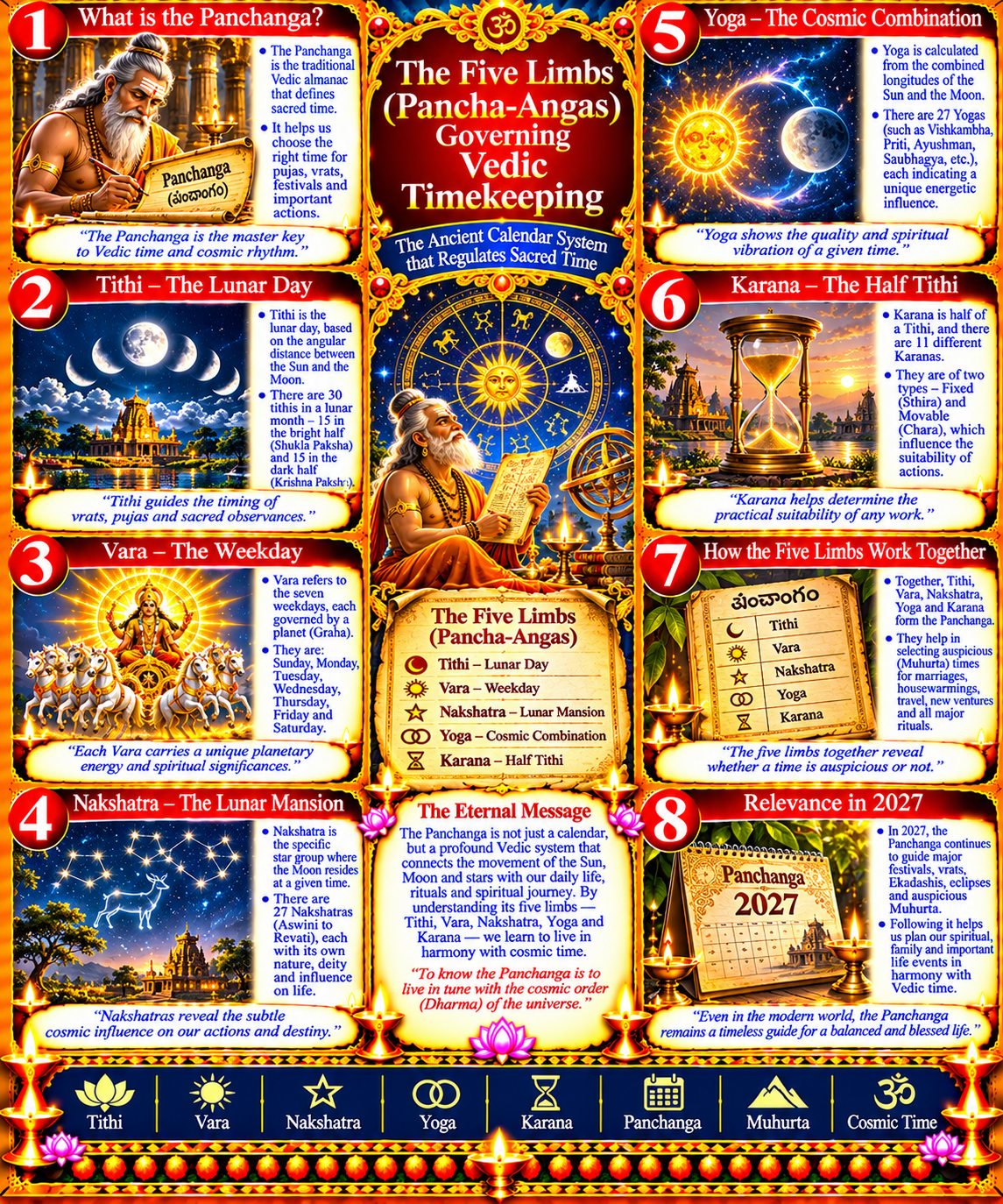
The Five Limbs (Pancha-Angas) Governing Vedic Timekeeping
Every single day in the Vedic calendar derives its spiritual potency from five distinct astronomical limbs. Indeed, ancient rishis observed how these factors affect human consciousness. Consequently, sacred rituals synchronize with these subtle celestial shifts.
- Tithi (Lunar Day): Represents the twelve-degree angular separation between the Moon and the Sun.
- Vara (Weekday): Denotes the solar day, with each day governed by a presiding planetary deity.
- Nakshatra (Lunar Mansion): Identifies the specific constellation of thirteen degrees and twenty minutes occupied by the Moon.
- Yoga (Luni-Solar Angular Sum): Measures the combined longitudinal positions of the Sun and Moon.
- Karana (Half-Tithi): Represents half of a lunar tithi, governing practical and devotional activities.
Regional Luni-Solar Reckoning: Amanta and Purnimanta Systems
India celebrates sacred festivals through two distinct regional lunar reckoning traditions. Specifically, the Amanta tradition concludes the lunar month on the New Moon (Amavasya). Southern and Western states like Maharashtra, Gujarat, Karnataka, and Andhra Pradesh follow this Amanta calendar. In contrast, the Purnimanta tradition concludes the month on the Full Moon (Purnima). Northern states like Uttar Pradesh, Rajasthan, and Bihar adhere to the Purnimanta cycle. Nevertheless, both systems celebrate major festivals on identical cosmic lunar tithis.
Determining Shubh Muhurat and Auspicious Fasting Hours
Devotees must track sunrise tithi timings with careful precision. For instance, classical fasting rules documented in the Sacred Laws of the Aryas on Sacred Texts mandate the sunrise tithi (Udaya Tithi) rule. Hence, fasting vows commence at dawn when the prescribed lunar day prevails.
Vedic Ephemeris and Planetary Coordinates Reference
Modern Hindu scholars calculate exact muhurats using precise astronomical ephemeris algorithms. For exact sunrise and planetary transit timings in your specific geographical location, consult the Drik Panchang Vedic calendar and ephemeris database. Thus, seekers can perform each holy puja during its optimal planetary window.
Month-by-Month Hindu Festival Calendar 2027: Complete Sacred Dates
Below is the complete chronological guide to all twelve lunar months in 2027. Each section highlights presiding deities, spiritual symbolism, and confirmed dates.
1. Pausha and Magha (January – February 2027): Solar Transit and Awakening of Spring
The year opens with the transition from Pausha into Magha. Above all, this season honors the Sun God (Surya Deva) as he begins his northward journey.
Makar Sankranti / Pongal / Uttarayan (January 14, 2027): In particular, the Sun enters Capricorn (Makara Rashi). Furthermore, devotees celebrate harvest abundance with sesame and jaggery sweets. They also take sacred dips in holy rivers to welcome longer, warmer days.
Pausha Putrada Ekadashi (January 18, 2027): Consequently, couples observe strict fasting to pray for noble progeny. In addition, they perform Vishnu puja to cultivate lasting domestic peace.
Vasant Panchami (February 11, 2027): Similarly, this sacred day celebrates the arrival of Spring and honors Goddess Saraswati. Students and artists worship books, musical instruments, and sacred learning tools.
Ratha Saptami (February 13, 2027): Specifically, it marks the birthday of Lord Surya. Devotees offer milk arghya and chant the Aditya Hridaya Stotram at sunrise.
Bhishma Ashtami (February 14, 2027): In addition, it commemorates the grand patriarch Bhishma. He chose to leave his mortal frame during this auspicious Uttarayan period.
2. Phalguna (February – March 2027): The Great Night of Shiva and Ecstatic Colors
Phalguna concludes the traditional lunar year with deep asceticism followed by joyful communal celebration. Indeed, this month demonstrates the balance between stillness and divine play.
Vijaya Ekadashi (March 4, 2027): Therefore, devotees observe fasting to overcome lingering obstacles. Lord Rama observed this fast before crossing the ocean to Lanka.
Maha Shivaratri (March 6, 2027): Specifically, this is the supreme night of Lord Shiva. Devotees fast for twenty-four hours, chant the Rudram, and offer sacred Bilva leaves. Discover how intense devotion conquered mortality in our story of Sage Markandeya conquering death through Shiva worship. Therefore, this holy night bestows profound peace and mental clarity.
Holika Dahan (March 21, 2027): Meanwhile, communities ignite sacred bonfires in the evening. This ritual commemorates young Prahlada surviving the fire and vanquishing demonic ego.
Holi / Rangwali Holi (March 22, 2027): Thus, the ecstatic festival of colors celebrates the divine love of Sri Radha-Krishna. Friends and neighbors apply herbal gulal, resolving old disputes in festive unity.
3. Chaitra (April 2027): Dawn of the Hindu New Year
Chaitra marks the auspicious beginning of the Hindu liturgical New Year. Furthermore, according to scripture, Lord Brahma initiated cosmic creation on Chaitra Shukla Pratipada.
Ugadi / Gudi Padwa (April 7, 2027): Specifically, it marks the New Year in Andhra Pradesh, Telangana, Karnataka, and Maharashtra. Families consume neem and jaggery pachadi to welcome diverse life experiences with equanimity.
Chaitra Navratri (April 7 – April 15, 2027): In particular, nine sacred days are dedicated to Goddess Durga and her primordial forms. Devotees chant the Devi Mahatmyam and maintain satvic dietary discipline.
Rama Navami (April 15, 2027): Moreover, it celebrates the divine birth of Lord Rama in Ayodhya. Read our detailed account of Sage Rishyasringa and the birth of Lord Rama to appreciate the sacred rites behind his royal descent.
Hanuman Jayanti (April 20, 2027): Similarly, it is observed on Chaitra Purnima, honoring the exemplary avatar of valor, humility, and selfless devotion. Devotees chant the Hanuman Chalisa and offer vermilion.
4. Vaishakha (May 2027): Imperishable Merit and Avatar Appearances
Vaishakha is renowned as the month of supreme charitable merit. Specifically, charitable acts, water offerings, and spiritual penances bear everlasting rewards.
Akshaya Tritiya (May 9, 2027): Indeed, it is known as the day of imperishable fortune. Charitable donations, business initiatives, and gold acquisitions on this tithi never diminish in value.
Ganga Saptami (May 13, 2027): Furthermore, it commemorates the rebirth of the holy River Ganga from the ear of Sage Jahnu. Pilgrims offer prayers along the sacred riverbanks.
Narasimha Jayanti (May 19, 2027): Specifically, it celebrates Lord Vishnu appearing in half-man, half-lion form. He burst from a stone pillar to protect Prahlada and eliminate Hiranyakashipu.
Buddha Purnima (May 20, 2027): In addition, it honors the birth, enlightenment, and Mahaparinirvana of Gautama Buddha on the full moon of Vaishakha.
5. Jyeshtha (June 2027): River Reverence and Extreme Penance
Falling during the peak heat of summer, Jyeshtha emphasizes water reverence and matrimonial fidelity. Furthermore, spiritual penance purifies the mind against sensory distractions.
Vat Savitri Vrat (June 4, 2027): Consequently, married women tie sacred threads around Banyan trees. This ritual commemorates Savitri rescuing her husband Satyavan from the Lord of Death, Yama.
Ganga Dussehra (June 14, 2027): Similarly, it celebrates the descent of Goddess Ganga from heaven to earth. Devotees offer ten types of flowers and fruits to wash away ten kinds of sins.
Nirjala Ekadashi (June 15, 2027): Indeed, it is also named Bhima Ekadashi. Devotees fast without consuming food or water for twenty-four hours, securing the merit of all annual Ekadashis.
6. Ashadha (July 2027): Chariot Processions and the Beginning of Chaturmas
Ashadha brings the monsoon and inaugurates the sacred four-month contemplative retreat known as Chaturmas. As a result, worldly ceremonies yield to silent meditation.
Jagannath Ratha Yatra (July 5, 2027): Notably, the monumental chariot procession of Lord Jagannath, Balabhadra, and Subhadra travels through Puri, Odisha. Millions gather to pull the sacred ropes.
Devshayani Ekadashi (July 15, 2027): Therefore, Lord Vishnu enters cosmic meditative slumber (Yoga Nidra) upon the celestial serpent Shesha. Secular wedding ceremonies pause until November.
Guru Purnima / Vyasa Purnima (July 18, 2027): In addition, disciples honor their spiritual teachers with paduka pujas. They also celebrate Sage Veda Vyasa, the compiler of Vedic wisdom.
7. Shravana (August 2027): Shaivite Devotion and Sibling Affection
Shravana shines as one of the holiest periods in the Hindu year. Shaivite pilgrims carry holy Ganga water to local shrines every Monday during Shravan Somwar.
Nag Panchami (August 7, 2027): Specifically, it is dedicated to the serpent deities (Vasuki, Ananta, and Shesha). Devotees offer milk and turmeric, praying for freedom from snakebite and environmental harmony.
Varalakshmi Vratam (August 13, 2027): Furthermore, it is celebrated on the Friday before Shravana Purnima in Southern India. Women worship Goddess Lakshmi for health, prosperity, and family well-being.
Raksha Bandhan (August 17, 2027): Meanwhile, it is observed on Shravana Purnima. Sisters tie protective sacred threads (Rakhis) on their brothers’ wrists, reaffirming lifelong family affection.
Gayatri Jayanti (August 17, 2027): Similarly, it marks the divine appearance of the Mother of the Vedas. Vedic students renew their sacred threads during Upakarma rituals.
8. Bhadrapada (August – September 2027): Avatars and Obstacle Removers
Bhadrapada is illuminated by the divine descents of Lord Krishna and Lord Ganesha. Consequently, joyous festivals fill households across India with music and sweet offerings.
Krishna Janmashtami (August 25, 2027): Indeed, it celebrates the midnight appearance of Lord Krishna in Mathura. Devotees fast, rock baby Krishna in golden cradles, and celebrate Dahi Handi contests.
Ganesh Chaturthi (September 4, 2027): Moreover, devotees welcome Lord Ganesha into beautifully decorated pandals. Devotees offer steamed modaks and invoke his blessings to conquer all worldly obstacles.
Radha Ashtami (September 9, 2027): Specifically, it marks the divine appearance day of Srimati Radharani. Devotees celebrate her supreme devotion with temple kirtans and sweet offerings.
Anant Chaturdashi (September 14, 2027): Finally, it marks the grand finale of Ganeshotsav with vibrant idol immersions (Visarjan). In addition, devotees worship Lord Vishnu in his infinite cosmic form.
9. Ashwin (September – October 2027): Ancestral Remembrance and Durga Puja
Ashwin balances solemn ancestral rituals with grand autumnal worship of the Divine Mother. Ultimately, it celebrates the eternal victory of righteousness over demonic tyranny.
Pitru Paksha (September 16 – September 30, 2027): In particular, this is a sacred fifteen-day period dedicated to ancestral offerings (Tarpanam). Families offer food and prayers for the peaceful ascent of departed souls.
Sharad Navratri Ghatasthapana (October 1, 2027): Furthermore, it commences nine nights of intense devotion to Nava Durga. Devotees maintain fasting, perform Garba dances, and honor feminine divine power.
Maha Ashtami / Durga Ashtami (October 8, 2027): Specifically, this is the climactic day of Navratri worship. Devotees offer prayers to Goddess Mahishasuramardini and perform Kanya Puja for young girls.
Vijayadashami / Dussehra (October 10, 2027): Therefore, it commemorates Lord Rama vanquishing the demon king Ravana. Learn more about optimal puja timings in our guide to Vijayadashami dates, puja time and traditions. Moreover, discover the deep ethical lessons behind why Ravana is burned on Dasara.
Karwa Chauth (October 18, 2027): Similarly, married women observe a strict dawn-to-moonrise waterless fast. They pray for the longevity and prosperity of their husbands before the rising moon.
10. Kartika (October – November 2027): The Festival of Lights and Supreme Purity
Kartika is revered as the holiest month for Vaishnava worship. Devotees light earthen lamps (Diyas) daily to dispel inner darkness and invite divine grace.
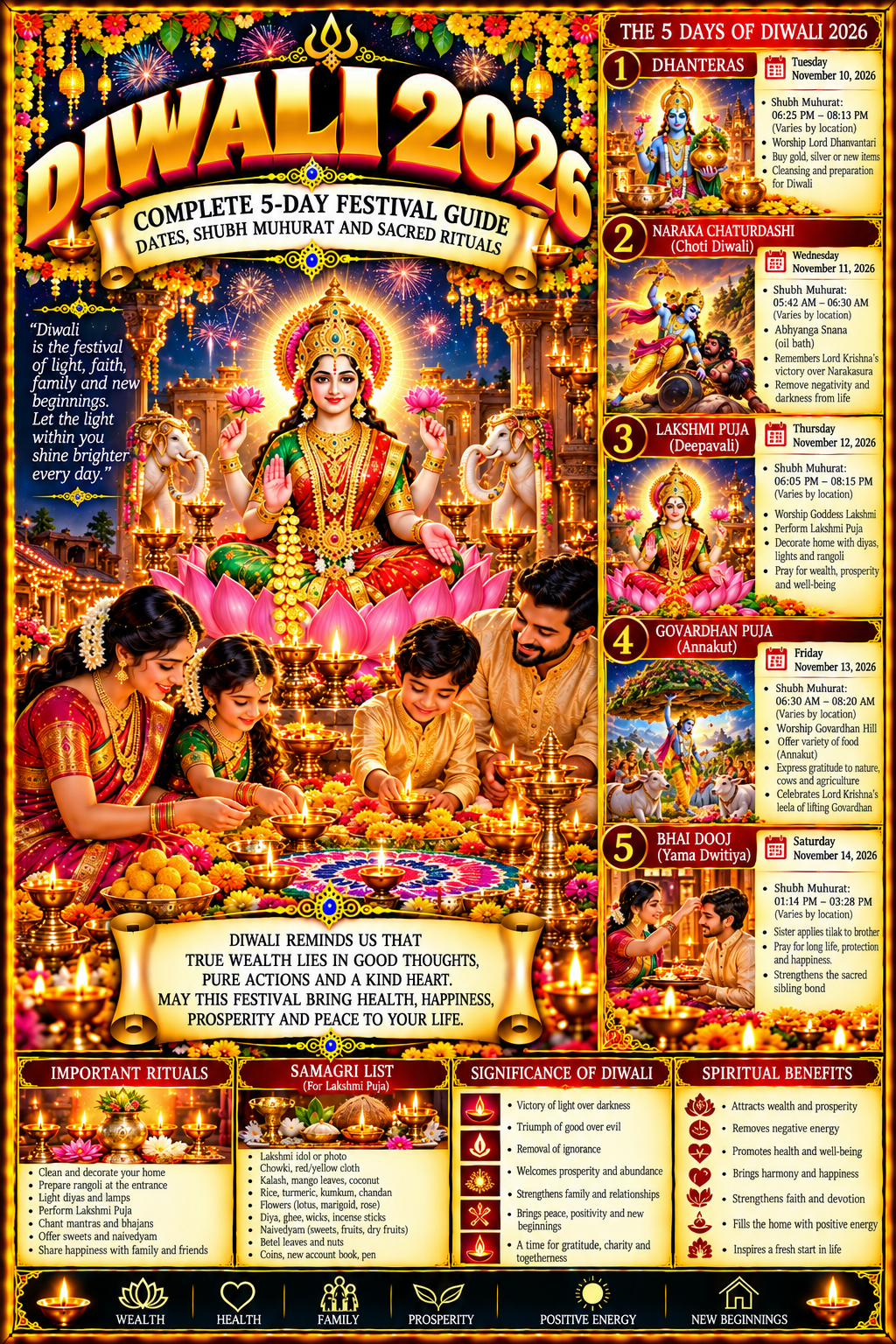
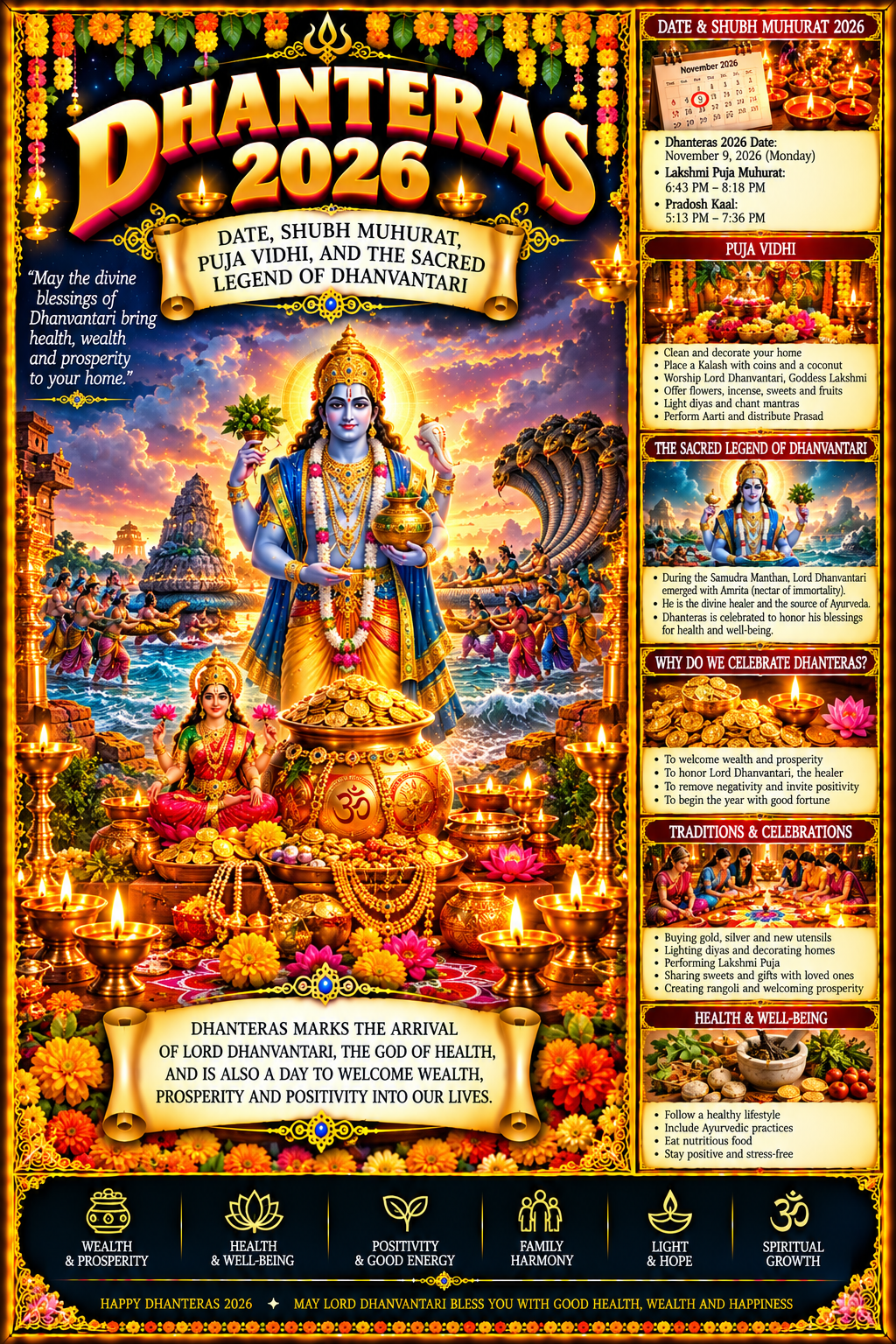
Dhanteras (October 27, 2027): In addition, it honors Lord Dhanvantari, the father of Ayurveda. Families purchase auspicious metals and utensils to welcome prosperity into the household.
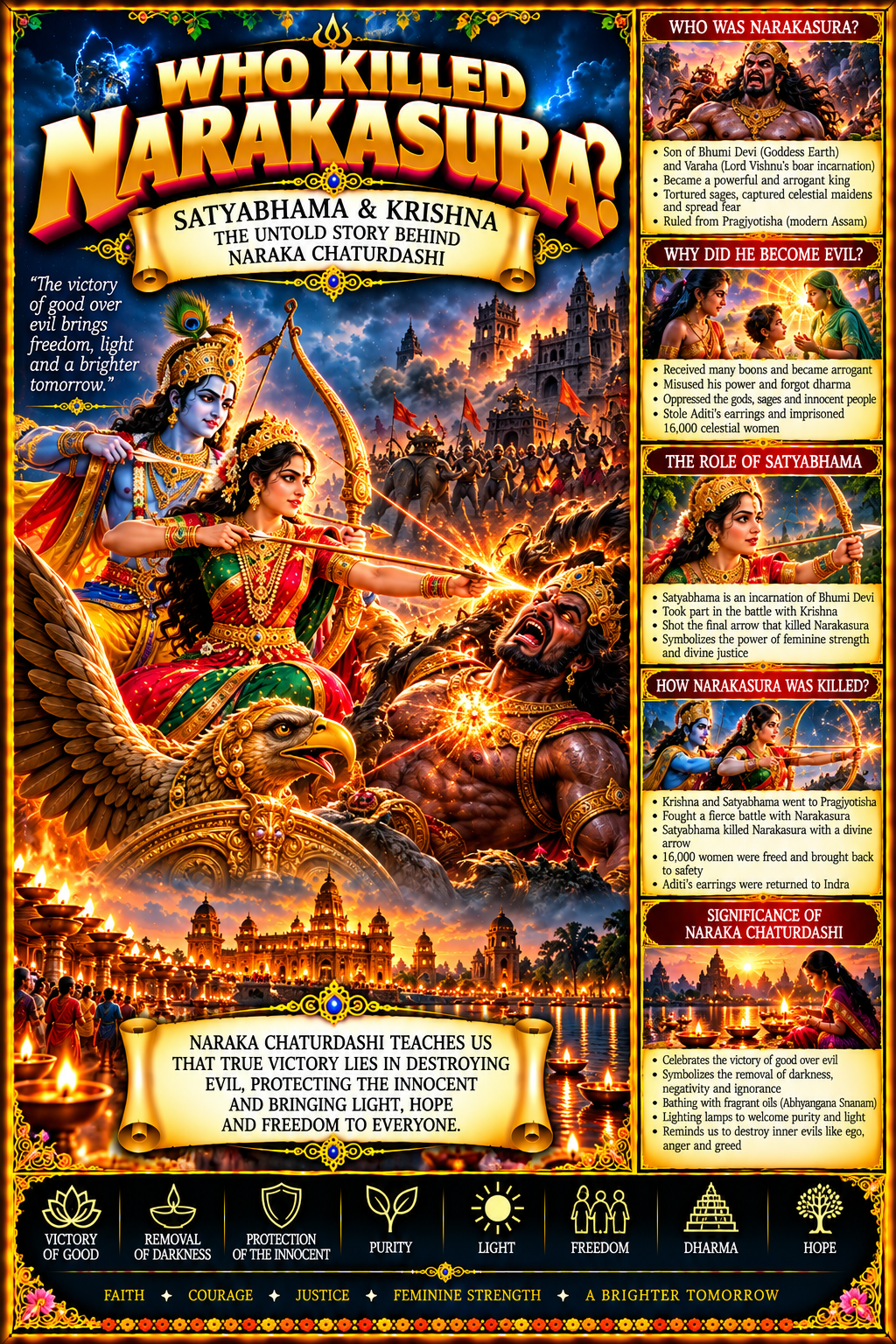
Naraka Chaturdashi / Choti Diwali (October 28, 2027): Meanwhile, it commemorates Lord Krishna and Satyabhama vanquishing the demon Narakasura before dawn, freeing sixteen thousand captive souls.
Diwali / Deepawali (October 29, 2027): Indeed, this is the universal festival of lights celebrating Lord Rama’s return to Ayodhya. Families illuminate homes with lamps and perform evening Lakshmi-Ganesha puja.
Govardhan Puja and Annakut (October 31, 2027): Furthermore, it commemorates Sri Krishna lifting Govardhan Hill with his little finger to shield Vrindavan from Indra’s torrential rainstorm.
Bhai Dooj / Yama Dwitiya (November 1, 2027): Similarly, sisters apply auspicious tilak to their brothers’ foreheads. Brothers offer gifts and renew their vows of lifelong protection.
Chhath Puja Sandhya Arghya (November 4, 2027): Specifically, this is a rigorous solar penance observed along riverbanks. Devotees stand in water to offer arghya to the setting Sun God and Chhathi Maiya.
Devutthana Ekadashi & Tulsi Vivah (November 9, 2027): Consequently, Lord Vishnu awakens from cosmic slumber, ending Chaturmas. Devotees conduct the ceremonial wedding of sacred Tulsi with Shaligram, opening the Hindu wedding season.
Karthika Poornima / Dev Deepawali (November 13, 2027): Finally, millions of earthen lamps illuminate the ghats of Varanasi. The gods celebrate Lord Shiva’s triumph over the demon Tripurasura.
11. Margashirsha (November – December 2027): Devotion to the Bhagavad Gita
In the Bhagavad Gita (10.35), Lord Krishna declares that among all twelve months, he is Margashirsha. This quiet winter month encourages profound contemplation of divine wisdom.
Mokshada Ekadashi (December 9, 2027): Therefore, fasting on this eleventh tithi is believed to bestow liberation from the repetitive cycle of birth and death.
Gita Jayanti (December 9, 2027): Furthermore, this is the sacred anniversary of Lord Krishna delivering the 700 immortal verses of the Bhagavad Gita to Arjuna at Kurukshetra.
Dattatreya Jayanti (December 13, 2027): Similarly, it celebrates Lord Dattatreya, the unified incarnation of Brahma, Vishnu, and Shiva, worshipped as the supreme universal guru.
12. Pausha (December 2027): Winter Penance and Charity
Pausha closes the 2027 calendar year with quiet introspection and charitable offerings. It prepares devotees for the upcoming solar renewal of Uttarayan in January 2028.
Saphala Ekadashi (December 24, 2027): Consequently, it is observed on Pausha Krishna Ekadashi. Devotees fast and meditate to achieve success in all righteous spiritual endeavors.
Pausha Amavasya (December 28, 2027): Finally, this is a solemn day for ancestral tarpana rituals, holy river baths, and donating warm clothing to the underprivileged.
Master Reference Table: Major Hindu Festivals in 2027
| Festival / Vrat | Gregorian Date (2027) | Hindu Month & Tithi | Presiding Deity | Key Ritual / Spiritual Practice |
|---|---|---|---|---|
| Makar Sankranti | January 14, 2027 | Pausha / Surya Makara Transit | Surya Deva | Sesame-jaggery distribution, holy river snanam, kite flying |
| Vasant Panchami | February 11, 2027 | Magha Shukla Panchami | Goddess Saraswati | Yellow attire, Vidya Arambham, instrument worship |
| Maha Shivaratri | March 6, 2027 | Phalguna Krishna Chaturdashi | Lord Shiva | 24-hour fast, night jagaran, Bilva leaf Abhishekam |
| Holi (Rangwali) | March 22, 2027 | Chaitra Krishna Pratipada | Sri Radha-Krishna | Herbal color play, community harmony, sweets feast |
| Ugadi / Gudi Padwa | April 7, 2027 | Chaitra Shukla Pratipada | Lord Brahma | Pachadi intake, Gudi flag hoisting, Panchanga sravanam |
| Rama Navami | April 15, 2027 | Chaitra Shukla Navami | Lord Rama | Fasting until noon, Ramayana recitation, Panakam offering |
| Hanuman Jayanti | April 20, 2027 | Chaitra Purnima | Lord Hanuman | Sundarkand chanting, Sindoor puja, Hanuman Chalisa |
| Akshaya Tritiya | May 9, 2027 | Vaishakha Shukla Tritiya | Lord Vishnu & Lakshmi | Charitable dana, water pot donation, gold purchase |
| Nirjala Ekadashi | June 15, 2027 | Jyeshtha Shukla Ekadashi | Lord Vishnu | Strict 24-hour waterless fasting and silent meditation |
| Jagannath Ratha Yatra | July 5, 2027 | Ashadha Shukla Dwitiya | Lord Jagannath | Grand chariot pulling procession in Puri, devotional kirtan |
| Guru Purnima | July 18, 2027 | Ashadha Purnima | Sage Veda Vyasa / Gurus | Guru Paduka puja, spiritual reflection, sacred satsang |
| Varalakshmi Vratam | August 13, 2027 | Friday before Shravana Purnima | Goddess Lakshmi | Kalasha sthapana, sacred toram thread tying, sumangali puja |
| Raksha Bandhan | August 17, 2027 | Shravana Purnima | Sibling Protection | Rakhi thread tying, sweet exchange, protective prayers |
| Krishna Janmashtami | August 25, 2027 | Bhadrapada Krishna Ashtami | Lord Sri Krishna | Midnight fast, cradle arati, Dahi Handi competitions |
| Ganesh Chaturthi | September 4, 2027 | Bhadrapada Shukla Chaturthi | Lord Ganesha | Modak offerings, 10-day pandal worship, Ganpati Visarjan |
| Sharad Navratri Begins | October 1, 2027 | Ashwin Shukla Pratipada | Nava Durga | Ghatasthapana, nine sacred color offerings, Garba folk dance |
| Vijayadashami (Dussehra) | October 10, 2027 | Ashwin Shukla Dashami | Durga & Rama | Effigy burning of Ravana, Shami tree puja, Ayudha puja |
| Diwali (Deepawali) | October 29, 2027 | Kartika Amavasya | Goddess Lakshmi & Ganesha | Lighting earthen diyas, evening Lakshmi Puja, sweet feasts |
| Devutthana Ekadashi | November 9, 2027 | Kartika Shukla Ekadashi | Lord Vishnu & Tulsi | Awakening of Vishnu, Tulsi Vivah wedding rituals, fasting |
| Karthika Poornima | November 13, 2027 | Kartika Purnima | Lord Shiva & Vishnu | 365-wick deepam, Dev Deepawali in Varanasi, sacred bath |
| Gita Jayanti | December 9, 2027 | Margashirsha Shukla Ekadashi | Lord Sri Krishna | Recitation of all 700 verses of the Bhagavad Gita |
Core Fasting (Vrat) Principles and Sacred Penance Rules in 2027
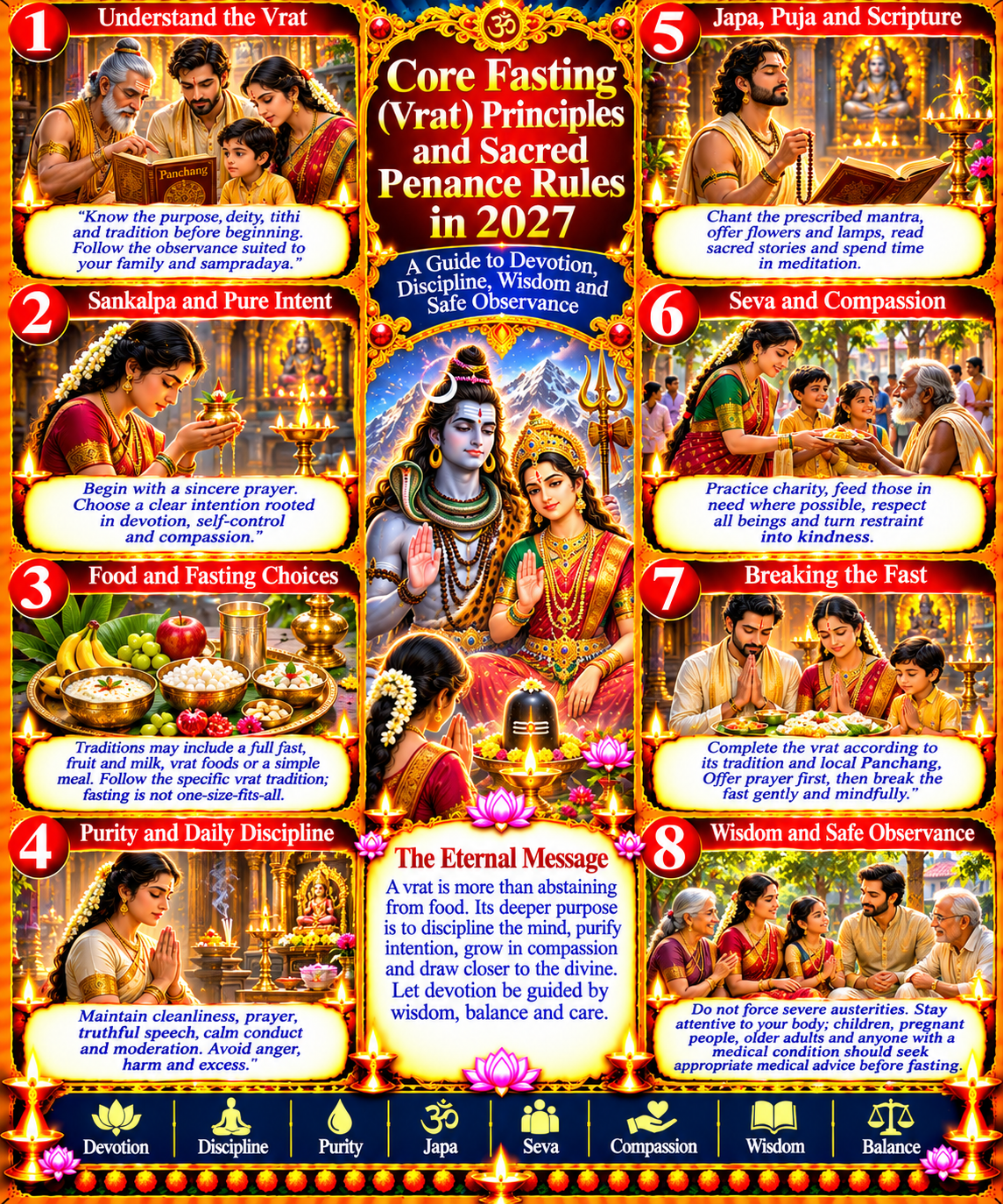
In Sanatana Dharma, a Vrat represents conscious self-mastery rather than simple physical deprivation. The Sanskrit root Vri means “to choose” or “to make a solemn resolve.” Consequently, regular fasting calms the digestive fire (Jatharagni) and directs biological vitality toward contemplation and mantra repetition.
- Ekadashi Vrat: Observed twice monthly on the eleventh lunar tithi. Devotees avoid grains and lentils to minimize fluid retention influenced by lunar gravitational pull.
- Pradosham Vrat: Observed on the thirteenth tithi (Trayodashi) of both fortnights, 1.5 hours around sunset, to clear accumulated karmic impurities through Shiva puja.
- Sankashti Chaturthi: Observed on the fourth tithi of Krishna Paksha. Devotees fast until moonrise, invoking Lord Ganesha to dissolve formidable obstacles.
- Satvic Nutrition: During Navratri and Shravana, practitioners consume sabudana, buckwheat (kuttu), water chestnut flour (singhara), fruits, and sendha namak, abstaining from tamasic ingredients.
Frequently Asked Questions About the Hindu Festival Calendar 2027
1. What makes the Hindu Festival Calendar 2027 unique compared to solar calendars?
The Hindu calendar calculates time through luni-solar cycles, synchronizing lunar phases with solar years through intercalary Adhik Maas adjustments.
2. On which date will Diwali fall in 2027?
Diwali falls on Friday, October 29, 2027, coinciding with the sacred Kartika Amavasya tithi.
3. When is Maha Shivaratri celebrated in 2027?
Maha Shivaratri will be observed on Saturday, March 6, 2027, during Phalguna Krishna Chaturdashi.
4. What is the difference between the Amanta and Purnimanta calendar systems?
Amanta months end on the New Moon (Amavasya), whereas Purnimanta months end on the Full Moon (Purnima).
5. Why do Hindu festival dates shift on the Gregorian calendar each year?
Because a lunar year has approximately 354 days, lunar festival dates shift roughly eleven days backward each solar year.
6. When will Holi be celebrated in 2027?
Holika Dahan occurs on March 21, 2027, followed by Rangwali Holi on Monday, March 22, 2027.
7. Which date marks Rama Navami in 2027?
Rama Navami will be celebrated on Thursday, April 15, 2027, on Chaitra Shukla Navami.
8. When does Ganesh Chaturthi fall in 2027?
Ganesh Chaturthi commences on Saturday, September 4, 2027, on Bhadrapada Shukla Chaturthi.
9. What are the dates for Sharad Navratri in 2027?
Sharad Navratri begins on October 1, 2027, concluding with Vijayadashami on October 10, 2027.
10. When is Krishna Janmashtami observed in 2027?
Krishna Janmashtami will be celebrated on Wednesday, August 25, 2027, on Bhadrapada Krishna Ashtami.
11. Why do devotees observe strict fasting on Ekadashi?
Ekadashi fasting cleanses physiological toxins, stabilizes metabolic rhythms, and directs mental focus toward meditation during peak lunar gravitational tides.
12. What is the spiritual significance of Makar Sankranti?
Makar Sankranti marks the Sun entering Capricorn, initiating the auspicious six-month northward Uttarayan period.
13. When does Chaturmas begin and end in 2027?
Chaturmas begins on Devshayani Ekadashi (July 15, 2027) and concludes on Devutthana Ekadashi (November 9, 2027).
14. What foods are permitted during sacred Hindu fasts?
Permitted satvic foods include fruits, dairy products, sabudana, buckwheat flour, water chestnut flour, potatoes, and rock salt.
15. When is Raksha Bandhan celebrated in 2027?
Raksha Bandhan falls on Tuesday, August 17, 2027, on the auspicious Shravana Purnima tithi.
16. Why are ancestral offerings performed during Pitru Paksha?
Pitru Paksha offers descendants a sacred window to express gratitude and offer tarpanam for departed ancestors’ spiritual peace.
17. What is the spiritual significance of lighting lamps during Kartika month?
Lighting earthen lamps dispels ignorance, invites Goddess Lakshmi’s auspicious grace, and honors Lord Vishnu throughout the holy month.
18. When is Akshaya Tritiya celebrated in 2027?
Akshaya Tritiya falls on Sunday, May 9, 2027, on Vaishakha Shukla Tritiya, bringing inexhaustible merit.
19. How should devotees break a strict Ekadashi fast?
Devotees must break the fast during the designated Parana window on Dwadashi morning after sunrise.
20. Where can readers find authenticated scriptural analyses of Vedic festivals?
Ratnam Strategy provides scripture-grounded guides on Indian epics, temple traditions, and festival dates to preserve authentic Vedic heritage.