Raja Ratnam
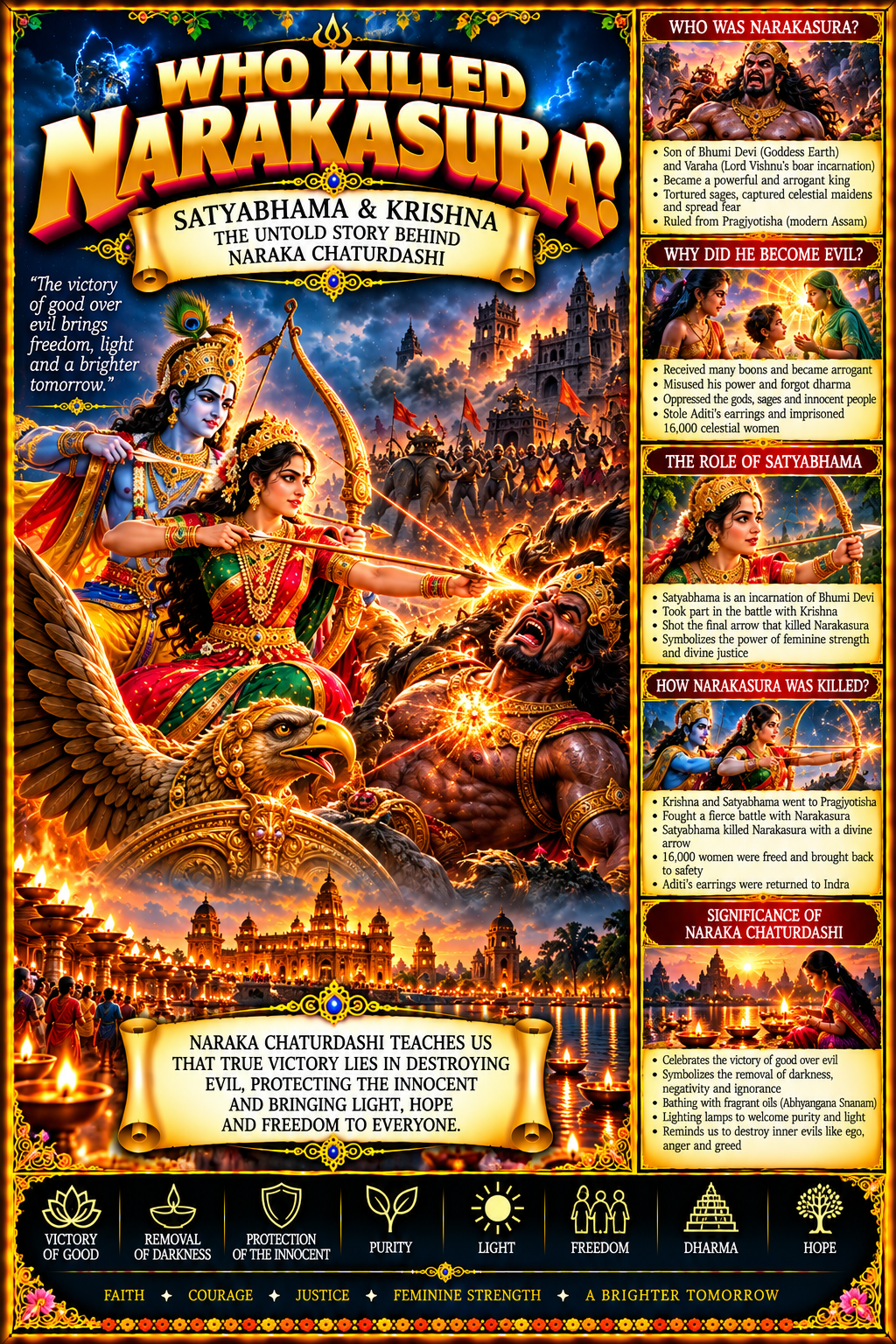
For centuries, millions of devotees celebrating the second day of Diwali have paused to ask: who killed Narakasura, and why does this fierce puranic battle hold such pivotal spiritual weight? Celebrated across India as Naraka Chaturdashi, Choti Diwali, or Roop Chaudas, this sacred occasion commemorates the annihilation of the tyrannical demon king of Pragjyotishpura. However, when inquiring who killed Narakasura, popular retellings frequently oversimplify the epic duel, overlooking the decisive, heroic role played by Satyabhama alongside Lord Krishna.
Indeed, unraveling who killed Narakasura unveils an intricate cosmic drama of ancient boons, maternal reincarnation, divine weapons, and the liberation of sixteen thousand captive maidens. Furthermore, understanding whether it was Krishna’s Sudarshana Chakra or Satyabhama’s archery that struck the fatal blow illuminates profound theological truths about feminine empowerment (Shakti) in Sanatana Dharma.
Who Was Narakasura? The Cosmic Origin of the Asura King
To fully comprehend who killed Narakasura, one must first trace the demon king’s extraordinary birth. Unlike ordinary Asuras born into demonic clans, Narakasura was the biological son of Mother Earth (Bhudevi) and Lord Vishnu during his Varaha (boar) avatar. According to the Kalika Purana and Srimad Bhagavatam, when Lord Vishnu rescued Bhudevi from the cosmic waters of the netherworld, their divine contact resulted in the conception of Naraka.
Because he was the son of Bhudevi, Vishnu granted the infant a formidable boon: he would enjoy long life, immense sovereignty, and could only ever be killed by or with the direct consent of his own mother, Bhudevi. Consequently, the celestial prophecy insured that no deity, demon, mortal king, or celestial weapon could harm him unless his mother willed his demise.
The Descent into Darkness: The Reign of Terror in Pragjyotishpura
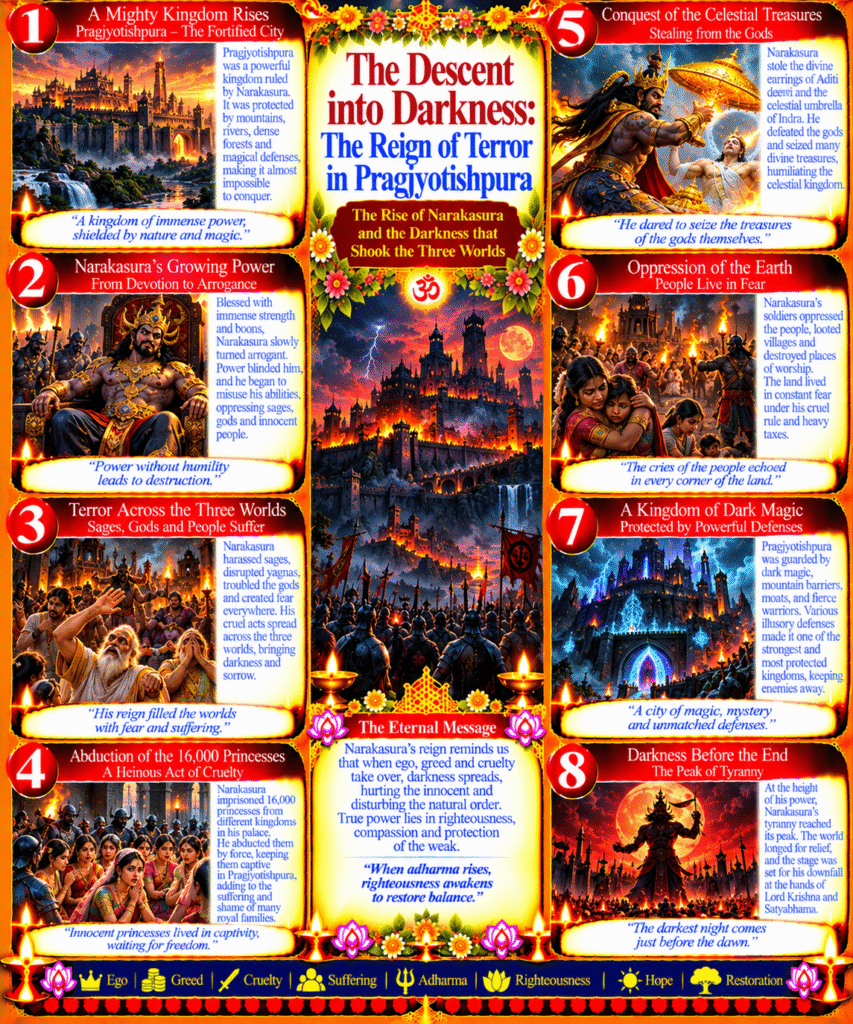
Initially, King Naraka ruled Pragjyotishpura (modern-day Assam) righteously. However, through association with the malicious Asura king Banasura, Naraka became corrupted by insatiable arrogance. Renaming himself Narakasura, he launched campaigns of conquest across Swarga (heaven) and Bhuloka (earth):
- Theft of Aditi’s Celestial Earrings: He raided the celestial abode of Indra, physically plundering the luminous earrings of Aditi, the divine mother of all Devas.
- Seizure of Varuna’s Rain Umbrella: He snatched Chattra, the imperial parasol of the water deity Varuna, and established dominion over heaven’s defenses.
- Abduction of 16,100 Women: Narakasura kidnapped 16,100 noble princesses and divine maidens, imprisoning them within the impregnable fortress of Audaka inside Pragjyotishpura.
Desperate and humiliated, Lord Indra journeyed to Dwarka to seek refuge at the lotus feet of Lord Krishna. Indra pleaded for divine intervention to put an end to Narakasura’s unchecked atrocities.
The Cosmic Paradox: Who Killed Narakasura and the Role of Satyabhama
Here lies the heart of the enigma: who killed Narakasura when Vishnu had promised Bhudevi that only she could end her son’s life? Because Krishna was an incarnation of Vishnu, he could not violate his own cosmic promise. The divine cosmos resolved this paradox through the reincarnation of Bhudevi as Queen Satyabhama, Krishna’s spirited and warrior-trained wife.
When Krishna prepared to march upon Pragjyotishpura, Satyabhama insisted on accompanying him into battle. Her anger was fueled not merely by royal duty, but by moral outrage over Narakasura’s insult to Mother Aditi and the imprisonment of thousands of helpless women.
Storming the Impregnable Fortress of Pragjyotishpura
Pragjyotishpura was fortified with insurmountable elemental defenses: mountains of fire, barriers of razor-sharp water currents, sonic enchantments, and deep moats guarded by the five-headed demon Mura. Mounting the great celestial eagle Garuda, Krishna and Satyabhama shattered every defensive barrier. Krishna hurled his Sudarshana Chakra, decapitating Mura and earning the eternal epithet Murari (the foe of Mura).
The Decisive Climax: Krishna’s Feigned Swoon and Satyabhama’s Counter-Attack
As Narakasura personally charged into the fray riding a ferocious battle elephant, he unleashed lethal mystic projectiles. Recognizing the terms of the ancient boon, Krishna feigned unconsciousness after being struck by an Asura spear, testing Satyabhama’s resolve.
Witnessing her beloved husband collapse, Satyabhama’s maternal tenderness vanished, replaced by the righteous fury of Bhudevi and Mahashakti. Stepping forward upon the chariot, she strung her celestial bow with unwavering precision and showered Narakasura with a barrage of lethal arrows. Mortally wounding the demon, she destroyed his chariot and neutralized his sorcery.
The Fatal Strike: Sudarshana Chakra and Bhudevi’s Sanction
With Satyabhama—the incarnation of Bhudevi—having sanctioned and delivered the decisive defeat, Krishna rose and hurled the glowing Sudarshana Chakra, cleanly sundering the demon king. Thus, when scholars examine who killed Narakasura, scriptural theology reveals a divine partnership: Satyabhama sanctioned and incapacitated the demon, fulfilling the maternal boon, while Krishna executed the cosmic liberation.
Scriptural Reference from the Harivamsa and Srimad Bhagavatam
The Harivamsa explicitly details Satyabhama’s fierce combat prowess, emphasizing that without her active participation, Narakasura remained invulnerable to physical harm.
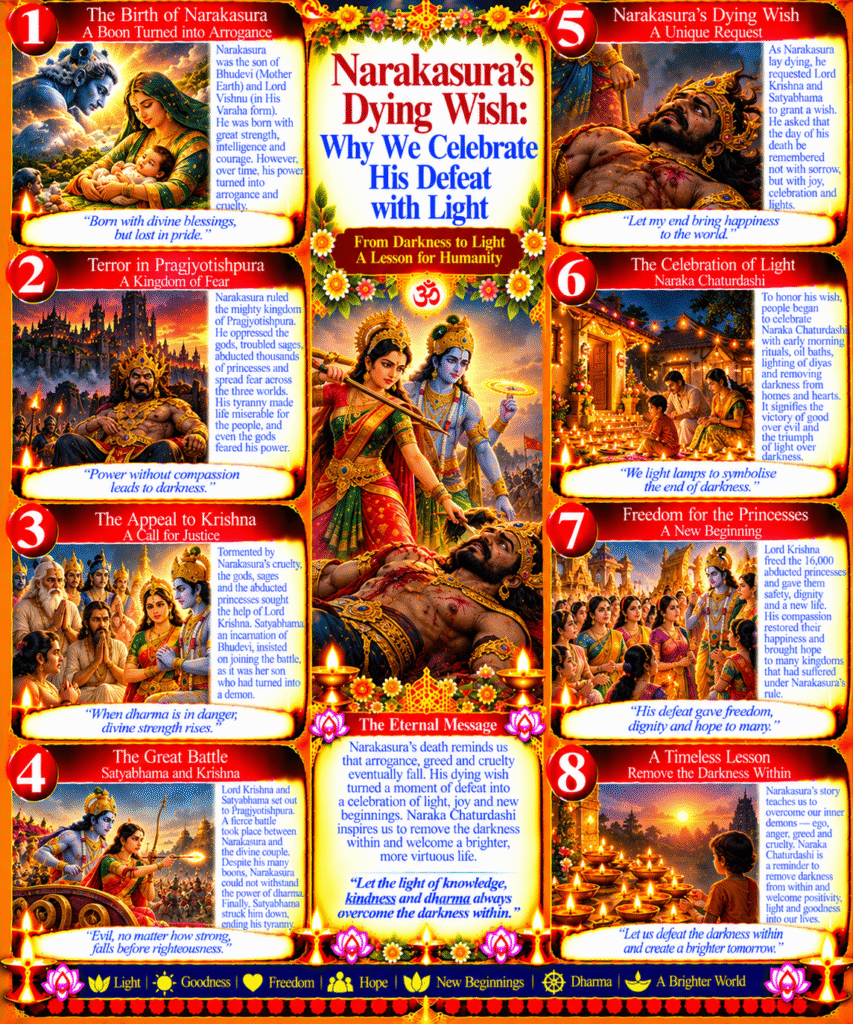
As Narakasura lay dying on the battlefield, the veil of demonic delusion lifted from his consciousness. Recognizing Krishna as the Supreme Lord and Satyabhama as his divine mother Bhudevi, he offered humble prostrations and made a heartfelt final request:
“O Mother, O Lord of the Universe! Let this day of my demise not be observed in sorrow or mourning. Instead, let all people throughout future ages celebrate this day with joy, lighting lamps, and bathing before sunrise to wash away their sins and rejoice in the triumph of light over darkness.”
Touched by his genuine repentance, Krishna and Satyabhama granted his prayer. Henceforth, the fourteenth day of the dark fortnight in Kartika was consecrated as Naraka Chaturdashi, an indispensable pillar of the five-day Deepavali celebrations detailed in our complete Diwali 2026 complete festival guide and broader Hindu festival calendar.
The Sacred Liberation of the 16,100 Princesses
Following Narakasura’s death, Krishna and Satyabhama entered the subterranean vaults of Pragjyotishpura, liberating the 16,100 captured princesses. In ancient society, women abducted and held captive by demons suffered brutal social stigma, ostracization, and rejection by their families.
The distressed princesses wept before Krishna, stating they had no home to return to and that suicide was their only recourse. In a sublime act of cosmic chivalry, compassion, and social restoration, Krishna accepted all 16,100 maidens as his lawful wives, providing each with an honorable royal sanctuary in Dwarka and restoring their divine dignity.
Sacred Rituals of Naraka Chaturdashi: Abhyanga Snan and Yama Tarpan
Because answering who killed Narakasura directly inspires the traditional rituals performed across India on Choti Diwali, devotees follow several ancient customs:
1. Abhyanga Snan (Holy Pre-Dawn Oil Bath)
Devotees wake during the Brahma Muhurta before sunrise, massaging their bodies with warm sesame oil infused with herbs, followed by an aromatic herbal paste (Ubtan). Scriptures declare that on Naraka Chaturdashi morning, Goddess Lakshmi resides in sesame oil and the sacred River Ganga resides in all bathwater. This ritual mirrors Krishna washing away the blood of battle and purifies the subtle body of negative karmas.
2. Yama Tarpan and Fourteen Diyas
Devotees illuminate fourteen earthen lamps (Chaudah Deepak) throughout the household and perform libations (Tarpan) dedicated to Lord Yama, praying for the alleviation of hellish suffering (Naraka) for ancestors and family lineages.
3. Crushing the Bitter Karit Fruit (Maharashtra Tradition)
In Maharashtra and Western India, families smash a small bitter wild fruit called Karit with their left heel before taking the oil bath. The crushing of the fruit symbolizes the crushing of Narakasura’s head and the internal annihilation of pride and ego.
Theological Meaning: Why Satyabhama’s Role Matters Today
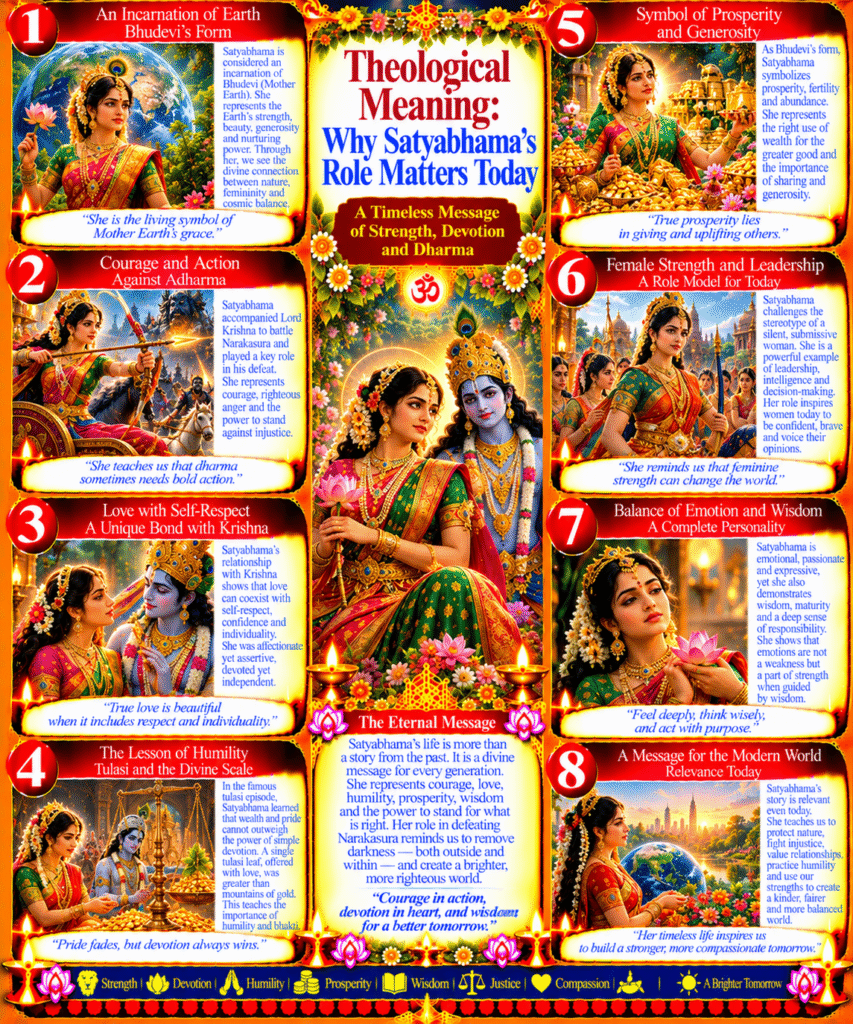
The story of who killed Narakasura carries immense theological and philosophical depth that resonates deeply today:
1. Mother Earth as Protector and Disciplinarian: Bhudevi is supremely nurturing, yet when her offspring degenerates into a tormentor of creation, she will not hesitate to wield the bow of justice. Divine love never excuses tyranny.
2. Equal Partnership in Dharma: Unlike narratives where women remain passive spectators, Satyabhama sits alongside Krishna on Garuda, actively navigating the battlefield and deciding the fate of empires, much like the righteous triumphs celebrated in why do we celebrate Dasara and the ethical trials endured during Lord Rama’s forest exile.
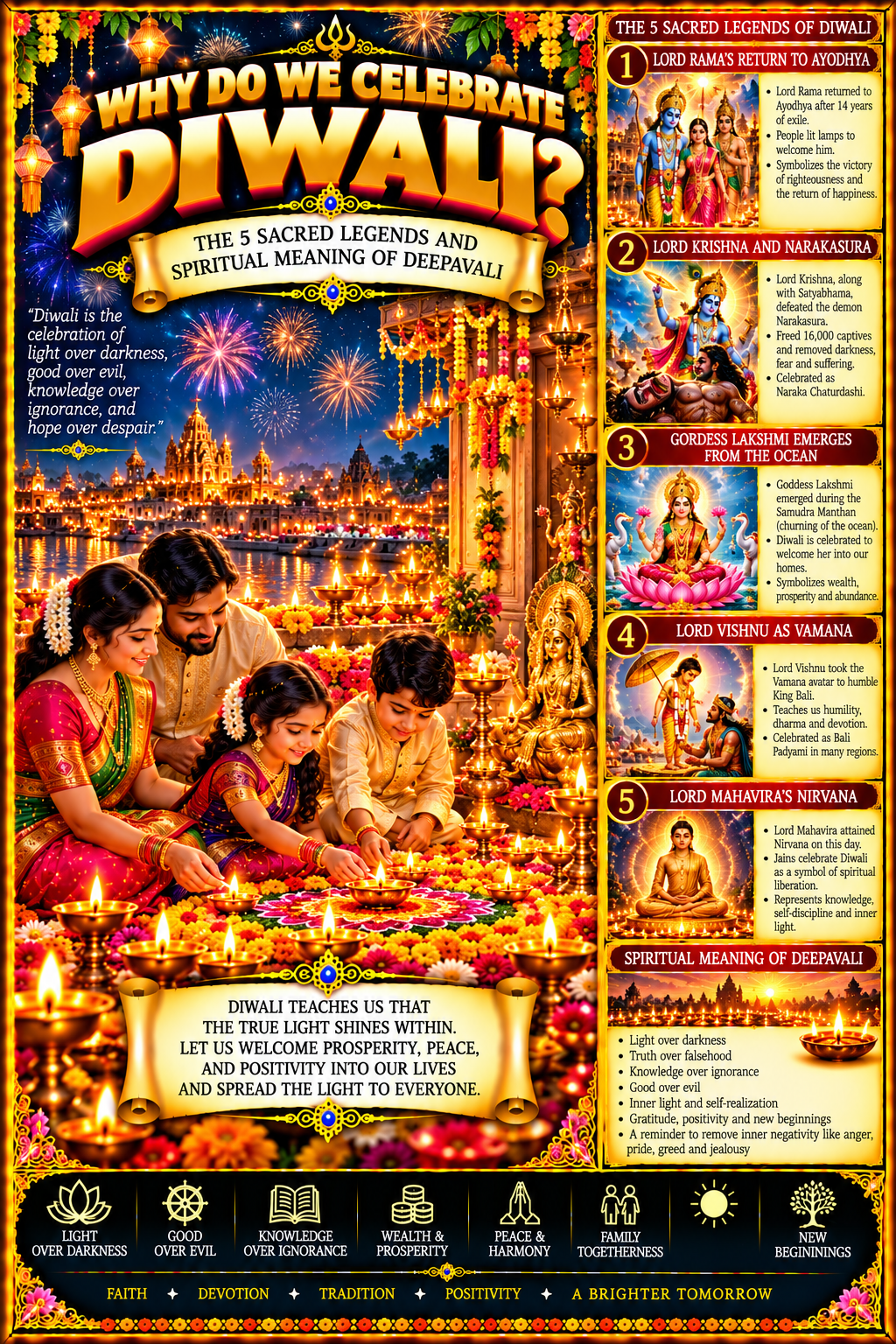
3. Internal Illumination: As explored in our deep analysis of why do we celebrate Diwali and its 5 sacred legends, Narakasura represents the demonic ego within us. The dawn bath and lamps signify awakening to our eternal higher self.
According to classical scriptural overviews in historical records of Narakasura and the Bhagavata Purana (Wikipedia), this epic encounter remains one of the most culturally influential legends across Indian festival traditions.
Frequently Asked Questions About Who Killed Narakasura (20 FAQs)
1. Who killed Narakasura according to Hindu scriptures?
Narakasura was killed through a joint divine effort by Queen Satyabhama and Lord Krishna. Satyabhama, the incarnation of Mother Earth (Bhudevi), delivered the fatal arrows to fulfill the maternal boon, after which Krishna hurled the Sudarshana Chakra.
2. Why could Lord Krishna not kill Narakasura alone?
Lord Vishnu had previously granted a boon to Mother Earth (Bhudevi) that her son Narakasura could only be killed by or with the direct consent of his mother. Therefore, Bhudevi had to reincarnate as Satyabhama to sanction his end.
3. Who was Narakasura’s father?
Narakasura was born from the union of Lord Vishnu in his Varaha (boar) avatar and Mother Earth (Bhudevi) when Vishnu rescued her from the primordial waters.
4. What was the capital city of Narakasura?
His capital city was Pragjyotishpura, which is located in modern-day Assam, India, and known for its ancient Tantric and military strongholds.
5. What is the connection between Narakasura and Diwali?
The death of Narakasura is celebrated on the second day of Diwali, known as Naraka Chaturdashi or Choti Diwali, symbolizing the vanquishing of darkness, fear, and tyranny.
6. Why did Narakasura request that his death be celebrated with lamps?
Before his death, Narakasura repented and asked Krishna that humanity should not mourn his passing, but celebrate it with oil lamps and joy to remember that righteousness always triumphs.
7. What did Narakasura steal from the gods?
He stole the celestial earrings of Goddess Aditi (mother of the Devas), the royal rain umbrella of Varuna, and captured the divine territory of Mount Meru.
8. Why did Krishna marry the 16,100 captive women?
He married them to restore their social dignity and protect them from societal ostracization after their prolonged imprisonment by Narakasura, giving them an honored status in Dwarka.
9. What is Abhyanga Snan and why is it performed on Naraka Chaturdashi?
Abhyanga Snan is a sacred pre-dawn bath taken after massaging the body with sesame oil and herbal ubtan. It commemorates Krishna washing off the dust and blood of battle after slaying Narakasura.
10. Who was demon Mura and why is Krishna called Murari?
Mura was a fierce five-headed demon general who guarded Narakasura’s fortress. Krishna slayed Mura with his Sudarshana Chakra, earning the sacred title Murari (“slayer of Mura”).
11. Why did Krishna feign fainting during the duel with Narakasura?
Krishna feigned unconsciousness to evoke the fierce warrior spirit of Satyabhama, enabling her to fulfill her cosmic destiny as Bhudevi and strike down her demonic son.
12. What vehicle did Krishna and Satyabhama ride to Pragjyotishpura?
They rode upon the divine eagle Garuda, who effortlessly traversed cosmic realms and overcame the celestial barriers surrounding the fortress.
13. What is the significance of the bitter Karit fruit crushed on this day?
In Western Indian customs, stepping on and crushing the bitter Karit fruit symbolizes the destruction of Narakasura’s head and the eradication of bitter egoism from the heart.
14. Which Purana narrates the story of Narakasura in detail?
The story is narrated in extensive detail in the Srimad Bhagavatam (Canto 10, Chapter 59), the Harivamsa, the Vishnu Purana, and the Kalika Purana.
15. Who was Narakasura’s son and what happened to him after the war?
His son was Bhagadatta. Following Narakasura’s defeat, Krishna spared Bhagadatta, restored the kingdom of Pragjyotishpura to him, and crowned him as the new righteous king.
16. Did Bhagadatta fight in the Kurukshetra War?
Yes, Bhagadatta fought valiantly in the Mahabharata war on the side of the Kauravas, commanding a formidable elephant army before being defeated by Arjuna.
17. Why is Naraka Chaturdashi also called Roop Chaudas?
It is called Roop Chaudas because the traditional pre-dawn herbal oil massage and ubtan bath are believed to enhance radiant physical beauty (Roop) and spiritual vitality.
18. What direction should the Yama Deepam face on Naraka Chaturdashi?
The lamp lit for Lord Yama should face south, the cardinal direction of Yama, to ward off untimely death and karmic tribulations.
19. Is Naraka Chaturdashi celebrated before or after Lakshmi Puja?
Naraka Chaturdashi is celebrated on the fourteenth day (Chaturdashi), exactly one day before the main Lakshmi Puja day (Amavasya) of Diwali.
20. What is the ultimate spiritual moral of the Narakasura legend?
The ultimate moral is that divine birth or high ancestry cannot protect one from the consequences of adharma (unrighteousness), and that true enlightenment requires cleansing the ego through divine wisdom.