Raja Ratnam
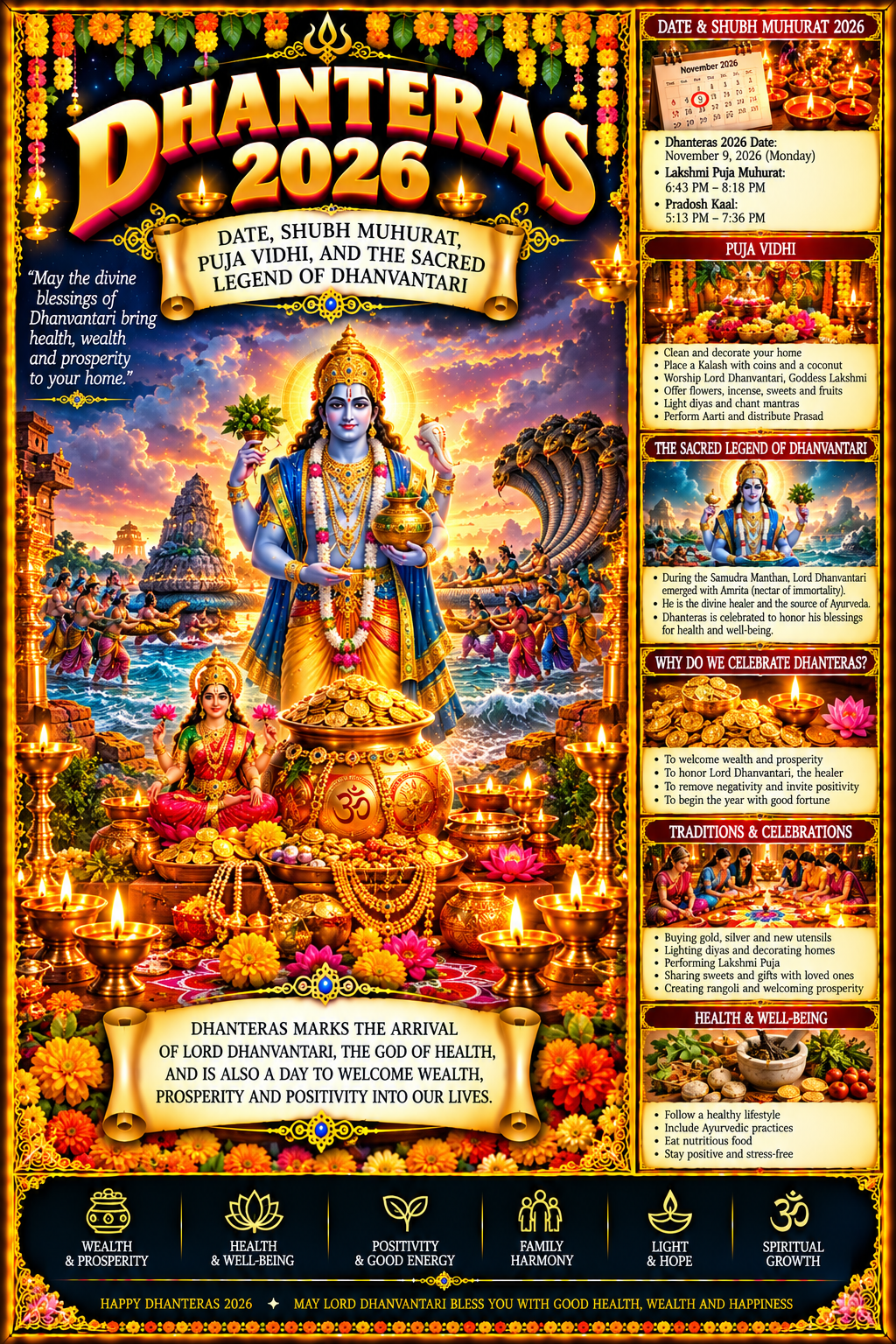
The grand five-day festival of lights commences with tremendous religious fervor on Dhanatrayodashi, and preparations for Dhanteras 2026 have already ignited widespread anticipation among millions of devotees globally. Observed reverently on the thirteenth lunar day (Trayodashi) of the dark fortnight (Krishna Paksha) in the sacred month of Kartika, Dhanteras 2026 marks the cosmic emergence of Lord Dhanvantari, the divine physician and father of Ayurveda.
Beyond traditional purchases of gold, silver, and kitchen utensils, Dhanteras 2026 embodies an ancient Vedic philosophy harmonizing holistic physical health (Arogya) and righteous material abundance (Samriddhi). Furthermore, following the precise astronomical timings and authentic Vedic rituals ensures abundant celestial blessings for every household.
Dhanteras 2026 Date, Tithi Timings, and Astrological Significance
According to the traditional Vedic Panchang, Dhanteras 2026 falls on Saturday, November 7, 2026. Understanding the exact celestial alignment of the Trayodashi Tithi is vital for performing the worship during Pradosh Kaal:
- Trayodashi Tithi Begins: November 6, 2026, at 11:48 PM
- Trayodashi Tithi Ends: November 7, 2026, at 10:14 PM
- Auspicious Dhanteras Puja Muhurat: 05:42 PM to 07:38 PM (Duration: 1 Hour 56 Minutes)
- Pradosh Kaal: 05:32 PM to 08:08 PM
- Vrishabha Kaal (Fixed Ascendant): 05:42 PM to 07:38 PM
- Yama Deepam Muhurat: 05:35 PM to 06:52 PM
Aligning family prayers within the Pradosh Kaal and Vrishabha Lagna ensures enduring stability of wealth, as the fixed sign (Sthira Lagna) signifies that divine prosperity will not vanish or fluctuate erratically, a foundational principle noted throughout the Hindu festival calendar.
The Sacred Legends of Dhanteras: Lord Dhanvantari and Yama Deepam
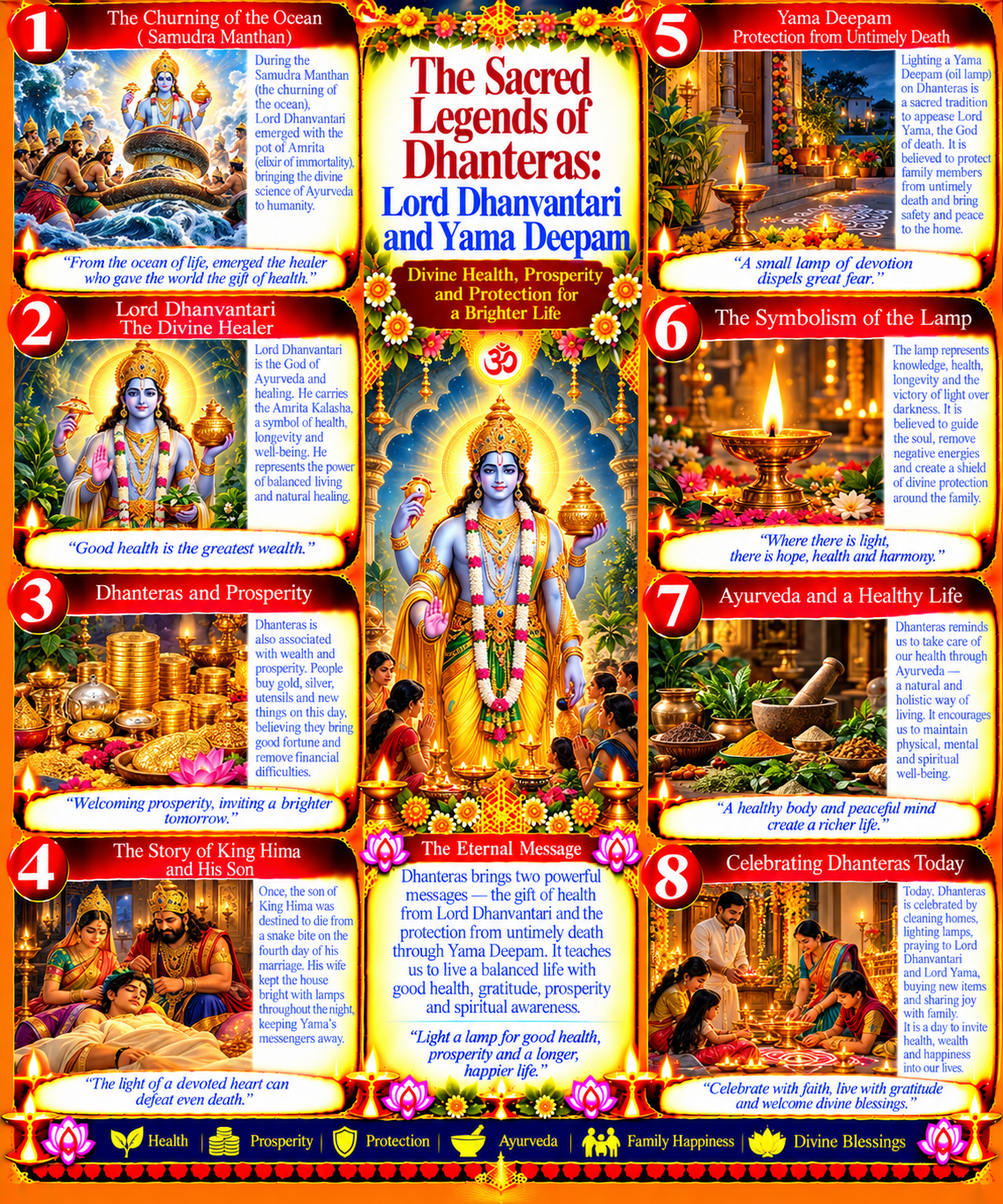
To truly grasp the sanctity of Dhanteras 2026, one must explore the two seminal mythological chronicles underpinning the observance.
The Cosmic Emergence of Lord Dhanvantari
During the celestial Samudra Manthan (ocean churning) between the Devas and Asuras, Lord Dhanvantari materialized out of the milky ocean holding the sacred Amrita Kalash (pot of divine nectar) in one hand and holy Ayurvedic treatises in the other. As an avatar of Lord Vishnu, Dhanvantari incarnated to liberate humanity from chronic sickness, physical frailty, and suffering.
Consequently, celebrating Dhanteras 2026 is not merely an invocation of commercial profit; it is foremost a day dedicated to sanctifying health, strengthening immunity, and offering gratitude for life-giving medicinal herbs.
The Legend of King Hima’s Son and the Defeat of Yama
A gripping puranic legend recounts the destiny of the sixteen-year-old son of King Hima, whose horoscope predicted his tragic demise via a snakebite on the fourth day of his marriage. His devoted young bride refused to surrender to fate. On that fateful evening, she illuminated every corner of their chambers with oil lamps and heaped all her gold ornaments and silver coins at the threshold.
When Lord Yama arrived disguised as a venomous serpent, the blinding brilliance of the lamps and glittering metals dazzled his eyes. Mesmerized by the radiant lights and the bride’s melodious devotional singing, Yama sat peacefully on the mound of jewels all night and departed silently at dawn without claiming the prince’s life. Thus, the tradition of Yama Deepam was consecrated to avert untimely death (Apamrityu).
Dhanteras 2026 Buying Guide: Auspicious Items and Taboos
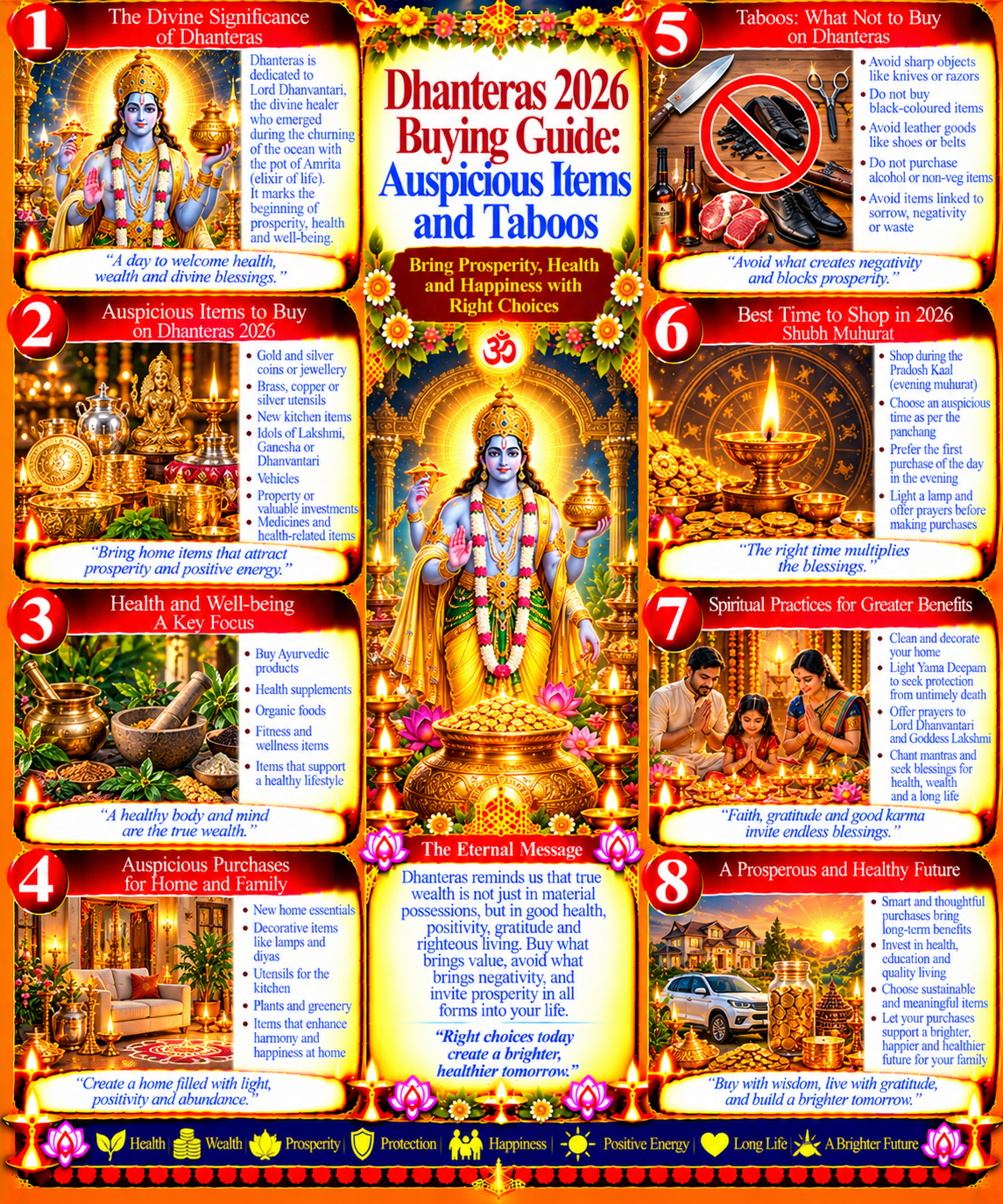
Millions flock to markets on Dhanteras to purchase sacred items. However, scriptures prescribe precise guidelines on what attracts auspiciousness versus what accumulates negative energetic vibrations.
Top Auspicious Items to Purchase on Dhanteras 2026
- Brass and Copper Utensils: Brass is deeply beloved by Lord Dhanvantari. Buying brass utensils and filling them with water or grain before entering the home invites perennial nourishment.
- Gold and Silver Coins: Coins embossed with images of Goddess Lakshmi and Lord Ganesha (whom devotees honor reverently during Ganesh Chaturthi) stabilize financial prosperity.
- Broom (Jhadu): According to the Matsya Purana, a new broom represents the physical removal of Daridrata (poverty and squalor) from the home, clearing space for Mahalakshmi.
- Coriander Seeds (Dhania): Purchasing dry whole coriander seeds, offering them during evening puja, and later planting them in household pots symbolizes sprouting abundance.
- Clay Diyas: Sourcing handcrafted earthen lamps directly from local artisans sustains community welfare.
- Accounts Books (Bahi-Khata): Traders invest in new registers to sanctify their future business operations.
Items to Strictly Avoid Buying on Dhanteras
- Sharp Objects: Scissors, knives, blades, and iron nails channel aggressive Martian and Saturnine energies and should never be purchased.
- Iron and Steel Articles: Pure iron represents Saturn (Shani), which is counterproductive to Trayodashi celebrations. Stainless steel, containing high iron alloys, should be minimized in favor of brass, copper, or bronze.
- Glassware: Glass is astrologically associated with Rahu, creating illusions and instability.
- Empty Vessels: Never bring empty containers into the house; always fill purchased utensils with water, rice, or sweets before entering through the front door.
- Black Garments: Black represents mourning and dark Tamasic energy, conflicting with the radiant solar nature of Diwali festivities.
Authentic Step-by-Step Puja Vidhi for Dhanteras 2026
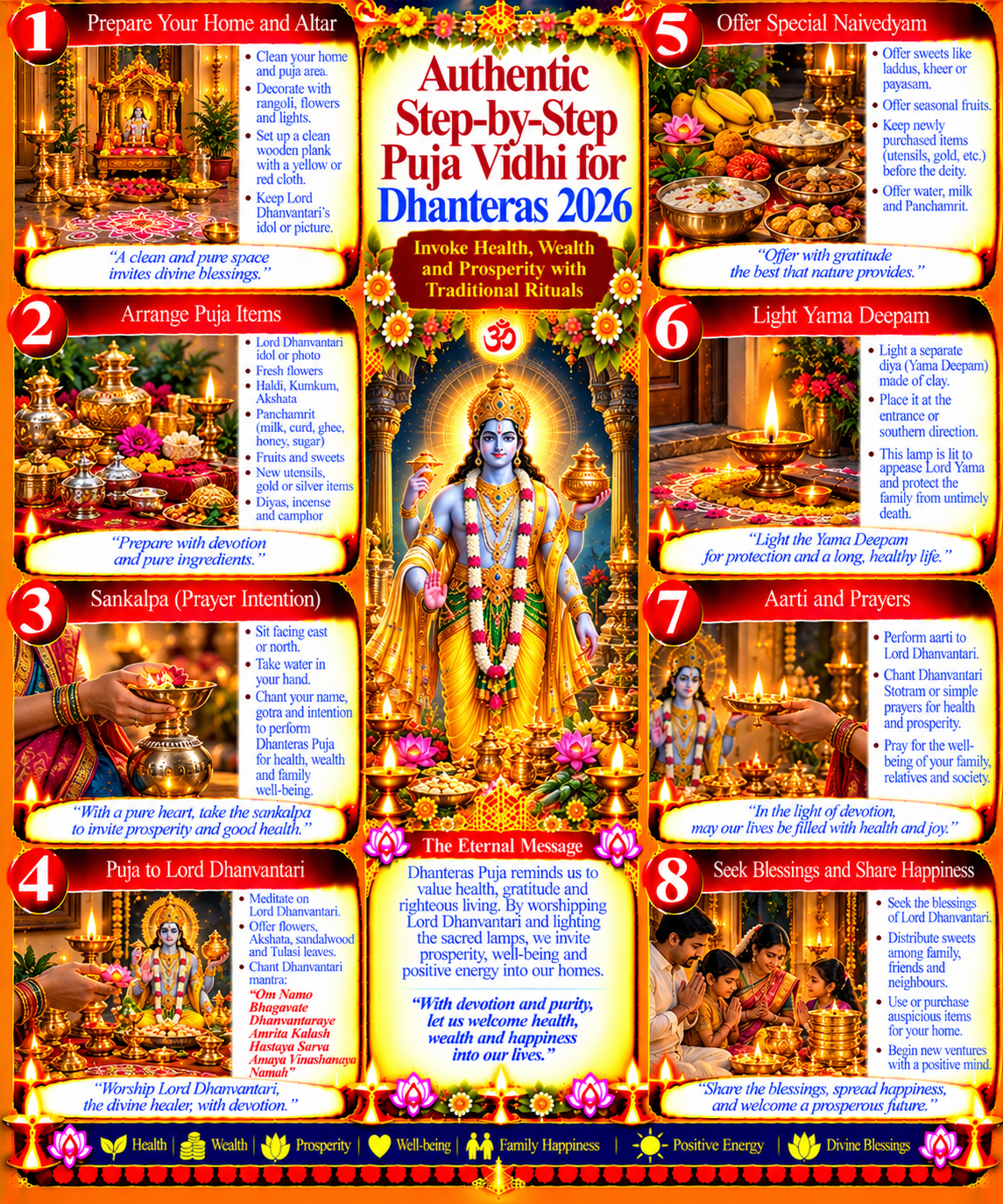
Conducting the evening worship systematically ensures maximum spiritual merit. Here is the canonical procedural framework:
Phase 1: House Purification and Altar Setup
Cleanse the puja room and sprinkle Gangajal. Spread a clean red or yellow cloth over a raised wooden platform (Chowki). Draw an eight-petaled lotus (Ashtadal Kamal) using rice grains and vermilion.
Phase 2: Invoking Dhanvantari, Ganesha, Lakshmi, and Kubera
Place idols or sacred images of Lord Ganesha, Goddess Lakshmi, Lord Dhanvantari, and Lord Kubera onto the altar. Light an unbroken Akhand Diya fueled with pure cow ghee.
Sacred Mantra for Lord Dhanvantari
Chant the venerable Dhanvantari Gayatri Mantra 108 times using a Tulsi rosary:
“Om Namo Bhagavate Vasudevaya Dhanvantaraye Amrita Kalasha Hastaya Sarva Maya Vinashanaya Trailokya Nathaya Shri Maha Vishnave Namah.”
Sacred Mantra for Lord Kubera
To seek blessing for administrative and economic stewardship, chant the Kubera Ashta-Lakshmi Mantra:
“Om Hreem Shreem Kreem Shreem Kuberaya Ashta-Lakshmi Mama Grihe Dhanam Puraya Puraya Namah.”
Phase 3: The Crucial Yama Deepam Ritual
After twilight, prepare a large four-wick clay diya filled with mustard oil. Place it outside the main entrance of the house facing south (the cardinal direction governed by Lord Yama). Offer raw rice grains and yellow flowers around the lamp, praying for the protection of all household members from illness and accidents.
Special Intention During South-Facing Light
Ensure that the eldest member of the family places the lamp without glancing backwards, invoking total spiritual immunity against untimely tribulations.
Sanctifying Family Well-Being
Recite the classical prayer: “Mrityuna Pasha Dandabhyam Kalena Shyamaya Saha | Trayodashyam Deepadanat Suryajah Preeyatam Mama.”
According to classical Ayurvedic history documented in historical records of Lord Dhanvantari (Wikipedia), the cosmic physician brought forth life-giving wisdom during the churning of the milky ocean.
Frequently Asked Questions About Dhanteras 2026 (20 FAQs)
1. When is Dhanteras 2026 celebrated?
Dhanteras 2026 will be celebrated on Saturday, November 7, 2026, corresponding to Kartika Krishna Trayodashi.
2. What is the most auspicious puja muhurat for Dhanteras 2026?
The ideal puja muhurat is during Pradosh Kaal and Vrishabha Lagna, between 05:42 PM and 07:38 PM on November 7, 2026.
3. Who is the primary deity worshipped on Dhanteras?
Lord Dhanvantari, the celestial healer and avatar of Lord Vishnu, is the primary deity, worshipped alongside Goddess Lakshmi, Lord Ganesha, and Lord Kubera.
4. Why is buying a broom considered auspicious on Dhanteras 2026?
The broom symbolizes cleaning away poverty, negative energies, and stagnation, making the home welcoming for Goddess Lakshmi.
5. What is Yama Deepam and what direction should it face?
Yama Deepam is a four-faced mustard oil lamp lit on Dhanteras evening outside the home facing the south direction to protect the family from untimely death.
6. Can we buy steel utensils on Dhanteras?
Traditional scriptures advise against steel because it contains iron alloys associated with Rahu and Saturn. Brass, copper, or silver are strongly recommended instead.
7. Why is Lord Kubera worshipped on Dhanteras?
Lord Kubera is the celestial treasurer of the universe. Worshipping him ensures the righteous preservation and ethical multiplication of wealth.
8. Why do people buy coriander seeds (Dhania) on Dhanteras?
Coriander seeds symbolize fertility, growth, and prosperity. Devotees offer them to Goddess Lakshmi and sow some in flower pots for positive growth.
9. What should one do with purchased utensils before entering the home?
Never bring an empty vessel inside. Fill it with water, unpolished rice grains, or sweets before crossing the threshold to welcome uninterrupted abundance.
10. Is Dhanteras a public holiday across India?
While Dhanteras is not a nationwide gazetted government holiday, businesses, banks, and educational institutions in many states observe festive half-days or local holidays.
11. Why do gold and silver prices spike around Dhanteras?
Enormous cultural demand driven by beliefs that investments made on Trayodashi yield perennial spiritual and financial dividends causes significant market rushes.
12. What oil is best for the Dhanteras evening puja diya?
Pure cow ghee is ideal for the altar lamps dedicated to Lakshmi and Dhanvantari, while mustard oil (Sarson) or sesame oil (Til) is prescribed for the Yama Deepam.
13. Can we buy vehicles or electronics on Dhanteras 2026?
Yes, many people buy vehicles and electronics, but astrological experts suggest scheduling delivery during auspicious Choghadiya or Pradosh timings.
14. What prasad should be offered to Lord Dhanvantari?
Offerings should include fresh yellow fruits, sweets made of jaggery, whole wheat halwa, Tulsi leaves, and Ayurvedic medicinal herbs like dry ginger and coriander.
15. What is the spiritual significance of lighting 13 diyas on Dhanteras?
Lighting thirteen lamps on Trayodashi represents dispelling 13 distinct forms of darkness and misfortunes across the household and family lineage.
16. Can renters or apartment residents perform Yama Deepam?
Yes, apartment dwellers can place the Yama Deepam near their main apartment door or on a balcony pointing southwards with equal spiritual efficacy.
17. Why is black cloth prohibited during Dhanteras puja?
Black absorbs and stores stagnant energies, while vibrant yellow, red, and saffron reflect divine solar warmth, purity, and spiritual radiance.
18. What is National Ayurveda Day and how does it relate to Dhanteras?
The Government of India officially designates Dhanteras as National Ayurveda Day to honor Lord Dhanvantari and promote holistic ancient medicine.
19. What if someone cannot afford gold or silver on Dhanteras?
Purchasing humble earthen diyas, a grass broom, or a handful of coriander seeds carries identical spiritual virtue when offered with sincere devotion.
20. What is the historical link between Dhanteras and Rama’s journey to Ayodhya?
Dhanteras falls two days prior to Rama’s arrival in Ayodhya, marking the climax of joy as citizens began extensive preparations after his 14-year exile.