Raja Ratnam
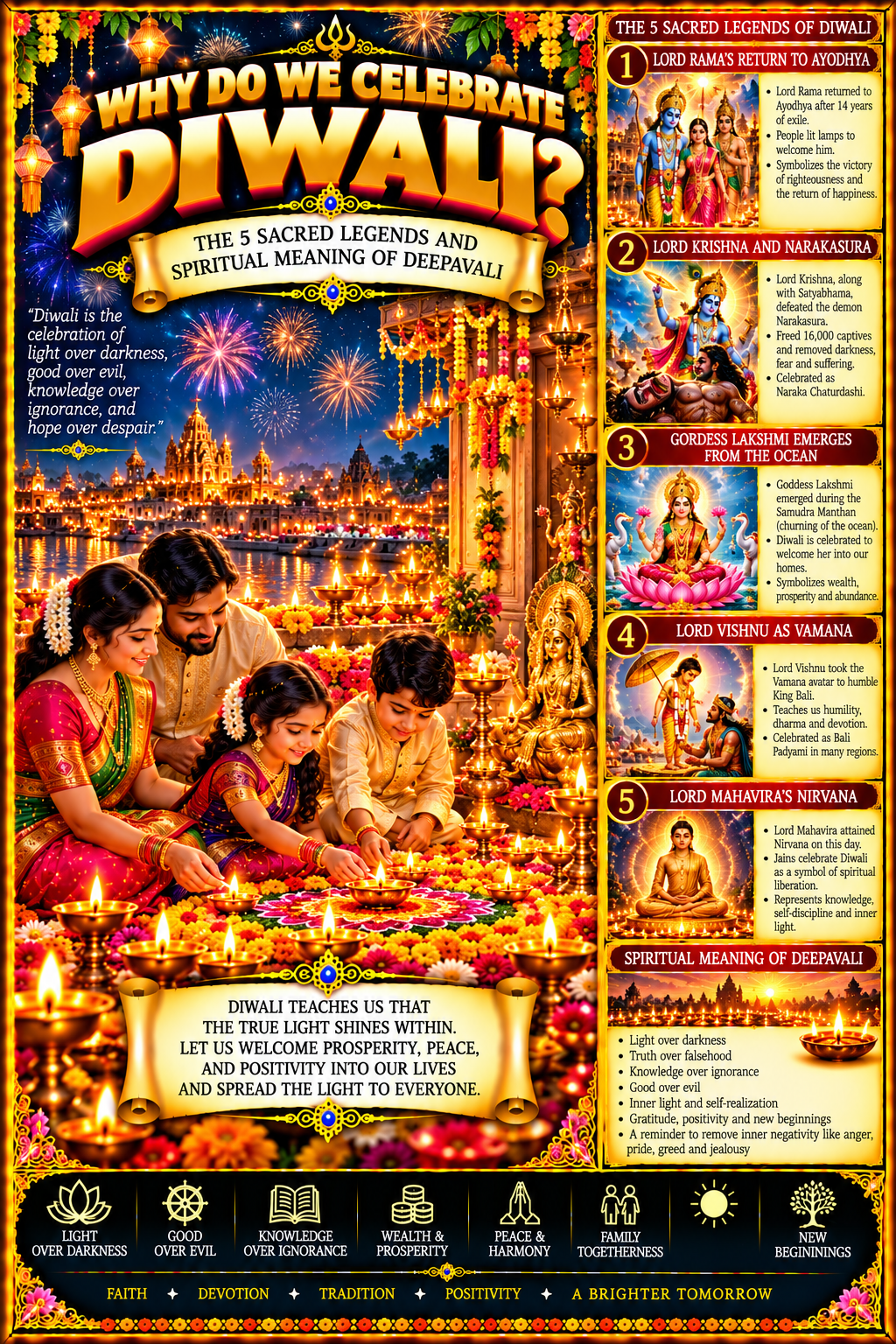
Every autumn, millions of earthen lamps illuminate courtyards, doorways, and rooftops across the world, prompting generations to contemplate: why do we celebrate Diwali with such profound joy and devotion? Known universally as Deepavali—the continuous row of lights—this glorious Hindu festival transcends ordinary jubilation. In truth, understanding why do we celebrate Diwali requires traversing ancient epics, cosmic battles, and esoteric spiritual allegories that guide human consciousness from darkness to divine radiance.
While regional folklore weaves multifaceted tapestries around the festival, every sacred narrative converges on a singular eternal philosophy: the inexorable triumph of Dharma over Adharma, wisdom over ignorance, and inner light over spiritual gloom. Furthermore, examining why do we celebrate Diwali reveals how this festival harmonizes seasonal renewal, ethical duty, and mystical inner awakening.
Why Do We Celebrate Diwali: The Essential Philosophical Foundation
At its deepest philosophical core, the question of why do we celebrate Diwali is encapsulated in the ancient Upanishadic prayer: Tamaso ma jyotir gamaya—”Lead me from darkness unto light.” Consequently, lighting clay diyas is not merely an aesthetic ceremony; it represents the igniting of the divine spark (Atman) residing within the human heart.
Just as a single small lamp effortlessly dissolves centuries of surrounding darkness, cultivating spiritual discernment effortlessly dissolves delusion, egoism, and fear. Therefore, whenever scholars analyze why do we celebrate Diwali, they emphasize that true illumination begins internally before manifesting outward as communal harmony and festive merriment.
The 5 Sacred Legends: Unveiling Why Do We Celebrate Diwali Across India
India’s vast spiritual geography cherishes distinct historical and puranic events commemorated during Deepavali. Let us explore each of the five foundational legends in rich detail.
1. The Triumphant Return of Lord Rama to Ayodhya
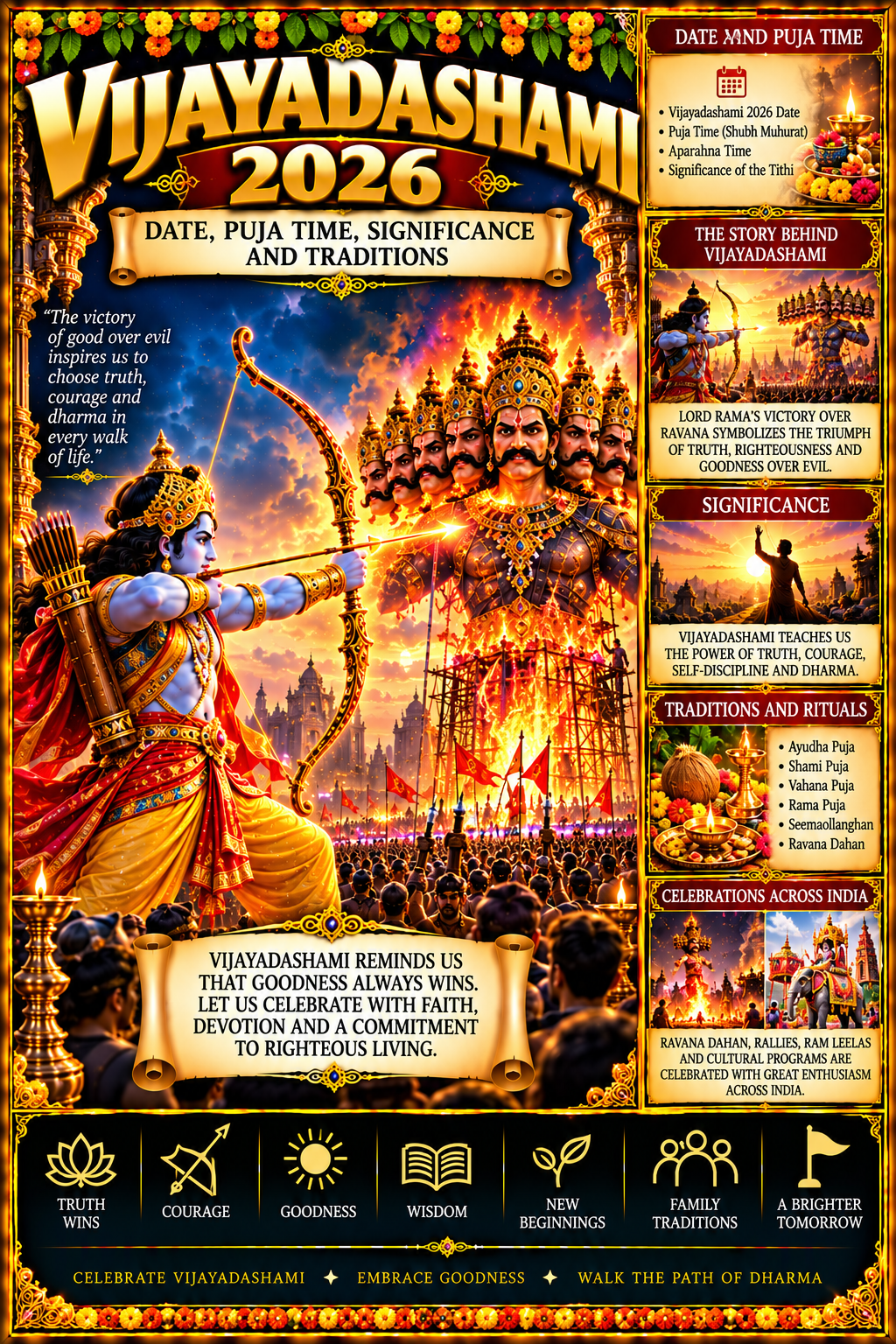
Undoubtedly, the most universally recognized reason why do we celebrate Diwali in Northern and Central India is the historic homecoming of Maryada Purushottama Lord Rama. Following an agonizing 14-year forest exile and the climactic vanquishing of the demon king Ravana in Lanka (celebrated twenty days earlier on Dussehra, as explored in why do we celebrate Dasara), Lord Rama returned to his capital city of Ayodhya accompanied by Mata Sita, Lakshmana, and devotee Hanuman.
Because the auspicious return took place on the moonless night of Kartika Amavasya, the devoted citizens of Ayodhya placed countless oil-filled clay lamps along every boulevard, rampart, and rooftop to illuminate the path for their beloved rightful sovereign. This magnificent collective lighting established the perennial tradition of Deepavali.
The Ethical Allegory of Rama’s Triumph
Rama’s historic coronation (Ramrajya) established an ideal civilization founded upon righteousness, compassion, and unwavering integrity. Understanding this epic narrative, detailed extensively in the life story of Ravana and his defeat, reminds seekers that personal integrity inevitably withstands external chaos.
2. Samudra Manthan and the Emergence of Goddess Lakshmi
A second foundational answer to why do we celebrate Diwali lies in the cosmic chronicle of the Samudra Manthan (churning of the primordial milk ocean). As documented in the Vishnu Purana and Srimad Bhagavatam, when the Devas and Asuras churned the celestial ocean to retrieve Amrita (nectar of immortality), numerous divine treasures materialized.
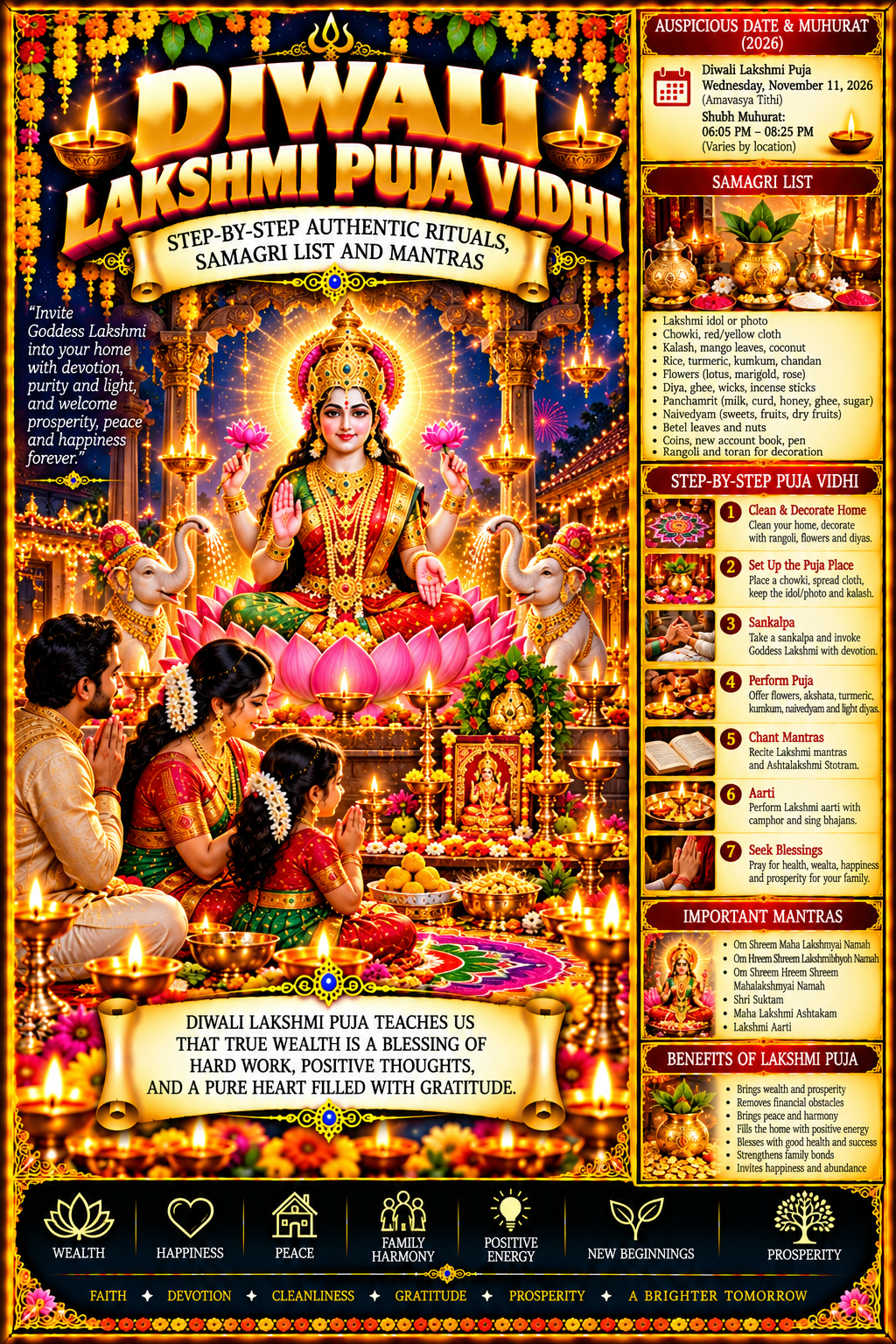
On the sacred day of Kartika Amavasya, Goddess Lakshmi, the divine embodiment of auspiciousness, grace, and eternal abundance, emerged from the foaming cosmic waters seated atop a blooming pink lotus. The celestial guardians performed her ceremonial coronation, and she subsequently selected Lord Vishnu as her divine consort.
Spiritual Opulence Versus Material Greed
Crucially, Sanatana Dharma distinguishes between blind greed and righteous prosperity. Goddess Lakshmi bestows spiritual wealth, ethical abundance, and family harmony only upon residences purified of deceit and laziness. This understanding forms the backbone of the entire Hindu festival calendar.
3. Lord Krishna and Satyabhama Vanquishing Narakasura
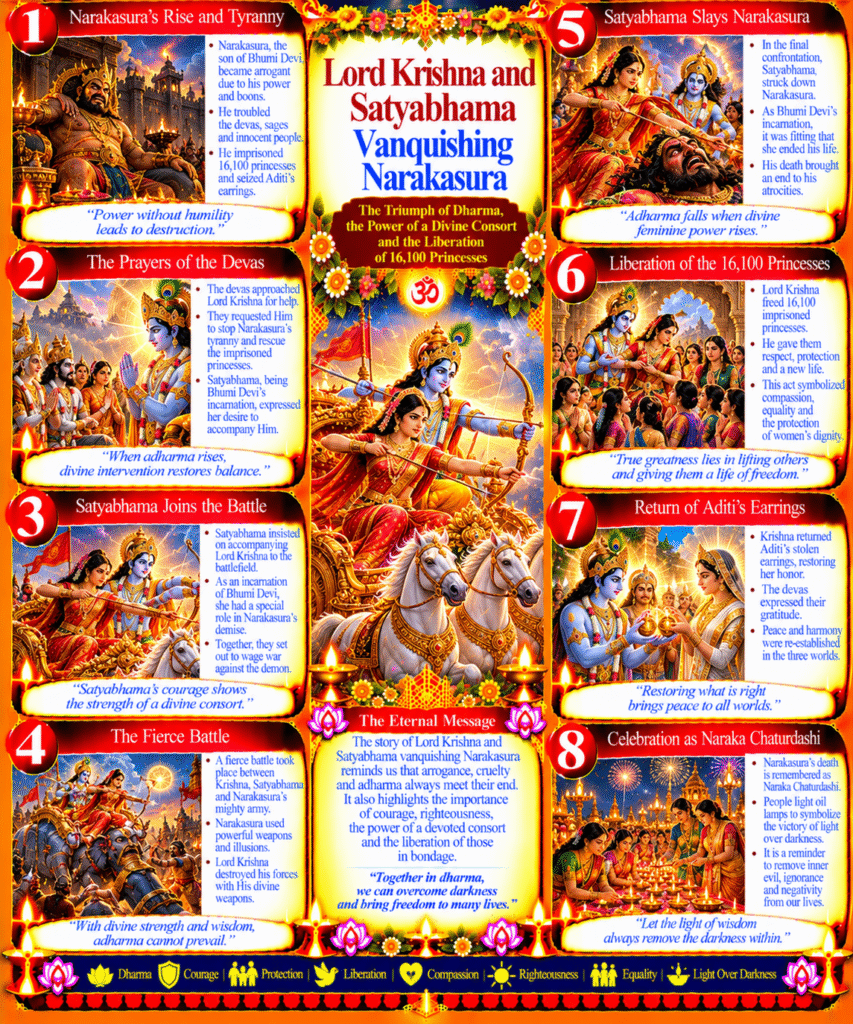
In Southern and Western India, answering why do we celebrate Diwali points directly to the ferocious battle on Naraka Chaturdashi. The tyrant demon king Narakasura, intoxicated by severe boons, had wreaked havoc across the three realms, imprisoning 16,100 innocent maidens and humiliating celestial beings.
Lord Krishna, accompanied into the celestial battlefield by his warrior consort Satyabhama, defeated and slew Narakasura before dawn. Dying with purified awareness, Narakasura pleaded that his demise should not be mourned, but rather celebrated as a festival of light and emancipation. Consequently, devotees awaken before sunrise on Naraka Chaturdashi to take sacred oil baths (Abhyanga Snan), symbolizing the destruction of inner demonic tendencies.
4. Goddess Kali’s Fierce Dance of Cosmic Dissolution (Bengal & Eastern Traditions)
In West Bengal, Odisha, and Assam, the question of why do we celebrate Diwali yields a deeply esoteric Shakta perspective. While other regions conduct Lakshmi Puja, Eastern India performs solemn midnight worship of Maa Kali on Kartika Amavasya.
According to sacred Shakta scriptures, Maa Kali went on a cosmic rampage destroying the demonic hordes threatening creation. To pacify her uncontrollable divine frenzy, Lord Shiva placed himself serenely beneath her dancing feet. Upon stepping on her beloved consort, Kali stuck out her tongue in astonishment and regained tranquil composure. Worshipping Kali on Diwali night incinerates deep-rooted ego, fear, and karmic impurities.
5. The Return of the Pandavas from 12-Year Exile
Another classic legend found in the Mahabharata explains that the five righteous Pandava brothers—Yudhishthira, Bhima, Arjuna, Nakula, and Sahadeva—along with Draupadi, returned to their kingdom on Kartika Amavasya after enduring twelve arduous years of forest exile and one year of incognito concealment (Agyatvas). Grateful subjects illuminated their homes with earthen lamps to celebrate the return of righteous governance.
Deep Spiritual Symbolism: Deconstructing Every Element of Deepavali
Beyond historical anecdotes, why do we celebrate Diwali with specific material rituals? Every festive accessory possesses profound metaphysical meaning.
The Clay Diya: Human Body and Divine Atman
The earthen lamp (mitti ka diya) represents the mortal physical body fashioned from terrestrial clay. The oil or cow ghee symbolizes our vasanas (accumulated worldly desires and karmic tendencies), while the cotton wick represents the intellect and focused mind. When ignited by the flame of spiritual wisdom (Jnana), the desires burn away entirely, casting illuminating light outward without ego.
Rangoli and Kolam: Transient Beauty and Hospitable Harmony
Intricate geometric powder designs drawn at household entrances serve two crucial purposes. Spiritually, they invite the steps of Mahalakshmi. Ethically and ecologically, traditional rice-flour rangolis provide sustenance to ants, birds, and insects, demonstrating radical hospitality to all sentient life forms.
Micro-Rituals Within Sacred Rangoli Arts
Geometric patterns utilize sacred Yantra geometry, channeling cosmic balance and shielding the household threshold against disruptive energetic influences.
Traditional Colors and Natural Pigments
Authentic rangolis historically featured turmeric (yellow/auspiciousness), vermilion (red/shakti), and rice powder (white/purity), eschewing harmful synthetic chemicals.
Cross-Tradition Celebration: Why Do We Celebrate Diwali in Sikhism, Jainism, and Buddhism?
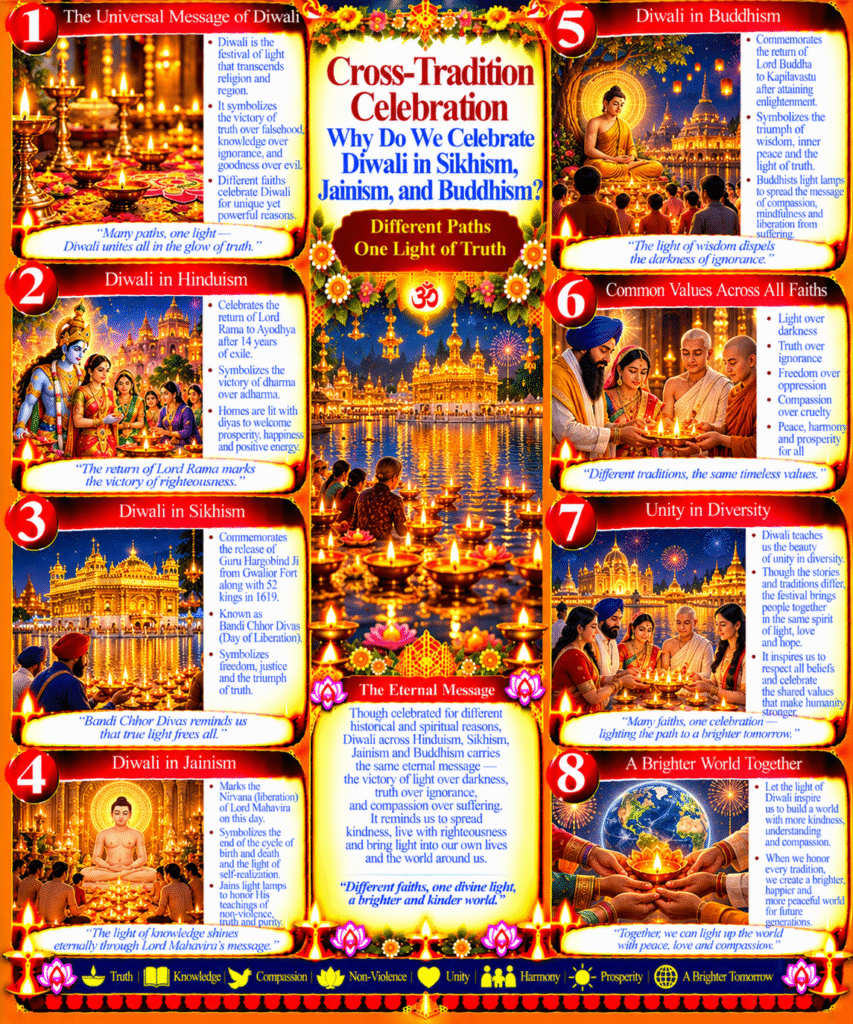
Diwali is uniquely unifying because diverse Indian faiths commemorate seminal historical milestones on this identical calendar day, answering why do we celebrate Diwali across diverse spiritual lineages:
Sikh Tradition (Bandi Chhor Divas): The sixth Sikh Guru, Guru Hargobind Ji, secured release from Gwalior Fort prison by Mughal Emperor Jahangir, miraculously negotiating the liberation of 52 Hindu hill kings. The Golden Temple in Amritsar was illuminated with lamps upon their triumphant arrival.
Jain Tradition (Mahavira Nirvana): Bhagwan Mahavira, the 24th Tirthankara, attained absolute liberation (Moksha/Nirvana) at Pavapuri on Kartika Krishna Amavasya in 527 BCE. Jains illuminate lamps to commemorate the perpetuation of his enlightened teachings.
Buddhist Tradition (Ashoka Vijayadashami & Deepavali): Emperor Ashoka the Great embraced Buddhism and initiated nationwide Dhamma propagation, inspiring devotees to illuminate stupas and monasteries in celebratory joy.
Why Celebrating Diwali Matters Immensely in the 21st Century
In an era marked by rapid digital acceleration, social fragmentation, and pervasive mental anxiety, contemplating why do we celebrate Diwali offers urgent therapeutic relevance:
1. Resolving Psychological Darkness: Modern life frequently breeds loneliness, despair, and competitive bitterness. Rekindling the inner diya represents conscious mental self-care, cultivating gratitude, and choosing joy over despondency.
2. Economic Inclusivity and Community Support: By purchasing handcrafted clay lamps from local potters and seasonal treats from small artisans, Diwali functions as an engine of decentralized grassroots economic empowerment.
3. Reconciliation and Forgiveness: Families wipe clean domestic spaces, settle past debts, discard obsolete belongings, and mend strained relationships, starting a completely fresh chapter of life.
As recorded in the ancient epic Valmiki Ramayana (Wikipedia), the radiant reception of Lord Rama stands as the cultural pinnacle of Ayodhya’s history.
Frequently Asked Questions About Why Do We Celebrate Diwali (20 FAQs)
1. What is the primary historical reason why do we celebrate Diwali?
The primary reason celebrated in Northern and Western India is Lord Rama’s triumphant return to Ayodhya with Sita and Lakshmana after 14 years of exile and the defeat of Ravana.
2. Why do we celebrate Diwali on the Amavasya (new moon) night?
Amavasya is the darkest night of the lunar month. Lighting lamps on this pitch-black night signifies that spiritual light and knowledge can illuminate even the deepest darkness.
3. Why is Goddess Lakshmi worshipped instead of Lord Rama on Diwali night?
Diwali night coincides precisely with the appearance day of Goddess Lakshmi from the Samudra Manthan (ocean churning). Devotees invoke her for spiritual purity, peace, and auspicious wealth.
4. Why do we celebrate Diwali in South India for Lord Krishna’s victory?
South Indian traditions commemorate Lord Krishna and Satyabhama slaying the oppressive demon Narakasura on Naraka Chaturdashi, liberating thousands of captives.
5. What is the spiritual meaning behind lighting earthen diyas?
Earthen diyas represent the mortal human body, the oil symbolizes worldly desires, and the glowing flame represents the awakened soul (Atman) shining with divine wisdom.
6. Why do Jains celebrate Diwali?
Jains commemorate the Moksha (final liberation from the cycle of rebirth) of Bhagwan Mahavira, the 24th Tirthankara, attained on this day in 527 BCE.
7. Why do Sikhs celebrate Bandi Chhor Divas on Diwali?
Sikhs celebrate Bandi Chhor Divas to mark the release of Guru Hargobind Ji and 52 Hindu kings from imprisonment in Gwalior Fort by Emperor Jahangir.
8. Why do people clean and paint their homes before Diwali?
Cleanliness represents physical and mental purity (Shaucha). Ancient scriptures state that Goddess Lakshmi resides exclusively in clean, orderly, and harmonious environments.
9. What is the significance of the Samudra Manthan in relation to Diwali?
During the cosmic churning of the ocean, Goddess Lakshmi and Lord Dhanvantari emerged on Trayodashi and Amavasya, giving birth to the worship of health and prosperity.
10. Why do people in Bengal worship Goddess Kali during Diwali?
Eastern India worships Maa Kali on Kartika Amavasya to honor the fierce mother goddess who annihilates ignorance, demonic ego, and negative cosmic forces.
11. How does Diwali relate to the Mahabharata?
According to legend, the five Pandavas returned to Hastinapur on Kartika Amavasya after finishing their 12-year banishment and one-year exile in disguise.
12. Why do people draw rangoli patterns at house entrances?
Rangolis welcome the divine footsteps of Goddess Lakshmi, bring harmonious energy into the residence, and provide rice-flour food to small creatures.
13. What is the connection between Lord Ganesha and Goddess Lakshmi on Diwali?
Ganesha is the lord of wisdom (Buddhi) and remover of obstacles. Prosperity without wisdom leads to arrogance and ruin; hence, Lakshmi and Ganesha are always worshipped jointly.
14. Why is gold and silver bought on Dhanteras during Diwali?
Purchasing precious metals signifies welcoming enduring wealth and invites the blessings of Lord Kubera and Dhanvantari into the household.
15. What is the significance of Govardhan Puja during the 5-day festival?
It commemorates Lord Krishna lifting the sacred Govardhan hill with his little finger to shelter the villagers and cattle of Vrindavan from torrential storms caused by Lord Indra.
16. Why do sisters and brothers celebrate Bhai Dooj on the final day?
Bhai Dooj commemorates Goddess Yamuna welcoming her brother Lord Yama with a sacred tilak and feasts, blessing brothers with longevity and sisters with lifelong protection.
17. Did Lord Rama arrive in Ayodhya on the same day Ravana was killed?
No, Ravana was vanquished on Dussehra (Dashami). The travel from Lanka to Ayodhya took approximately twenty days, culminating in his grand arrival on Kartika Amavasya (Diwali).
18. Why do merchants and businesses open new account books on Diwali?
Through the Chopda Pujan ritual, business communities seek divine sanction, transparency, and ethical success for the upcoming financial year.
19. What does the exchange of sweets (mithai) symbolize during Diwali?
Distributing sweets symbolizes sweetening speech and interpersonal relationships, leaving behind past resentments and fostering fraternity.
20. How can one celebrate Diwali in an eco-friendly and spiritually authentic manner?
By using biodegradable earthen diyas with mustard or sesame oil, creating natural flower and rice-flour rangolis, donating food and clothes to underprivileged communities, and minimizing noisy smoke-filled firecrackers.