Raja Ratnam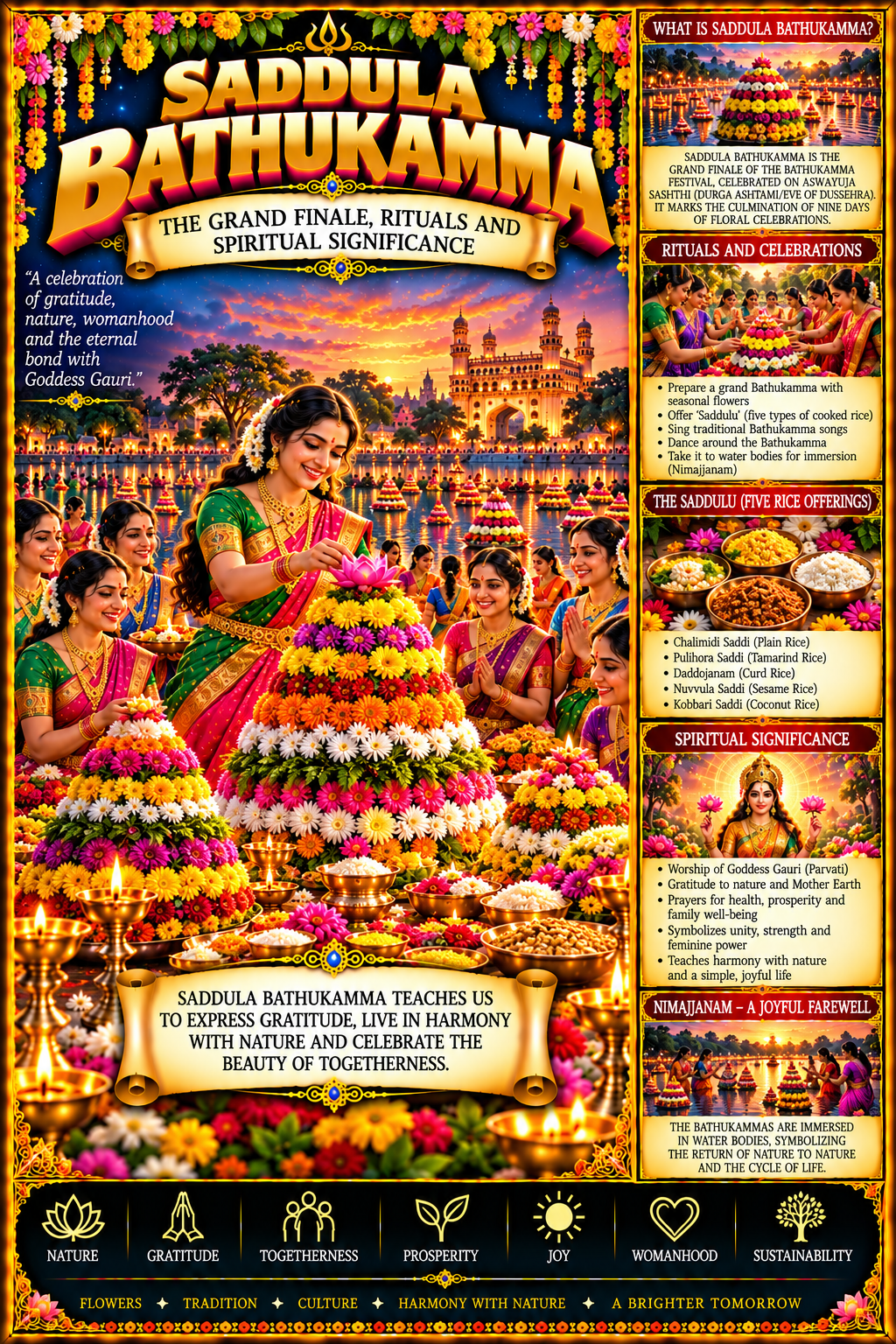
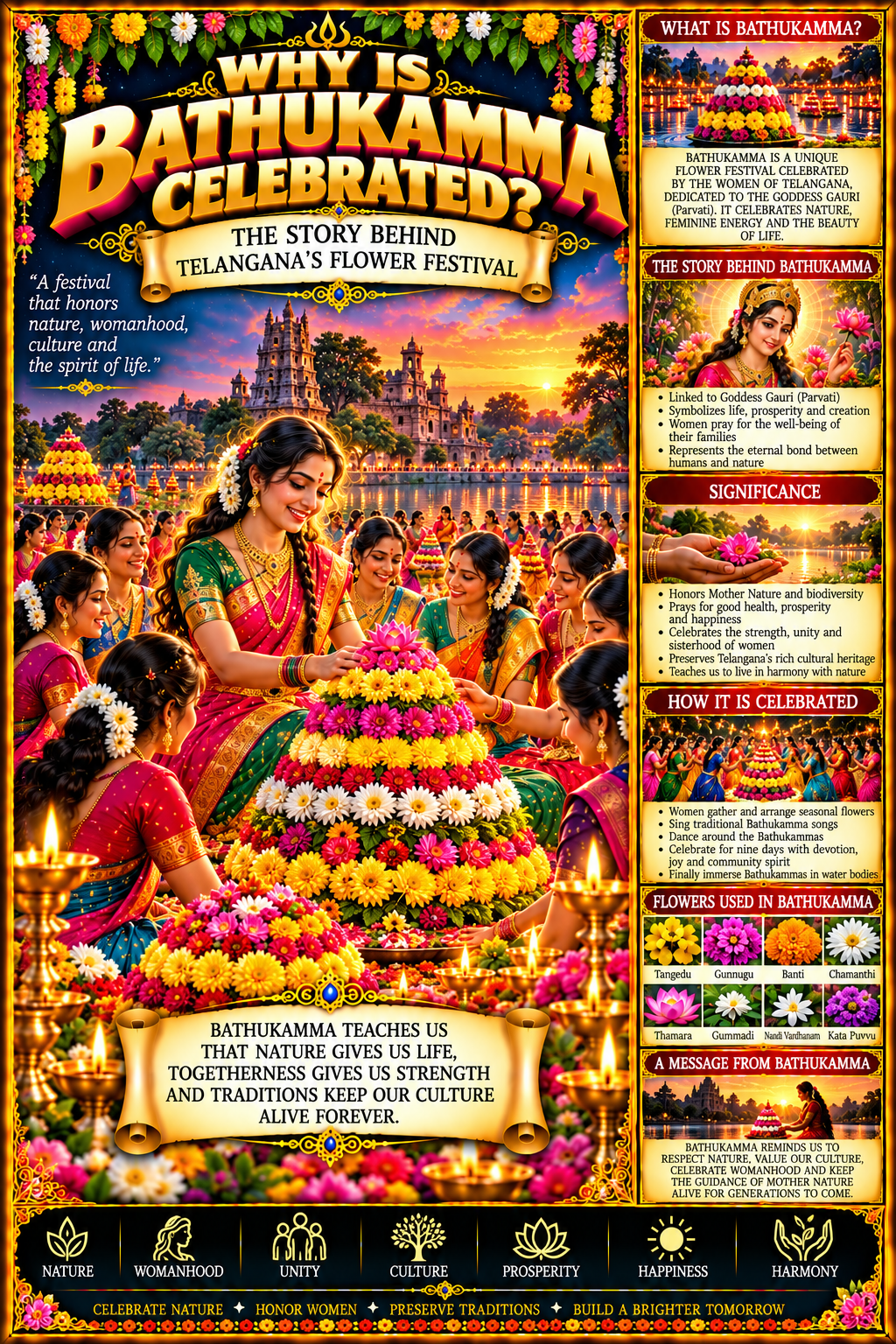
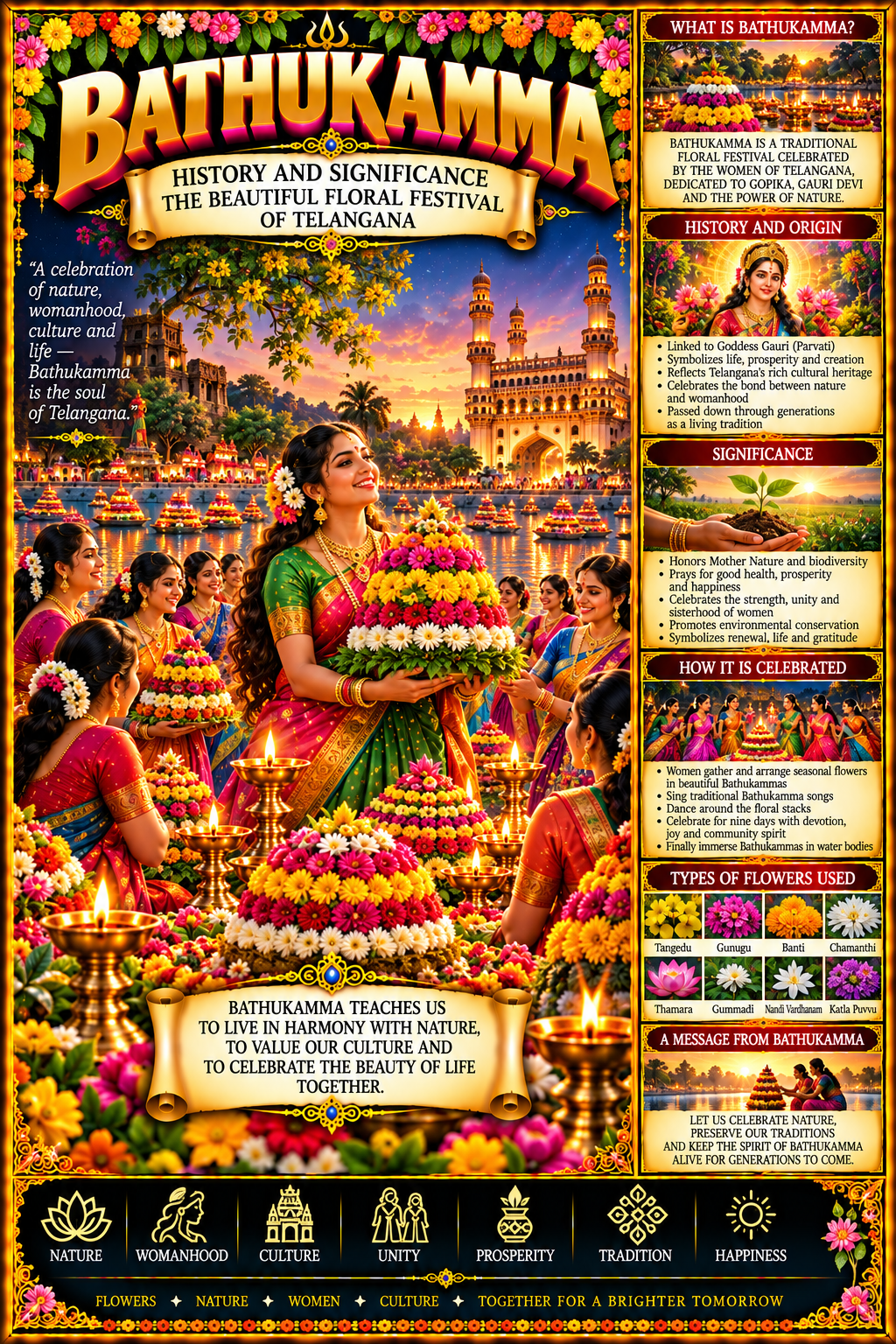
As the golden twilight descends upon the Deccan plateau on the auspicious eighth lunar day of Ashwayuja (Durgashtami), the vibrant celebrations of Telangana reach their majestic climax with Saddula Bathukamma. Celebrated as the grand finale of the nine-day floral festival, Saddula Bathukamma (also affectionately revered across rural villages as Pedda Bathukamma or the “Great Bathukamma”) is an awe-inspiring spectacle of collective sisterhood, culinary devotion, and sacred ecological worship. Having celebrated the earlier days explored in our guide to Bathukamma traditions, songs, rituals, and celebrations, families dedicate this concluding day to crafting towering floral monuments and preparing five consecrated rice delicacies.
Coinciding with the divine worship of Maa Mahagauri on Day 8 of Navratri and serving as the emotional bridge leading into the sacred significance of Dasara and Vijayadashami, this final day carries immense theological weight. From the intricate selection of sacred Bathukamma flowers and their meanings to the deeply moving farewell songs along lake shores, Saddula Bathukamma embodies the living soul of Telangana’s spiritual culture.
According to cultural documentations maintained by the official cultural portal of Telangana Tourism, Saddula Bathukamma is a state-wide celebration where millions of women gather along illuminated lakes, tanks, and rivers to bid a tearful, affectionate farewell to Mother Gauri.
Saddula Bathukamma: The Sacred Rituals and Spiritual Significance of the Grand Finale
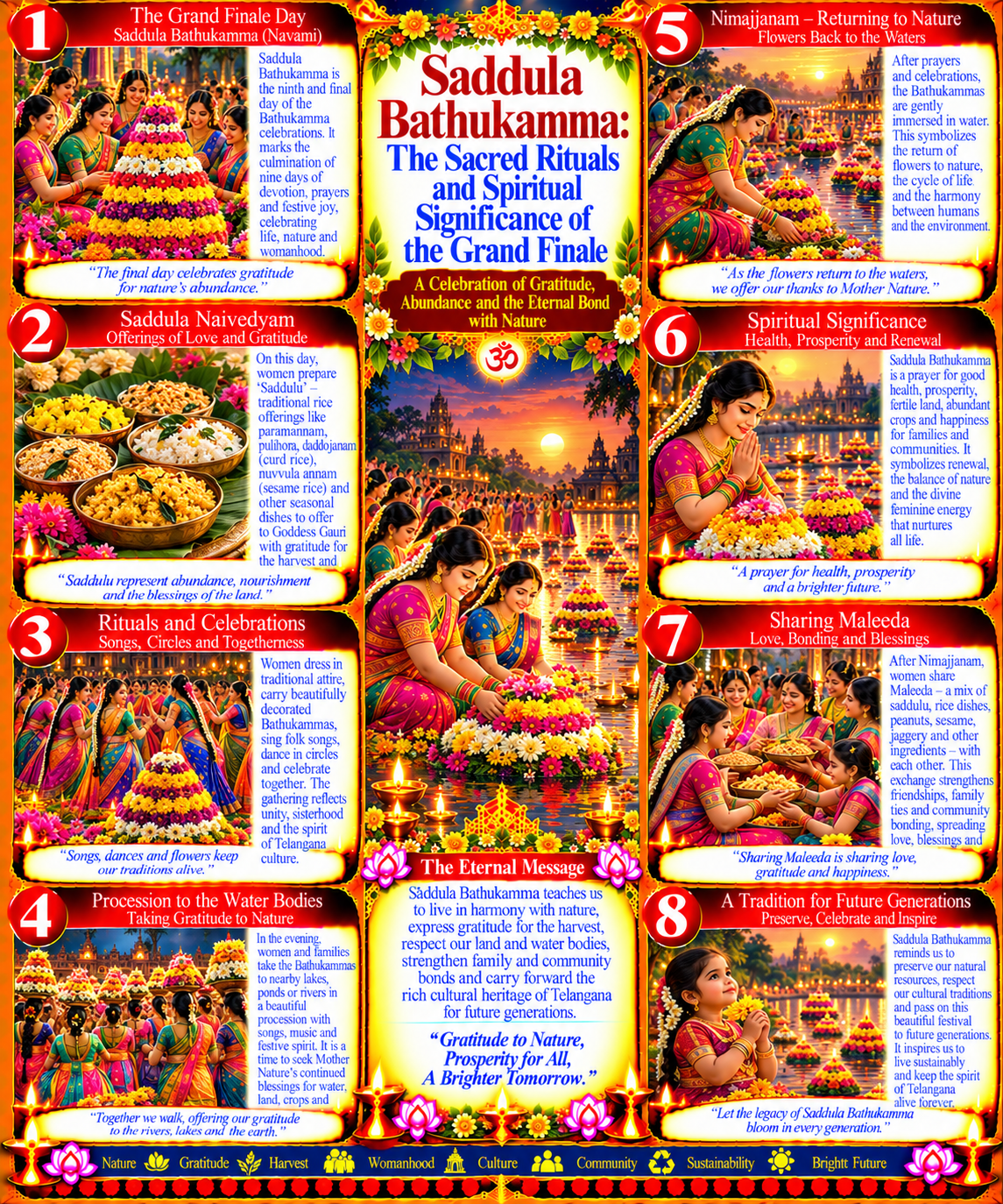
To fully appreciate the grandeur of Saddula Bathukamma, one must explore its multifaceted dimensions: the monumental floral engineering, the five consecrated rice preparations (Saddulu), the emotional farewell hymns, and the eco-restorative lake immersion.
1. Architectural Splendor: Crafting the Colossal Pedda Bathukamma
While the first eight days witness smaller floral plates constructed at home, the ninth day demands the creation of Pedda Bathukamma. Women begin harvesting and preparing blossoms at dawn, gathering hundreds of fresh stems of Tangedu, Gunugu, Banthi, Chamanthi, Gummadi, Katla, and Mandhara.
Using a massive brass or bronze circular tray (Tambalam) measuring up to three feet across, matriarchs and daughters layer broad pumpkin leaves as an insulated moisture bed. Layer upon layer of flowers are arranged concentrically facing radially outward. On Saddula Bathukamma, these towers often rise between five to eleven concentric tiers, reaching commanding heights of three to four feet. Crowning the peak is the sacred Gouramma—a conical murti of Goddess Gauri fashioned from pure turmeric paste, enshrined within the golden chalice of an open pumpkin flower (Gummadi Puvvu) and lit with a pure cow ghee lamp (Deepam).
2. The Sacred Five Saddulu: Gastronomic and Nutritional Heart of the Finale
The term Saddulu in Telugu refers to seasoned, packed rice delicacies traditionally prepared for sacred travel or festive gatherings. On Saddula Bathukamma, five distinct spiced rice offerings are consecrated before Goddess Gauri:
The Five Sacred Rice Varieties (Saddulu) and Their Ayurvedic Wisdom
Rooted in ancient wellness principles that balance bodily humors during seasonal autumn transitions, each preparation serves a vital therapeutic purpose:
Perugannam (Curd Rice) and Nuvvula Annam (Sesame Rice)
Perugannam cools metabolic heat (Pitta) and restores gut microbiota following the monsoon season. Nuvvula Annam, prepared with lightly toasted stone-ground white sesame seeds and cow ghee, supplies concentrated calcium, healthy fats, and zinc to support joint resilience.
Probiotic Restoration and Seasonal Equilibrium
Fresh cultured yogurt soothes late-monsoon digestive inflammation, providing probiotic bacteria that bolster natural immunity against damp evening chills.
Chitrannam (Lemon Rice) and Pulihora (Tamarind Rice)
Chitrannam, flavored with freshly squeezed lime juice, wild turmeric, green chilies, and crunchy peanuts, delivers an abundance of vitamin C. Classical tamarind Pulihora stimulates sluggish digestive fire (Agni), clearing heavy bodily toxins (Ama).
Digestive Fire Stimulation and Pitta Pacification
The synergistic blend of turmeric curcumin, tamarind tartaric acid, fenugreek, and mustard temperings cleanses the liver and enhances cellular vitality.
Avala Annam (Mustard Seed Infused Rice)
Unique to Telangana festive gastronomy, Avala Annam is prepared by blending freshly ground black mustard seed paste into steamed rice with pure ghee. It produces internal metabolic warmth, acting as a natural shield against the evening chill.
Thermal Protection During Lakeside Twilight Rituals
Mustard isothiocyanates promote peripheral blood circulation, preventing respiratory congestion while standing barefoot on breezy lake shores during sunset ceremonies.
3. The Grand Assembly and Climax Chappatla Nrityam
By late afternoon, women dress in their finest handloom silk Pattu Sarees (Pochampally, Gadwal, and Narayanpet), adorned with traditional gold jewelry and fresh flowers. Young daughters wear dazzling Langa Voni (half-sarees). Carrying the heavy floral towers upon their heads, they converge upon open public grounds, historic temple squares, and village choutras.
Placing hundreds of multi-colored floral towers together in the center, women form immense concentric circles. Singing legendary folk ballads like “Bathukamma Bathukamma Uyyalo” and “Chithu Chithula Bomma”, they perform the synchronized clapping dance (Chappatla Nrityam). The choreography starts at a slow, graceful cadence, building into a swirling, high-energy crescendo as twilight settles across the horizon.
“Poyi Ravamma Gauri… Poyi Ravamma… Malli Vache Samvatsaram… Thirigi Ravamma…”
— Traditional Farewell Hymn Sung During Saddula Bathukamma Immersion
4. The Shobha Yatra and Sacred Lake Immersion (Nimajjanam)
Recognized in national folklore surveys conducted by the Ministry of Culture, Government of India, as darkness falls, torch-lit processions (Shobha Yatra) escort the women toward nearby lakes, rivers, or temple tanks (Cheruvulu). Documented in the historical archives of Bathukamma (Wikipedia), this immersion is an ecological wonder. Thousands of floral pyramids are gently launched into the water. Lit ghee lamps float upon the calm ripples, creating the illusion of a starry sky mirrored across the water.
As the wild blossoms float away, releasing antibacterial tannins from Senna auriculata (Tangedu) and Celosia argentea (Gunugu), they purify stagnant post-monsoon rainwater, cleansing communal reservoirs in accordance with the ancient hydraulic wisdom of the Kakatiya rulers explored in our overview of legends behind why Bathukamma is celebrated.
5. The Sacred Gouramma Retrieval and Maleeda Distribution
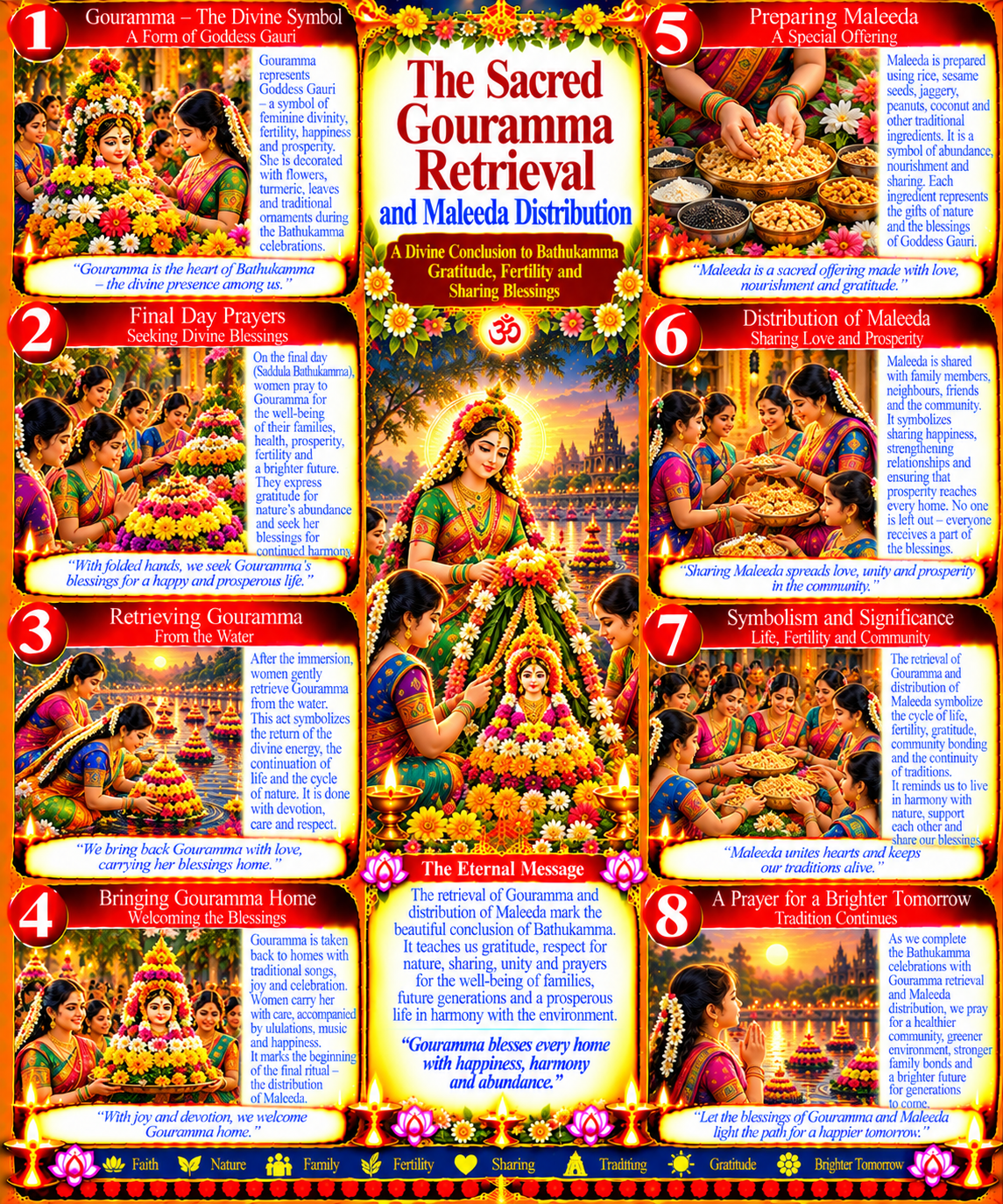
Before the floral towers float beyond reach, women carefully retrieve the small turmeric Gouramma idol from the water. Reverently applying the sanctified wet turmeric paste to their foreheads, necks, and mangalsutras, they pray for everlasting health, marital harmony, and family prosperity.
The celebrations conclude with the distribution of Maleeda—a wholesome confectionery made by crumbling wheat chapatis and kneading them with pure cow ghee, grated jaggery, cardamom, and roasted sesame seeds. Women lovingly feed Maleeda to one another, apply red vermilion (Kumkum) to each other’s foreheads, and embrace in profound sisterhood, seamlessly stepping into the victorious joy of Dasara.
Frequently Asked Questions About Saddula Bathukamma (20 Detailed FAQs)
1. What is Saddula Bathukamma, and on which day is it celebrated?
Saddula Bathukamma is the grand 9th day finale of the festival, celebrated on Ashwayuja Ashtami (Durgashtami), right before the festival of Dasara (Vijayadashami).
2. Why is Saddula Bathukamma also called Pedda Bathukamma?
Pedda means big or grand in Telugu. It is called Pedda Bathukamma because the floral towers built on this day are massive, reaching heights of up to three to four feet with seven to eleven concentric tiers.
3. What are the five varieties of Saddulu offered on this day?
The five sacred rice preparations are Perugannam (curd rice), Chitrannam (lemon rice), Pulihora (tamarind rice), Nuvvula annam (sesame rice), and Avala annam (mustard seed rice).
4. What is the meaning of the word “Saddulu”?
Saddulu refers to flavored, travel-friendly rice delicacies prepared with natural preservatives like tamarind, lemon, mustard, and sesame, offered to the deity and shared among community members.
5. Why is Avala Annam (mustard rice) specifically prepared on Saddula Bathukamma?
Mustard seeds produce internal metabolic heat, protecting women and children from evening chills as they participate in lakeside twilight immersion rituals.
6. How is the turmeric Gouramma idol treated during the immersion?
Before the floral tower floats away, women retrieve the turmeric Gouramma from the water and apply the sanctified paste to their foreheads, necks, and mangalsutras for divine protection.
7. What is Maleeda and why is it distributed?
Maleeda is a sweet confectionery made from crushed whole wheat rotis, jaggery, cow ghee, cardamom, and sesame. Women feed it to one another as a gesture of mutual affection and sisterhood.
8. Which flowers are mandatory for building Pedda Bathukamma?
Essential blooms include Tangedu (Senna auriculata), Gunugu (Celosia argentea), Gummadi (pumpkin flower), Banthi (marigold), and Chamanthi (chrysanthemum).
9. What is the ecological significance of immersing flowers in village lakes?
Medicinal tannins and flavonoids from wild blossoms cleanse algae, kill mosquito larvae, and disinfect post-monsoon standing water without synthetic chemical pollution.
10. What traditional attires do women wear on Saddula Bathukamma?
Women wear rich handloom silk sarees such as Pochampally Ikat, Gadwal, or Narayanpet pattu sarees with heirloom jewelry, while young girls wear vibrant Langa Voni (half-sarees).
11. What is the Shobha Yatra?
Shobha Yatra is the grand festive twilight procession where women carry towering floral pyramids upon their heads toward lakes accompanied by folk singing and traditional instruments.
12. What farewell songs are sung during the immersion?
Women sing heartfelt songs asking Goddess Gauri to return next year, such as “Poyi Ravamma Gauri… Malli Vache Samvatsaram Thirigi Ravamma”.
13. How does Saddula Bathukamma transition into Dasara?
Saddula Bathukamma marks the climax of Sharad Navratri. The following day is celebrated as Vijayadashami (Dasara), featuring the worship of the sacred Shami tree (Jammi Chettu) and the exchange of Jammi leaves.
14. What time of day does the immersion take place?
The immersion (Nimajjanam) takes place at dusk (Sandhya Kaal), allowing floating earthen ghee lamps to illuminate the lake waters as night falls.
15. Can men participate in Saddula Bathukamma celebrations?
Men actively assist by harvesting wild flowers from fields, transporting heavy brass platters, and escorting the women safely during the lakeside processions.
16. What is the base platter used to construct Pedda Bathukamma?
A broad circular brass or bronze tray called a Tambalam is used, covered with broad pumpkin or lotus leaves to preserve floral freshness.
17. Why is pumpkin flower (Gummadi Puvvu) placed at the top of the tower?
Gummadi Puvvu represents fertility, prosperity, and solar energy, serving as the divine chalice upon which the turmeric Gouramma idol is seated.
18. What is the role of the Kakatiya dynasty in Saddula Bathukamma heritage?
The Kakatiya rulers of Warangal promoted Saddula Bathukamma to foster community solidarity and maintain the ecological health of the extensive chain of village tanks they constructed.
19. What is the symbolic meaning of circular clapping dances on Saddula Bathukamma?
The circular dance (Chappatla Nrityam) honors the cosmic rhythm of existence, placing the divine feminine floral tower at the very center of worldly life.
20. What is the core spiritual message of Saddula Bathukamma?
Saddula Bathukamma teaches humanity that the divine Mother resides in living nature, celebrating feminine grace, community harmony, and profound gratitude for life’s blessings.