Admin
Admin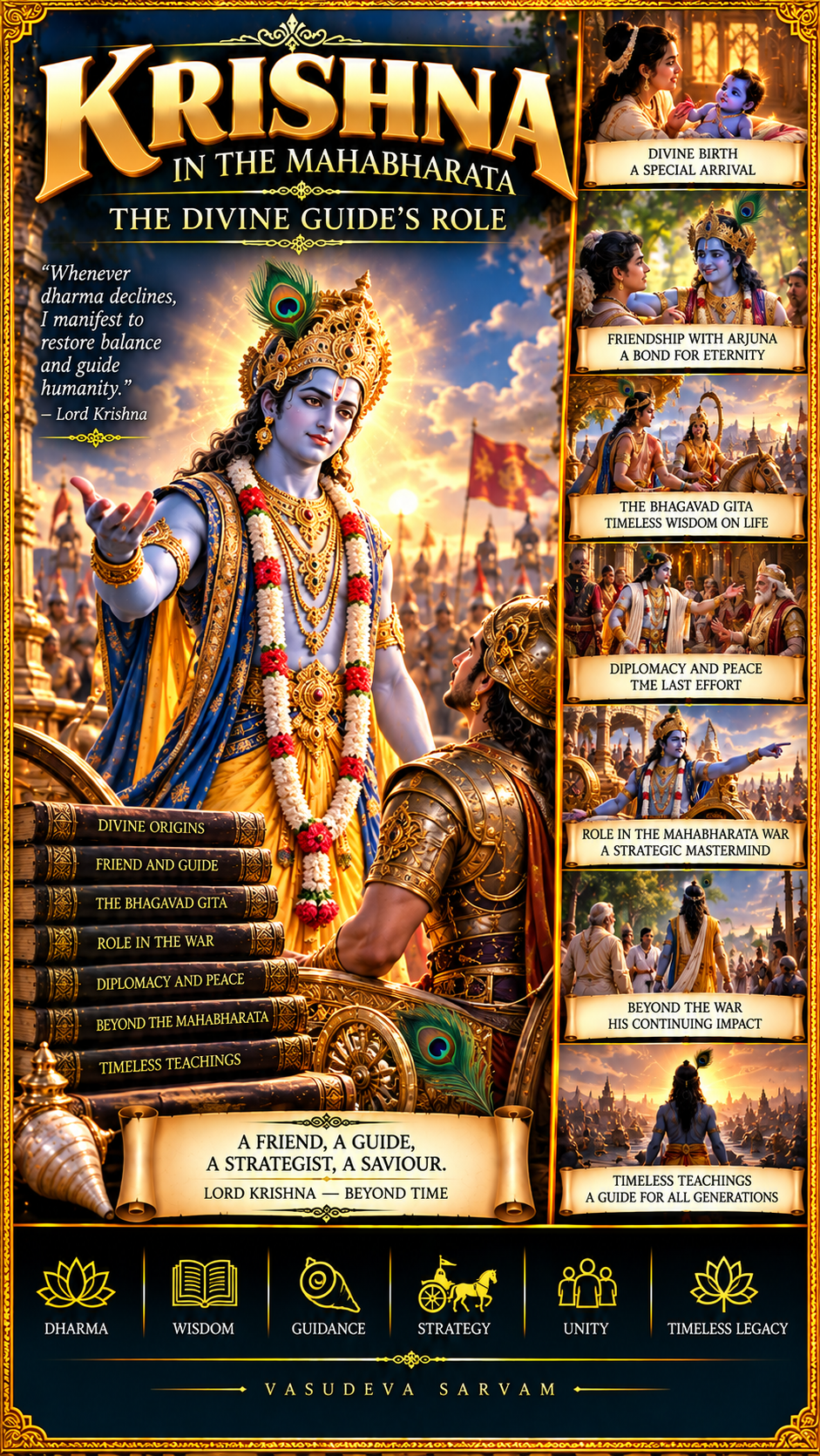
Krishna in Mahabharata: The Divine Role of the Supreme Guide
Krishna in Mahabharata is not merely a character but the soul of the epic. As the eighth avatar of Lord Vishnu, Krishna guides humanity through wisdom, strategy, compassion, and divine justice. Without Krishna, the Mahabharata would be a tale of war; with Krishna, it becomes a timeless guide to dharma and life.
Introduction to Krishna in Mahabharata
Lord Krishna appears in the Mahabharata as a king, friend, diplomat, philosopher, and divine guide. Though he does not directly fight in the Kurukshetra war, his influence shapes every major event. Krishna represents divine consciousness guiding human actions toward righteousness.
Birth and Early Life of Lord Krishna
The birth and early life of Lord Krishna is one of the most divine and captivating chapters in Hindu mythology. It symbolizes the eternal victory of righteousness over evil and the descent of the Supreme Lord to restore dharma on Earth.
Divine Birth of Lord Krishna in Mathura
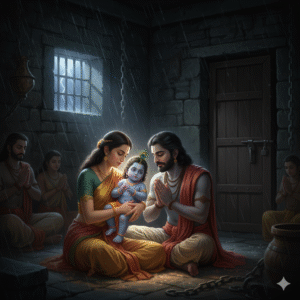
Lord Krishna was born in the prison of King Kamsa in Mathura, during the dark hours of Ashtami Tithi in the month of Bhadrapada, celebrated today as Janmashtami. His parents were Devaki and Vasudeva, members of the Yadava dynasty.
Kamsa, the tyrant king of Mathura, had received a prophecy that the eighth son of Devaki would cause his death. Driven by fear, Kamsa imprisoned Devaki and Vasudeva and killed their children one by one. When Krishna was born, divine miracles occurred—chains broke, guards fell asleep, and the prison gates opened on their own, signaling the arrival of the Supreme Being.
Vasudeva Carries Krishna to Gokul
Following divine instructions, Vasudeva carried the newborn Krishna across the flooded Yamuna River to Gokul. The river parted to allow safe passage, and Shesha Naga formed a protective canopy over Krishna’s head.
In Gokul, Krishna was exchanged with Yashoda’s daughter, who was an incarnation of Goddess Yogamaya. When Kamsa tried to kill the baby girl, she revealed her divine form and warned him that his destroyer was already safe elsewhere.
Childhood in Gokul and Vrindavan
Krishna was raised by Nanda Maharaja and Mother Yashoda in the pastoral village of Gokul and later Vrindavan. His childhood was filled with joy, divine play (leelas), and miracles that revealed his godly nature while maintaining the charm of a mischievous child.
Some of Krishna’s most famous childhood stories include:
- Makhan Chor – Stealing butter and winning hearts
- Putana Vadha – Slaying the demoness Putana
- Trinavarta Vadha – Defeating the whirlwind demon
- Kaliya Mardana – Subduing the poisonous serpent Kaliya
- Govardhan Giri Upliftment – Lifting Govardhan Hill to protect villagers
These divine acts symbolize protection of devotees and destruction of evil.
Krishna’s Education and Values
Although divinely omniscient, Krishna later studied under Guru Sandipani at his ashram in Ujjain. He mastered the Vedas, scriptures, warfare, music, diplomacy, and statecraft in a very short time, showing the perfect balance between divine wisdom and human discipline.
This phase of Krishna’s life emphasizes the importance of education, humility, and respect for teachers.
Spiritual Significance of Krishna’s Early Life
Krishna’s childhood teaches powerful life lessons:
- God is always close to devotees, even in simple forms
- Innocence and divinity can coexist
- Evil cannot harm divine purpose
- Love and devotion are the highest forms of worship
His early life represents joy (Ananda), protection (Raksha), and divine play (Leela), which later evolved into deep wisdom in the Mahabharata.
Transition Toward His Role in Krishna in Mahabharata
Krishna’s early years prepared him for his future role as a king, strategist, diplomat, and divine guide in the Mahabharata. The playful child of Vrindavan later became the supreme teacher of the Bhagavad Gita, guiding humanity through righteousness and wisdom.
Krishna as the King of Dwarka
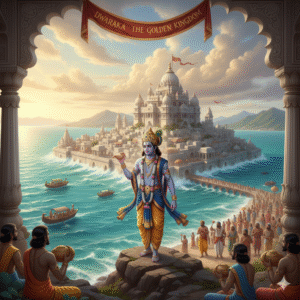
Krishna as the King of Dwarka represents the perfect balance between divine wisdom and ideal kingship. After defeating the tyrant Kamsa and freeing Mathura from oppression, Krishna realized that continuous attacks from Jarasandha and other hostile kings would bring suffering to his people. To protect the Yadavas and establish lasting peace, Krishna made a strategic and compassionate decision—to found a new kingdom on the western coast of India.
Establishment of the Golden City of Dwarka
Krishna chose the shores of the Arabian Sea to build Dwarka, a magnificent and well-planned city created with divine assistance from Vishwakarma, the celestial architect. Dwarka was described as a city of unmatched beauty, prosperity, and security, with grand palaces, wide roads, gardens, and fortified walls.
Dwarka symbolized not only material prosperity but also spiritual harmony and righteous governance. It became a safe haven for the Yadavas and a center of culture, devotion, and diplomacy.
Krishna’s Leadership and Governance
As the king of Dwarka, Krishna ruled with wisdom, fairness, and compassion. He did not govern with fear or force, but through respect, justice, and moral authority. His leadership style reflected the core principles of dharma:
- Protection of citizens
- Justice for the oppressed
- Respect for elders and women
- Welfare of society over personal power
Krishna demonstrated that a ruler must serve the people, not dominate them.
Diplomatic Genius of Krishna
Krishna’s kingship was marked by extraordinary diplomatic skill. He believed that war should always be the last option. Before the Kurukshetra war, Krishna used diplomacy to resolve conflicts peacefully, including his mission as a peace ambassador to Hastinapura.
His alliances through marriages and friendships strengthened political unity across kingdoms, making Dwarka a powerful yet peaceful state.
Krishna’s Role as a Householder King
Unlike many divine figures, Krishna lived as a grihastha (householder). His life in Dwarka with Rukmini, Satyabhama, and other queens reflected harmony between spiritual wisdom and worldly responsibilities.
This aspect of Krishna’s life teaches that one can attain spiritual greatness while fulfilling family and social duties.
Dwarka as a Centre of Dharma
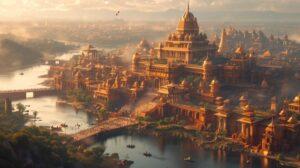
Under Krishna’s rule, Dwarka became a land where truth, justice, devotion, and prosperity coexisted. Sages, scholars, and devotees frequently visited the city, making it a center of learning and spirituality.
Krishna ensured that power was always guided by wisdom and humility.
Symbolic Significance of Krishna’s Kingship
Krishna as the King of Dwarka symbolizes:
- Ideal leadership rooted in dharma
- Strategic thinking combined with compassion
- Balance between spirituality and governance
- Protection of the righteous without unnecessary violence
His kingship proves that divine wisdom can guide even the most complex political challenges.
The Submergence of Dwarka
After Krishna’s departure from the mortal world, Dwarka was submerged by the sea, symbolizing the end of an era. This event marked the conclusion of the Dvapara Yuga and reminded humanity that even the grandest civilizations are temporary, while dharma remains eternal.
Relevance of Krishna’s Kingship Today
Krishna’s rule over Dwarka offers timeless lessons for modern leaders and administrators:
- Lead with wisdom, not ego
- Choose peace before conflict
- Protect people above power
- Combine ethics with strategy
Krishna and the Pandeva’s: Eternal Bond( Krishna in Mahabharata)
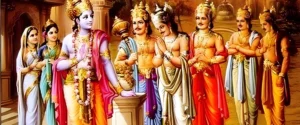
Krishna shared a deep bond with the Pandeva’s, especially Arjuna. He guided them during exile, humiliation, and war, always ensuring dharma prevailed.
Krishna and Arjuna
Krishna’s friendship with Arjuna symbolizes the connection between the human soul and the divine guide.
Krishna’s Role in Draupadi’s Protection (Krishna in Mahabharata)
When Draupadi was humiliated in the Kaurava court, Krishna protected her honor by providing endless cloth, proving that divine grace protects those who surrender with faith.
Krishna as the Diplomat and Peace-Maker
Before the Kurukshetra war, Krishna went as a peace messenger to Hastinapura. His mission was to prevent bloodshed, but the arrogance of Duryodhana made war inevitable.
Krishna and the Bhagavad Gita
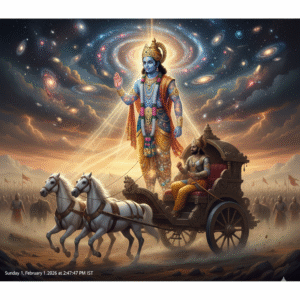
The Supreme Teacher
On the battlefield of Kurukshetra, Krishna revealed the Bhagavad Gita to Arjuna, delivering eternal teachings on duty, devotion, karma, and liberation.
Krishna as Arjuna’s Charioteer (Krishna in Mahabharata)
Krishna chose to become Arjuna’s charioteer, symbolizing humility and divine guidance steering human life.
Krishna’s Strategic Role in the Kurukshetra War
Though unarmed, Krishna ensured the victory of dharma through divine strategy:
- Guiding Arjuna against Karna
- Advising Bhima in defeating Duryodhana
- Ensuring the fall of Bhishma and Drona
Krishna and the Concept of Dharma
Krishna redefined dharma as dynamic and situational, not rigid. He taught that righteousness must serve truth and justice.
Teachings and Life Lessons from Krishna in Mahabharata
- Perform duty without attachment
- Stand for justice even against loved ones
- Balance wisdom with compassion
- Surrender ego to divine will
Krishna’s Departure from Earth
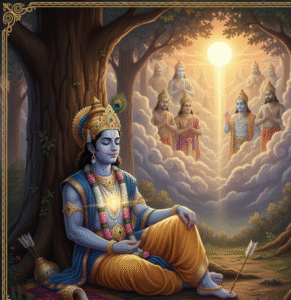
After fulfilling his divine mission, Krishna left the mortal world, marking the end of the Dvapara Yuga.
Importance of Krishna in Mahabharata Today
Krishna’s teachings guide modern life in leadership, ethics, spirituality, and emotional strength.
The divine wisdom of Krishna shaped Arjuna’s destiny, as explained in our detailed guide on Arjuna in Mahabharata.
Final Thoughts
Krishna in Mahabharata represents divine guidance in human life. Through love, wisdom, strategy, and compassion, Krishna ensures that dharma triumphs over adharma.
For readers of Ratnam Strategy, Krishna’s role offers eternal inspiration and spiritual clarity rooted in India’s greatest epic.
FAQs – Krishna in Mahabharata
1. Who was Krishna as the King of Dwarka?
Krishna was the righteous and wise ruler of Dwarka, guiding the Yadavas with divine wisdom.
2. Why did Krishna establish the city of Dwarka?
To protect the Yadavas from repeated attacks by Jarasandha and other enemies.
3. Where was Dwarka located?
Dwarka was built on the western coast of India, near the Arabian Sea.
4. Who helped Krishna build Dwarka?
Vishwakarma, the divine architect, helped build the city.
5. What kind of city was Dwarka?
Dwarka was a prosperous, fortified, and spiritually rich kingdom.
6. Was Krishna a powerful king?
Yes, Krishna was both a powerful and compassionate ruler.
7. How did Krishna rule Dwarka?
He ruled with justice, diplomacy, and adherence to dharma.
8. Did Krishna prefer war or peace as a king?
Krishna always preferred peace and diplomacy over war.
9. What was Krishna’s leadership style?
His leadership combined wisdom, strategy, compassion, and humility.
10. Who were Krishna’s queens in Dwarka?
Rukmini, Satyabhama, and others were Krishna’s queens.
11. Was Krishna both a king and a householder?
Yes, Krishna balanced royal duties with family life.
12. How did Dwarka prosper under Krishna?
Through righteous governance and divine protection.
13. Did sages visit Dwarka during Krishna’s rule?
Yes, Dwarka became a center of spirituality and learning.
14. What is the spiritual significance of Dwarka?
Dwarka symbolizes ideal governance guided by dharma.
15. What happened to Dwarka after Krishna’s death?
After Krishna’s departure, Dwarka was submerged in the sea.
16. What does the submergence of Dwarka symbolize?
The end of the Dvapara Yuga and the impermanence of material glory.
17. Is Dwarka mentioned in the Mahabharata?
Yes, Dwarka plays a vital role in the Mahabharata.
18. What lessons does Krishna’s kingship teach us?
Leadership rooted in ethics, wisdom, and compassion.
19. How is Krishna as King of Dwarka relevant today?
His rule offers guidance for modern leadership and governance.
20. Why is Krishna’s rule over Dwarka remembered?
Because it represents the perfect balance of power and righteousness.