 Raja Ratnam
Introduction to Ekadanta (The One with a Single Tusk) – The Sacred Form of Lord Ganesha
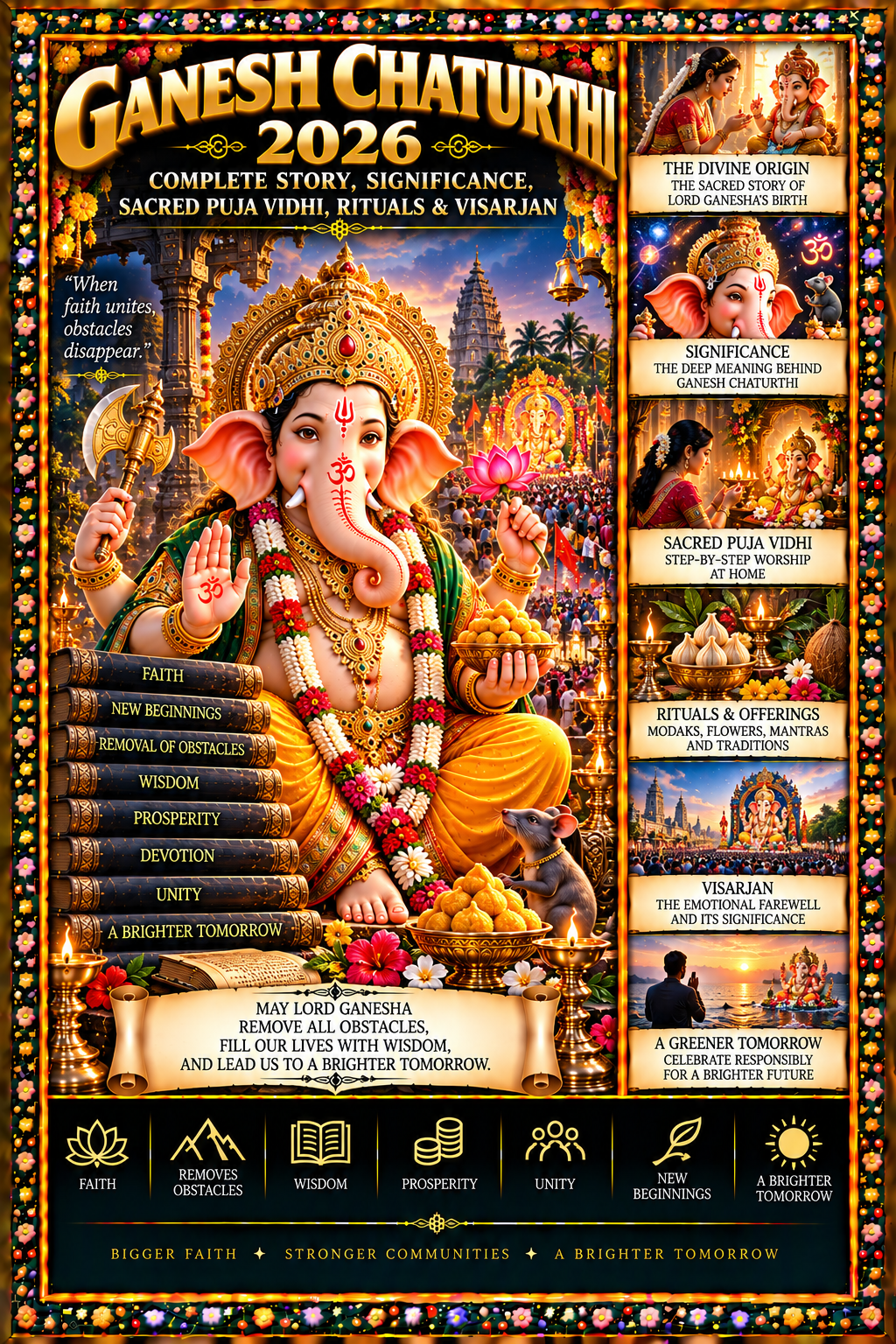
Ekadanta (The One with a Single Tusk):The Hindu god Ganesha is revered as the remover of obstacles, the god of beginnings, and the embodiment of wisdom. Among his many forms, Ekadanta, meaning “The One with a Single Tusk,” holds a special place. Worshipping Ekadanta is believed to enhance focus, patience, and self-control, qualities essential for both spiritual and worldly success.As a symbol of sacrifice and discernment, it represents keeping what is good and discarding what is bad.
The Literal Meaning of “Ekadanta”
The name Ekadanta comes from two Sanskrit words:
Eka – meaning one
Danta – meaning tusk or tooth
Together, they form “One Tusked,” a direct reference to Lord Ganesha’s unique appearance.
Sanskrit Roots and Etymology
Danta refers not only to a tusk, but also to determination and strength in Sanskrit. In Hindu philosophy, removing a tusk signifies the deliberate decision to give up something valuable for a greater purpose.
Ekadanta (The One with a Single Tusk): Mythological Story Behind the Single Tusk
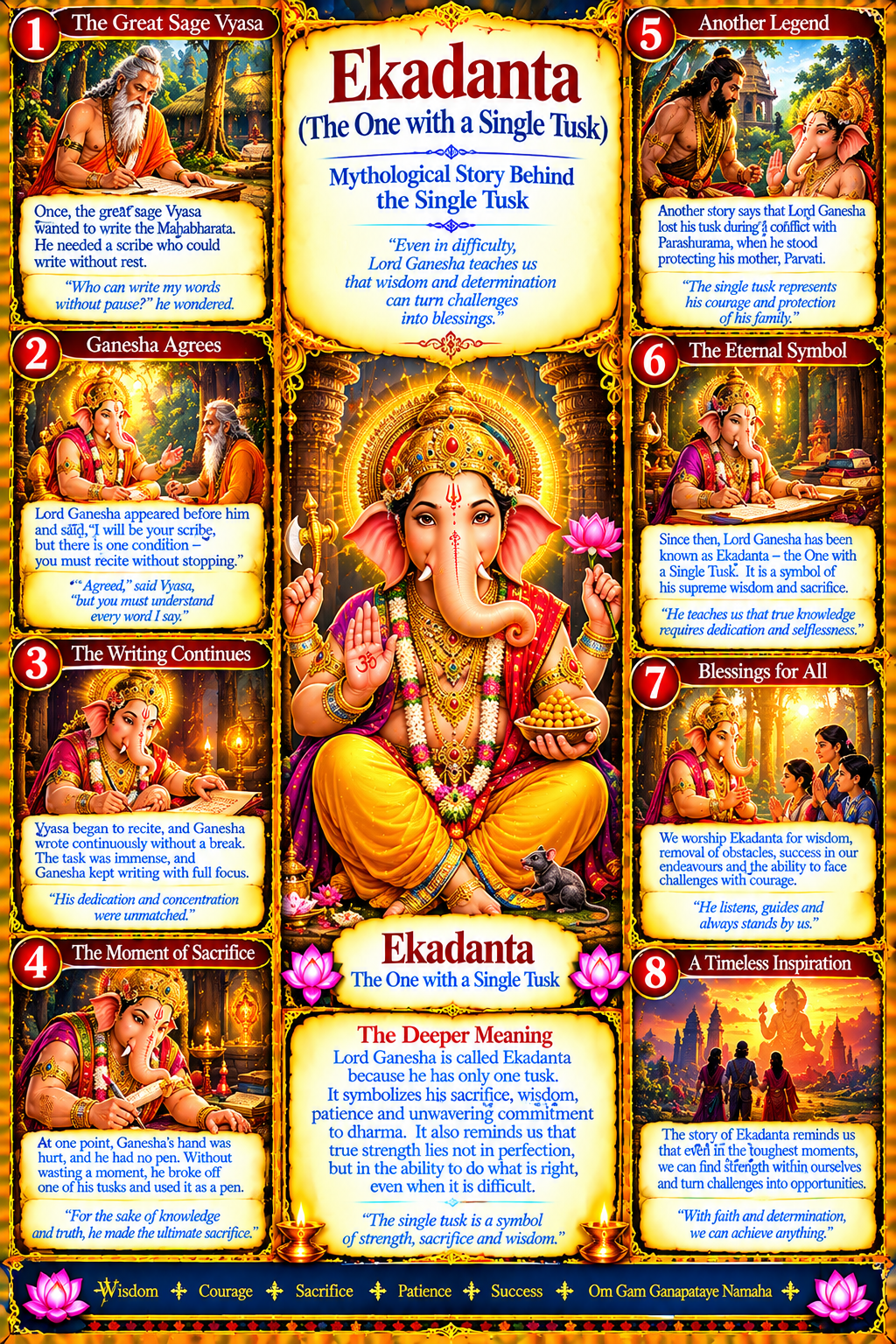
Mythological Story Behind the Single Tusk
Many fascinating legends explain why Ganesha has just one tusk. These stories carry profound moral and spiritual lessons.
The Mahabharata Connection – Writing the Epic
One popular legend says that Sage Vyasa approached Ganesha to write down the great epic Mahabharata as he dictated it. Ganesha agreed, but on one condition—Vyasa had to recite without pause. When Ganesha’s pen broke mid-way, he broke off one of his tusks to continue writing without delay, showing sacrifice and commitment to duty.
Ekadanta (The One with a Single Tusk): The Moon Curse and Symbolic Lesson
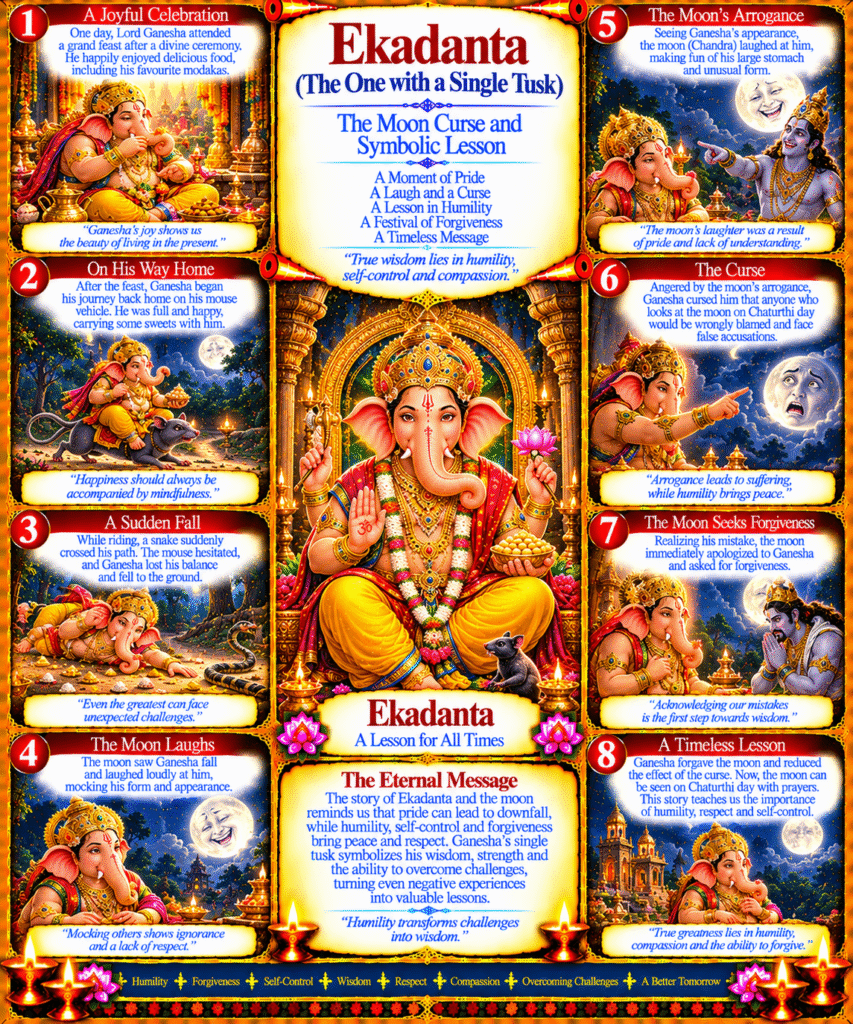
Another story tells how the moon mocked Ganesha’s appearance after he fell from his mount, a mouse, during a feast. Angered, Ganesha broke one tusk and hurled it at the moon, cursing it. This tale teaches the dangers of arrogance and the value of humility.
Spiritual Symbolism of Ekadanta
Ekadanta is more than a physical attribute—it is a spiritual metaphor.
Ekadanta (The One with a Single Tusk)Sacrifice and Discernment
The broken tusk signifies the ability to let go of what no longer serves us while preserving what’s essential. It reflects the practice of viveka—discriminative wisdom.
Ekadanta (The One with a Single Tusk): Inner Strength and Focus
With only one tusk, Ganesha reminds devotees to remain focused and steadfast towards their goals.
Benefits of Worshipping Ekadanta
Devotees believe that meditating on or worshipping Ekadanta grants specific blessings.
Mental Focus and Concentration
Ekadanta helps sharpen the mind, enabling individuals to pursue education, career, and spiritual goals with clarity.
Patience and Self-Control
The form teaches restraint, the art of waiting for the right time, and controlling impulses.
Overcoming Obstacles in Life
Just as Ganesha removes physical and spiritual barriers, Ekadanta empowers devotees to face challenges with calm determination.
Ekadanta in Hindu Iconography
Traditionally, Ekadanta is depicted holding symbolic items in a variety of art forms.
Depictions in Temples and Murals
In temple carvings, he is shown with one tusk, a pot-belly, and four arms, often holding a modak (sweet), an axe, and a lotus.
Modern Artistic Representations
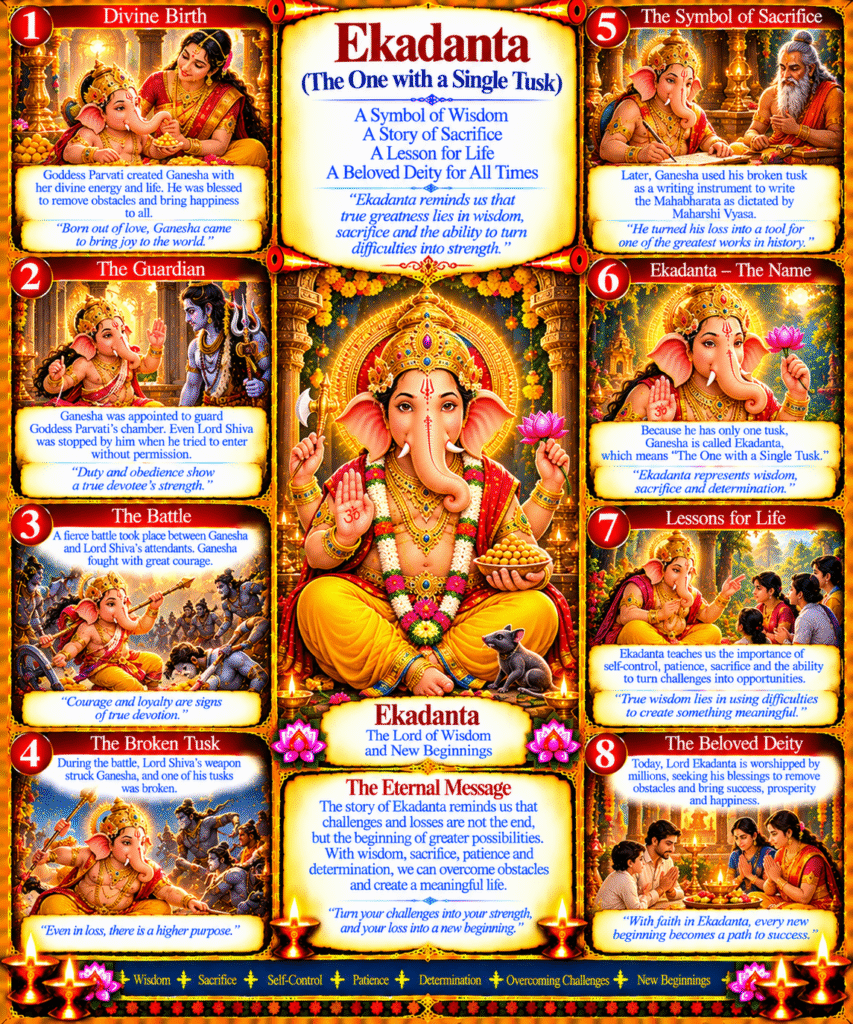
Contemporary artists have reimagined Ekadanta in paintings, sculptures, and digital art, making his image accessible to younger generations.
Mantras and Prayers for Ekadanta
Chanting mantras dedicated to Ekadanta is believed to invoke his blessings.
Popular Ekadanta Mantra with Meaning
“Ekadantaya Vidmahe Vakratundaya Dhimahi Tanno Danti Prachodayat”
Meaning:The one-tusked Lord, the bearer of the curved trunk, is a symbol of our meditation. May he inspire and guide our intellect.
Daily Puja and Meditation Practices
Flower, fruit, and sweet offerings are often offered by devotees when reciting the mantra.. Meditation on his image helps develop patience and spiritual awareness.
For official cultural and historical archives, visit the Ministry of Culture, Government of India.
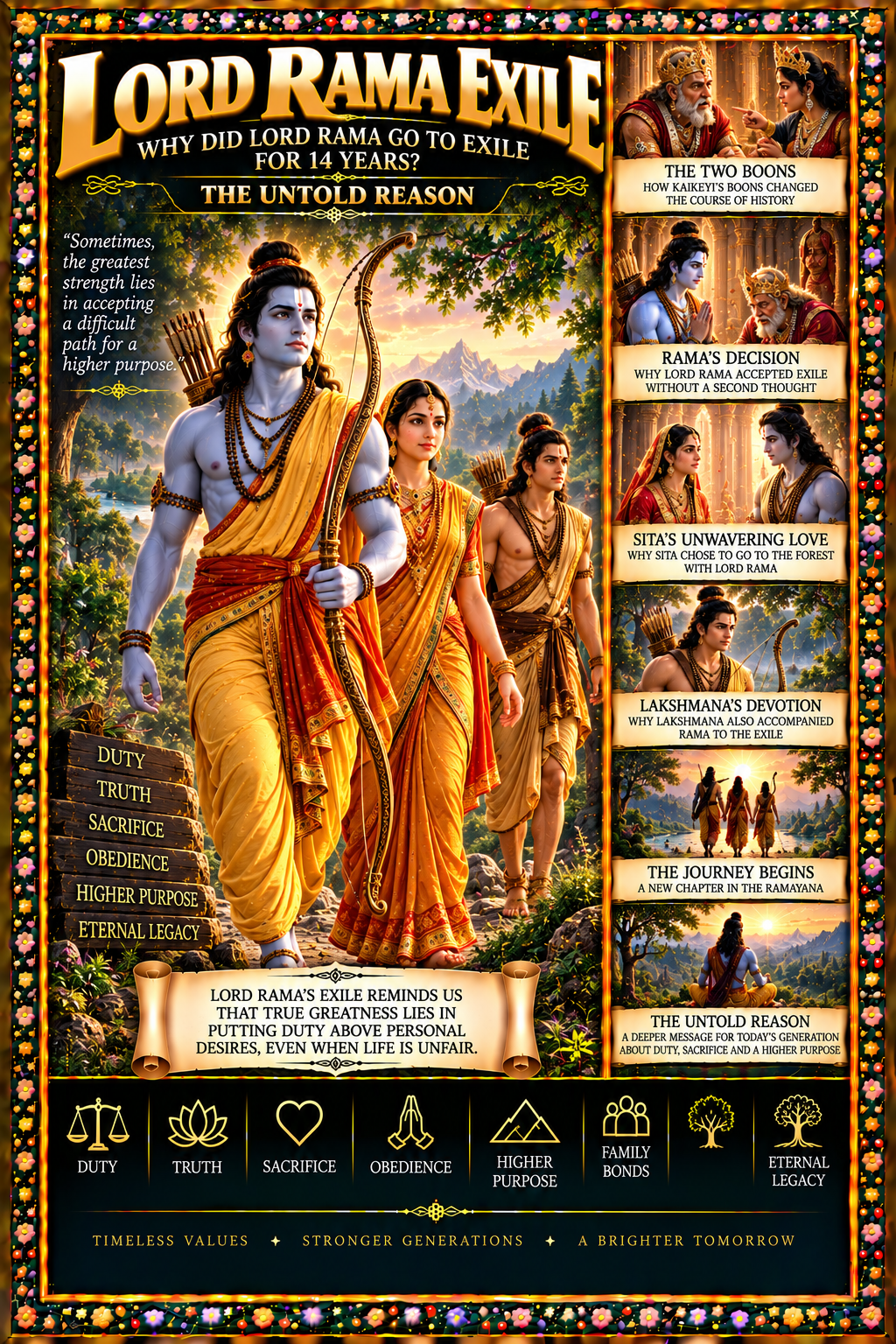
Related Sacred Topics & Cultural Heritage: For further spiritual exploration, read about Lord Rama’s ideal life story. For further spiritual exploration, read about the 14-year exile of Lord Rama.
Conclusion – Embracing the Wisdom of Ekadanta
The form of Ekadanta stands as a timeless reminder that strength comes not from possessing everything but from knowing what to let go. Whether in mythology, iconography, or daily worship, Ekadanta teaches us to live with focus, patience, and inner wisdom. In a world full of distractions, his single tusk becomes a symbol of clarity and purposeful living.
Ekadanta (The One with a Single Tusk) About FAQs
1. Why does Ganesha have only one tusk?
Multiple legends explain it—one being his sacrifice while writing the Mahabharata, another involving a curse on the moon. It represents sacrifice, discernment, and focus. The Ekadantaya Vidmahe mantra is most popular. Improved focus, patience, self-control, and the removal of obstacles. In many South Indian temples, ancient murals, and modern artwork. Yes, many devotees specifically invoke Ekadanta during Ganesh Chaturthi rituals. It means *The One with a Single Tusk. It shows his spirit of sacrifice and reminds us to keep what’s good in life and let go of what’s not. There are three puranas: the Ganesha Purana, the Mudgala Purana, and the Mudgala Purana. It stands for wisdom, good judgment, and rising above duality. Yes! Ekadanta is the second form in the Navanama (nine names) of Ganesha. His right hand. He snapped it off so he could use it as a pen to write the Mahabharata exactly as Sage Vyasa dictated it. Often depicted in red or dark hues. The mouse (*Mushika*). To succeed, one must be determined and focused. Ganesh Chaturthi. *Om Ekadantaya Namah. It helps clear obstacles from your path and boosts your focus. Sitting in *lalitasana* (relaxed pose) or dancing. Modaks and laddus. Yes, in Tibetan and Nepalese traditions. Single-minded devotion. Siddhivinayak (Mumbai), Ganpatipule (Maharashtra), Pillaiyarpatti (Tamil Nadu). Earth (*Prithvi*). Focus on truth, let go of ego and negativity.2. What is the spiritual meaning of Ekadanta?
3. Which mantra is dedicated to Ekadanta?
4. What benefits do devotees receive from worshipping Ekadanta?
5. Where can Ekadanta depictions be found?
6. Is Ekadanta worship part of Ganesh Chaturthi?
7. What does “Ekadanta” mean?
8. Why does Lord Ganesha have only one tusk?
9. Which scripture mentions Ekadanta?
10. What does Ganesha’s single tusk symbolize?
11.Is Ekadanta one of the Navanama Ganapati?
12. Which hand usually holds the broken tusk?
13. Why did Ganesha break his tusk?
14. What is the colour of Ekadanta’s form?
15. Which vehicle does Ekadanta ride?
16. What blessing does Ekadanta give?
17. What is Ekadanta’s main festival?
18. Which mantra is chanted for Ekadanta?
19. What are the benefits of chanting this mantra?
20. In which posture is Ekadanta usually shown?
21. Which food is Ekadanta’s favourite?
22. Does Ekadanta appear in Buddhist art?
23. What quality does Ekadanta inspire in devotees?
24. Where are famous temples of Ekadanta?
25. Which element does Ekadanta represent?
26. What is the lesson of the Ekadanta form?

thanks