Admin
Admin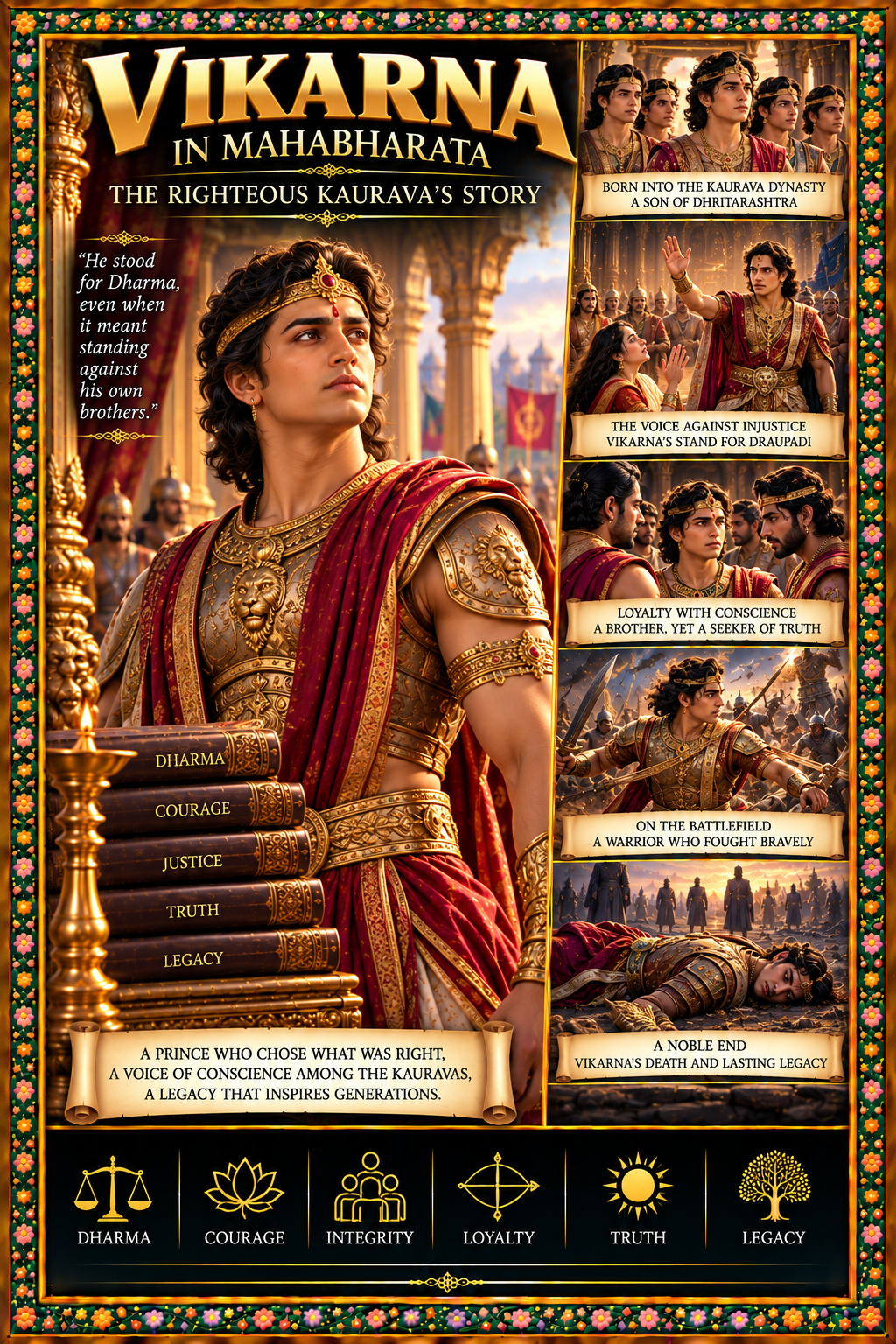
Vikarna in the Mahabharata: The Voice of Dharma Among the Kauravas
.In the Mahabharata, you will find powerful kings, wise sages, and legendary warriors. Among the hundred sons of King Dhritarashtra and Queen Gandhari, one prince stands out for his sense of justice and moral courage—Vikarna. While most Kauravas blindly supported Duryodhana, Vikarna dared to question wrongdoing, even when it meant opposing his own brothers.
Though often overshadowed by famous figures such as Bhishma, Karna, Arjuna, and Duryodhana, Vikarna remains one of the most respected characters in the Mahabharata. His courage to stand for righteousness during Draupadi’s humiliation in the Kuru court made him a symbol of integrity and fairness.
This article explores Vikarna’s birth, character, role in the Mahabharata, moral dilemmas, participation in the Kurukshetra War, and his lasting legacy.
Who Was Vikarna?
Vikarna was the third son of King Dhritarashtra and Queen Gandhari. He was one of the hundred Kaurava brothers and a prince of Hastinapura.
Unlike many of his brothers, Vikarna possessed a strong moral compass and a deep understanding of dharma (righteousness). He was known for his honesty, courage, and willingness to speak the truth even in difficult situations.
Although he loved and respected his family, he was not afraid to criticize them when they acted unjustly.
Birth and Family Background – Vikarna in the Mahabharata
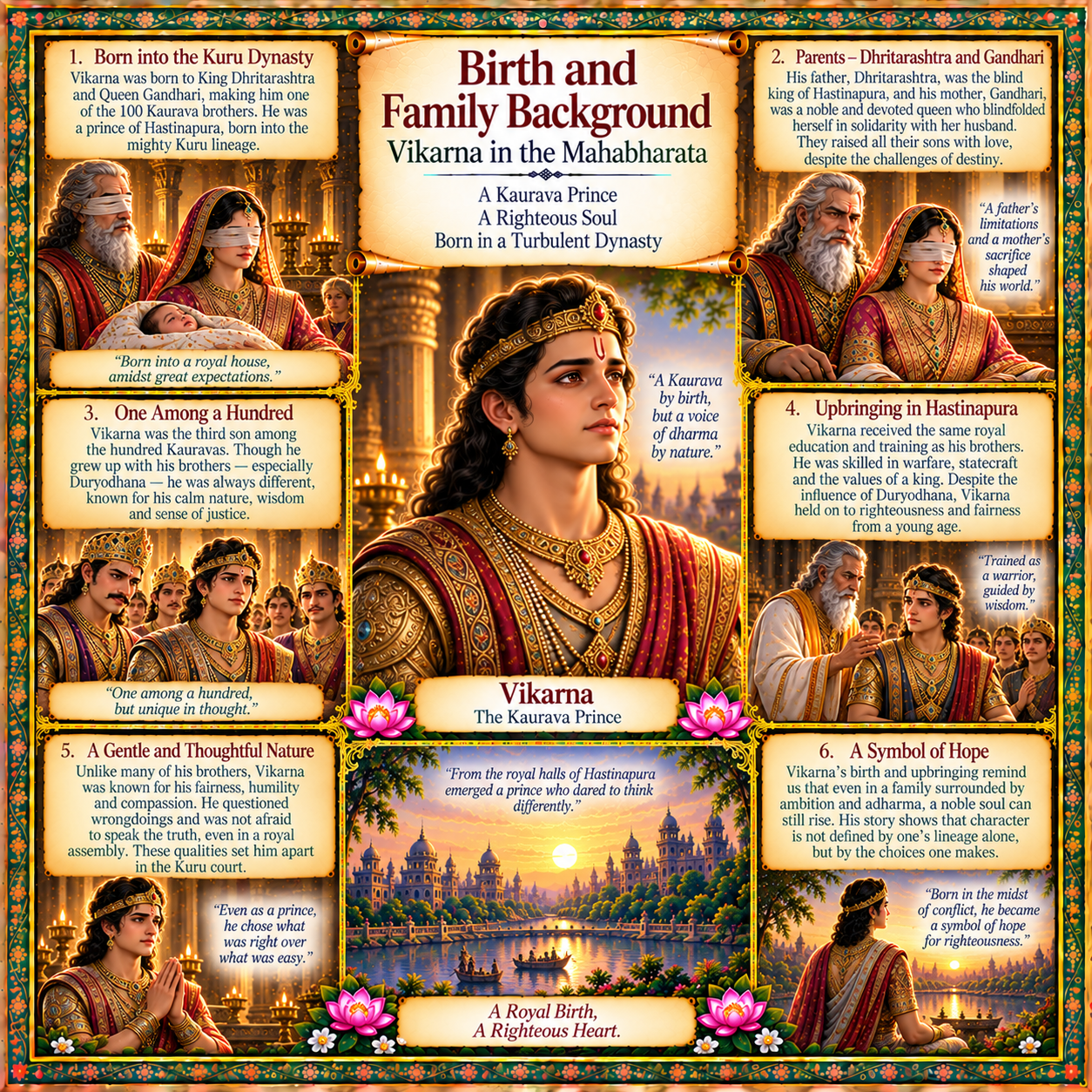
Vikarna belonged to the Kuru dynasty, one of the most powerful royal families in ancient India. His brothers included:
Notable Members of the Kaurava Family
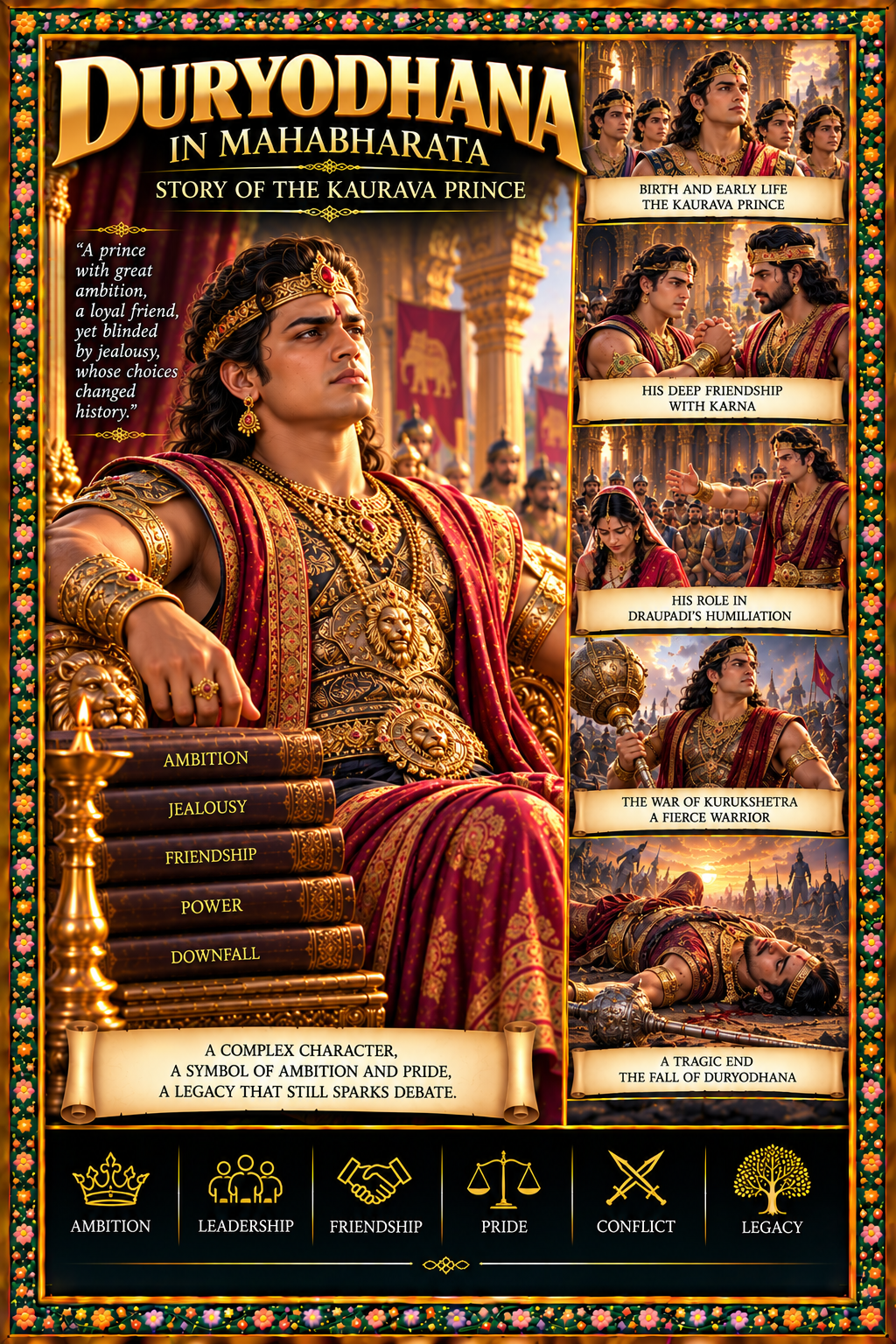
Duryodhana
The eldest Kaurava and leader of the Kaurava army.
Dushasana
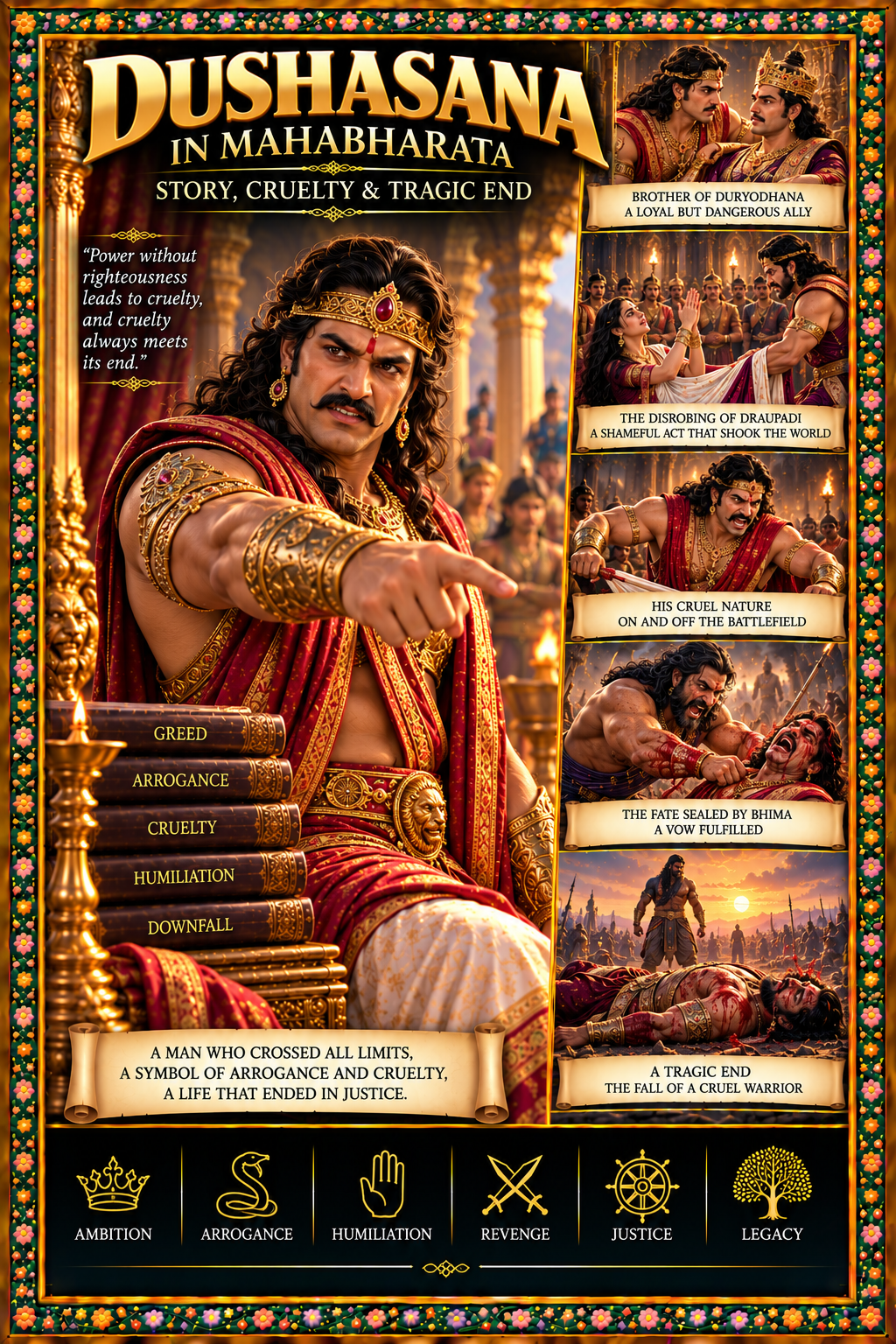
The second Kaurava, infamous for attempting to disrobe Draupadi.
Vikarna
The third son, known for righteousness and fairness.
Growing up under the influence of Duryodhana and Shakuni, Vikarna witnessed many schemes against the Pandavas. However, unlike most Kauravas, he often recognized the difference between right and wrong.
Vikarna’s Character and Virtues – Vikarna in the Mahabharata
Vikarna is remembered as one of the few Kauravas who upheld the principles of dharma.
His qualities included:
- Honesty
- Courage
- Compassion
- Respect for women
- Fair judgment
- Loyalty balanced with morality
These virtues earned him respect even among the Pandavas.
The Dice Game and Vikarna’s Greatest Moment – Vikarna in the Mahabharata
One of the most significant events in the Mahabharata is the infamous dice game organized by Duryodhana and Shakuni.
After losing his kingdom, wealth, brothers, and himself, Yudhishthira gambled away Draupadi. She was dragged into the royal assembly and publicly humiliated.
Draupadi’s Question
Draupadi asked a crucial question:
Do I still have the right to be staked if Yudhishthira has already lost himself?
The entire assembly remained silent.
Great elders such as Bhishma, Drona, and Kripa struggled to answer.
Vikarna Defends Draupadi – Vikarna in the Mahabharata
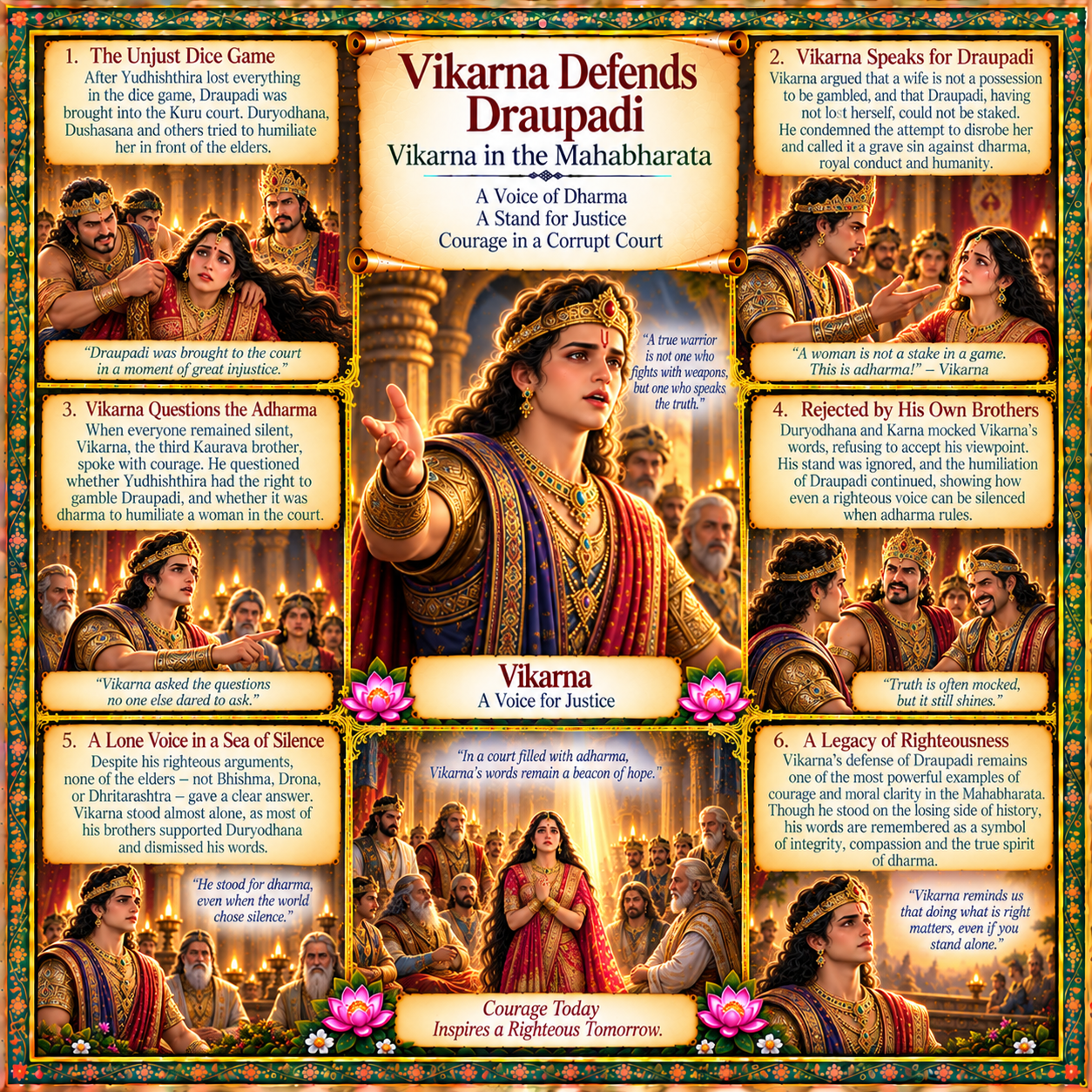
At this critical moment, Vikarna rose and spoke.
He openly declared that Draupadi’s question was valid and deserved an answer.
Vikarna argued that:
- A person who has already lost himself cannot wager another person.
- Draupadi had been won unfairly.
- The treatment of Draupadi was against dharma.
- The assembly should protect justice.
His speech was one of the bravest acts in the Mahabharata because he challenged not only Duryodhana but also the silence of the entire royal court.
Opposition from Karna – Vikarna in the Mahabharata
Karna strongly opposed Vikarna’s argument.
He defended Duryodhana’s position and insulted Draupadi.
Despite Karna’s criticism, Vikarna stood firm and continued to support justice.
This moment established him as the moral voice among the Kauravas.
Why Vikarna Stayed with the Kauravas – Vikarna in the Mahabharata
Many readers wonder why Vikarna remained with the Kauravas if he knew they were wrong.
The answer lies in the complex nature of duty.
Vikarna faced a difficult conflict:
Dharma Versus Family Loyalty
He understood that many actions of Duryodhana were unjust.
However, he also believed:
- A prince must support his kingdom.
- A brother must stand with his family.
- A warrior must honor his commitments.
This internal struggle makes Vikarna one of the most realistic and human characters in the epic.
Vikarna in the Kurukshetra War – Vikarna in the Mahabharata
When the great Kurukshetra War began, Vikarna fought on the Kaurava side.
Despite his moral disagreements, he remained loyal to Hastinapura and his brothers.
He fought courageously throughout the war and demonstrated exceptional skill as a warrior.
Relationship with the Pandavas – Vikarna in the Mahabharata
The Pandavas respected Vikarna because of his honesty during Draupadi’s humiliation.
Bhima especially remembered Vikarna’s defense of Draupadi.
Yet, as warriors on opposite sides, they eventually had to face each other in battle.
The Battle Between Bhima and Vikarna – Vikarna in the Mahabharata
One of the most emotional moments of the war occurred when Bhima and Vikarna fought.
Bhima admired Vikarna and did not wish to kill him.
Before the battle, Bhima reportedly acknowledged Vikarna’s righteousness and virtue.
However, both warriors were bound by their duties.
The battle was fierce, and Bhima ultimately killed Vikarna.
Bhima’s Regret
Unlike many other Kauravas, Vikarna’s death saddened Bhima.
Bhima recognized that Vikarna had always tried to uphold justice.
His death symbolized the tragedy of war, where even noble individuals become victims of larger conflicts.
Symbolism of Vikarna in the Mahabharata
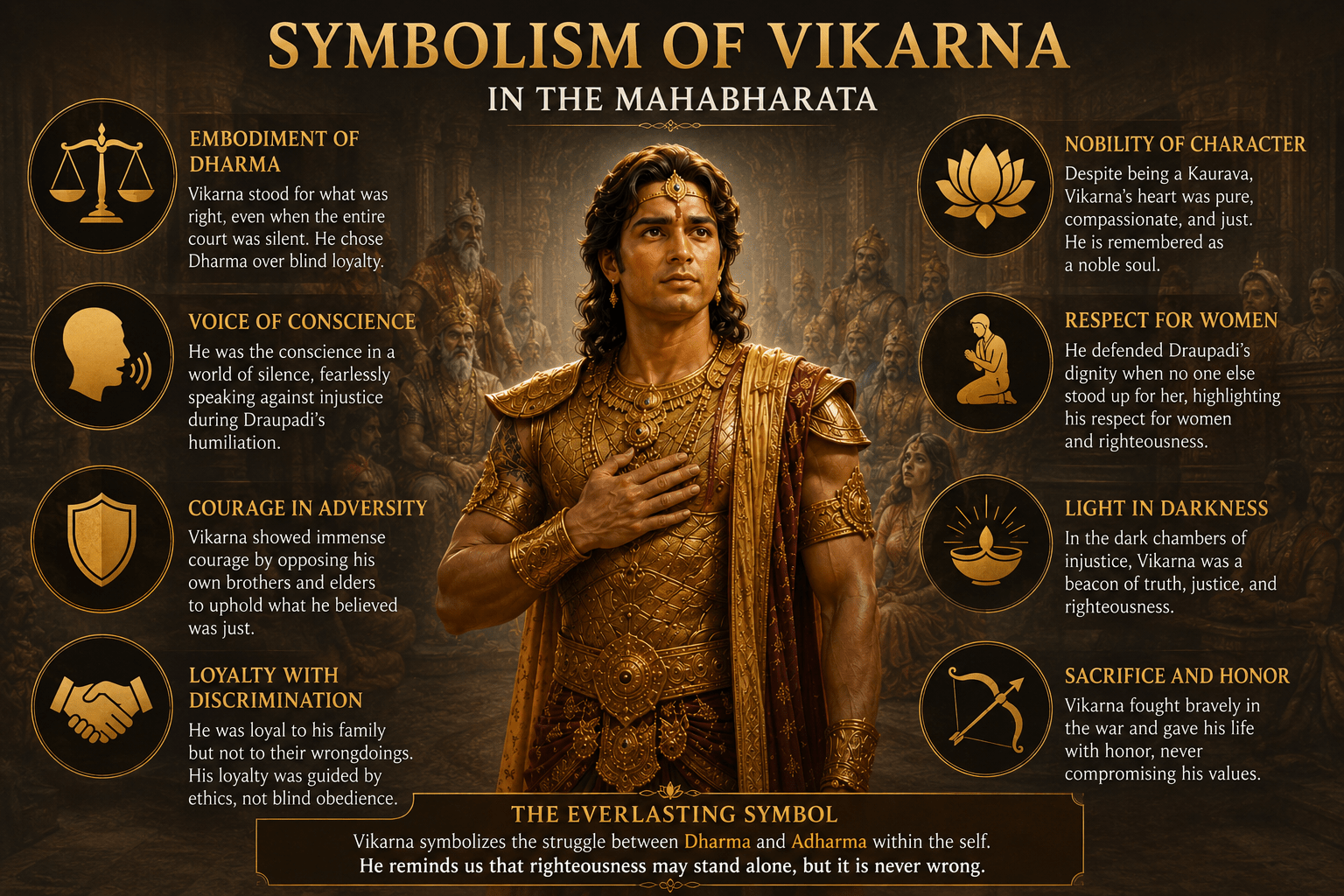
Vikarna represents several important themes.
Moral Courage
He showed that speaking the truth requires courage, especially when everyone else remains silent.
Individual Responsibility
Vikarna demonstrated that individuals must think independently rather than blindly follow authority.
The Complexity of Dharma
His life illustrates how dharma is not always straightforward.
Sometimes people face situations where every choice involves sacrifice.
Loyalty and Ethics
Vikarna struggled to balance loyalty to family with loyalty to righteousness.
This conflict remains relevant even today.
Lessons from Vikarna’s Life
Modern readers can learn many valuable lessons from Vikarna.
Stand Up Against Injustice
Even if everyone remains silent, one voice can make a difference.
Speak the Truth Fearlessly
Vikarna proved that truth should not be compromised for popularity.
Respect Women
His defense of Draupadi highlighted the importance of dignity and respect.
Think Independently
He refused to accept wrongdoing simply because powerful people supported it.
Balance Loyalty with Ethics
True loyalty should never completely override moral responsibility.
Vikarna’s Legacy
Although Vikarna did not become a king and is not as famous as many major heroes of the Mahabharata, his legacy remains powerful.
He is remembered as:
- The righteous Kaurava
- The defender of Draupadi
- The voice of justice in the Kuru court
- A symbol of moral courage
- A warrior trapped between duty and righteousness
His story reminds us that true greatness is not measured by victory or power but by integrity and courage.
Conclusion
Vikarna occupies a unique place in the Mahabharata. Born into the Kaurava family, he witnessed the rise of jealousy, ambition, and injustice within his own household. Yet he never lost sight of dharma.
His courageous defense of Draupadi during the dice game remains one of the most admirable moments in the epic. Even though he ultimately fought for the Kauravas, his moral character earned him the respect of both friends and enemies.
Vikarna’s life teaches us that standing for justice is never easy, especially when it means opposing those closest to us. His legacy continues to inspire readers as an example of integrity, courage, and unwavering commitment to righteousness.
Frequently Asked Questions (FAQs)-Vikarna in the Mahabharata
1. Who was Vikarna in the Mahabharata?
Vikarna was the third son of Dhritarashtra and Gandhari and one of the hundred Kauravas.
2. Why is Vikarna famous?
He is famous for defending Draupadi during her humiliation in the Kuru court.
3. Was Vikarna a Kaurava?
Yes, he was one of the Kaurava princes.
4. Who were Vikarna’s parents?
Dhritarashtra was the son of Queen Gandhari and King Dhritarashtra.
5. Was Vikarna older than Dushasana?
No. Dushasana was the second son, while Vikarna was the third.
6. Did Vikarna support Draupadi?
Yes, he openly supported her argument during the dice game.
7. Why did Vikarna oppose the Kauravas?
He opposed their actions when he believed they violated dharma.
8. Did Karna disagree with Vikarna?
Yes, Karna strongly rejected Vikarna’s defense of Draupadi.
9. Why didn’t Vikarna join the Pandavas?
He remained loyal to his family and kingdom despite his moral concerns.
10. Did Vikarna fight in the Kurukshetra War?
Yes, he fought on the Kaurava side.
11. Who killed Vikarna?
Bhima killed Vikarna during the Kurukshetra War.
12. Did Bhima respect Vikarna?
Yes, Bhima respected Vikarna for his righteousness.
13. Was Vikarna a good warrior?
Yes, he was considered a brave and capable warrior.
14. What does Vikarna symbolize?
He symbolizes justice, moral courage, and ethical responsibility.
15. Did Vikarna support Duryodhana completely?
No, he supported his family but disagreed with several actions.
16. Why is Vikarna called the righteous Kaurava?
Because he consistently stood for fairness and justice.
17. Was Vikarna present during Draupadi’s humiliation?
Yes, he was present and spoke in her defense.
18. What lessons can we learn from Vikarna?
Courage, honesty, respect for women, and standing against injustice.
19. Is Vikarna respected by Mahabharata readers?
Yes, he is widely admired for his moral integrity.
20. Why is Vikarna important in the Mahabharata?
He represents the voice of conscience within the Kaurava camp and highlights the complexity of dharma.