Raja Ratnam
- Mahabharatam , Mythology , Women Characters
- January 5, 2026
- 525 views
Goddess Ganga in Mahabharata: The Celestial River, Mother of Bhishma & Moksha Symbol
Introduction In the vast and profound epic Mahabharata, Goddess Ganga stands as more than a river—she is a celestial being, a compassionate mother, and a divine force of purification. Revered as Ganga Devi, she flows through the narrative as a bridge between heaven and earth, karma and liberation, sorrow and salvation. Her presence in Mahabharatam is deeply tied to destiny, sacrifice, and dharma. Origin of Goddess Ganga Ganga is described in Hindu scriptures as a celestial river (Akasha Ganga) flowing in the heavens. She descends to Earth to cleanse humanity of sins and grant moksha (liberation). In the Mahabharata, she is both a goddess and a queen, assuming a human form to fulfill divine purposes. Ganga is known for her purity, compassion, and power—capable of washing away even the gravest sins. Her descent itself symbolizes divine grace entering the mortal realm. Goddess Ganga and King Shantanu One of the most touching episodes involving Ganga in the Mahabharata is her marriage to Shantanu, the king of Hastinapura. Their union was destined, yet bound by a mysterious condition: Shantanu must never question Ganga’s actions. Ganga gave birth to seven sons and, each time, immersed the newborns in the river—returning them to the…
- Kuru Dynasty
- January 4, 2026
- 564 views
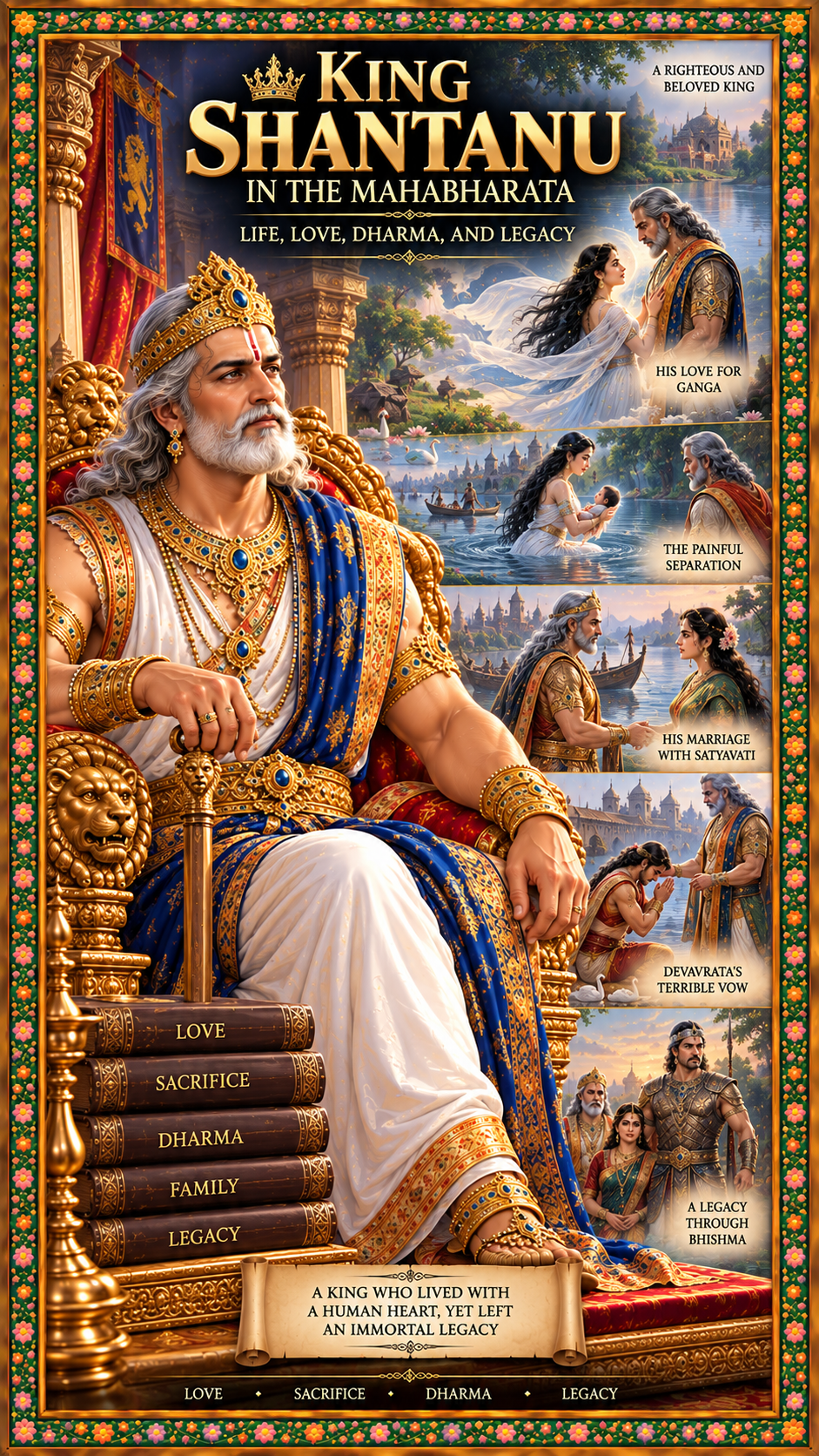
King Shantanu in Mahabharata: Love for Ganga, Satyavati’s Vow & Legacy
Introduction King Shantanu is one of the most pivotal ancestral figures in the epic Mahabharata. Though he does not fight in the Kurukshetra war, his life decisions—rooted in love, fate, and dharma—shape the destiny of the Kuru dynasty. From his divine marriage with Goddess Ganga to his later union with Satyavati, Shantanu’s story explains the origins of Bhishma, the Kauravas, and the Pandavas. This full-length blog explores King Shantanu’s life, character, marriages, moral dilemmas, and lasting impact on the Mahabharata. Who Was King Shantanu? King Shantanu was the ruler of Hastinapura, descending from the illustrious Kuru lineage. Renowned for his compassion, righteousness, and humility, Shantanu was beloved by his subjects. His reign symbolized peace and prosperity, yet his personal life was marked by divine trials and emotionally difficult choices. Shantanu’s greatness lies not only in his kingship but also in how his personal vows and relationships shaped the future of Bharata’s greatest epic. King Shantanu and Goddess Ganga: A Divine Union While hunting near the river Ganga, Shantanu encountered a celestial woman of extraordinary beauty—Ganga Devi, the river goddess. He fell deeply in love, and she agreed to marry him on one strict condition:He must never question her actions. The…
- Children of King Shantanu
- January 3, 2026
- 582 views
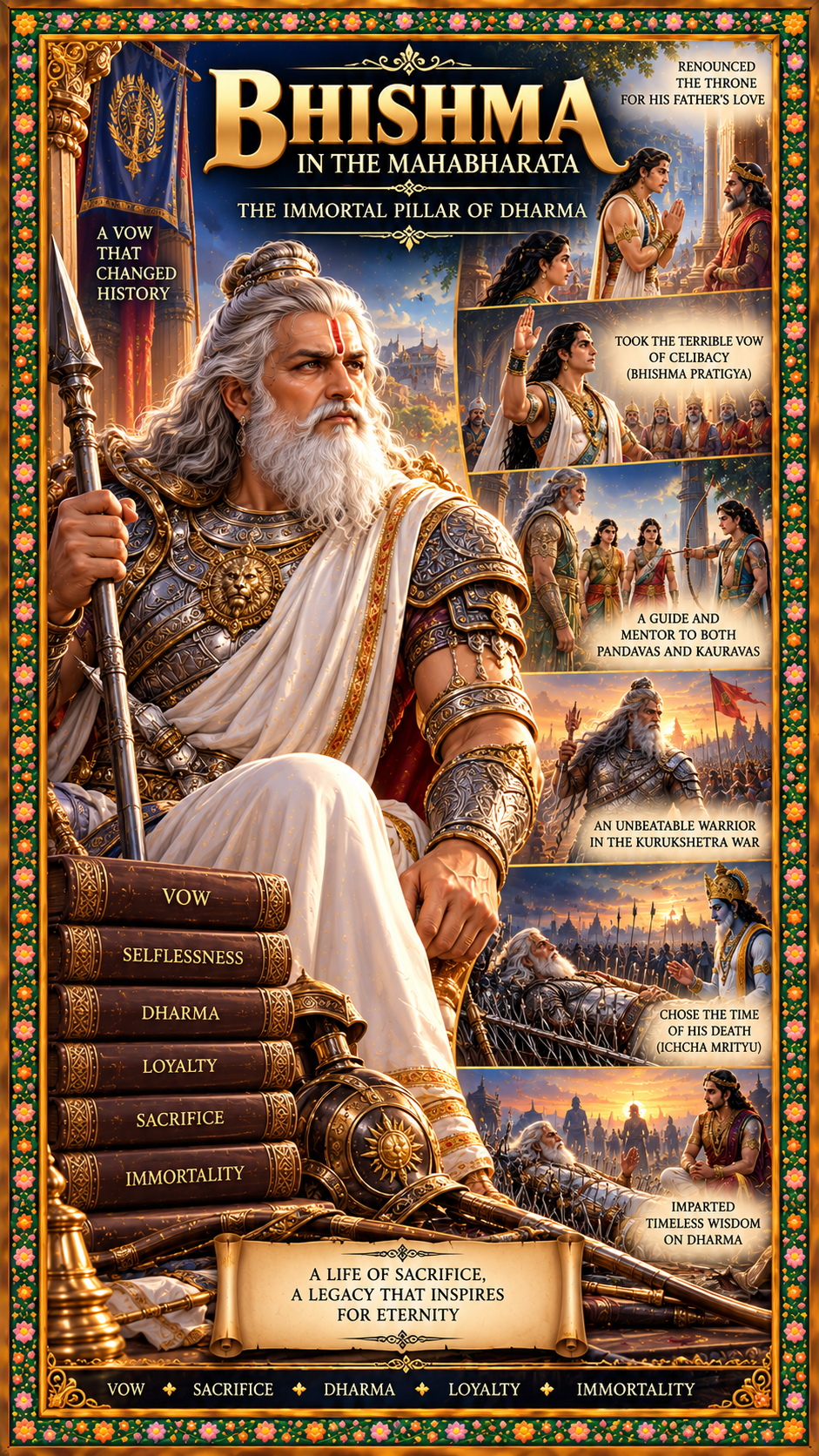
Bhishma in Mahabharata: The Terrible Vow (Pratigya), Powers & Bed of Arrows
Introduction Bhishma, also known as Bhishma Pitamaha, stands as one of the most revered, tragic, and powerful figures in the Mahabharata. He is not merely a warrior but a symbol of unbreakable vows, sacrifice, loyalty, and dharma. His life story is both inspiring and heartbreaking, showing how even righteousness can lead to suffering when bound by rigid duty. Birth of Bhishma – Devavrata, the Son of Destiny Devavrata, the son of King Shantanu, ruler of the Kuru dynasty, and Ganga, the goddess of the River Ganga, was Bhishma’s birth name. Devavrata was no ordinary child. Trained by great sages and blessed by celestial beings, he mastered: From a young age, he was destined to become a legendary protector of the Kuru dynasty. The Terrible Vow – Why He Is Called Bhishma The turning point of Devavrata’s life came when King Shantanu wished to marry Satyavati. In order to inherit the throne, her father demanded that only her children inherit it. To fulfill his father’s happiness, Devavrata took a terrible (bhīṣaṇa) vow: The gods themselves showered flowers from the heavens, and from that moment, Devavrata became Bhishma, the one who took an impossible vow. This single decision shaped the entire future…