Raja Ratnam
- Mahabharatam , Mythology , Sons of Vichitravirya (via Sage Vyasa)
- January 8, 2026
- 431 views
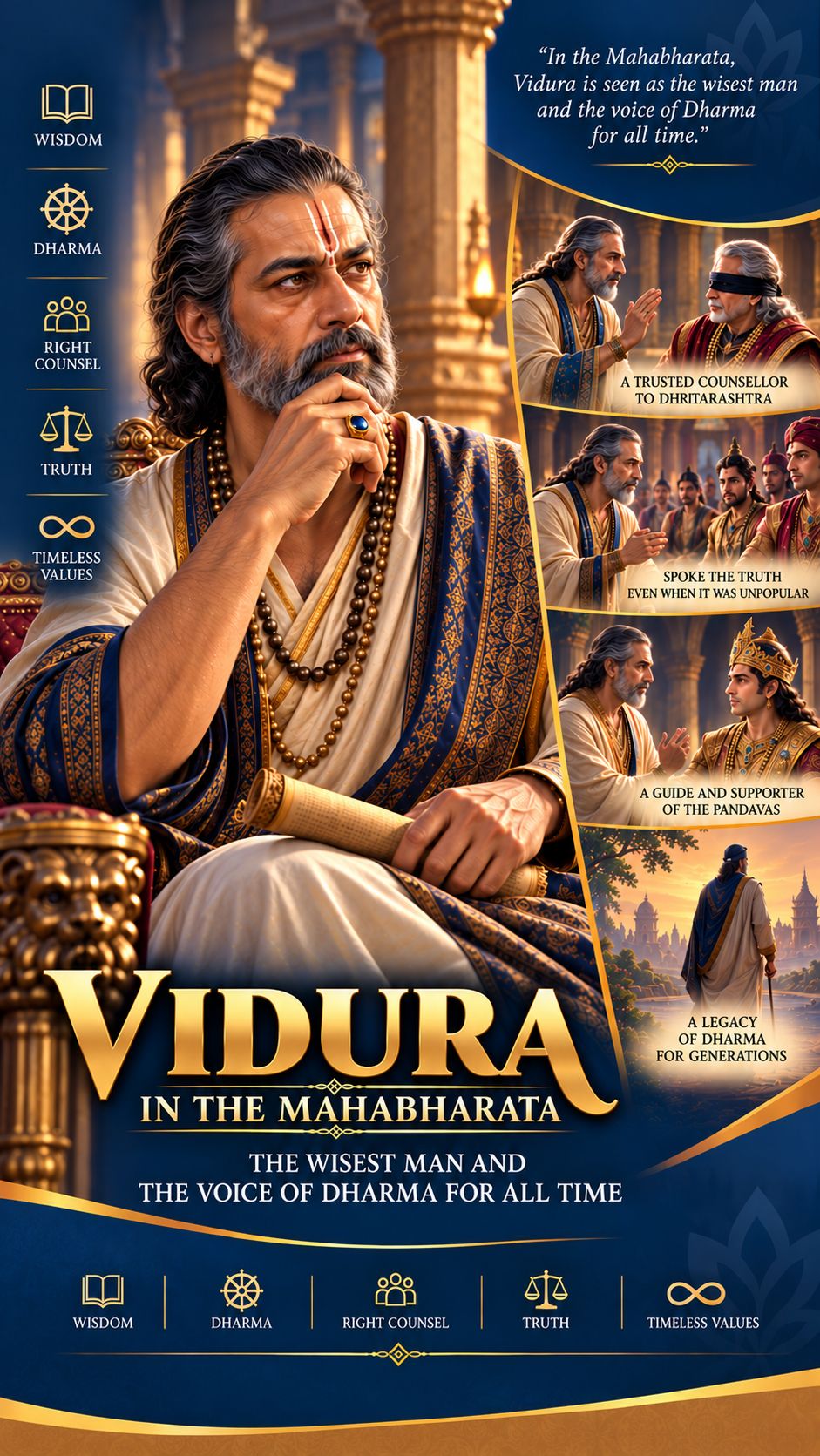
In the Mahabharata, Vidura is seen as the wisest man and the voice of Dharma for all time
Introduction In the vast and complex epic of the Mahabharata, filled with mighty warriors, divine incarnations, and powerful kings, one man stands apart—not for his strength or royal birth, but for his unmatched wisdom, moral clarity, and unwavering commitment to dharma. That man is Vidura. Widely regarded as the wisest man in the epic, Vidura served as the chief advisor to King Dhritarashtra and the moral compass of the Kuru kingdom. Time and again, he warned against injustice, greed, and the catastrophic war of Kurukshetra. Yet, his wise counsel often fell on deaf ears. This blog explores Vidura’s life, wisdom, role in the Mahabharata, and timeless relevance in leadership, governance, and ethics. Who Was Vidura? Vidura was born to Vyasa, the great sage and author of the Mahabharata, and a maidservant of the Kuru palace. Despite his humble maternal origin, Vidura was endowed with extraordinary intelligence, integrity, and spiritual insight. According to tradition, Vidura was an incarnation of Yama (Dharma Devata)—the god of righteousness and justice—sent to guide humanity during a time of moral decline. Though denied the throne due to social conventions, Vidura became the most respected statesman in Hastinapura. The Wisest Man in the Epic Vidura’s wisdom was…

- Kuru Dynasty , Mahabharatam , Mythology , Women Characters
- January 6, 2026
- 535 views
Satyavati in Mahabharatam – The Woman Who Shaped Destiny
Introduction Satyavati in the Mahabharatam popularly known as Sathavai in regional traditions, is one of the most powerful and influential women in the Mahabharatam. Though she does not fight on the battlefield of Kurukshetra, her decisions, ambitions, and maternal instincts shape the destiny of the Kuru dynasty and ultimately lead to the great war itself. Her life is a remarkable journey—from a humble fisherwoman to the Queen of Hastinapura, from a young girl cursed with a foul smell to the revered Queen Mother of one of India’s greatest epics. Birth and Early Life of Satyavati She was born to Uparichara Vasu, the king of Chedi, and a celestial nymph (apsara). Due to circumstances, she was abandoned at birth and later adopted by a fisherman chief named Dasharaja. In her early years, she was known as Matsyagandha, meaning “one who smells of fish”, because of her association with the fishing community. Despite her humble upbringing, possessed: These traits would later transform her destiny. Meeting Sage Parashara and the Birth of Vyasa One of the most crucial events in the Mahabharatam occurs when Satyavati meets Sage Parashara while ferrying him across a river. The Divine Boons Parashara, impressed by her beauty and…

- Mahabharatam , Mythology , Women Characters
- January 5, 2026
- 492 views
Goddess Ganga in Mahabharatam: Divine Mother, Sacred River & Symbol of Liberation
Introduction In the vast and profound epic Mahabharata, Goddess Ganga stands as more than a river—she is a celestial being, a compassionate mother, and a divine force of purification. Revered as Ganga Devi, she flows through the narrative as a bridge between heaven and earth, karma and liberation, sorrow and salvation. Her presence in Mahabharatam is deeply tied to destiny, sacrifice, and dharma. Origin of Goddess Ganga Ganga is described in Hindu scriptures as a celestial river (Akasha Ganga) flowing in the heavens. She descends to Earth to cleanse humanity of sins and grant moksha (liberation). In the Mahabharata, she is both a goddess and a queen, assuming a human form to fulfill divine purposes. Ganga is known for her purity, compassion, and power—capable of washing away even the gravest sins. Her descent itself symbolizes divine grace entering the mortal realm. Goddess Ganga and King Shantanu One of the most touching episodes involving Ganga in the Mahabharata is her marriage to Shantanu, the king of Hastinapura. Their union was destined, yet bound by a mysterious condition: Shantanu must never question Ganga’s actions. Ganga gave birth to seven sons and, each time, immersed the newborns in the river—returning them to the…

- Mythology , Navagraha's
- November 6, 2025
- 567 views
Shani Deva (Saturn) – Karma, Justice, Discipline
Introduction – The Power and Mystery of Shani Deva (Saturn) Among the Navagrahas, Shani Deva (Saturn) remains the most revered, feared, misunderstood, and ultimately transformative graha. Known as the Lord of Karma, Justice, Discipline, and Destiny, Shani acts as the cosmic judge who monitors the moral balance of the universe. Shani’s influence is never meant to punish out of anger—rather, he guides souls through accountability, responsibility, restraint, and spiritual awakening. His lessons are deep, life-changing, and karmically precise. Shani’s slow movement through the zodiac symbolizes patience, endurance, maturity, and long-term results. His blessings are slow but permanent; his teachings are tough but purifying. For official cultural and historical archives, visit the Ministry of Culture, Government of India. Mythological Origins of Shani Deva 1. Birth of Shani – Son of Surya and Chhaya Shani is the son of Lord Surya (Sun) and Devi Chhaya, who was created as a shadow form of Surya’s wife Sanjana. From birth, Shani exhibited extraordinary powers. When Surya refused to accept him, Shani’s angry gaze caused Surya’s chariot horses to weaken, leading Surya to realize the divine strength of his son. 2. Relationship with Yama – God of Death Shani and Yama are brothers. While Yama…

- Mythology , Navagraha's
- November 4, 2025
- 454 views
Guru Deva (Brihaspati / Jupiter) — The Divine Teacher of Gods and the Light of Wisdom
Introduction Guru (Brihaspati / Jupiter): In the grand cosmic family of the Navagrahas, Guru (Brihaspati) shines as the planet of wisdom, righteousness (dharma), knowledge, and divine counsel.Known as Devaguru — the preceptor of the Devas — he is revered not just as a planet influencing destiny, but as a living embodiment of divine wisdom and truth. Where Surya represents energy and life, and Chandra reflects emotion and mind, Guru governs knowledge, faith, and morality — the spiritual compass that guides humanity toward enlightenment. In astrology, Jupiter symbolizes expansion, prosperity, optimism, and justice. His blessings bring spiritual understanding, wealth, and harmony in life.In mythology, he stands as the Guru of the Devas, constantly guiding them against ignorance and ego. Mythological Origin of Guru (Brihaspati / Jupiter) The origins of Brihaspati are described in the Rig Veda and later in the Puranas such as the Brahmanda Purana and Matsya Purana. Brihaspati is the son of Sage Angiras, one of the Saptarishis, and Shraddha Devi.From birth, he radiated extraordinary brilliance and wisdom. His intellect and mastery of the Vedas were so profound that even the Devas sought his counsel. Recognizing his spiritual might, Lord Indra appointed Brihaspati as the Guru and priest of…

- Mythology , Navagraha's
- November 4, 2025
- 469 views
Budha (Mercury) — The Planet of Intelligence, Communication & Wit
Introduction Among the Navagrahas, Budha (Mercury) stands out as the planet of intellect, speech, learning, and trade. Representing the quicksilver quality of the mind, Budha governs our ability to analyze, communicate, and connect. In astrology, he rules logic, language, business acumen, and adaptability — the very traits that make humans the thinking species. Known as the celestial prince, Budha’s energy is youthful, playful, and curious. He represents the mind that loves to learn, negotiate, and express itself clearly. For official cultural and historical archives, visit the Ministry of Culture, Government of India. Mythological Origin of Budha Budha (Mercury) Birth of Budha — The Child of Chandra and Tara According to Hindu mythology, Budha was born from Chandra (the Moon) and Tara, the wife of Brihaspati (Jupiter). When Chandra became infatuated with Tara, she was drawn to his charm and brilliance. Their union resulted in the birth of a radiant child — Budha. When Brihaspati discovered the affair, a great celestial conflict erupted among the gods. The child, however, was so radiant and intelligent that the gods accepted him as divine. He was named Budha, meaning “the Wise” or “the Enlightened One.” Later, Budha performed intense penance to Lord Vishnu and…

- Mythology , Navagraha's
- November 3, 2025
- 460 views
Mangala (Mars) — The Fiery Planet of Power, Courage, and Discipline
Introduction — Mangala (Mars) The Red Flame of the Cosmos Among the nine celestial forces known as the Navagrahas, Mangala (Mars) stands as the radiant embodiment of courage, discipline, and willpower. His energy burns bright like the red planet that bears his name — fierce yet purifying, fiery yet purposeful. In the cosmic order, Mangala represents Shakti (divine energy in motion). He governs action, war, vitality, and justice, ensuring that dharma is protected and courage prevails over fear. In every astrological chart, Mars determines the strength of one’s drive, determination, and self-discipline. Devotees view Mangala Deva not merely as a planet, but as a divine commander, a guardian of righteousness, and a symbol of inner strength. To those who walk the spiritual path, his energy teaches that true courage is not in aggression — but in the calm mastery of the self. For official cultural and historical archives, visit the Ministry of Culture, Government of India. Mythological Origin of Mangala The birth of Mangala Deva is one of the most powerful and symbolic episodes in Hindu cosmology. According to the Skanda Purana and Matsya Purana, he was born from the fiery energy that emanated from Lord Shiva’s third eye —…

- Mythology , Navagraha's
- November 1, 2025
- 540 views
Chandra Deva – The Radiant Moon God of Mind, Peace, and Emotion
Introduction Among the celestial beings that adorn the night sky, Chandra Deva, the Moon God, holds a special place in the hearts of devotees. His gentle radiance calms the world, nourishes life, and governs the emotional and mental balance of every being. In Hinduism, Chandra is not merely a planet (graha) but a divine deity of peace, beauty, fertility, and spiritual reflection. This article explores Chandra’s mythological origins, his divine role in astrology, his connection to Soma and Nakshatras, and how modern science complements ancient beliefs about the Moon. For official cultural and historical archives, visit the Ministry of Culture, Government of India. For official cultural and historical archives, visit the Archaeological Survey of India. Birth and Origin of Chandra Deva According to the Vedic scriptures, Chandra was born from the Samudra Manthan (churning of the ocean of milk). When the gods and demons churned the cosmic ocean to obtain Amrita (nectar of immortality), several divine treasures emerged — including Chandra, the radiant moon. His cool light was said to soothe even the fiercest flames. In some texts, he is also described as the son of Sage Atri and Anasuya, born from their intense penance. Chandra’s beauty and brilliance were…

- Lord Ganesha , Mythology
- August 19, 2025
- 515 views
Ekadanta (The One with a Single Tusk): Meaning, Symbolism & Benefits
Introduction to Ekadanta (The One with a Single Tusk) – The Sacred Form of Lord Ganesha Ekadanta (The One with a Single Tusk):The Hindu god Ganesha is revered as the remover of obstacles, the god of beginnings, and the embodiment of wisdom. Among his many forms, Ekadanta, meaning “The One with a Single Tusk,” holds a special place. Worshipping Ekadanta is believed to enhance focus, patience, and self-control, qualities essential for both spiritual and worldly success.As a symbol of sacrifice and discernment, it represents keeping what is good and discarding what is bad. The Literal Meaning of “Ekadanta”The name Ekadanta comes from two Sanskrit words: Eka – meaning one Danta – meaning tusk or tooth Together, they form “One Tusked,” a direct reference to Lord Ganesha’s unique appearance. Sanskrit Roots and Etymology Danta refers not only to a tusk, but also to determination and strength in Sanskrit. In Hindu philosophy, removing a tusk signifies the deliberate decision to give up something valuable for a greater purpose. Ekadanta (The One with a Single Tusk): Mythological Story Behind the Single Tusk Mythological Story Behind the Single TuskMany fascinating legends explain why Ganesha has just one tusk. These stories carry profound moral and…

- Lord Ganesha , Mythology
- August 10, 2025
- 435 views
Vakratunda Ganapathi – The Symbol of Overcoming All Challenges
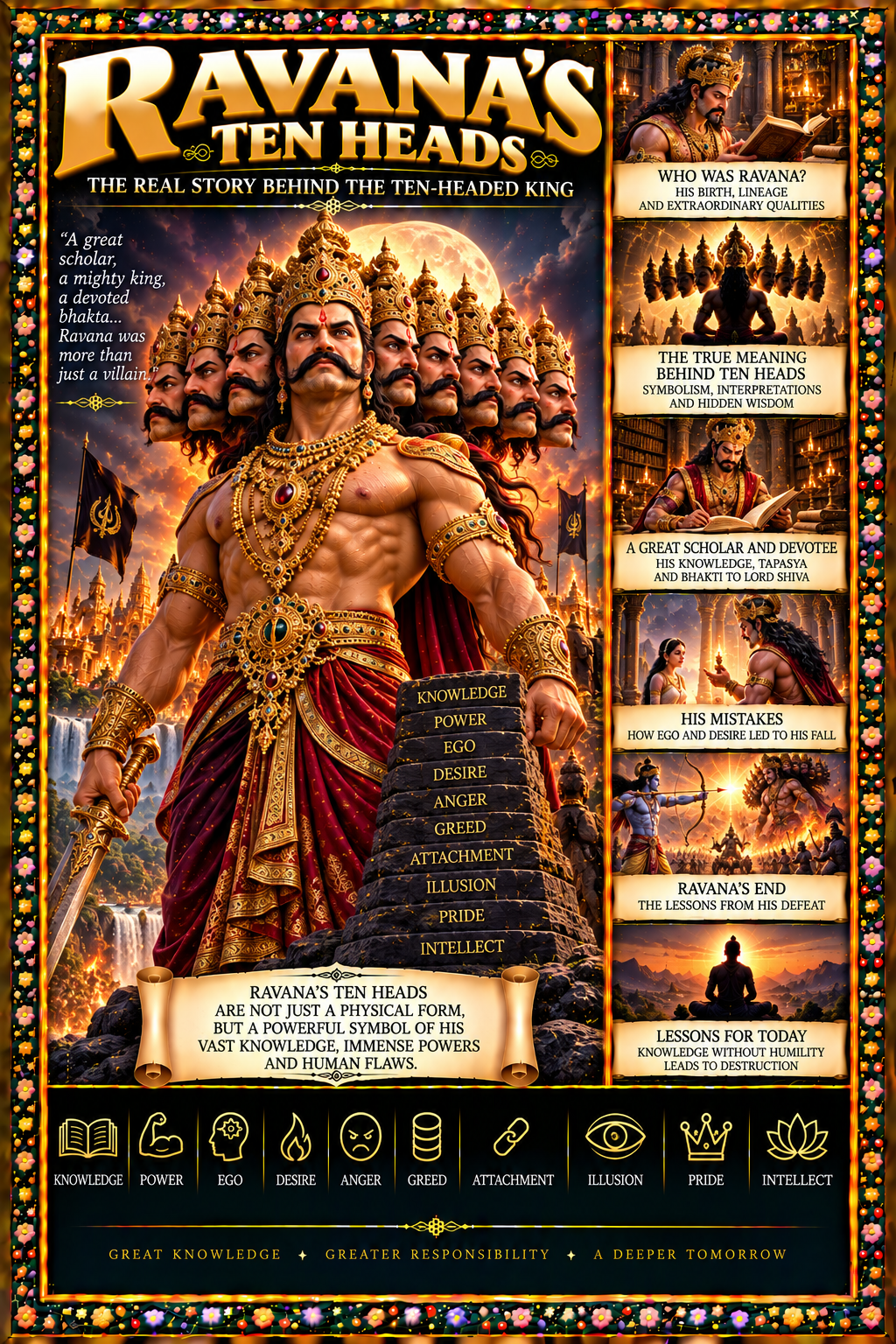
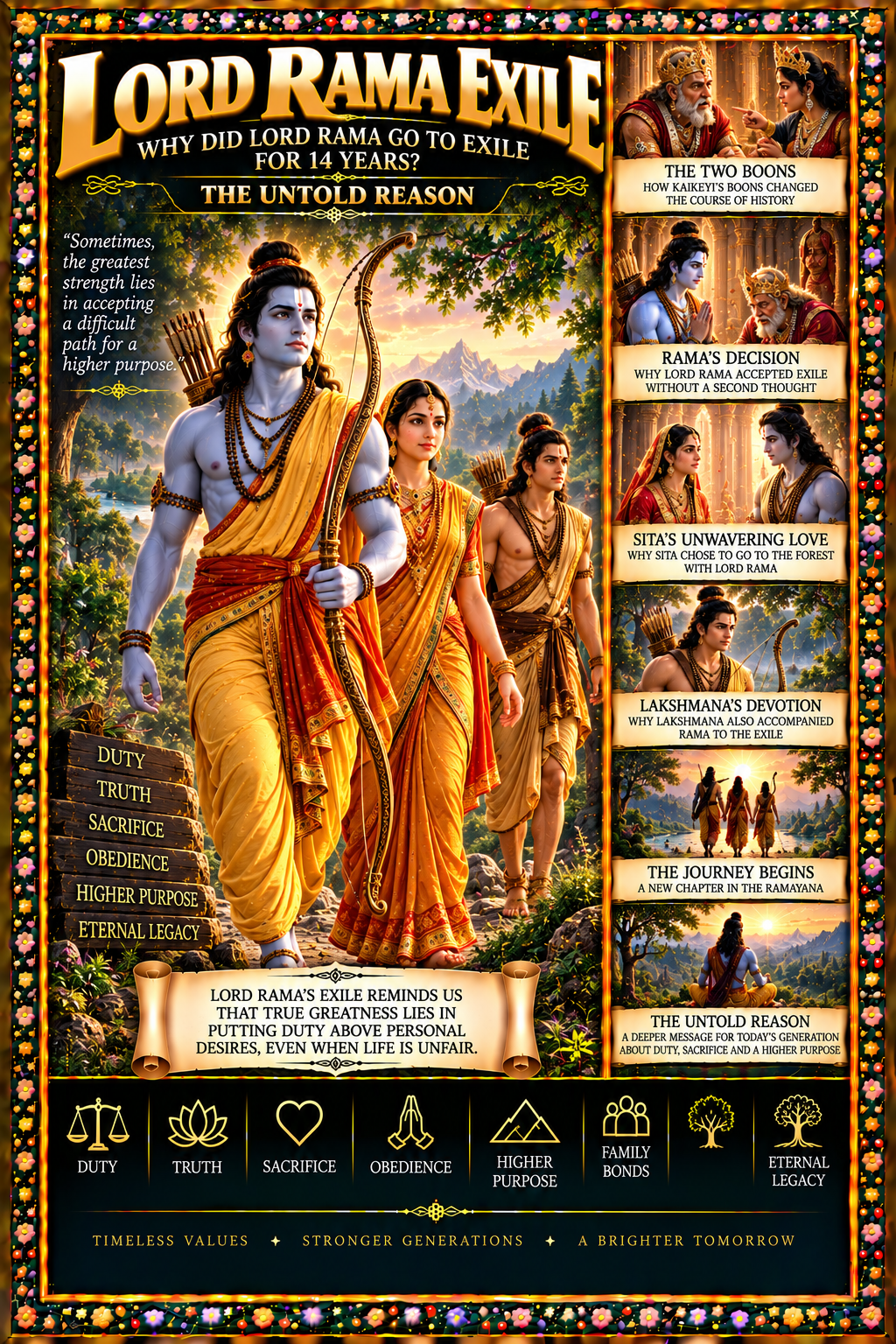
Vakratunda Ganapathi is a special form of Lord Ganesha that reminds us that no obstacle is too complicated for us to handle. Even his name says it all — Vakra means “curved” and Tunda means “trunk,” symbolizing life’s twists and turns. His bent trunk is like a message that the road may not always be straight, but if we keep going, we’ll win in the end. In this form, Ganesha holds an ankusha to guide us in the right direction and a pasha (noose) to pull away negativity. His calm, peaceful expression shows pure strength and inner balance. Praying to Vakratunda Ganapathi is believed to clear big hurdles from our path and fill us with courage, focus, and determination to succeed in whatever we aim for. For official cultural and historical archives, visit the Ministry of Culture, Government of India. Related Sacred Topics & Cultural Heritage: For further spiritual exploration, read about Lord Rama’s ideal life story. For further spiritual exploration, read about the 14-year exile of Lord Rama. For further spiritual exploration, read about Ravana’s story in the Ramayana. Origin and Significance of Vakratunda Ganapathi The origins of Vakratunda Ganapathi are deeply rooted in Ganapati Atharvashirsha and ancient Puranic…