Raja Ratnam
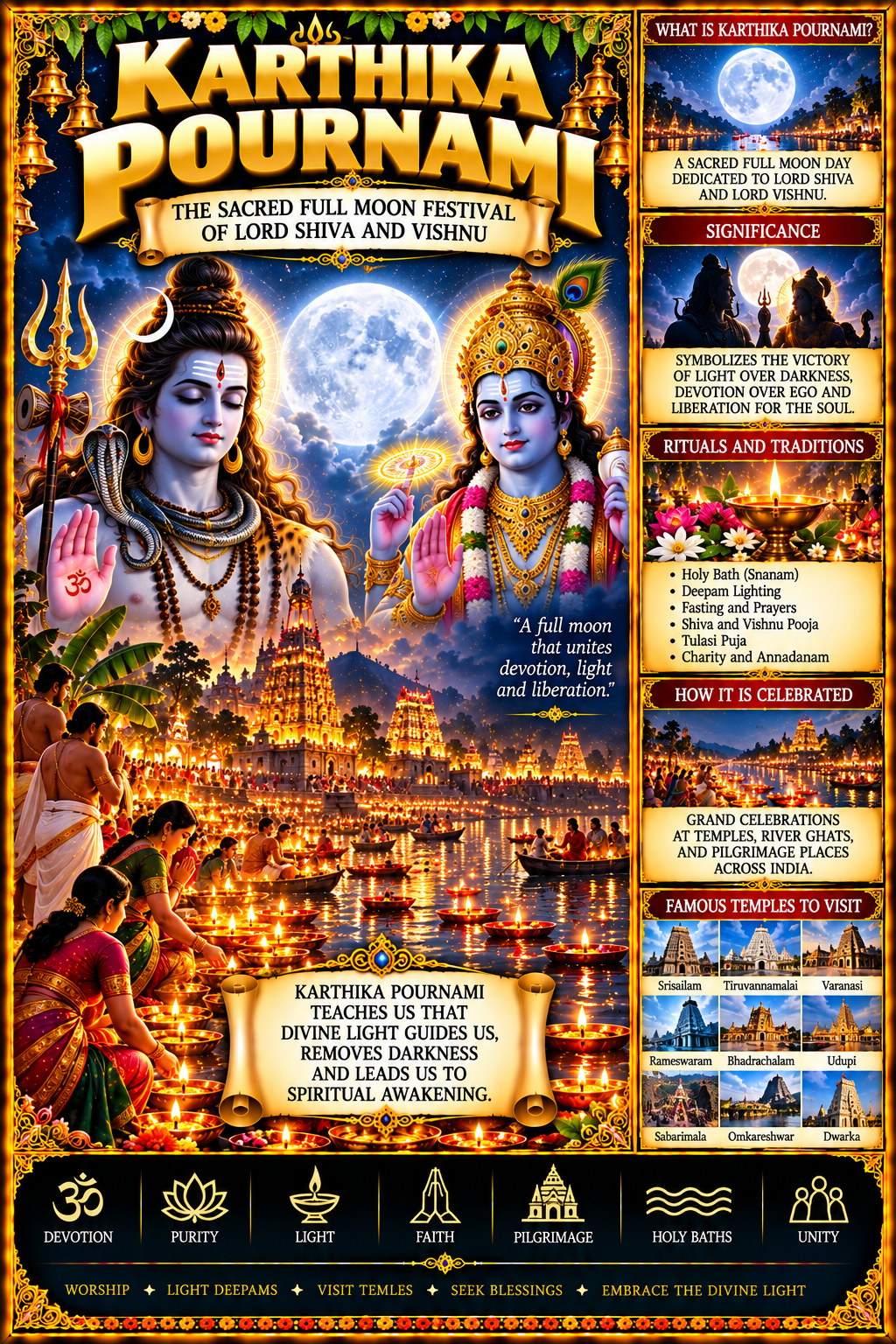
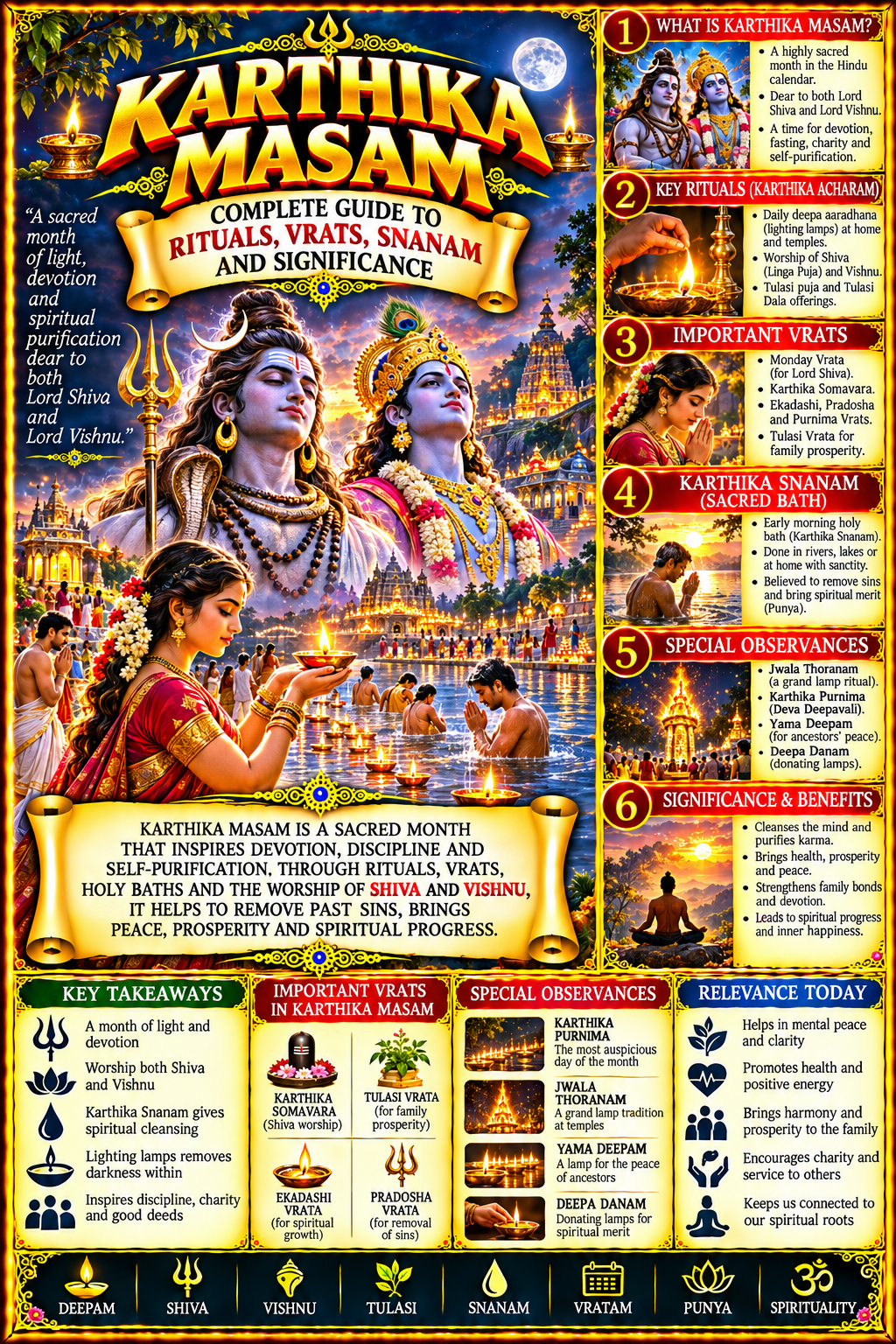
Shining as the brightest celestial jewel of the entire Hindu liturgical year, Karthika Pournami embodies the grand theological confluence of Shaivism and Vaishnavism. Celebrated on the full moon day (Purnima) of the auspicious lunar month of Karthika, Karthika Pournami is universally observed as Tripurari Purnima, Deva Deepavali (the Diwali of the Gods), and Boita Bandana. On this luminous night, millions of clay lamps illuminate temple towers, riverbanks, and households, creating an earthly reflection of cosmic radiance.
Unlike ordinary lunar festivals, participating in Karthika Pournami offers rare spiritual merit because it commemorates both Lord Shiva’s destruction of the demon cities of Tripurasura and Lord Vishnu’s primordial incarnation as the Matsya Avatar. Furthermore, undertaking sacred holy river baths (Nadi Snan) and lighting clusters of 365 cotton wicks on this evening is believed to incinerate lifetimes of accumulated negative karma.
Karthika Pournami 2026: Date, Panchang Tithi, and Shubh Muhurat
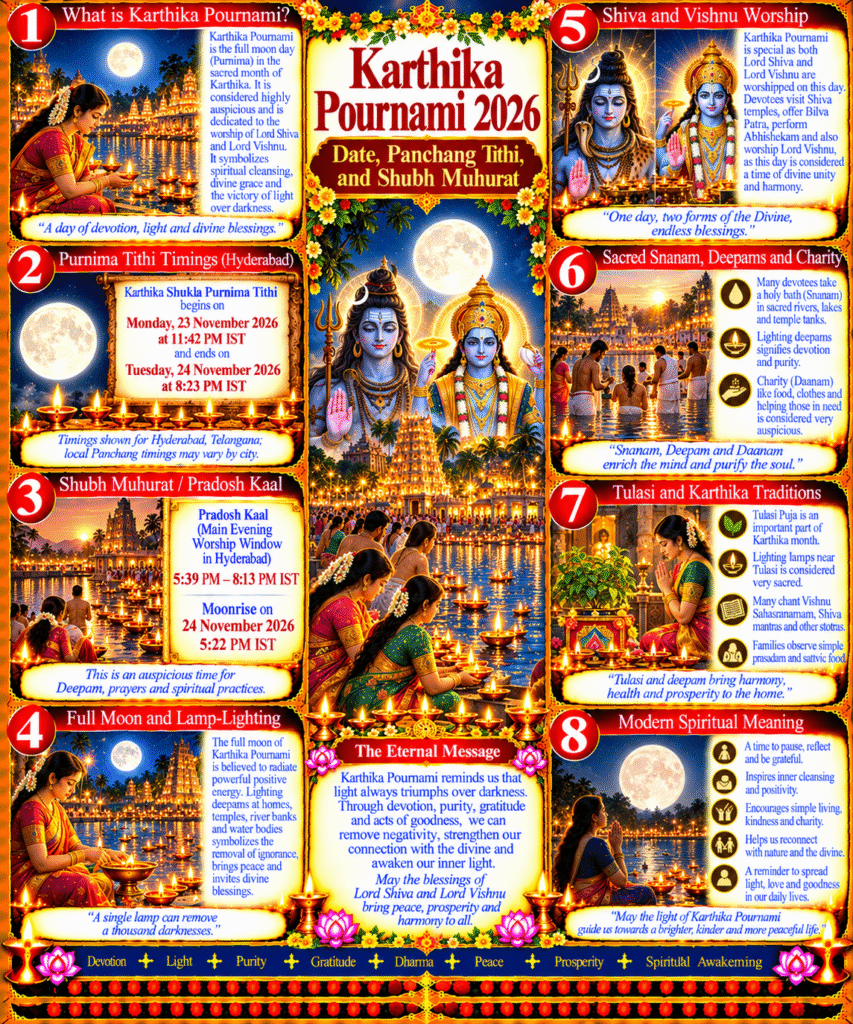
According to astronomical calculations in the canonical Hindu festival calendar guide, Karthika Pournami in 2026 will be celebrated on Tuesday, November 24, 2026. Conducting prayers and temple deepotsavam during the Pradosh Kaal yields maximum spiritual fruit:
- Pournami Tithi Begins: November 23, 2026, at 07:12 PM
- Pournami Tithi Ends: November 24, 2026, at 05:48 PM
- Auspicious Nadi Snan Muhurat (Pre-Dawn Bath): 04:52 AM to 06:14 AM (Brahma Muhurta)
- Deva Deepavali Pradosh Muhurat: 05:18 PM to 07:54 PM (Duration: 2 Hours 36 Minutes)
- Moonrise Timing on Karthika Pournami: 05:22 PM
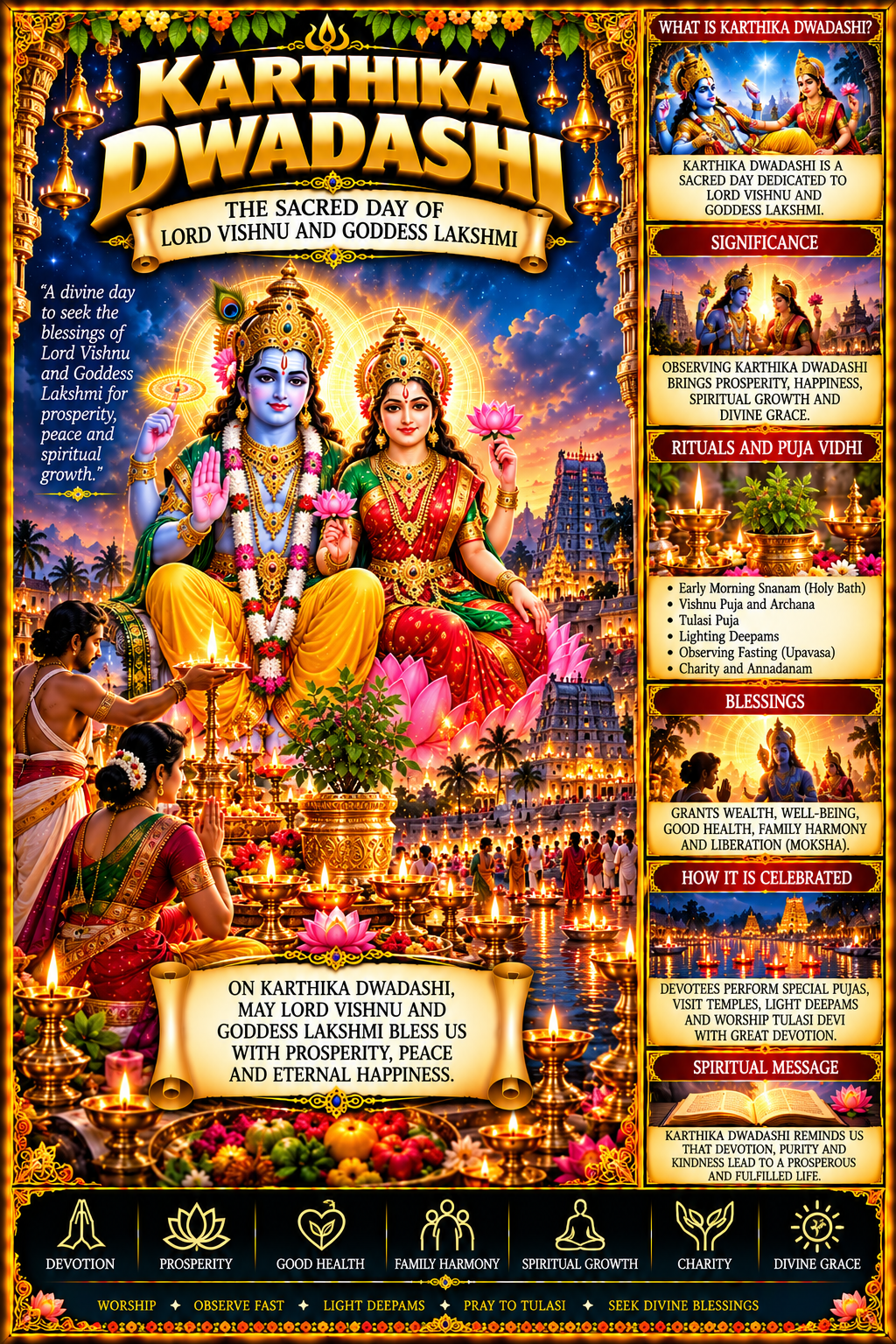
Because the Purnima tithi spans both the pre-dawn hours of November 24 for the holy bath and the twilight transition for temple lamp lighting, devotees observe the festival across this sacred window. This observance represents the magnificent spiritual climax following Karthika Dwadashi and Tulsi Vivah and the broader Diwali festival season.
The Twin Cosmic Legends: How Karthika Pournami Unites Shiva and Vishnu
In Sanatana Dharma, sectarian divisions dissolve on Karthika Pournami through two monumental Puranic milestones recorded in the Shiva Purana, Matsya Purana, and Srimad Bhagavatam.
1. Tripurasura Samharam: Lord Shiva as Tripurari
The sons of demon king Taraksura—Tarakaksha, Kamalaksha, and Vidyunmali—performed severe austerities to propitiate Lord Brahma. They secured an extraordinary boon: three flying celestial fortresses (Tripura) made of gold, silver, and iron that moved independently across cosmic realms. These cities could only be destroyed if all three aligned in a single straight line, and only by a single arrow launched by Lord Shiva.
Corrupted by their invincibility, the Asuras unleashed tyranny upon the cosmos. On Karthika Pournami, the cosmic conditions aligned: the three cities converged for a single fleeting second under the Pushya constellation. The Devas constructed a cosmic chariot from Earth, used Mount Meru as the bow, serpent king Vasuki as the bowstring, Agni as the arrowhead, and Lord Vishnu Himself as the shaft of the celestial arrow.
Lord Shiva, mounting the cosmic chariot, smiled serenely and shot the arrow (the Pasupatastra infused with Vishnu’s energy). The single projectile pierced all three fortresses simultaneously, incinerating adharma and freeing the universe. Overjoyed, the Devas illuminated the heavens with millions of lamps, consecrating this night as Tripurari Purnima.
2. Matsya Avatar: Lord Vishnu Salvaging the Cosmic Vedas
Simultaneously in Vaishnava theology, Karthika Pournami is celebrated as the appearance day of Lord Vishnu’s first divine incarnation, the Matsya Avatar (the horned fish). When the demon Hayagriva stole the four Vedas and plunged them into the abyss during the cosmic dissolution (Pralaya), Vishnu incarnated as a giant golden fish.
Lord Matsya rescued King Satyavrata (Manu), gathered the medicinal herbs and seed species of creation aboard a cosmic boat tied to his horn via the serpent Vasuki, and recovered the sacred Vedas from the oceanic depths. Thus, worshipping Vishnu on this day honors the restoration of divine knowledge to mortal mankind.
3. Radha-Krishna Mahadivya Raas Leela in Vrindavan
In the Braj region and Gaudiya Vaishnava lineage, Karthika Pournami marks the night of the transcendental Maha Raas. Under the cooling nectar of the full autumnal moon in the groves of Vrindavan, Lord Krishna played his enchanting flute, expanding into countless manifestations so that each Gopi danced in intimate communion with the Supreme Lord.
Grand Regional Traditions of Karthika Pournami Across India
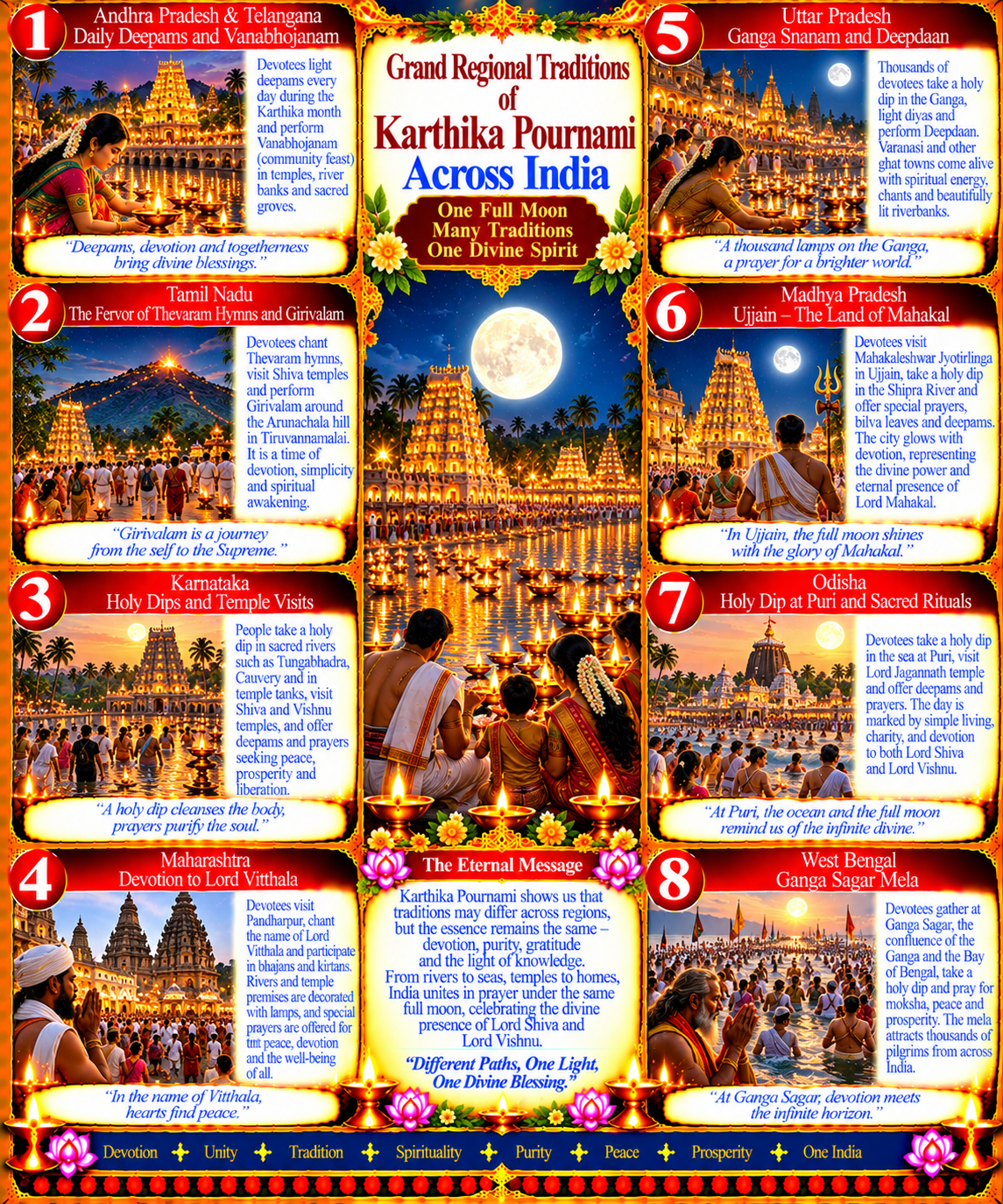
Across India’s vast spiritual map, Karthika Pournami manifests through awe-inspiring regional celebrations:
1. Deva Deepavali in Varanasi (Kashi)
Along the crescent ghats of Varanasi, over one million earthen diyas are lit simultaneously following sunset. Puranic tradition states that all thirty-three crore deities descend physically from Swarga to take a holy dip in the sacred Ganga and celebrate Shiva’s victory over Tripurasura. The sight of shimmering ghats reflected in the flowing Ganga is universally hailed as one of the most stunning spiritual spectacles on Earth.
2. Jwala Thoranam in Andhra Pradesh and Telangana
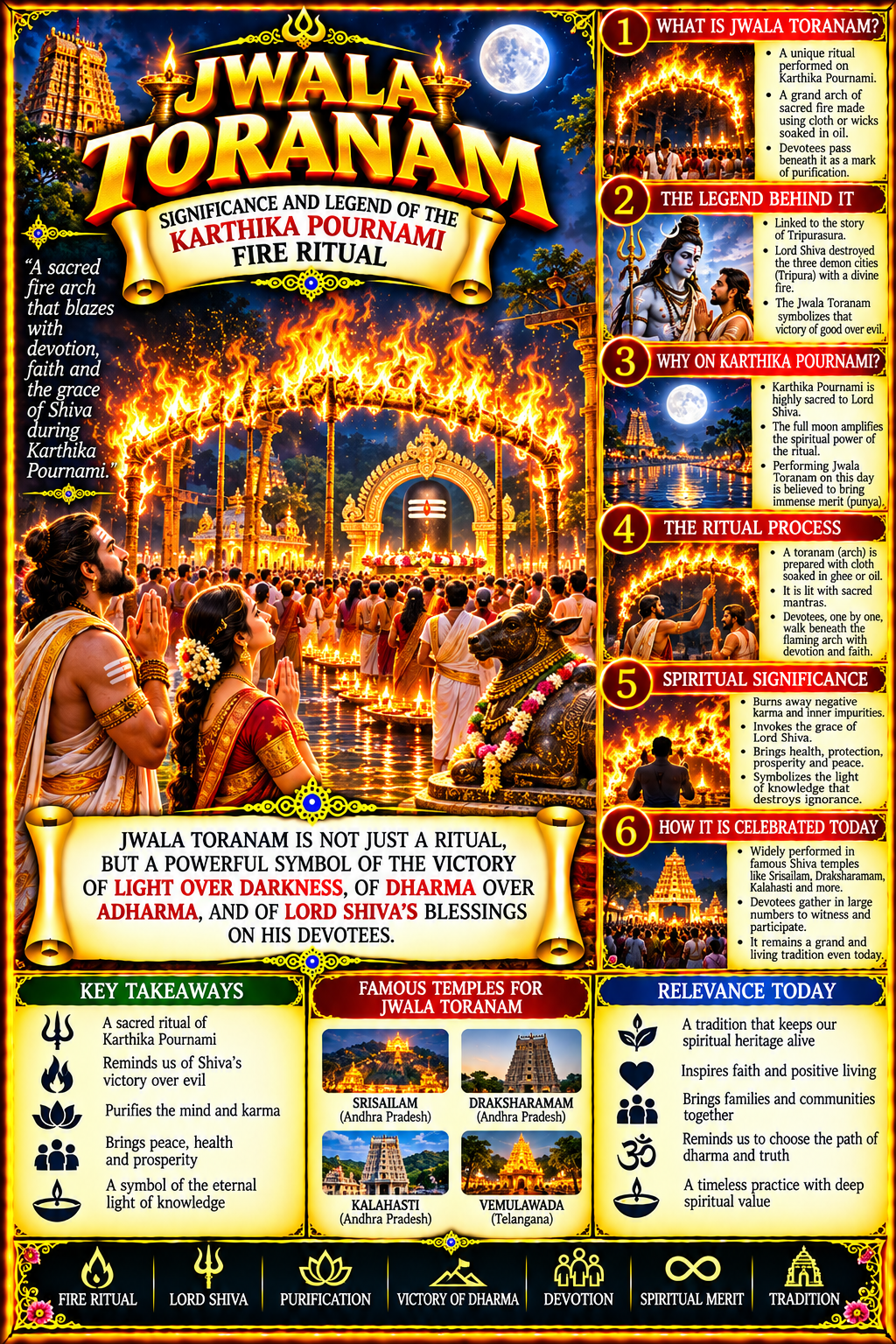
In South Indian Shiva temples, priests erect a high archway adorned with dry grass, camphor, and cotton strings called the Jwala Thoranam. At twilight, the arch is set ablaze in a controlled sacred bonfire. The temple palanquins carrying Lord Shiva and Goddess Parvati are carried underneath the blazing arch, followed by thousands of devotees who walk underneath to incinerate sins and ward off malefic planetary energies.
3. Boita Bandana: Maritime Heritage in Odisha
In Odisha, thousands gather at riverbanks and seashores at dawn to float miniature boats crafted from banana bark, cork, and paper, carrying earthen lamps, betel leaves, and coins. Known as Boita Bandana, this ritual commemorates ancient Odia mariners (Sadhavas) who sailed across the Bay of Bengal to trade in Bali, Java, and Sumatra on the favorable trade winds of Karthika Pournami.
4. Karthigai Deepam at Tiruvannamalai (Tamil Nadu)
At the Arunachaleswara Temple in Tiruvannamalai, a colossal cauldron filled with thousands of liters of pure ghee is ignited atop the sacred Arunachala hill. The massive flame (Maha Deepam) represents Lord Shiva’s original pillar of infinite cosmic fire (Jyotirlinga), visible for tens of kilometers across the landscape.
Authentic Step-by-Step Puja Vidhi and Rituals for Karthika Pournami
Devotees seeking holistic liberation and domestic peace on Karthika Pournami follow this canonical procedural structure:
Phase 1: Sacred Nadi Snan (Pre-Dawn Holy Bath)
Awaken during Brahma Muhurta. Bathing in a natural flowing river (Ganga, Godavari, Krishna, Yamuna, or Kaveri) on this morning is considered equal to performing an Ashwamedha sacrifice. If unable to reach a river, add sacred Gangajal to domestic bathwater while chanting the seven sacred river mantras.
Phase 2: Shiva Abhishekam and Vishnu Sahasranama Chanting
Offer Panchamrit Abhishekam (milk, curd, honey, ghee, and sugar) to the Shiva Lingam using sacred Bilva leaves. Simultaneously, recite the Sri Vishnu Sahasranama Stotram or chant the Purusha Suktam to invoke Lord Vishnu’s preserving grace.
Phase 3: Lighting the 365 Cotton Wicks (Mukkoti Deepam)
In the evening, gather 365 thin cotton threads soaked in pure cow ghee or sesame oil. Place them inside an earthen diya or on halved raw Indian gooseberries (Amla Deepam). Light this flame before Lord Shiva, Lord Vishnu, or the Tulsi plant, offering it for the well-being of all ancestors and descendants.
Deepadan: Offering Lamps to Water Bodies
Float small clay lamps fitted on leaf bases into nearby ponds, lakes, or rivers. Watching the glowing light traverse dark waters symbolizes guiding departed ancestral souls toward heavenly realms.
Fasting and Sattvic Feast (Bhojan)
Devotees observe a strict fast throughout the day, breaking it only after beholding the full moon and offering Arghya (water libation) to the Moon god Chandra. The sanctified prasad typically includes sweet kheer, halwa, and seasonal fruits.
Vedic Shiva-Vishnu Unity Mantra
Chant the ancient Skanda Purana hymn establishing non-duality: “Shivaya Vishnu Roopaya Shiva Roopaya Vishnave | Shivasya Hridayam Vishnur Vishnoshcha Hridayam Shivah.”
According to classical academic and spiritual encyclopedias documented in historical records of Kartik Purnima and Deva Deepavali (Wikipedia), this holy day represents the supreme harmonizing force in Indian devotional heritage.
Spiritual, Mental, and Astrological Benefits of Karthika Poornima
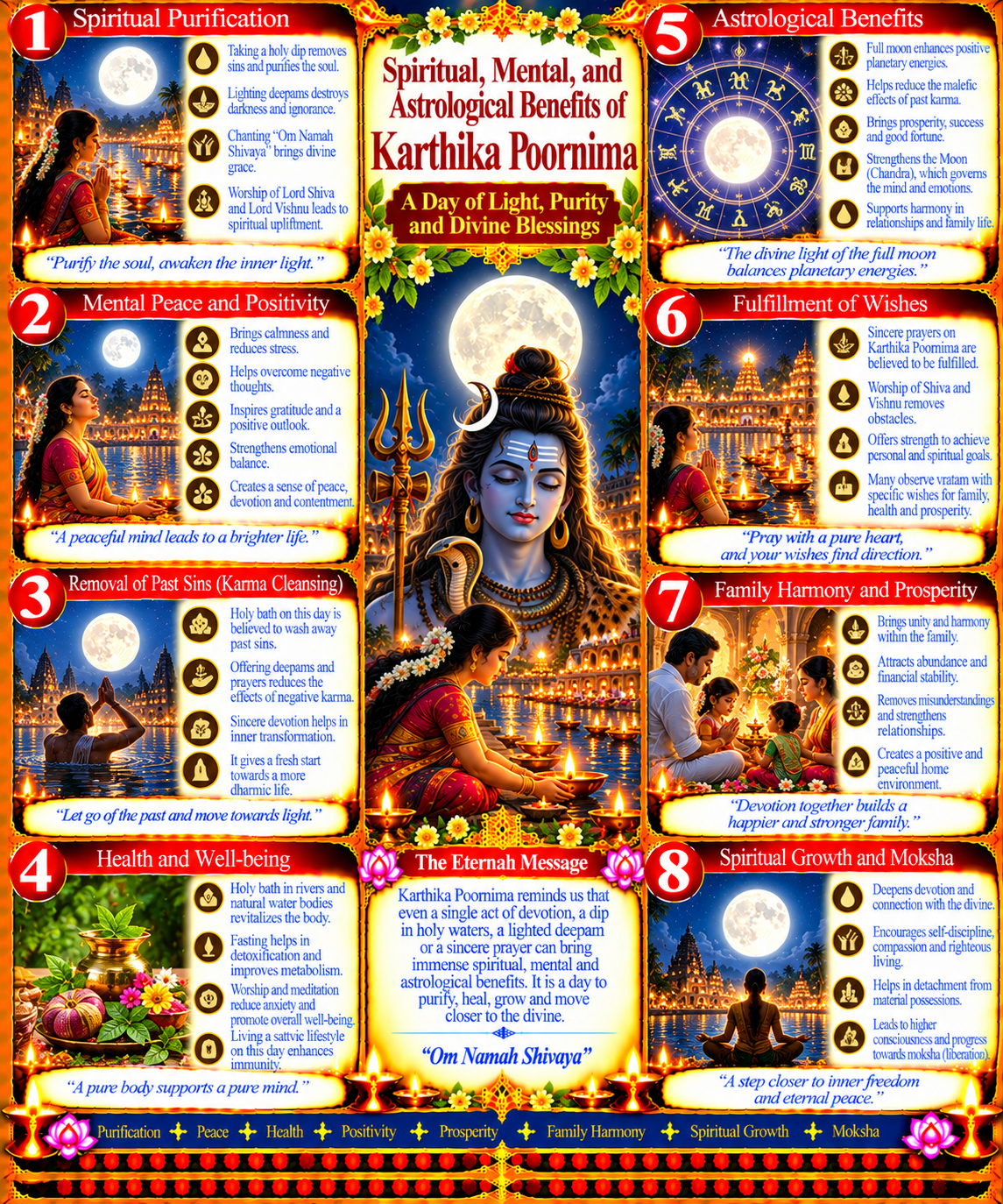
Observing the holy vows of Karthika Pournami bestows multi-fold spiritual and psychological virtues:
1. Destruction of Internal Demons: Just as Shiva demolished the three outer citadels of Tripurasura, meditating on this full moon annihilates the three inner vices: ego (Ahamkara), delusion (Maya), and toxic anger (Krodha), completing the inner transformation celebrated since Vijayadashami.
2. Pacification of Moon Afflictions (Chandra Dosha): Because the Moon reaches its peak radiance in its own exaltation period of Kartika, offering Arghya with raw milk and unbroken rice dissolves mental anxieties, depression, and hormonal imbalances.
3. Liberation of Ancestral Souls (Pitru Moksha): Offering Deepadan and lighting lamps on this night ensures that ancestors who have not yet attained peace find liberation in the higher spiritual planes.
Frequently Asked Questions About Karthika Pournami (20 FAQs)
1. What is Karthika Pournami and why is it so sacred?
Karthika Pournami is the full moon night of the sacred month of Karthika. It is revered because it unites the worship of Lord Shiva (as Tripurari) and Lord Vishnu (as Matsya Avatar), granting multi-fold spiritual merit for lighting lamps and bathing in holy rivers.
2. When is Karthika Pournami celebrated in 2026?
Karthika Pournami in 2026 will be observed on Tuesday, November 24, 2026, with holy baths taken in the morning and Deva Deepavali lamp lighting performed during evening Pradosh Kaal.
3. Why is Karthika Pournami called Tripurari Purnima?
It is called Tripurari Purnima because Lord Shiva vanquished the three demonic flying citadels of Tripurasura with a single divine arrow on this full moon day.
4. What is Deva Deepavali in Varanasi?
Deva Deepavali is celebrated fifteen days after Diwali on Karthika Pournami in Varanasi, where over one million lamps are lit along the Ganga ghats to welcome the Devas who descend from heaven to celebrate Shiva’s victory.
5. What is the significance of the Matsya Avatar on Karthika Pournami?
On this day, Lord Vishnu incarnated as the divine horned fish (Matsya) to rescue the sacred Vedas and Manu from the cosmic deluge, safeguarding human wisdom.
6. Why do devotees light 365 wicks on Karthika Pournami?
Lighting a cluster of 365 cotton wicks symbolizes offering a lamp of prayer for each day of the year, dispelling darkness and wiping away karmic debts.
7. What is Jwala Thoranam and where is it celebrated?
Jwala Thoranam is a sacred blazing grass archway ritual celebrated in Andhra Pradesh and Telangana Shiva temples. Deities and devotees pass under the flame to burn away sins and planetary afflictions.
8. Why do people in Odisha celebrate Boita Bandana?
Boita Bandana commemorates ancient Odia mariners who set sail to Southeast Asian islands like Bali and Sumatra on Karthika Pournami. Devotees float decorative miniature boats with lamps at dawn.
9. What is Nadi Snan and why is it performed before sunrise?
Nadi Snan is a holy dip in natural flowing rivers taken during Brahma Muhurta. Scriptures declare that all holy waters absorb cosmic nectar on Karthika Pournami, cleansing sins of lifetimes.
10. Can we perform the holy bath at home if rivers are not nearby?
Yes, by adding a few drops of Gangajal to bathwater and chanting the sacred river names (Ganga, Yamuna, Godavari, Saraswati, Narmada, Sindhu, Kaveri), devotees attain equivalent spiritual merit.
11. What is the significance of the Amla lamp (Usiri Deepam)?
Scooping a small dent in an Indian gooseberry (Amla), placing a ghee wick in it, and lighting it invokes the combined blessings of Lord Vishnu and Goddess Lakshmi for glowing physical health and longevity.
12. What is Karthigai Deepam in Tamil Nadu?
It is the grand lighting of a massive flame atop the holy hill of Arunachala in Tiruvannamalai, celebrating Lord Shiva appearing as an infinite column of cosmic light (Annamalaiyar).
13. How does Karthika Pournami connect to Radha and Krishna?
In Vrindavan, Karthika Pournami marks the celestial night of the Maha Raas Leela, where Krishna danced with the Gopis under the autumnal full moon, representing pure divine love.
14. Why is non-vegetarian food strictly avoided throughout the month and on this day?
Karthika is a deeply sattvic month dedicated to self-restraint and compassion. Consuming non-vegetarian food obstructs spiritual purification and increases tamasic qualities.
15. What prasad is offered to Lord Shiva on Karthika Pournami?
Offerings include sweet pongal, milk kheer, panchamrit, bilva leaves, white sweet batashas, and fresh coconut.
16. What is the importance of offering Arghya to the Moon on this night?
Offering water, raw milk, and white flowers to the full moon relieves Chandra Dosha, calms emotional restlessness, and enhances mental clarity and peaceful sleep.
17. Why do people organize community vanabhojanam (picnics under amla trees)?
Dining under the shade of an Amla or Bilva tree during Karthika month absorbs medicinal oxygen and pranic vitality, fostering community brotherhood and physical health.
18. What is the spiritual benefit of donating lamps (Deepadan)?
Donating lamps to temples or riverbanks removes the darkness of ignorance, brings clarity to future generations, and guides departed ancestral souls to liberation.
19. Does Guru Nanak Jayanti fall on Karthika Pournami?
Yes, Sikhs across the world celebrate the birth anniversary (Prakash Gurpurab) of Guru Nanak Dev Ji on Karthika Pournami with grand processions, Nagar Kirtan, and community langar.
20. What is the ultimate philosophical message of Karthika Pournami?
The ultimate teaching is that Shiva and Vishnu are one non-dual supreme reality, and that by igniting the inner light of wisdom and righteous devotion, all mortal suffering dissolves into infinite peace.