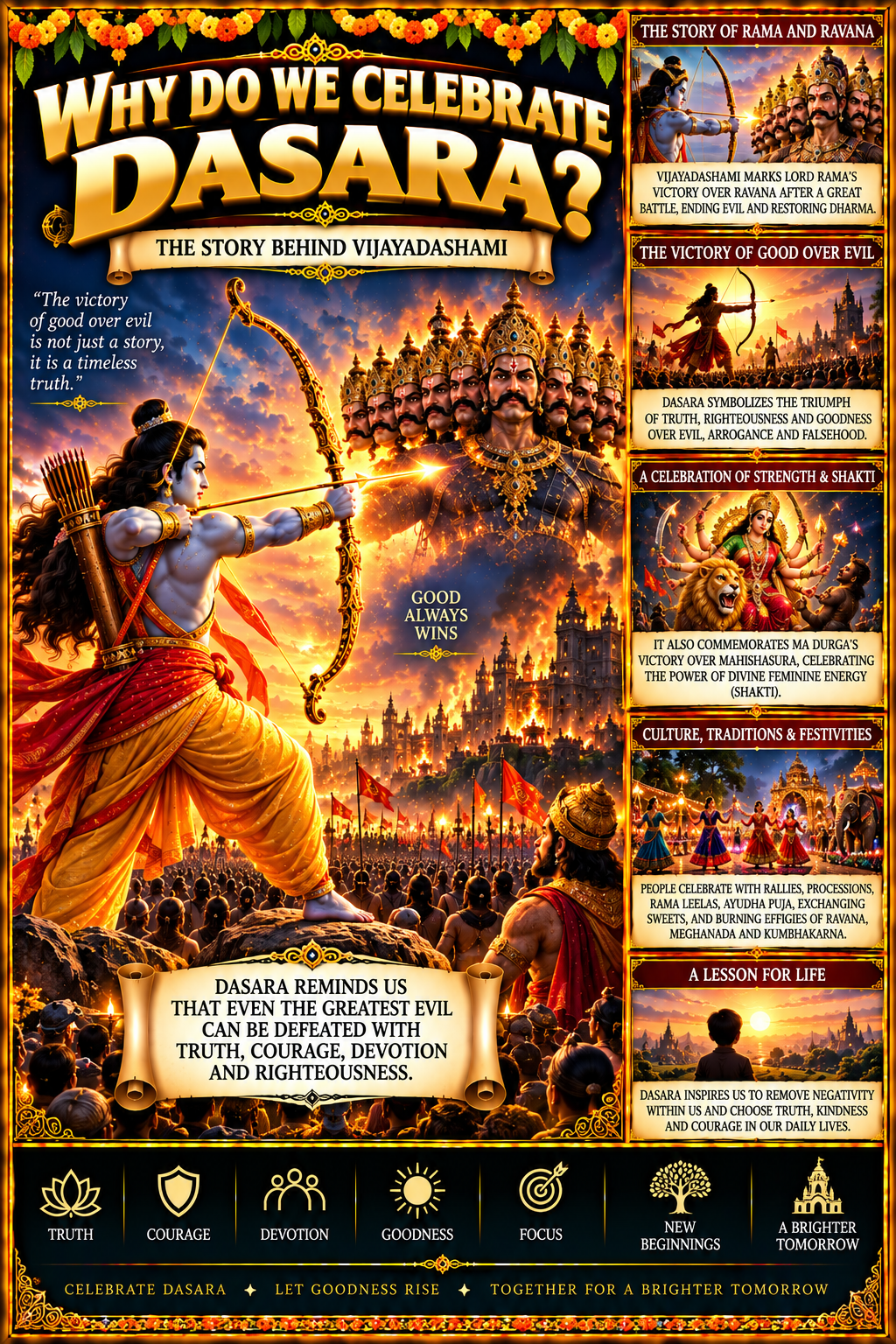
 Why Do We Celebrate Dasara? The Story Behind Vijayadashami
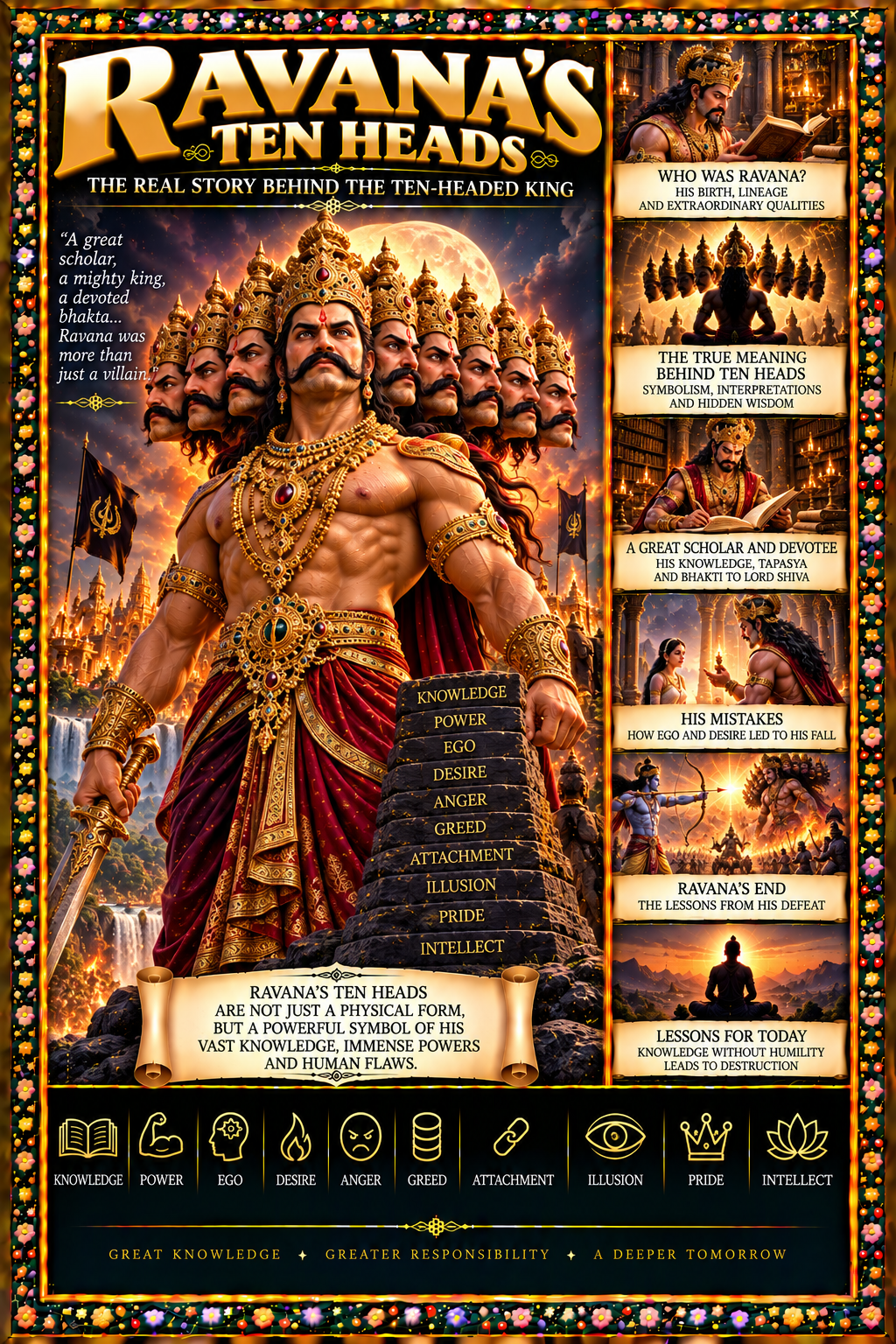 Ravana’s Ten Heads: The Real Story Behind the Ten-Headed King
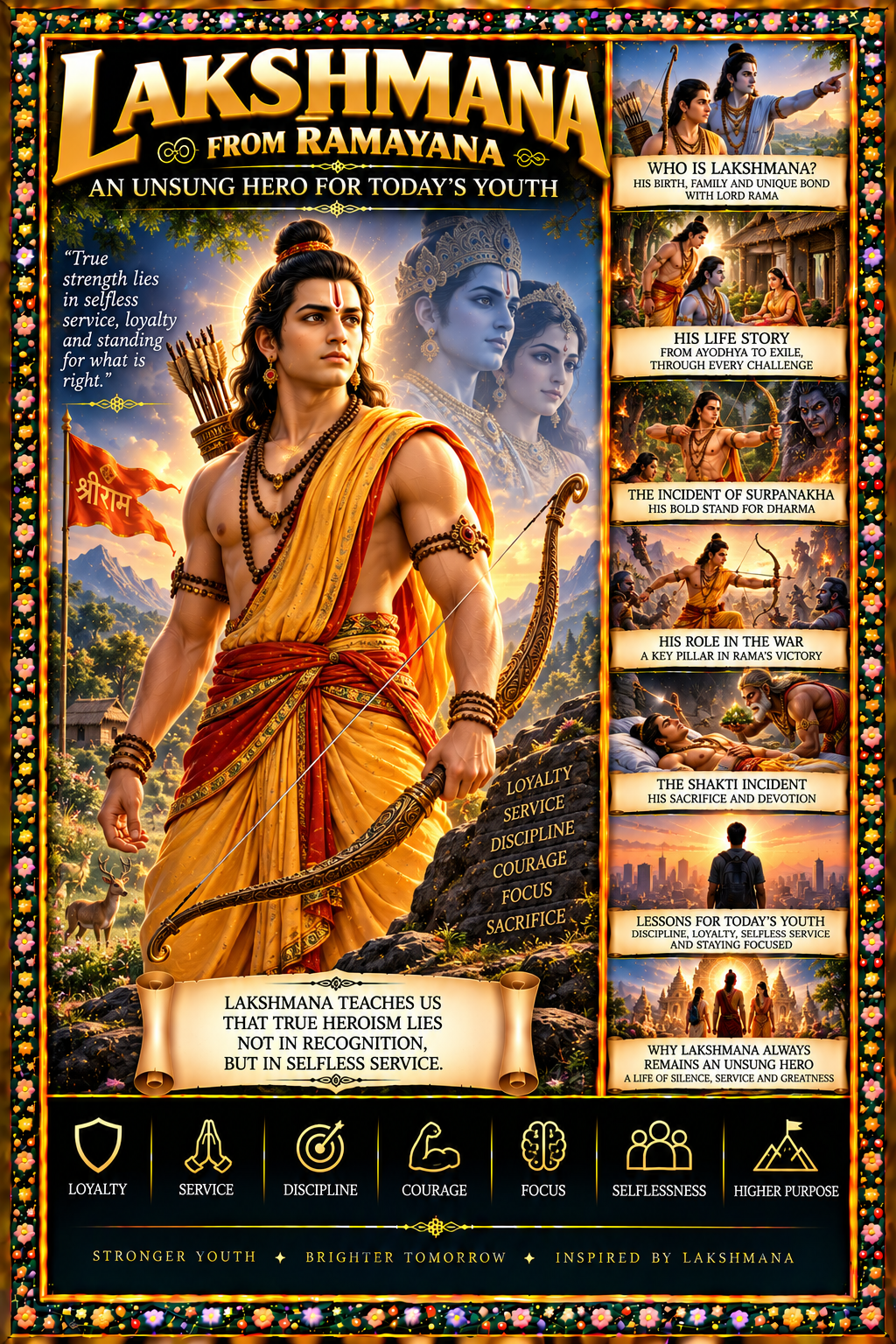
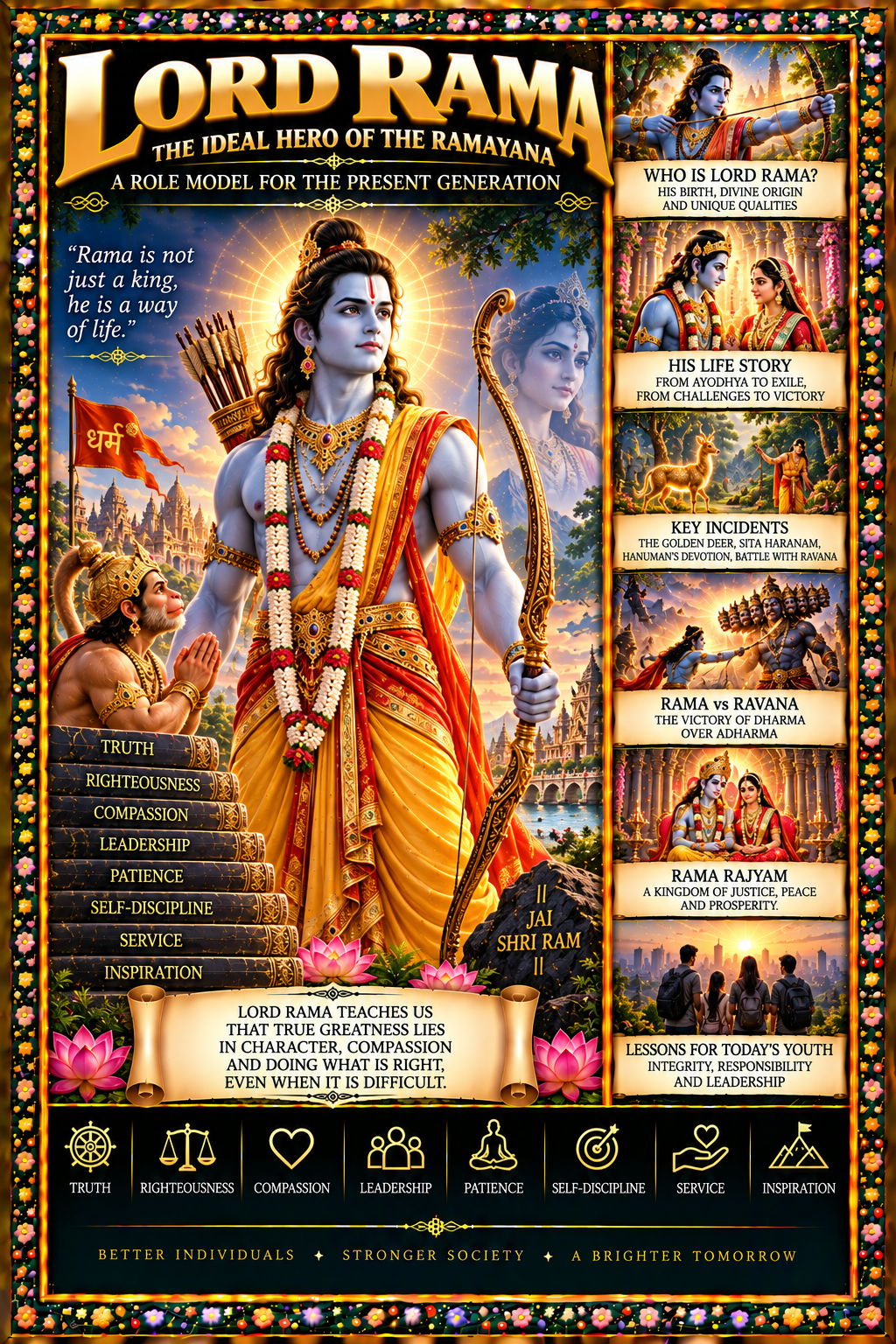
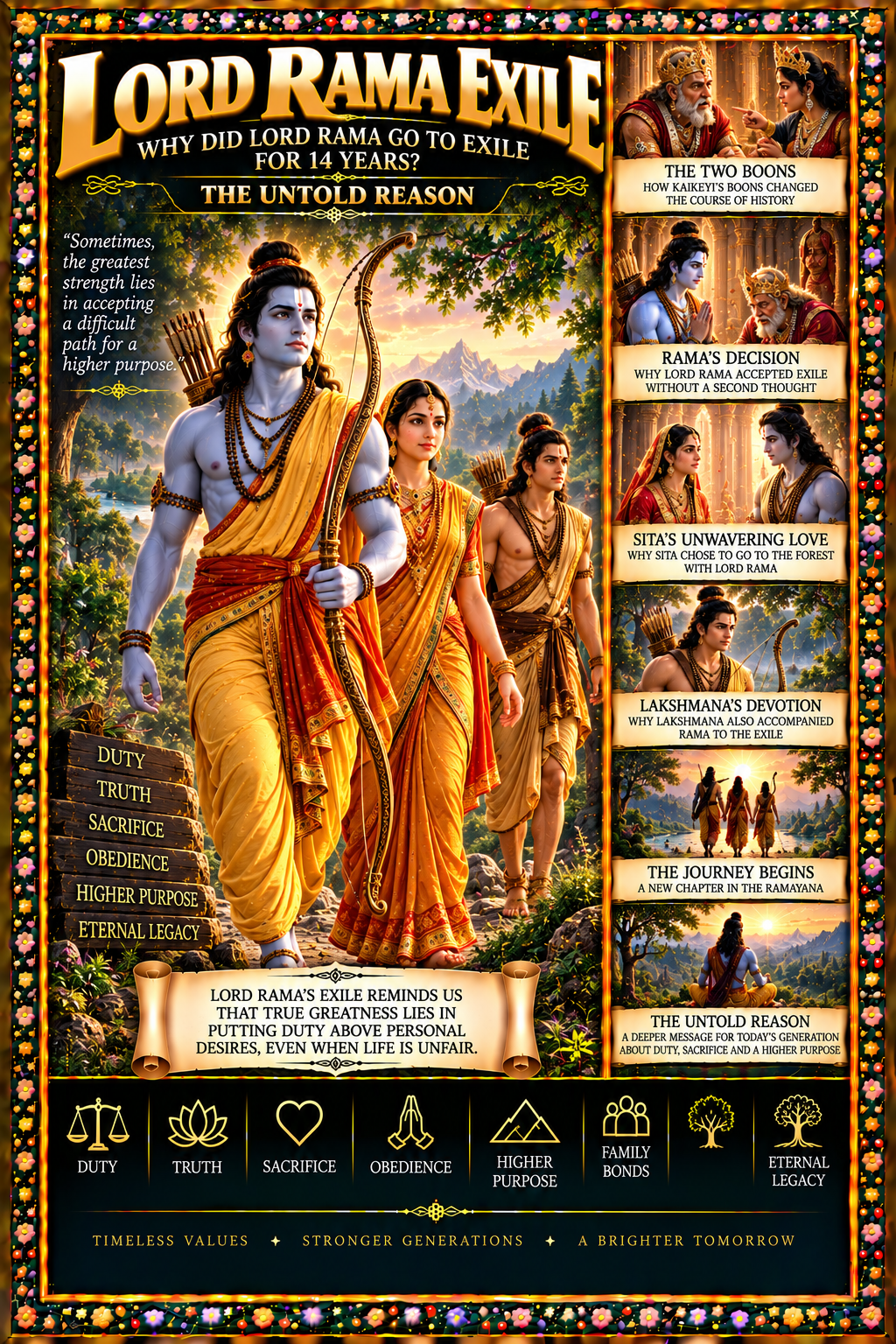 Lord Rama Exile: Why Did Lord Rama Go to Exile for 14 Years? The Untold Reason
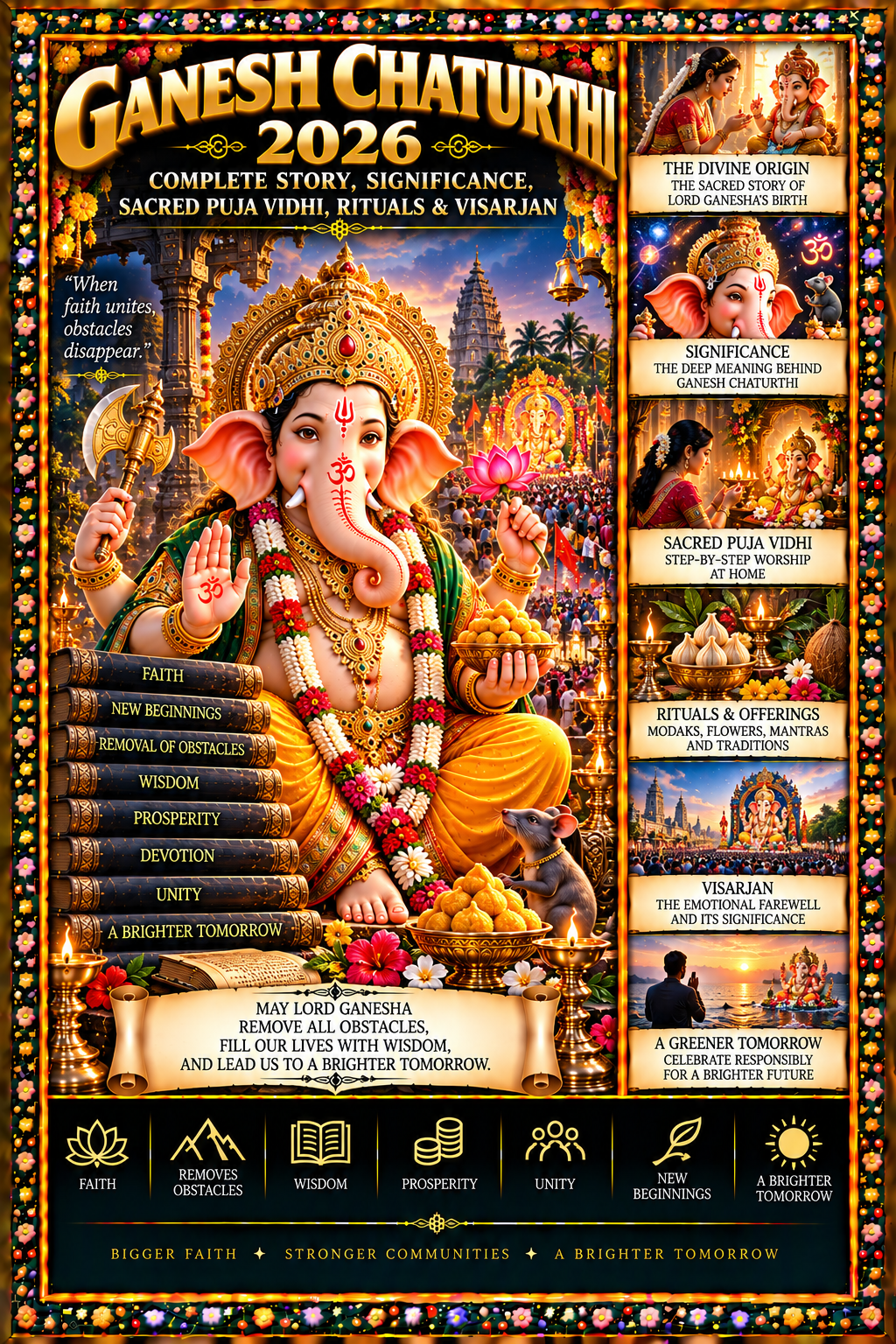 Ganesh Chaturthi 2026: Complete Story, Significance, Sacred Puja Vidhi, Rituals & Visarjan
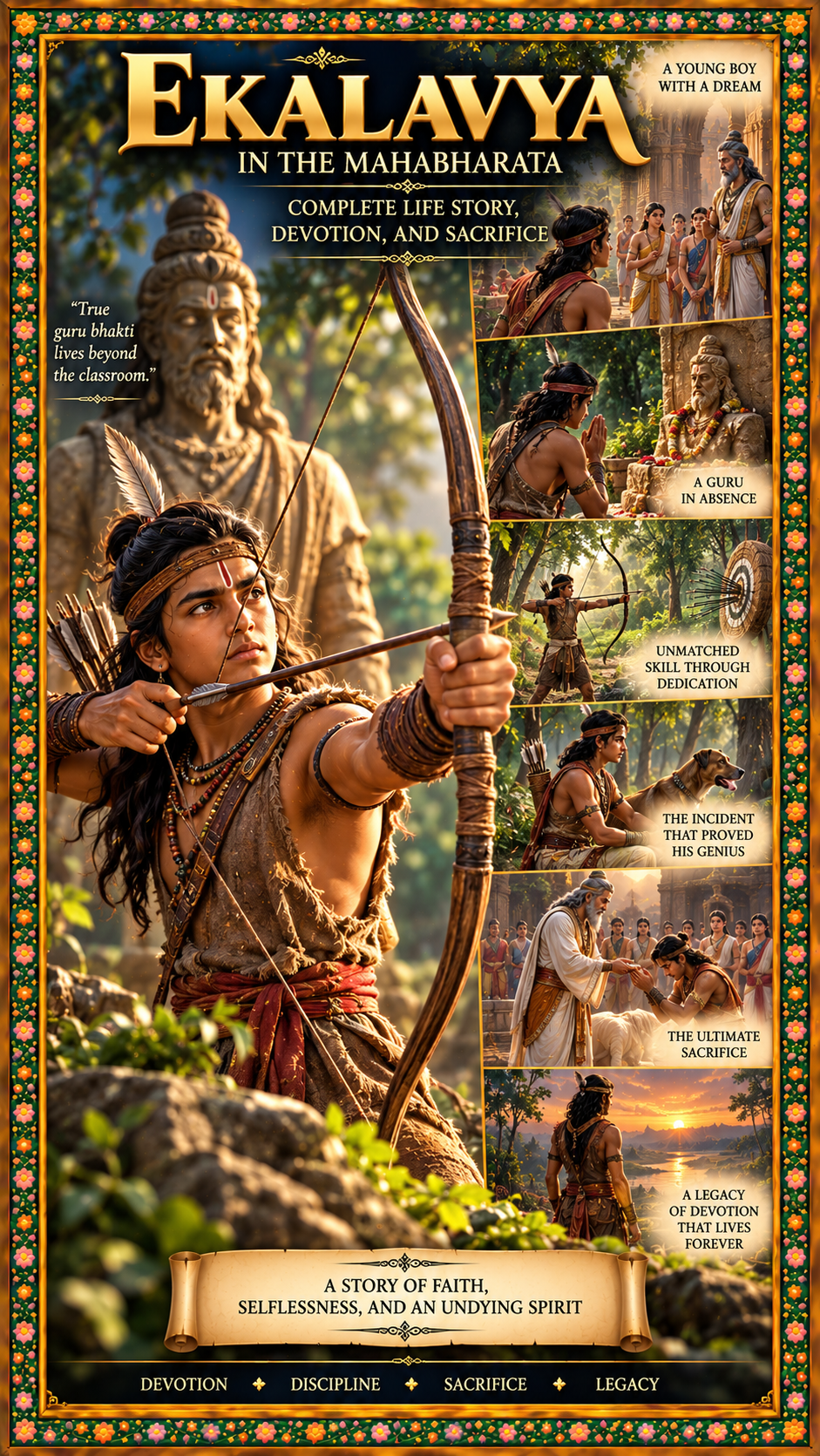 Ekalavya in the Mahabharata: Complete Life Story, Devotion, and Sacrifice
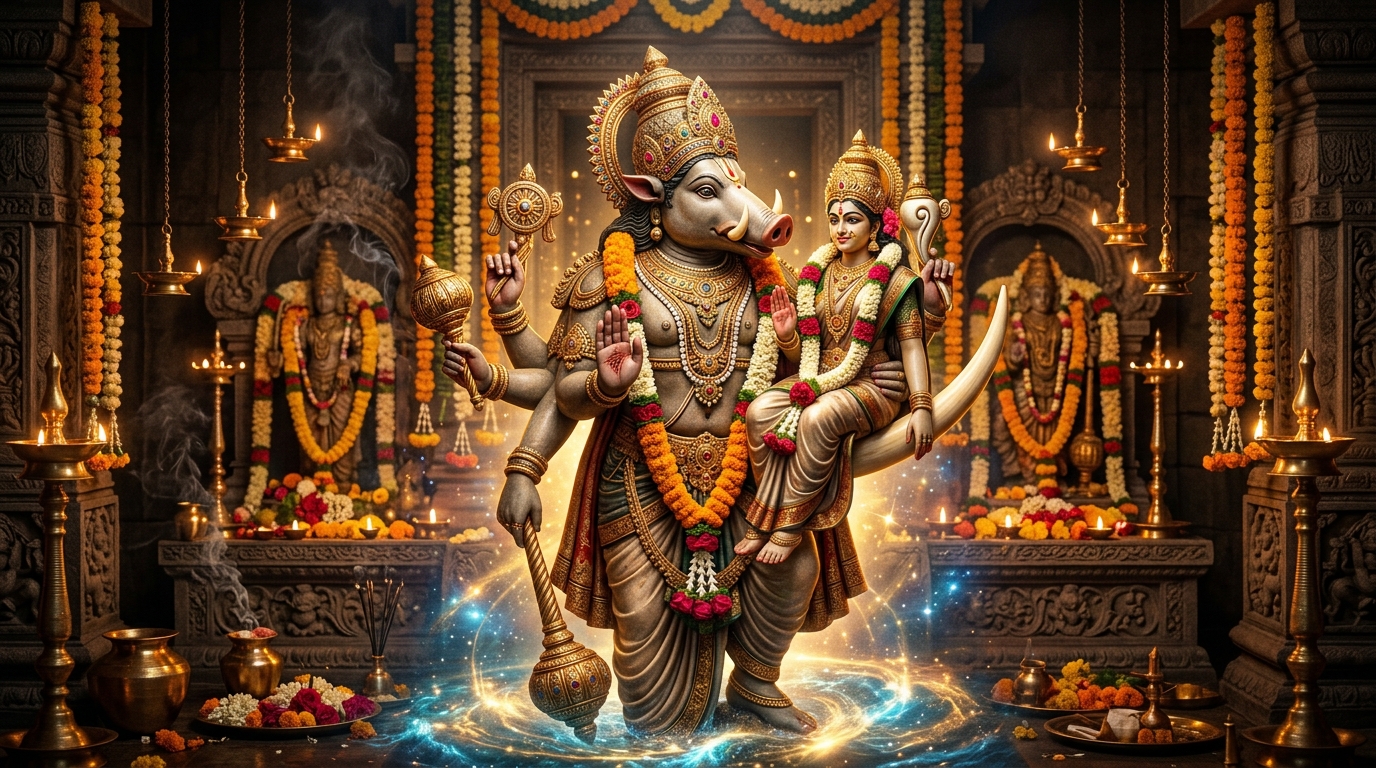 Varaha Jayanti 2026: Complete Story, Significance, Sacred Puja Vidhi & Powerful Mantras
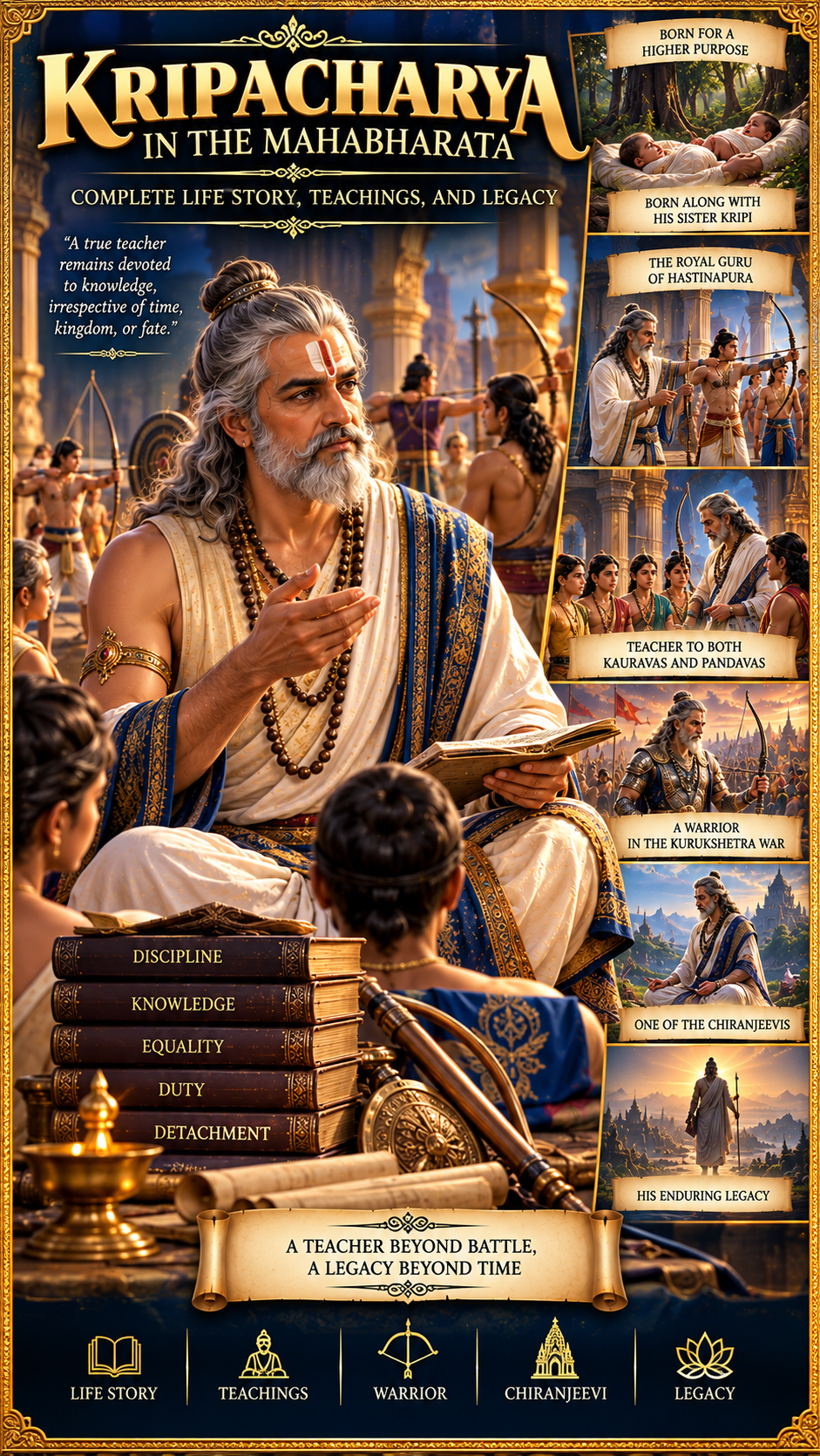 Kripacharya in the Mahabharata: Complete Life Story, Teachings, and Legacy
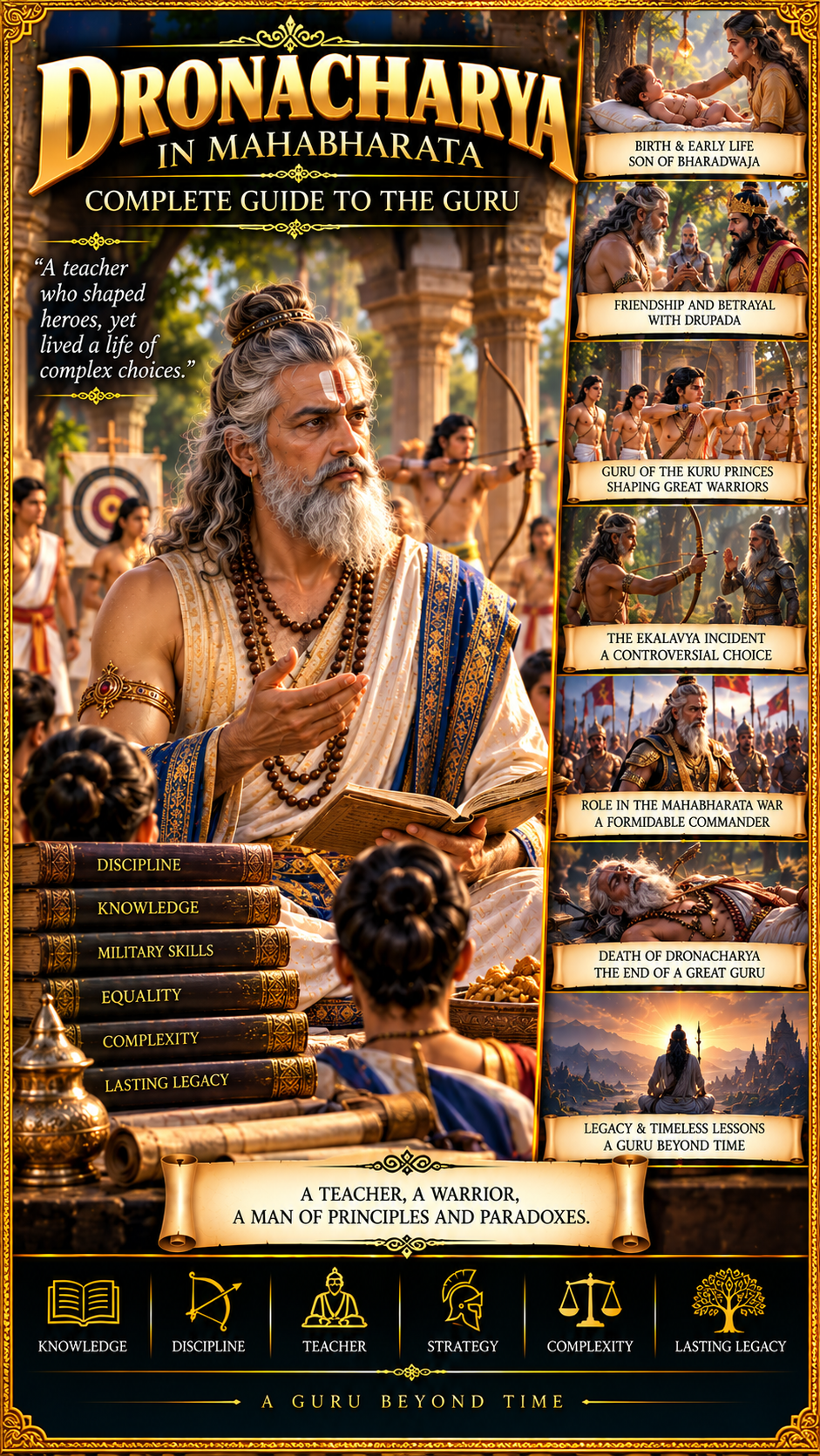
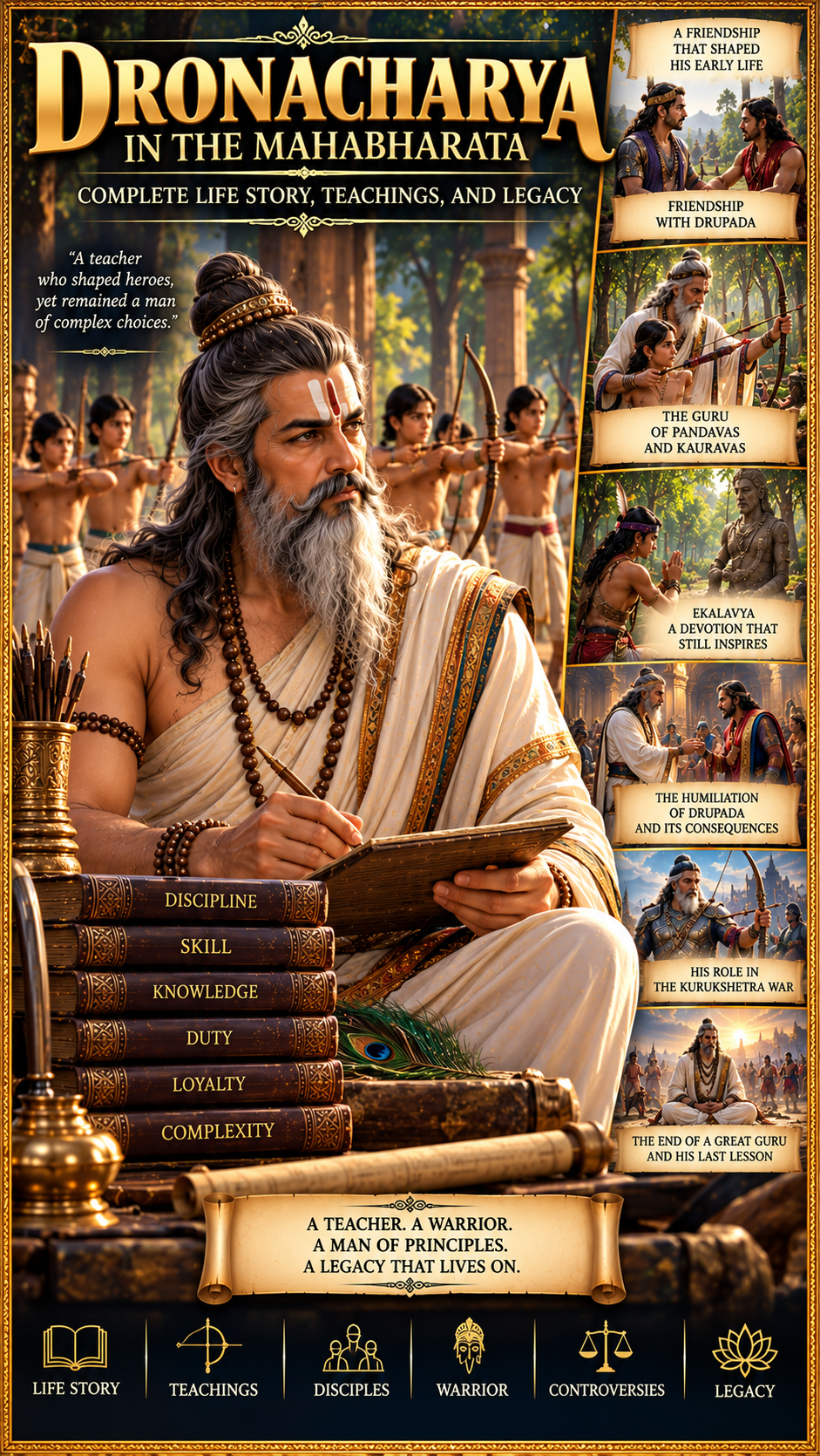 Dronacharya in the Mahabharata: Complete Life Story, Teachings, and Legacy
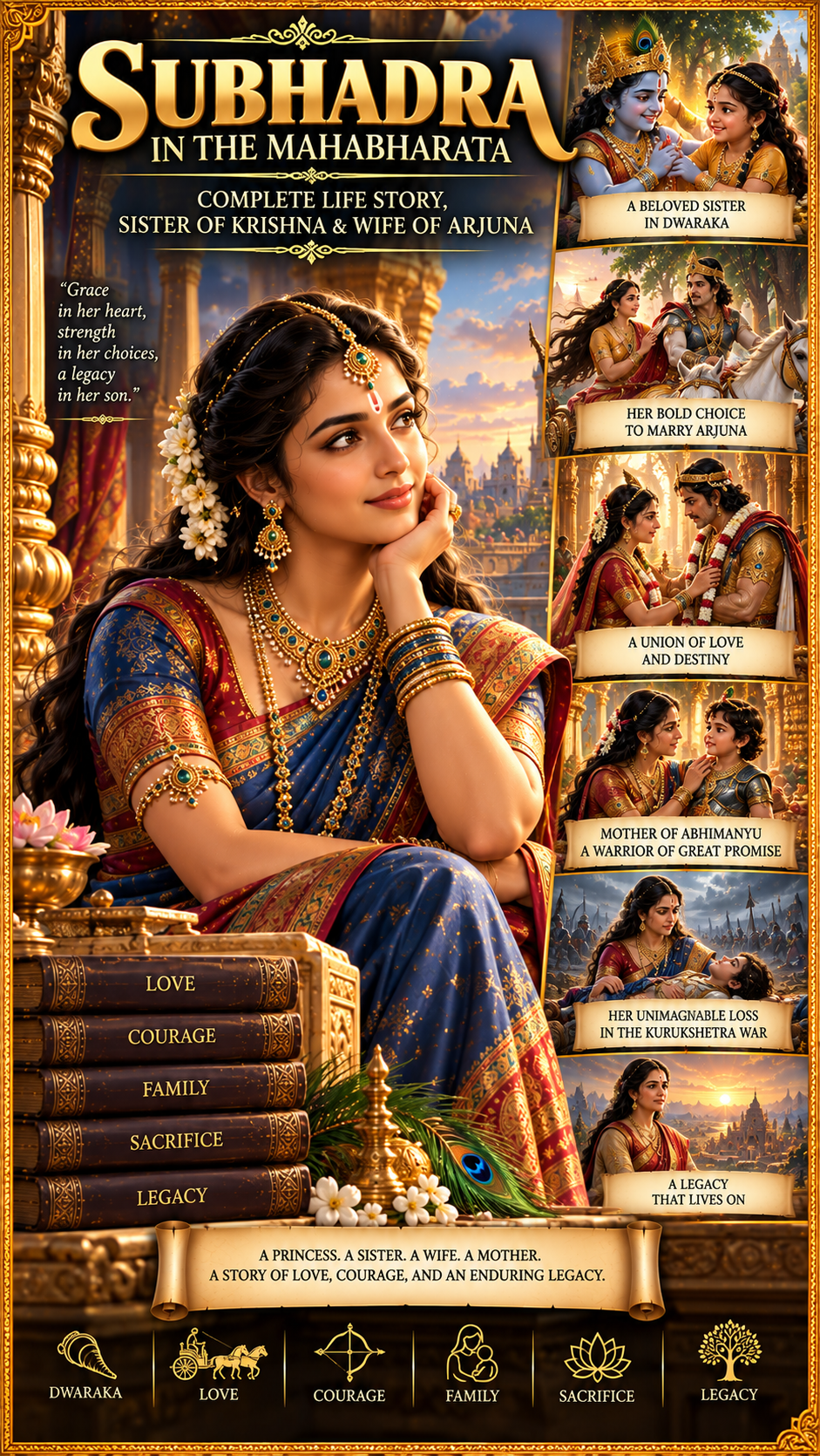 Subhadra in the Mahabharata: Complete Life Story, Sister of Krishna & Wife of Arjuna
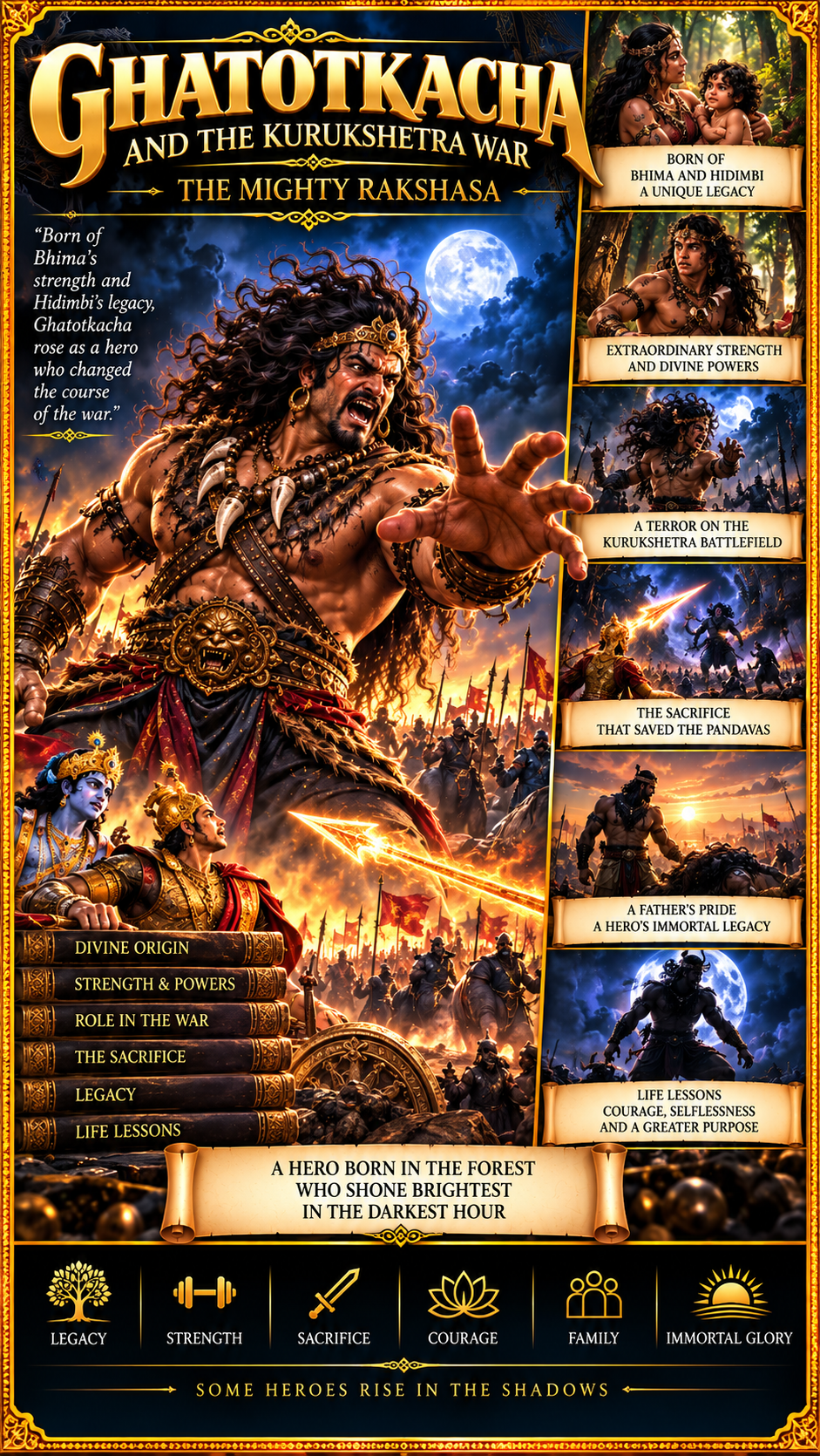
 Hidimbi in the Mahabharata: Complete Life Story, Marriage to Bhima, and Legacy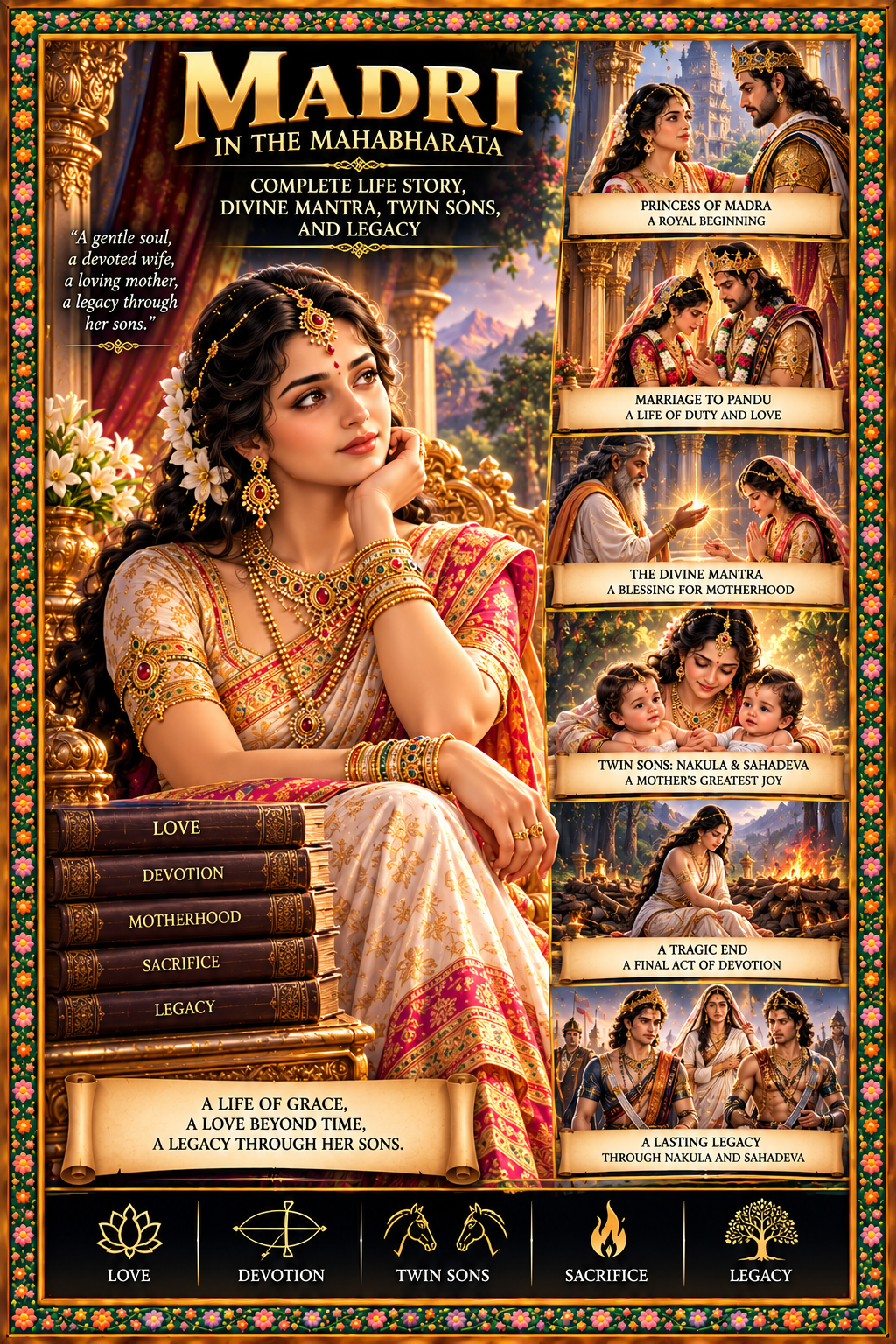







Raja Ratnam
- Kuru Dynasty
- January 4, 2026
- 539 views
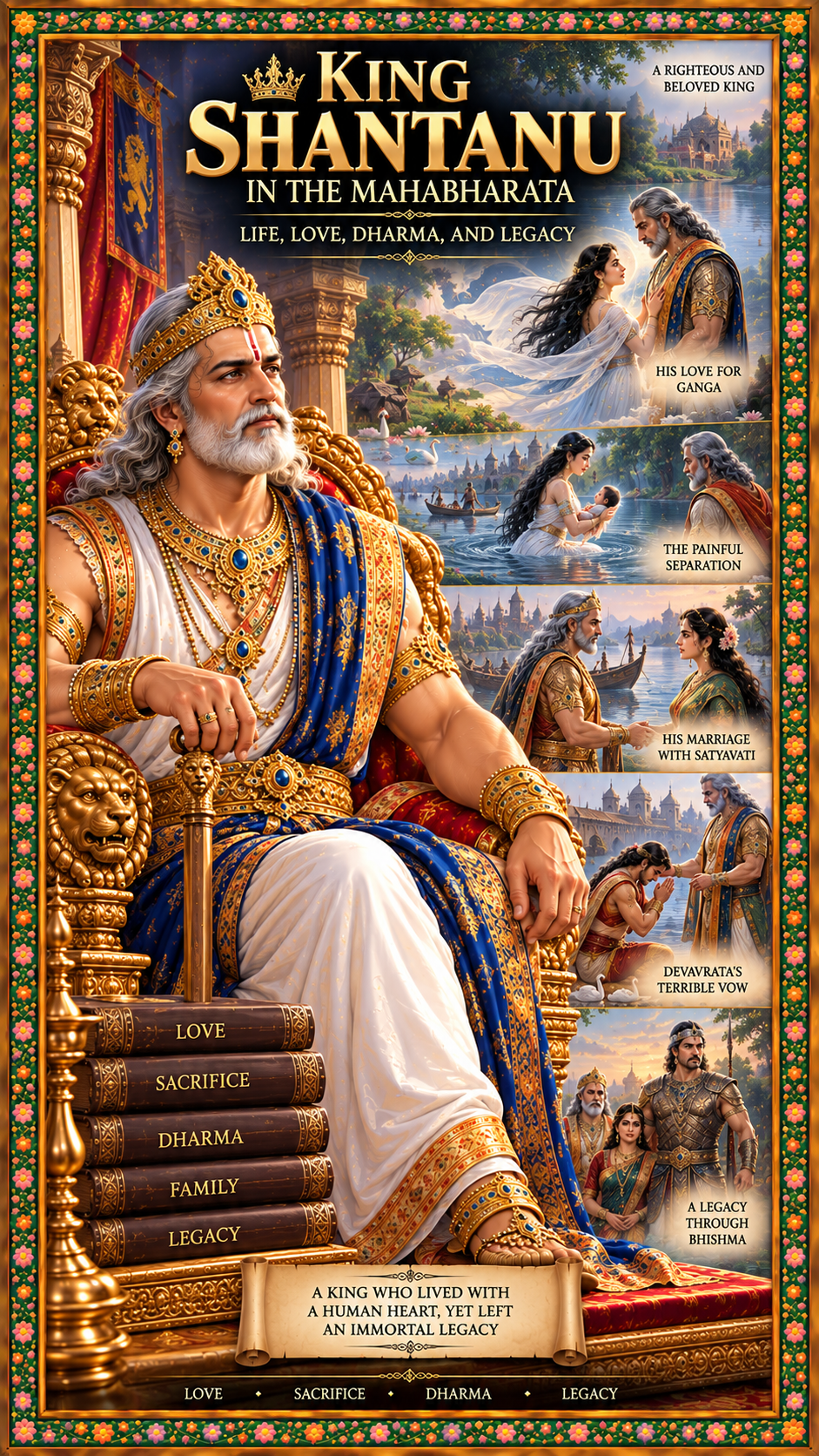
King Shantanu in the Mahabharata: Life, Love, Dharma, and Legacy
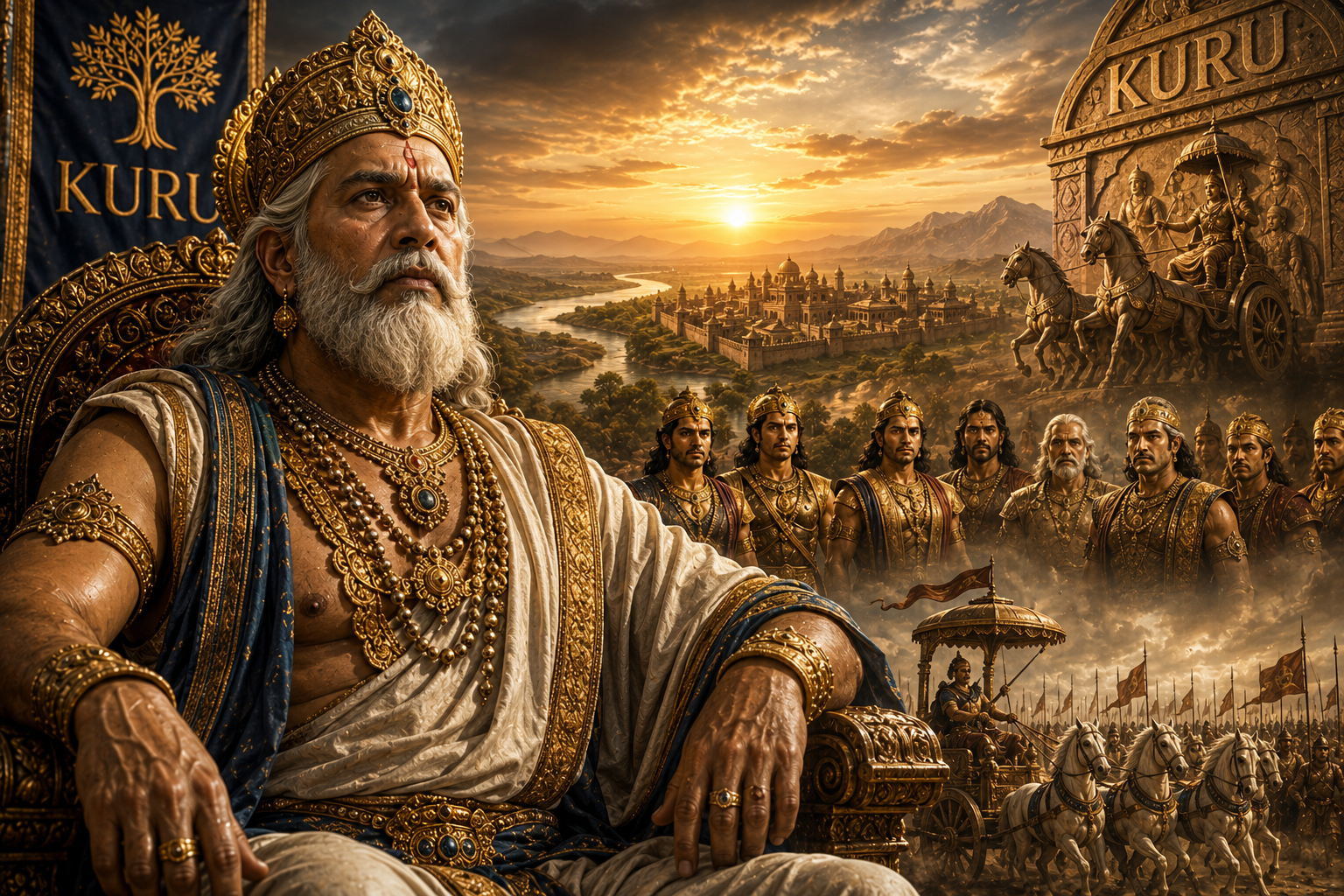
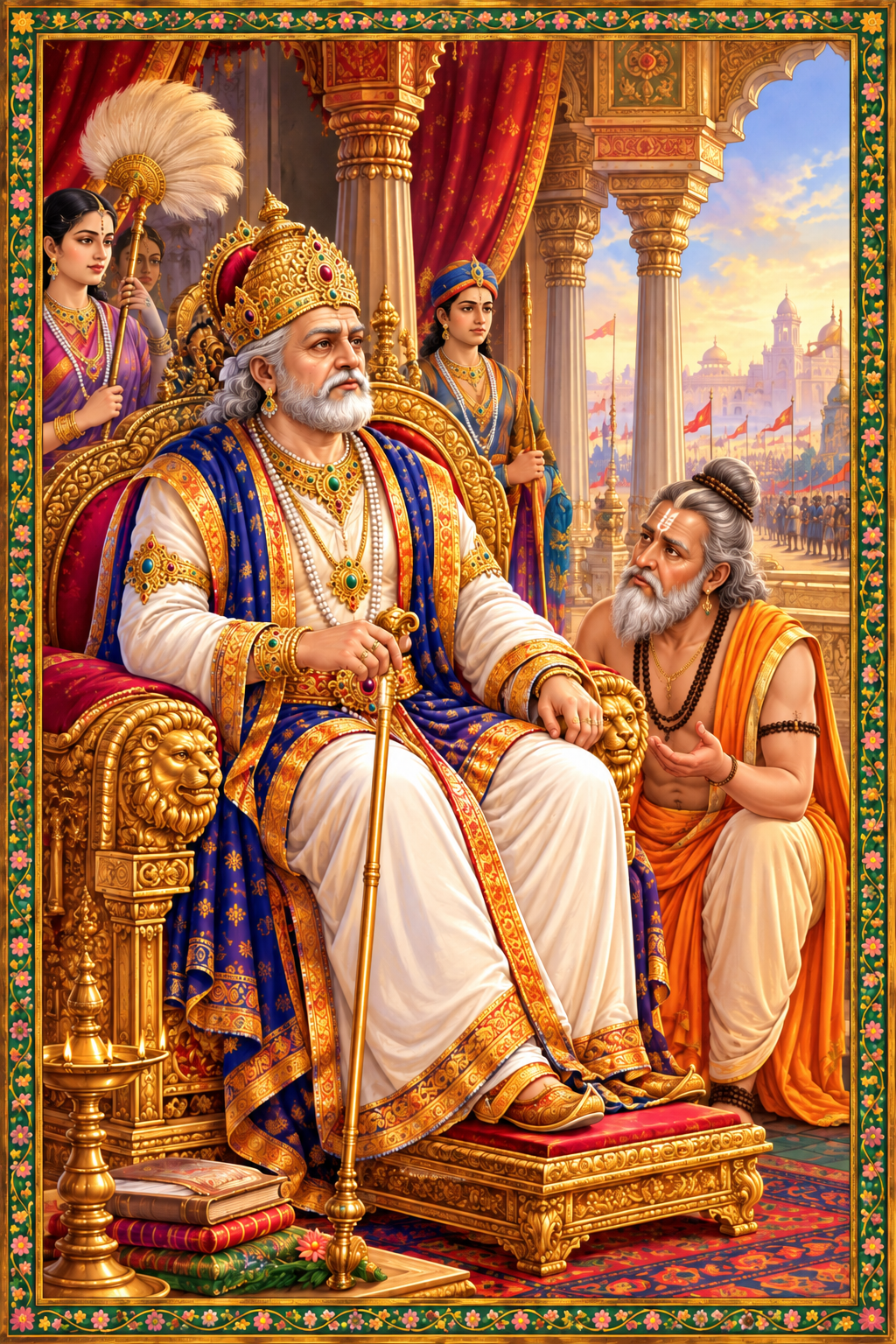
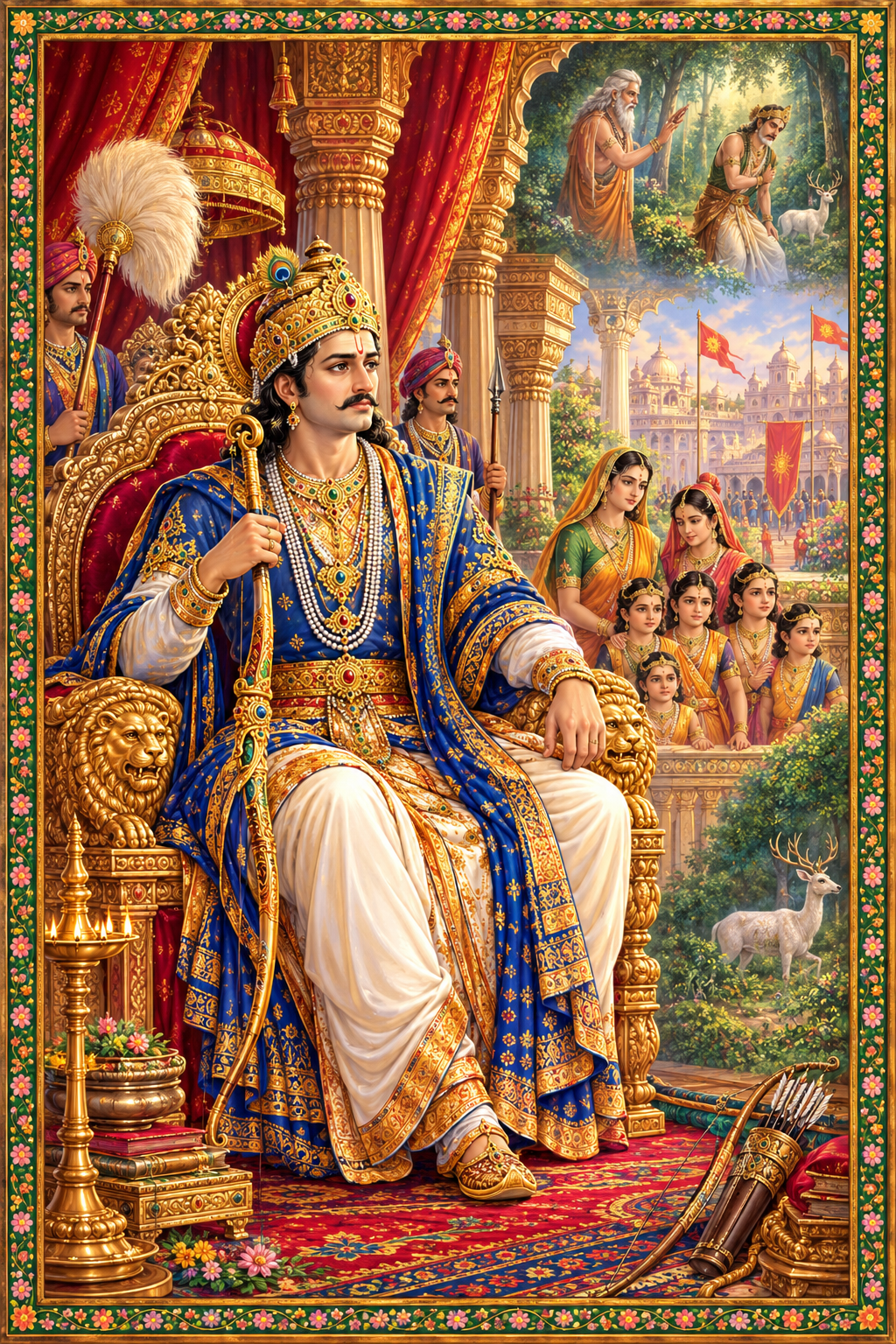
Introduction King Shantanu is one of the most pivotal ancestral figures in the epic Mahabharata. Though he does not fight in the Kurukshetra war, his life decisions—rooted in love, fate, and dharma—shape the destiny of the Kuru dynasty. From his divine marriage with Goddess Ganga to his later union with Satyavati, Shantanu’s story explains the origins of Bhishma, the Kauravas, and the Pandavas. This full-length blog explores King Shantanu’s life, character, marriages, moral dilemmas, and lasting impact on the Mahabharata. Who Was King Shantanu? King Shantanu was the ruler of Hastinapura, descending from the illustrious Kuru lineage. Renowned for his compassion, righteousness, and humility, Shantanu was beloved by his subjects. His reign symbolized peace and prosperity, yet his personal life was marked by divine trials and emotionally difficult choices. Shantanu’s greatness lies not only in his kingship but also in how his personal vows and relationships shaped the future of Bharata’s greatest epic. King Shantanu and Goddess Ganga: A Divine Union While hunting near the river Ganga, Shantanu encountered a celestial woman of extraordinary beauty—Ganga Devi, the river goddess. He fell deeply in love, and she agreed to marry him on one strict condition:He must never question her actions. The…
- Children of King Shantanu
- January 3, 2026
- 552 views
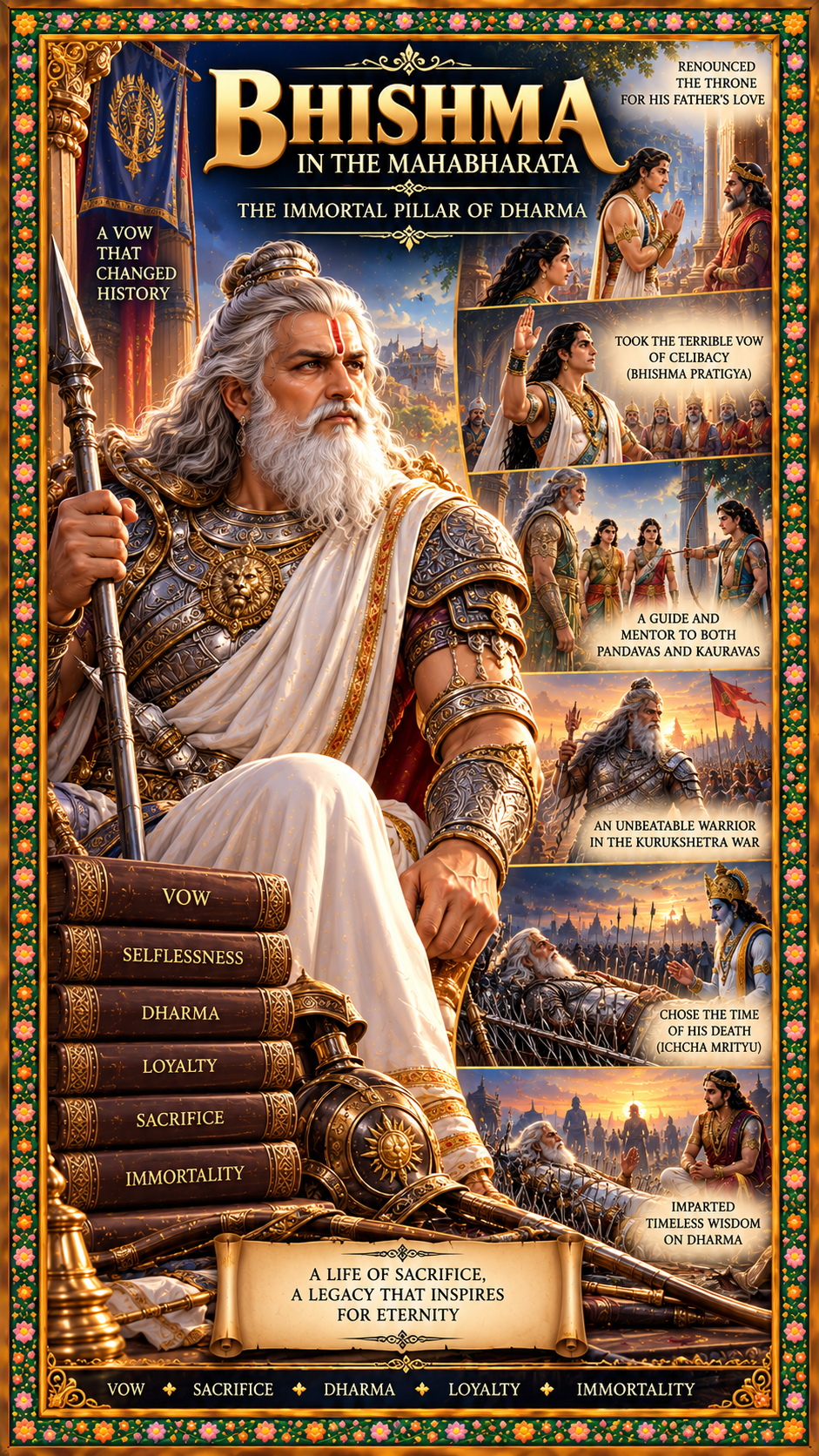
Bhishma in the Mahabharata – The Immortal Pillar of Dharma
Introduction Bhishma, also known as Bhishma Pitamaha, stands as one of the most revered, tragic, and powerful figures in the Mahabharata. He is not merely a warrior but a symbol of unbreakable vows, sacrifice, loyalty, and dharma. His life story is both inspiring and heartbreaking, showing how even righteousness can lead to suffering when bound by rigid duty. Birth of Bhishma – Devavrata, the Son of Destiny Devavrata, the son of King Shantanu, ruler of the Kuru dynasty, and Ganga, the goddess of the River Ganga, was Bhishma’s birth name. Devavrata was no ordinary child. Trained by great sages and blessed by celestial beings, he mastered: From a young age, he was destined to become a legendary protector of the Kuru dynasty. The Terrible Vow – Why He Is Called Bhishma The turning point of Devavrata’s life came when King Shantanu wished to marry Satyavati. In order to inherit the throne, her father demanded that only her children inherit it. To fulfill his father’s happiness, Devavrata took a terrible (bhīṣaṇa) vow: The gods themselves showered flowers from the heavens, and from that moment, Devavrata became Bhishma, the one who took an impossible vow. This single decision shaped the entire future…
- Navagraha's
- December 29, 2025
- 450 views
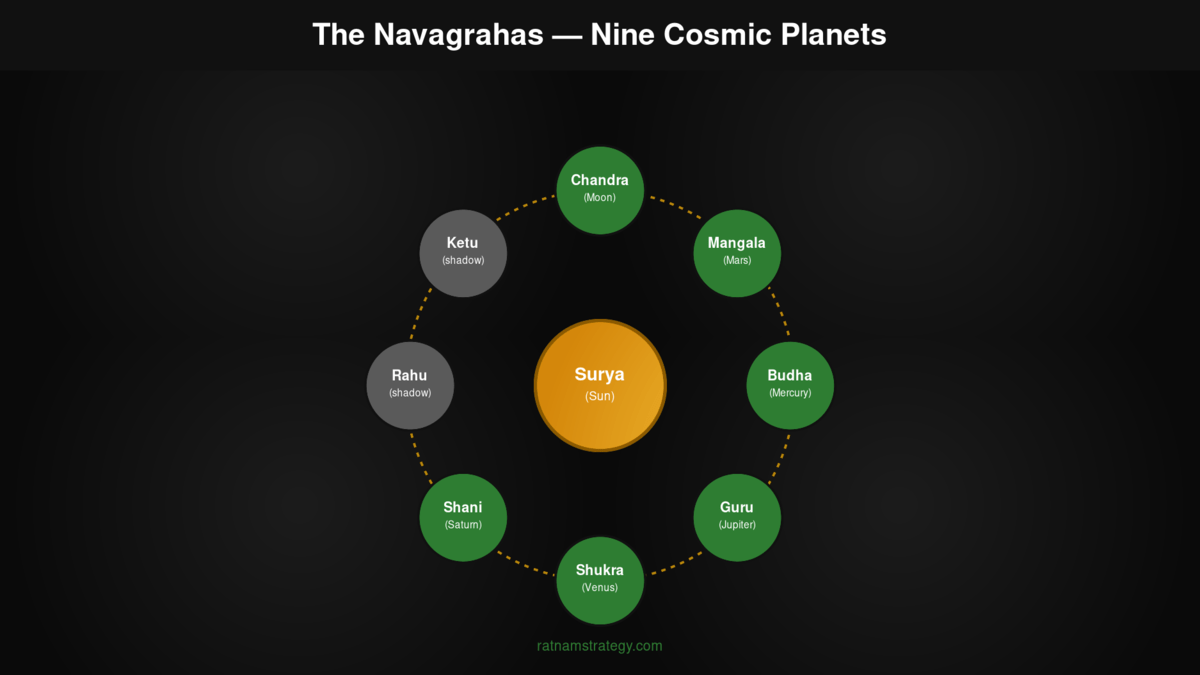
Navagrahas — Soul’s Journey is guided by the Cosmic Teacher
Introduction — More Than Planets, Eternal Teachers The Navagrahas are often misunderstood as mere planets that influence fate.In truth, they are cosmic teachers — divine forces that guide the soul through karma, experience, growth, and liberation. The purpose of each Graha is not to punish, but to teach.Transits are not accidents, but lessons timed by the universe. Together, the Navagrahas form a complete spiritual syllabus for human life —from birth and identity to desire, duty, wisdom, and finally moksha. Surya — Awakening the Soul (Atman) The source of life and consciousness is Surya Deva.He teaches: Surya awakens the Atman, reminding us to stand in our truth and shine without fear. Without Surya, there is no life.Without self-awareness, there is no growth. Chandra — Mastering the Mind Chandra governs the mind, emotions, and inner world.He teaches: The Moon reminds us that inner peace is more important than outer success.A calm mind reflects the divine clearly. Mangala — Right Action and Courage Mangala Deva represents energy, discipline, and righteous action.He teaches: Mangala is the inner warrior —fighting ignorance, laziness, and fear. Guru (Brihaspati) — Wisdom and Dharma Guru is the light of wisdom.He teaches: Without Guru, power becomes arrogance.With Guru, life becomes…

- Navagraha's
- December 28, 2025
- 461 views
Ketu Deva — The Planet of Moksha, Detachment, and Spiritual Awakening
Introduction — The Silent Force of Liberation Among the Navagrahas, Ketu is the most silent, mysterious, and spiritually potent graha.He does not create noise, fame, or desire — instead, he cuts attachments, dissolves ego, and pushes the soul toward liberation (Moksha). If Rahu binds the soul to illusion and desire,Ketu frees the soul through detachment and realization. Ketu represents: Ketu does not give pleasure —he gives truth. Mythological Origin of Ketu Deva The origin of Ketu is inseparable from Rahu and the great event of Samudra Manthan. When the Asura Svarbhanu disguised himself and drank Amrita,Lord Vishnu severed his body with the Sudarshana Chakra. Unlike Rahu, who retained desire and hunger,Ketu was left without a head — symbolizing ego-less existence. Thus, Ketu became: Scriptures describe Ketu as a flag without a pole —present, powerful, but unattached. Ketu Deva in Hindu Scriptures Ketu appears in: Ancient sages describe Ketu as: Unlike other planets, Ketu does not follow worldly dharma.He follows cosmic truth. For official cultural and historical archives, visit the Ministry of Culture, Government of India. Mythological Origin of Ketu Deva The origin of Ketu is inseparable from Rahu and the great event of Samudra Manthan. When the Asura Svarbhanu disguised…

- Navagraha's
- December 28, 2025
- 446 views
Rahu Deva — The Shadow Planet of Illusion, Obsession, and Transformation
Introduction — Rahu Deva It is the invisible force that shapes destiny Among the Navagrahas, Rahu Deva is the most mysterious, feared, and misunderstood force.He has no physical body, no light of his own — yet his influence is powerful enough to alter destinies, create kings, destroy empires, and awaken souls. Rahu represents: If Surya gives clarity and Mangala gives action,Rahu tests the soul by blurring truth — forcing growth through confusion. Rahu is not evil.He is the teacher of hidden karma. Mythological Origin of Rahu Deva The origin of Rahu comes from the legendary Samudra Manthan (Churning of the Ocean of Milk). When the Devas and Asuras churned the ocean for Amrita (nectar of immortality), Lord Vishnu appeared as Mohini to distribute it only to the Devas. An Asura named Svarbhanu disguised himself as a Deva and secretly drank the Amrita.Before the nectar could reach his stomach, Surya (Sun) and Chandra (Moon) exposed him. In anger, Lord Vishnu beheaded him with the Sudarshana Chakra. But since he had already tasted Amrita: Rahu survived — immortal, bodiless, and eternally hungry. From that moment, Rahu swore revenge on the Sun and Moon —causing solar and lunar eclipses by swallowing them temporarily.…

- Navagraha's
- November 25, 2025
- 707 views
Shukra Deva(Venus) — The Planet of Love, Beauty, Desire & Divine Guidance
Introduction — The Radiant Energy of Love and Harmony(Shukra (Venus)) Among the Navagrahas Shukra (Venus) — The Planet of Love & Divine Guidance(Venus) stands as the brightest and most beautiful presence in the night sky.Known as the Guru of the Asuras, Shukra is the divine embodiment of: If Brihaspati represents divine spiritual wisdom, Shukra Deva represents worldly wisdom — the art of living gracefully in the material world. In astrology, Shukra governs relationships, marriage, wealth, creativity, comfort, and attraction.In mythology, he is a master of mantras, a healer, and a compassionate guide of the Asuras. Birth of Shukra(Venus) Shukra is the son of Sage Bhrigu, one of the Saptarishis, and his wife Kavyamata. From birth, he was endowed with extraordinary intelligence, charm, and compassion.While Brihaspati guided the Devas, Shukra chose the path of guiding the Asuras (Danavas) — beings often misunderstood but filled with potential. This cosmic balance created the eternal duality: Shukra’s Tapasya to Lord Shiva The most legendary tale of Shukra describes his thousand-year penance to please Lord Shiva.He stood upside down, consumed only by air, and meditated with unwavering devotion. Pleased by his austerity, Lord Shiva granted Shukra the powerful knowledge of the “Mṛta Sañjīvani Mantra” —the…

- Navagraha's
- November 25, 2025
- 516 views
Surya Deva (Sun) — The Eternal Source of Light, Power, and Divine Energy
For official cultural and historical archives, visit the Ministry of Culture, Government of India. Related Sacred Topics & Cultural Heritage: For further spiritual exploration, read about Lord Rama’s ideal life story. For further spiritual exploration, read about the 14-year exile of Lord Rama. For further spiritual exploration, read about Ravana’s story in the Ramayana. Introduction — The Heart of the Universe Among the Navagrahas, Surya Deva stands supreme as the giver of life, light, and consciousness.He is the visible form of the divine — the eternal witness who illuminates the world every day without fail. In Vedic tradition, Surya is not merely a celestial body;He is Prana (life-force), Tejas (spiritual fire), and Chaitanya (awareness).He represents truth, clarity, discipline, and the power to rise above darkness. Without Surya, plants cannot live, Earth cannot thrive, The mind cannot awaken,andSpiritual consciousness cannot bloom. Thus, Surya is honored as Savita, the universal creator and nurturer. Mythological Origin of Surya Deva According to the Rig Veda, Surya is born from the cosmic fire of creation — Agni.Later Puranas identify him as the son of Sage Kashyapa and Aditi, the mother of the gods. He rides a divine seven-horse chariot, symbolising the seven days of the…

- Mythology , Navagraha's
- November 6, 2025
- 582 views
Shani Deva (Saturn) – Karma, Justice, Discipline
Introduction – The Power and Mystery of Shani Deva (Saturn) Among the Navagrahas, Shani Deva (Saturn) remains the most revered, feared, misunderstood, and ultimately transformative graha. Known as the Lord of Karma, Justice, Discipline, and Destiny, Shani acts as the cosmic judge who monitors the moral balance of the universe. Shani’s influence is never meant to punish out of anger—rather, he guides souls through accountability, responsibility, restraint, and spiritual awakening. His lessons are deep, life-changing, and karmically precise. Shani’s slow movement through the zodiac symbolizes patience, endurance, maturity, and long-term results. His blessings are slow but permanent; his teachings are tough but purifying. For official cultural and historical archives, visit the Ministry of Culture, Government of India. Mythological Origins of Shani Deva 1. Birth of Shani – Son of Surya and Chhaya Shani is the son of Lord Surya (Sun) and Devi Chhaya, who was created as a shadow form of Surya’s wife Sanjana. From birth, Shani exhibited extraordinary powers. When Surya refused to accept him, Shani’s angry gaze caused Surya’s chariot horses to weaken, leading Surya to realize the divine strength of his son. 2. Relationship with Yama – God of Death Shani and Yama are brothers. While Yama…

- Mythology , Navagraha's
- November 4, 2025
- 459 views
Guru Deva (Brihaspati / Jupiter) — The Divine Teacher of Gods and the Light of Wisdom
Introduction Guru (Brihaspati / Jupiter): In the grand cosmic family of the Navagrahas, Guru (Brihaspati) shines as the planet of wisdom, righteousness (dharma), knowledge, and divine counsel.Known as Devaguru — the preceptor of the Devas — he is revered not just as a planet influencing destiny, but as a living embodiment of divine wisdom and truth. Where Surya represents energy and life, and Chandra reflects emotion and mind, Guru governs knowledge, faith, and morality — the spiritual compass that guides humanity toward enlightenment. In astrology, Jupiter symbolizes expansion, prosperity, optimism, and justice. His blessings bring spiritual understanding, wealth, and harmony in life.In mythology, he stands as the Guru of the Devas, constantly guiding them against ignorance and ego. Mythological Origin of Guru (Brihaspati / Jupiter) The origins of Brihaspati are described in the Rig Veda and later in the Puranas such as the Brahmanda Purana and Matsya Purana. Brihaspati is the son of Sage Angiras, one of the Saptarishis, and Shraddha Devi.From birth, he radiated extraordinary brilliance and wisdom. His intellect and mastery of the Vedas were so profound that even the Devas sought his counsel. Recognizing his spiritual might, Lord Indra appointed Brihaspati as the Guru and priest of…

- Mythology , Navagraha's
- November 4, 2025
- 474 views
Budha (Mercury) — The Planet of Intelligence, Communication & Wit
Introduction Among the Navagrahas, Budha (Mercury) stands out as the planet of intellect, speech, learning, and trade. Representing the quicksilver quality of the mind, Budha governs our ability to analyze, communicate, and connect. In astrology, he rules logic, language, business acumen, and adaptability — the very traits that make humans the thinking species. Known as the celestial prince, Budha’s energy is youthful, playful, and curious. He represents the mind that loves to learn, negotiate, and express itself clearly. For official cultural and historical archives, visit the Ministry of Culture, Government of India. Mythological Origin of Budha Budha (Mercury) Birth of Budha — The Child of Chandra and Tara According to Hindu mythology, Budha was born from Chandra (the Moon) and Tara, the wife of Brihaspati (Jupiter). When Chandra became infatuated with Tara, she was drawn to his charm and brilliance. Their union resulted in the birth of a radiant child — Budha. When Brihaspati discovered the affair, a great celestial conflict erupted among the gods. The child, however, was so radiant and intelligent that the gods accepted him as divine. He was named Budha, meaning “the Wise” or “the Enlightened One.” Later, Budha performed intense penance to Lord Vishnu and…