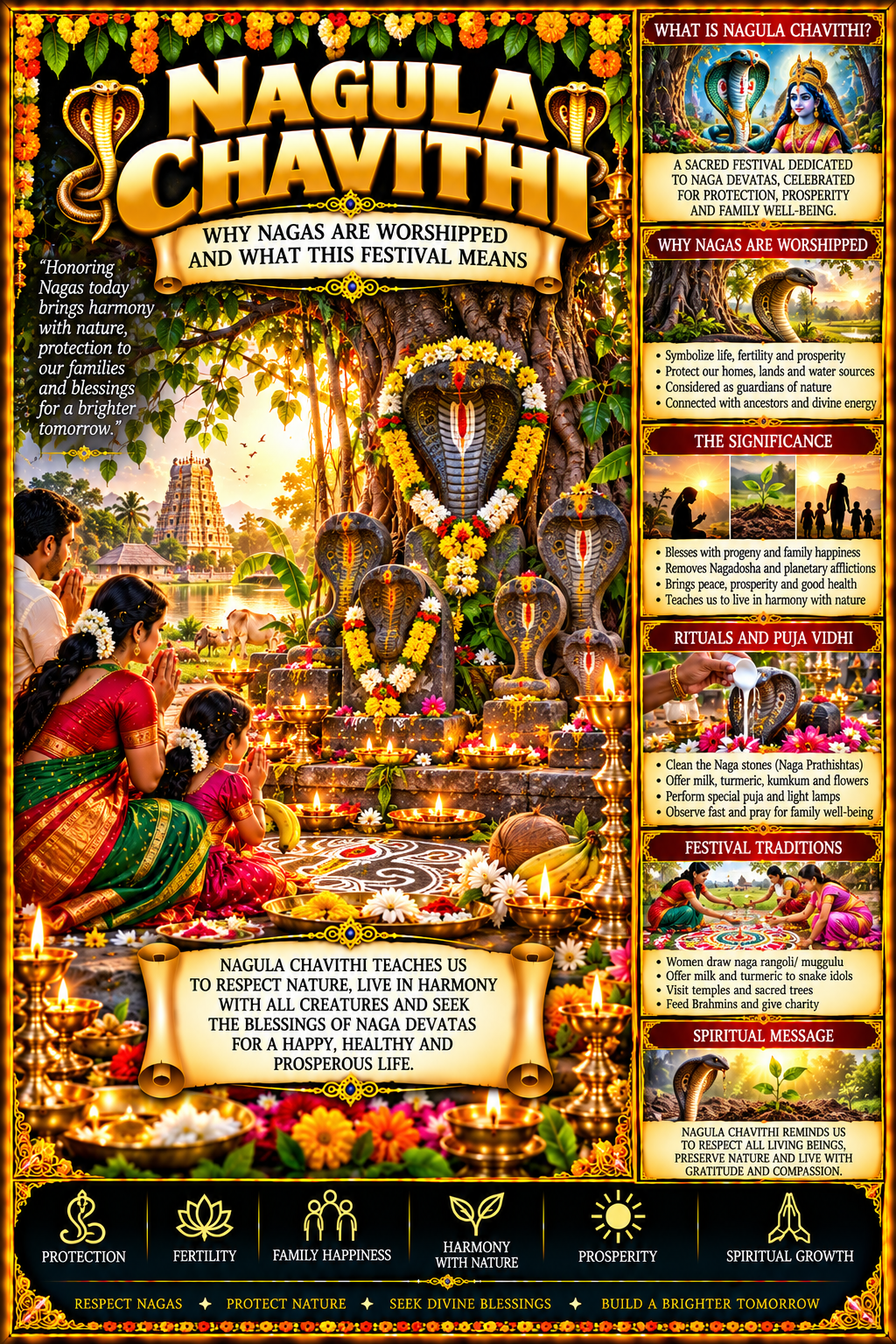
 Nagula Chavithi: Why Nagas Are Worshipped and What This Festival Means
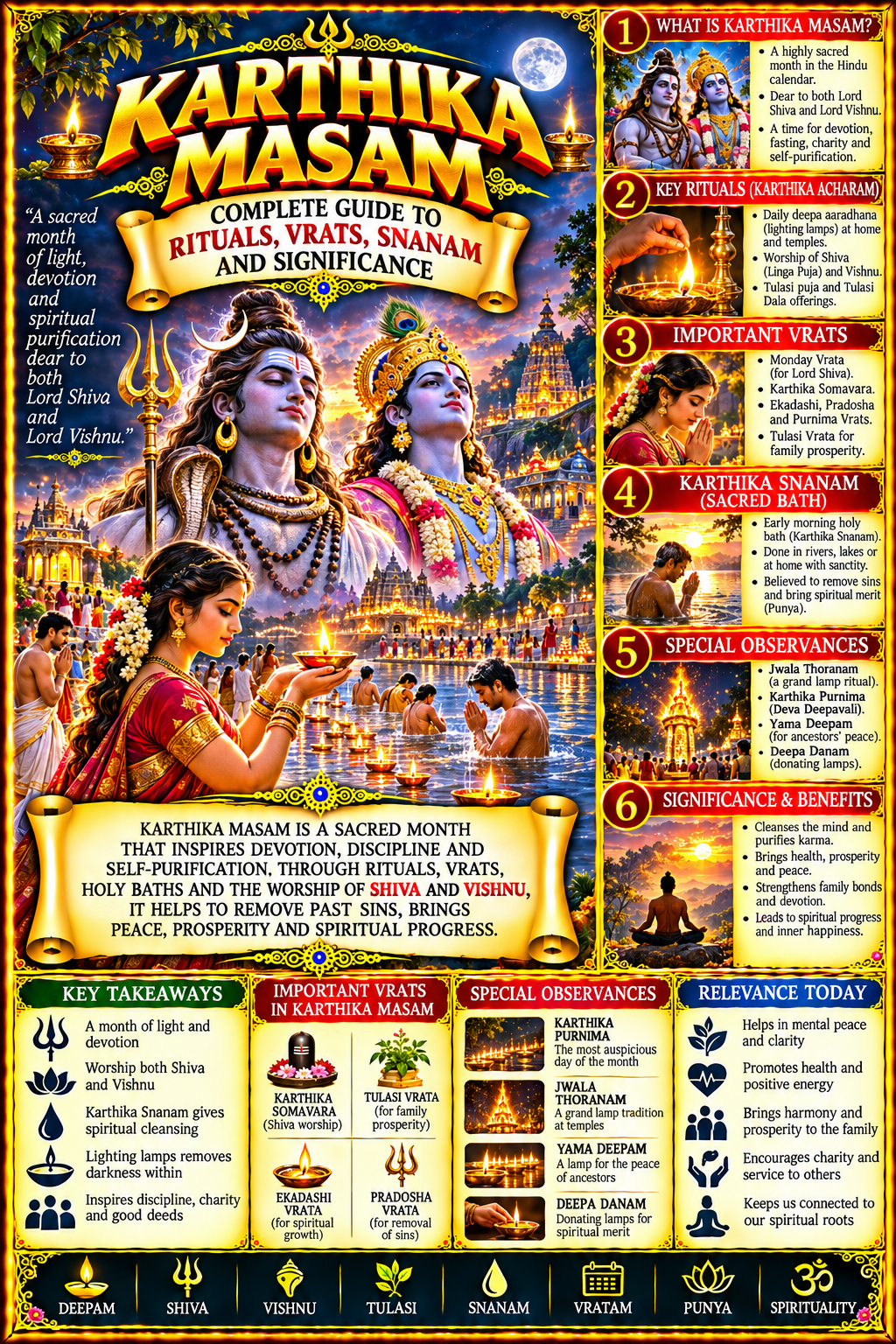 Karthika Masam: Complete Guide to Rituals, Vrats, Snanam and Significance
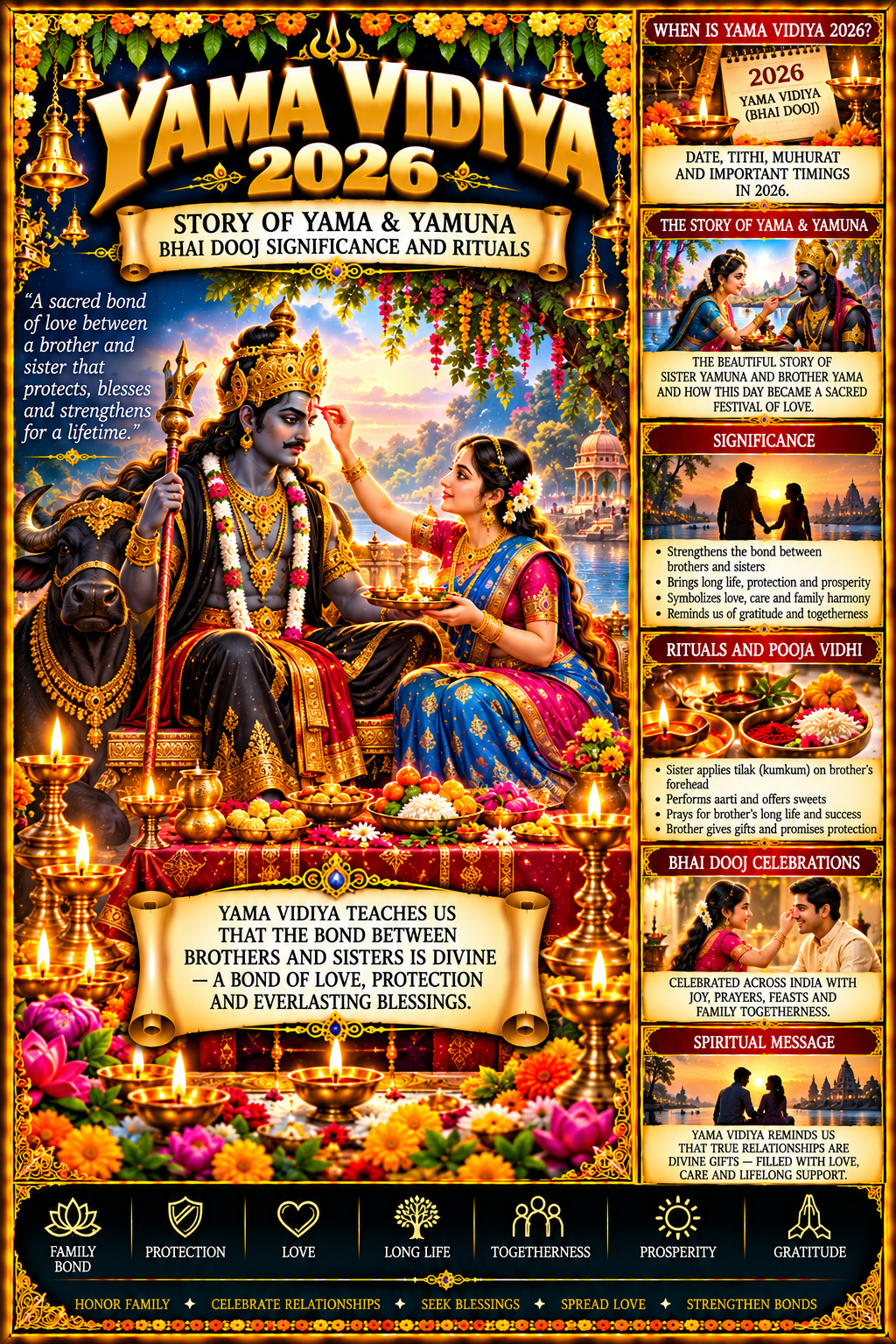 Yama Vidiya 2026: Story of Yama & Yamuna | Bhai Dooj Significance and Rituals
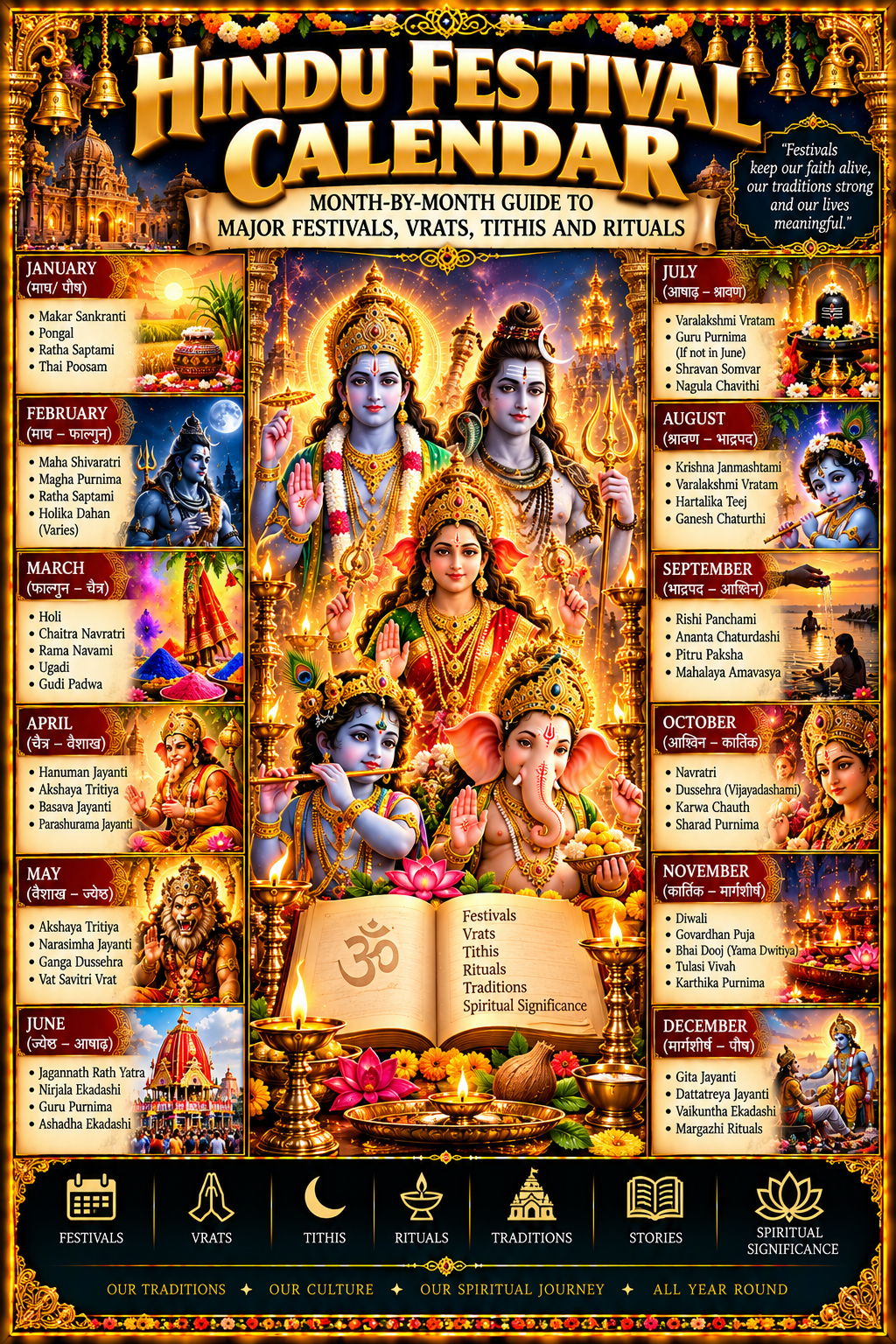
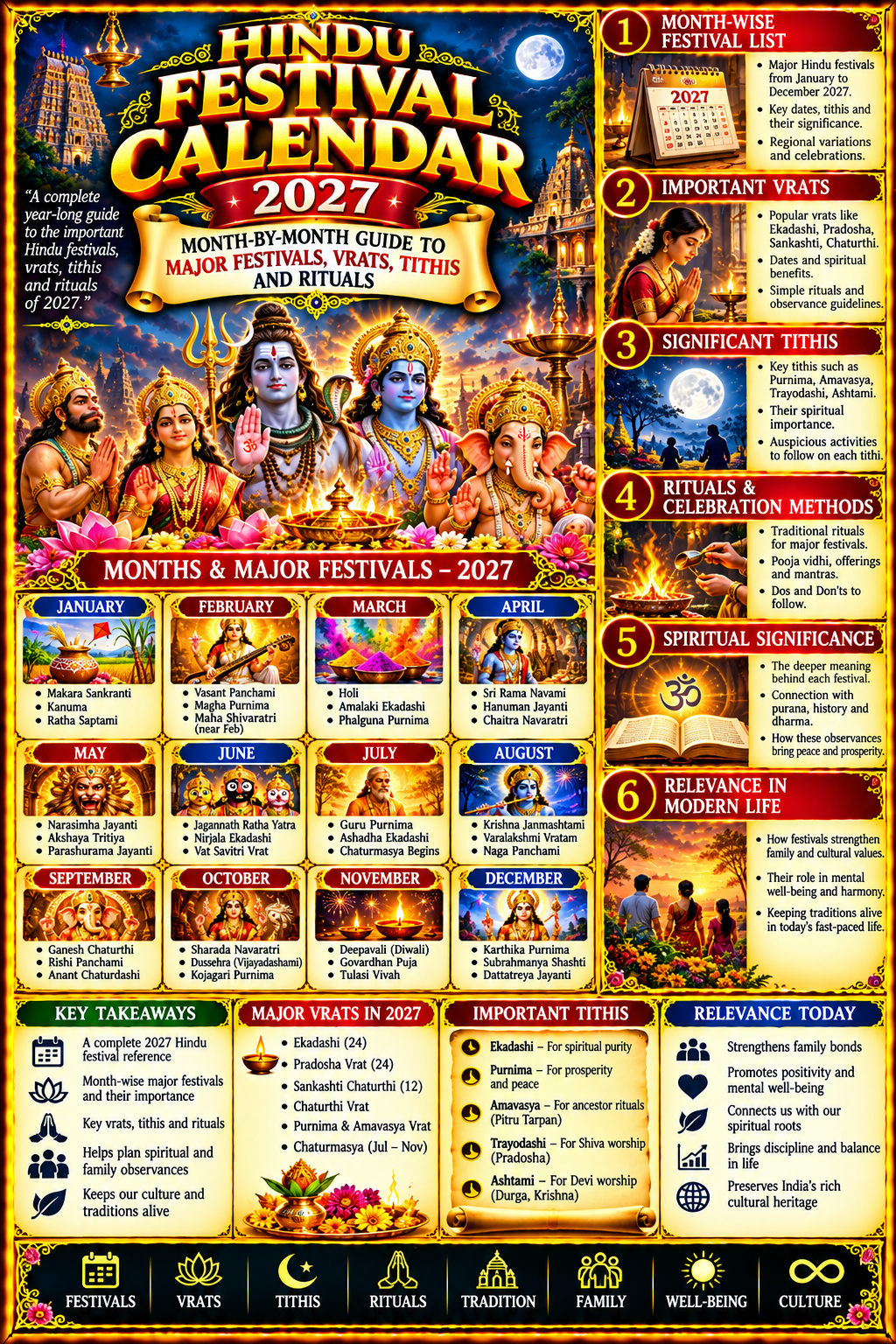 Hindu Festival Calendar: Month-by-Month Guide to Major Festivals, Vrats, Tithis and Rituals 2027
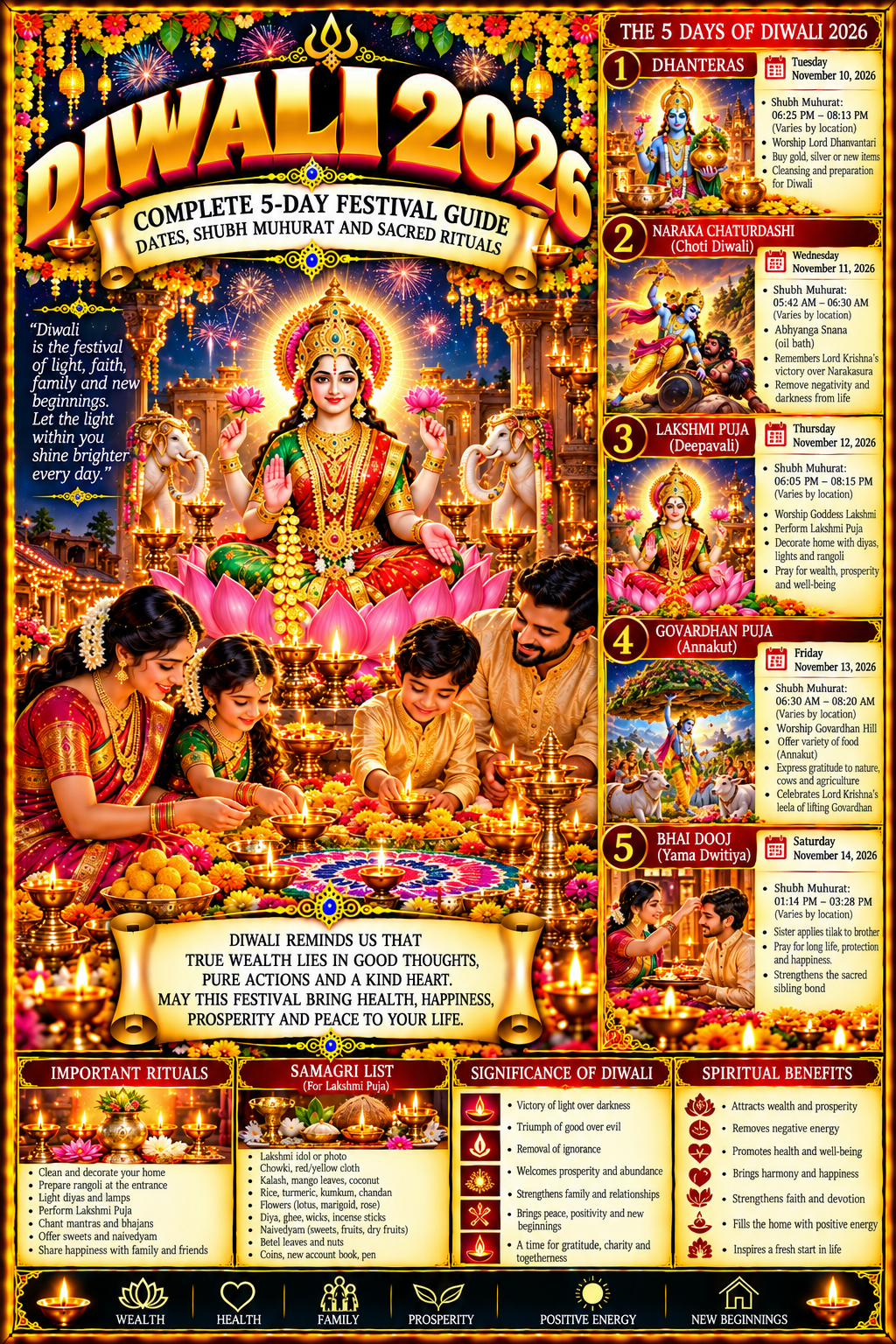 Diwali 2026: Complete 5-Day Festival Guide, Dates, Shubh Muhurat and Sacred Rituals
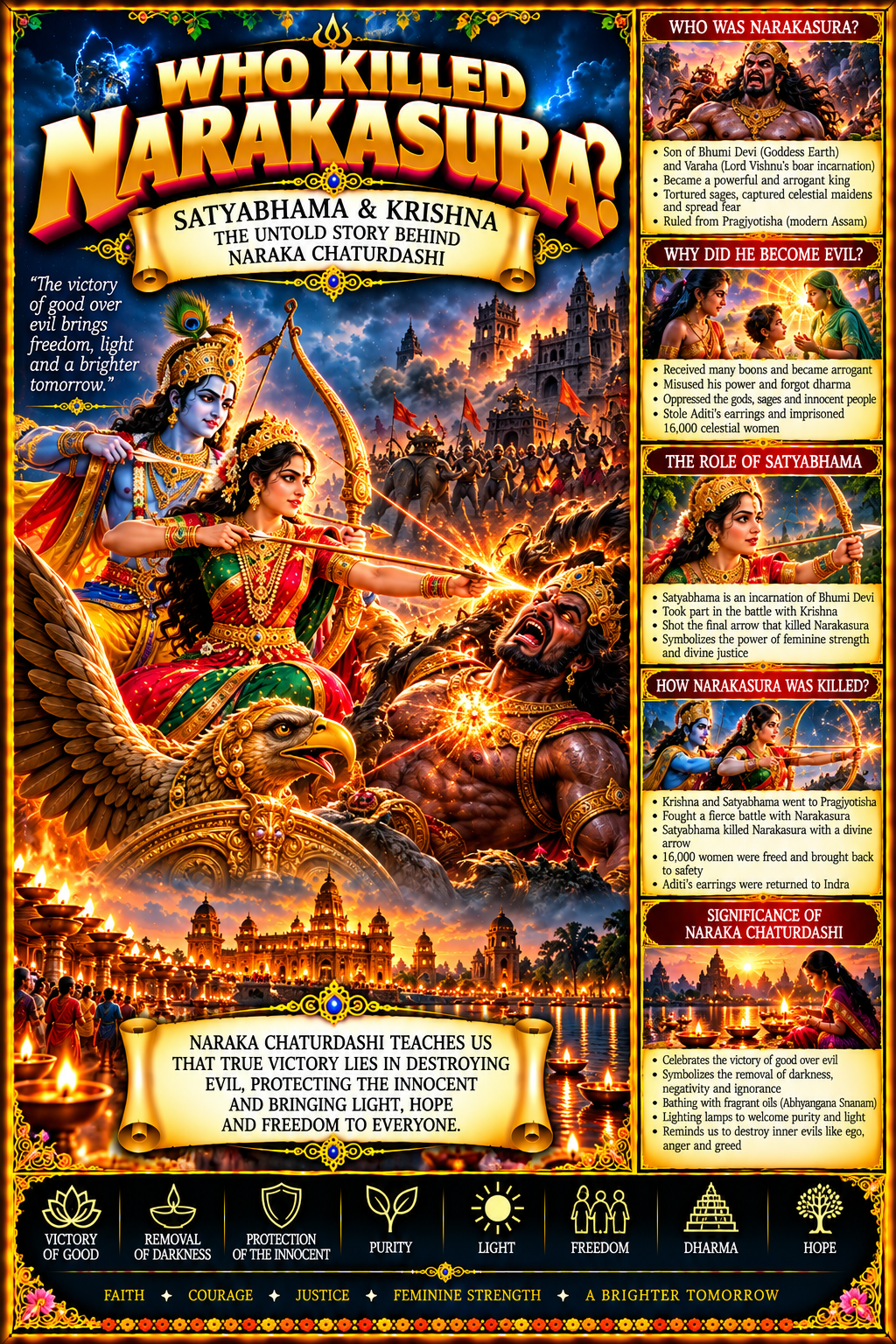 Who Killed Narakasura? Satyabhama & Krishna | The Untold Story Behind Naraka Chaturdashi
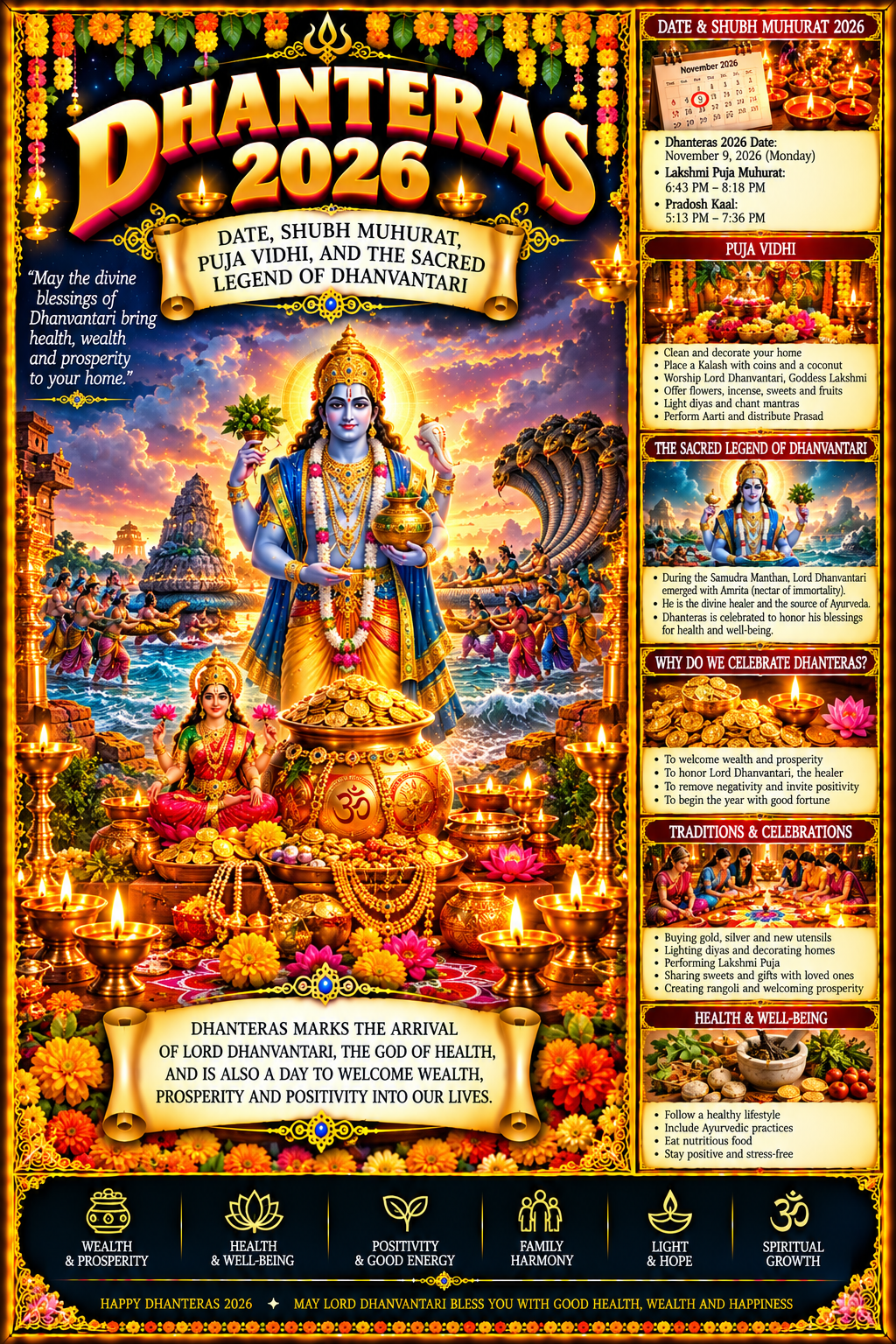 Dhanteras 2026: Date, Shubh Muhurat, Puja Vidhi, and the Sacred Legend of Dhanvantari
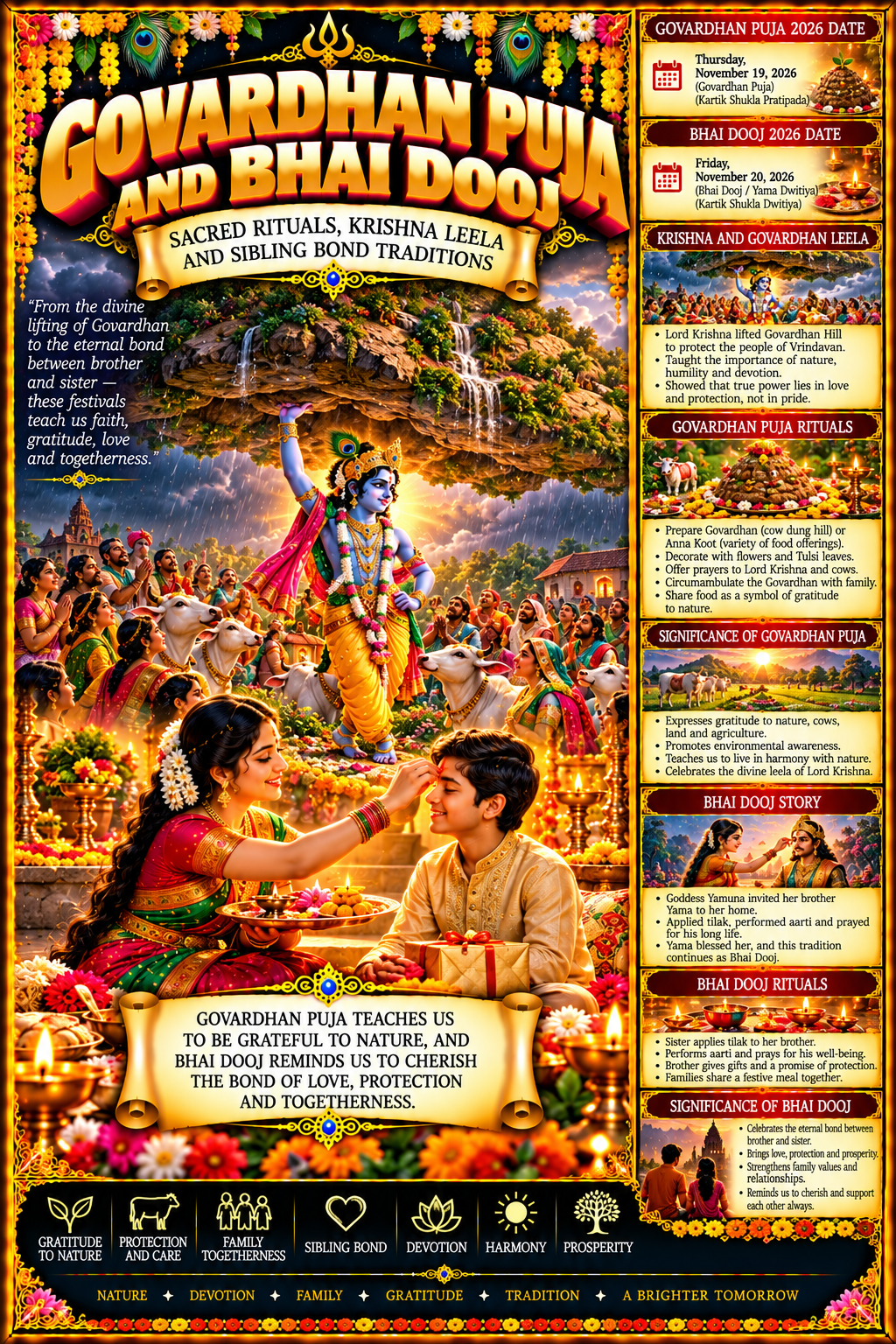 Govardhan Puja and Bhai Dooj: Sacred Rituals, Krishna Leela and Sibling Bond Traditions
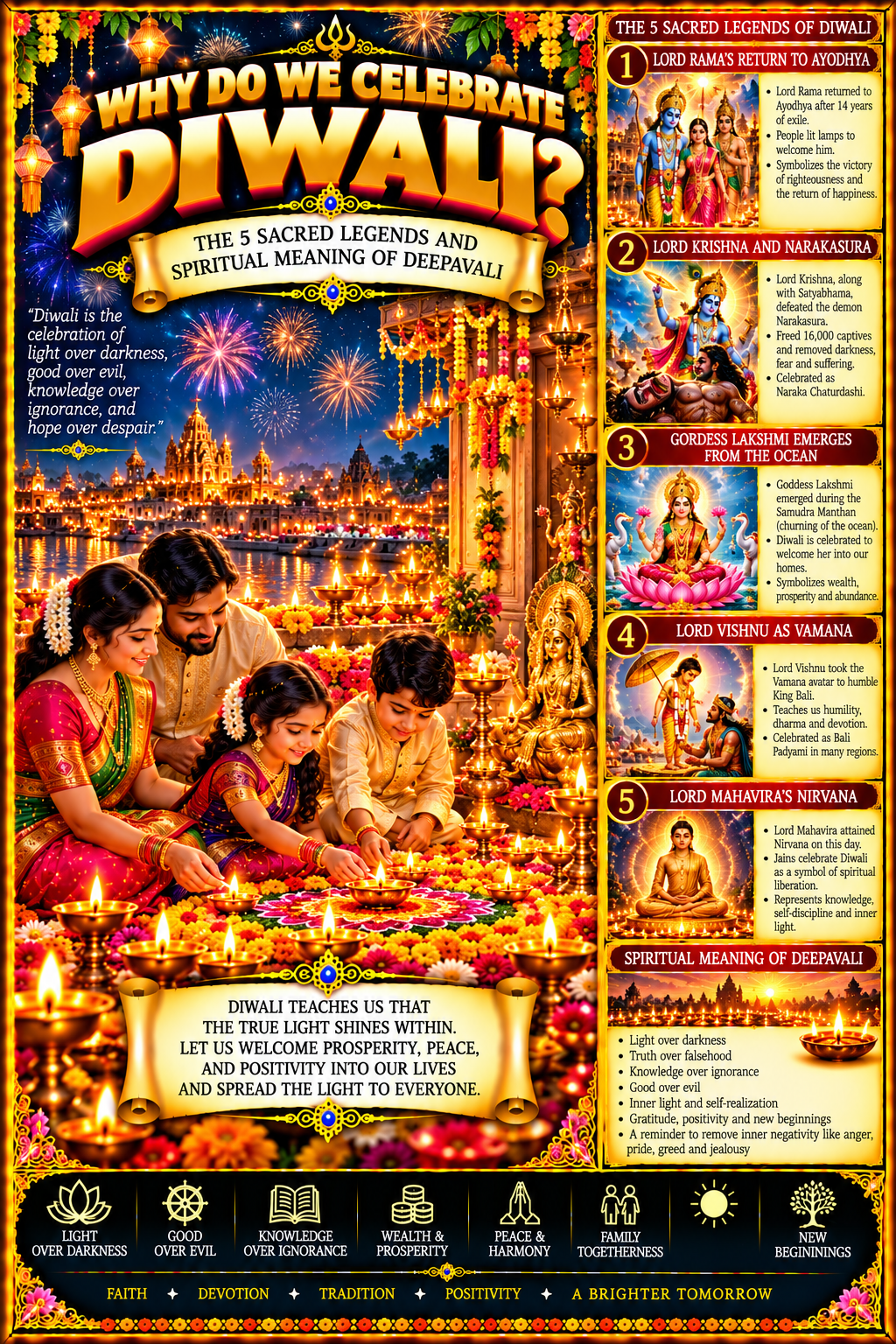 Why Do We Celebrate Diwali: The 5 Sacred Legends and Spiritual Meaning of Deepavali
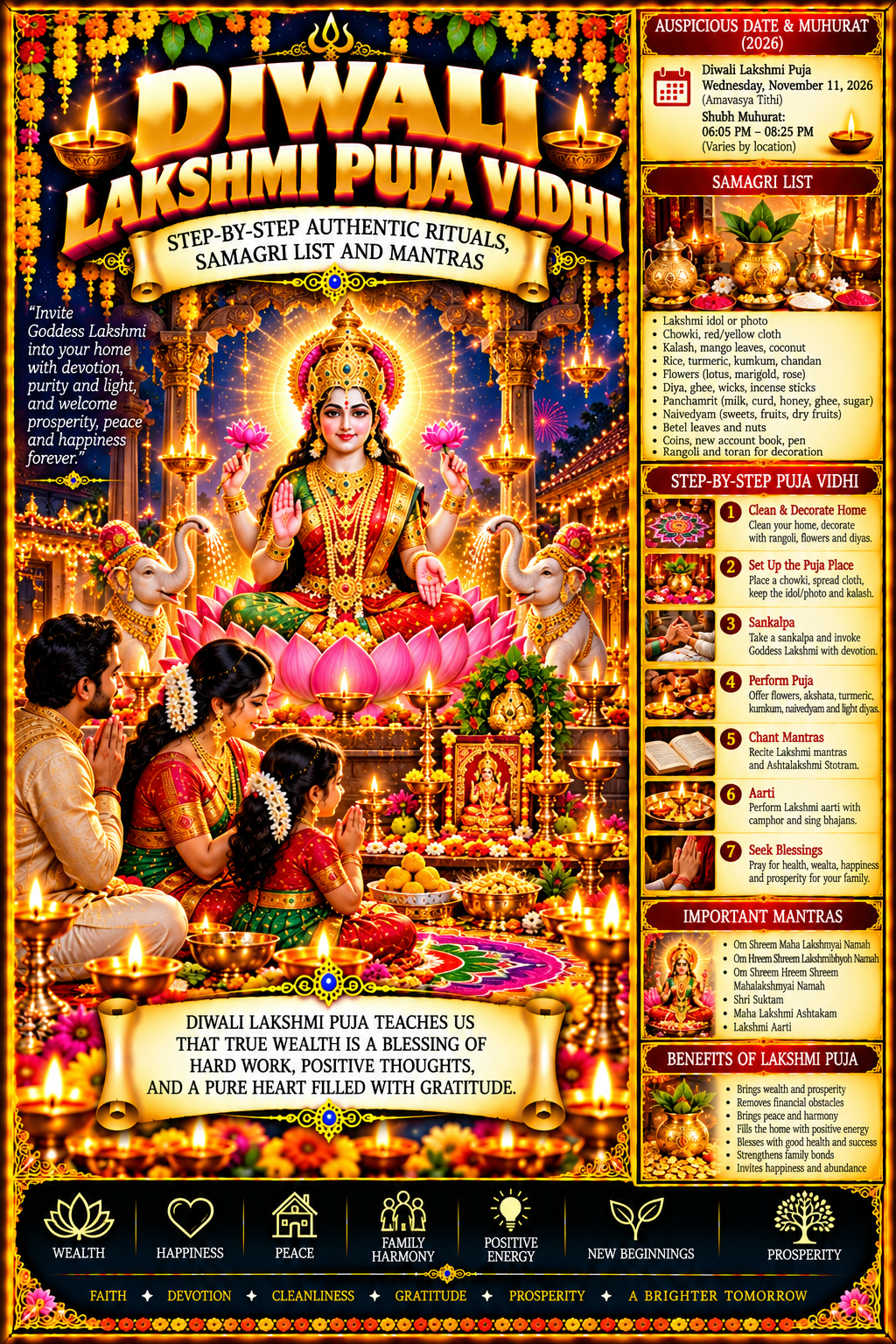 Diwali Lakshmi Puja Vidhi: Step-by-Step Authentic Rituals, Samagri List and Mantras
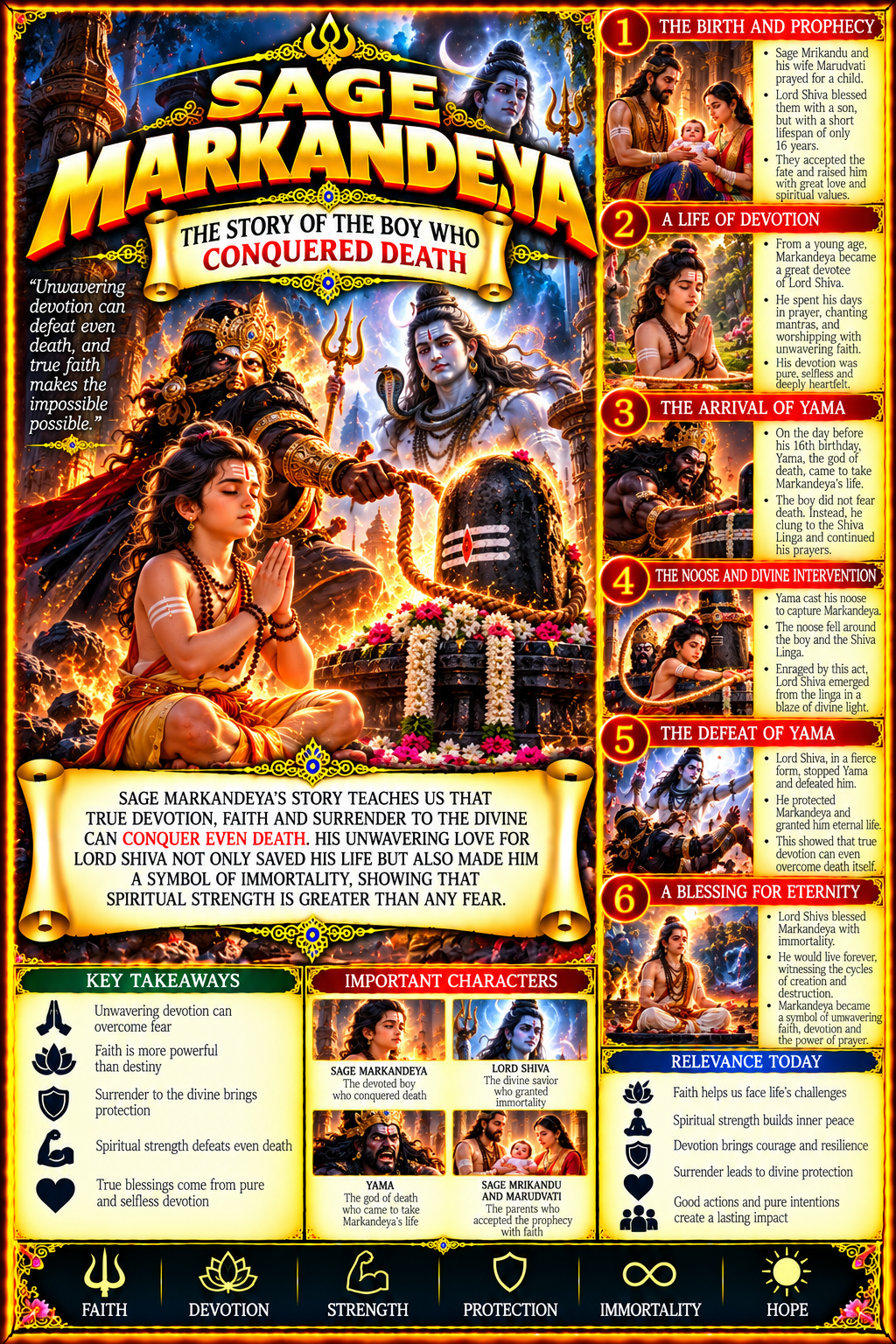
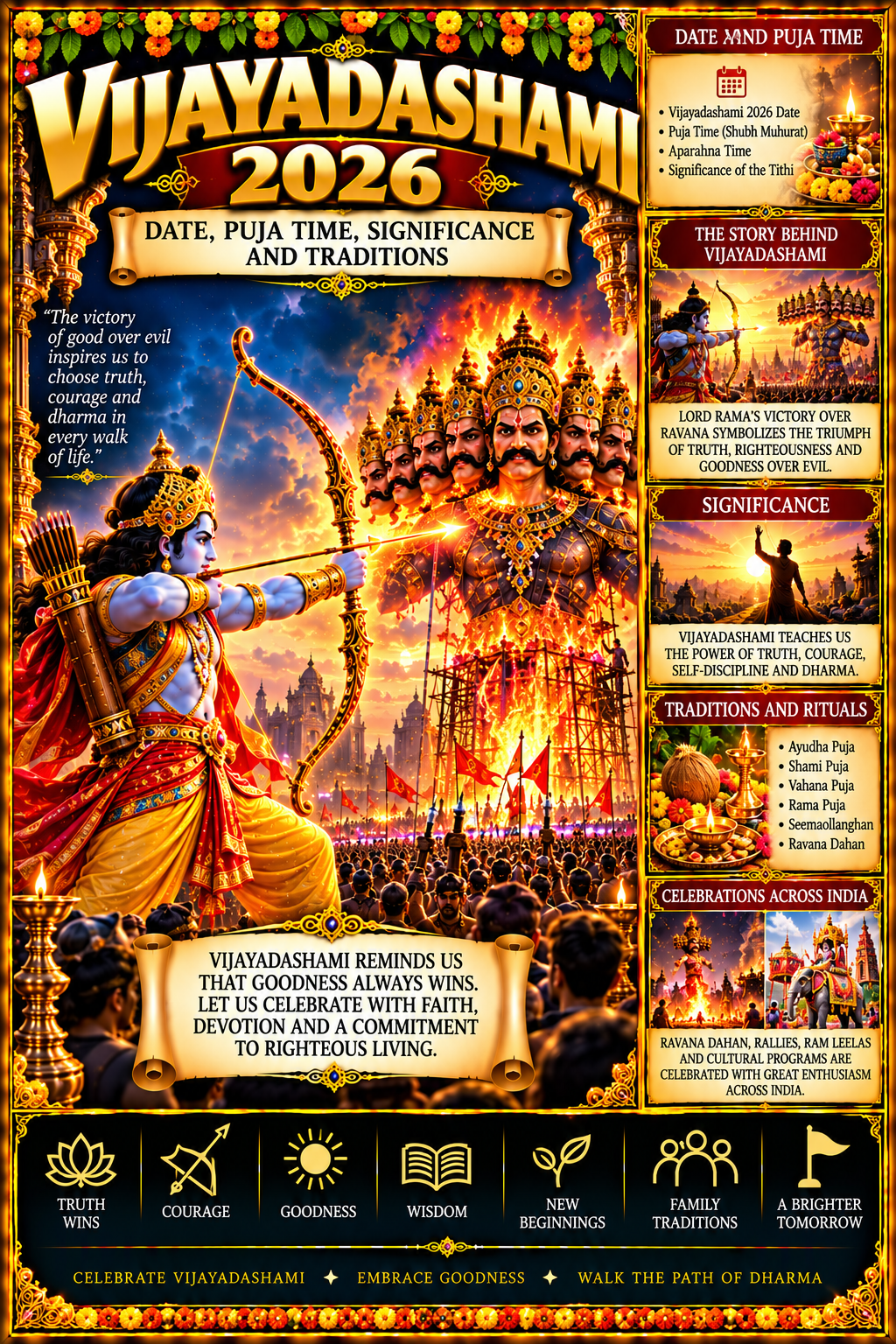
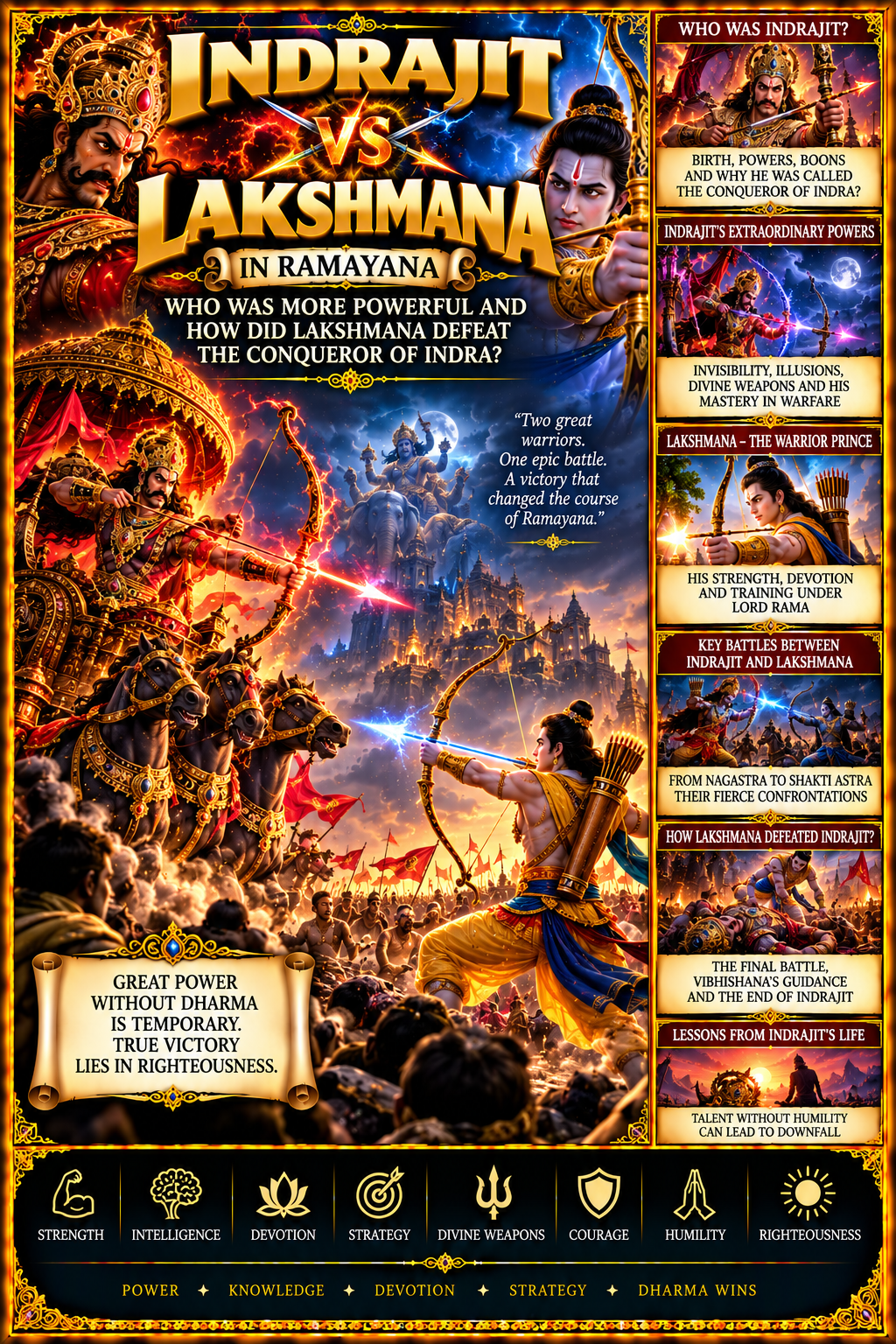
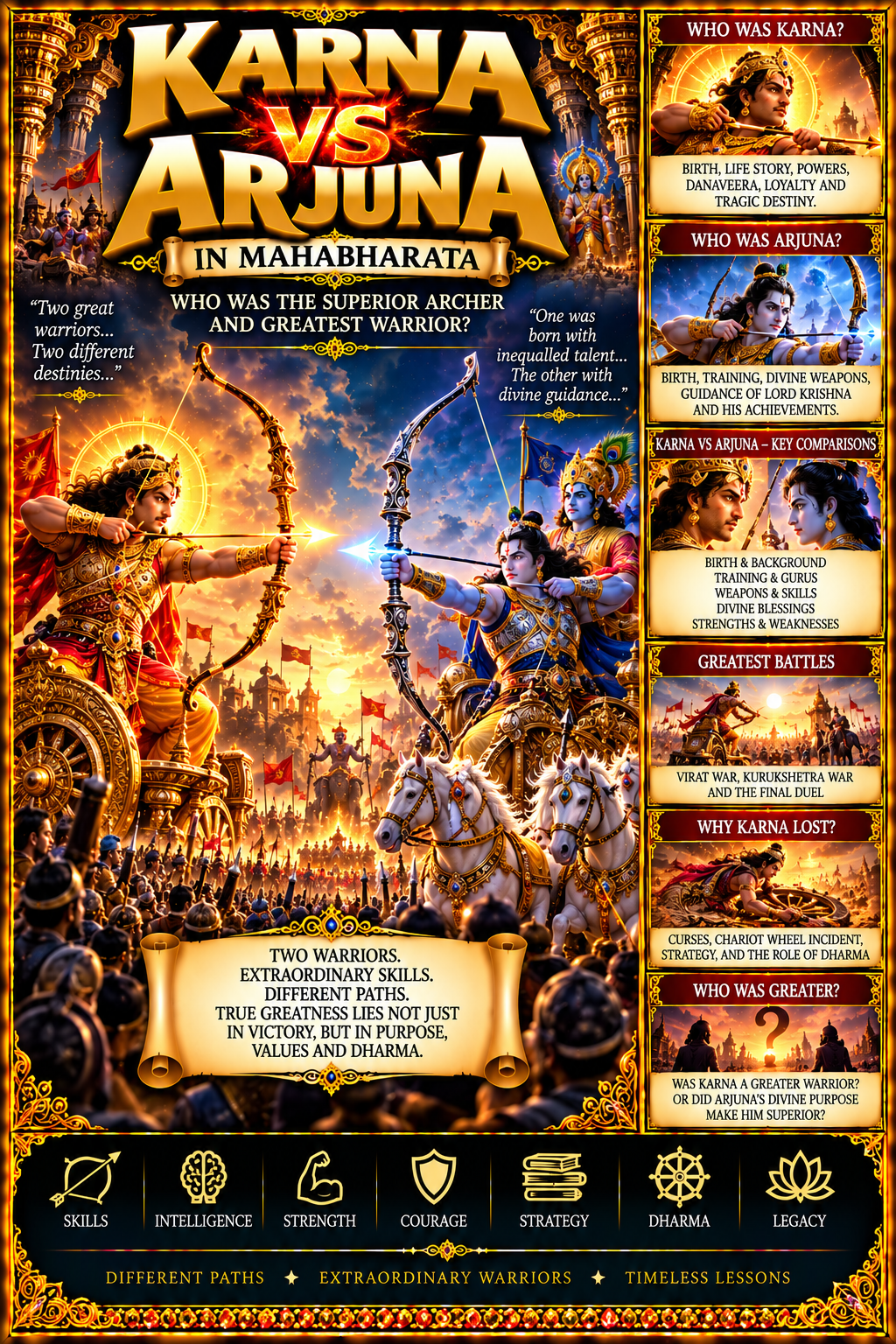
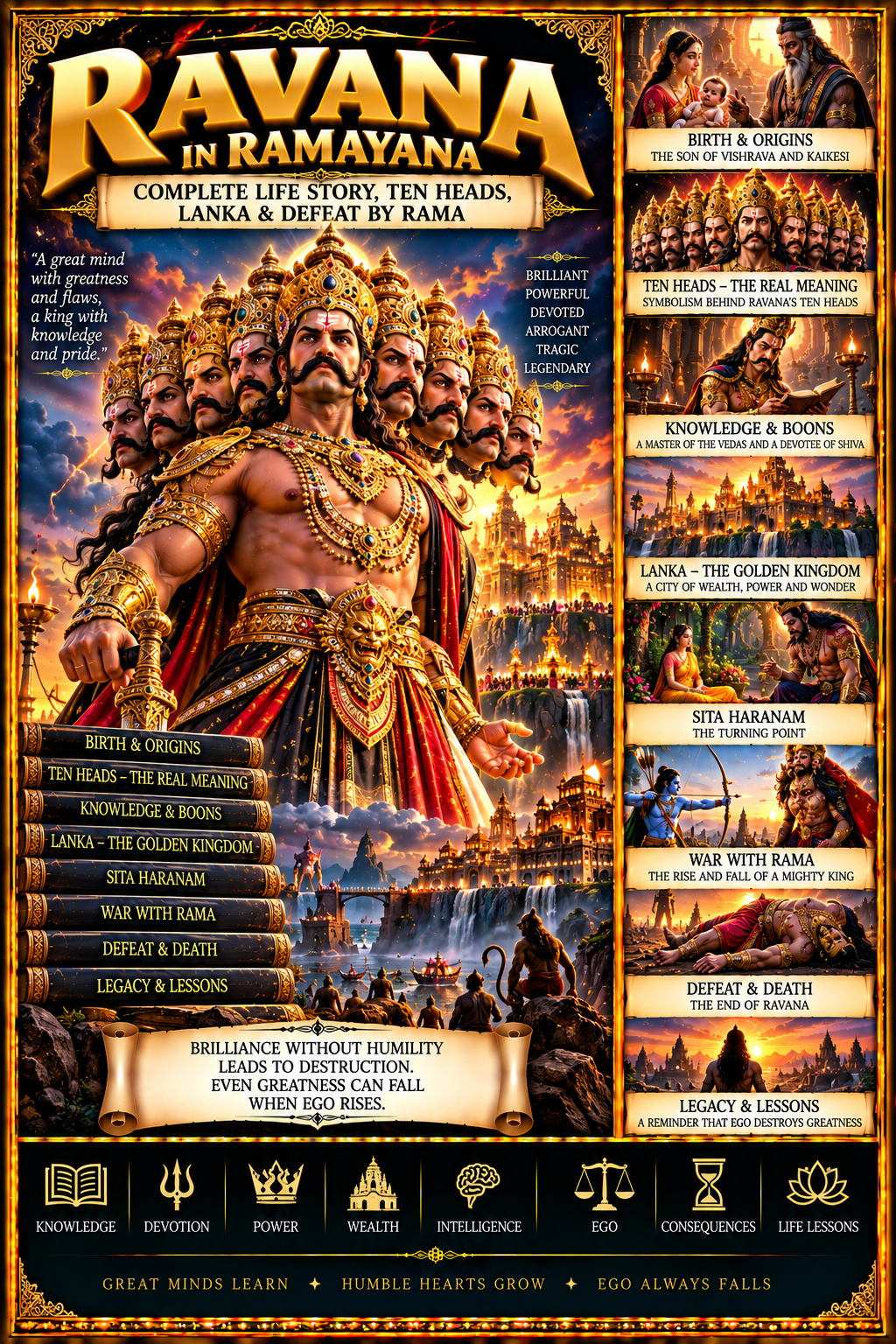
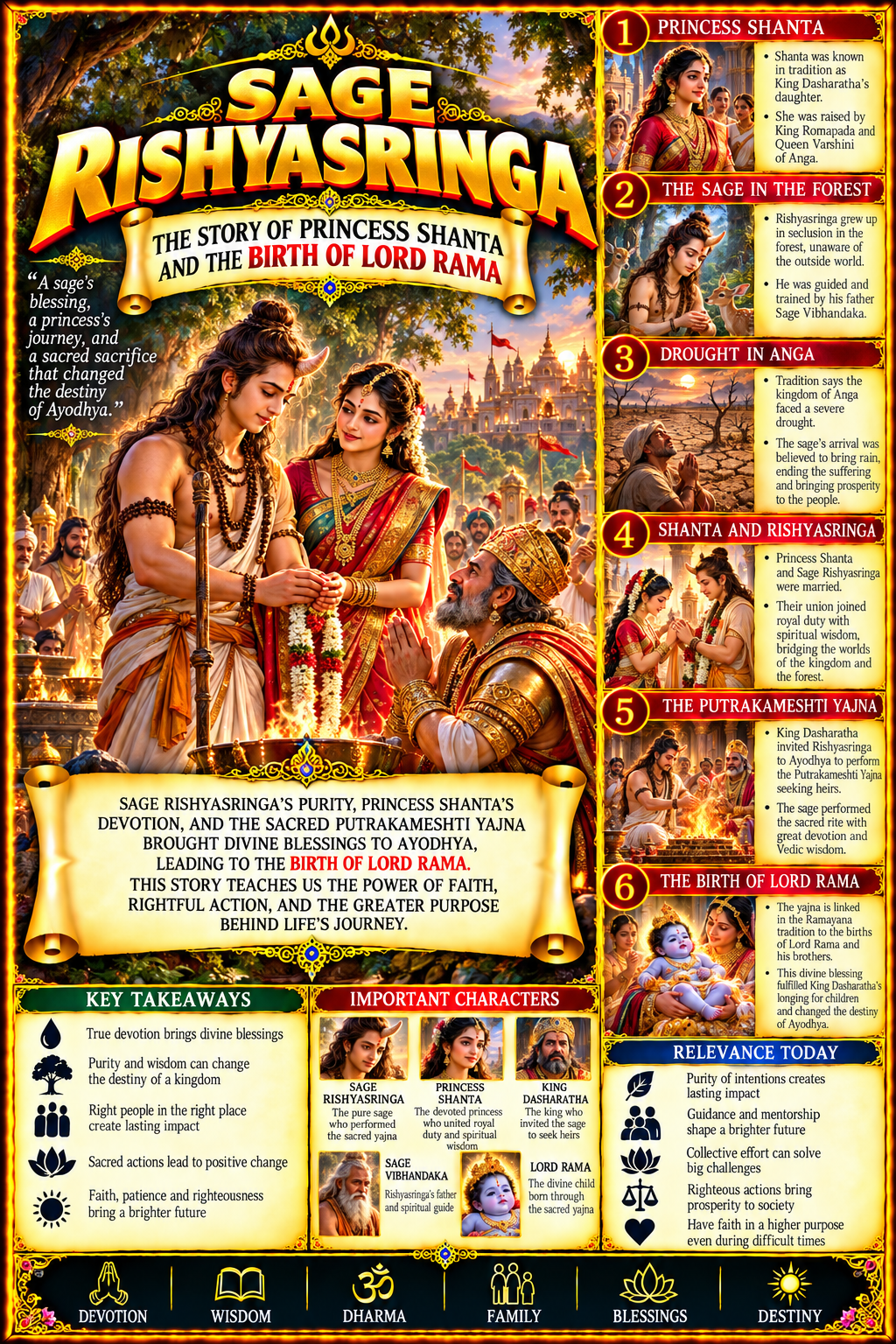








Raja Ratnam
- Festivals
- February 3, 2026
- 403 views
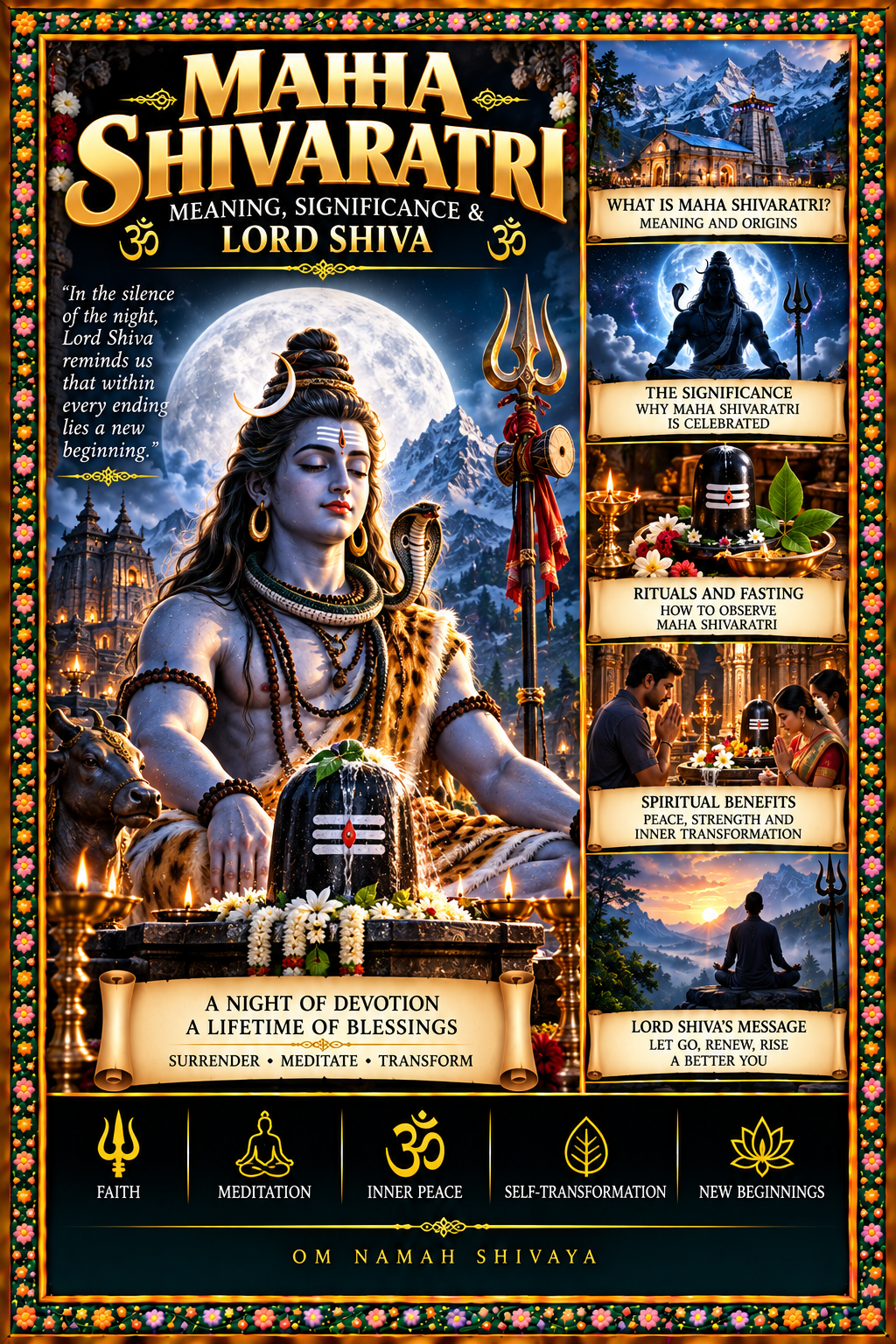
Maha Shivaratri: Significance, 4 Prahars Puja Vidhi, Fasting Rules & Katha
Meaning and Significance of Maha Shivaratri As midnight deepens on the fourteenth night of Phalguna, millions of flickering oil lamps glow inside Shiva temples across India. Devotees chant ‘Om Namah Shivaya’, keeping an all-night vigil while pouring bilva leaves, holy water, and milk over the sacred Shiva Lingam. Known as Maha Shivaratri – the Great Night of Shiva – this sacred observance celebrates the cosmic stillness and divine union of Shiva and Parvati, inviting seekers of all ages into quiet reflection, inner strength, and peace. For official cultural and historical archives, visit the Incredible India Official Tourism Authority. Lord Shiva – The Auspicious One Lord Shiva is known as Mahadeva, Bholenath, and The Destroyer – not of the world, but of ignorance and ego. He is the embodiment of stillness, compassion, renunciation, and infinite cosmic power. Shiva is: Why Maha Shivaratri Is Spiritually Powerful Unlike other festivals celebrated during the day, Maha Shivaratri is observed at night. Spiritually, this night: Ancient yogic traditions believe that on this night, planetary alignments support spiritual growth and meditation. Shiva Marriage Day – The Sacred Union Maha Shivaratri is also celebrated as the divine marriage of Lord Shiva and Goddess Parvati. This union represents:…
- Mahabharatam
- February 1, 2026
- 600 views
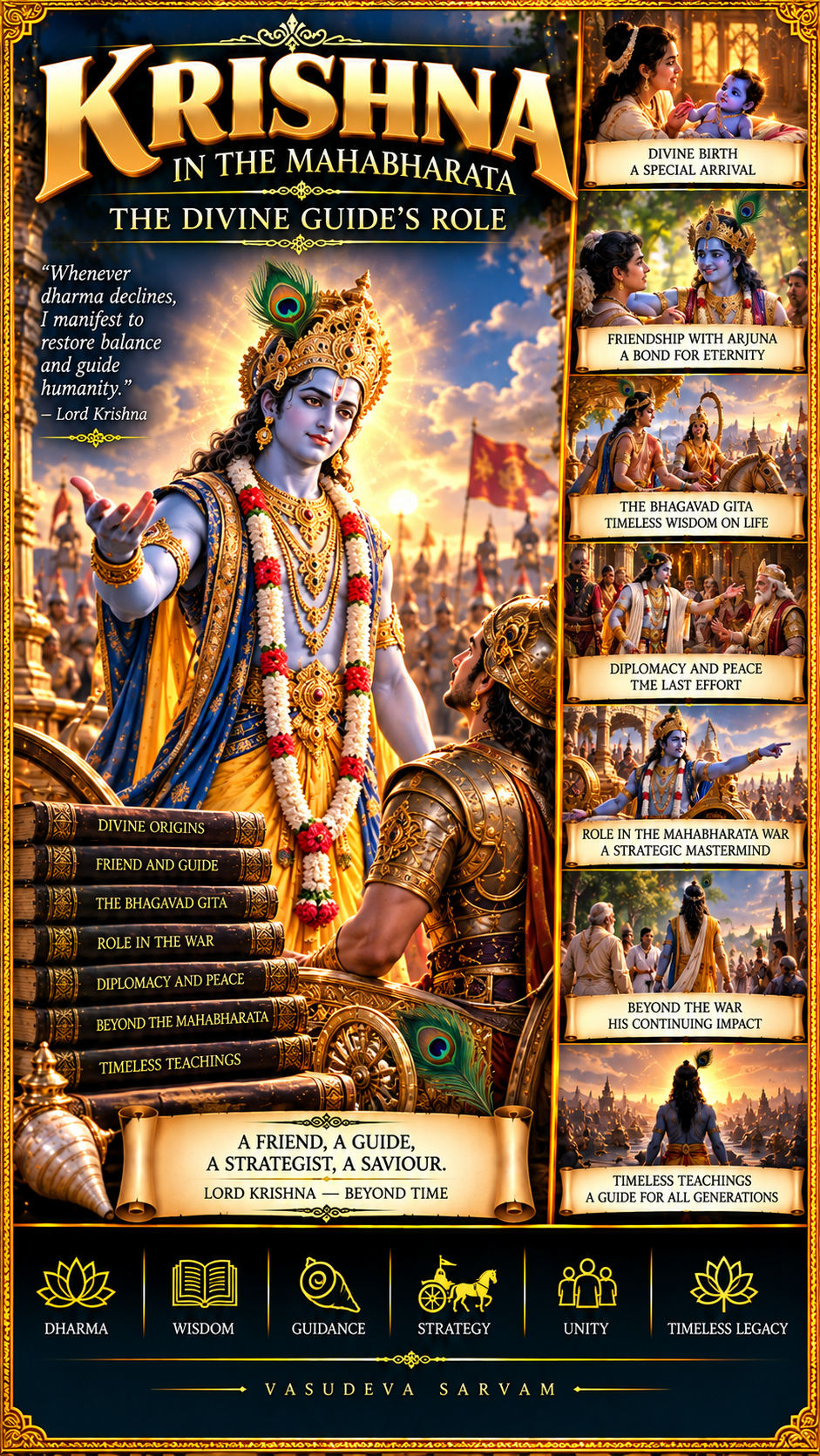
Lord Krishna in Mahabharata: Complete Role, Divine Diplomacy & Kurukshetra Guide
Krishna in Mahabharata: The Divine Role of the Supreme Guide Walking into the heated royal courts and battlefield camps with a peacock feather in his crown and a gentle smile upon his lips, Lord Krishna was the radiant heart and moral compass of the Mahabharata. Choosing never to raise a weapon of his own at Kurukshetra, he took up the reins of Arjuna’s chariot as a humble driver. Through divine diplomacy, unmatched wisdom, and boundless compassion, Krishna transformed a devastating fratricidal war into a timeless beacon for righteous living. Introduction to Krishna in Mahabharata Lord Krishna appears in the Mahabharata as a king, friend, diplomat, philosopher, and divine guide. Though he does not directly fight in the Kurukshetra war, his influence shapes every major event. Krishna represents divine consciousness guiding human actions toward righteousness. For official cultural and historical archives, visit the Ministry of Culture, Government of India. Birth and Early Life of Lord Krishna The birth and early life of Lord Krishna is one of the most divine and captivating chapters in Hindu mythology. It symbolizes the eternal victory of righteousness over evil and the descent of the Supreme Lord to restore dharma on Earth. Divine Birth of Lord…
- Mahabharatam
- February 1, 2026
- 506 views
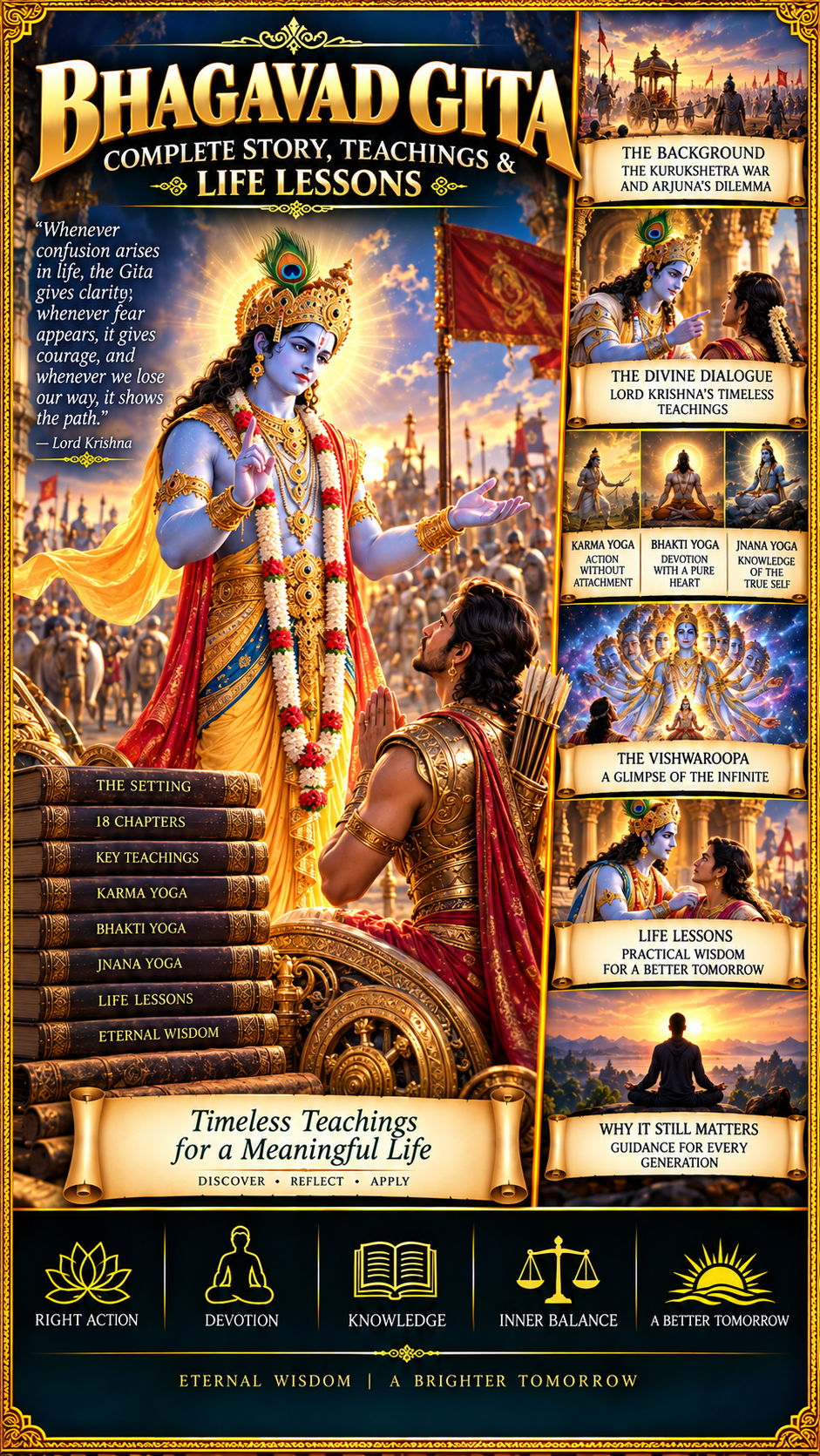
Bhagavad Gita Summary: Complete Story, Core Teachings & 10 Timeless Life Lessons
Introduction to Bhagavad Gita Between two colossal armies poised for war on the plains of Kurukshetra, Prince Arjuna let his Gandiva bow slip from trembling fingers as he looked upon his grandfathers, teachers, and cousins. In that moment of overwhelming despair, Lord Krishna spoke the 700 verses of the Bhagavad Gita – the Song of the Lord. Speaking not just to Arjuna but to every human heart facing duty, fear, and uncertainty, the Gita remains a timeless manual for navigating life with courage and inner calm. At its core, the Bhagavad Gita teaches how to live a balanced life while performing one’s responsibilities with devotion and wisdom. For official cultural and historical archives, visit the Ministry of Culture, Government of India. Origin and Background of the Bhagavad Gita Battlefield of Kurukshetra The Bhagavad Gita was spoken on the battlefield of Kurukshetra, just before the great war between the Pandavas and the Kauravas. Arjuna, overwhelmed by sorrow and moral conflict, drops his bow and refuses to fight. At this crucial moment, Lord Krishna reveals divine wisdom to guide Arjuna out of despair. Lord Krishna’s instructions to Arjuna about the Bhagavad Gita Arjuna’s Moral Dilemma Arjuna saw his own relatives, teachers, and…
- Mahabharatam , Pandeva's , Sons of Kunti (From Different Devas)
- January 30, 2026
- 570 views
Arjuna in Mahabharata: The Greatest Archer, Gandiva Bow & Role in Kurukshetra
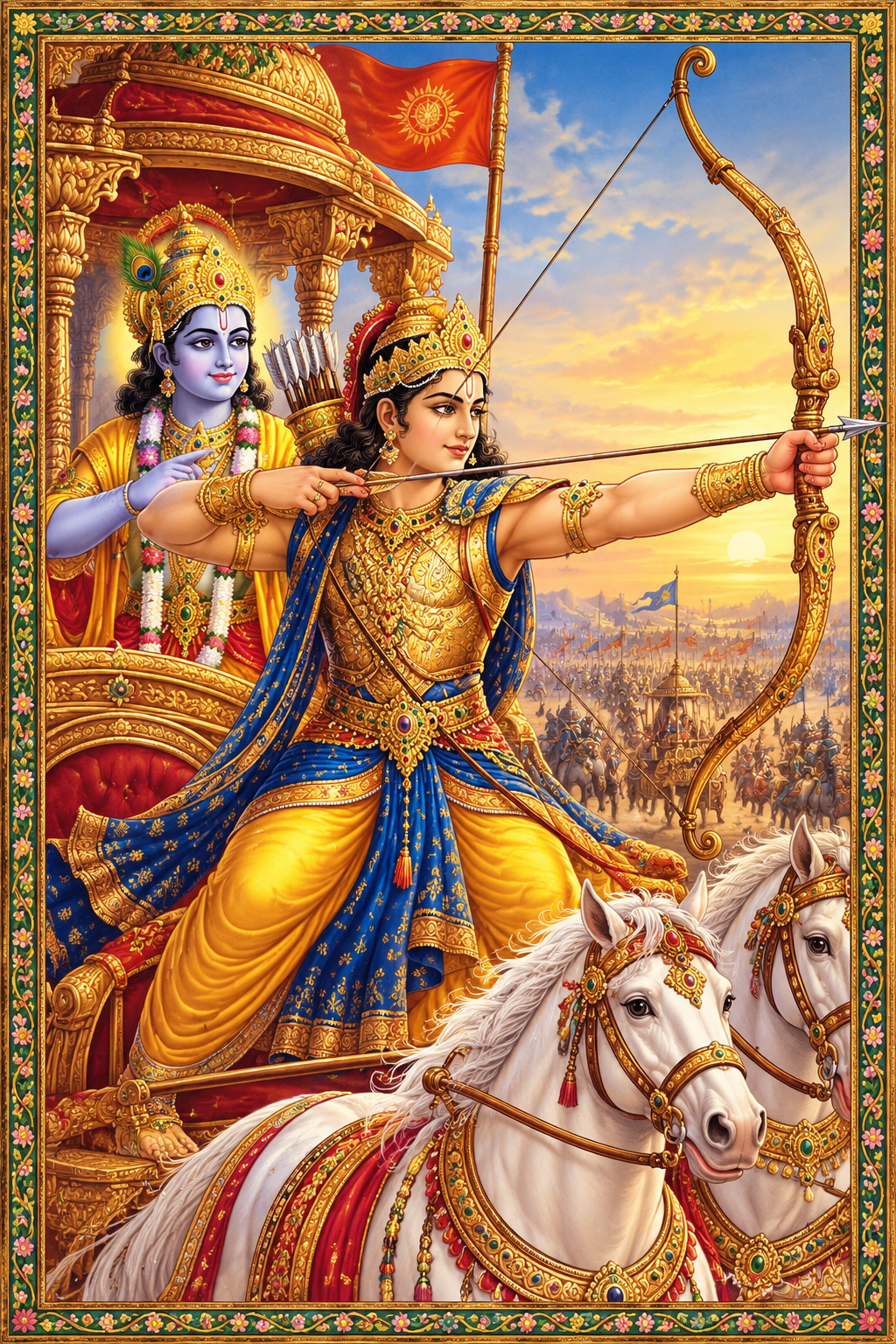
Arjuna in Mahabharata: The Greatest Archer and Hero of Dharma When Guru Dronacharya placed a wooden bird high up in a forest tree and asked his royal pupils what they could see, only one young prince answered: ‘I see only the eye of the bird.’ That focused young archer was Arjuna, third of the Pandavas and bearer of the celestial Gandiva bow. Blessed with divine weapons from Lord Shiva and guided by his dearest friend and charioteer, Lord Krishna, Arjuna’s life was a masterclass in single-minded focus, discipline, and standing up for righteousness. Introduction to Arjuna in Mahabharata Arjuna is the third of the five Pandava brothers and the son of King Pandu and Queen Kunti. He was born through the blessings of Lord Indra, the king of gods, which is why Arjuna possessed divine strength, courage, and extraordinary skill in warfare. Among all warriors of the Mahabharata, Arjuna is considered the finest archer and a symbol of discipline, focus, and devotion. The story of Arjuna in the Mahabharata is not just about war, but about life lessons, duty, self-doubt, inner strength, and ultimate spiritual wisdom through the Bhagavad Gita. For official cultural and historical archives, visit the Ministry of…
- Mahabharatam , Mythology
- January 29, 2026
- 687 views
Abhimanyu in Mahabharata: Breaking the Chakravyuha & The Heroic Martyrdom
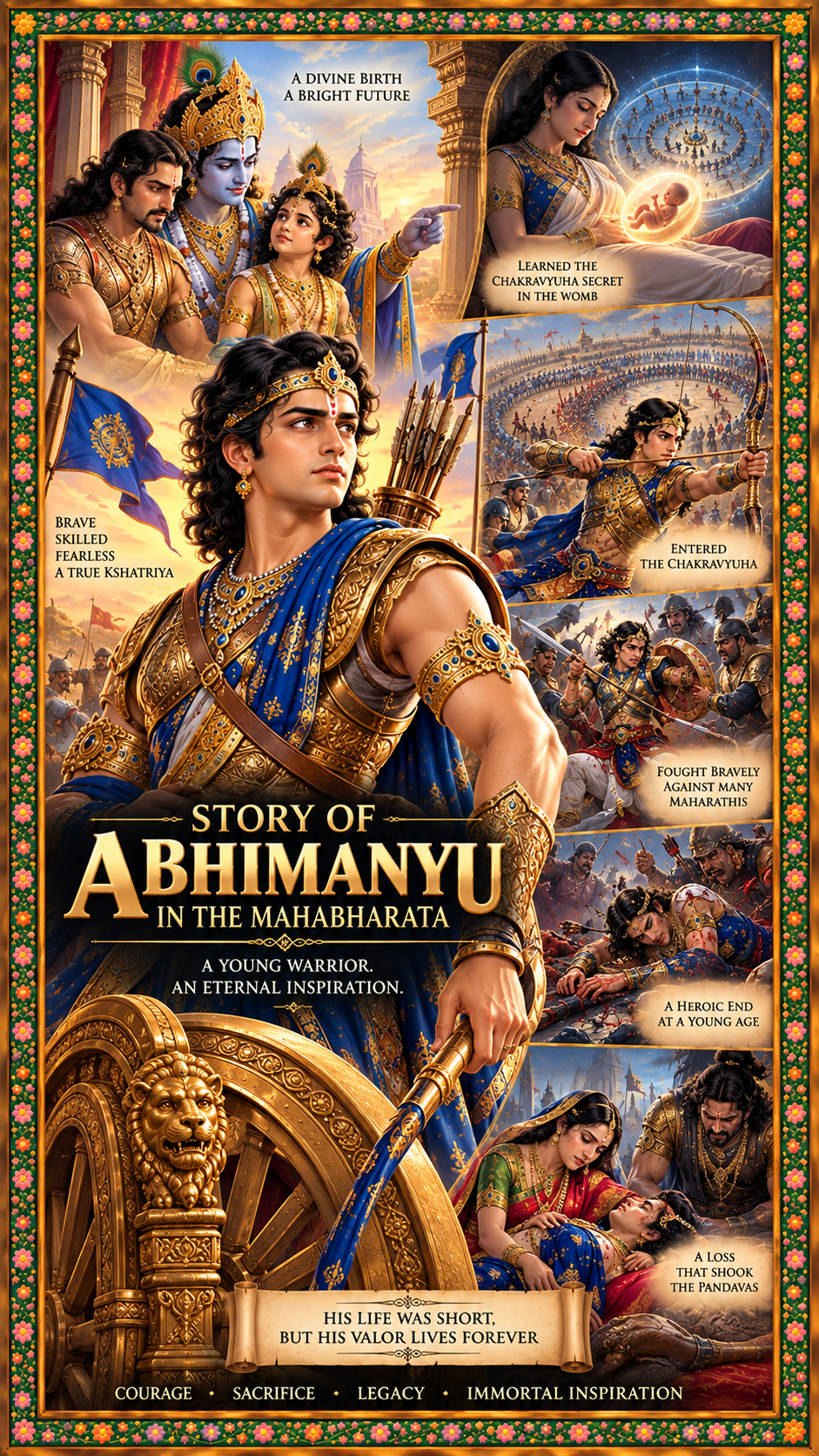
Introduction On the thirteenth day of the Kurukshetra war, when the mighty Dronacharya arranged the Kaurava forces into the impenetrable, spiral Chakravyuha formation, only one sixteen-year-old prince stepped forward to save the Pandava army: Abhimanyu. Having learned how to pierce the wheel formation while still in his mother Subhadra’s womb, the brave teenager rode his chariot deep into the heart of the enemy lines. Fighting alone against seasoned veteran kings, Abhimanyu’s unmatched valor became an eternal symbol of youthful courage. For official cultural and historical archives, visit the Ministry of Culture, Government of India. Who Was Abhimanyu in the Mahabharata? Abhimanyu was the son of Arjuna, the greatest archer among the Pandavas, and Subhadra, the sister of Lord Krishna. From birth, he carried divine qualities and warrior instincts. Despite his young age, Abhimanyu was regarded as a powerful warrior equal to seasoned kings. Lineage and Family Background Abhimanyu was born into the noble Chandravanshi (Lunar Dynasty), one of the most respected royal lineages in the Mahabharata. He was the son of Arjuna, the greatest archer among the Pandavas, known for his courage, discipline, and devotion to dharma. His mother Subhadra was the sister of Lord Krishna, giving Abhimanyu a divine…
- Mahabharatam , Mythology
- January 27, 2026
- 823 views
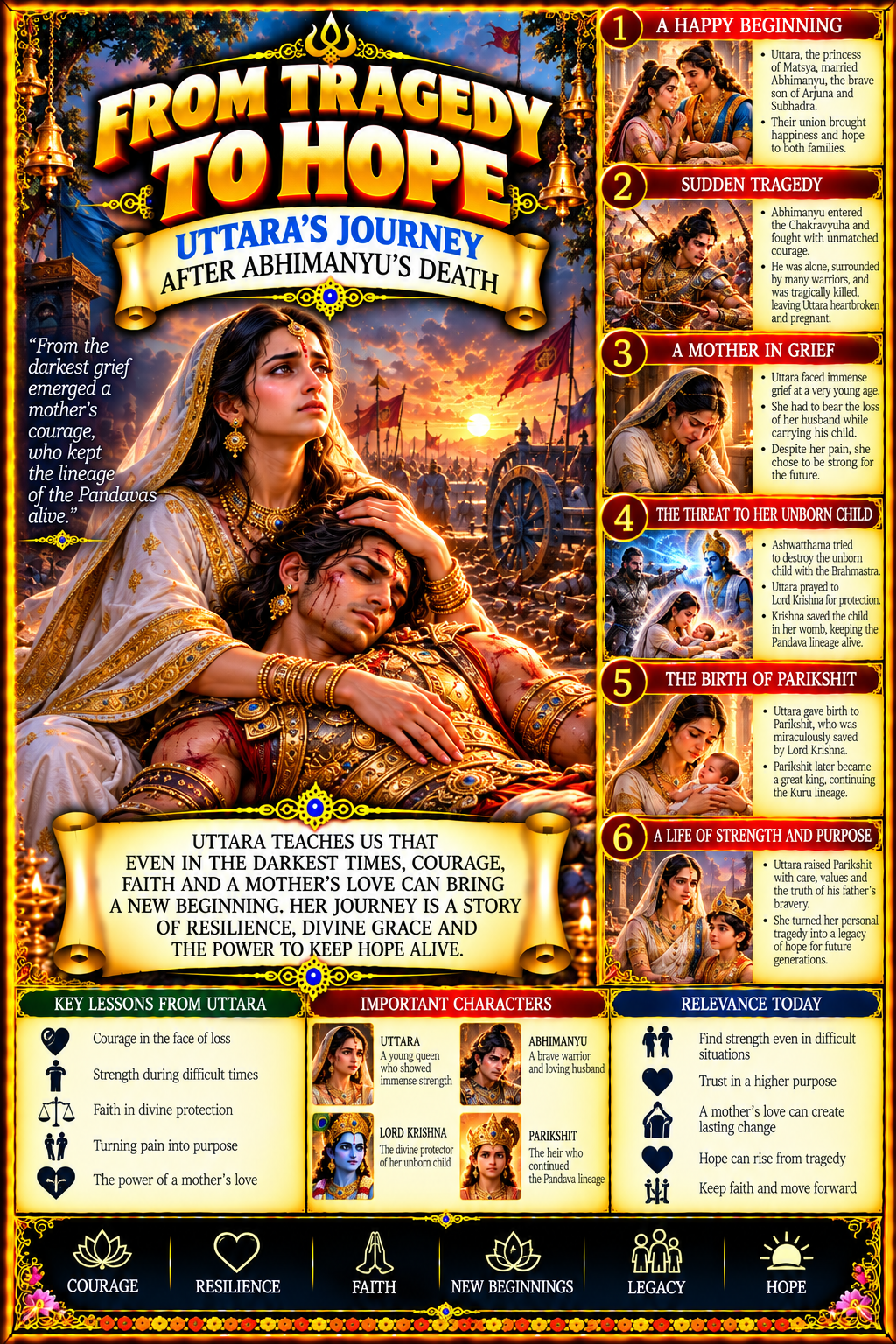
Uttara in Mahabharata: The Princess of Matsya, Arjuna’s Discipleship & Royal Matsya Wedding
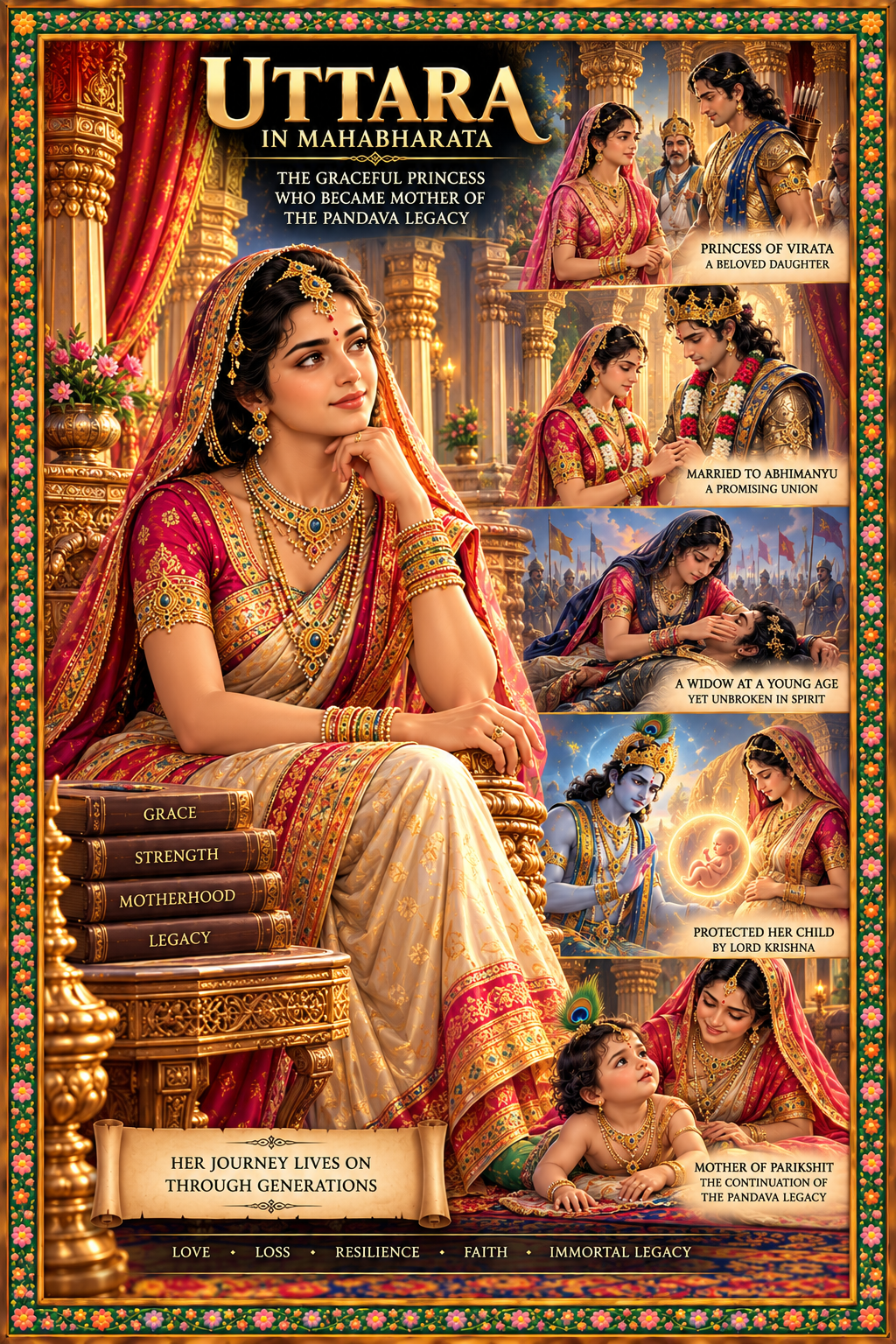
In the royal palace of King Virata, young princess Uttara grew up surrounded by music, classical dance, and kingdom festivities. Learning about Uttara in Mahabharata during her youth in the Matsya Kingdom highlights a gentle, cultured princess whose life intersected with the greatest heroes of the epic during the Pandavas’ year of disguise (Agyatvas). While her post-war resilience is chronicled in our story of Uttara’s journey after Abhimanyu’s death, this chronicle explores her Matsya childhood, her discipleship under Arjuna, and the royal alliance that reshaped the Kuru dynasty. Childhood in the Matsya Kingdom: Daughter of King Virata Princess Uttara was the cherished daughter of King Virata and Queen Sudeshna, rulers of the Matsya Kingdom with its capital at Upaplavya (Viratnagar). Renowned for its cattle wealth, agrarian abundance, and fine arts, Matsya was a cultured kingdom where princess Uttara was educated in vocal music, vina playing, and classical dance. The Discipleship: Arjuna as Brihannala in the Royal Court During their thirteenth year of exile, the five Pandavas and Draupadi entered the Matsya court under secret identities. Arjuna, bound by an ancient celestial curse from the apsara Urvashi, took the form of Brihannala, a skilled dancer and musician wearing bangles and braided…
- Mahabharatam , Mythology
- January 25, 2026
- 1020 views
Shikhandi in Mahabharata: Amba’s Rebirth, Gender Transformation & Fall of Bhishma
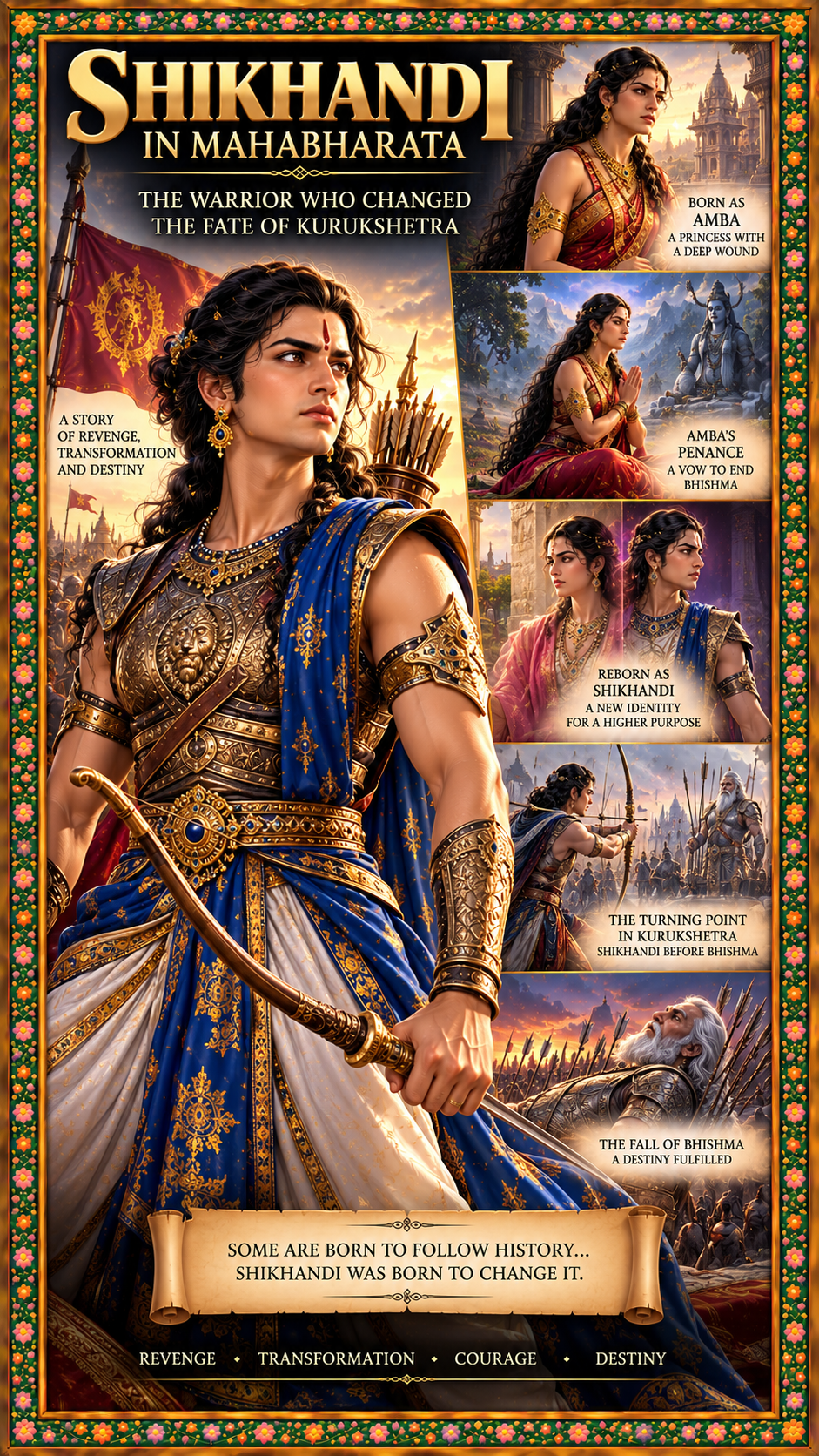
Introduction Standing tall on the battlefield of Kurukshetra with drawn bow was a warrior whose destiny had been forged across two lifetimes: Shikhandi. Born as Princess Amba of Kashi, she had performed intense mountain austerities to seek justice against Bhishma. Reborn into King Drupada’s household and transformed into a formidable warrior, Shikhandi became the decisive instrument through whom the invincible grandfather of the Kurus was finally brought to rest upon the bed of arrows. This blog explores who Shikhandi was, the story behind their birth, their transformation, and their importance in the Mahabharata war. For official cultural and historical archives, visit the Ministry of Culture, Government of India. Who Was Shikhandi? Shikhandi was a warrior in the Mahabharata who fought on the side of the Pandavas during the Kurukshetra War. However, Shikhandi’s identity goes beyond a simple warrior role. Their life story involves themes of rebirth, destiny, gender identity, revenge, and divine justice. Shikhandi was born as Shikhandini, the daughter of King Drupada of Panchala, and later became Shikhandi through divine intervention. The Past Life of Shikhandi – Amba’s Story To understand Shikhandi, we must first understand Amba. Amba was a princess who was abducted by Bhishma along with her sisters Ambika and Ambalika for the prince of Hastinapura.…
- Festivals , Mythology
- January 22, 2026
- 400 views
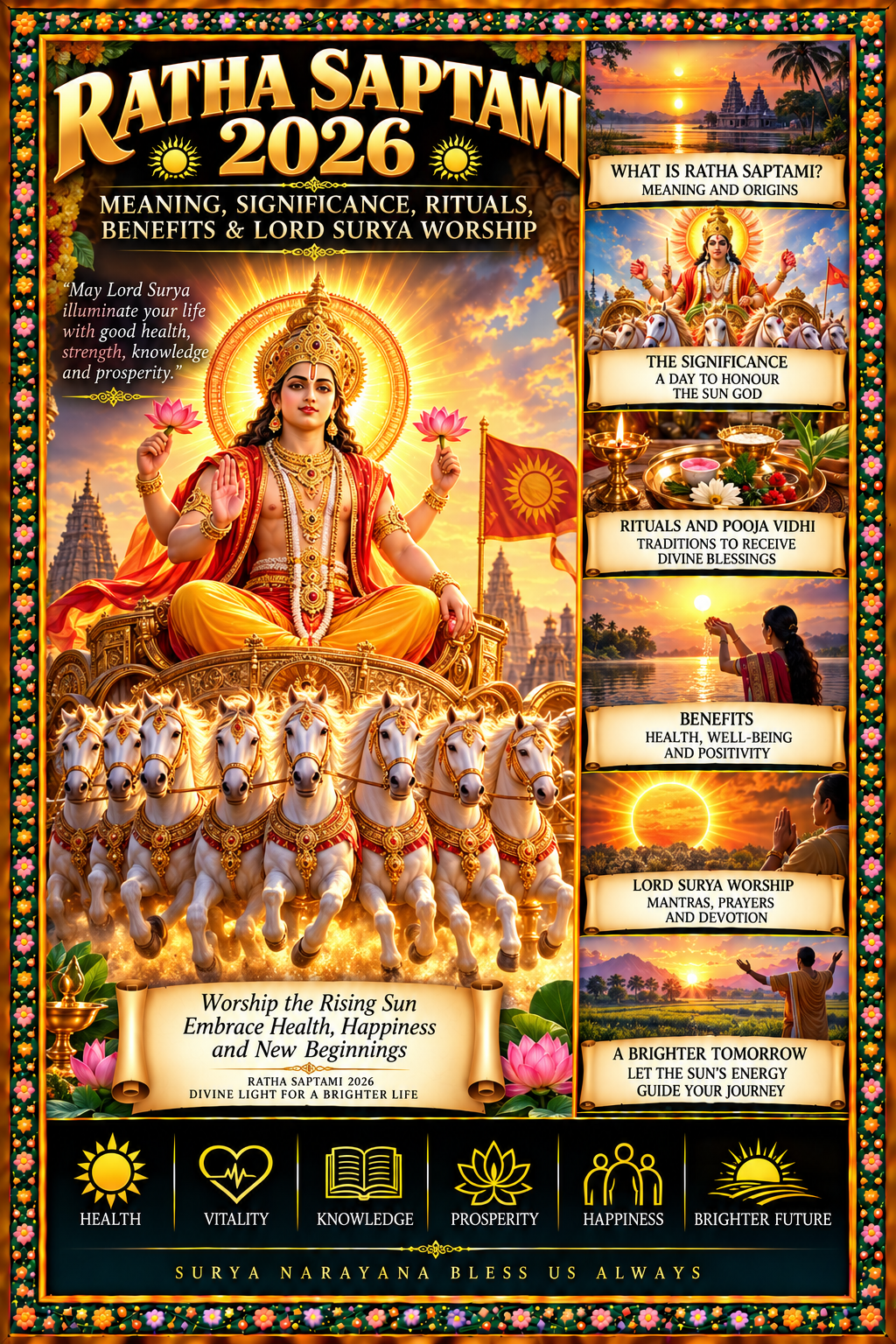
Ratha Saptami: Surya Jayanti Snanam, Milk Offering Rituals, Arghya & Benefits
Introduction As dawn breaks on the seventh day of the bright fortnight in Magha, millions across India step out into the crisp morning air to offer arghya of water to the rising sun. Known as Ratha Saptami or Surya Jayanti, this sacred festival envisions the Sun God, Lord Surya, turning his golden chariot drawn by seven radiant horses toward the northern sky. Families celebrate this day by boiling milk in clay pots until it overflows toward the sun, welcoming vitality, health, and solar warmth back into their lives. What is Ratha Saptami? (Meaning of Ratha Saptami Festival) The word Ratha means chariot and Saptami means seventh day. According to Hindu belief, on this sacred day, Lord Surya rides his divine chariot drawn by seven horses, symbolizing the seven colors of light, seven days of the week, and seven chakras of the human body. Ratha Saptami is also known as: This day signifies the awakening of solar energy on Earth and is considered ideal for new beginnings. Significance of Ratha Saptami in Hinduism Spiritual Significance of Ratha Saptami Ratha Saptami is believed to destroy sins, remove negative energies, and bring divine blessings. Worshipping the Sun God on this day is said to improve clarity of mind, inner strength, and…
- Mahabharatam , Mythology
- January 20, 2026
- 527 views
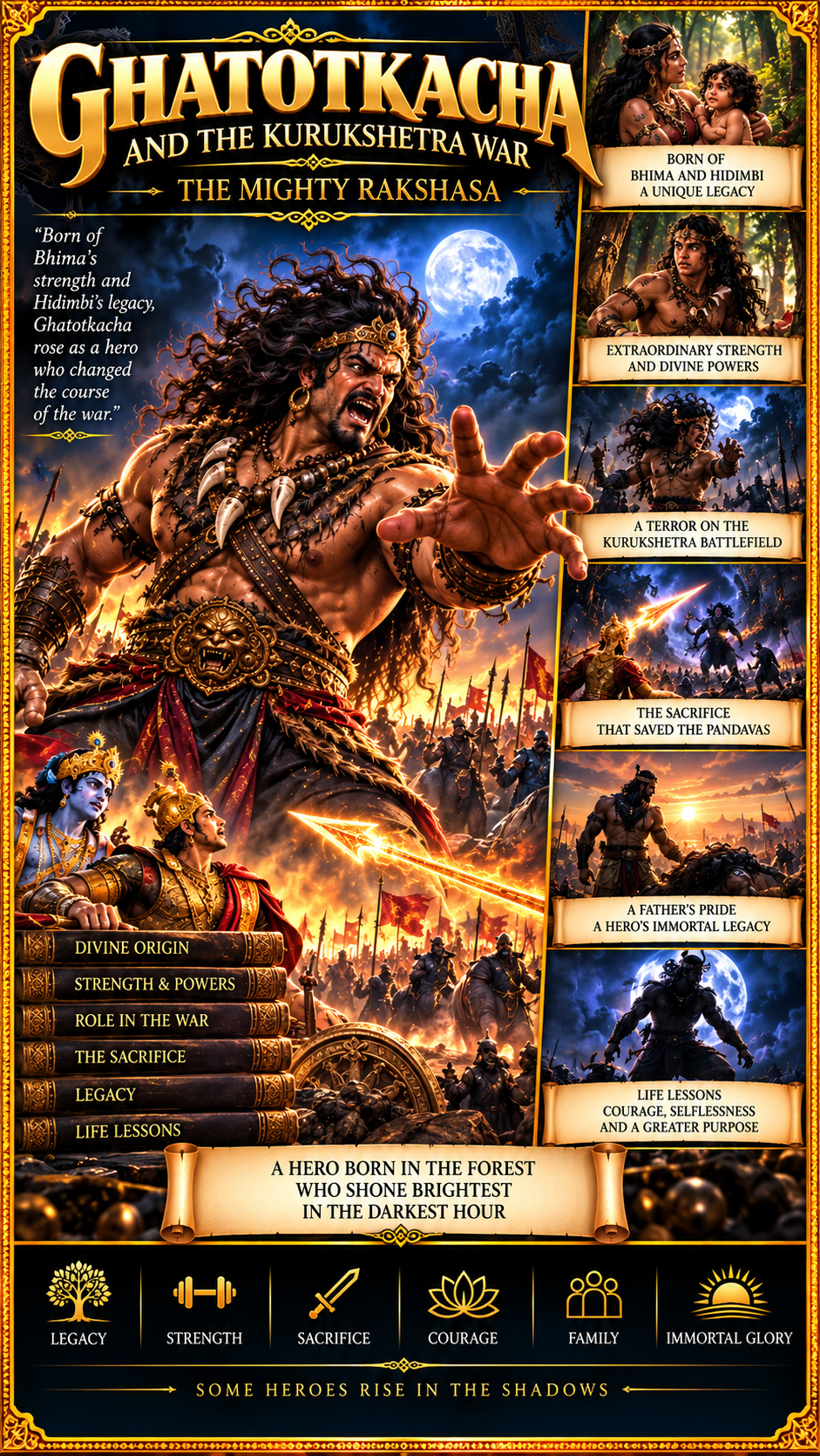
Ghatotkacha in Mahabharata: The Nocturnal Titan of Kurukshetra & The Vasavi Shakti
Introduction When darkness fell on the fourteenth night of Kurukshetra and the fighting continued under blazing torches, a gigantic warrior soared into the night sky, hurling boulders and illusions that sent terror through the Kaurava ranks. This was Ghatotkacha, the half-human, half-Rakshasa son of Bhima and Hidimbi. Loved by the Pandavas for his infectious devotion, Ghatotkacha sacrificed his life that night, forcing Karna to exhaust the divine Vasavi Shakti spear and ensuring the survival of Prince Arjuna. Born as the son of Bhima and the Rakshasi Hidimba, Ghatotkacha possessed extraordinary strength, magical powers, and unmatched night-war abilities. His heroic sacrifice not only changed the fate of the war but also saved Arjuna’s life indirectly. Ghatotkacha stands as a symbol of selfless sacrifice, destiny, and divine strategy in the Mahabharata. Birth of Ghatotkacha After the Pandavas escaped from the House of Lac (Lakshagriha), they traveled through dense forests. During this time, Bhima encountered Hidimba, a Rakshasi who fell in love with him. With Kunti’s permission, Bhima married Hidimba under Gandharva tradition. From this union was born Ghatotkacha. Meaning of the Name “Ghatotkacha” According to legend, he was born with a powerful body and fearsome appearance, typical of Rakshasas. Yet beneath his…

- Mythology , Ramayanam
- January 13, 2026
- 508 views
What is Rama Rajya? Principles of Ideal Governance, Justice & Modern Relevance
Introduction: Rama Rajya Explained For thousands of years across the Indian subcontinent, the concept of Rama Rajya has stood as the gold standard of righteous leadership. In this legendary vision of society, King Rama placed the happiness, safety, and moral well-being of his citizens above his own personal comfort. It envisions a world where truth reigns, rulers remain accountable to the humblest citizen, and every family lives in harmony, free from poverty, fear, and injustice. Rooted in the Ramayana, Rama Rajya is not merely a religious or mythological concept. It is a governance philosophy – one that continues to influence political thought, public administration, and ethical leadership even today. For students, professionals, administrators, and leaders, understanding Rama Rajya offers timeless lessons in ethical governance and responsible leadership. What Is Rama Rajya? Rama Rajya refers to the period of governance under Lord Rama, king of Ayodhya, where society functioned in harmony under the principles of dharma (righteousness). Key Characteristics of Rama Rajya: In Rama Rajya, the king was not above the law – he was its first servant. Core Principles of Rama Rajya Dharma as the Foundation of Governance In Rama Rajya, dharma guided every decision. Governance was not driven by…