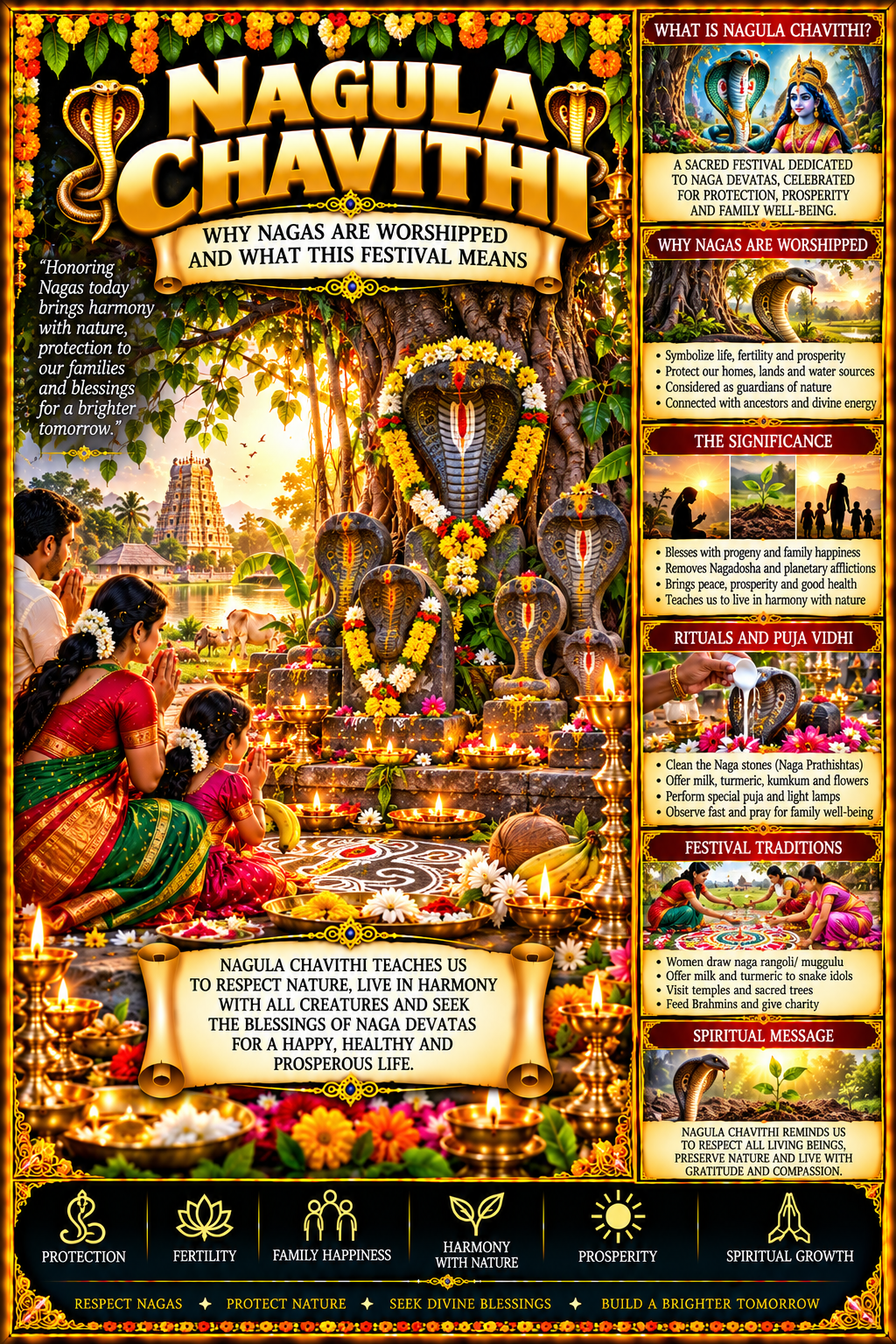
 Nagula Chavithi: Why Nagas Are Worshipped and What This Festival Means
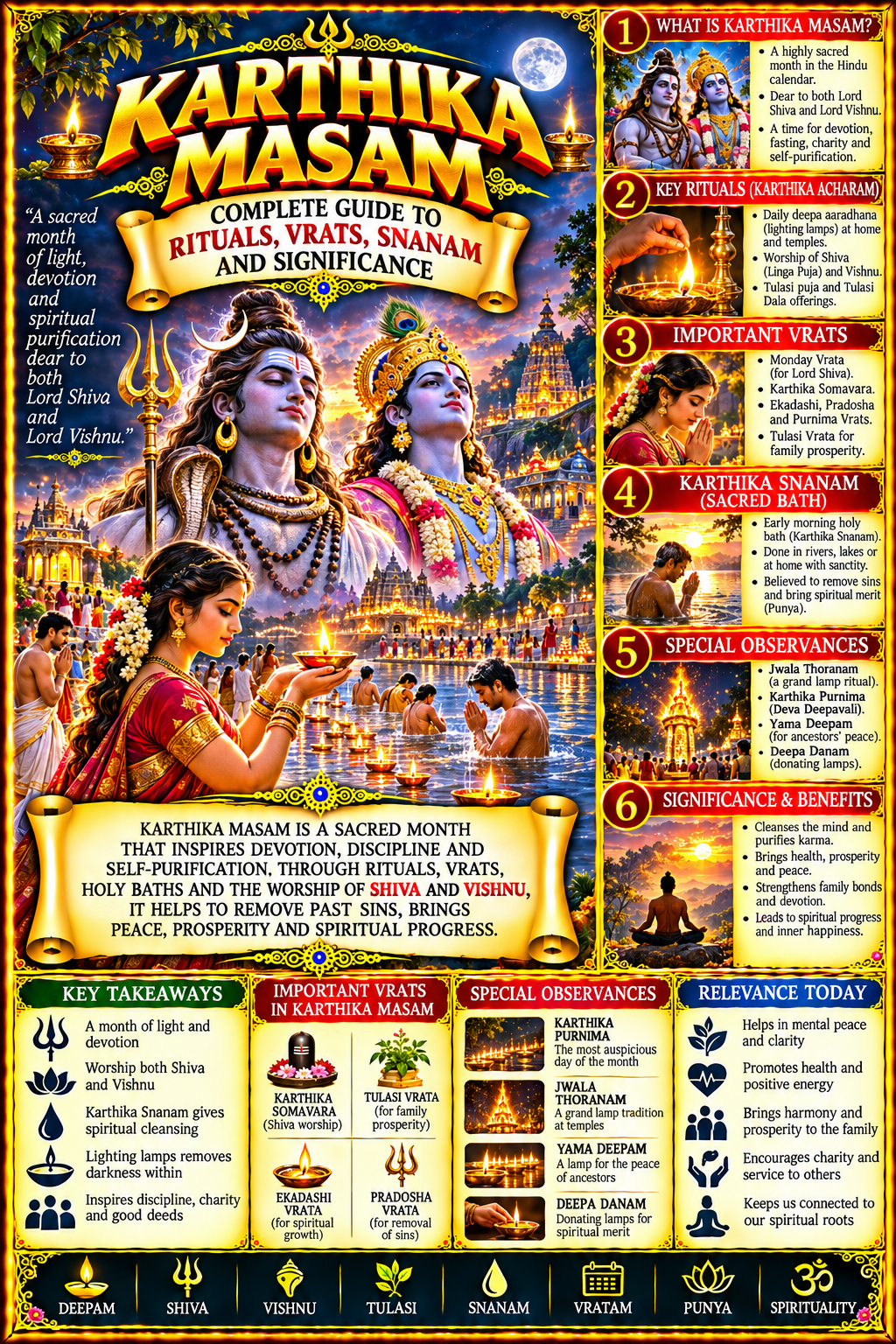 Karthika Masam: Complete Guide to Rituals, Vrats, Snanam and Significance
 Yama Vidiya 2026: Story of Yama & Yamuna | Bhai Dooj Significance and Rituals
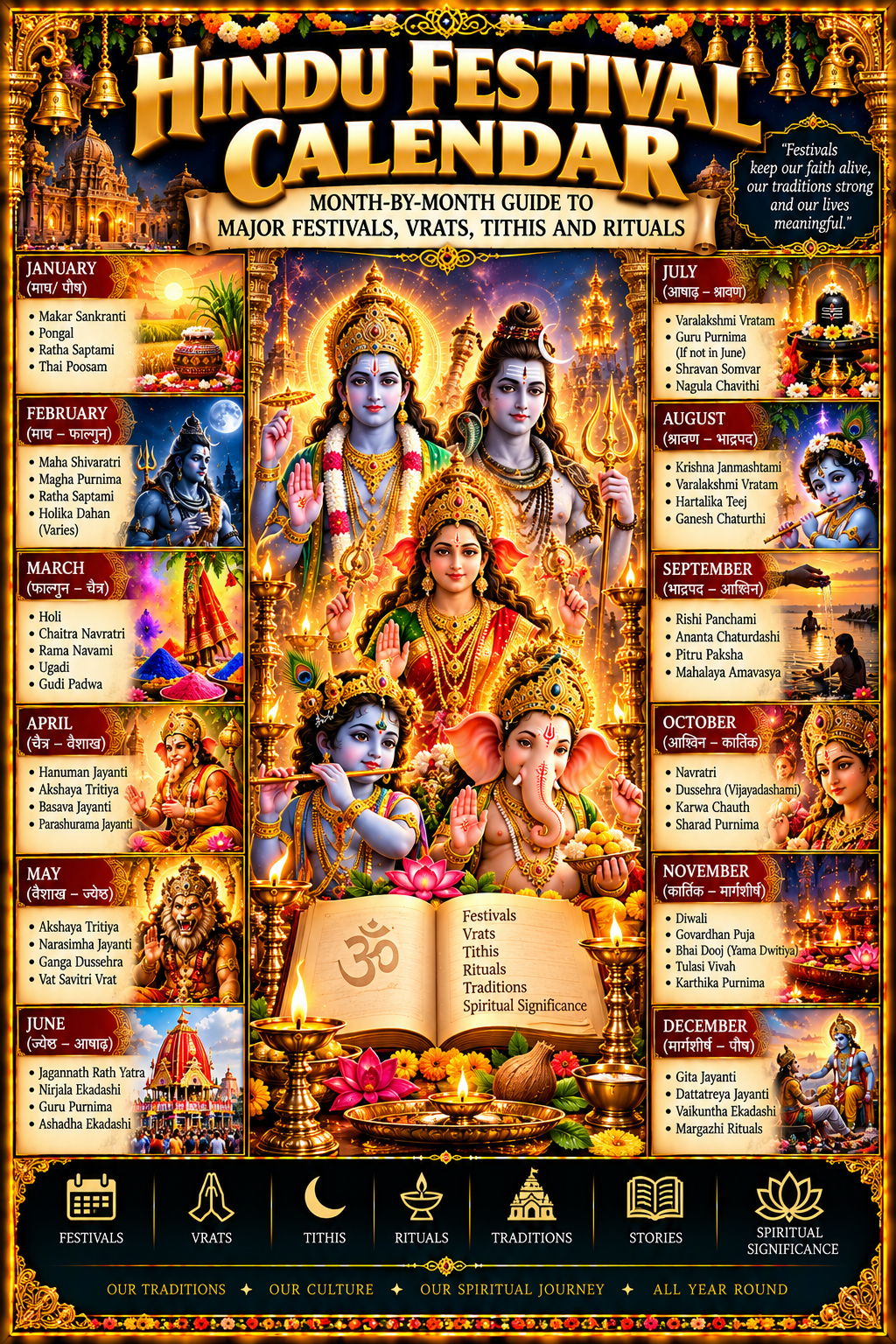
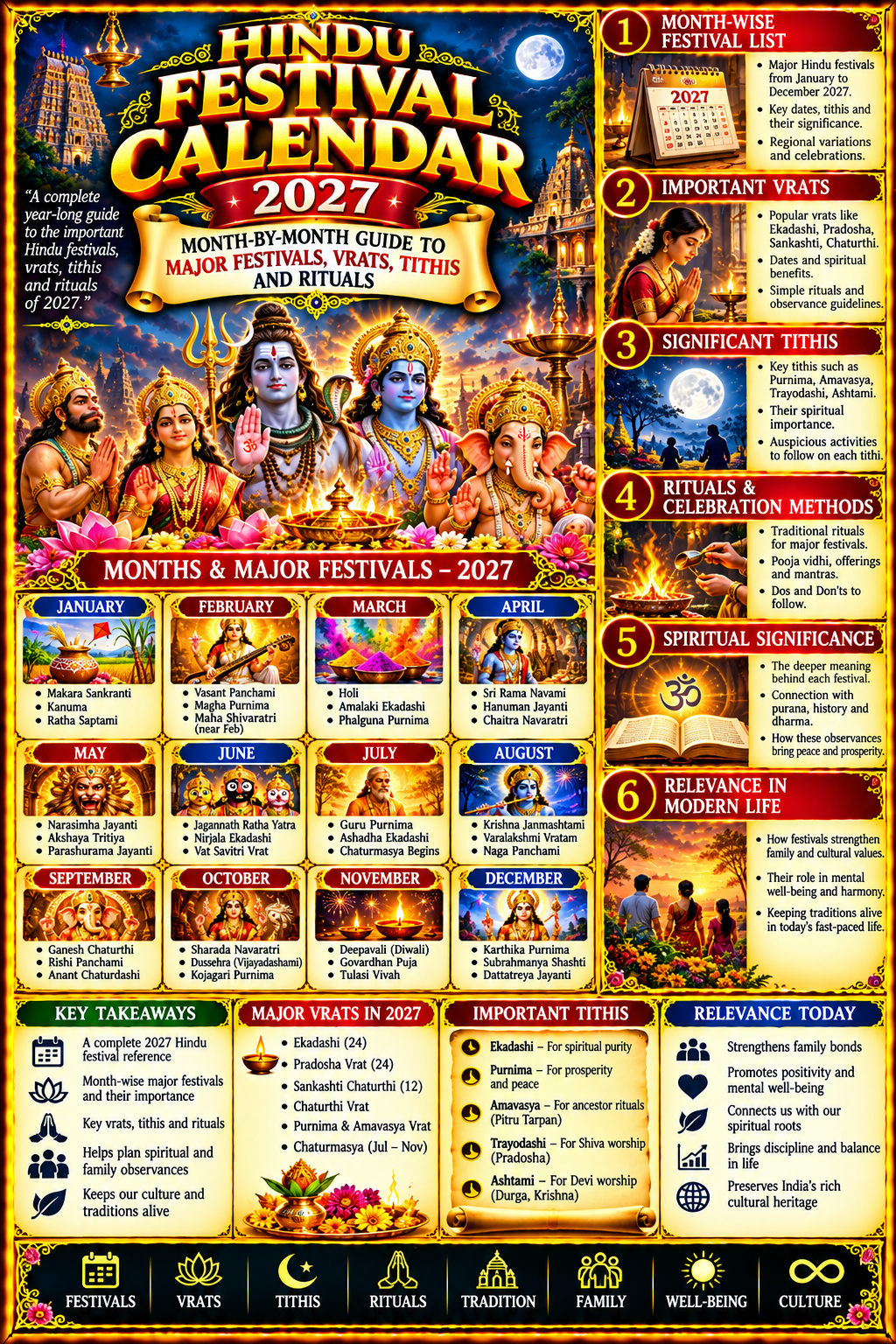 Hindu Festival Calendar: Month-by-Month Guide to Major Festivals, Vrats, Tithis and Rituals 2027
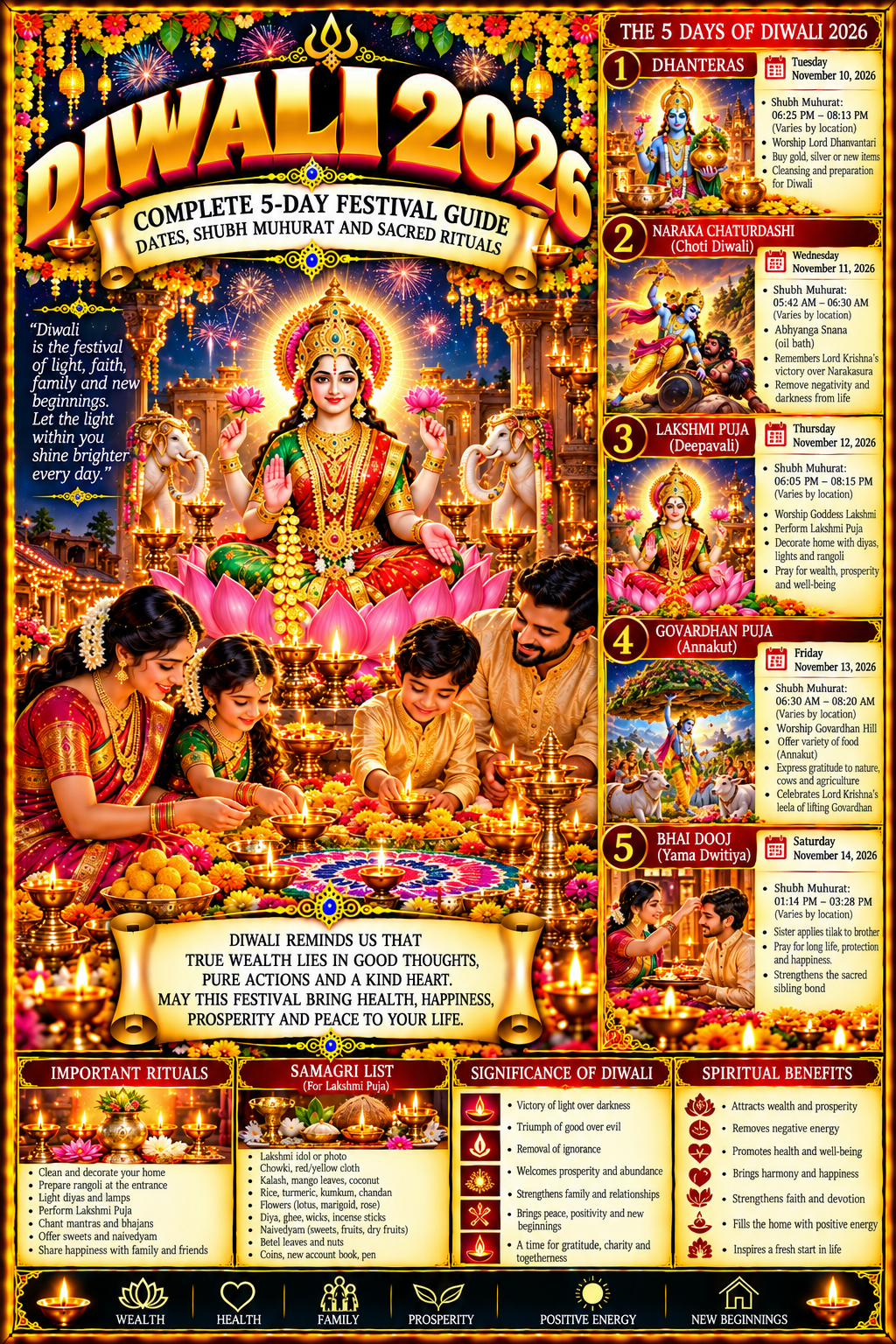 Diwali 2026: Complete 5-Day Festival Guide, Dates, Shubh Muhurat and Sacred Rituals
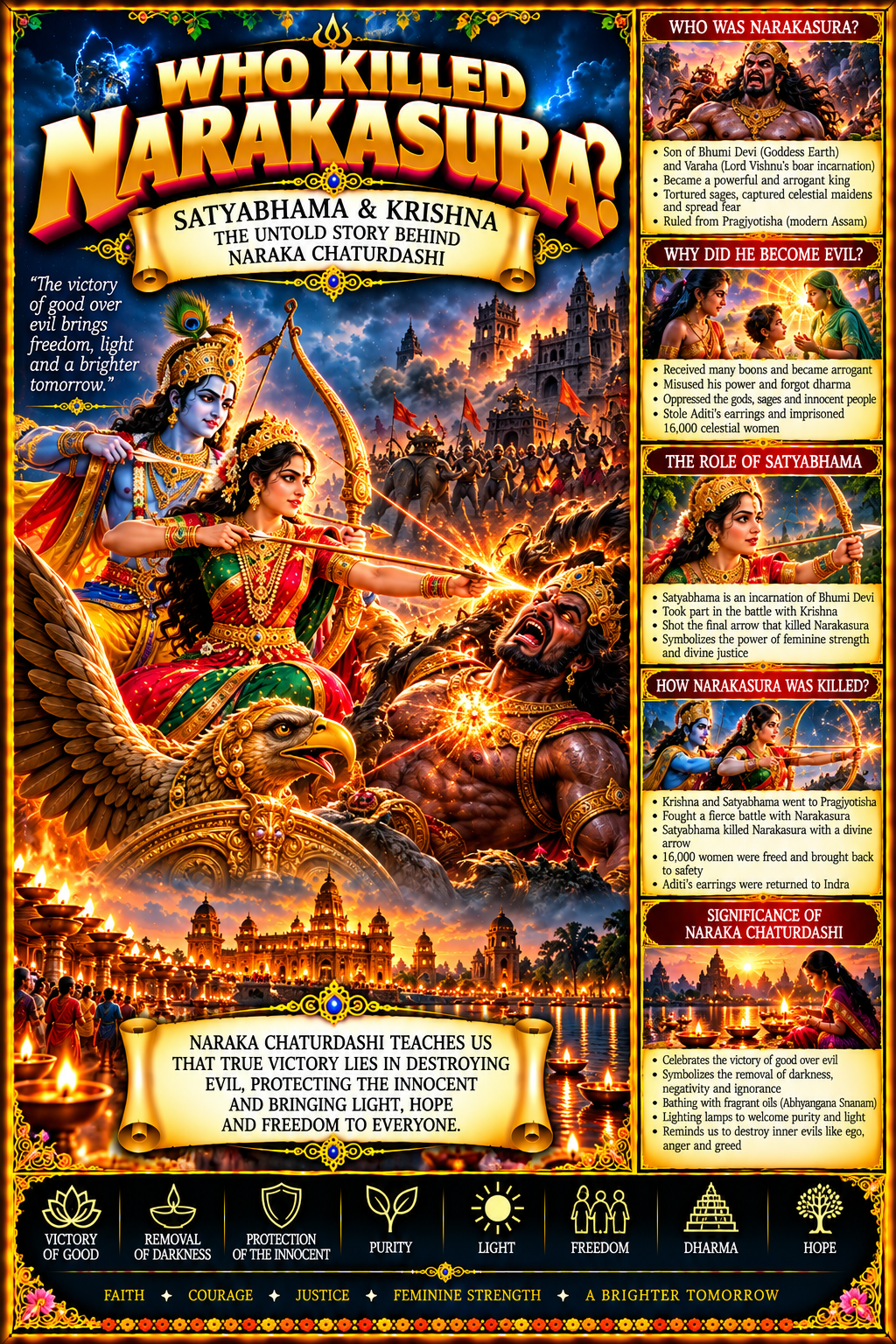 Who Killed Narakasura? Satyabhama & Krishna | The Untold Story Behind Naraka Chaturdashi
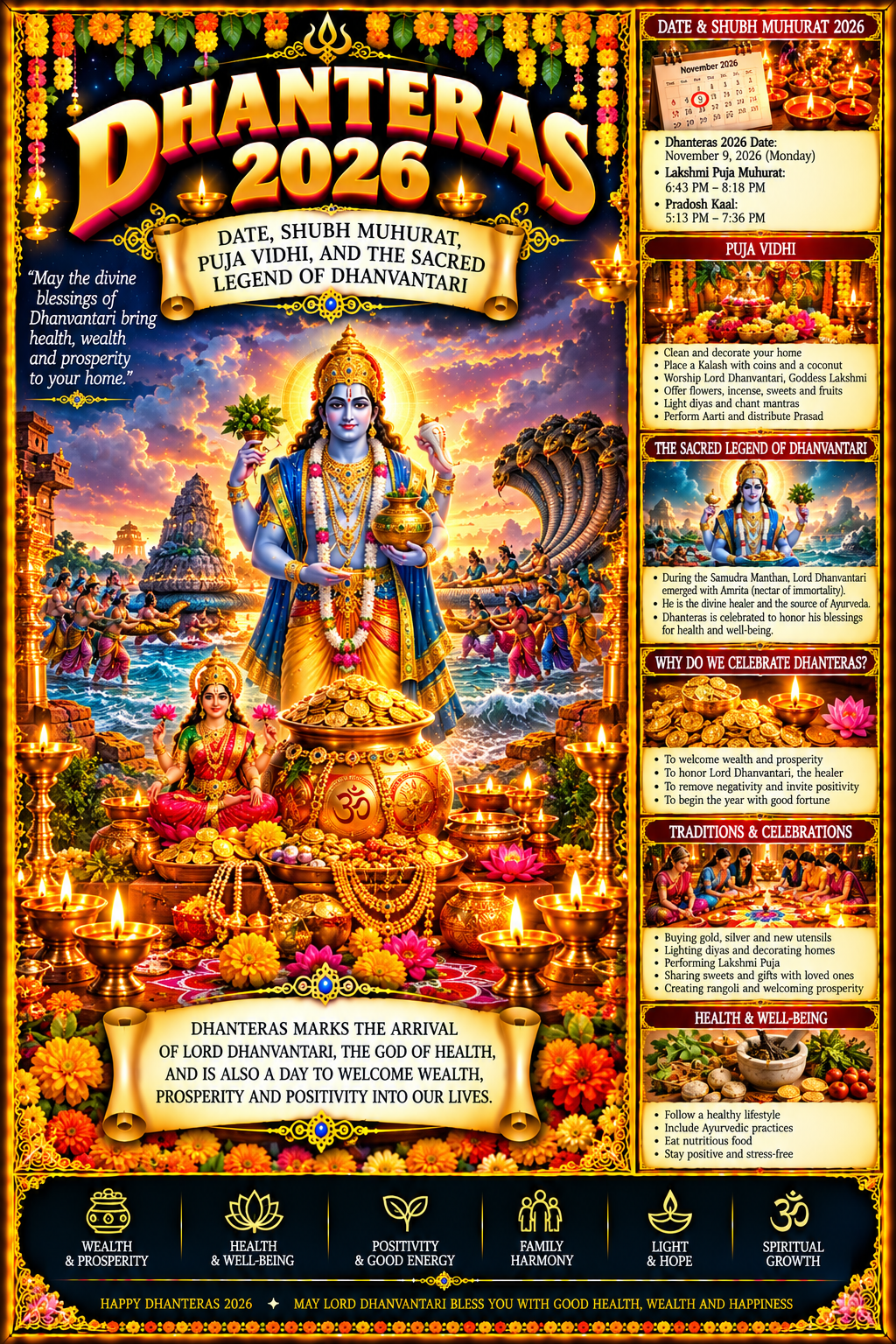 Dhanteras 2026: Date, Shubh Muhurat, Puja Vidhi, and the Sacred Legend of Dhanvantari
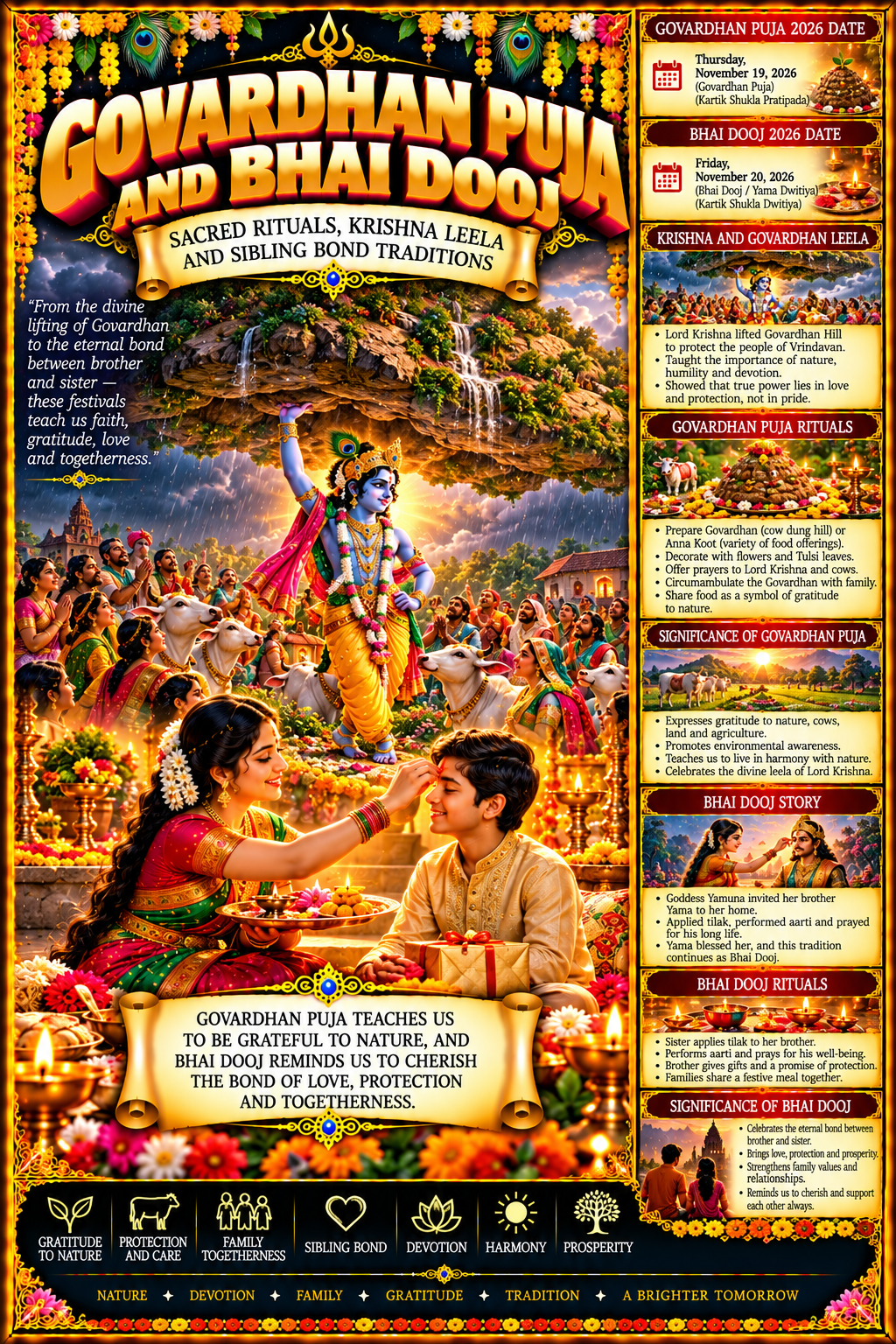 Govardhan Puja and Bhai Dooj: Sacred Rituals, Krishna Leela and Sibling Bond Traditions
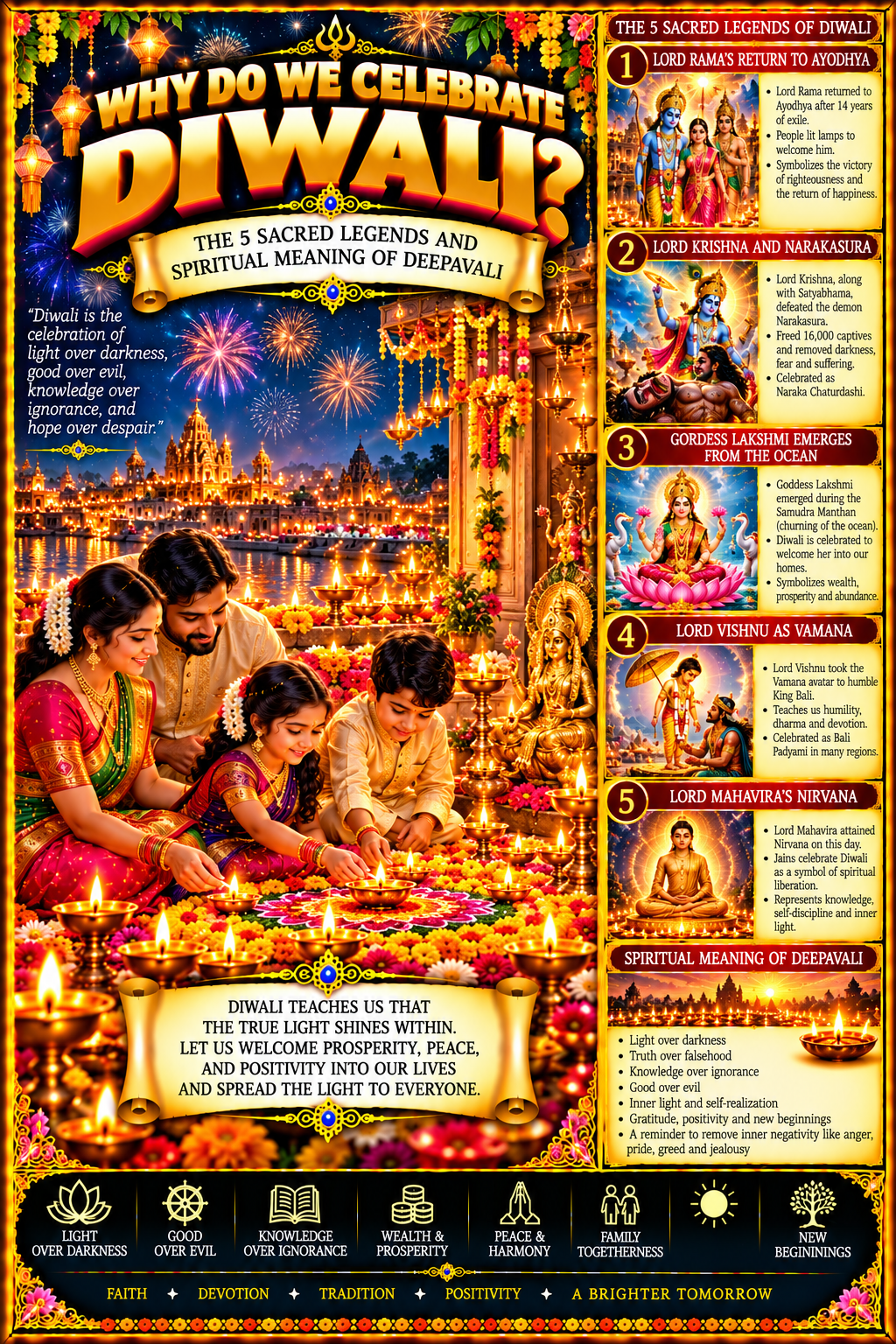 Why Do We Celebrate Diwali: The 5 Sacred Legends and Spiritual Meaning of Deepavali
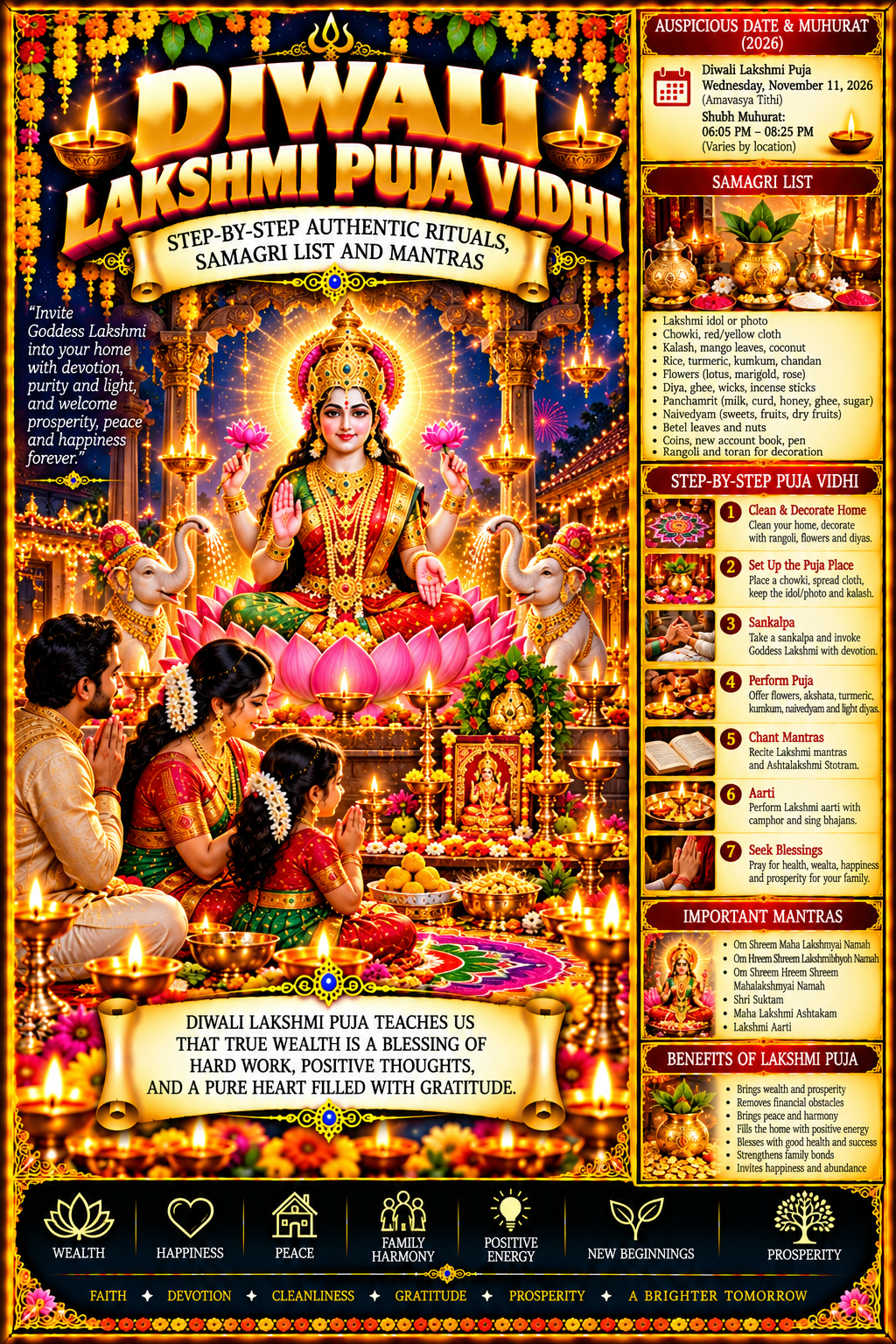 Diwali Lakshmi Puja Vidhi: Step-by-Step Authentic Rituals, Samagri List and Mantras






Raja Ratnam
- Mahabharatam
- April 6, 2026
- 579 views
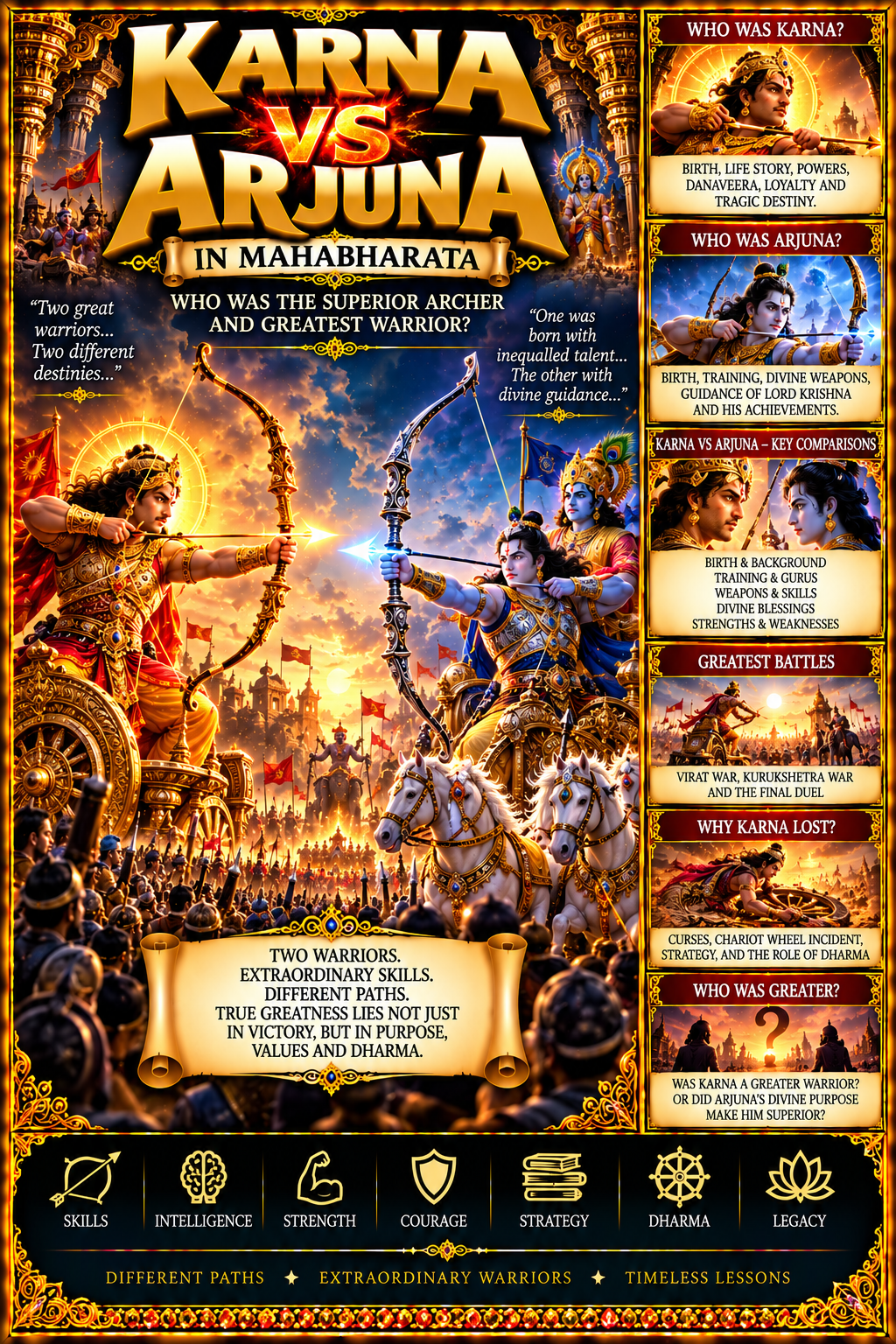
Karna in Mahabharata: Complete Life Story, 3 Curses, Kavacha Kundala & Death
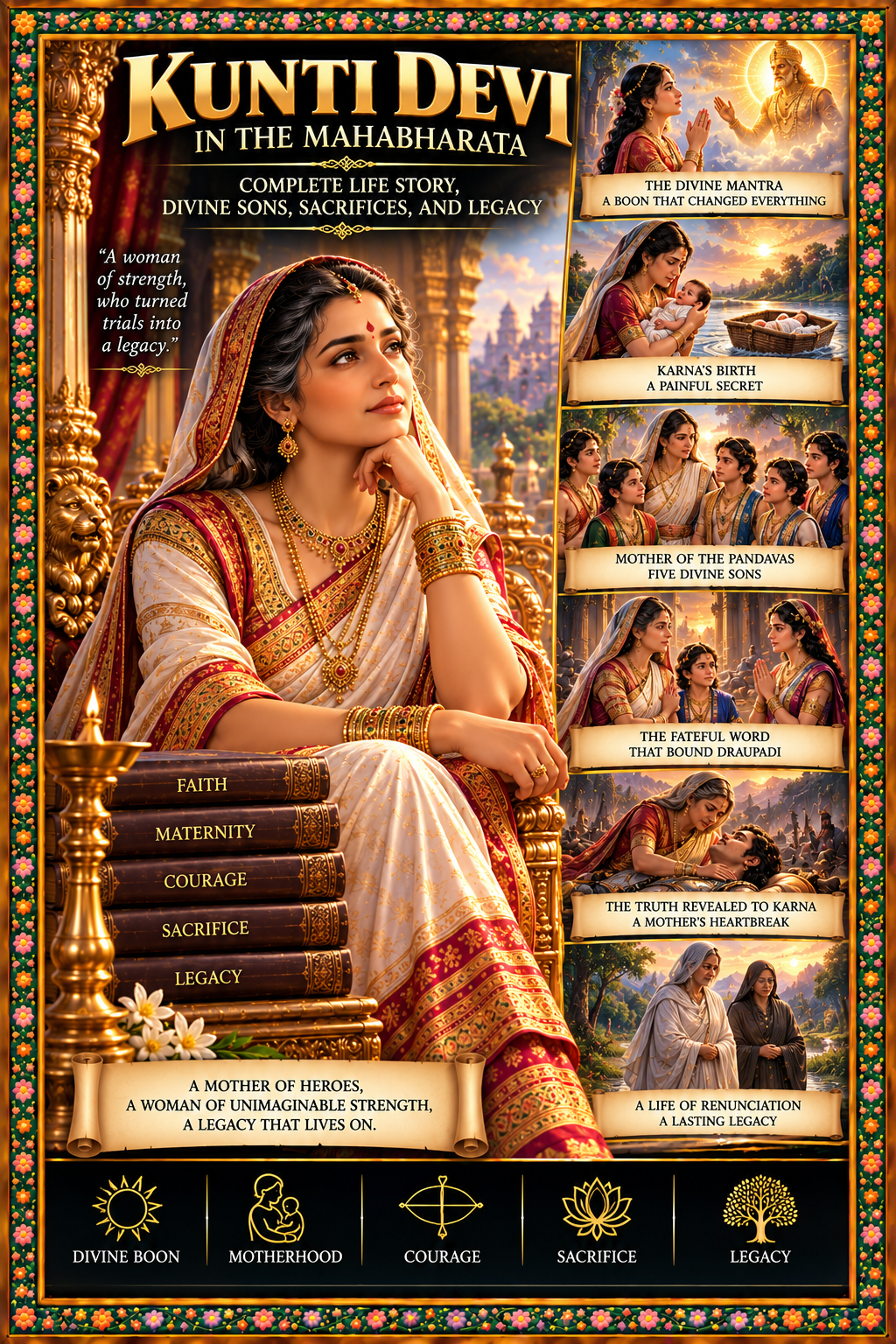
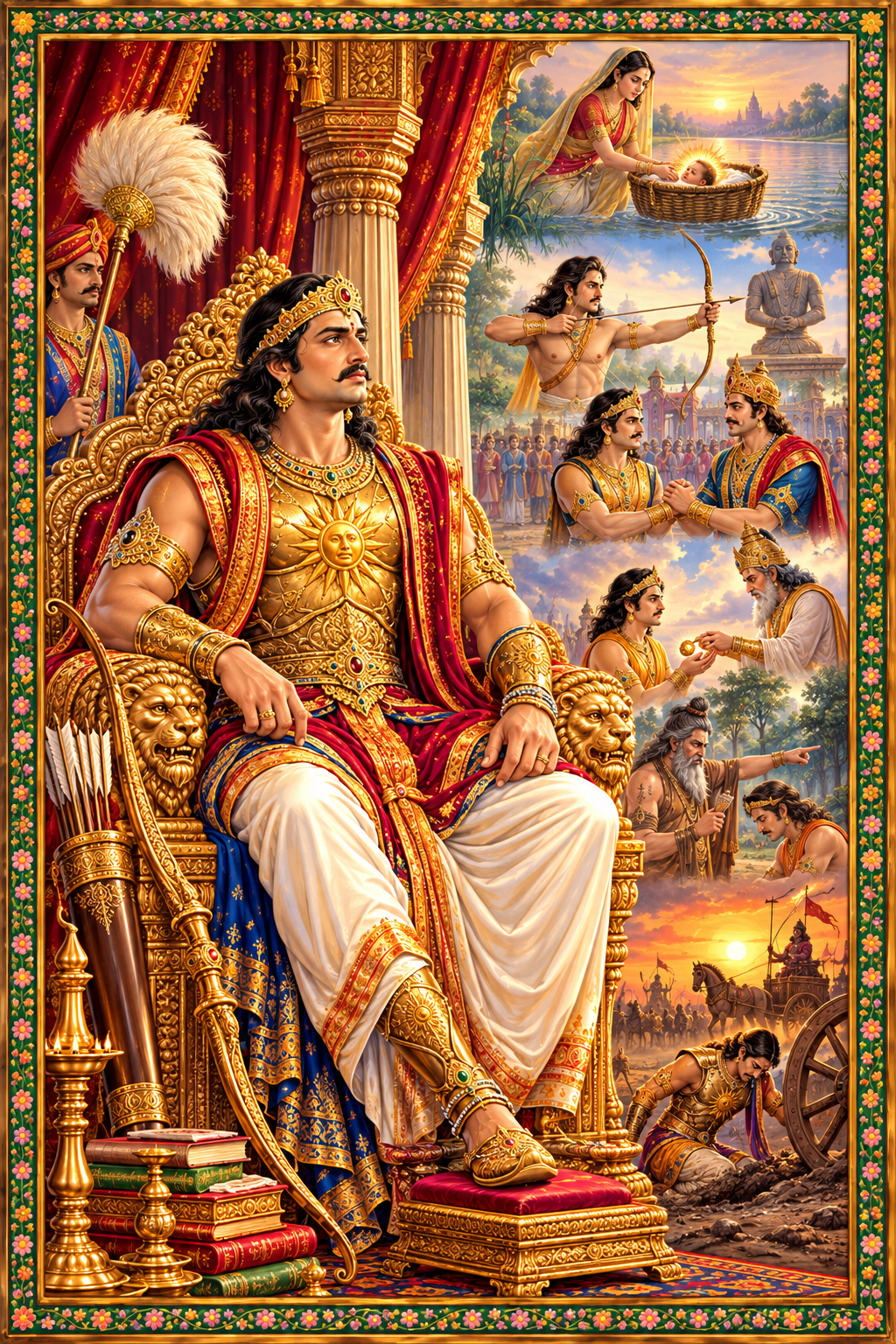
Introduction – Karna in Mahabharata Born to the unmarried princess Kunti with divine golden armor and earrings glowing from his flesh, Karna was set adrift on the river Ashwa, only to be lovingly raised by a gentle charioteer. Despite having the strength to challenge celestial gods, he was mocked for his caste and turned away from royal academies. Gifted with legendary generosity, he gave away whatever anyone asked of him, even his life-saving armor. Karna remains one of the most beloved and tragic figures in world literature – a warrior who stood by his friend Duryodhana to the bitter end. Even though he was born with divine powers, Karna spent most of his life proving his worth. His story is not just about war but also about respect, friendship, and destiny. Many people consider Karna a tragic hero because he had great qualities but faced constant struggles. For official cultural and historical archives, visit the Ministry of Culture, Government of India. Birth of Karna – Karna in Mahabharata Karna was born to Kunti before her marriage. She received a boon that allowed her to call any god. Out of curiosity, she called the Sun God. As a result, Karna was…
- Mahabharatam , Women Characters
- March 22, 2026
- 484 views
Draupadi in Mahabharata: Birth from Fire, 5 Husbands, Vow of Revenge & Legacy
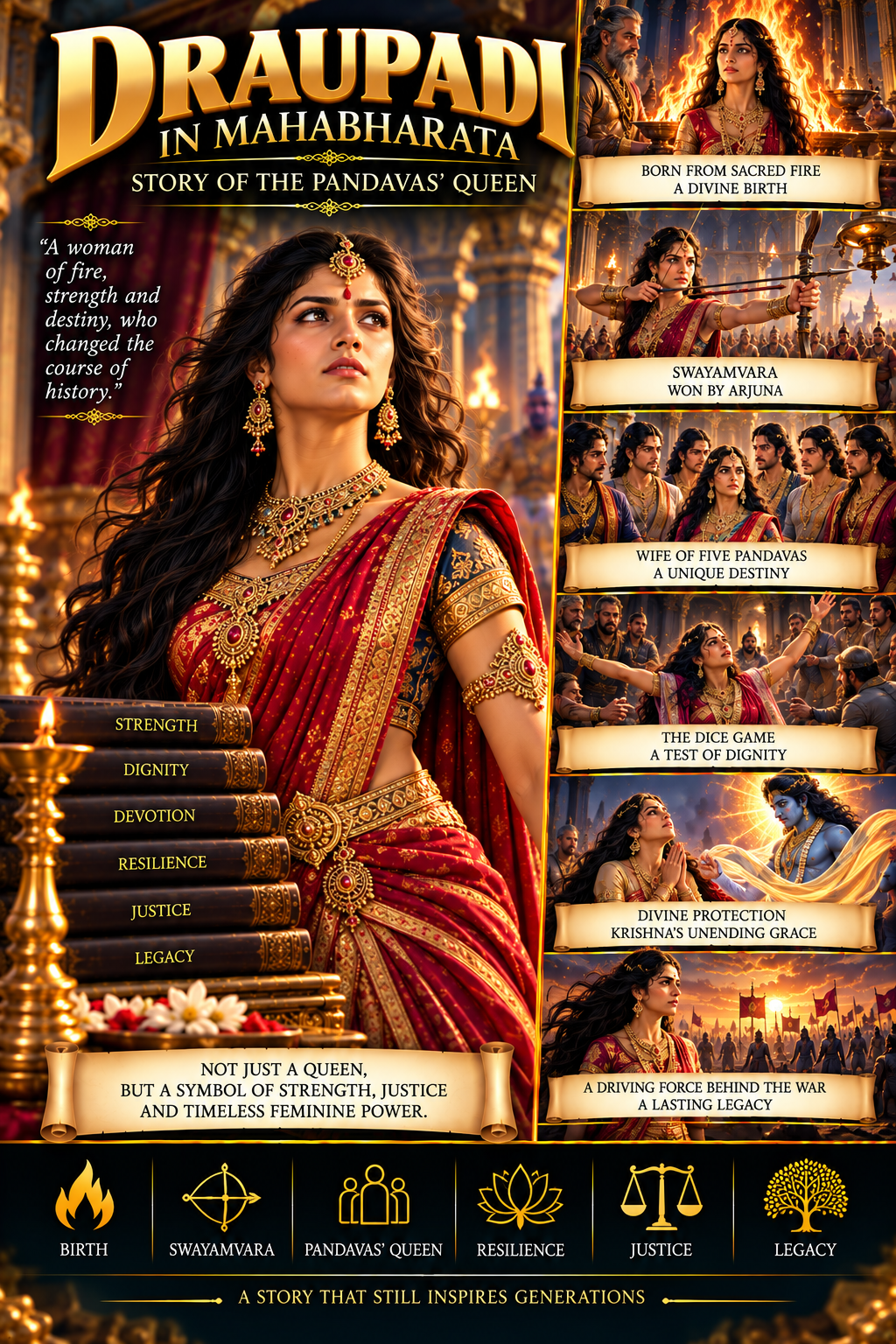
Introduction – Draupadi in Mahabharata Emerging from the sacred sacrificial flames of King Drupada with glowing dark skin, lotus eyes, and the fragrance of blue lilies, Draupadi was born to redefine the destiny of ancient India. Intelligent, outspoken, and dignified, she commanded respect across royal courts. When subjected to the ultimate insult in the assembly hall of Hastinapur, her fierce vow of vengeance shook the empire. Draupadi stands as an enduring symbol of unshakeable dignity, resilience, and feminine strength. Many events in the Mahabharata happened because of the insult done to Draupadi. Her humiliation in the Kaurava court became one of the main reasons for the Kurukshetra war. Even though she suffered many hardships, she remained strong and never lost her self-respect. Draupadi’s story teaches us about courage, patience, devotion, and the power of dharma. For official cultural and historical archives, visit the Ministry of Culture, Government of India. Birth of Draupadi – Draupadi in Mahabharata Draupadi was not born like an ordinary child. She appeared from a sacred fire during a yajna performed by King Drupada, the ruler of Panchala. King Drupada wanted revenge against Drona, so he performed a powerful sacrifice to get a son who could defeat…
- Pandeva's , Sons of Kunti (From Different Devas)
- March 11, 2026
- 503 views
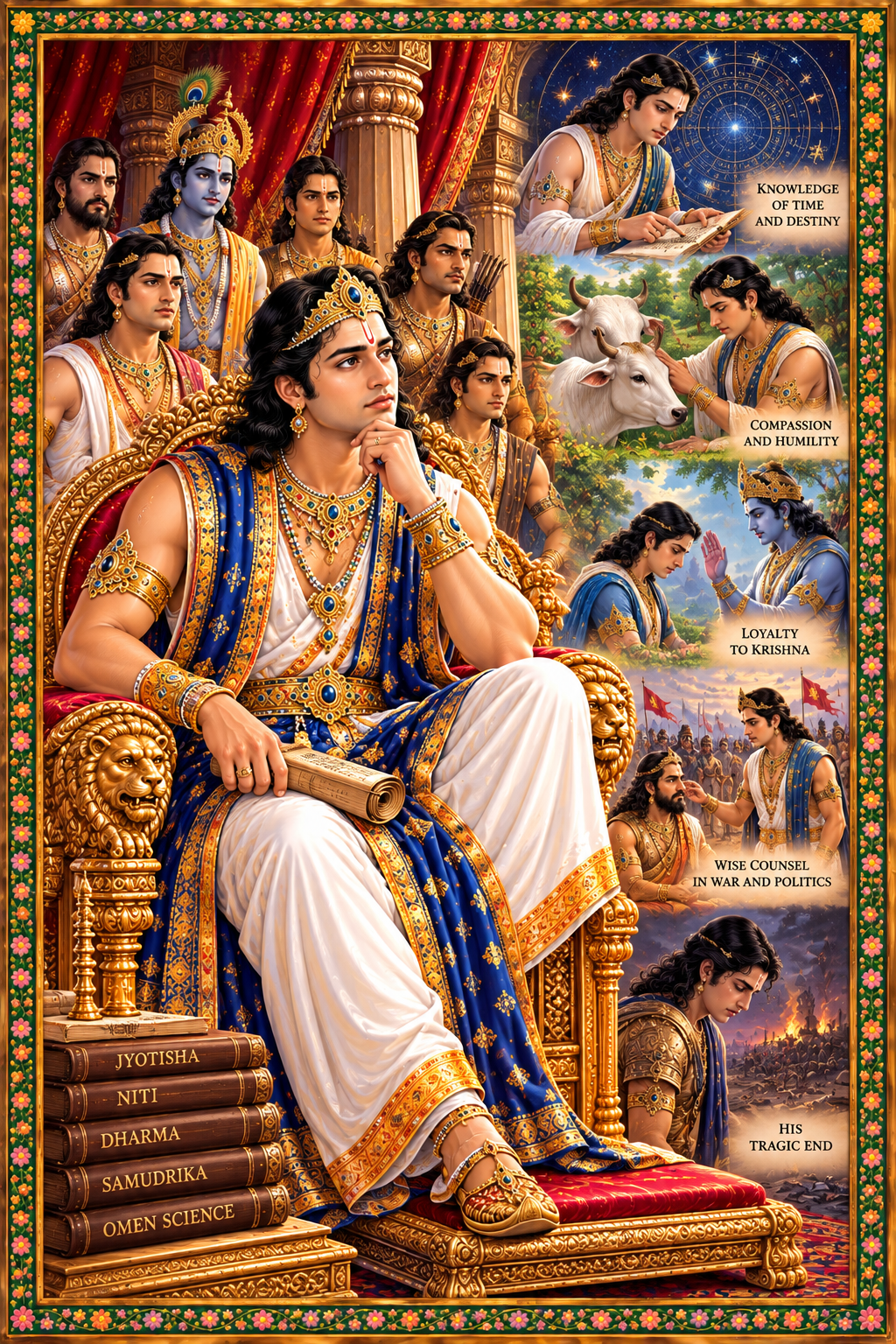
Sahadeva in Mahabharata: The Astrologer Pandava Who Knew the Future of Kurukshetra
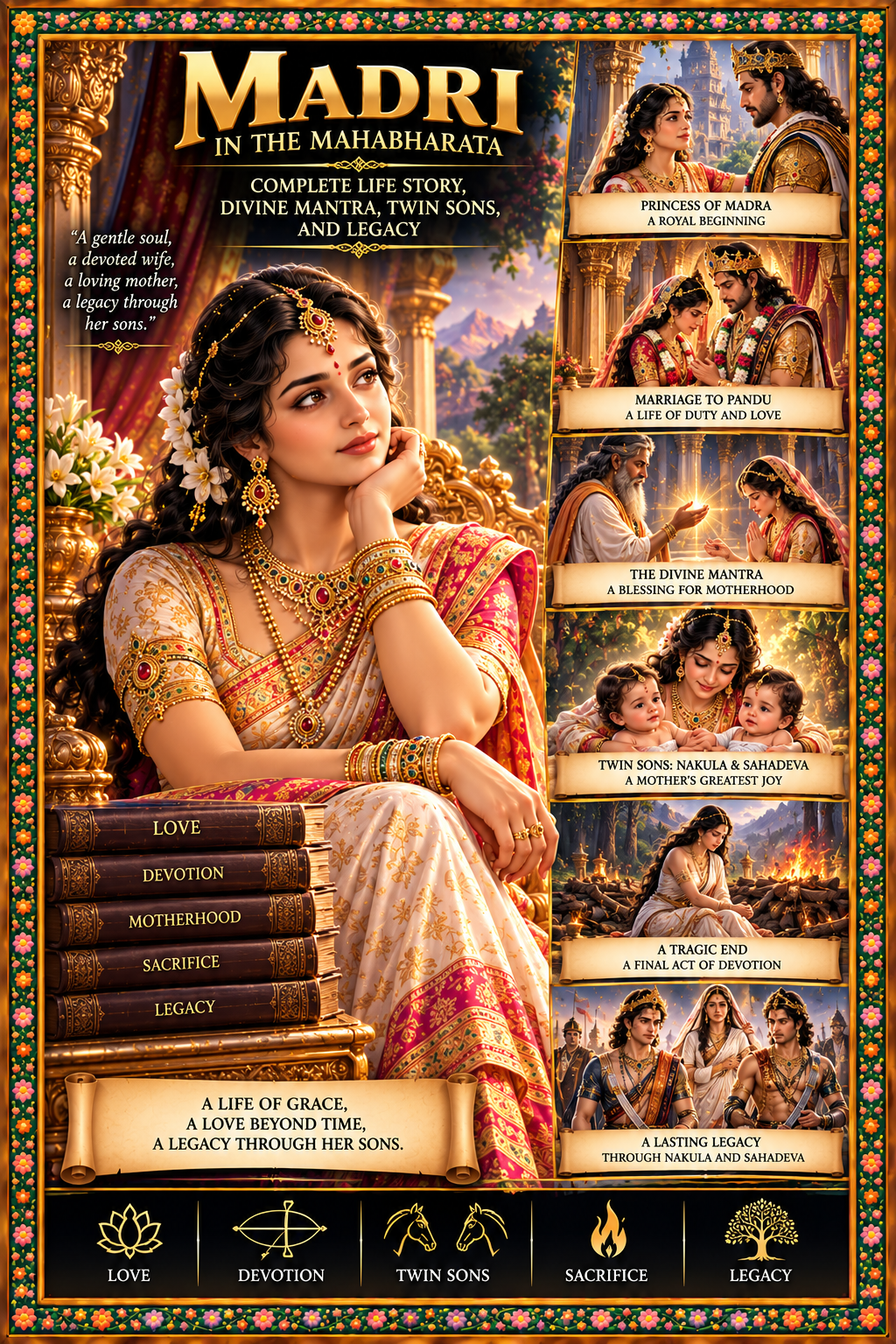
A wise Pandava prince in the Mahabharata – Sahadeva Introduction – Sahadeva in Mahabharata While Bhima conquered with unmatched physical strength and Arjuna with peerless archery, the youngest Pandava, Sahadeva, possessed a power far rarer: the gift of foreknowledge. A master of the stars and ancient medicine, Sahadeva knew the tragic outcome of the Kurukshetra war long before the conch shells were blown. Bound by a vow never to reveal the future unless asked, he was the quiet, introspective brother whose advice King Yudhishthira sought in the darkest hours of decision. Sahadeva was the youngest of the Pandavas and the twin brother of Nakula. Even though he did not speak much, he understood many things that others could not. Many stories say that Sahadeva knew the future but chose to remain silent because of his promise and his respect for dharma. His character teaches us that true knowledge does not always need loud words. Sometimes, silence itself shows greatness. Birth of Sahadeva -Sahadeva in Mahabharata Sahadeva and Nakula were born to King Pandu’s second wife, Madri. Since Pandu was cursed and could not have children, Kunti shared a divine mantra with Madri. By using that mantra, Madri prayed to the…

- Festivals
- March 11, 2026
- 277 views
Ugadi 2026 Celebrations at Pavani Pleasant, Bangalore
Pavani Pleasant Bangalore celebrates Ugadi 2026 Introduction : Ugadi Celebration 2026 As tender mango leaves adorned doorways and the refreshing scent of jasmine filled the morning air, residents gathered at Pavani Pleasant in Bangalore to welcome the Telugu and Kannada New Year with open hearts. From preparing the traditional six-taste Ugadi Pachadi – reminding everyone that life is a beautiful blend of sweet, sour, bitter, and tangy experiences – to lively cultural songs by children and elders, the celebration united neighbors in joyful community bonding. At Pavani Pleasant, families gathered together in traditional attire, decorated their surroundings with colorful rangoli and mango leaves, and participated in cultural activities that brought the entire community together. The Ugadi Celebration 2026 at Pavani Pleasant Bangalore became a beautiful reminder of how festivals strengthen community bonds and preserve cultural traditions. For official cultural and historical archives, visit the Ministry of Culture, Government of India. Ugadi 2026 Date – In 2026, Ugadi will be celebrated on March 19, Thursday. Ugadi marks the first day of the Chaitra month in the Hindu lunisolar calendar and is celebrated as the Telugu and Kannada New Year. The festival usually falls in March or April, depending on the lunar…
- Pandeva's , Sons of Kunti (From Different Devas)
- March 6, 2026
- 449 views
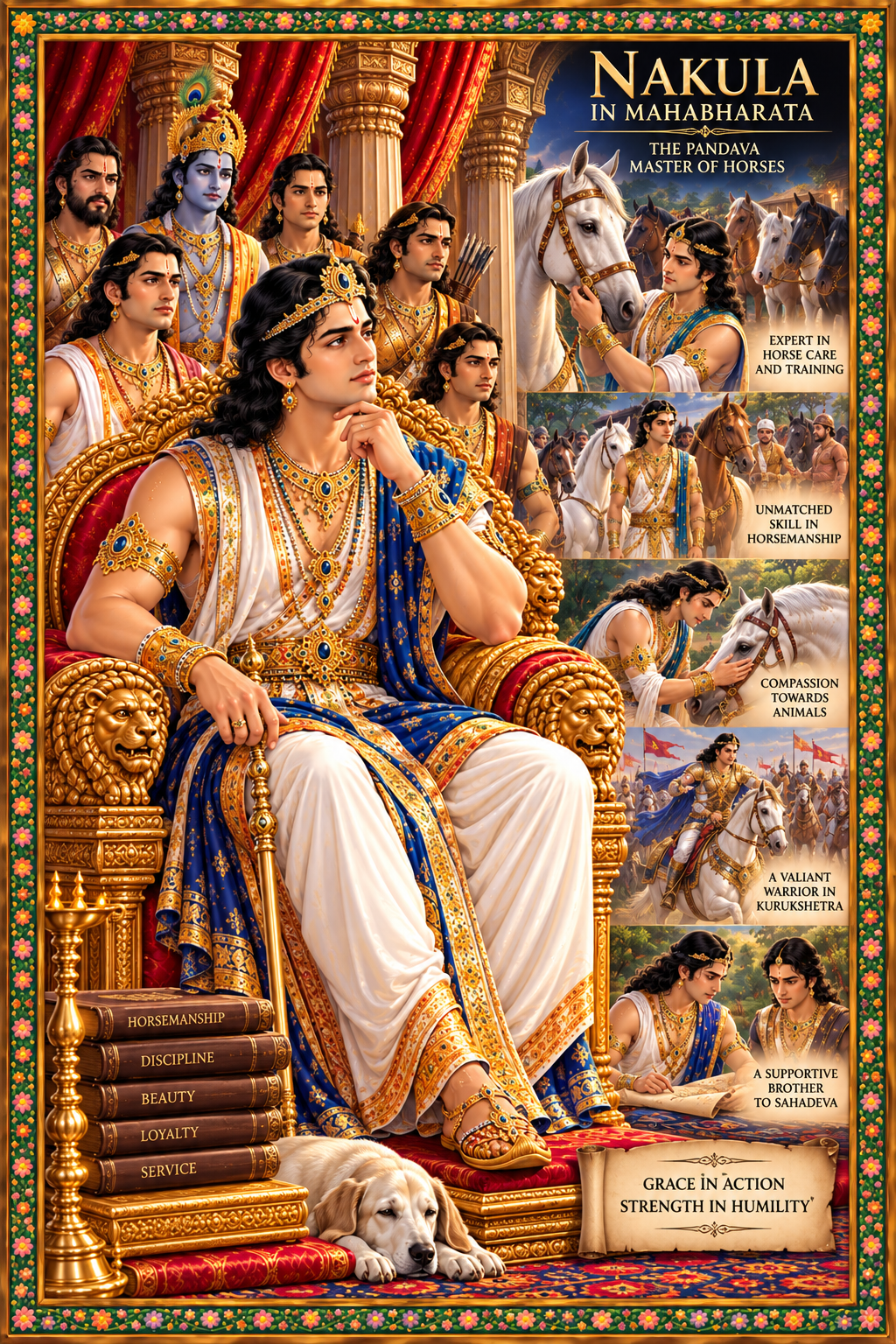
Nakula in Mahabharata: The Handsome Pandava, Master of Horses & Ayurveda
Nakula is the handsome warrior who is master of horses? Introduction – Nakula in Mahabharata Renowned across kingdoms for his radiant charm and athletic grace, Nakula was the fourth Pandava brother and the elder of the Madri twins. Beyond his striking presence, Nakula was one of the finest swordsmen of his era and an intuitive master of horses, able to heal wounded animals and understand their moods like no one else. Unfailingly humble, loyal, and brave, his devotion to his elder brothers and his heroic deeds in battle made him an indispensable pillar of the Pandava family. He was the fourth Pandava and the twin brother of Sahadeva. Nakula is remembered for his loyalty, courage, and humility, which made him a respected warrior and noble prince. For official cultural and historical archives, visit the Ministry of Culture, Government of India. Birth and Divine Origin – Nakula in Mahabharata Nakula was born to Queen Madri, the second wife of King Pandu. Through a divine blessing, Madri invoked the Ashwini Kumaras, the twin celestial physicians of the gods. As a result, she gave birth to twin sons – Nakula and Sahadeva. Because of this divine origin, Nakula possessed: Among the Pandavas, Nakula…

- Festivals
- March 3, 2026
- 563 views
Holi 2026 Celebrations at Pavani Pleasant, Whitefield
Holi 2026 at Pavani Pleasant: When Whitefield Turned into a Rainbow! Introduction : Holi celebration at Pavani Pleasant If you think Holi is just about dry colors, you have not celebrated it at Pavani Pleasant in Whitefield! From morning drum beats echoing through the courtyards to clouds of bright gulal floating across the sky, this year’s festival of colors brought every family together in laughter, sweet thandai, and dancing. Holi is that one festival where adults turn into kids, kids go absolutely wild, and everyone ends up looking like a walking rainbow. And this year? It was a whole new experience for us. So buckle up, grab some thandai (or coffee if you’re not into that), and let me take you through the most colourful day of the year at our beloved Pavani Pleasant! The Night Before: Preparations in Full Swing – Holi celebration at Pavani Pleasant The real fun started the night before! Mr. Sharma from 302 (our unofficial event czar) was running around like a headless chicken, making sure everything was perfect. “We need more water balloons! More colors! More everything!” – classic Mr. Sharma energy. Priya Aunty from 501 had organized a natural color-making session in the…
- Mahabharatam , Pandeva's , Sons of Kunti (From Different Devas)
- February 22, 2026
- 664 views
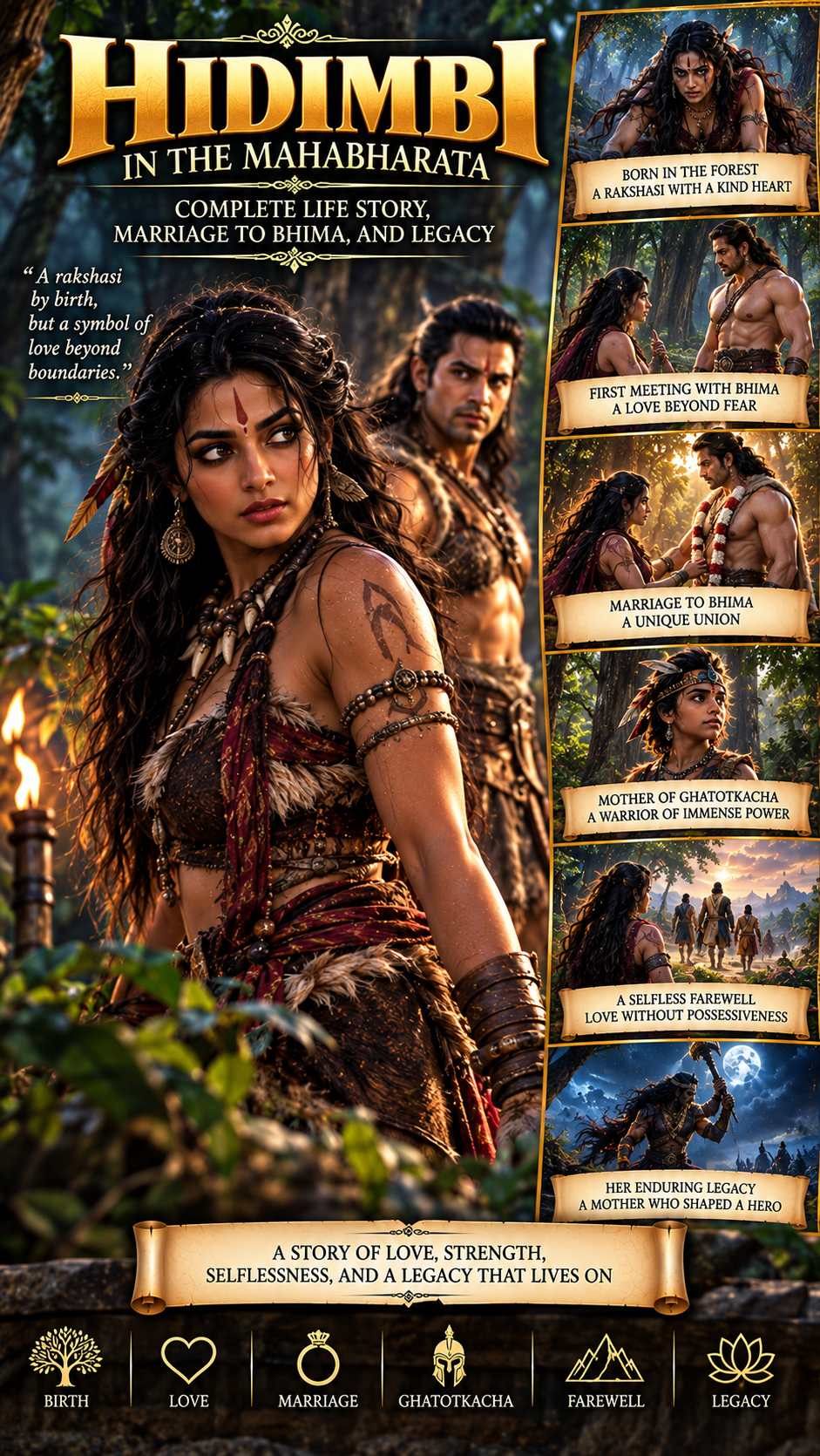
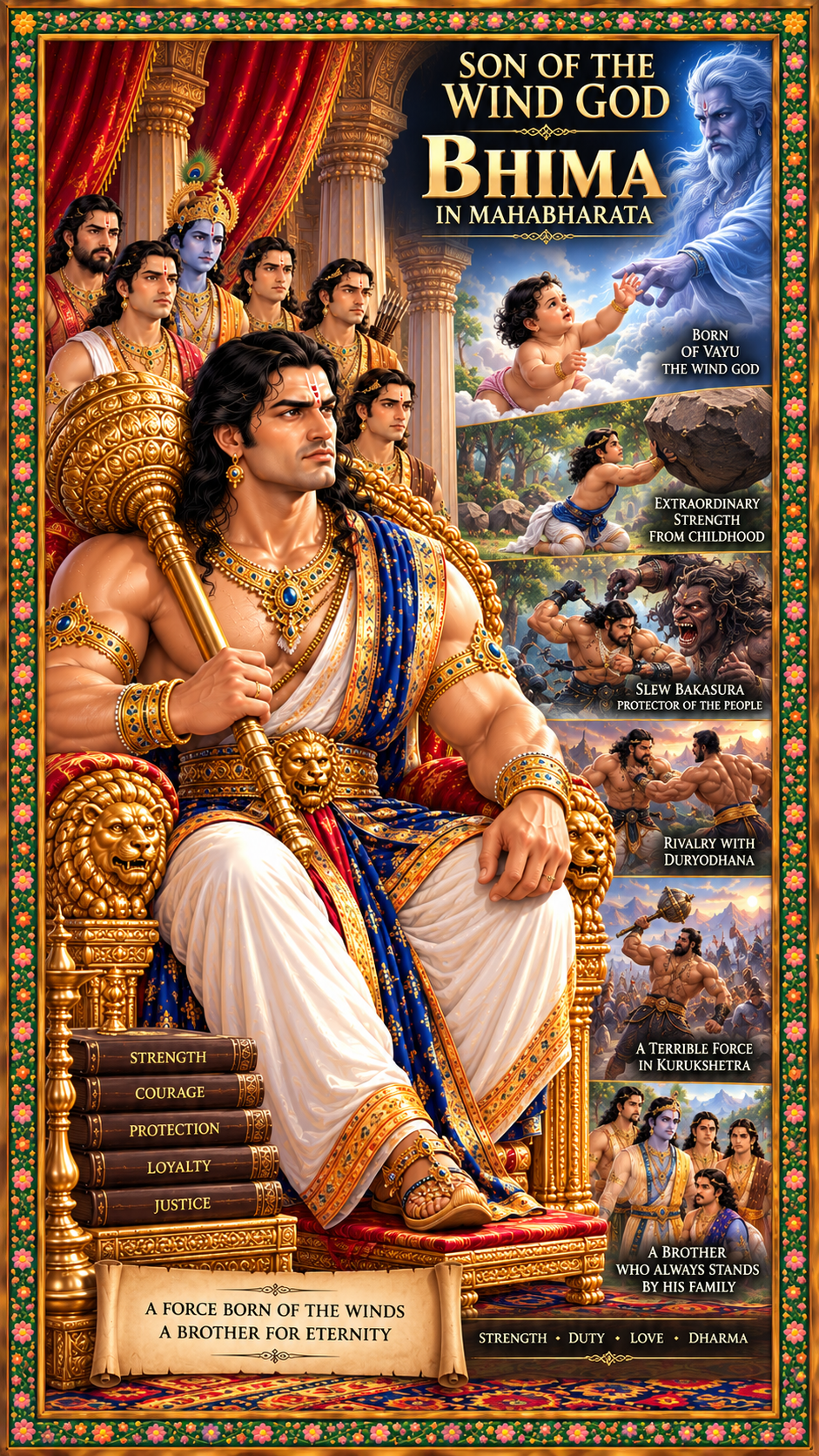
Bhima in Mahabharata: Story of the Strongest Pandava, Mighty Feats & Vows
Life of Bhima in Mahabharata – The Strongest Pandava Introduction : Bhima in Mahabharata Blessed by Vayu, the wind god, with the immense strength of ten thousand elephants, Bhima was the unstoppable guardian of the Pandava family. Whether wrestling forest demons, tearing through enemy battle formations, or preparing delicious feasts during their year in disguise, his appetite for life was as gigantic as his mace. Yet beneath his towering, thunderous presence lay a deeply protective heart that swore to defend his brothers and Draupadi at any cost. Bhima‘s life is filled with heroic deeds, fierce battles, and unwavering dedication to justice. For official cultural and historical archives, visit the Ministry of Culture, Government of India. Birth of Bhima – Bhima in Mahabharata Bhima was one of the five Pandavas in the Mahabharata. He was born to Kunti through the blessings of Vayu, the Wind God. After King Pandu was cursed that he would die if he touched his wives, Kunti used a divine mantra given by Sage Durvasa. By chanting the mantra and invoking Vayu, she gave birth to Bhima. From birth, Bhima was extremely strong. It is said that when he accidentally fell from his mother’s hands as a…
- Pandeva's , Sons of Kunti (From Different Devas)
- February 22, 2026
- 525 views
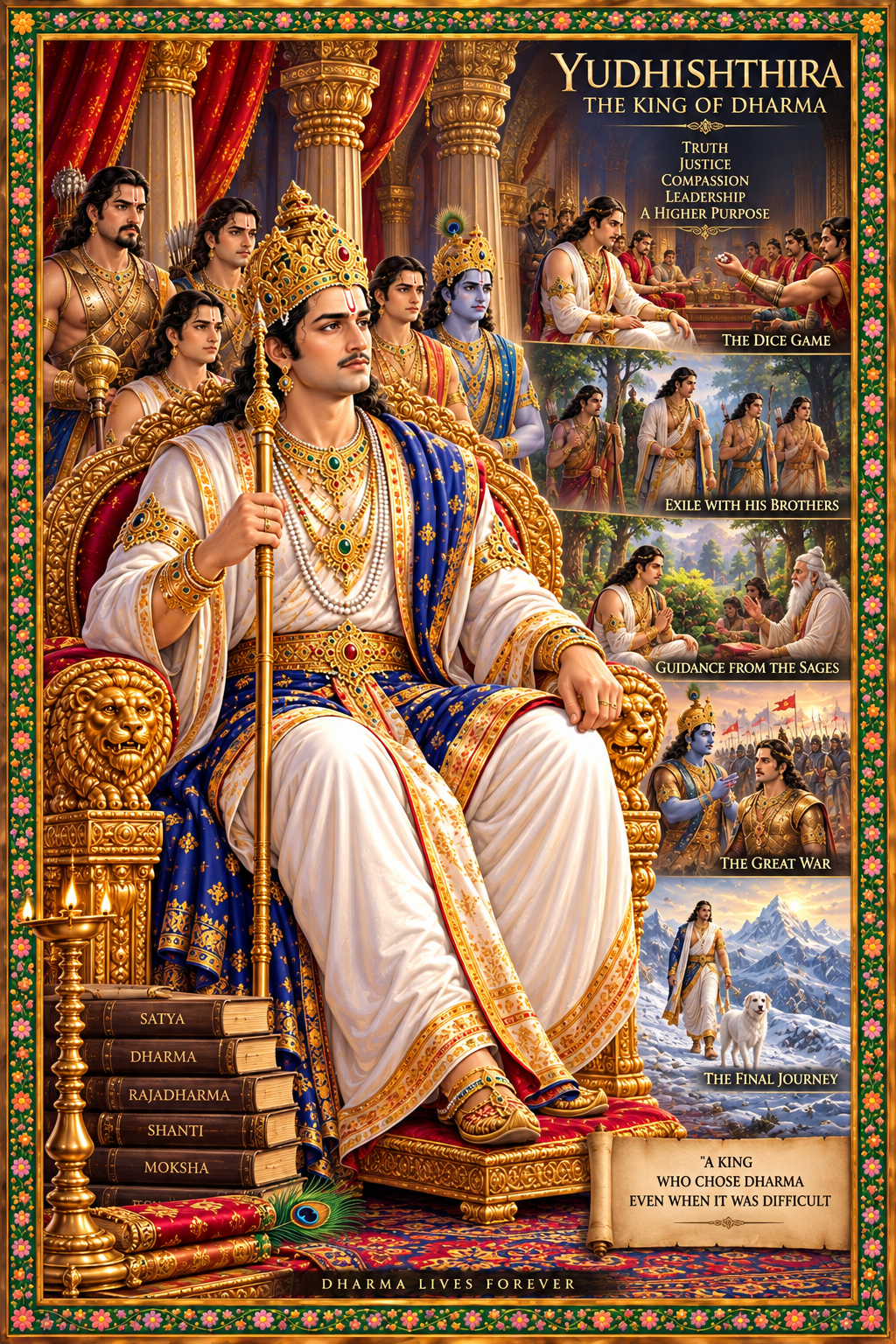
Yudhishthira in Mahabharata: The King of Dharma, Yaksha Prashna & Dice Game
King Dharma Raju in the Mahabharata Introduction – Dharma Raju(Yudhishthira) in Mahabharata In a world torn by political ambition and vengeance, King Yudhishthira, affectionately called Dharma Raju, stood as the living embodiment of moral integrity. The eldest son of King Pandu and Kunti, born of Lord Dharma himself, he was renowned for speaking only the truth. Even when faced with the terrifying Yaksha at the enchanted lake or walking toward heaven with a faithful stray dog, Yudhishthira proved that compassion and righteousness are the highest virtues a leader can possess. As the eldest of the Pandavas, Dharma Raju symbolized justice, patience, forgiveness, and moral strength. His life journey – from royal heir to exile, from gambler to emperor – teaches timeless lessons on leadership, responsibility, and ethical governance. This detailed blog on RatnamStrategy explores his birth, virtues, challenges, leadership, Kurukshetra war role, and spiritual legacy Dharma Raju’s Divine Origin and Birth Dharma Raju, also known as Yudhishthira, was the eldest of the Pandavas in the Mahabharata. He was born to Queen Kunti through the divine blessing of Lord Dharma (Yama). Before marriage, Kunti received a sacred mantra from Sage Durvasa that allowed her to invoke any god and receive a…
- Mahabharatam
- February 16, 2026
- 821 views
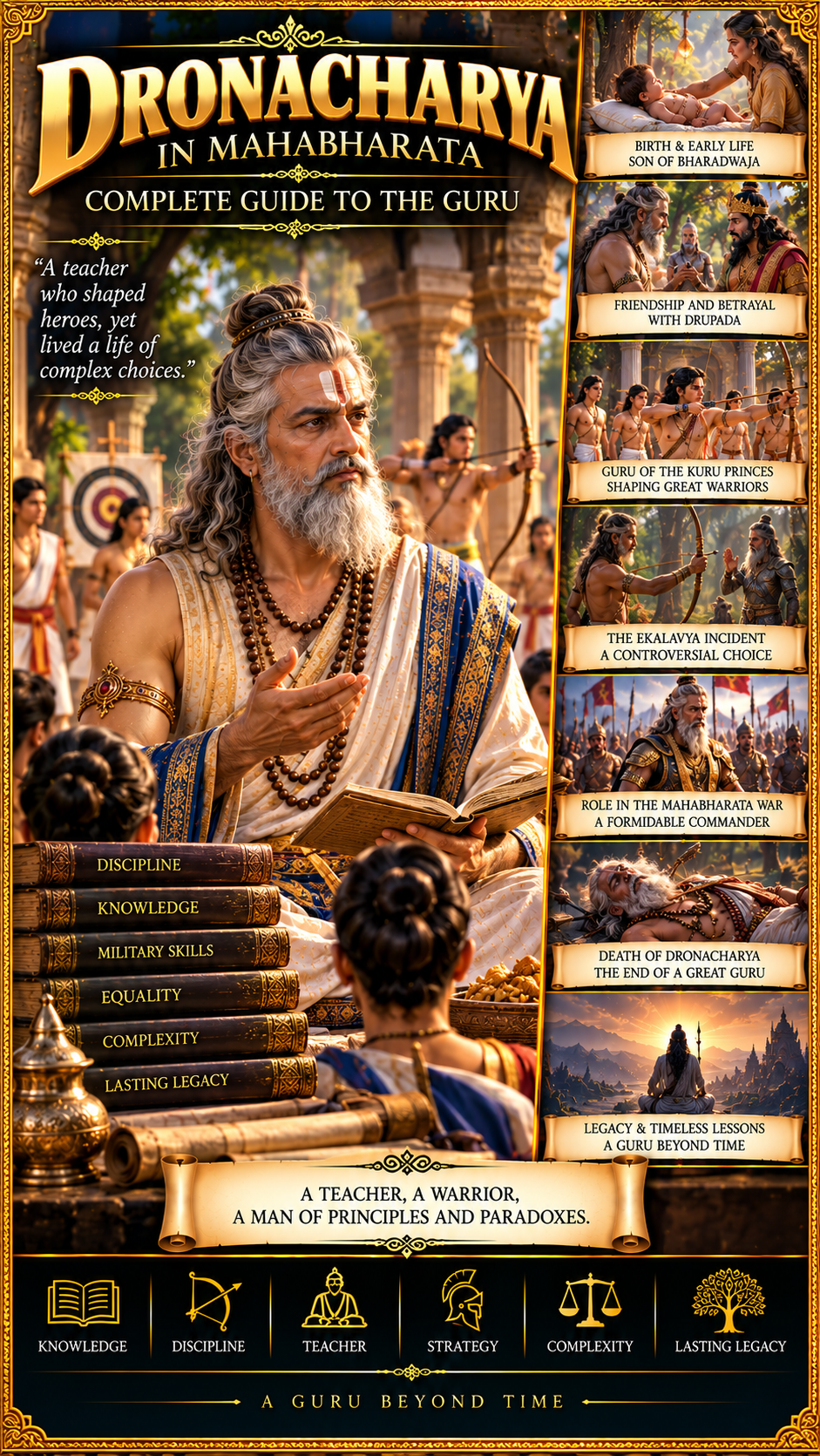
Dronacharya’s Military Formations & Astras: The Chakravyuha, Celestial Weapons & Kurukshetra Generalship
From the quiet ashrams of Sage Bharadwaja to the battlefield of Kurukshetra, Dronacharya commanded awe across ancient India not only as a royal teacher, but as the supreme military strategist of his era. Exploring Dronacharya’s Military Formations and Astras reveals a master of martial geometry (Dhanurveda) whose tactical deployments shook the Pandava army to its core. While his personal life is chronicled in our complete biography of Dronacharya in the Mahabharata, this analysis examines his formidable battle formations, his divine celestial astras, and his five days as supreme commander-in-chief. The Martial Genius of Drona: Dhanurveda and Battle Geometry In ancient Indian warfare, a general’s greatness was measured by his mastery of Vyuhas – intricate, dynamic troop formations designed to withstand overwhelming cavalry, chariot, and infantry charges. Dronacharya was educated in the Dhanurveda by Sage Agnivesha and received celestial weapons directly from Lord Parashurama. He treated the battlefield like a chessboard, arranging hundreds of thousands of warriors into geometric patterns that could advance, constrict, and crush enemy battalions. The Chakravyuha: Mechanics of the Deadly Wheel Formation On the thirteenth day of the Kurukshetra war, faced with the urgency to capture King Yudhishthira, Dronacharya unleashed his most terrifying formation: the Chakravyuha (The…
- Mahabharatam
- February 10, 2026
- 518 views
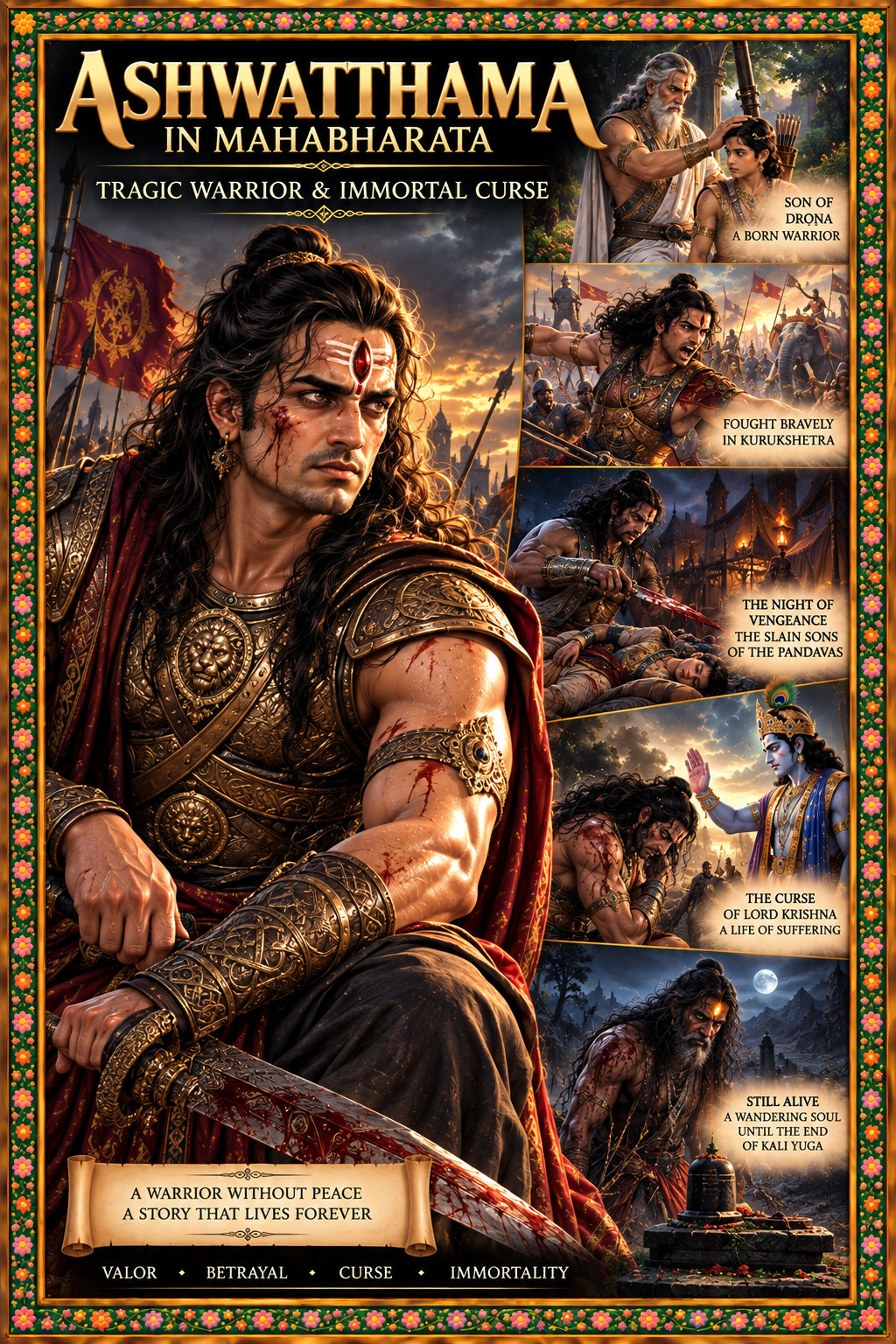
Ashwatthama in Mahabharata: The Immortal Warrior, Mani Jewel & Krishna’s Curse
Introduction: Who Is Ashwatthama in Mahabharata? Born with a glowing celestial jewel set into his forehead that protected him from hunger, thirst, and weapons, Ashwatthama was the cherished son of Guru Dronacharya. A peerless archer blessed with celestial astras, his world collapsed when his father was killed on the battlefield. Consumed by grief and unyielding vengeance, he launched a devastating midnight raid on the sleeping Pandava camp, invoking a curse from Lord Krishna that condemned him to wander the earth alone through millennia. Ashwatthama is remembered as a Chiranjivi (immortal being), condemned to roam the earth in pain and isolation until the end of Kali Yuga. His story is not just about war – it is a moral warning. For official cultural and historical archives, visit the Ministry of Culture, Government of India. Birth and Early Life of Ashwatthama Ashwatthama was born to Dronacharya and Kripi, the sister of Kripacharya. His birth itself was extraordinary. After years of intense penance and prayer to Lord Shiva, Drona was blessed with a powerful son. It is believed that Ashwatthama was born with a divine gem (Mani) embedded in his forehead. This gem granted him: His name “Ashwatthama” means “the sound of a…