Raja Ratnam
- Mahabharatam , Mythology , Sons of Vichitravirya (via Sage Vyasa)
- January 8, 2026
- 454 views
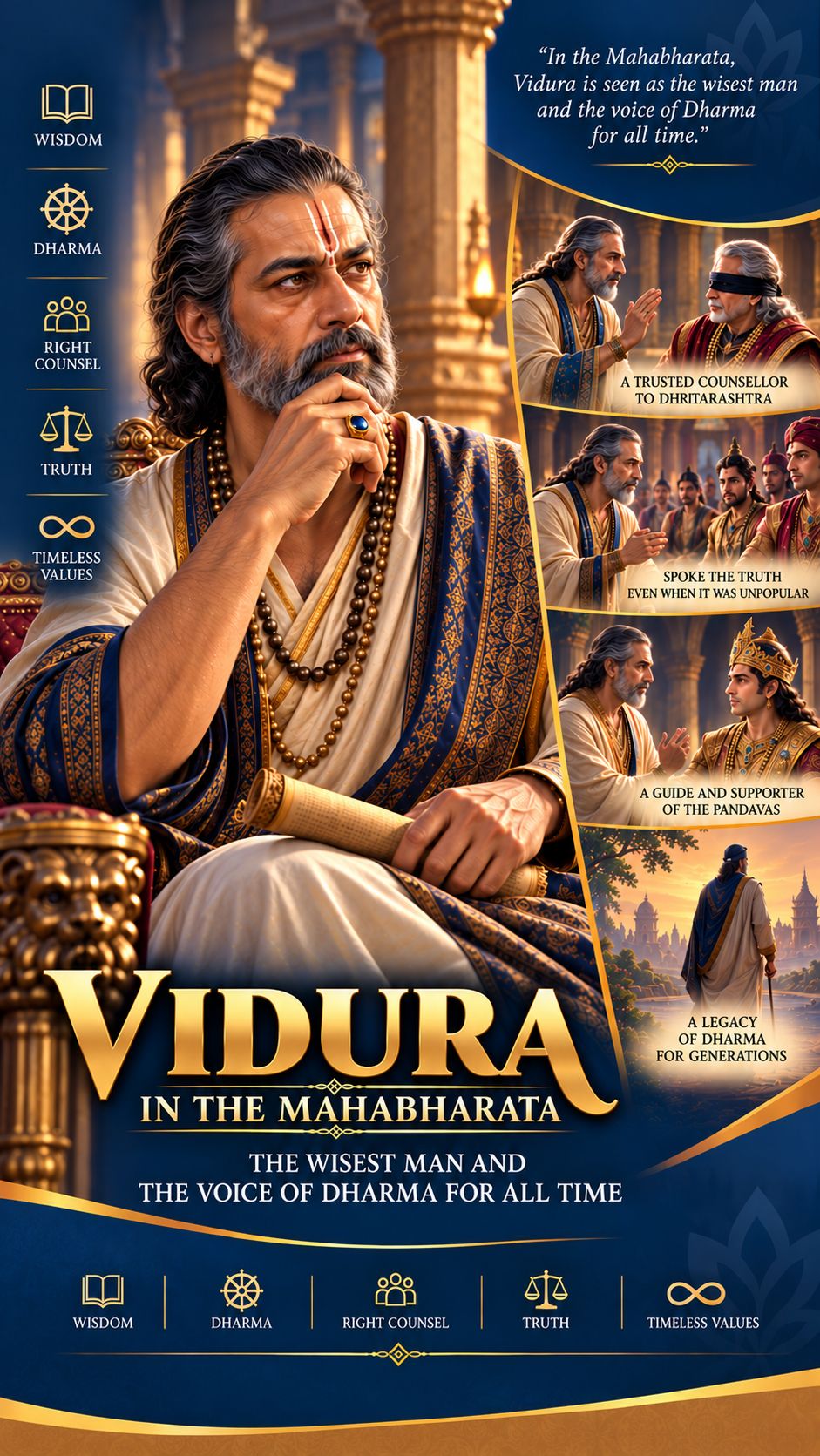
Vidura in Mahabharata: Life Story, Vidura Niti, Wisdom & Teachings
Introduction In the vast and complex epic of the Mahabharata, filled with mighty warriors, divine incarnations, and powerful kings, one man stands apart—not for his strength or royal birth, but for his unmatched wisdom, moral clarity, and unwavering commitment to dharma. That man is Vidura. Widely regarded as the wisest man in the epic, Vidura served as the chief advisor to King Dhritarashtra and the moral compass of the Kuru kingdom. Time and again, he warned against injustice, greed, and the catastrophic war of Kurukshetra. Yet, his wise counsel often fell on deaf ears. This blog explores Vidura’s life, wisdom, role in the Mahabharata, and timeless relevance in leadership, governance, and ethics. Who Was Vidura? Vidura was born to Vyasa, the great sage and author of the Mahabharata, and a maidservant of the Kuru palace. Despite his humble maternal origin, Vidura was endowed with extraordinary intelligence, integrity, and spiritual insight. According to tradition, Vidura was an incarnation of Yama (Dharma Devata)—the god of righteousness and justice—sent to guide humanity during a time of moral decline. Though denied the throne due to social conventions, Vidura became the most respected statesman in Hastinapura. The Wisest Man in the Epic Vidura’s wisdom was…

- Kuru Dynasty , Mahabharatam , Mythology , Women Characters
- January 6, 2026
- 571 views
Satyavati in Mahabharata: Matsyagandha, Queen Mother & Architect of Kuru Destiny
Introduction Satyavati in the Mahabharatam popularly known as Sathavai in regional traditions, is one of the most powerful and influential women in the Mahabharatam. Though she does not fight on the battlefield of Kurukshetra, her decisions, ambitions, and maternal instincts shape the destiny of the Kuru dynasty and ultimately lead to the great war itself. Her life is a remarkable journey—from a humble fisherwoman to the Queen of Hastinapura, from a young girl cursed with a foul smell to the revered Queen Mother of one of India’s greatest epics. Birth and Early Life of Satyavati She was born to Uparichara Vasu, the king of Chedi, and a celestial nymph (apsara). Due to circumstances, she was abandoned at birth and later adopted by a fisherman chief named Dasharaja. In her early years, she was known as Matsyagandha, meaning “one who smells of fish”, because of her association with the fishing community. Despite her humble upbringing, possessed: These traits would later transform her destiny. Meeting Sage Parashara and the Birth of Vyasa One of the most crucial events in the Mahabharatam occurs when Satyavati meets Sage Parashara while ferrying him across a river. The Divine Boons Parashara, impressed by her beauty and…

- Mahabharatam , Mythology , Women Characters
- January 5, 2026
- 525 views
Goddess Ganga in Mahabharata: The Celestial River, Mother of Bhishma & Moksha Symbol
Introduction In the vast and profound epic Mahabharata, Goddess Ganga stands as more than a river—she is a celestial being, a compassionate mother, and a divine force of purification. Revered as Ganga Devi, she flows through the narrative as a bridge between heaven and earth, karma and liberation, sorrow and salvation. Her presence in Mahabharatam is deeply tied to destiny, sacrifice, and dharma. Origin of Goddess Ganga Ganga is described in Hindu scriptures as a celestial river (Akasha Ganga) flowing in the heavens. She descends to Earth to cleanse humanity of sins and grant moksha (liberation). In the Mahabharata, she is both a goddess and a queen, assuming a human form to fulfill divine purposes. Ganga is known for her purity, compassion, and power—capable of washing away even the gravest sins. Her descent itself symbolizes divine grace entering the mortal realm. Goddess Ganga and King Shantanu One of the most touching episodes involving Ganga in the Mahabharata is her marriage to Shantanu, the king of Hastinapura. Their union was destined, yet bound by a mysterious condition: Shantanu must never question Ganga’s actions. Ganga gave birth to seven sons and, each time, immersed the newborns in the river—returning them to the…