Raja Ratnam
- Mahabharatam , Pandeva's , Sons of Kunti (From Different Devas)
- February 22, 2026
- 614 views
Bhima in Mahabharata: Story of the Strongest Pandava, Mighty Feats & Vows
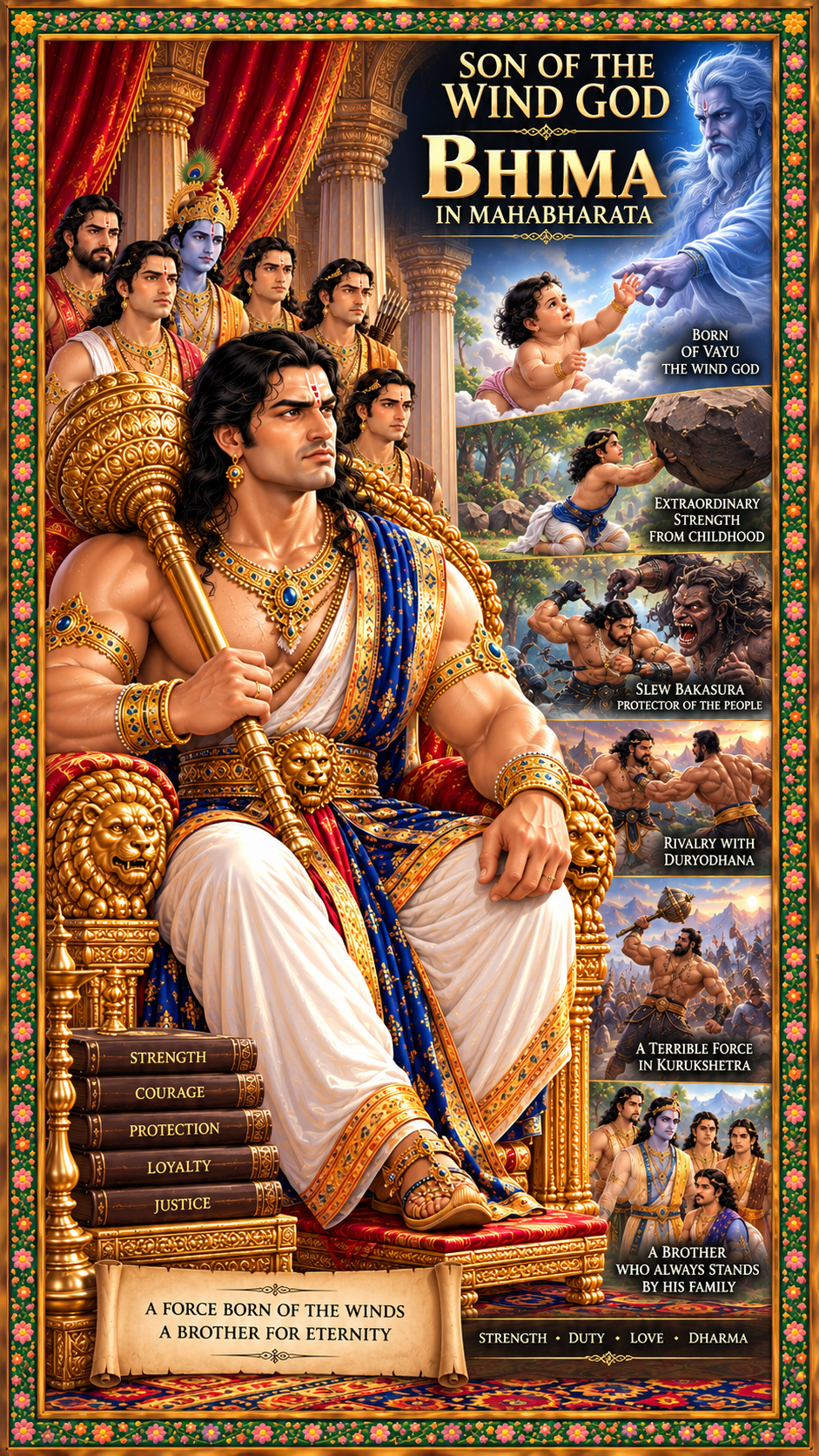
Life of Bhima in Mahabharata – The Strongest Pandava Introduction : Bhima in Mahabharata In the epic Mahabharata, many warriors displayed extraordinary courage and strength. Among them, Bhima stands out as the most powerful warrior of the Pandavas. Known for his immense physical strength, fearless nature, and loyalty to his family, Bhima played a crucial role in the victory of the Pandavas during the Kurukshetra War. Bhima’s life is filled with heroic deeds, fierce battles, and unwavering dedication to justice. For official cultural and historical archives, visit the Ministry of Culture, Government of India. Birth of Bhima – Bhima in Mahabharata Bhima was one of the five Pandavas in the Mahabharata. He was born to Kunti through the blessings of Vayu, the Wind God. After King Pandu was cursed that he would die if he touched his wives, Kunti used a divine mantra given by Sage Durvasa. By chanting the mantra and invoking Vayu, she gave birth to Bhima. From birth, Bhima was extremely strong. It is said that when he accidentally fell from his mother’s hands as a baby, he hit a rock — and the rock broke into pieces! This showed his divine strength. Bhima later became famous…
- Mahabharatam
- February 16, 2026
- 788 views
Dronacharya in Mahabharata: Life Story, The Guru’s Masterpiece & Kurukshetra Death
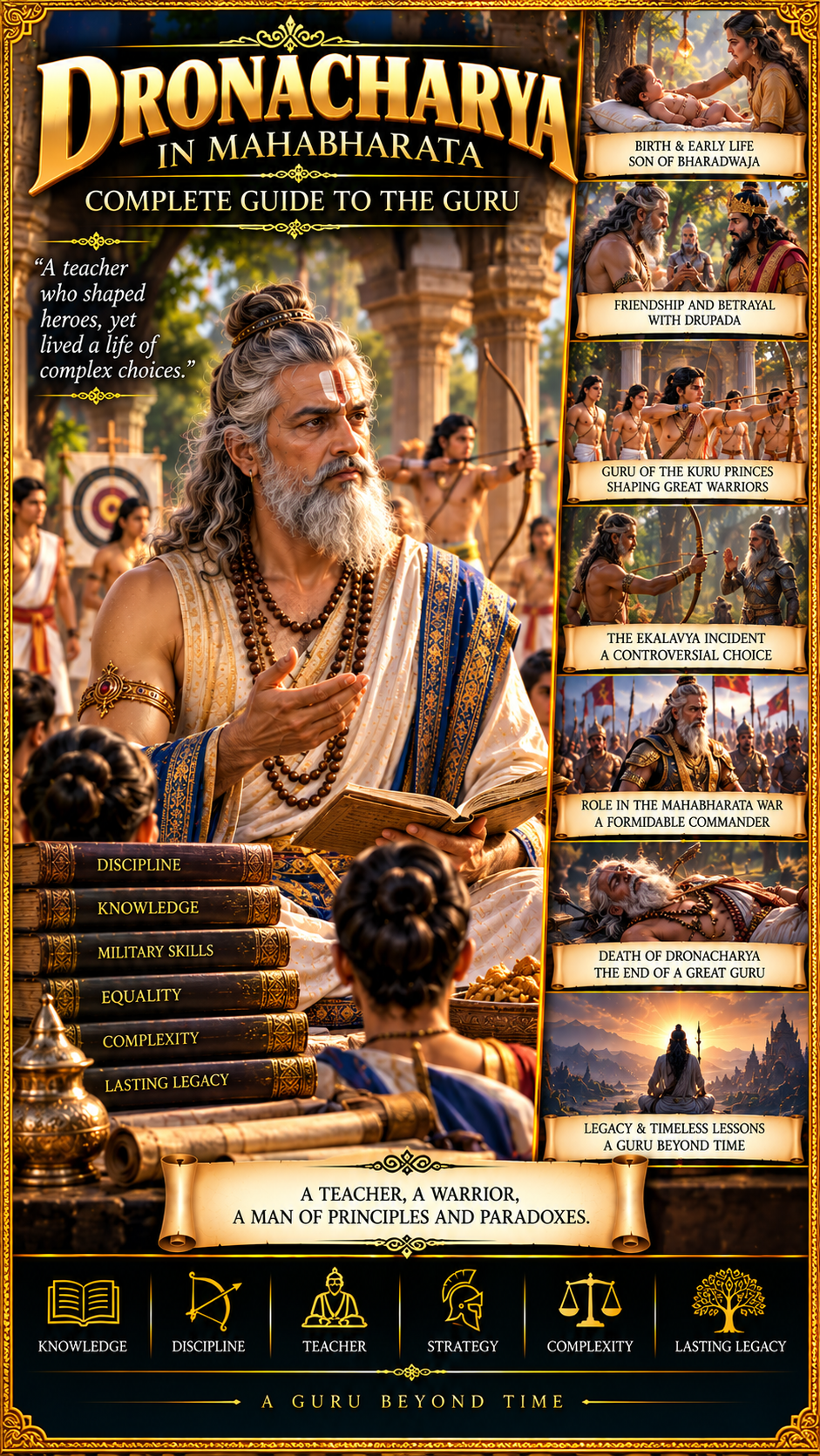
Introduction : Dronacharya in Mahabharata Dronacharya in Mahabharata : Dronacharya in the Mahabharata was one of the greatest warriors and teachers (gurus) of ancient India. He played a crucial role in shaping the destiny of both the Pandavas and the Kauravas. Known for his unmatched knowledge of warfare and archery, Dronacharya trained legendary warriors like Arjuna and Duryodhana. His life is filled with loyalty, controversy, sacrifice, and tragedy. In this complete guide, we will explore his birth, education, role in the Kurukshetra War, and his dramatic death. Birth and Early Life of Dronacharya Dronacharya was the son of Sage Bharadwaja. The name “Drona” comes from the fact that he was born on a vessel (drona). From childhood, he showed exceptional interest in warfare and scriptures. He became a close friend of Drupada, who later became the king of Panchala. However, destiny changed their friendship forever. Education and Mastery in Warfare Dronacharya received advanced military training from Parashurama, who was known for his knowledge of divine weapons (Astras). He mastered: Because of his unmatched skills, he became one of the greatest warriors in the Mahabharata. For official cultural and historical archives, visit the Ministry of Culture, Government of India. Dronacharya Became…
- Mahabharatam
- February 10, 2026
- 484 views
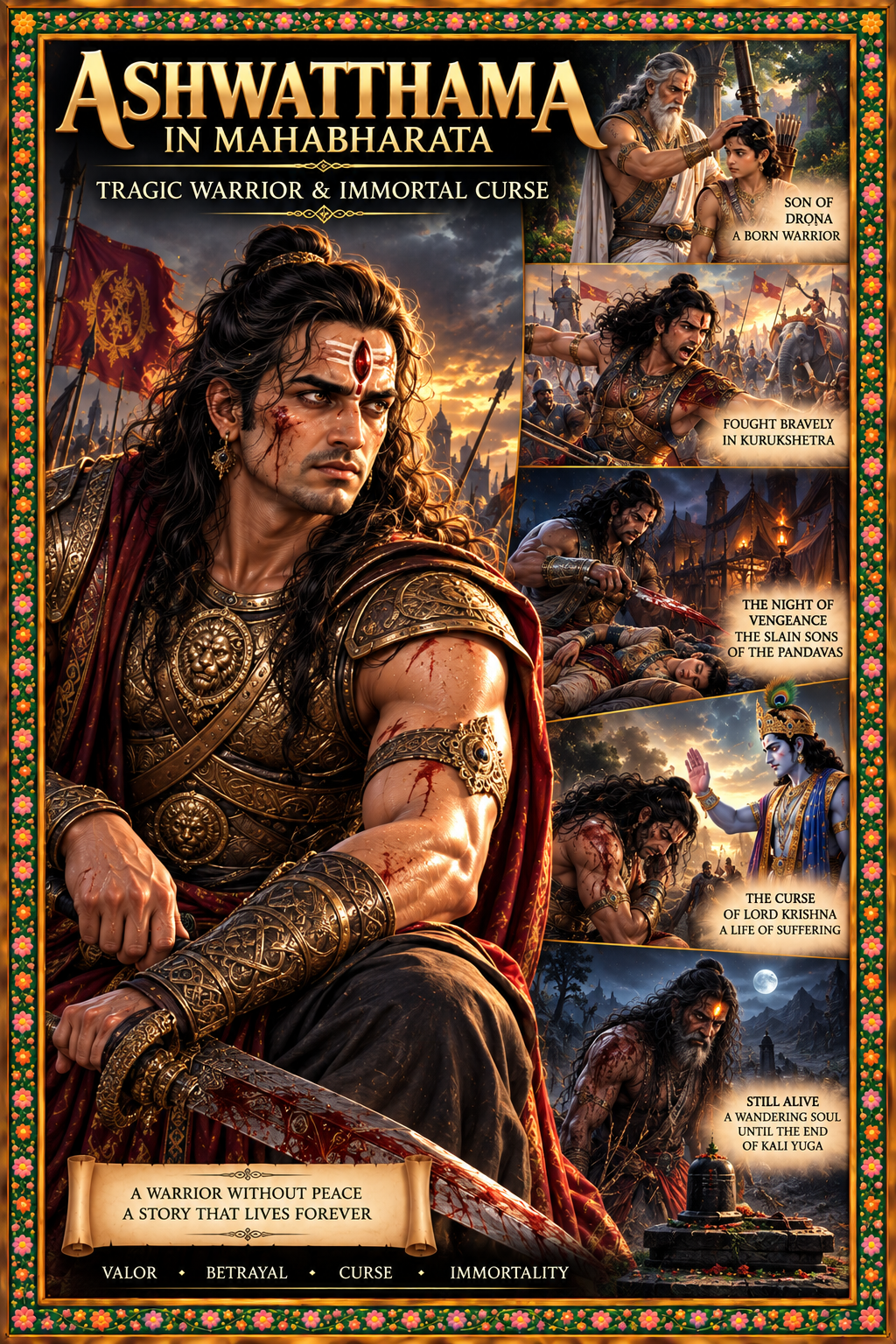
Ashwatthama in Mahabharata: The Immortal Warrior, Mani Jewel & Krishna’s Curse
Introduction: Who Is Ashwatthama in Mahabharata? Ashwatthama in Mahabharata stands as one of the most complex and tragic characters in the epic. Neither entirely evil nor fully righteous, he represents uncontrolled rage, wounded pride, and the devastating consequences of adharma. Born to the great teacher Dronacharya, Ashwatthama possessed immense power, divine weapons, and unmatched battlefield skill. Yet, his life ended not with glory—but with an eternal curse. Ashwatthama is remembered as a Chiranjivi (immortal being), condemned to roam the earth in pain and isolation until the end of Kali Yuga. His story is not just about war—it is a moral warning. For official cultural and historical archives, visit the Ministry of Culture, Government of India. Birth and Early Life of Ashwatthama Ashwatthama was born to Dronacharya and Kripi, the sister of Kripacharya. His birth itself was extraordinary. After years of intense penance and prayer to Lord Shiva, Drona was blessed with a powerful son. It is believed that Ashwatthama was born with a divine gem (Mani) embedded in his forehead. This gem granted him: His name “Ashwatthama” means “the sound of a horse”, signifying strength and fearlessness. Ashwatthama as the Son of Dronacharya Growing up under Dronacharya, Ashwatthama received elite…
- Mahabharatam
- February 1, 2026
- 563 views
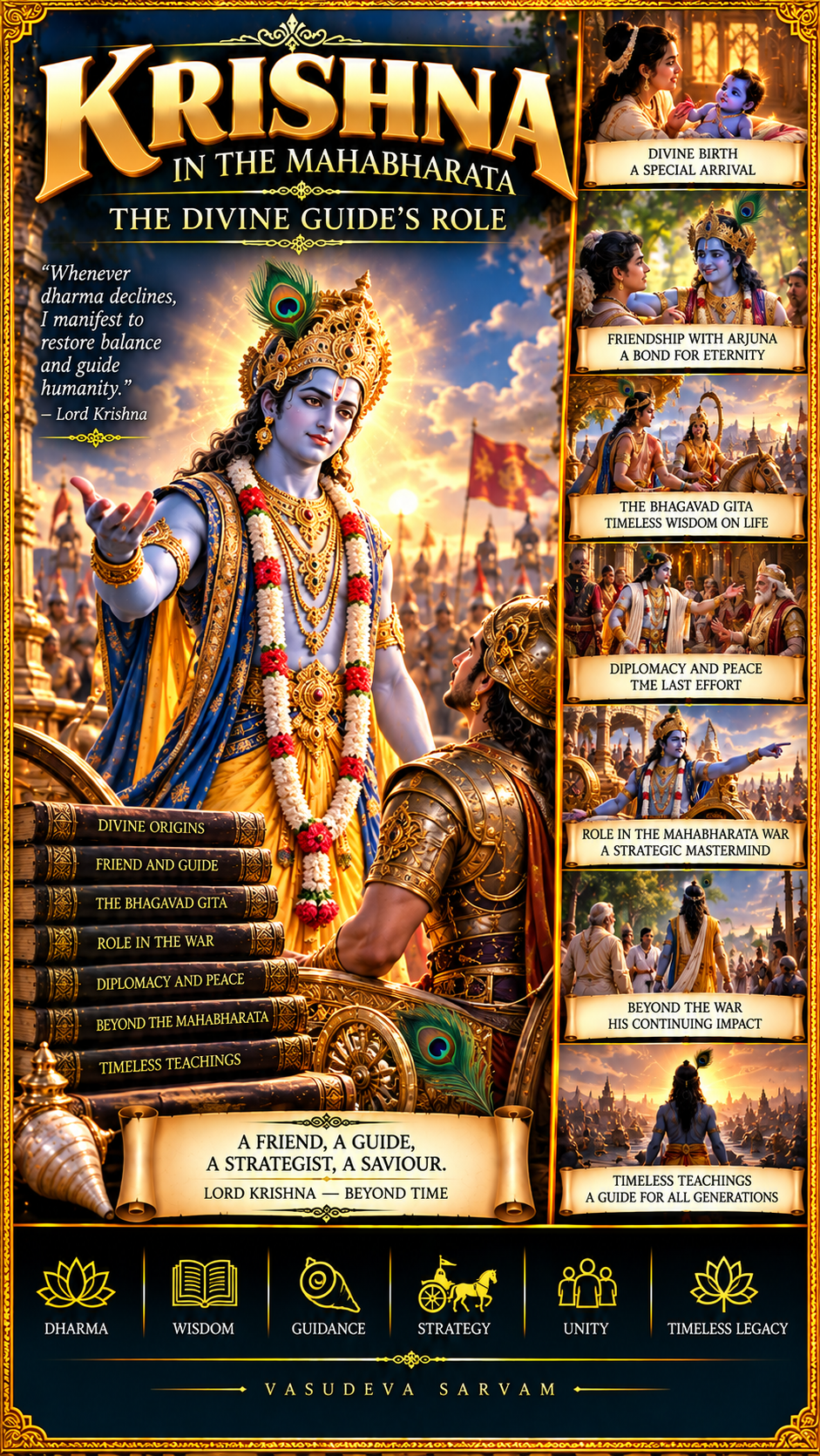
Lord Krishna in Mahabharata: Complete Role, Divine Diplomacy & Kurukshetra Guide
Krishna in Mahabharata: The Divine Role of the Supreme Guide Krishna in Mahabharata is not merely a character but the soul of the epic. As the eighth avatar of Lord Vishnu, Krishna guides humanity through wisdom, strategy, compassion, and divine justice. Without Krishna, the Mahabharata would be a tale of war; with Krishna, it becomes a timeless guide to dharma and life. Introduction to Krishna in Mahabharata Lord Krishna appears in the Mahabharata as a king, friend, diplomat, philosopher, and divine guide. Though he does not directly fight in the Kurukshetra war, his influence shapes every major event. Krishna represents divine consciousness guiding human actions toward righteousness. For official cultural and historical archives, visit the Ministry of Culture, Government of India. Birth and Early Life of Lord Krishna The birth and early life of Lord Krishna is one of the most divine and captivating chapters in Hindu mythology. It symbolizes the eternal victory of righteousness over evil and the descent of the Supreme Lord to restore dharma on Earth. Divine Birth of Lord Krishna in Mathura Lord Krishna was born in the prison of King Kamsa in Mathura, during the dark hours of Ashtami Tithi in the month of Bhadrapada,…
- Mahabharatam
- February 1, 2026
- 456 views
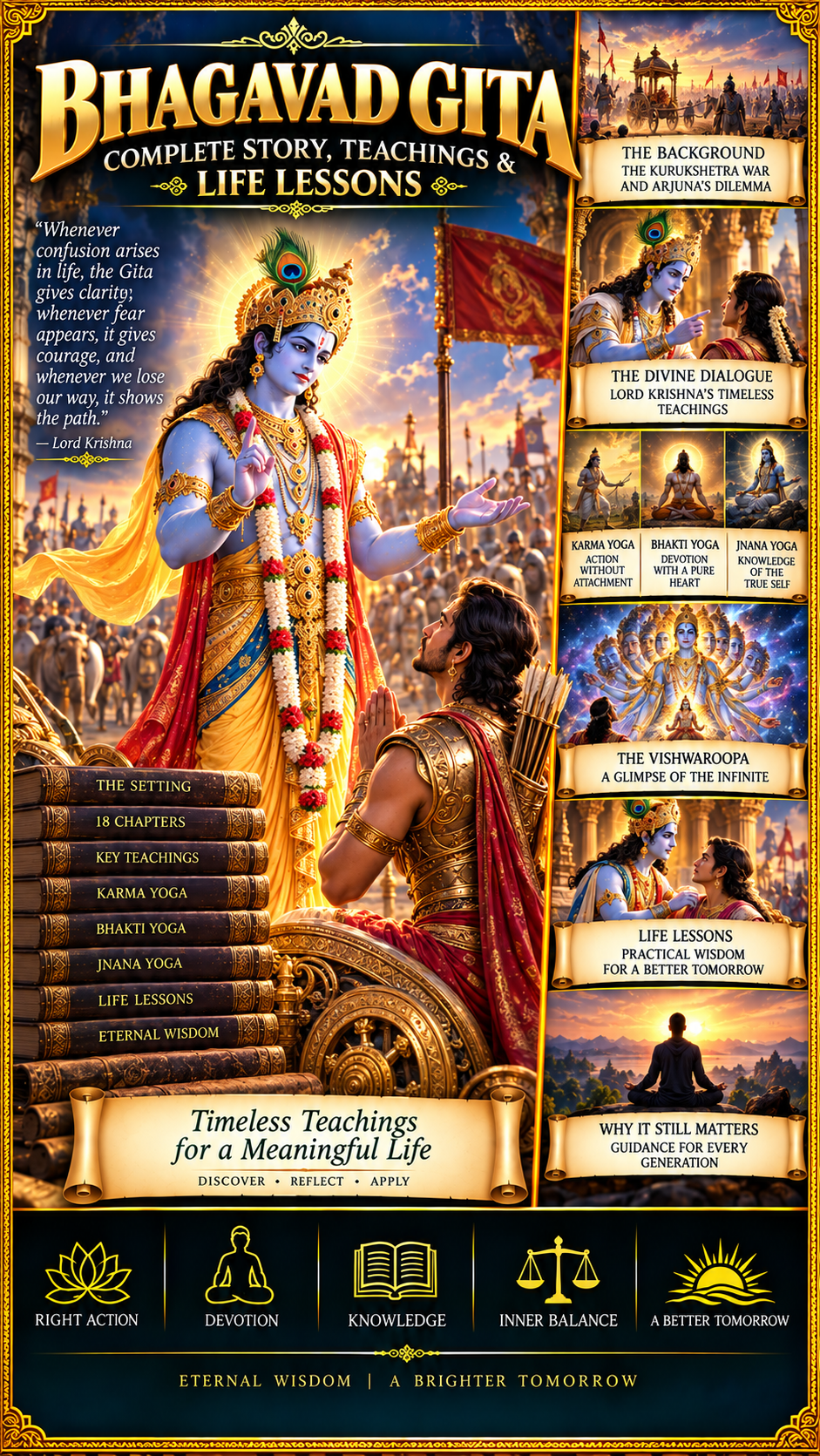
Bhagavad Gita Summary: Complete Story, Core Teachings & 10 Timeless Life Lessons
Introduction to Bhagavad Gita Mahabharata’s Bhishma Parva contains 700 verses of the Bhagavad Gita, which means “The Song of the Lord”.It addresses fundamental human dilemmas such as fear, confusion, duty, attachment, and purpose of life. At its core, the Bhagavad Gita teaches how to live a balanced life while performing one’s responsibilities with devotion and wisdom. For official cultural and historical archives, visit the Ministry of Culture, Government of India. Origin and Background of the Bhagavad Gita Battlefield of Kurukshetra The Bhagavad Gita was spoken on the battlefield of Kurukshetra, just before the great war between the Pandavas and the Kauravas. Arjuna, overwhelmed by sorrow and moral conflict, drops his bow and refuses to fight. At this crucial moment, Lord Krishna reveals divine wisdom to guide Arjuna out of despair. Lord Krishna’s instructions to Arjuna about the Bhagavad Gita Arjuna’s Moral Dilemma Arjuna saw his own relatives, teachers, and friends on both sides of the war. His compassion turned into confusion, fear, and attachment. Krishna chose Arjuna because he represented every human being who struggles between emotions and duty. Core Teachings of the Bhagavad Gita Dharma – The Path of Duty The Bhagavad Gita emphasizes dharma, meaning righteous duty. Krishna…
- Mahabharatam , Pandeva's , Sons of Kunti (From Different Devas)
- January 30, 2026
- 526 views
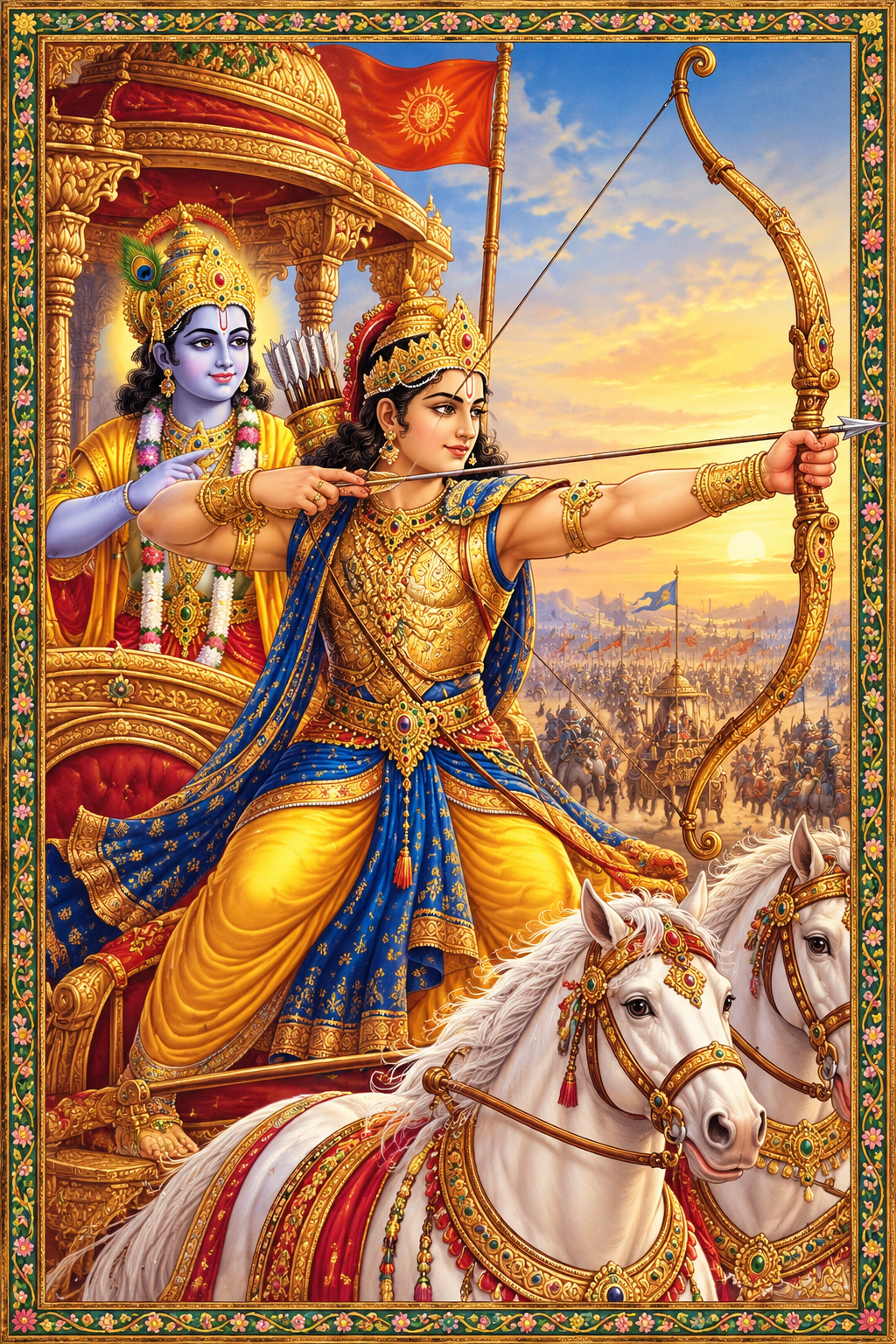
Arjuna in Mahabharata: The Greatest Archer, Gandiva Bow & Role in Kurukshetra
Arjuna in Mahabharata: The Greatest Archer and Hero of Dharma Arjuna in Mahabharata is one of the most celebrated warriors in Indian history and Hindu mythology. Known for his unmatched archery skills, deep devotion to Lord Krishna, and strong commitment to dharma (righteousness), Arjuna’s life is filled with inspiration, struggle, devotion, and victory. This full-length SEO-optimized blog is specially crafted for Ratnam Strategy in the same format as Uttara and Abhimanyu content. Introduction to Arjuna in Mahabharata Arjuna is the third of the five Pandava brothers and the son of King Pandu and Queen Kunti. He was born through the blessings of Lord Indra, the king of gods, which is why Arjuna possessed divine strength, courage, and extraordinary skill in warfare. Among all warriors of the Mahabharata, Arjuna is considered the finest archer and a symbol of discipline, focus, and devotion. The story of Arjuna in the Mahabharata is not just about war, but about life lessons, duty, self-doubt, inner strength, and ultimate spiritual wisdom through the Bhagavad Gita. For official cultural and historical archives, visit the Ministry of Culture, Government of India. Birth and Early Life of Arjuna in Mahabharata Arjuna was born after Kunti invoked Lord Indra using…
- Mahabharatam , Mythology
- January 29, 2026
- 646 views
Abhimanyu in Mahabharata: Breaking the Chakravyuha & The Heroic Martyrdom
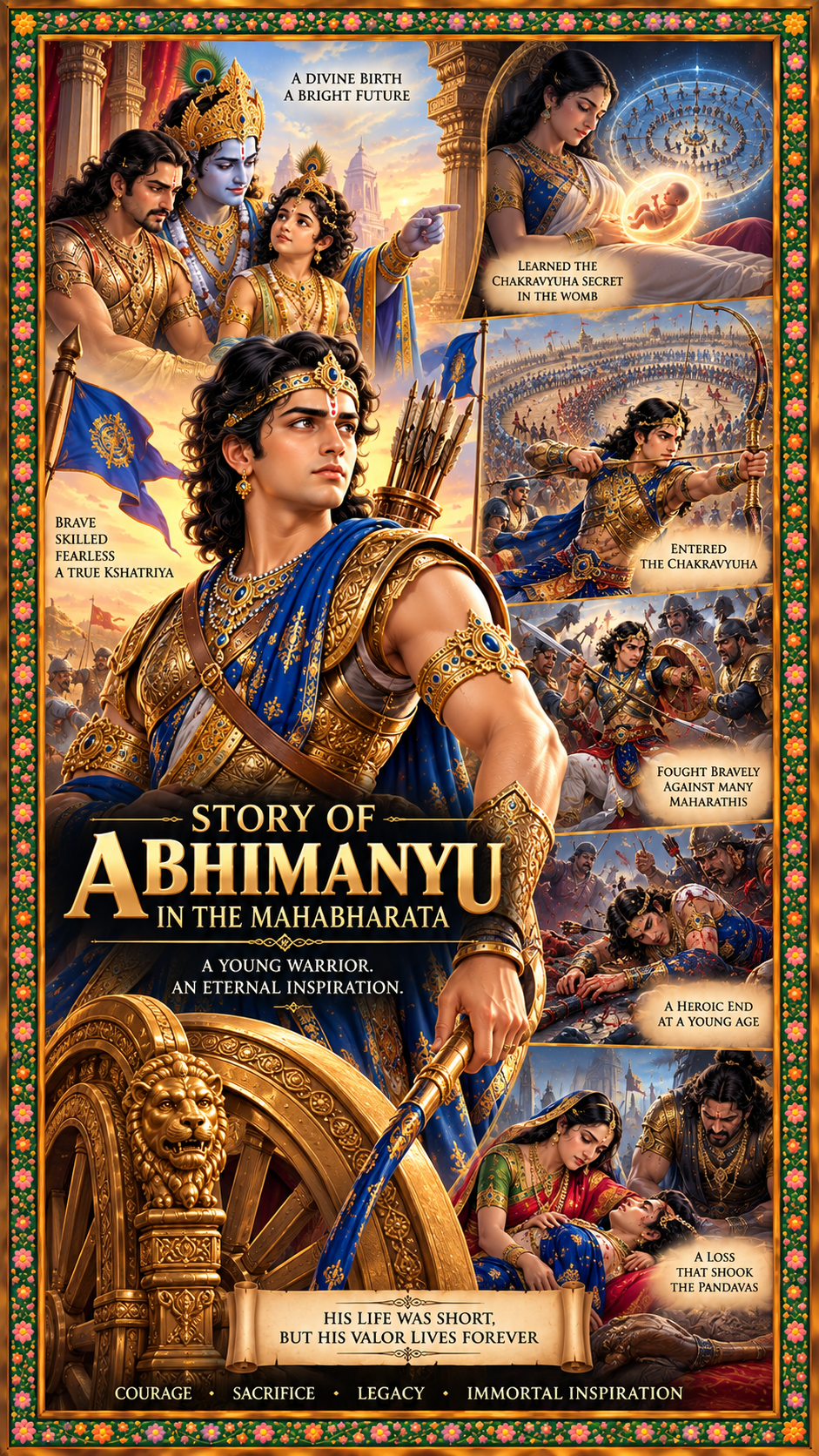
Introduction The story of Abhimanyu in the Mahabharata stands as one of the most emotional and heroic episodes in the great Indian epic. Though young in age, Abhimanyu displayed extraordinary courage, wisdom, and devotion to dharma. His sacrifice during the Kurukshetra war became a symbol of supreme bravery and righteous struggle. For official cultural and historical archives, visit the Ministry of Culture, Government of India. Who Was Abhimanyu in the Mahabharata? Abhimanyu was the son of Arjuna, the greatest archer among the Pandavas, and Subhadra, the sister of Lord Krishna. From birth, he carried divine qualities and warrior instincts. Despite his young age, Abhimanyu was regarded as a powerful warrior equal to seasoned kings. Lineage and Family Background Abhimanyu was born into the noble Chandravanshi (Lunar Dynasty), one of the most respected royal lineages in the Mahabharata. He was the son of Arjuna, the greatest archer among the Pandavas, known for his courage, discipline, and devotion to dharma. His mother Subhadra was the sister of Lord Krishna, giving Abhimanyu a divine connection from birth. Through Arjuna’s warrior lineage and Krishna’s guidance, Abhimanyu inherited extraordinary bravery and wisdom. According to the scriptures, Abhimanyu was also believed to be the incarnation of…
- Mahabharatam , Mythology
- January 27, 2026
- 781 views
Uttara in Mahabharata: Princess of Matsya & Mother of King Parikshit
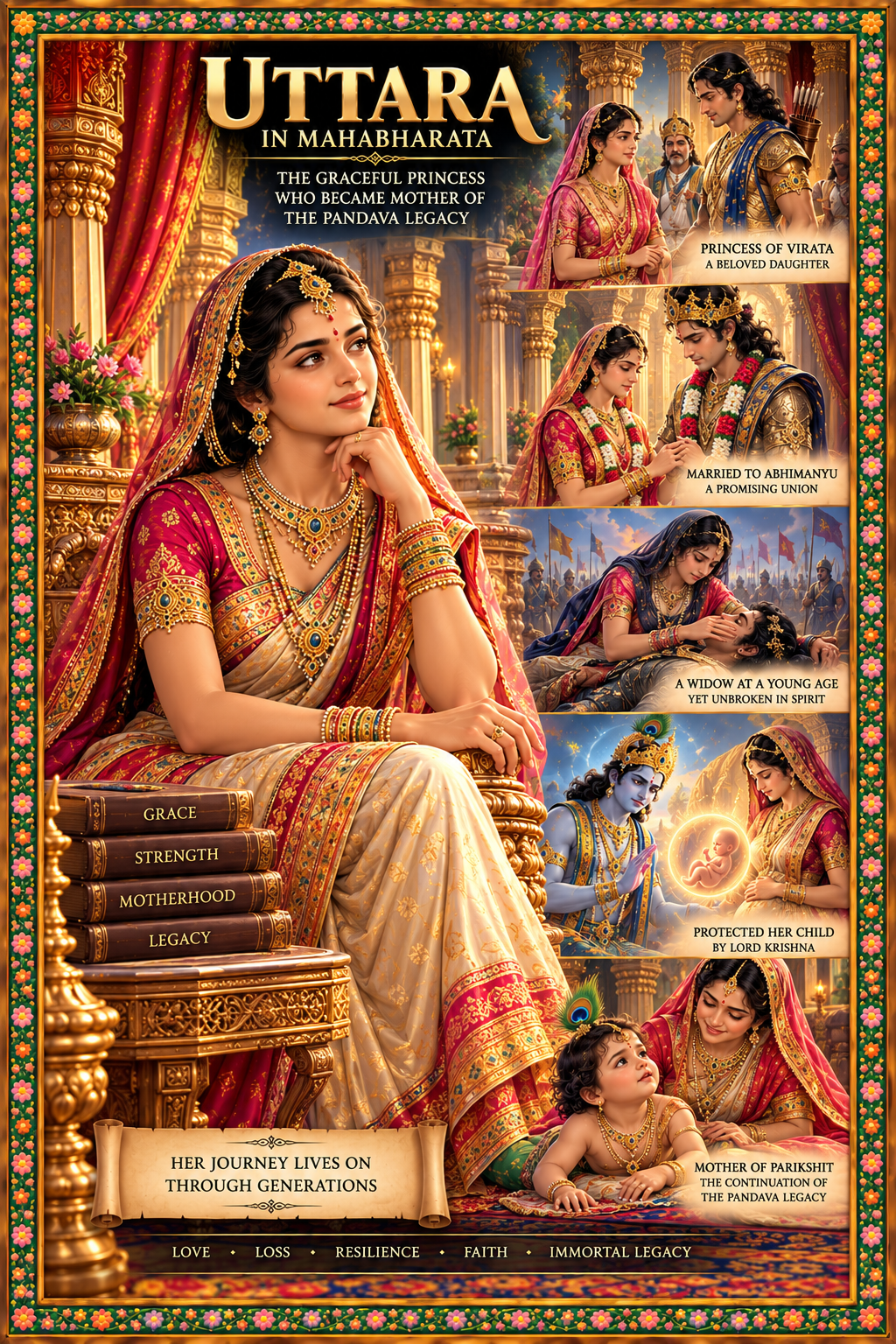
Introduction The Mahabharata is filled with warriors, kings, and divine heroes—but behind the battlefield glory lie equally powerful stories of courage, devotion, and legacy. One such underrated yet significant character is Uttara, the princess of the Matsya Kingdom. Though not a warrior on the battlefield, Uttara’s role shaped the future of the Pandava lineage. She became the mother of Parikshit, the sole surviving heir of the Pandavas, ensuring the continuation of the Kuru dynasty after the devastating Kurukshetra War. This blog explores who Uttara was, her life, her marriage, her struggles, and her historical importance in the Mahabharata. For official cultural and historical archives, visit the Ministry of Culture, Government of India. Who Was Uttara in Mahabharata? Uttara was the daughter of King Virata of Matsya Kingdom and Queen Sudeshna. She was the princess of the kingdom where the Pandavas spent their final year of exile in disguise (Agyatavas). She later married Abhimanyu, the brave son of Arjuna and Subhadra, becoming closely connected to the Pandava family. Uttara in Mahabharata and Her Royal Birth Uttara was born into the noble Matsya dynasty as the daughter of King Virata and Queen Sudeshna. Raised in a palace filled with discipline, culture, and…
- Mahabharatam , Mythology
- January 25, 2026
- 967 views
Shikhandi in Mahabharata: Amba’s Rebirth, Gender Transformation & Fall of Bhishma
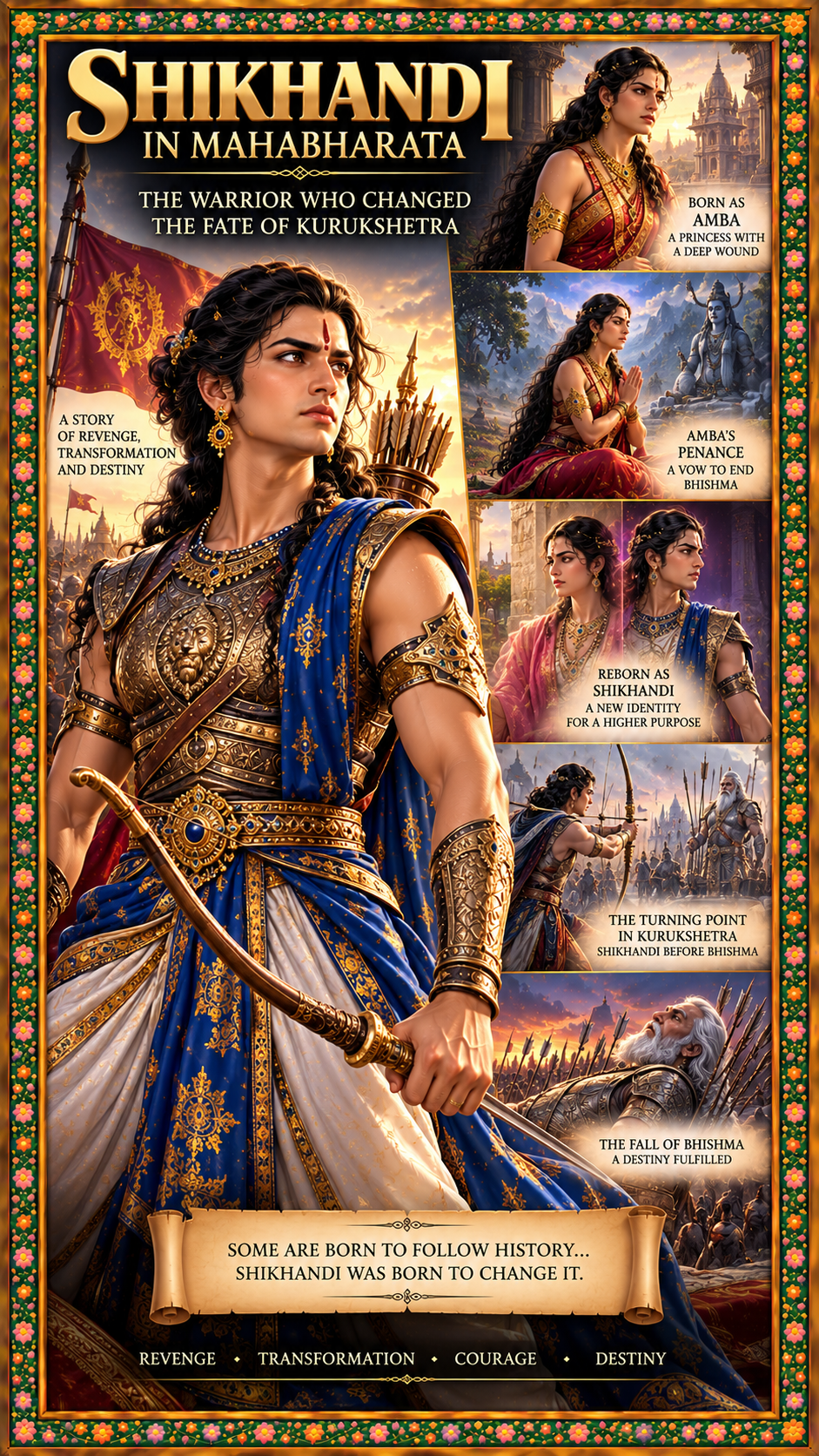
Introduction The Mahabharata is not just a tale of war but a profound epic filled with complex characters, moral dilemmas, and destiny-driven events. Among these powerful figures, Shikhandi stands out as one of the most unique and influential characters. Often misunderstood and sometimes overlooked, Shikhandi played a crucial role in the fall of Bhishma, one of the greatest warriors of all time. This blog explores who Shikhandi was, the story behind their birth, their transformation, and their importance in the Mahabharata war. For official cultural and historical archives, visit the Ministry of Culture, Government of India. Who Was Shikhandi? Shikhandi was a warrior in the Mahabharata who fought on the side of the Pandavas during the Kurukshetra War. However, Shikhandi’s identity goes beyond a simple warrior role. Their life story involves themes of rebirth, destiny, gender identity, revenge, and divine justice. Shikhandi was born as Shikhandini, the daughter of King Drupada of Panchala, and later became Shikhandi through divine intervention. The Past Life of Shikhandi – Amba’s Story To understand Shikhandi, we must first understand Amba. Amba was a princess who was abducted by Bhishma along with her sisters Ambika and Ambalika for the prince of Hastinapura. However, Amba revealed that she loved another king and wanted to marry him. Bhishma released…
- Mahabharatam , Mythology
- January 20, 2026
- 488 views
Ghatotkacha in Mahabharata: The Nocturnal Titan of Kurukshetra & The Vasavi Shakti
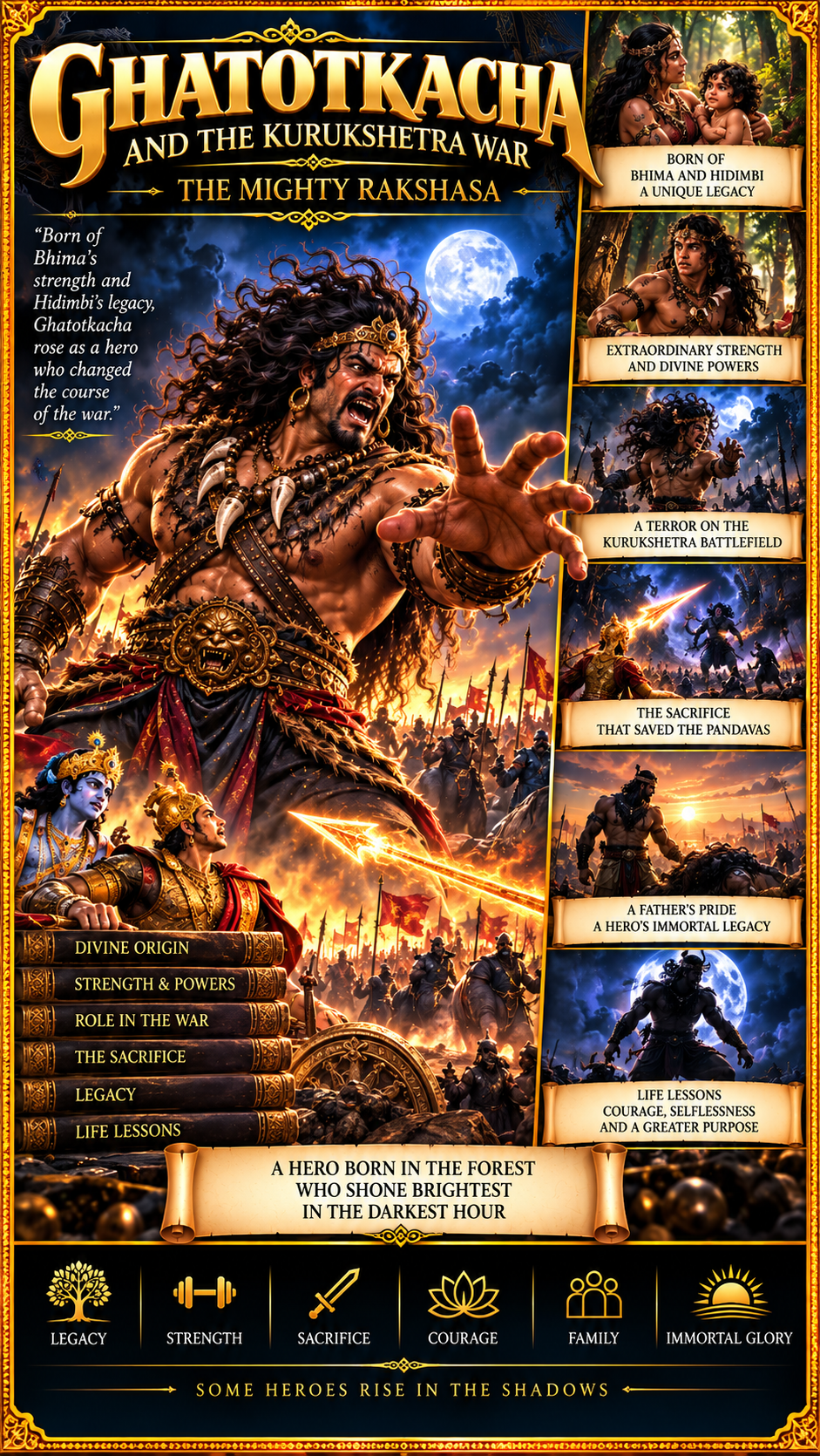
Introduction Among the many powerful warriors of the Mahabharata, few left an impact as dramatic and decisive as Ghatotkacha. Though he appears mainly in the later part of the epic, his role becomes one of the most critical turning points of the Kurukshetra war. Born as the son of Bhima and the Rakshasi Hidimba, Ghatotkacha possessed extraordinary strength, magical powers, and unmatched night-war abilities. His heroic sacrifice not only changed the fate of the war but also saved Arjuna’s life indirectly. Ghatotkacha stands as a symbol of selfless sacrifice, destiny, and divine strategy in the Mahabharata. Birth of Ghatotkacha After the Pandavas escaped from the House of Lac (Lakshagriha), they traveled through dense forests. During this time, Bhima encountered Hidimba, a Rakshasi who fell in love with him. With Kunti’s permission, Bhima married Hidimba under Gandharva tradition. From this union was born Ghatotkacha. Meaning of the Name “Ghatotkacha” According to legend, he was born with a powerful body and fearsome appearance, typical of Rakshasas. Yet beneath his terrifying form lived a heart filled with loyalty, righteousness, and devotion to the Pandavas. Childhood and Extraordinary Powers From birth itself, Ghatotkacha displayed supernatural strength. Hidimba raised him among Rakshasas, where he learned:…