Raja Ratnam
- Children of King Shantanu
- January 3, 2026
- 578 views
Bhishma in Mahabharata: The Terrible Vow (Pratigya), Powers & Bed of Arrows
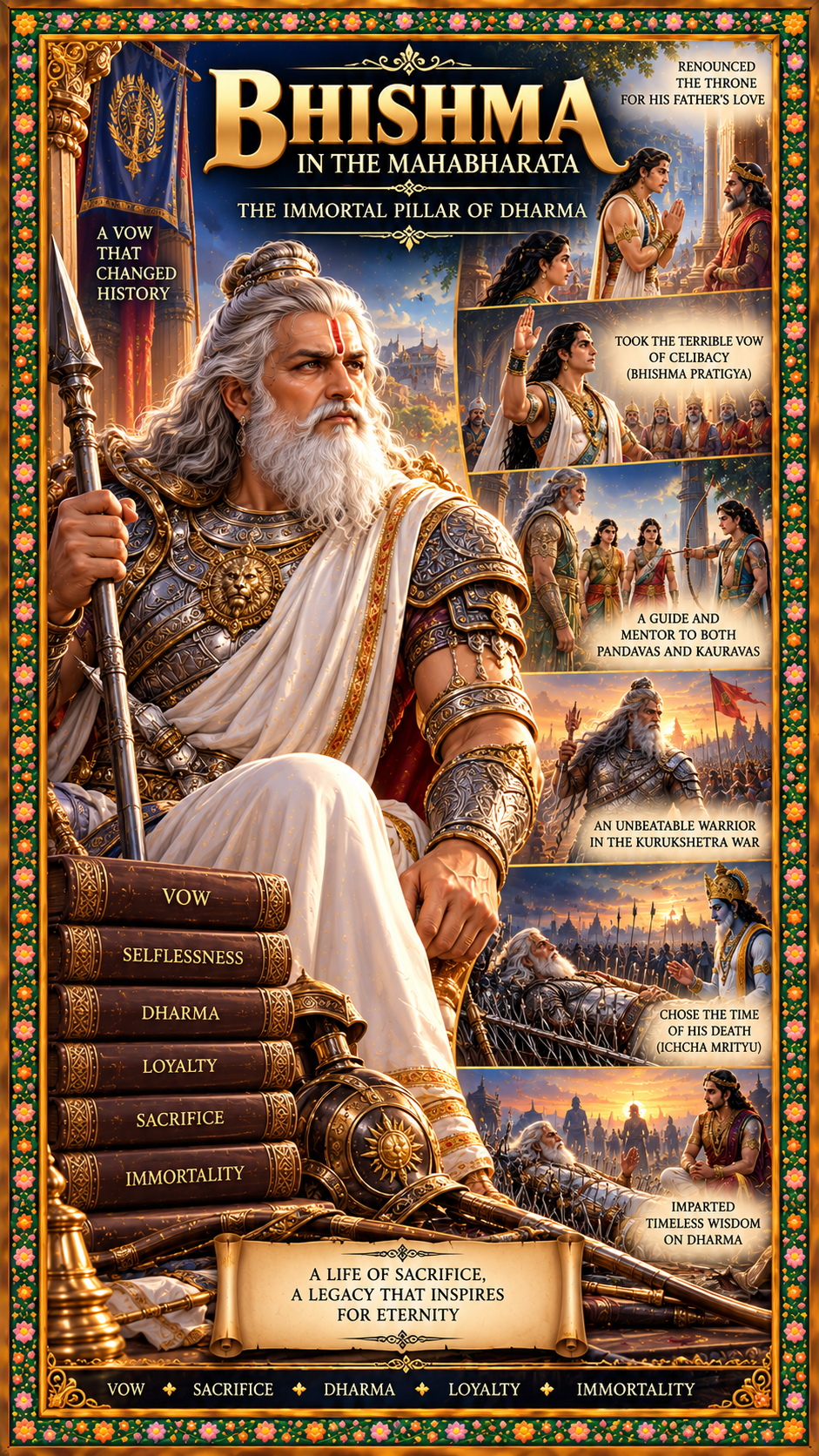
Introduction Bhishma, also known as Bhishma Pitamaha, stands as one of the most revered, tragic, and powerful figures in the Mahabharata. He is not merely a warrior but a symbol of unbreakable vows, sacrifice, loyalty, and dharma. His life story is both inspiring and heartbreaking, showing how even righteousness can lead to suffering when bound by rigid duty. Birth of Bhishma – Devavrata, the Son of Destiny Devavrata, the son of King Shantanu, ruler of the Kuru dynasty, and Ganga, the goddess of the River Ganga, was Bhishma’s birth name. Devavrata was no ordinary child. Trained by great sages and blessed by celestial beings, he mastered: From a young age, he was destined to become a legendary protector of the Kuru dynasty. The Terrible Vow – Why He Is Called Bhishma The turning point of Devavrata’s life came when King Shantanu wished to marry Satyavati. In order to inherit the throne, her father demanded that only her children inherit it. To fulfill his father’s happiness, Devavrata took a terrible (bhīṣaṇa) vow: The gods themselves showered flowers from the heavens, and from that moment, Devavrata became Bhishma, the one who took an impossible vow. This single decision shaped the entire future…