Raja Ratnam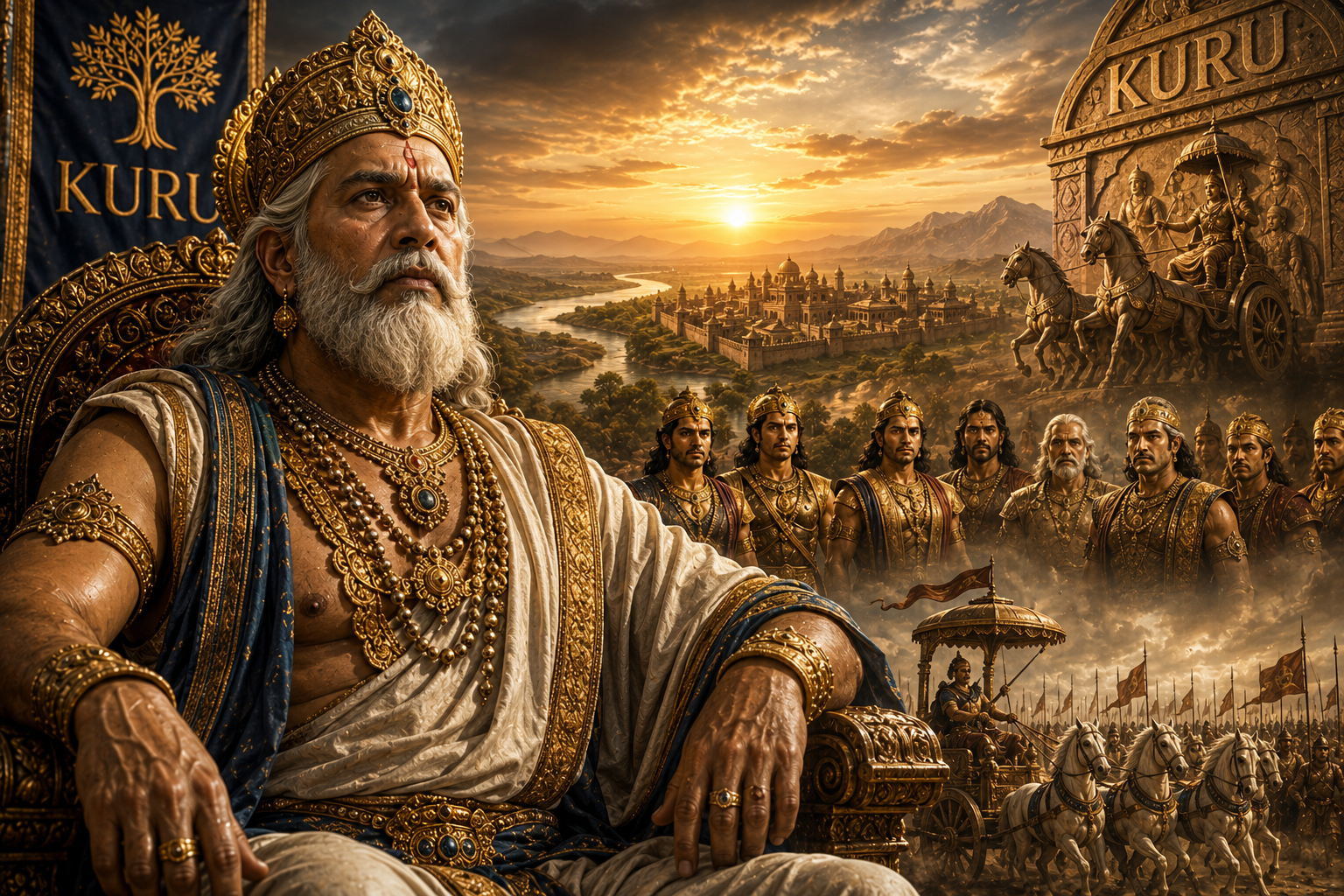
King Kuru in the Mahabharata – The Sacred King Who Shaped Destiny
Introduction to King Kuru – King Kuru in Mahabharata

Centuries before the war of eighteen days, an ancient king stepped onto a sacred plain between the Saraswati and Drishadvati rivers, yoked a golden plough to his oxen, and began tilling the earth with intense devotion. That noble monarch was King Kuru, descendant of Bharata and founding patriarch of the Kuru dynasty. By blessing the soil through years of spiritual penance, he transformed that vast plain into Kurukshetra – a field of dharma where anyone who passed away would attain spiritual liberation.
He was not just a ruler – he was a visionary, a तपस्वी (ascetic king), and the founder of the legendary Kuru dynasty. Most importantly, he is the reason why the battlefield of the great war came to be known as Kurukshetra.
For official cultural and historical archives, visit the Ministry of Culture, Government of India.
Who Was King Kuru? – King Kuru in Mahabharata
Lineage and Family Background
King Kuru belonged to the lunar dynasty (Chandravansha), one of the most prestigious royal lineages in ancient India. He was the son of King Samvarana and Queen Tapati, the daughter of the Sun God.
His lineage later gave rise to legendary figures like:
- Bhishma
- Dhritarashtra
- Panduraju
- The Pandavas and Kauravas
Thus, King Kuru was the root of one of the most powerful dynasties in Indian mythology.
The Great Vision of King Kuru – King Kuru in Mahabharata
Creation of Kurukshetra
King Kuru dreamed of creating a land where righteousness (Dharma) would flourish eternally. He chose a vast barren land and began ploughing it himself using a golden plough.
But this was no ordinary farming…
He infused the land with virtues such as:
- Truth (Satya)
- Compassion (Daya)
- Purity (Shauch)
- Austerity (Tapas)
This act transformed the land into a sacred क्षेत्र – a भूमि blessed with divine energy.
Blessing from Indra
Pleased by King Kuru’s devotion and determination, Lord Indra appeared before him and granted a divine boon:
👉 “This land shall be known as Kurukshetra. Whoever dies here while performing Dharma shall attain heaven.”
This blessing later became the foundation for the epic war of the Mahabharata.
Why Kurukshetra Became the Battlefield – King Kuru in Mahabharata
Centuries after King Kuru, the great conflict between the Pandavas and Kauravas needed a place where Dharma could be tested.
Kurukshetra was not chosen randomly…
It was chosen because:
- It was sanctified by King Kuru’s तपस्या
- It symbolized righteousness and truth
- It ensured that those who died in the war attained spiritual liberation
This is also where Bhagavad Gita was delivered by Krishna to Arjuna.
King Kuru’s Spiritual Significance – King Kuru in Mahabharata
A King Beyond Power
Unlike many rulers driven by conquest, King Kuru sought spiritual greatness. His actions reflect:
- Selflessness
- Dedication to Dharma
- Vision for humanity
He did not fight wars to expand territory – he cultivated land to expand righteousness.
Symbol of Karma Yoga
King Kuru’s life perfectly represents Karma Yoga – the path of action without attachment.
His ploughing was not for personal gain, but for the welfare of the world.
Legacy of King Kuru – King Kuru in Mahabharata
Founder of the Kuru Dynasty
The entire Mahabharata revolves around the descendants of King Kuru. Without him, there would be no:
- Hastinapura kingdom
- Pandavas vs Kauravas conflict
- Kurukshetra war
Eternal Sacred Geography
Even today, Kurukshetra is one of India’s holiest pilgrimage sites. It is believed that:
- Bathing in its waters cleanses sins
- Performing rituals here grants moksha
- It remains spiritually charged due to King Kuru’s तपस्या
Cultural and Historical Impact
King Kuru’s name lives on in:
- The term “Kauravas” (descendants of Kuru)
- The region Kurukshetra in Haryana
- Countless scriptures and traditions
Lesser-Known Facts About King Kuru – King Kuru in Mahabharata
Fascinating Insights
- King Kuru used a golden plough gifted by the gods
- He personally worked the land instead of delegating
- His तपस्या lasted for years
- Even gods were amazed by his dedication
King Kuru vs Other Kings in Mahabharata – King Kuru in Mahabharata
What Makes Him Unique?
Lessons from King Kuru’s Life – King Kuru in Mahabharata
Timeless Teachings
- True greatness lies in service
- Spiritual work is more powerful than physical conquest
- Vision can shape destiny
- Dharma always outlives power
Conclusion – King Kuru in Mahabharata
King Kuru may not appear frequently in the Mahabharata narrative, but his presence is felt in every chapter.
He didn’t fight in the war…
He created the very ground on which Dharma would be tested.
Without King Kuru, there would be no Kurukshetra…
And without Kurukshetra, there would be no Mahabharata as we know it.
His story reminds us that sometimes, the greatest contributions are not seen in battles – but in the foundations laid for future generations.
Related Sacred Topics & Cultural Heritage: For further spiritual exploration, read about Lord Rama’s ideal life story.
FAQs About King Kuru
1. Who was King Kuru?
King Kuru was the ancestor of the Kuru dynasty and a legendary king in the Mahabharata.
2. Why is Kurukshetra named after King Kuru?
Because he cultivated the land with Dharma and turned it into a sacred field.
3. What boon did Indra give to King Kuru?
That anyone who dies in Kurukshetra while following Dharma will attain heaven.
4. Is King Kuru related to Pandavas and Kauravas?
Yes, he is their ancestor.
5. What is King Kuru famous for?
Creating Kurukshetra and establishing Dharma.
6. Was King Kuru a warrior?
He was a king but is more known for his spiritual work.
7. Where is Kurukshetra located today?
In Haryana, India.
8. Why is Kurukshetra sacred?
Because of King Kuru’s तपस्या and divine blessings.
9. Did King Kuru fight in the Mahabharata war?
No, he lived long before the war.
10. What values did King Kuru promote?
Truth, purity, compassion, and austerity.
11. Who were King Kuru’s parents?
King Samvarana and Queen Tapati.
12. What dynasty did King Kuru belong to?
The Chandravansha (lunar dynasty).
13. What is the meaning of Kurukshetra?
“The field of Kuru.”
14. What role did King Kuru play in Mahabharata?
He laid the foundation for the Kuru dynasty and Kurukshetra.
15. Why is King Kuru important?
Because his actions shaped the entire Mahabharata story.
16. Is Kurukshetra still a pilgrimage site?
Yes, it is one of the holiest places in India.
17. What is the spiritual meaning of King Kuru’s work?
It symbolizes Karma Yoga and dedication to Dharma.
18. Did gods help King Kuru?
Yes, Indra blessed him.
19. What lesson can we learn from King Kuru?
Selfless action creates lasting impact.
20. Why should we remember King Kuru?
Because he built the spiritual foundation of the Mahabharata.
✅ For more powerful mythology stories and SEO blogs, visit Ratnam Strategy.