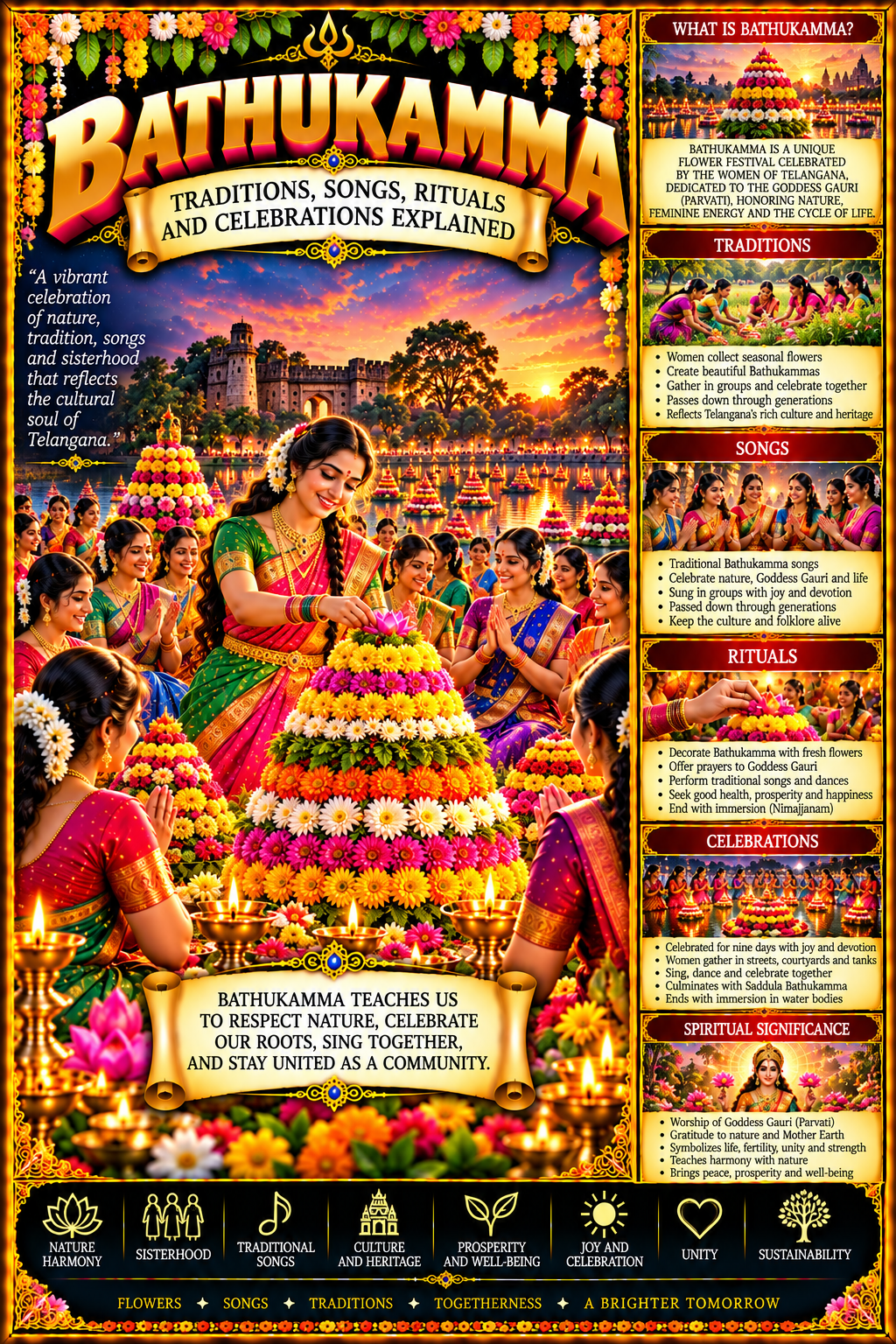
 Bathukamma Traditions, Songs, Rituals and Celebrations Explained
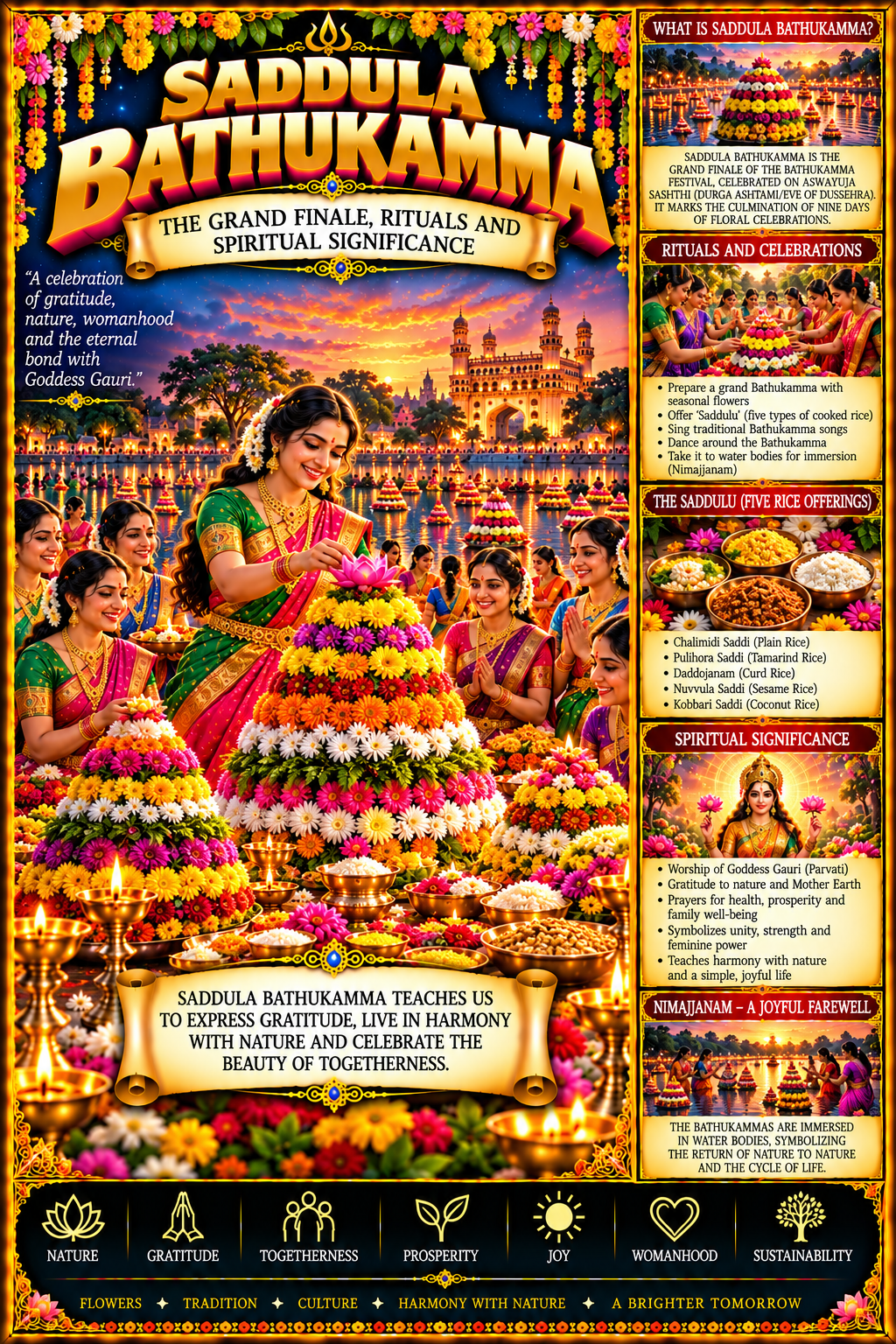 Saddula Bathukamma: The Grand Finale, Rituals and Spiritual Significance
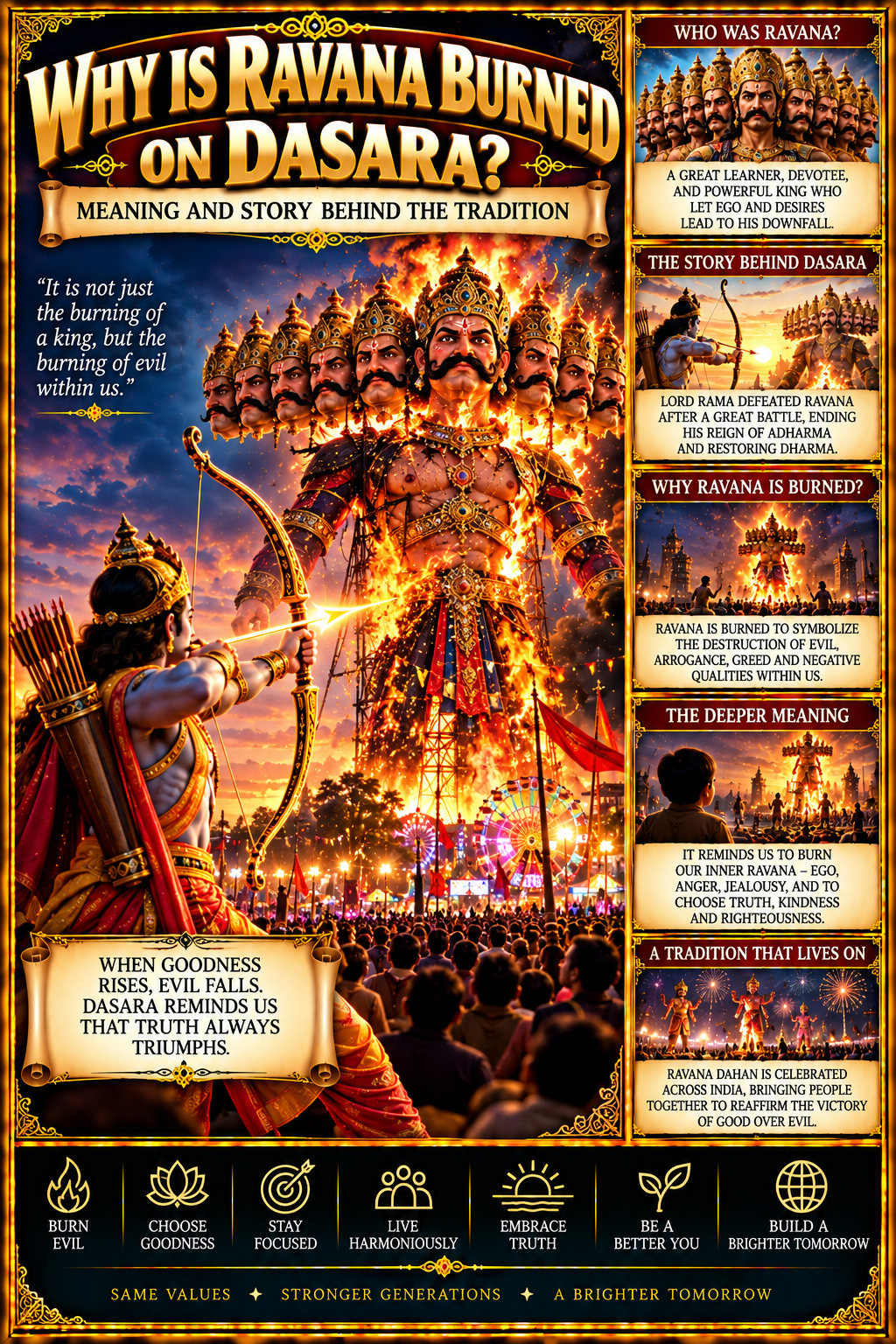 Why Is Ravana Burned on Dasara? Meaning and Story Behind the Tradition
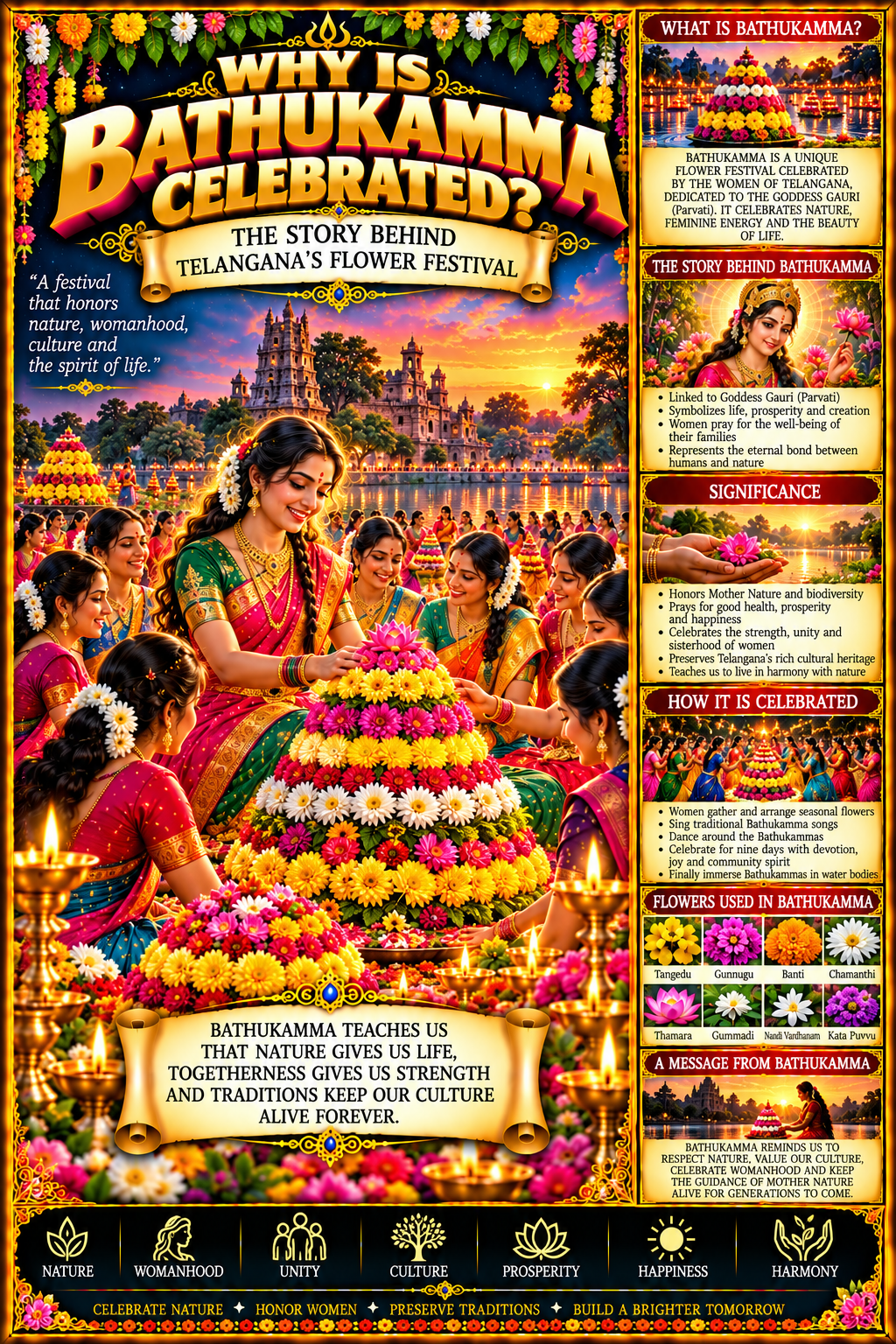 Why Is Bathukamma Celebrated? The Story Behind Telangana’s Flower Festival
 Bathukamma History and Significance: The Beautiful Floral Festival of Telangana
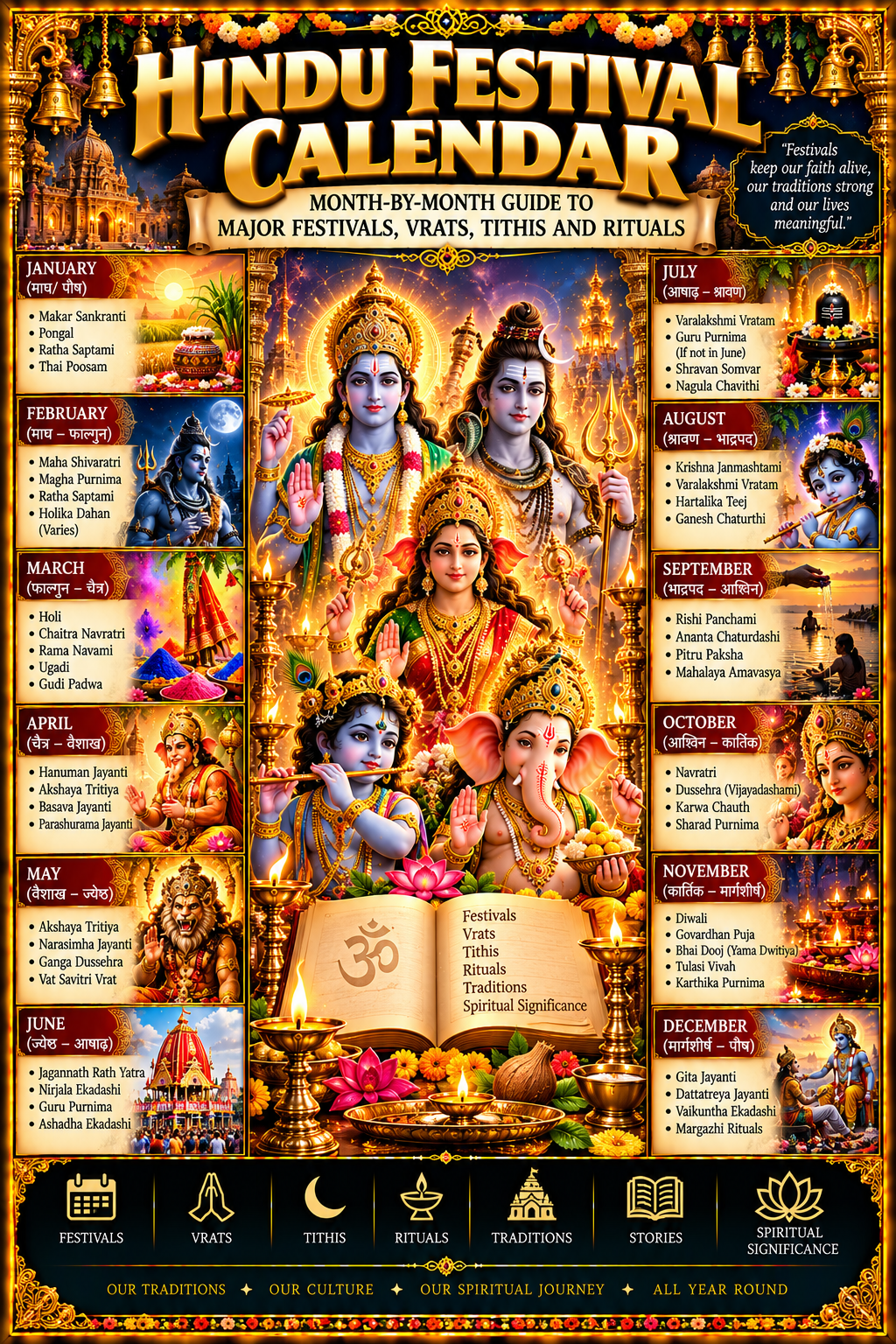 Hindu Festival Calendar: Month-by-Month Guide to Major Festivals, Vrats, Tithis and Rituals
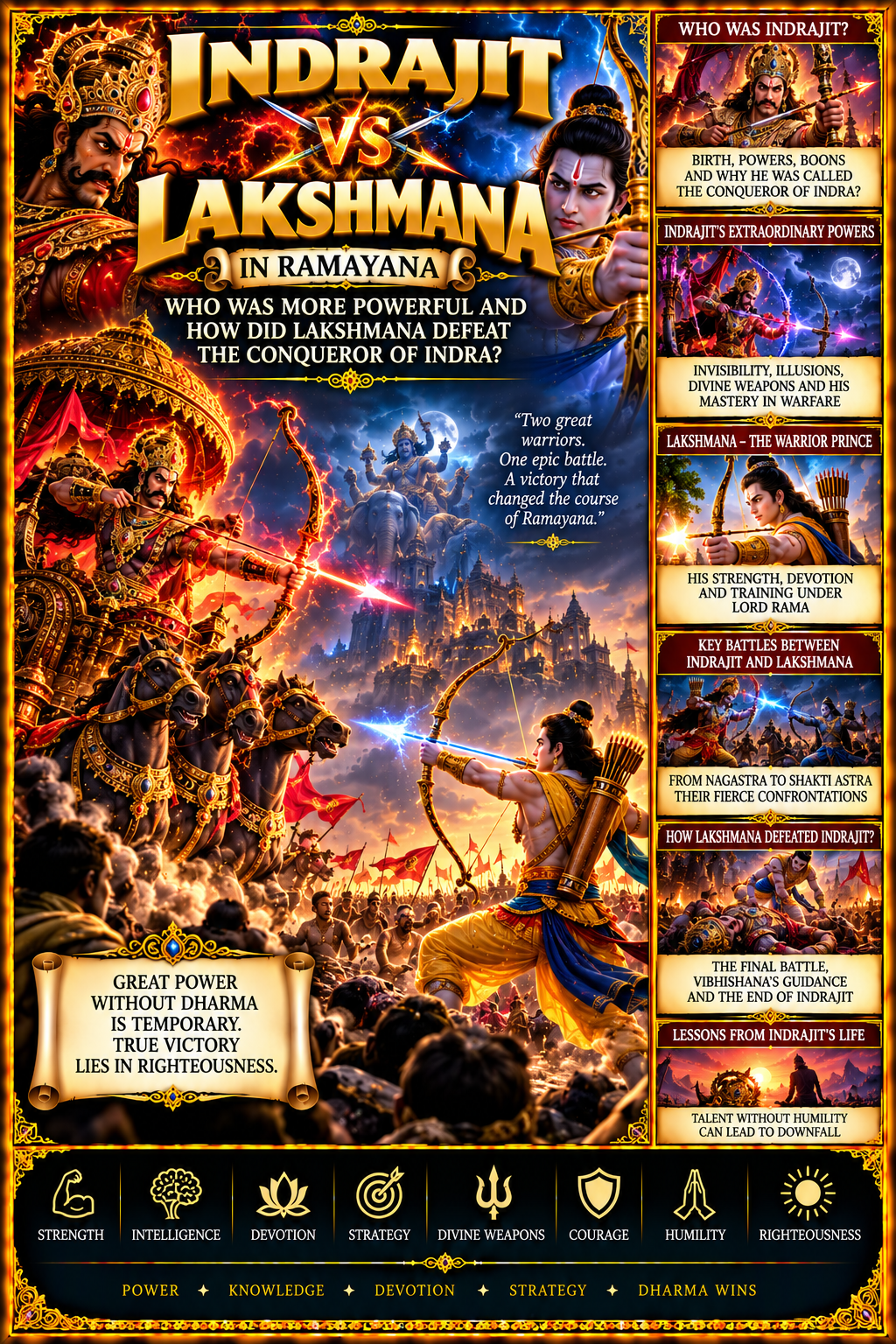 Indrajit vs Lakshmana in Ramayana: Who Was More Powerful and How Did Lakshmana Defeat the Conqueror of Indra?
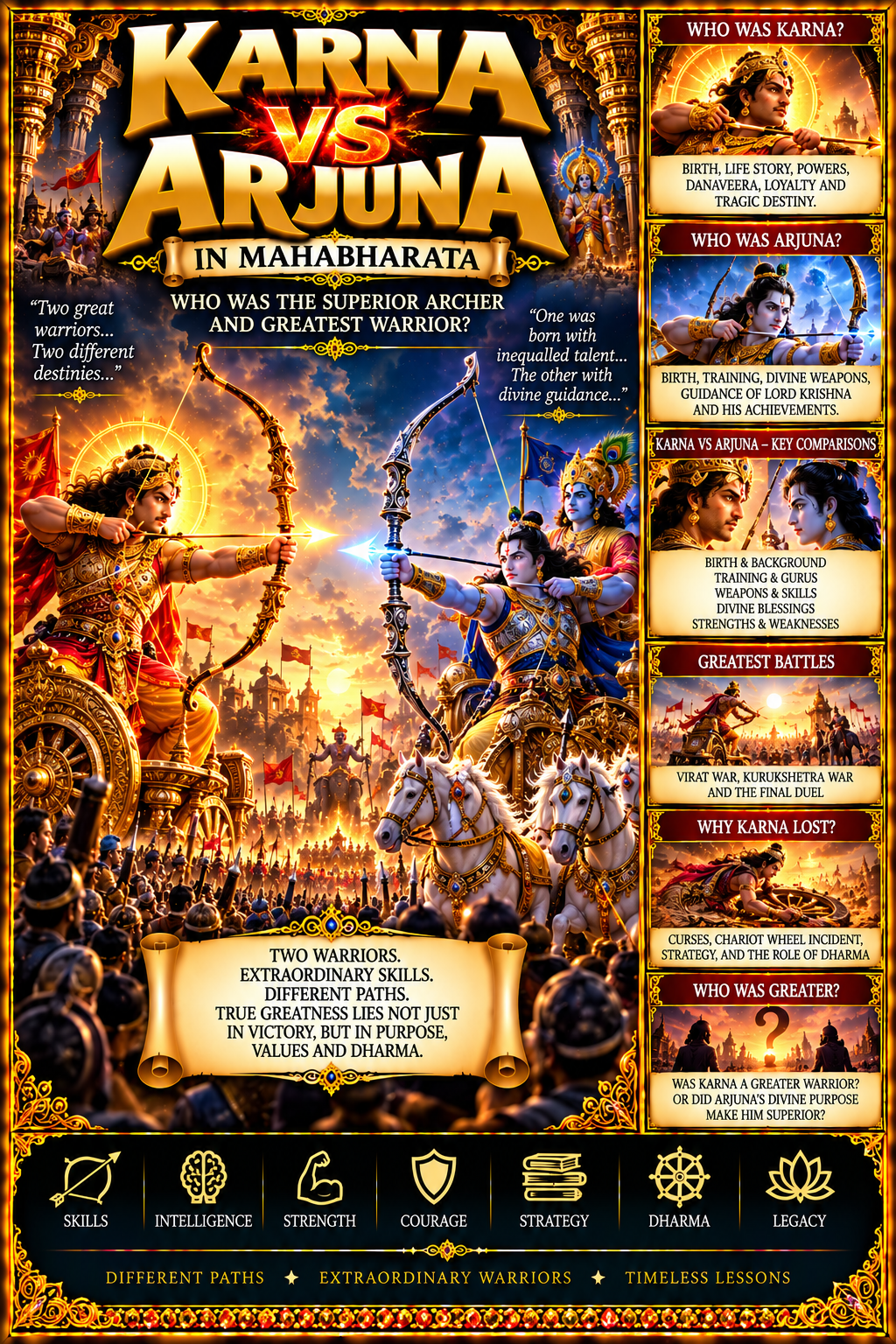 Karna vs Arjuna in Mahabharata: Who Was the Superior Archer and Greatest Warrior?
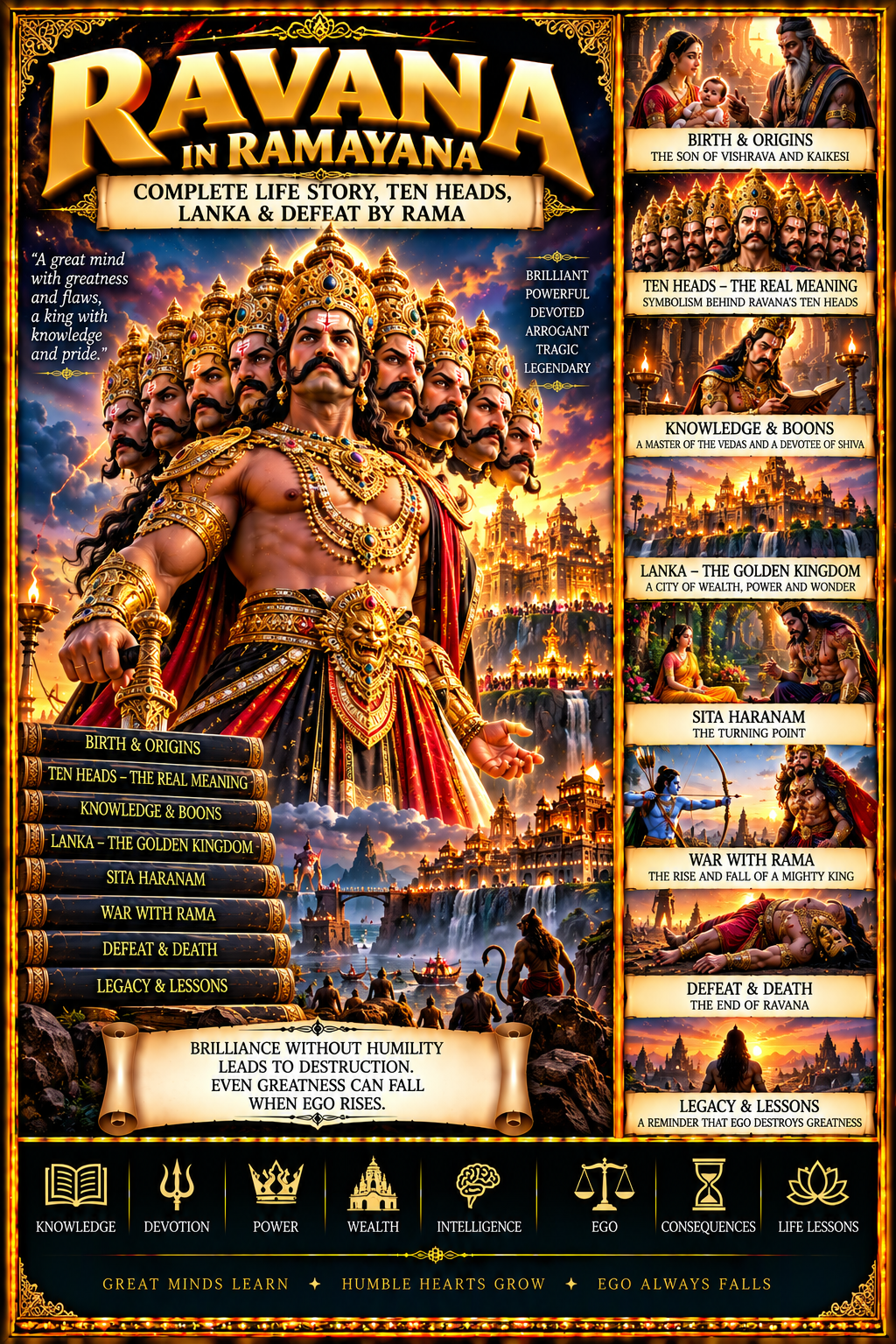 Ravana in Ramayana: Complete Biography, Shiva Bhakti, Golden Lanka & Downfall
 Why Do We Celebrate Dussehra (Vijayadashami)? Story, Shami Puja & Rituals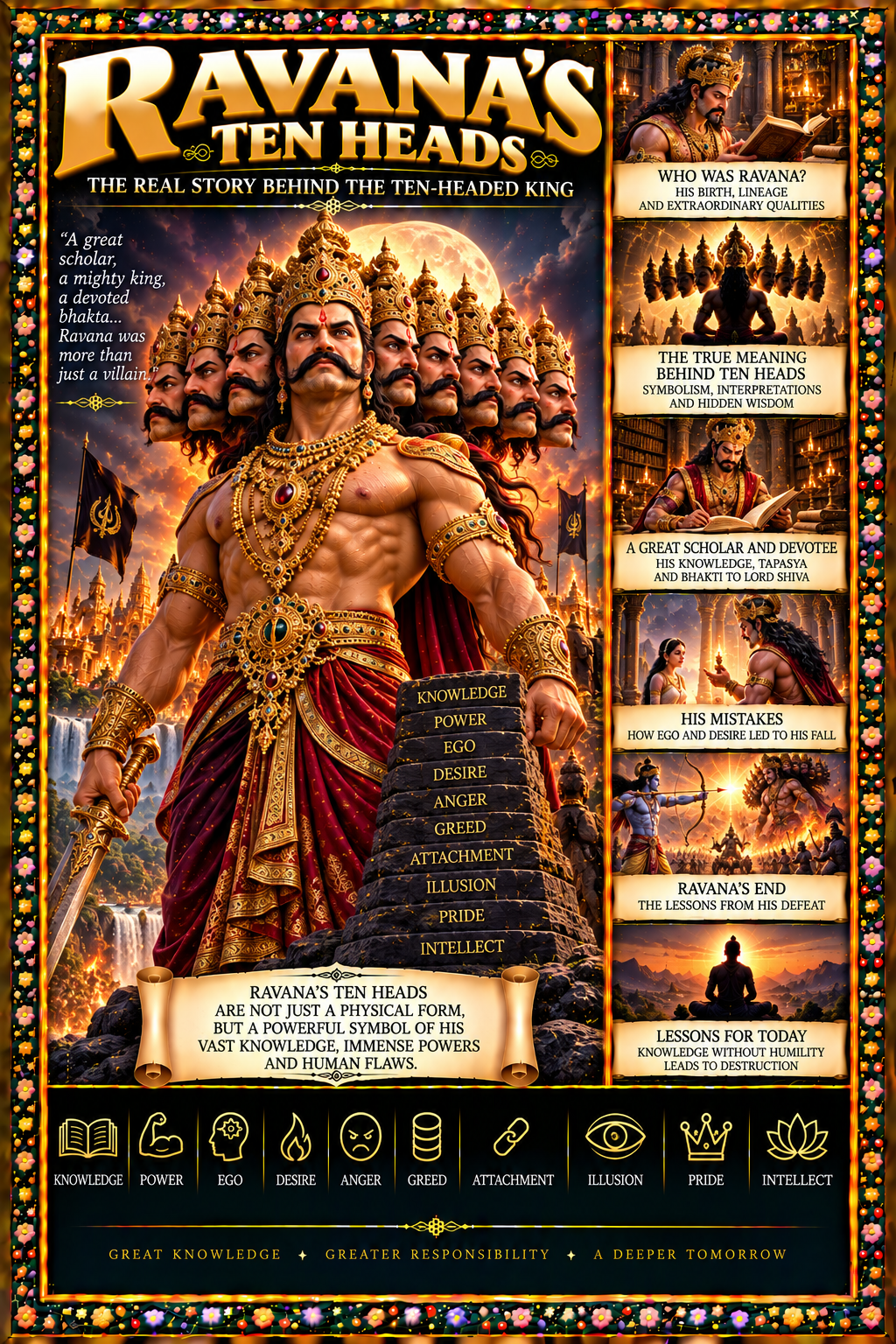












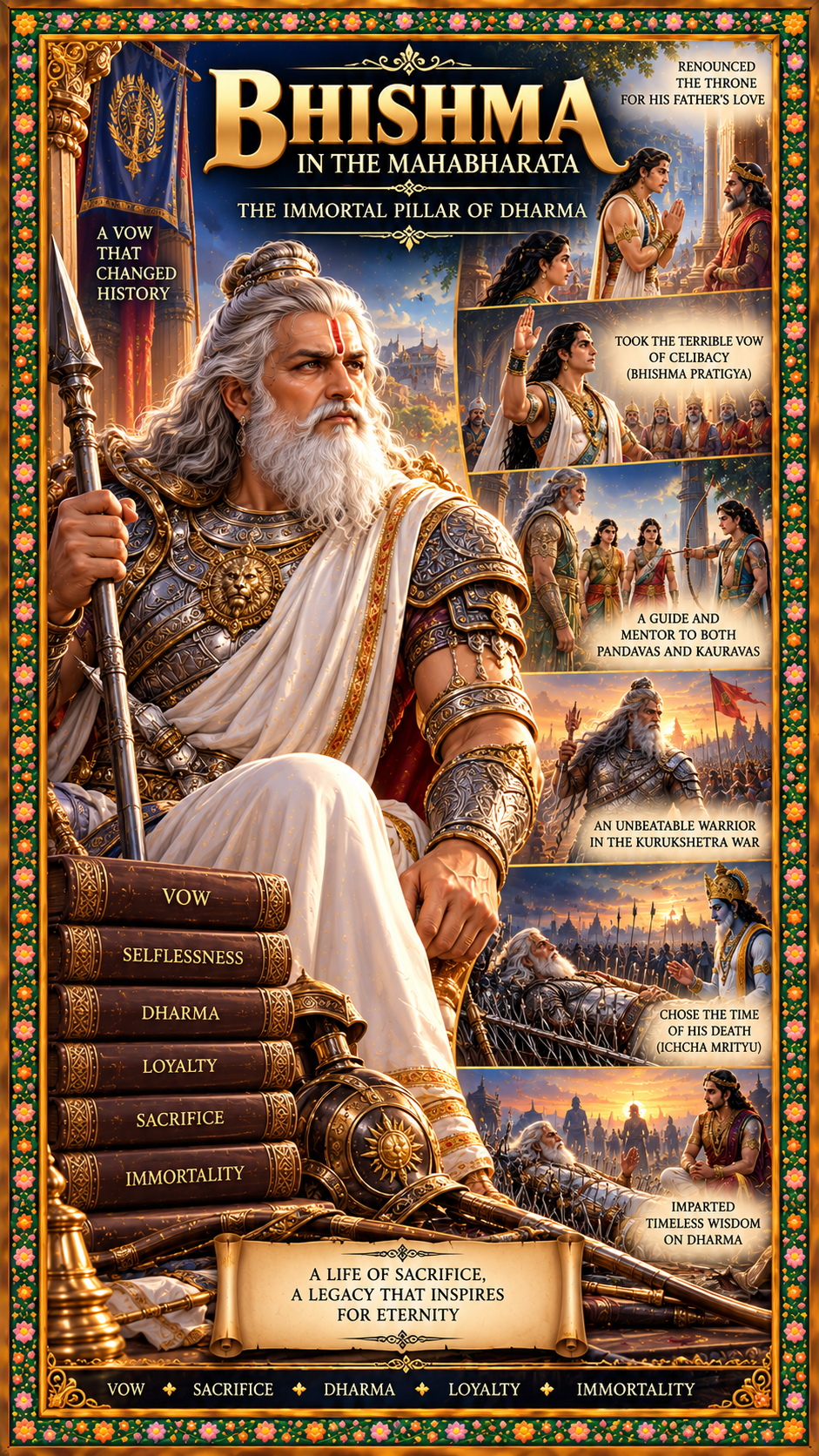



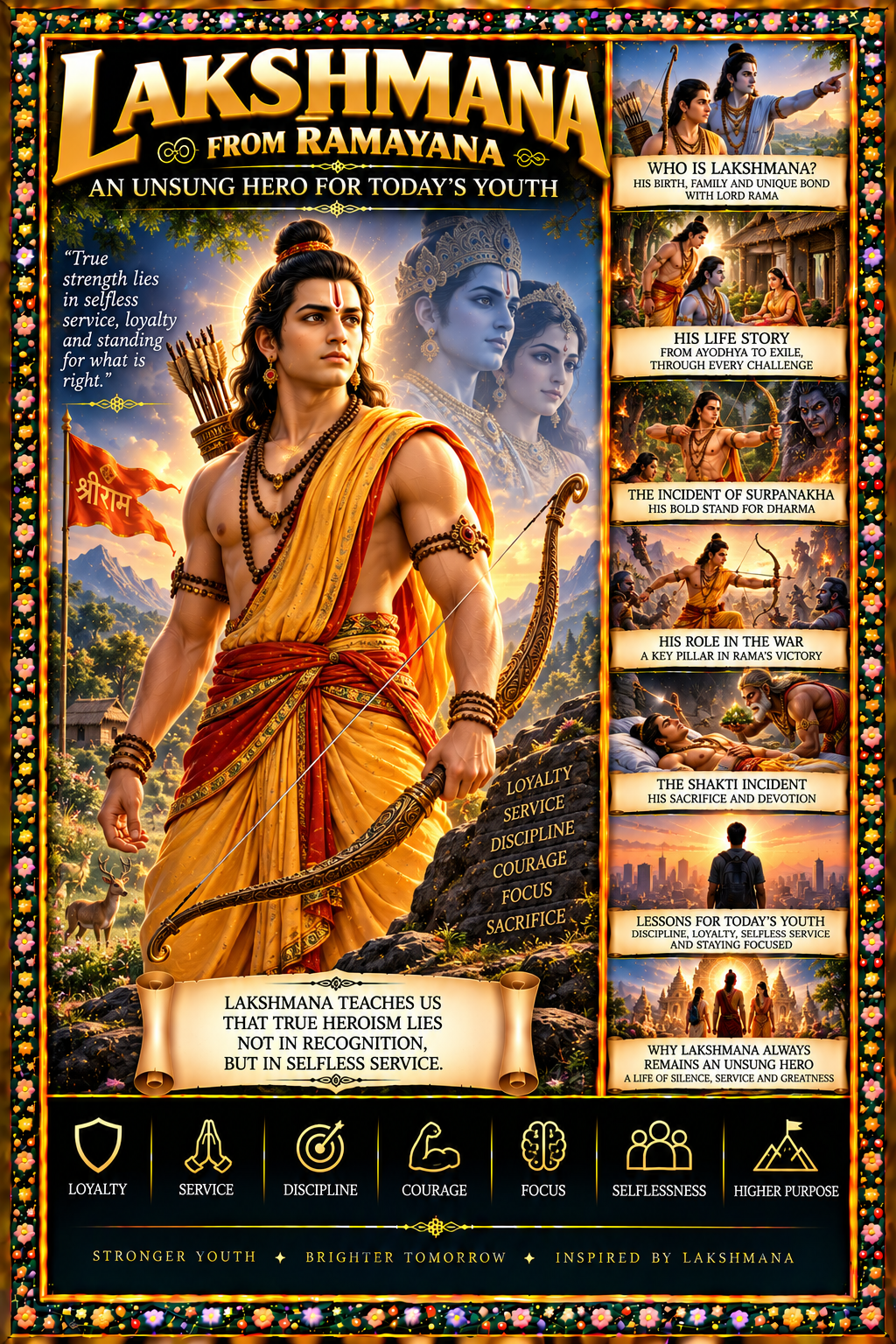
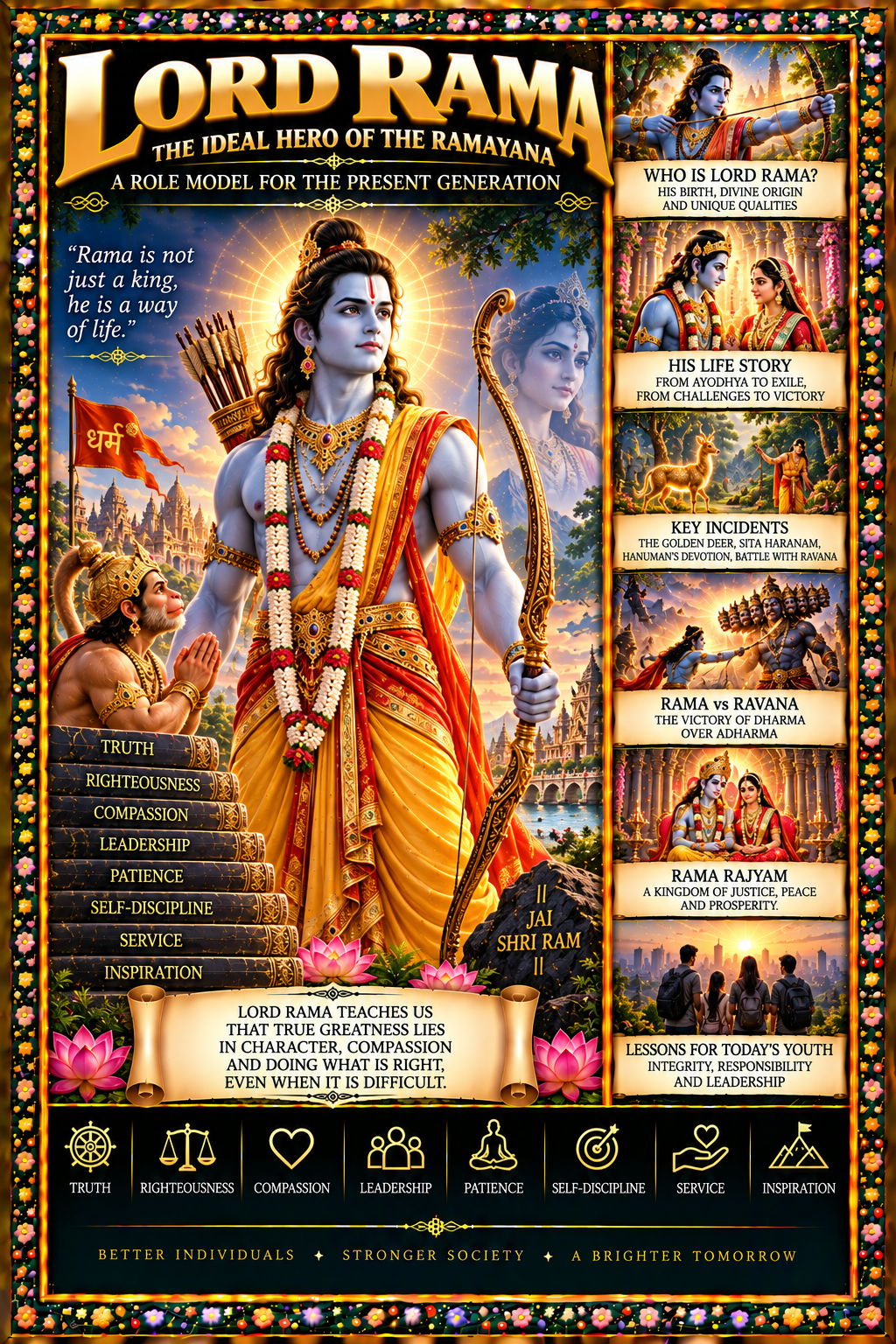
Raja Ratnam
- Children of King Shantanu
- May 2, 2026
- 214 views
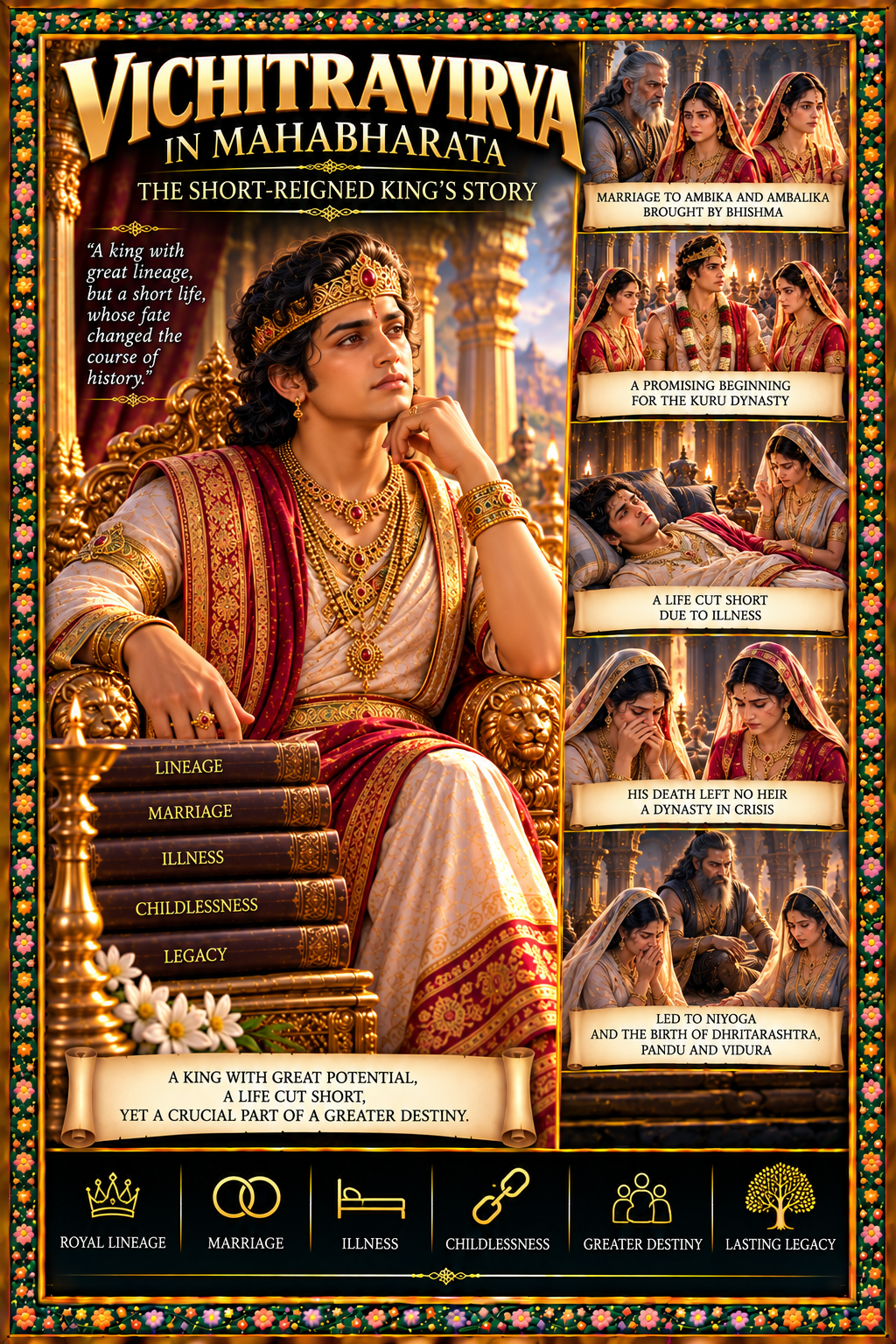
Vichitravirya in Mahabharata: The Hastinapur King & Father of Dhritarashtra and Pandu
Vichitravirya in the Mahabharata – The Short-Reigned King Who Changed Destiny Vichitravirya in Mahabharata Vichitravirya in Mahabharata : The Mahabharata, one of the greatest epics of ancient India, is filled with powerful kings, warriors, and complex characters. Among them stands Vichitravirya, a lesser-discussed yet highly significant figure. Though his life was short, his role in shaping the destiny of the Kuru dynasty was immense. Vichitravirya was the son of King Shantanu and Queen Satyavati, and the younger half-brother of the mighty Bhishma. His life, marked by royal privilege, fragile health, and untimely death, set in motion events that eventually led to the great Kurukshetra war. For official cultural and historical archives, visit the Ministry of Culture, Government of India. Birth and Lineage of Vichitravirya – Vichitravirya in Mahabharata Vichitravirya was born into the illustrious Kuru dynasty, one of the most powerful royal families in the Mahabharata. His parents were: He had an elder brother, Chitrangada, who initially ascended the throne. However, after Chitrangada’s untimely death in battle, the young Vichitravirya became the heir to the throne. Bhishma’s Role in His Life – Vichitravirya in Mahabharata Vichitravirya’s life was deeply influenced by his half-brother, Bhishma, one of the most revered warriors…
- Children of King Shantanu , Mahabharatam
- April 25, 2026
- 233 views
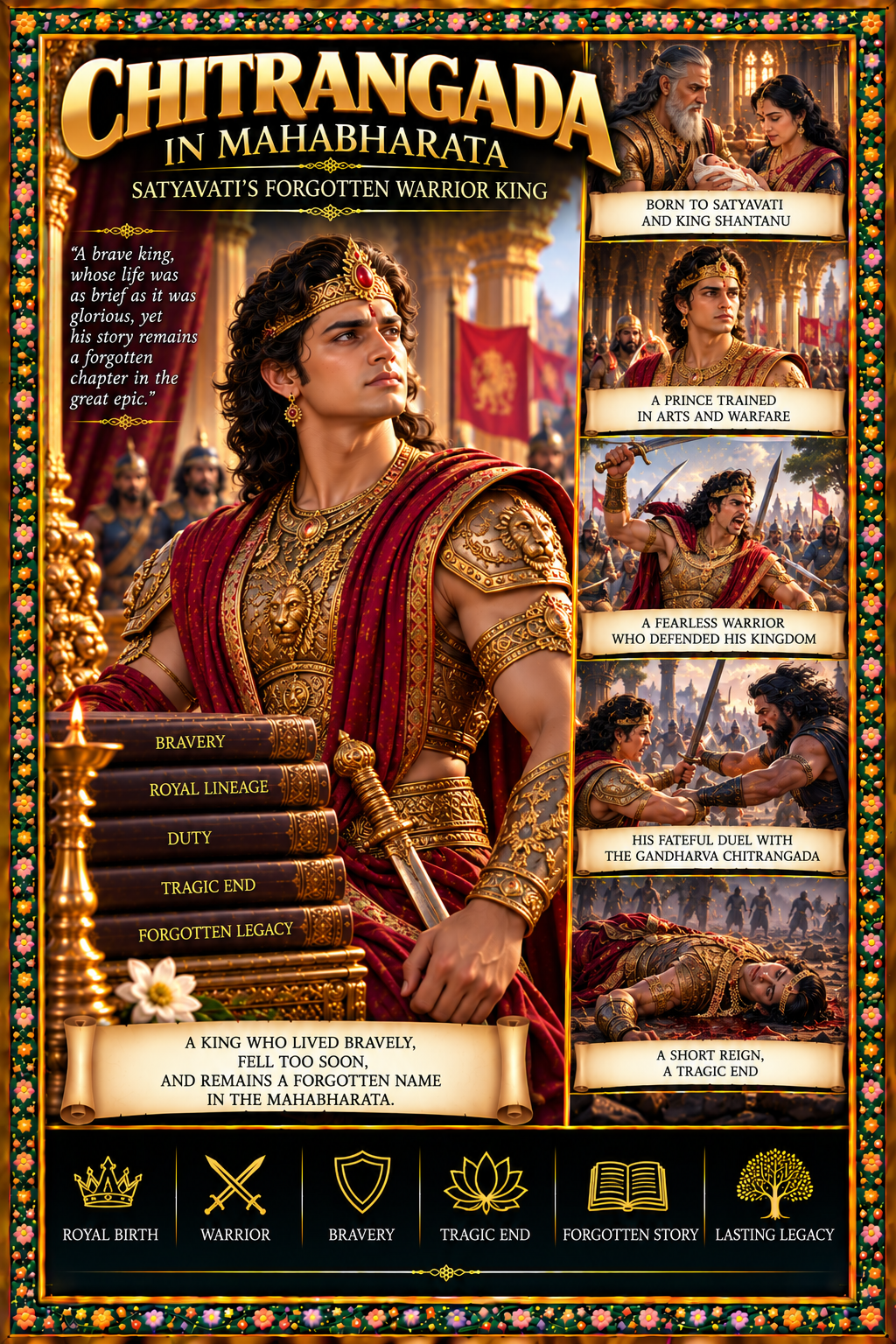
Chitrangada in Mahabharata: The Warrior King Killed by His Gandharva Namesake
Chitrangada in the Mahabharata – The Forgotten Kuru King Chitrangada : The epic of the Mahabharata is filled with powerful kings, legendary warriors, and unforgettable destinies. Yet, among the towering figures like Bhishma, Arjuna, and Krishna, there are characters whose stories remain hidden in the shadows. One such figure is Chitrangada — the elder son of Satyavati and Shantanu. Though his life was short, his story carries deep lessons about pride, destiny, and the fragile nature of power. Birth and Royal Lineage of Chitrangada Son of a Legendary Queen Chitrangada was born into the royal Kuru dynasty, one of the most powerful lineages in ancient India. His mother, Satyavati, was a woman of remarkable destiny who rose from humble beginnings to become the queen of Hastinapura. His father, Shantanu, was a noble and respected ruler. Through this union, Chitrangada inherited both royal authority and immense responsibility. Brother of Vichitravirya Chitrangada had a younger brother, Vichitravirya. After the death of King Shantanu, it was Chitrangada who ascended the throne, while Vichitravirya was still too young to rule. For official cultural and historical archives, visit the Ministry of Culture, Government of India. Chitrangada Becomes King of Hastinapura A Young and Powerful Ruler…
- Kuru Dynasty
- April 18, 2026
- 225 views
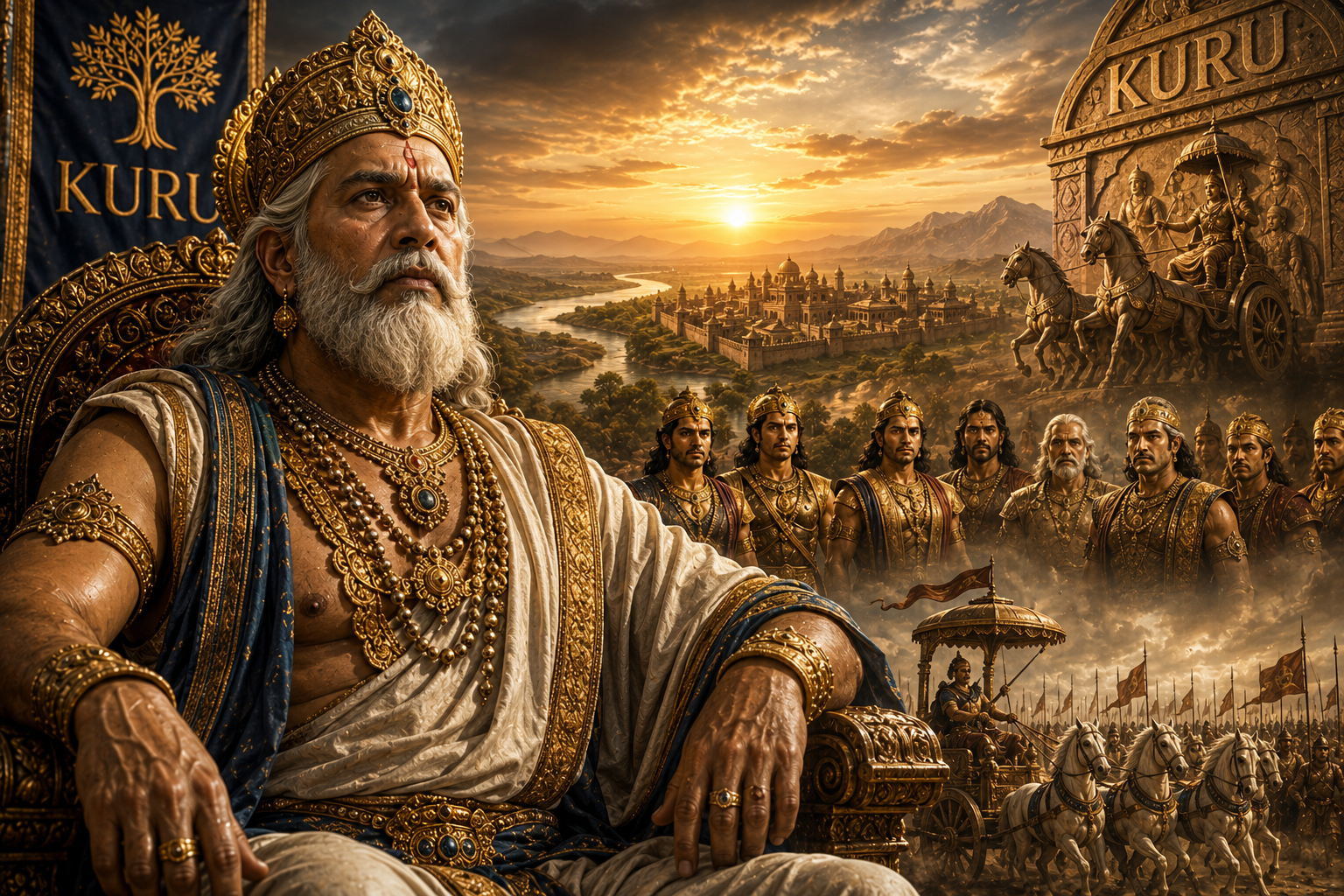
King Kuru in Mahabharata: Ancestor of Kurus & The Legend of Kurukshetra Field
King Kuru in the Mahabharata – The Sacred King Who Shaped Destiny Introduction to King Kuru – King Kuru in Mahabharata In the vast and profound epic of the Mahabharata, many kings and warriors shaped destiny—but few left a legacy as enduring as King Kuru. Though not as widely discussed as Arjuna or Karna, King Kuru’s influence runs deep through the veins of the entire epic. He was not just a ruler—he was a visionary, a तपस्वी (ascetic king), and the founder of the legendary Kuru dynasty. Most importantly, he is the reason why the battlefield of the great war came to be known as Kurukshetra. For official cultural and historical archives, visit the Ministry of Culture, Government of India. Who Was King Kuru? – King Kuru in Mahabharata Lineage and Family Background King Kuru belonged to the lunar dynasty (Chandravansha), one of the most prestigious royal lineages in ancient India. He was the son of King Samvarana and Queen Tapati, the daughter of the Sun God. His lineage later gave rise to legendary figures like: Thus, King Kuru was the root of one of the most powerful dynasties in Indian mythology. The Great Vision of King Kuru – King…
- Sons of Vichitravirya (via Sage Vyasa)
- April 9, 2026
- 348 views
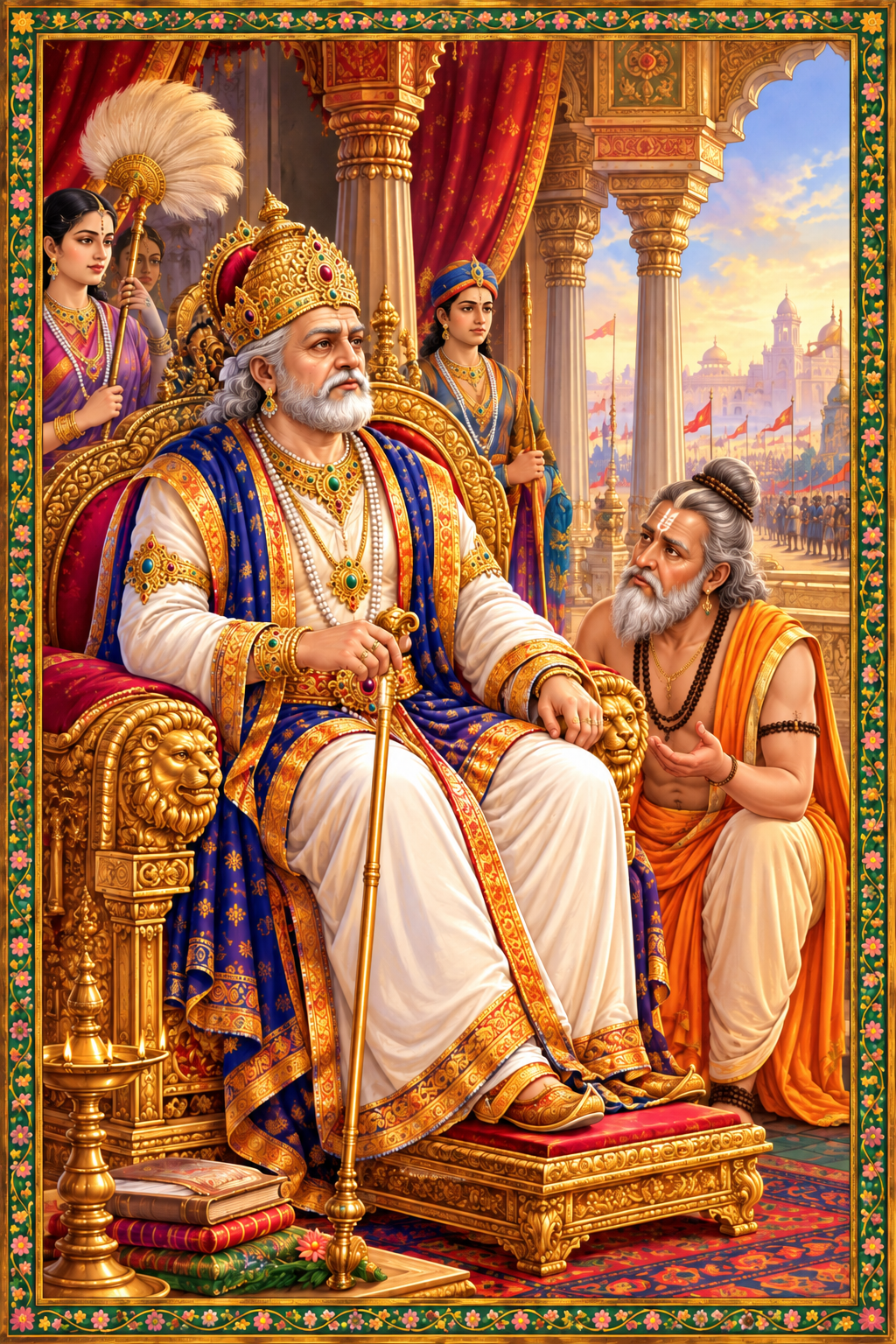
Dhritarashtra in Mahabharata: Story of the Blind King & The Curse of Blind Attachment
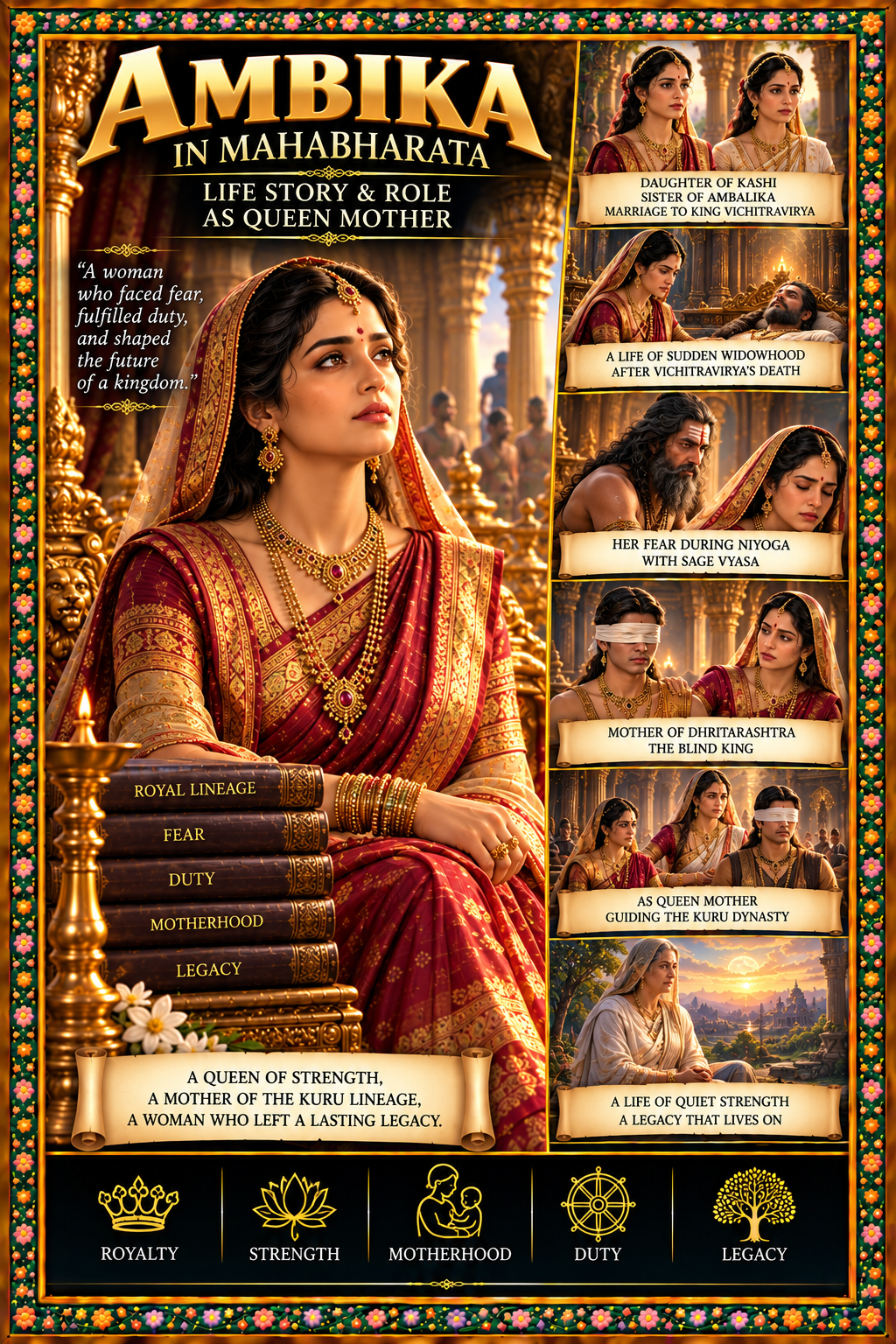
Dhritarashtra in the Mahabharata: The Blind King Who Saw Too Late Introduction: A King Without Sight, A Father Without Judgment – Dhritarashtra in the Mahabharata Dhritarashtra in the Mahabharata : In the vast epic of the Mahabharata, few characters are as tragic and complex as Dhritarashtra. Born blind, he ruled the mighty kingdom of Hastinapura—but his greatest blindness was not of the eyes, but of the heart. He was a king who knew what was right… yet chose silence.A father who loved deeply… yet failed completely. This is the emotional and powerful story of Dhritarashtra—the man whose weakness shaped the destiny of an entire dynasty. Birth of Dhritarashtra: A Curse of Destiny – Dhritarashtra in the Mahabharata Dhritarashtra was born to Queen Ambika through the sage Vyasa. But during the process, Ambika closed her eyes out of fear—resulting in a child born blind. This moment defined Dhritarashtra’s entire life. Though he was the eldest prince of Hastinapura, his blindness prevented him from becoming king. Instead, his younger brother Pandu ascended the throne. But destiny had other plans… For official cultural and historical archives, visit the Ministry of Culture, Government of India. The Rise to Power: A King by Circumstance –…
- Sons of Vichitravirya (via Sage Vyasa)
- April 9, 2026
- 379 views
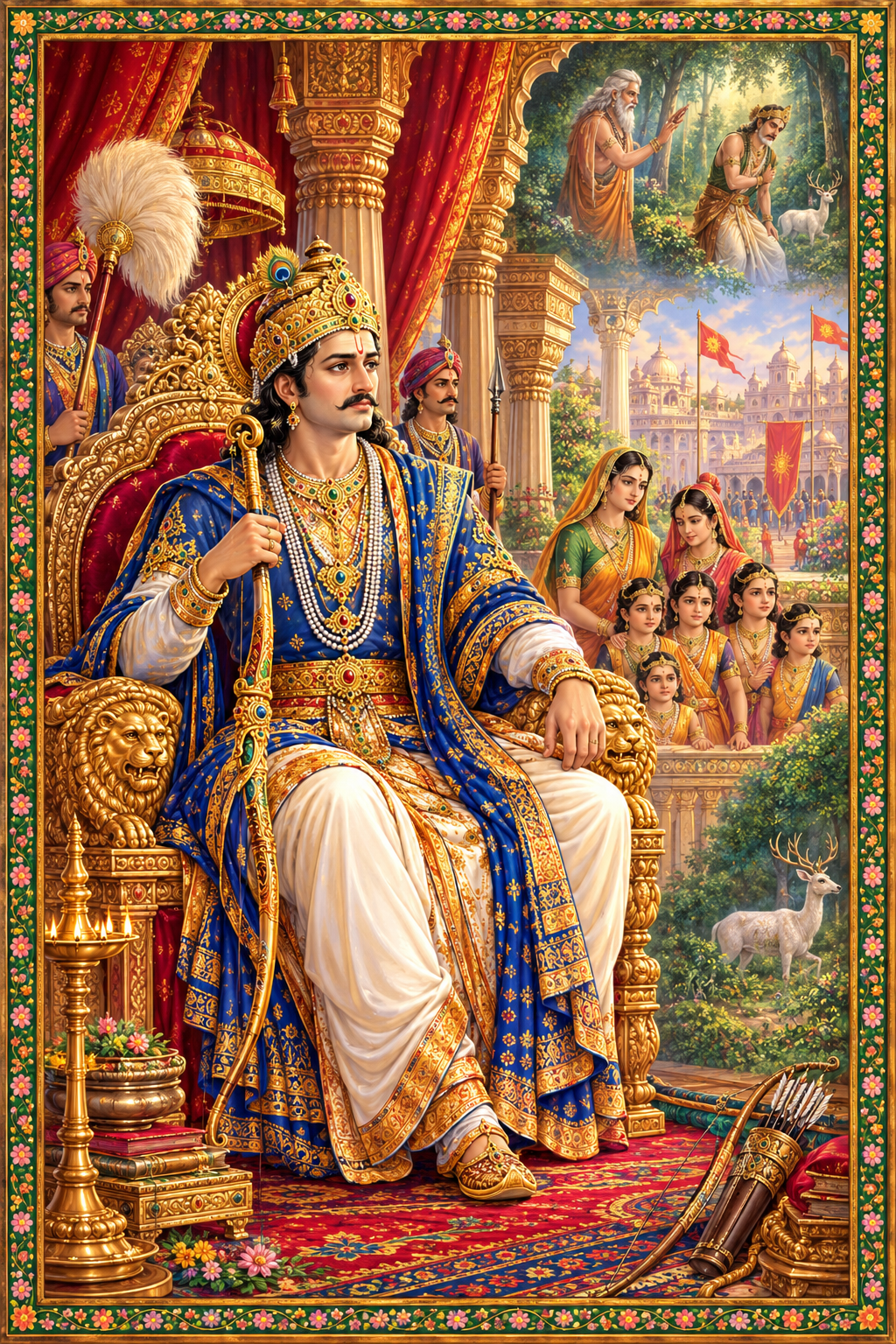
King Pandu in Mahabharata: Story, Sage Kindama’s Curse & Pandava Lineage
Panduraju in Mahabharata – The Tragic King Who Shaped Destiny Introduction -The Forgotten King Behind a Legendary War (Panduraju) Panduraju : When we think of the Mahabharata, our minds immediately rush to great warriors… The unmatched archer Arjuna…The mighty Bhima…The righteous Yudhishthira…Or even the tragic hero Karna… We remember their battles… their victories… their choices. But have you ever wondered… 👉 Who set all of this into motion?👉 Whose life silently shaped the greatest war in history? The answer is not a warrior standing on the battlefield…but a king who never even fought in the war. Panduraju. A King History Almost Forgot… Panduraju was not just another ruler of Hastinapura…He was a king of immense strength, discipline, and vision. A man who conquered kingdoms…A man who ruled with justice…A man who had everything a king could ever desire. And yet… His story is not remembered for his victories. It is remembered for his silence… his suffering… and his fate. The Beginning of a Tragedy… Panduraju At the peak of his power, when life seemed perfect… Fate intervened. Not through war.Not through enemies.But through a single moment—a mistake that would change everything. A curse. A curse so powerful… that it took…
- Mahabharatam
- April 6, 2026
- 529 views
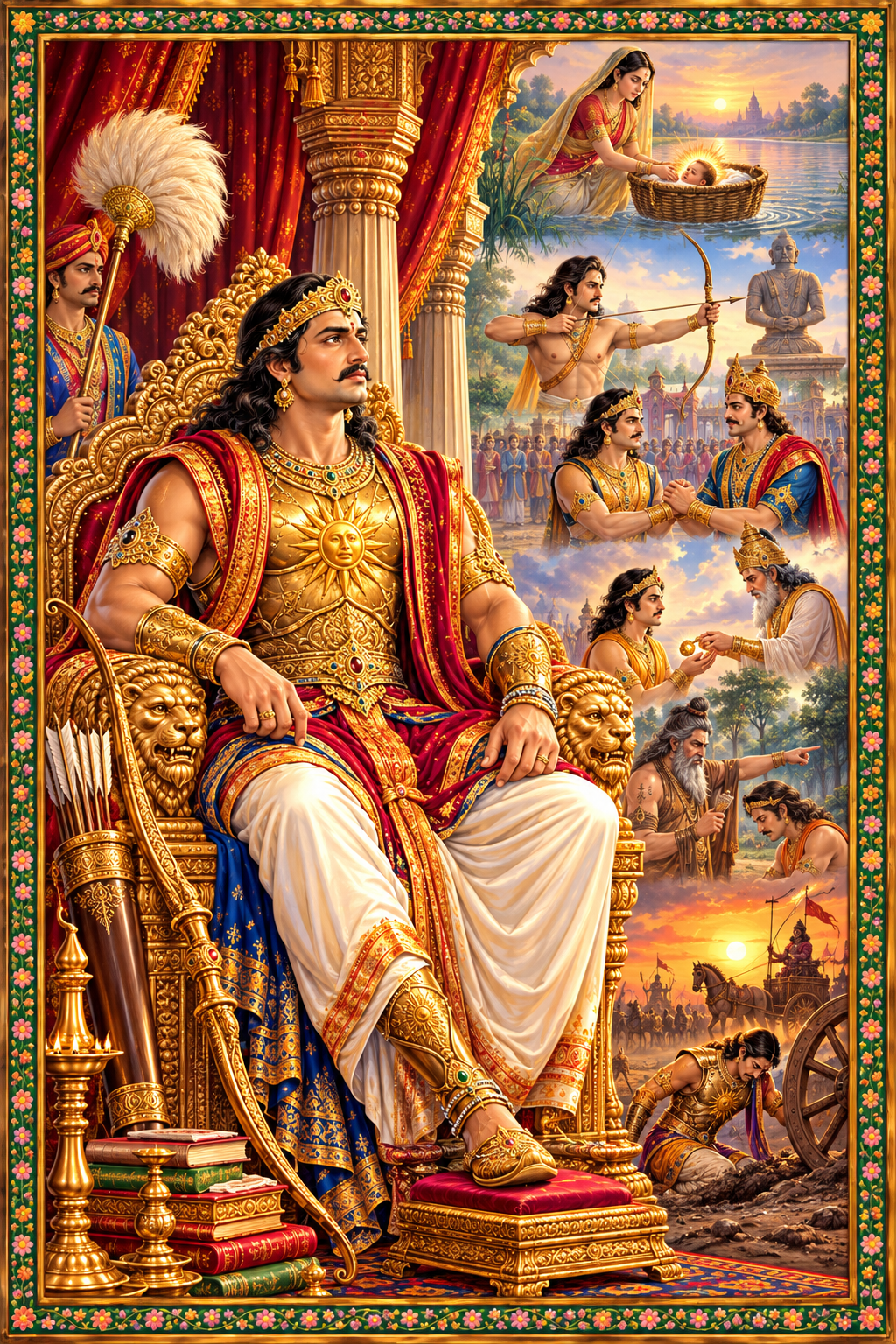
Karna in Mahabharata: Complete Life Story, 3 Curses, Kavacha Kundala & Death
Introduction – Karna in Mahabharata Karna is one of the most powerful and emotional characters in the Mahabharata. He was a great warrior, a loyal friend, and a man who lived his life facing rejection and hardship. Even though he was born with divine powers, Karna spent most of his life proving his worth. His story is not just about war but also about respect, friendship, and destiny. Many people consider Karna a tragic hero because he had great qualities but faced constant struggles. For official cultural and historical archives, visit the Ministry of Culture, Government of India. Birth of Karna – Karna in Mahabharata Karna was born to Kunti before her marriage. She received a boon that allowed her to call any god. Out of curiosity, she called the Sun God. As a result, Karna was born with divine armor (Kavacha) and earrings (Kundala). These made him very powerful. Since Kunti was unmarried, she placed the baby in a basket and set him afloat in a river. A charioteer named Adhiratha and his wife Radha found and raised him. Because of this, Karna grew up as a charioteer’s son. Karna’s Struggle for Respect – Karna in Mahabharata From childhood,…
- Mahabharatam , Women Characters
- March 22, 2026
- 446 views
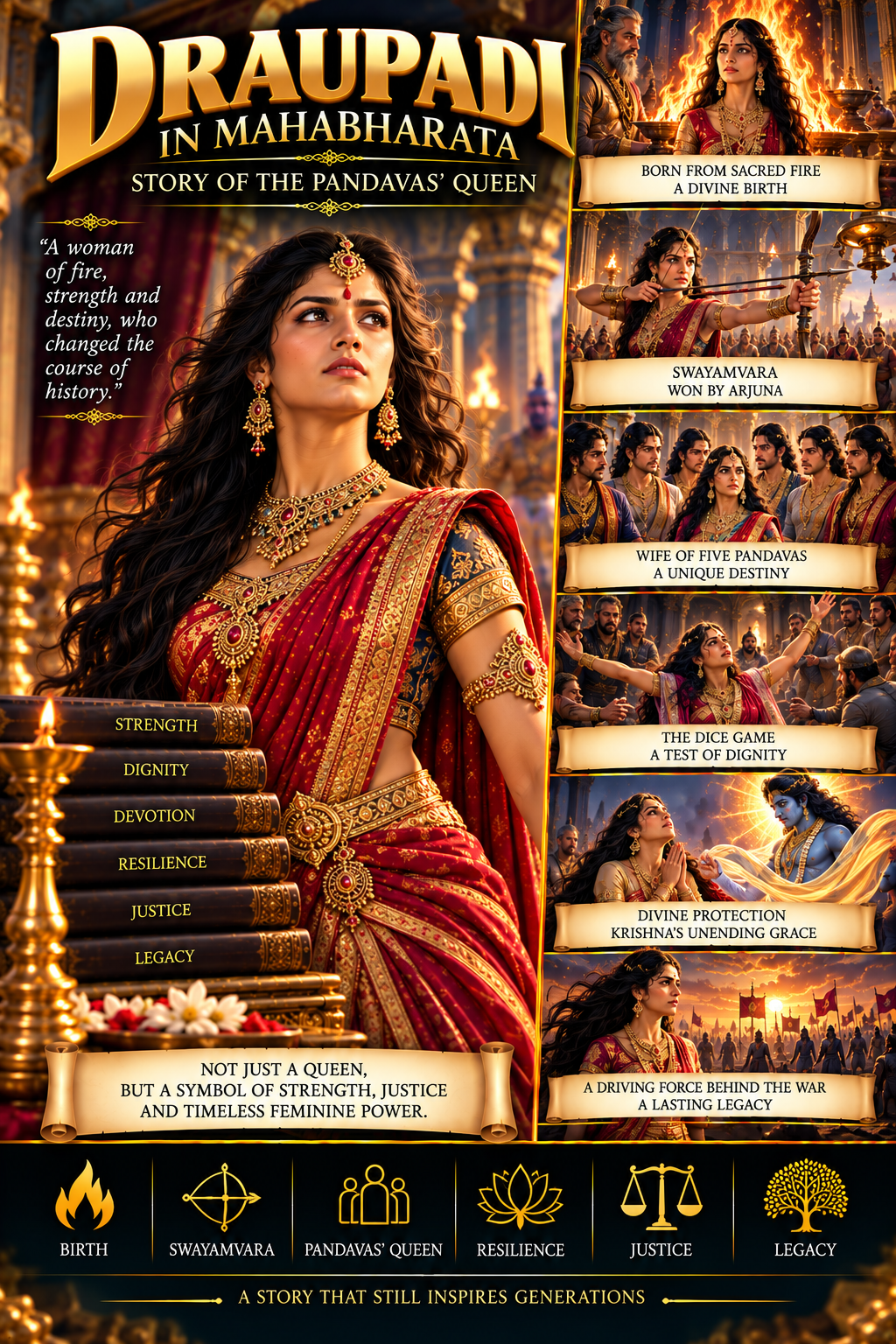
Draupadi in Mahabharata: Birth from Fire, 5 Husbands, Vow of Revenge & Legacy
Introduction – Draupadi in Mahabharata Draupadi in Mahabharata : Draupadi is one of the most important and powerful characters in the Mahabharata. She was not only the wife of the five Pandavas but also a woman of great strength, courage, and dignity. Her life was full of struggles, sacrifices, and unforgettable moments that changed the course of the great epic. Many events in the Mahabharata happened because of the insult done to Draupadi. Her humiliation in the Kaurava court became one of the main reasons for the Kurukshetra war. Even though she suffered many hardships, she remained strong and never lost her self-respect. Draupadi’s story teaches us about courage, patience, devotion, and the power of dharma. For official cultural and historical archives, visit the Ministry of Culture, Government of India. Birth of Draupadi – Draupadi in Mahabharata Draupadi was not born like an ordinary child. She appeared from a sacred fire during a yajna performed by King Drupada, the ruler of Panchala. King Drupada wanted revenge against Drona, so he performed a powerful sacrifice to get a son who could defeat Drona. From the fire, two children appeared — a son named Dhrishtadyumna and a daughter named Draupadi. Because she…
- Pandeva's , Sons of Kunti (From Different Devas)
- March 11, 2026
- 460 views
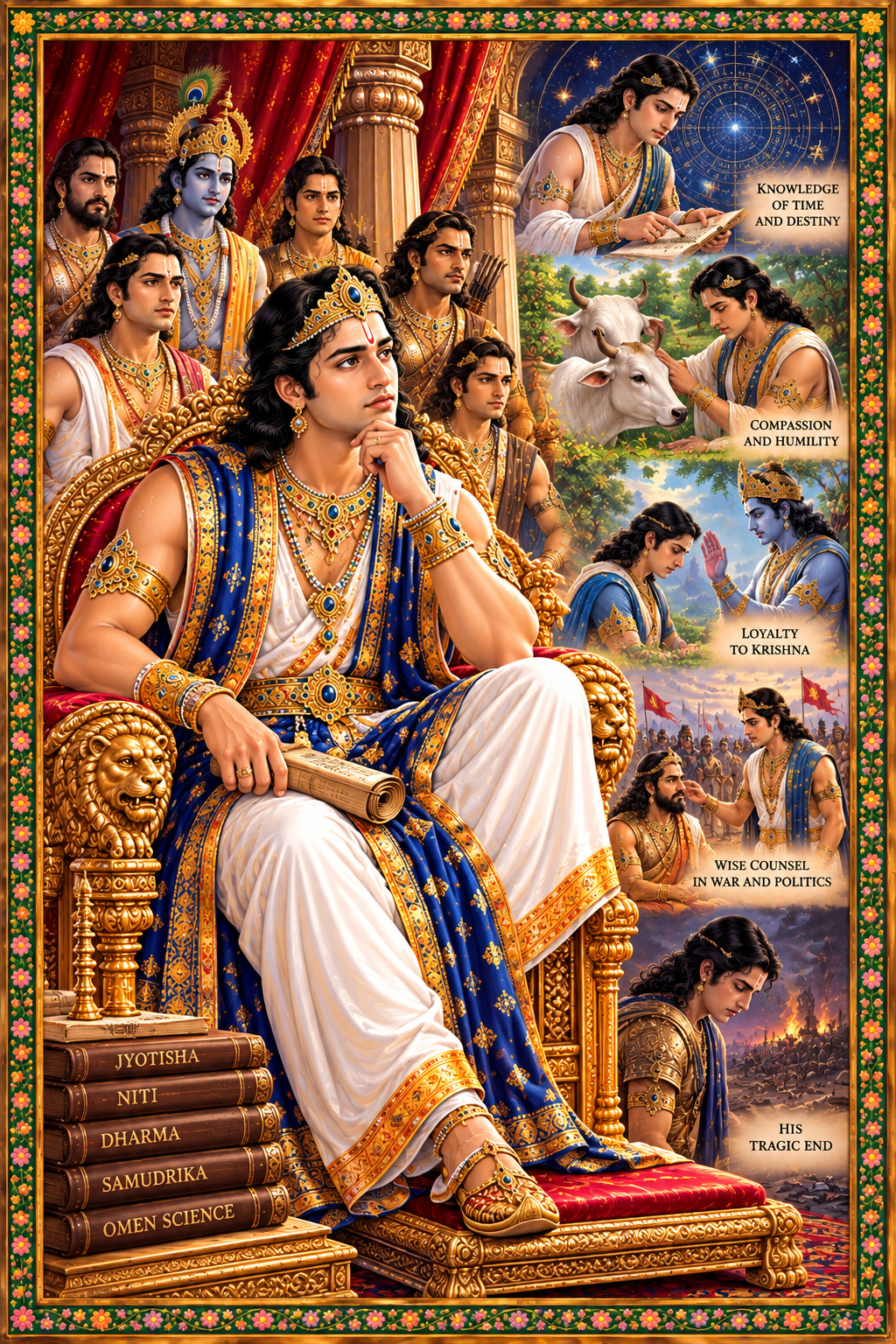
Sahadeva in Mahabharata: The Astrologer Pandava Who Knew the Future of Kurukshetra
A wise Pandava prince in the Mahabharata – Sahadeva Introduction – Sahadeva in Mahabharata In the great Indian epic Mahabharata, the Pandavas are known for their strength, courage, and righteousness. Among the five brothers, Sahadeva is often remembered as the quietest but also the most intelligent. While Bhima was famous for strength and Arjuna for archery, Sahadeva was respected for his wisdom, calm thinking, and deep knowledge of astrology. Sahadeva was the youngest of the Pandavas and the twin brother of Nakula. Even though he did not speak much, he understood many things that others could not. Many stories say that Sahadeva knew the future but chose to remain silent because of his promise and his respect for dharma. His character teaches us that true knowledge does not always need loud words. Sometimes, silence itself shows greatness. Birth of Sahadeva -Sahadeva in Mahabharata Sahadeva and Nakula were born to King Pandu’s second wife, Madri. Since Pandu was cursed and could not have children, Kunti shared a divine mantra with Madri. By using that mantra, Madri prayed to the Ashwini Kumaras, the twin gods known for healing and knowledge. Nakula and Sahadeva, Madri’s twin sons, were born as a consequence of…

- Festivals
- March 11, 2026
- 259 views
Ugadi 2026 Celebrations at Pavani Pleasant, Bangalore
Pavani Pleasant Bangalore celebrates Ugadi 2026 Introduction : Ugadi Celebration 2026 The Ugadi Celebration 2026 at Pavani Pleasant Bangalore was a vibrant community event where residents welcomed the Telugu New Year with traditional rituals, cultural programs, and joyful gatherings. Ugadi is one of the most important festivals celebrated by Telugu and Kannada communities and symbolizes the beginning of a new year filled with hope and prosperity. At Pavani Pleasant, families gathered together in traditional attire, decorated their surroundings with colorful rangoli and mango leaves, and participated in cultural activities that brought the entire community together. The Ugadi Celebration 2026 at Pavani Pleasant Bangalore became a beautiful reminder of how festivals strengthen community bonds and preserve cultural traditions. For official cultural and historical archives, visit the Ministry of Culture, Government of India. Ugadi 2026 Date – In 2026, Ugadi will be celebrated on March 19, Thursday. Ugadi marks the first day of the Chaitra month in the Hindu lunisolar calendar and is celebrated as the Telugu and Kannada New Year. The festival usually falls in March or April, depending on the lunar cycle. For the residents of Pavani Pleasant in Bangalore, the Ugadi Celebration 2026 at Pavani Pleasant Bangalore was a…
- Pandeva's , Sons of Kunti (From Different Devas)
- March 6, 2026
- 410 views
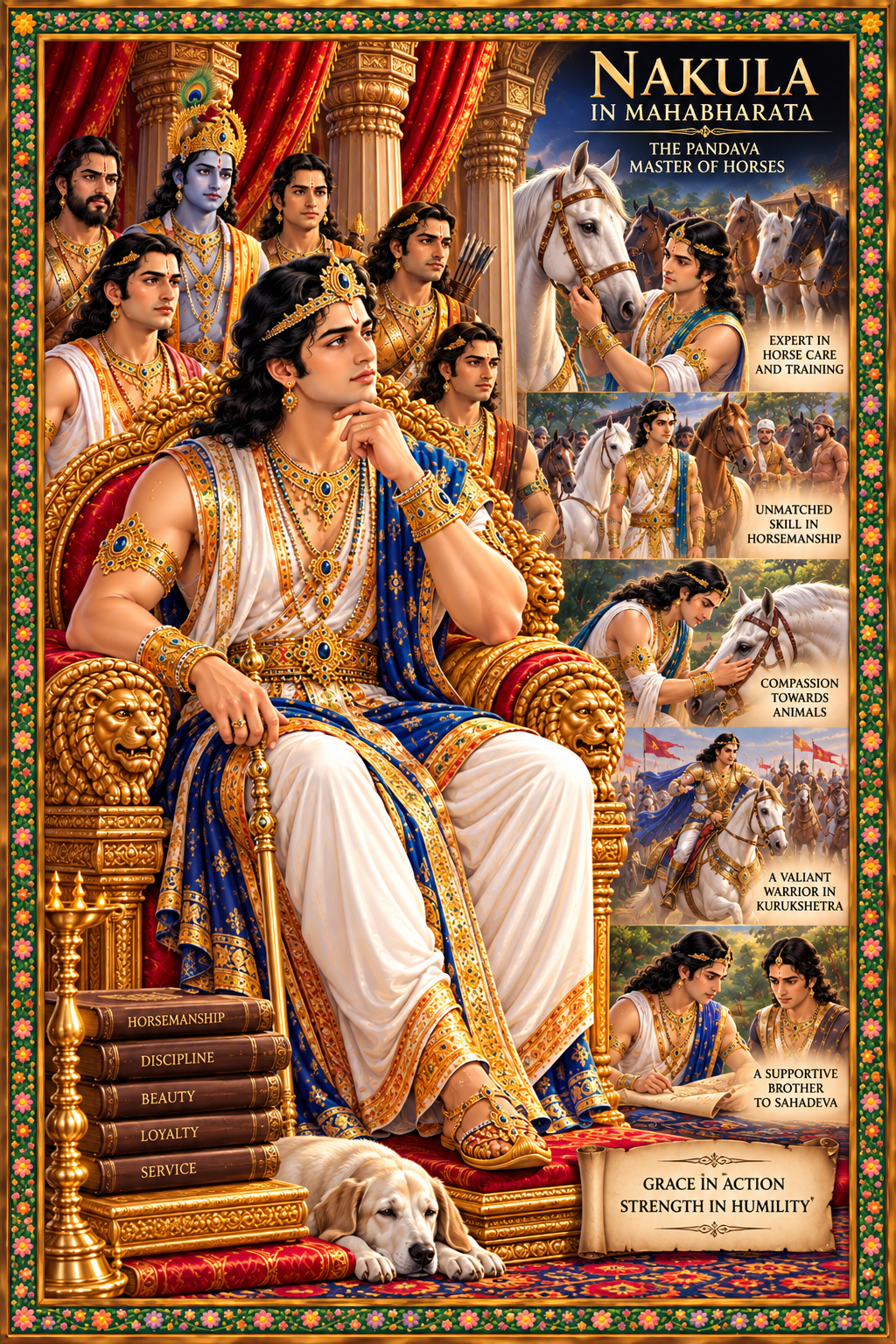
Nakula in Mahabharata: The Handsome Pandava, Master of Horses & Ayurveda
Nakula is the handsome warrior who is master of horses? Introduction – Nakula in Mahabharata Nakula in Mahabharata : Nakula is one of the five Pandava brothers in the great Indian epic, the Mahabharata. He is known for his extraordinary beauty, mastery of sword fighting, and exceptional skill in horse training. Although he is often less highlighted than his brothers, Nakula played an important role in the Pandavas’ journey and in the great Kurukshetra War.Nakula was the fourth of the five Pandavas and the twin brother of Sahadeva. He is remembered for his loyalty, courage, and humility, qualities that made him a respected warrior and a noble prince among the Pandavas He was the fourth Pandava and the twin brother of Sahadeva. Nakula is remembered for his loyalty, courage, and humility, which made him a respected warrior and noble prince. For official cultural and historical archives, visit the Ministry of Culture, Government of India. Birth and Divine Origin – Nakula in Mahabharata Nakula was born to Queen Madri, the second wife of King Pandu. Through a divine blessing, Madri invoked the Ashwini Kumaras, the twin celestial physicians of the gods. As a result, she gave birth to twin sons –…