Raja Ratnam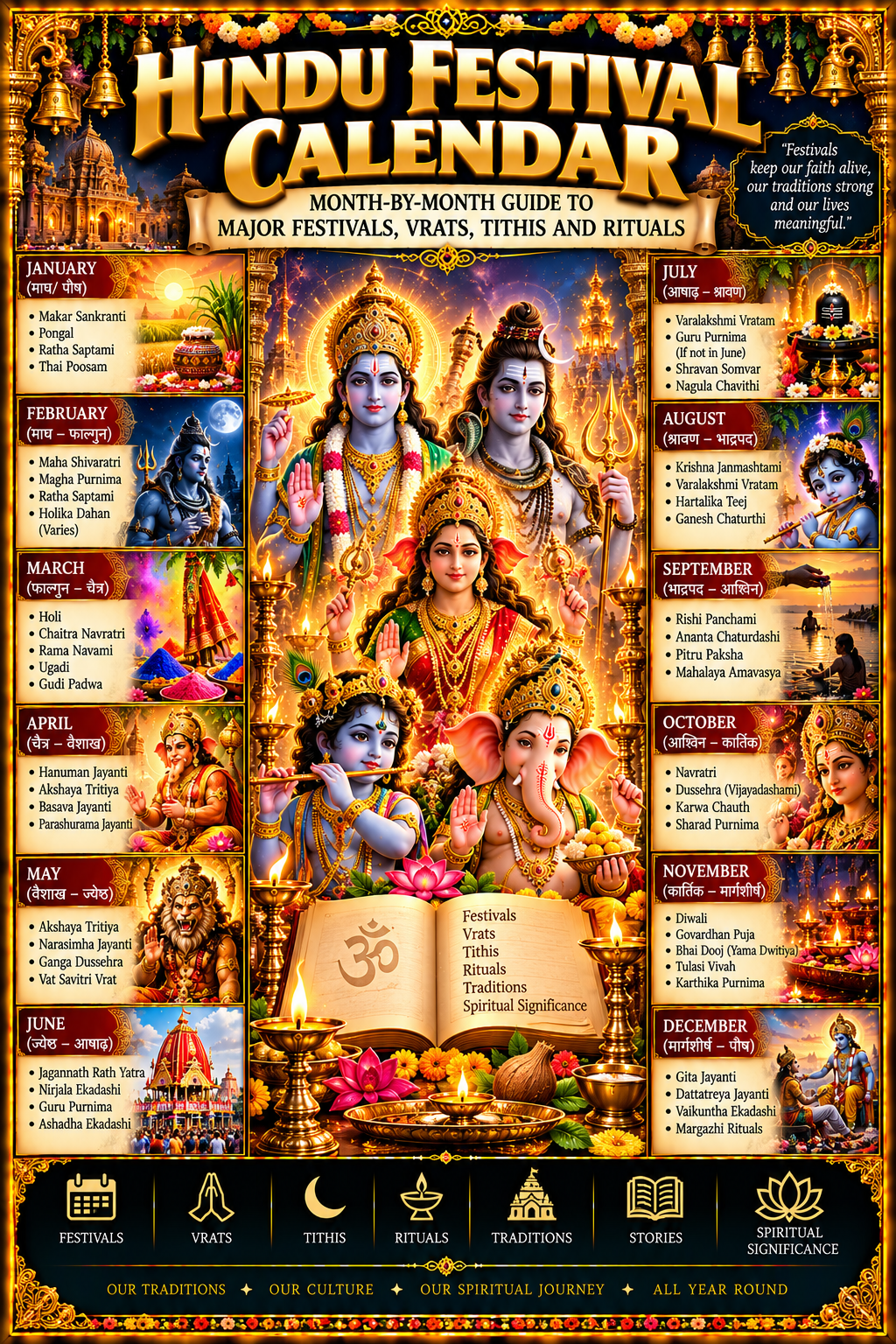
The Hindu calendar (Panchangam) is one of humanity’s most sophisticated astronomical and spiritual systems. Rather than viewing time as a flat, linear ticking of clocks, Sanatana Dharma views time as a sacred cosmic dance governed by the movements of the Sun (Surya), Moon (Chandra), and constellations (Nakshatras). Every lunar month brings unique energetic frequencies, observed through sacred festivals (Utsavas) and disciplined penances (Vrats).
Whether you are seeking auspicious dates for worship, fasting rules for sacred tithis like Ekadashi and Pradosham, or the spiritual symbolism behind celebrations like Diwali, Navratri, and Maha Shivaratri, this comprehensive month-by-month guide serves as the ultimate perennial reference for the Hindu liturgical year.
Understanding the Hindu Calendar: Solar vs. Lunar and Amanta vs. Purnimanta
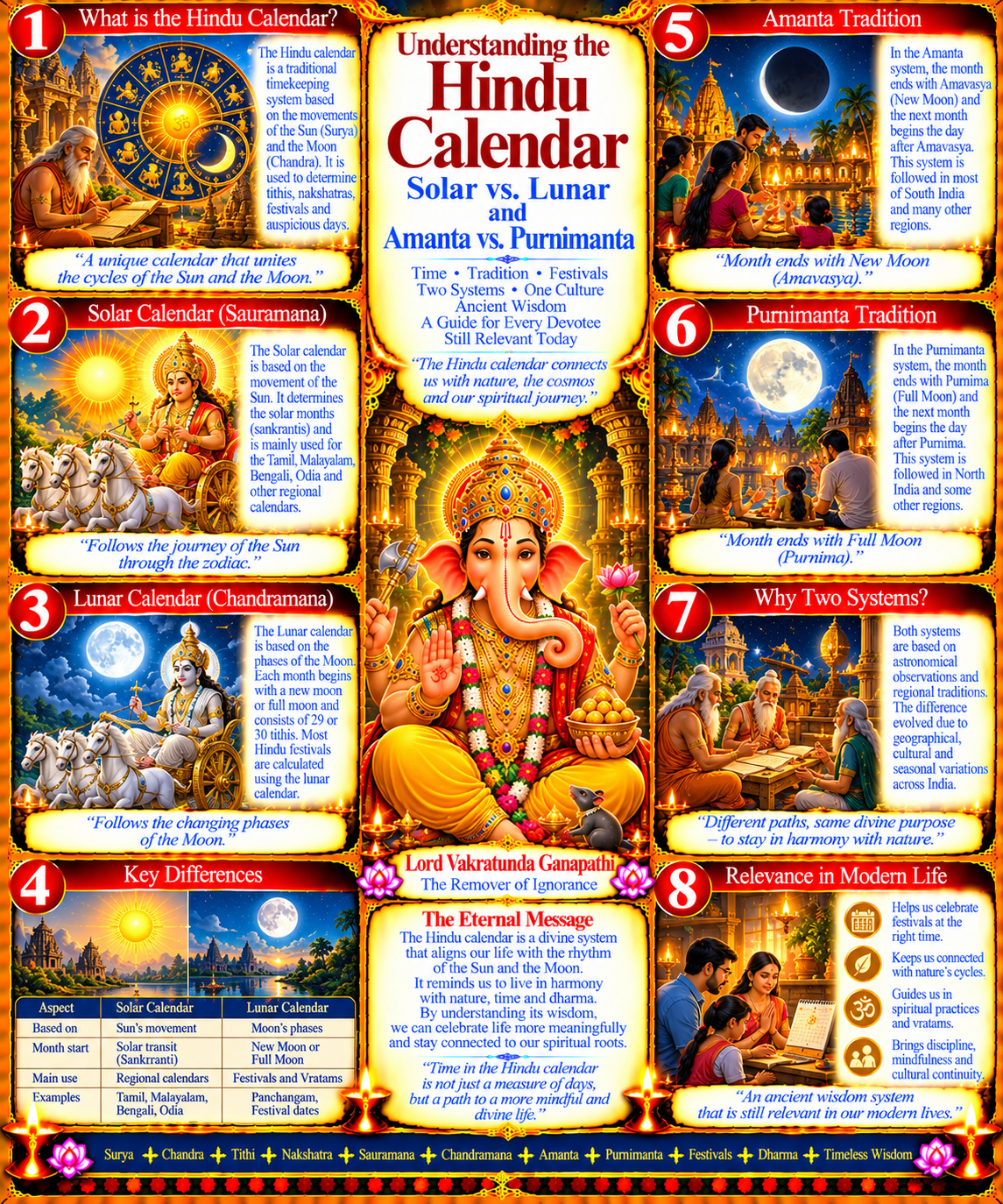
Before exploring individual festivals, it is essential to understand how traditional Hindu dates are determined. The calendar incorporates both solar and lunar mechanics:
- Luni-Solar Framework: While months are calculated according to the phases of the Moon (from New Moon to Full Moon or vice-versa), the calendar synchronizes with the tropical solar cycle by intercalating an extra month approximately every 32.5 months, known as Adhik Maas or Purushottama Maas.
- The Five Limbs of Panchangam: Every day is defined by five astronomical parameters: Tithi (lunar day), Vara (weekday), Nakshatra (lunar mansion), Yoga (luni-solar angular combination), and Karana (half-tithi).
- Amanta vs. Purnimanta Systems: In Southern and Western India (Maharashtra, Gujarat, Karnataka, Andhra Pradesh, Telangana, Tamil Nadu), the lunar month ends on the New Moon (Amavasya), known as the Amanta system. In Northern and Central India (Uttar Pradesh, Bihar, Rajasthan, Madhya Pradesh), the lunar month concludes on the Full Moon (Purnima), known as the Purnimanta system. While the naming of the dark fortnight (Krishna Paksha) differs slightly, the absolute tithis of major festivals coincide nationwide.
Month-by-Month Hindu Festivals & Vrat Calendar
Below is the complete cycle of the twelve sacred lunar months, their presiding planetary energies, and the foundational festivals celebrated across India:
1. Chaitra (March – April): The Dawn of the Cosmic Year
Chaitra marks the beginning of the Hindu New Year in many traditions. It begins with the Shukla Pratipada following the Vernal Equinox.
- Ugadi / Gudi Padwa (Chaitra Shukla Pratipada): Celebrated as the day Lord Brahma commenced cosmic creation. People consume Ugadi Pachadi (a dish with six tastes) representing the varied emotional experiences of life.
- Chaitra Navratri (Day 1 to Day 9): Nine sacred days dedicated to Goddess Durga and her primordial manifestations, concluding with the birth of Lord Rama.
- Rama Navami (Chaitra Shukla Navami): The divine appearance day of Lord Rama, the ideal king and avatar of Dharma, explored in detail in our study of Rama Rajya: A Model of Ethical Governance.
- Hanuman Jayanti (Chaitra Purnima): The appearance of Lord Hanuman, the immortal embodiment of bhakti and valor. Explore his feats in Hanuman in Ramayana: The Mighty Warrior.
2. Vaishakha (April – May): The Month of Auspicious Merit
Vaishakha is renowned as the month where charitable acts, water donations, and spiritual austerities bear inexhaustible fruit.
- Akshaya Tritiya (Vaishakha Shukla Tritiya): Known as the day of imperishable fortune. Traditional ventures, charity, and gold purchases on this tithi are believed never to diminish. It also marks the appearance of Parashurama and the descent of the sacred River Ganga.
- Narasimha Jayanti (Vaishakha Shukla Chaturdashi): The fierce incarnation of Lord Vishnu bursting from a pillar to protect his child-devotee Prahlada and destroy Hiranyakashipu.
- Buddha Purnima (Vaishakha Purnima): Commemorating the birth, enlightenment, and Mahaparinirvana of Gautama Buddha.
3. Jyeshtha (May – June): Deep Penance and Sacred Waters
Falling during the peak heat of summer, Jyeshtha emphasizes water conservation, devotion to sacred rivers, and conjugal fidelity.
- Ganga Dussehra (Jyeshtha Shukla Dashami): Celebrates the descent of Goddess Ganga from the locks of Shiva to sanctify the ashes of King Sagara’s sons. Learn more about her sacred lore in Goddess Ganga in Mahabharatam.
- Nirjala Ekadashi (Jyeshtha Shukla Ekadashi): Known as Bhima Ekadashi, where devotees fast without a single drop of water, reaping the spiritual merit of all 24 Ekadashis of the year.
- Vat Savitri Vrat (Jyeshtha Amavasya / Purnima): Married women tie sacred threads around the Banyan tree, honoring Savitri’s triumph over Yama to reclaim her husband Satyavan’s soul.
4. Ashadha (June – July): The Onset of Chaturmas
Ashadha ushers in the monsoon and initiates the four-month spiritual retreat known as Chaturmas.
- Jagannath Ratha Yatra (Ashadha Shukla Dwitiya): The monumental chariot procession of Lord Jagannath, Balabhadra, and Subhadra through Puri, Odisha.
- Devshayani Ekadashi (Ashadha Shukla Ekadashi): Lord Vishnu enters cosmic meditative slumber (Yoga Nidra) on Adi Shesha in the Kshirasagara. Austerities and dietary restrictions commence worldwide.
- Guru Purnima / Vyasa Purnima (Ashadha Purnima): A sacred day honoring spiritual preceptors, especially Sage Veda Vyasa who compiled the Vedas, Puranas, and the epic Mahabharata.
5. Shravana (July – August): Devotion to Shiva and Divine Bonds
Considered the most sacred month for Shaivite worship, Shravana reverberates with chanting of Om Namah Shivaya and the Maha Mrityunjaya mantra.
- Shravan Somwar Vrats: Fasting every Monday of Shravana to invoke the blessings of Lord Shiva for health, marital harmony, and peace of mind.
- Nag Panchami (Shravana Shukla Panchami): Honoring the serpent deities (Ananta, Vasuki, Shesha) who protect cosmic balance and fertility.
- Varalakshmi Vratam (Friday preceding Shravana Purnima): Widely observed in Southern India to propitiate Goddess Lakshmi for prosperity and family well-being. Read our guide to Varalakshmi Vratam: Puja Vidhi & Katha.
- Raksha Bandhan (Shravana Purnima): The eternal festival celebrating the protective and affectionate bond between brothers and sisters.
6. Bhadrapada (August – September): Avatars and Obstacle Removers
Bhadrapada is illuminated by the appearances of two of Hinduism’s most universally beloved deities: Sri Krishna and Lord Ganesha.
- Krishna Janmashtami (Bhadrapada Krishna Ashtami): The midnight appearance of Lord Krishna in Mathura prison. Fasting, midnight arati, and Dahi Handi processions celebrate the divine guide of the Mahabharata.
- Ganesh Chaturthi (Bhadrapada Shukla Chaturthi): The 10-day grand festival welcoming Lord Ganesha, the remover of obstacles and patron of wisdom. Discover the divine forms in our guide to About Lord Ganesh: The Remover of Obstacles.
- Anant Chaturdashi (Bhadrapada Shukla Chaturdashi): The culmination of Ganeshotsav with idol immersion (Visarjan) and the worship of Lord Vishnu in his infinite cosmic serpent form.
7. Ashwin (September – October): The Triumph of Light over Darkness
Ashwin brings the grand autumnal festivals that celebrate the feminine divine power (Shakti) and the triumph of truth over tyranny.
- Pitru Paksha (Ashwin Krishna Pratipada to Amavasya): A 15-day period dedicated to performing Tarpanam and Shraddha rituals for departed ancestors to ensure their peaceful spiritual ascent.
- Sharad Navratri (Ashwin Shukla Pratipada to Navami): The nine sacred nights celebrating the Nava Durga forms: Maa Shailaputri, Maa Brahmacharini, Maa Chandraghanta, Maa Katyayani, and Maa Mahagauri.
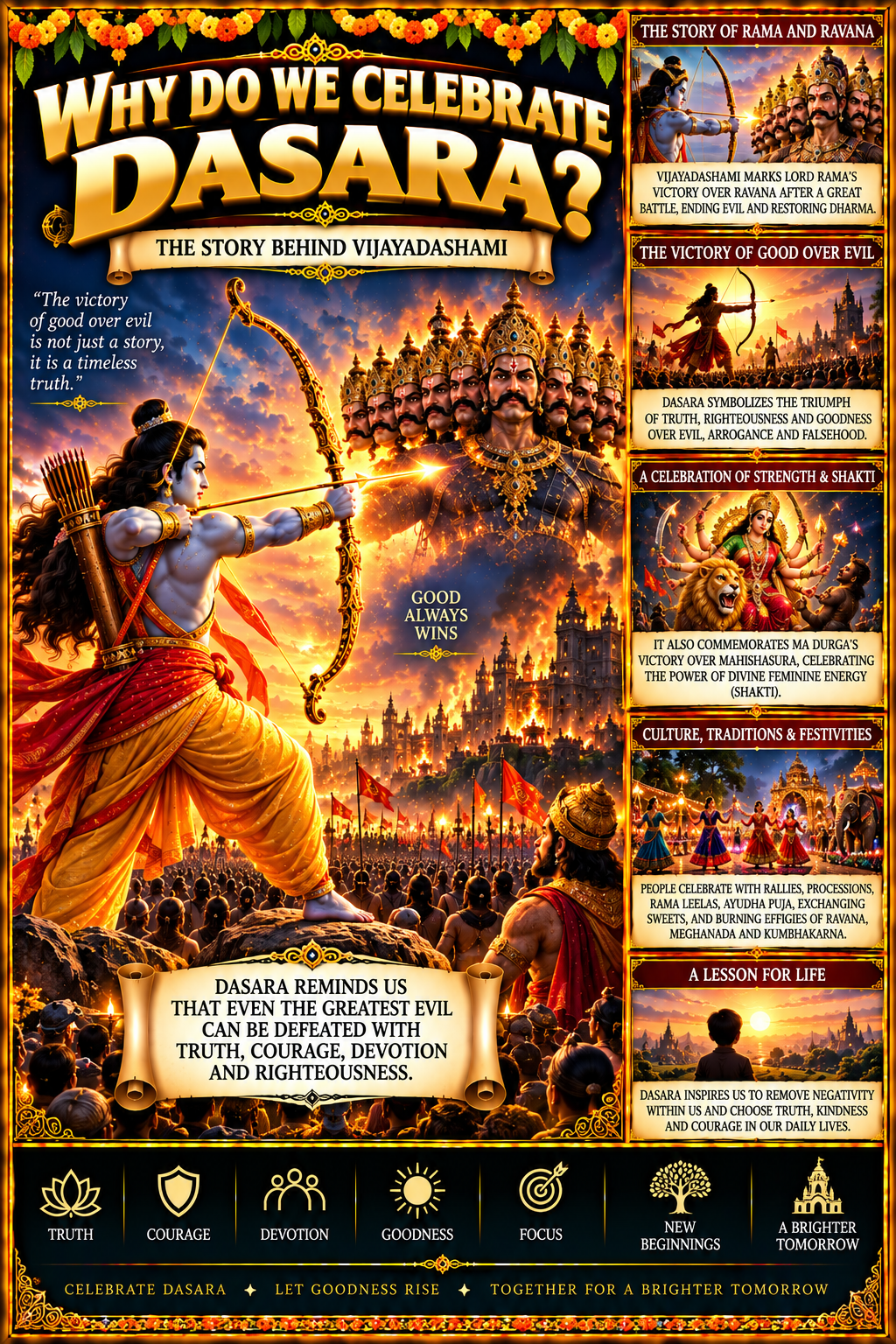
- Vijayadashami / Dussehra (Ashwin Shukla Dashami): Celebrating Durga’s destruction of Mahishasura and Lord Rama’s slaying of the ten-headed demon king Ravana.
- Karwa Chauth (Ashwin Krishna Chaturthi): A rigorous dawn-to-moonrise waterless fast observed by married women for the health, prosperity, and longevity of their husbands.
8. Kartika (October – November): The Festival of Lights and Supreme Purity
Kartika is revered as the holiest month of the year for Vaishnavas. Daily lighting of clay lamps (Diyas) dispels inner ignorance and attracts cosmic grace.
- Dhanteras (Kartika Krishna Trayodashi): Honoring Lord Dhanvantari, the father of Ayurveda and divine physician of the cosmos.
- Diwali / Deepawali (Kartika Amavasya): The universal celebration of the triumph of righteousness and the return of Lord Rama to Ayodhya after 14 years of exile. Families illuminate their homes with lamps and perform Lakshmi-Ganesha Puja.
- Govardhan Puja & Annakut (Kartika Shukla Pratipada): Honoring Krishna’s lifting of Govardhan Hill with his little finger to shelter the villagers of Vrindavan from Indra’s torrential wrath.
- Devutthana Ekadashi & Tulsi Vivah (Kartika Shukla Ekadashi): Lord Vishnu awakens from Yoga Nidra, marking the end of Chaturmas and the commencement of the Hindu wedding season with the ceremonial wedding of Tulsi and Shaligram.
- Karthika Poornima / Dev Deepawali (Kartika Purnima): The festival of lights of the gods in Varanasi, celebrating Lord Shiva’s victory over the demon Tripurasura. Read our deep dive into Karthika Poornima: Significance and Rituals.
9. Margashirsha (November – December): Devotion to Gita and Krishna
In the Bhagavad Gita (10.35), Lord Krishna declares: “Among the twelve months of the year, I am Margashirsha.” This month is revered for spiritual discourses and contemplation.
- Gita Jayanti (Margashirsha Shukla Ekadashi): The anniversary of Lord Krishna delivering the supreme wisdom of the 700 verses of the Bhagavad Gita to Arjuna at Kurukshetra. Explore our complete guide to The Bhagavad Gita: Timeless Life Lessons.
- Mokshada Ekadashi: Coinciding with Gita Jayanti, fasting on this tithi is believed to bestow liberation (Moksha) from the cycle of birth and death.
- Dattatreya Jayanti (Margashirsha Purnima): Celebrating Lord Dattatreya, the unified incarnation of Brahma, Vishnu, and Shiva.
10. Pausha (December – January): The Sun God’s Cosmic Pivot
Pausha marks the celestial transition of the Sun God (Surya) from the southern hemisphere into the northern hemisphere (Uttarayan).
- Makar Sankranti / Pongal / Uttarayan: One of the few Hindu festivals calculated on a solar transit (Surya Sankranti), when the Sun enters Capricorn (Makara). Across India, it is celebrated with kite flying, sesame-jaggery sweets, and harvest thanksgiving. Read our complete guide to Makar Sankranti: Traditions and Celebrations.
- Pausha Putrada Ekadashi: Observed by couples seeking virtuous progeny and spiritual fulfillment.
11. Magha (January – February): Renewal and the Awakening of Spring
Magha is celebrated for the sacred dip (Snanam) at Prayagraj Triveni Sangam and honoring the Sun and Saraswati.
- Vasant Panchami (Magha Shukla Panchami): The arrival of Spring (Ritu Vasant) and the appearance of Goddess Saraswati, the patroness of learning, music, arts, and speech. Devotees wear yellow garments and worship books and instruments.
- Ratha Saptami (Magha Shukla Saptami): Considered the birthday of the Sun God Surya Deva, when he turns his golden seven-horse chariot towards the northern hemisphere. Explore our complete guide to Ratha Saptami: Lord Surya Worship and Benefits.
- Bhishma Ashtami (Magha Shukla Ashtami): Commemorates the anniversary of the grand patriarch Bhishma choosing to leave his mortal body at will on his bed of arrows during Uttarayan. Read his immortal story in Bhishma in the Mahabharata.
12. Phalguna (February – March): The Grand Finale of Colors and Consciousness
The closing month of the Hindu year brings the deepest night of Shiva followed by the explosion of joyful spring colors.
- Maha Shivaratri (Phalguna Krishna Chaturdashi): The supreme night of Lord Shiva. Devotees observe all-night waterless fasting, chanting the Rudram and pouring Bilva leaves and milk over the Shivalinga in four prahar pujas. Explore our definitive guide to Maha Shivaratri: Significance and Lord Shiva.
- Holika Dahan (Phalguna Purnima Evening): Lighting the sacred bonfire celebrating the divine protection of Prahlada and the burning of demonic ego.
- Holi / Rangwali Holi (Phalguna Krishna Pratipada): The ecstatic festival of colors celebrating the divine love of Radha-Krishna and the renewal of community harmony.
Master Reference Table: Major Hindu Festivals by Month and Tithi
| Hindu Month | Major Festival | Lunar Tithi (Phase) | Presiding Deity | Key Ritual / Practice |
|---|---|---|---|---|
| Chaitra | Ugadi / Gudi Padwa | Shukla Pratipada | Lord Brahma | Pachadi intake, flag hoisting, new year resolutions |
| Chaitra | Rama Navami | Shukla Navami | Lord Rama | Fasting until noon, Ramayana recitation, Panakam offering |
| Vaishakha | Akshaya Tritiya | Shukla Tritiya | Vishnu & Lakshmi | Charity (Daan), water pot donation, gold purchase |
| Jyeshtha | Nirjala Ekadashi | Shukla Ekadashi | Lord Vishnu | 24-hour waterless fast, spiritual meditation |
| Ashadha | Guru Purnima | Purnima (Full Moon) | Veda Vyasa / Gurus | Guru Paduka Puja, spiritual introspection, Satsang |
| Shravana | Varalakshmi Vratam | Friday before Purnima | Goddess Lakshmi | Kalasha sthapana, sacred thread tying, feast |
| Bhadrapada | Krishna Janmashtami | Krishna Ashtami | Sri Krishna | Midnight fasting, Dahi Handi, Bhagavad Gita chanting |
| Bhadrapada | Ganesh Chaturthi | Shukla Chaturthi | Lord Ganesha | Modak offerings, 10-day pandal worship, Visarjan |
| Ashwin | Sharad Navratri | Shukla Pratipada to Navami | Nava Durga | Ghatasthapana, nine distinct color offerings, Garba |
| Ashwin | Vijayadashami | Shukla Dashami | Durga & Rama | Effigy burning of Ravana, Ayudha Puja, new beginnings |
| Kartika | Diwali (Deepawali) | Amavasya (New Moon) | Lakshmi & Ganesha | Diyas lighting, Lakshmi Puja, sweets distribution |
| Kartika | Karthika Poornima | Purnima (Full Moon) | Lord Shiva / Vishnu | 365-wick deepam, sacred river snanam, fasting |
| Margashirsha | Gita Jayanti | Shukla Ekadashi | Lord Krishna | Recitation of 700 verses of the Bhagavad Gita |
| Pausha | Makar Sankranti | Surya Makara Transit | Surya Deva (Sun) | Sesame-jaggery distribution, kite flying, river bath |
| Magha | Ratha Saptami | Shukla Saptami | Surya Deva (Sun) | Arghya with milk & water, Sun salutations (Surya Namaskar) |
| Phalguna | Maha Shivaratri | Krishna Chaturdashi | Lord Shiva | All-night vigil (Jagaran), Bilva leaf Abhishekam, fasting |
| Phalguna | Holi | Purnima to Pratipada | Radha-Krishna | Holika bonfire, herbal colors, community harmony |
Core Fasting (Vrat) Principles in Sanatana Dharma
In the Hindu tradition, a Vrat is not merely nutritional deprivation; it is a sacred act of conscious self-mastery. The word Vrat derives from the Sanskrit root Vri, meaning “to choose” or “to make a solemn resolve”. Fasting calms the digestive fire (Jatharagni), directing physical energy toward subtler brain centers for meditation and mantra japa.
- Ekadashi Vrat: Observed twice every month on the 11th lunar day. Grains, beans, and lentils are avoided to prevent water retention and restlessness of mind caused by lunar gravitational tides.
- Pradosham: Observed on the 13th day (Trayodashi) of both fortnights, 1.5 hours before and after sunset, to clear accumulated karmic blockages through Shiva worship.
- Sankashti Chaturthi: Observed on the 4th day of Krishna Paksha, breaking the fast only after sighting the moon at night, dedicated to Lord Ganesha for removing insurmountable hurdles.
- Satvic Diet: During Navratri and Shravana, devotees consume foods like sabudana, singhara (water chestnut flour), fruits, milk, rock salt (sendha namak), completely abstaining from onion, garlic, alcohol, and processed foods.
Frequently Asked Questions About the Hindu Festival Calendar
1. How is the Hindu calendar different from the Gregorian calendar?
The Gregorian calendar is purely solar, based on Earth’s 365.25-day orbit around the Sun. The Hindu calendar is luni-solar, calculating months by lunar phases (tithis) and adjusting to the solar cycle by intercalating an extra month (Adhik Maas) every 32.5 months.
2. What is the difference between Shukla Paksha and Krishna Paksha?
A lunar month has two 15-day fortnights. Shukla Paksha is the waxing phase from New Moon (Amavasya) to Full Moon (Purnima). Krishna Paksha is the waning phase from Full Moon to New Moon.
3. Why do Hindu festival dates change every year on the English calendar?
Because a lunar year consists of roughly 354 days (11 days shorter than the 365-day solar year), festival dates shift backward by about 11 days each year on the Gregorian calendar until an Adhik Maas re-aligns them with the solar seasons.
4. What is Adhik Maas (Purushottama Maas)?
Adhik Maas is an extra 13th intercalary lunar month added roughly every 3 years to align the lunar calendar with the solar seasons. Dedicated to Lord Vishnu, it is considered exceptionally auspicious for japa, charity, and spiritual austerities.
5. What is the difference between the Amanta and Purnimanta calendar systems?
In the Amanta system (common in South and West India), months end on the New Moon (Amavasya). In the Purnimanta system (common in North India), months end on the Full Moon (Purnima). Both systems observe festivals on the exact same lunar tithis.
6. Which Hindu month is considered the holiest of the year?
Kartika and Shravana are considered the two holiest months. Shravana is especially sacred for Lord Shiva worship, while Kartika is revered for Lord Vishnu, Tulsi Vivah, and the grand festival of Diwali.
7. Why is Makar Sankranti celebrated on the same date (January 14 or 15) every year?
Unlike most Hindu festivals which follow lunar tithis, Makar Sankranti is based on the solar calendar, marking the exact moment the Sun transits into the zodiac of Capricorn (Makara Rashi).
8. What is Chaturmas and what activities are restricted during it?
Chaturmas is a four-month sacred period (from Devshayani Ekadashi to Devutthana Ekadashi) when Lord Vishnu is in cosmic slumber. Marriages, housewarmings, and thread ceremonies are paused, and devotees focus on fasting, self-study, and charity.
9. Why do devotees fast on Ekadashi?
According to Ayurveda and Vedic scriptures, the 11th lunar day influences the body’s fluids due to lunar gravitational pull. Fasting cleanses physical toxins, sharpens mental focus, and generates immense spiritual merit.
10. What foods are permitted during Hindu fasting (Vrat)?
A Satvic diet is followed, including milk, yogurt, ghee, fruits, nuts, potatoes, sweet potatoes, sabudana, buckwheat (kuttu), water chestnut flour (singhara), and rock salt (sendha namak). Grains, onion, and garlic are avoided.
11. What is the significance of celebrating Navratri twice a year?
Navratri is celebrated during the seasonal transitions between winter and summer (Chaitra Navratri) and monsoon and autumn (Sharad Navratri). These cosmic transition periods are ideal for cleansing the body and invoking Mother Divine’s protective energy.
12. Why are ancestors honored during Pitru Paksha?
Pitru Paksha is a sacred 15-day period in Ashwin where the barrier between the earthly and ancestral realms is believed to thin, allowing living descendants to express gratitude and offer tarpanam and food to ensure ancestral liberation.
13. What is the spiritual significance of lighting lamps during Kartika month?
Lighting clay lamps (diyas) with sesame oil or ghee in Kartika dispels the darkness of ignorance, attracts Goddess Lakshmi, and honors Lord Vishnu, symbolizing the awakening of divine wisdom in the heart.
14. What is the importance of Maha Shivaratri?
Maha Shivaratri falls on the darkest night of Phalguna. It commemorates the night Lord Shiva performed the cosmic dance of creation and destruction (Tandava) and the night Shiva drank the Halahala poison to save the universe.
15. What is Ratha Saptami and why is it celebrated?
Ratha Saptami falls on Magha Shukla Saptami, marking the birth of the Sun God Surya Deva and the turn of his celestial chariot toward the northern hemisphere, bringing warmth, health, and agricultural prosperity.
16. What is the significance of Guru Purnima?
Guru Purnima honors the birth and spiritual legacy of Sage Veda Vyasa, who classified the four Vedas and authored the Mahabharata. Disciples express gratitude to their spiritual masters for guiding them from darkness to light.
17. Can someone break an Ekadashi fast at any time?
No, an Ekadashi fast must be broken during a specific window called Parana on the following morning (Dwadashi tithi) after sunrise and before the conclusion of the Dwadashi period for the fast to bear full spiritual fruit.
18. Why is Lord Ganesha worshipped before all other gods during festivals?
Lord Shiva bestowed a divine boon upon Ganesha that he must be worshipped first in every ritual, yajna, and festival. As the lord of categories and obstacle remover (Vighnaharta), his blessings ensure error-free completion.
19. What is the difference between a Festival (Utsava) and a Fast (Vrat)?
An Utsava is an outward celebration of community joy, music, and divine stories, whereas a Vrat is an inward, disciplined commitment of austerity, dietary restriction, and mental purification.
20. Where can I find in-depth analysis of Indian epics and spiritual traditions?
Ratnam Strategy provides comprehensive, scripture-backed analysis of the Ramayana, Mahabharata, Navagrahas, and Hindu festivals, translating ancient Sanskrit wisdom into actionable modern understanding.