Raja Ratnam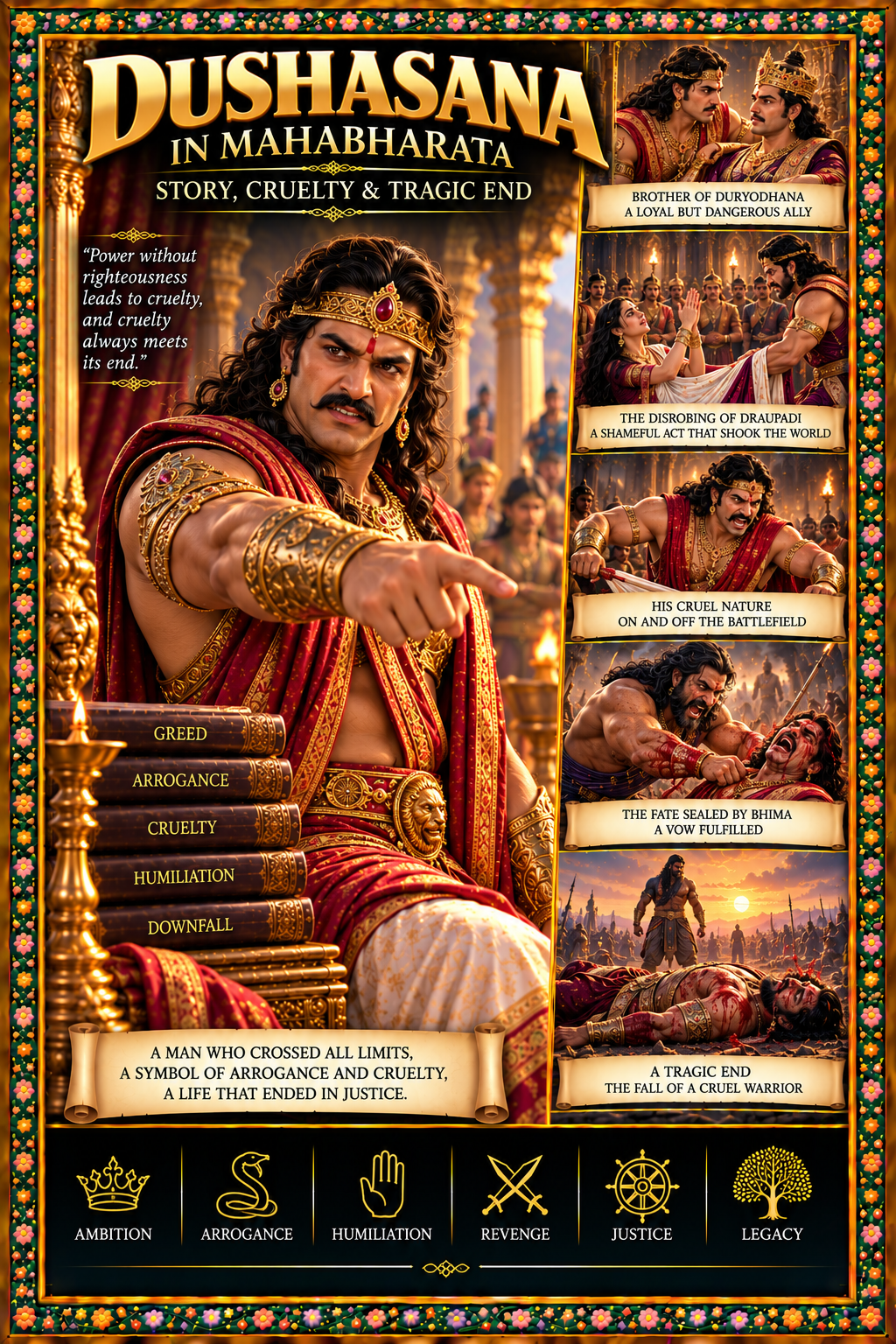
Dushasana in the Mahabharata – Dushasana in the Mahabharata
Few figures in epic literature represent the destructive nature of unchecked arrogance like Dushasana, the second son of King Dhritarashtra and Queen Gandhari. Fiercely devoted to his elder brother Duryodhana, his blind loyalty led him down a path of cruelty that shook the moral foundations of the Kuru dynasty. His reckless humiliation of Draupadi in the royal sabha sealed his fate, provoking Bhima’s terrible vow that would be fulfilled on the bloody sixteenth day of Kurukshetra.
Although Dushasana was born into the royal Kuru dynasty, his actions led him toward destruction. His loyalty toward Duryodhana pushed him into committing terrible acts that ultimately resulted in his tragic death at the hands of Bhima during the Kurukshetra war.
This article explores the complete story of Dushasana in the Mahabharata, including his birth, personality, major events, role in the war, death, and lessons from his life.
Who Was Dushasana? Dushasana in the Mahabharata
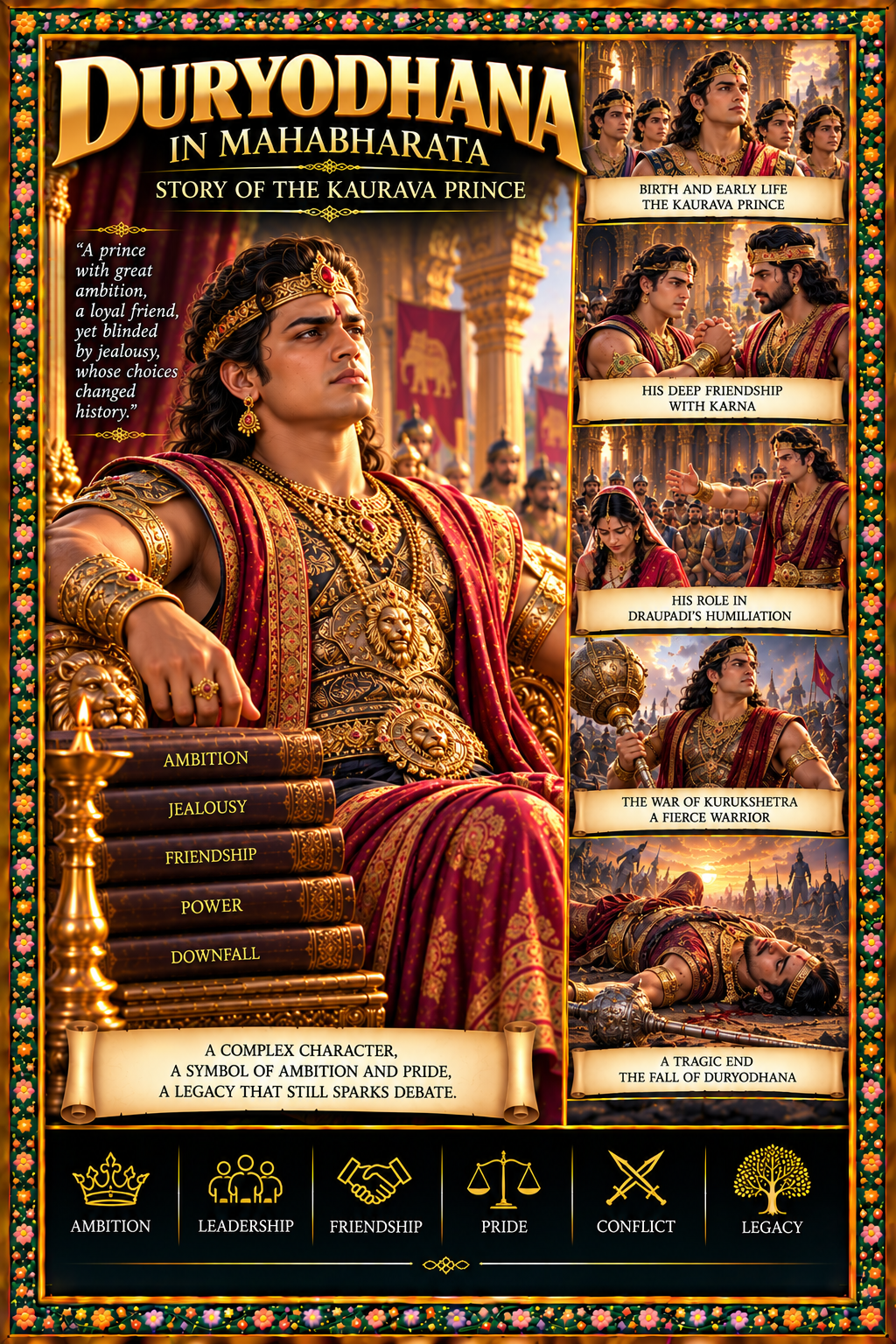
Dushasana was the second son of King Dhritarashtra and Queen Gandhari of Hastinapura. He was one of the 100 Kaurava brothers and the younger brother of Duryodhana.
Among all the Kauravas, Dushasana was the closest supporter of Duryodhana. He obeyed his elder brother without question and actively participated in every conspiracy against the Pandavas.
His name is often associated with anger, violence, pride, and injustice.
Birth and Family Background – Dushasana in the Mahabharata
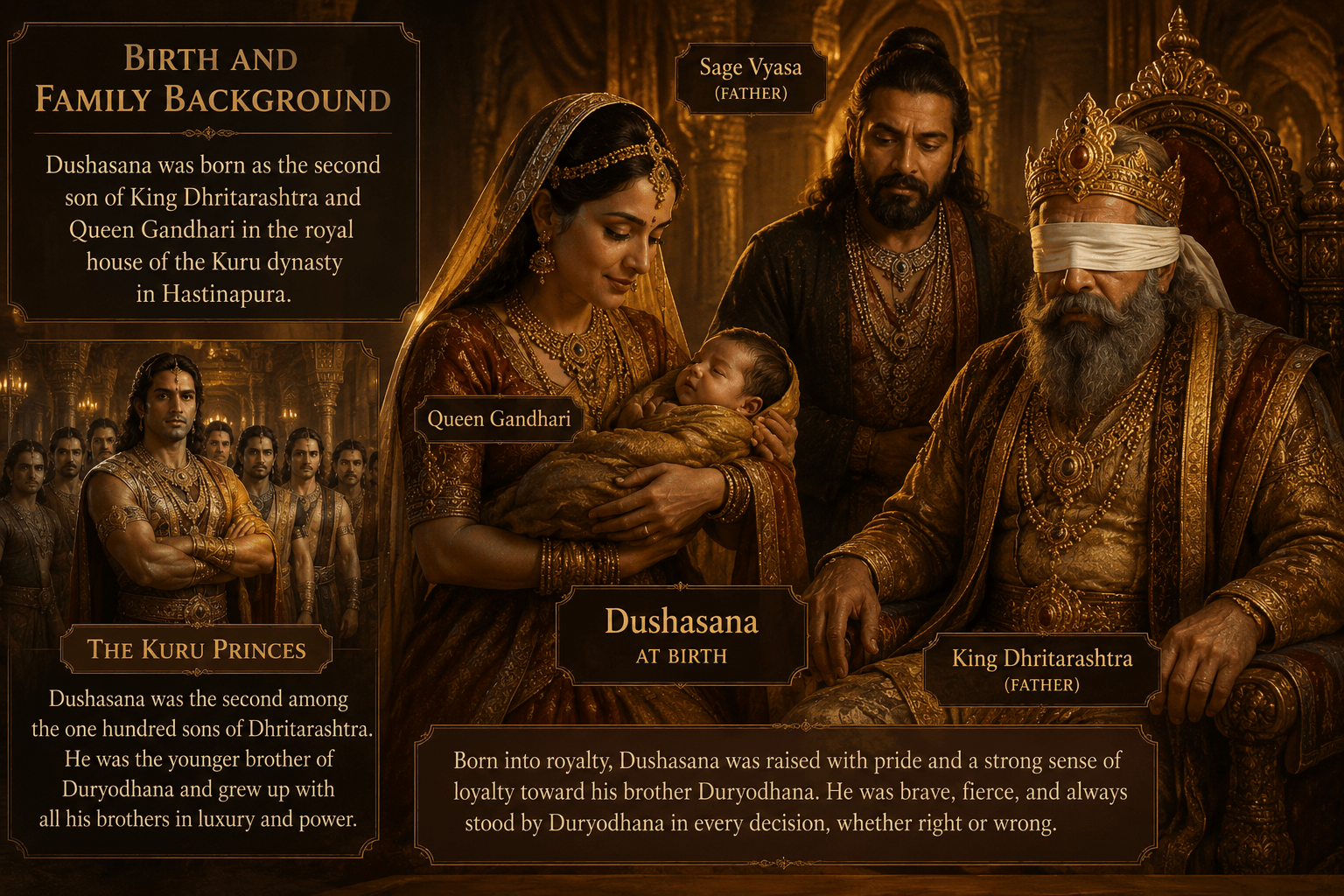
Dushasana belonged to the powerful Kuru dynasty.
Parents of Dushasana
- Father: King Dhritarashtra
- Mother: Queen Gandhari
Siblings
- Elder Brother: Duryodhana
- Sister: Dushala
- Other Brothers: Vikarna and 97 Kauravas
The Kauravas were cousins of the Pandavas:
- Yudhishthira
- Bhima
- Arjuna
- Nakula
- Sahadeva
The rivalry between the Kauravas and Pandavas became the central conflict of the Mahabharata.
For official cultural and historical archives, visit the Ministry of Culture, Government of India.
Personality of Dushasana – Dushasana in the Mahabharata
Dushasana was known for:
- Extreme loyalty to Duryodhana
- Aggressive nature
- Lack of compassion
- Pride and arrogance
- Hatred toward the Pandavas
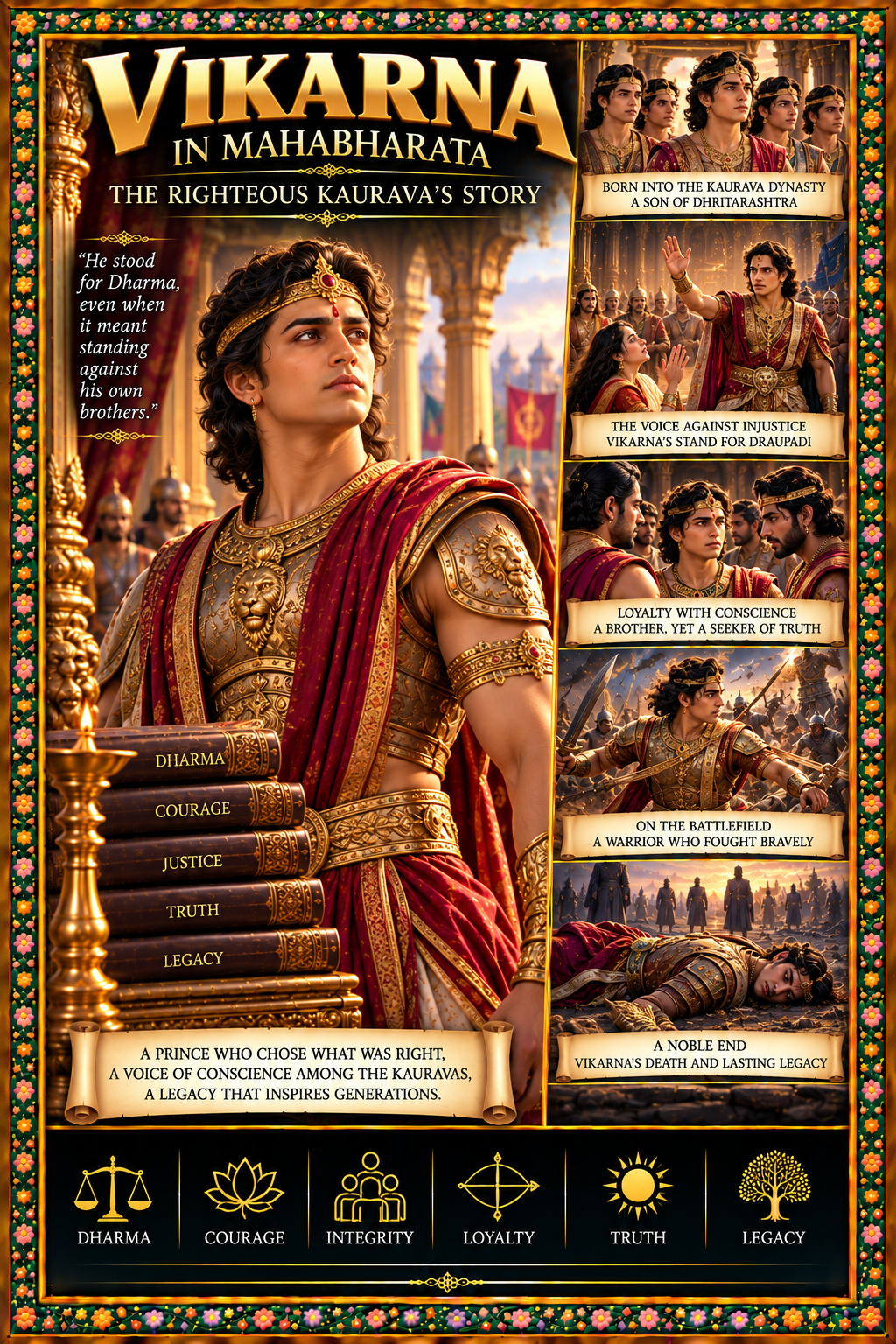
Unlike Vikarna, who sometimes questioned the injustice done to Draupadi, Dushasana blindly followed Duryodhana’s commands.
His cruel behavior made him one of the most hated characters in the epic.
Dushasana’s Role in the Dice Game – Dushasana in the Mahabharata
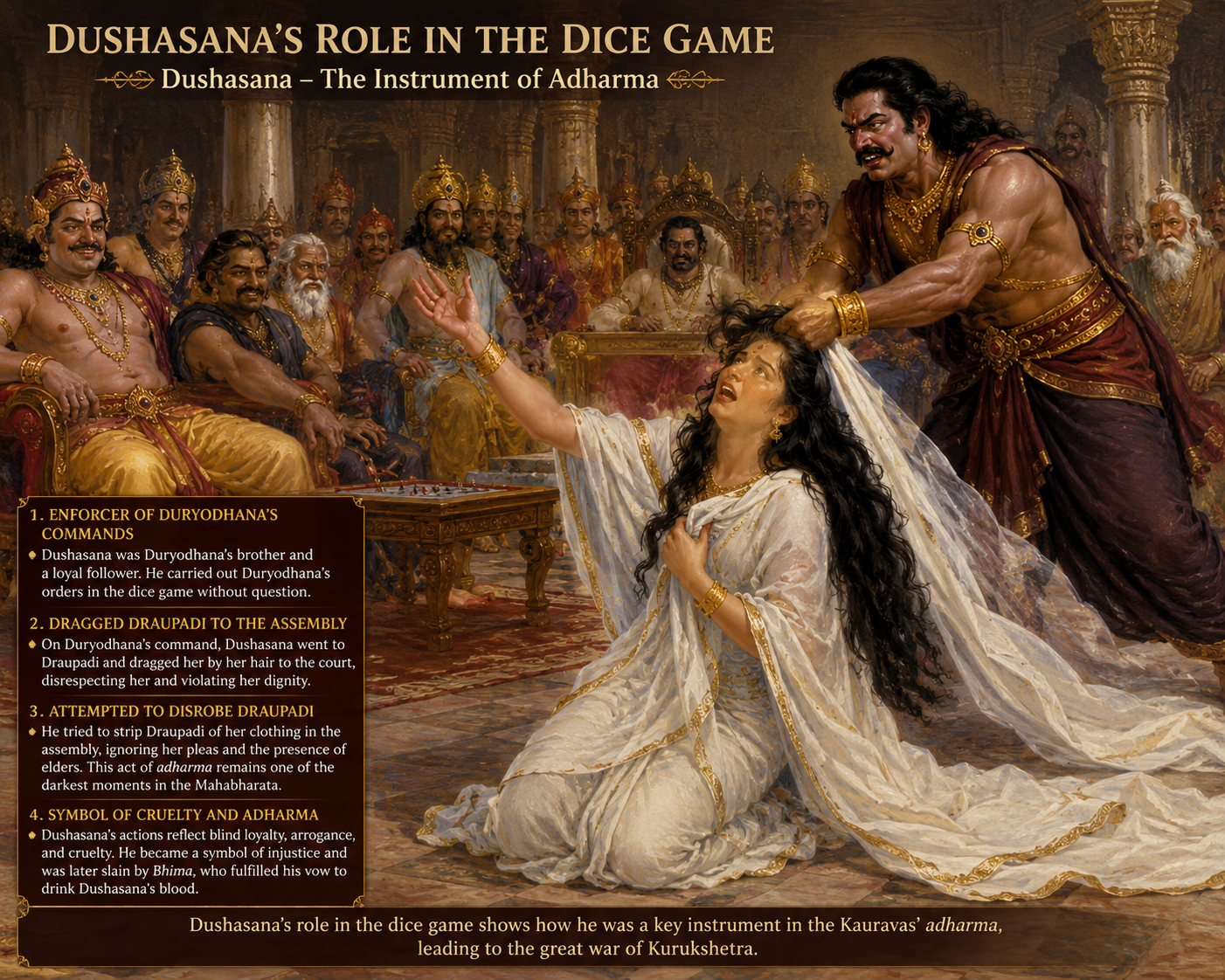
One of the most important incidents involving Dushasana happened during the infamous dice game in Hastinapura.
The Gambling Match – Dushasana in the Mahabharata
Shakuni manipulated Yudhishthira into gambling away:
- His kingdom
- His wealth
- His brothers
- Himself
- Draupadi
After Draupadi was declared lost in the game, Duryodhana ordered Dushasana to bring her into the royal court.
Humiliation of Draupadi – Dushasana in the Mahabharata
Dushasana forcefully dragged Draupadi by her hair into the assembly hall.
This act shocked many elders, including:
- Bhishma
- Drona
- Vidura
- Kripacharya
However, nobody stopped him.
Draupadi questioned the legality of the gambling match and demanded justice, but Duryodhana and Dushasana mocked her.
Attempt to Disrobe Draupadi – Dushasana in the Mahabharata
The most sinful act committed by Dushasana was his attempt to publicly disrobe Draupadi.
Under Duryodhana’s command, Dushasana tried to remove Draupadi’s sari in front of the royal court.
Draupadi prayed to Lord Krishna for protection.
Miraculously, Krishna protected her honor by making her sari endless. No matter how much Dushasana pulled the cloth, it continued infinitely.
Finally, Dushasana became exhausted and collapsed.
This moment became one of the greatest miracles in the Mahabharata.
Bhima’s Terrible Vow – Dushasana in the Mahabharata
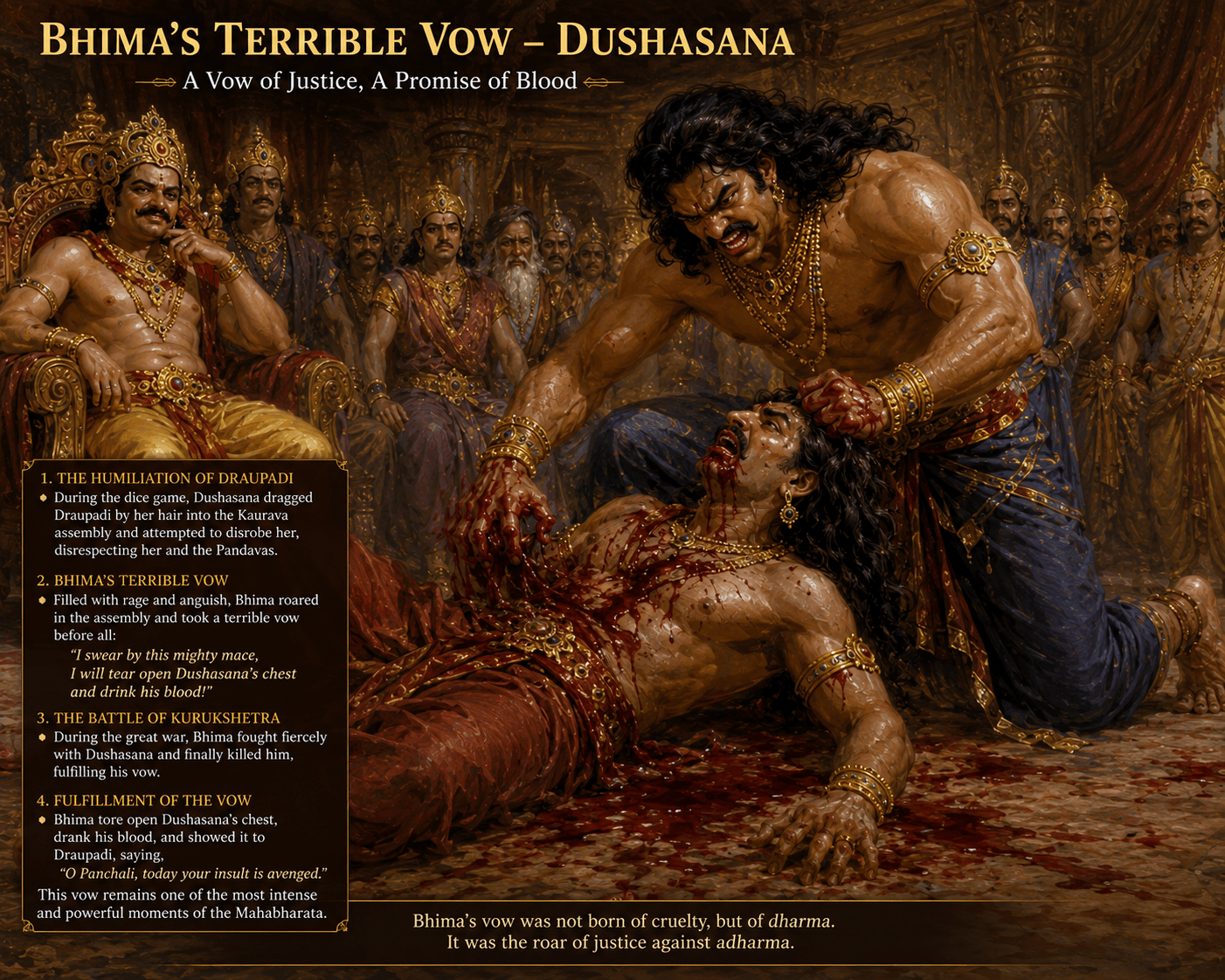
After witnessing Draupadi’s humiliation, Bhima became furious.
He took a terrible oath:
“I will tear open Dushasana’s chest and drink his blood.”
Bhima also vowed to break Duryodhana’s thigh.
These vows became major motivations during the Kurukshetra war.
Dushasana During the Exile of the Pandavas – Dushasana in the Mahabharata
After the dice game, the Pandavas were sent into exile for 13 years.
During this period, Dushasana remained loyal to Duryodhana and continued insulting the Pandavas whenever possible.
He believed the Kauravas were unbeatable and often underestimated the strength of the Pandavas.
Dushasana in the Kurukshetra War – Dushasana in the Mahabharata
Dushasana played an important role in the Kurukshetra war.
Warrior Skills – Dushasana in the Mahabharata
Dushasana was a powerful warrior trained by Dronacharya.
He fought using:
- Mace
- Sword
- Bow and arrows
Though not as skilled as Karna or Arjuna, he was still considered a dangerous fighter.
Supporter of Duryodhana – Dushasana in the Mahabharata
Throughout the war, Dushasana constantly supported Duryodhana.
He fought fiercely against:
- Bhima
- Arjuna
- Satyaki
- Other Pandava warriors
He participated in several deadly battles and helped the Kaurava army in strategic attacks.
Dushasana’s Death – Dushasana in the Mahabharata
The death of Dushasana is one of the most brutal scenes in the Mahabharata.
Bhima Fulfills His Oath – Dushasana in the Mahabharata
During the Kurukshetra war, Bhima finally confronted Dushasana in battle.
A fierce fight took place between them.
Bhima overpowered Dushasana with his immense physical strength.
He threw Dushasana to the ground and tore open his chest.
According to the Mahabharata, Bhima then drank Dushasana’s blood to fulfill his vow made during Draupadi’s humiliation.
This horrifying act shocked warriors on both sides.
Draupadi’s Revenge – Dushasana in the Mahabharata
Draupadi had vowed not to tie her hair until it was washed with the blood of Dushasana.
After Bhima killed Dushasana, her vow was fulfilled.
The death of Dushasana symbolized the punishment for insulting a woman and violating dharma.
Symbolism of Dushasana in the Mahabharata – Dushasana in the Mahabharata
Dushasana represents:
Blind Loyalty
He followed Duryodhana without questioning whether his actions were right or wrong.
Abuse of Power
As a prince, he misused his authority and insulted innocent people.
Consequences of Adharma
His violent end showed that injustice and cruelty eventually lead to destruction.
Relationship Between Duryodhana and Dushasana – Dushasana in the Mahabharata
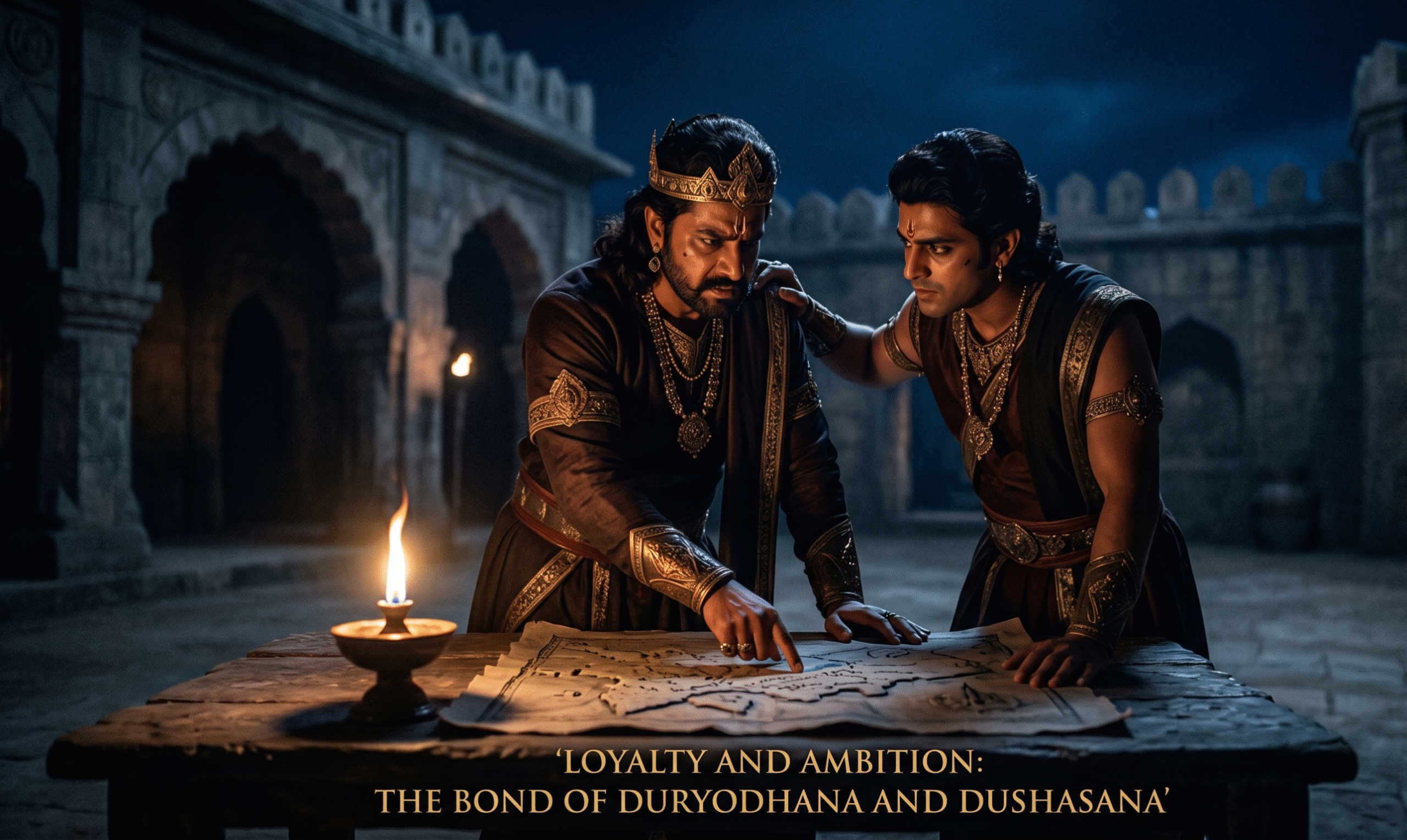
Dushasana was extremely loyal to Duryodhana.
Their relationship was built on:
- Brotherhood
- Shared hatred toward the Pandavas
- Desire for power
Duryodhana trusted Dushasana more than most of his brothers.
Dushasana acted as Duryodhana’s strongest supporter in every major conflict.
Dushasana Compared to Vikarna
Among the Kauravas, Vikarna was considered righteous and fair-minded.
During Draupadi’s humiliation, Vikarna questioned the legality of the gambling match and spoke in support of Draupadi.
Dushasana, however, insulted and abused her.
This contrast highlights the difference between:
- Dharma (righteousness)
- Adharma (unrighteousness)
Was Dushasana Completely Evil? – Dushasana in the Mahabharata
Many scholars believe Dushasana was heavily influenced by Duryodhana and Shakuni.
Though he committed terrible acts, his behavior was shaped by:
- Jealousy
- Family politics
- Desire for approval
- Royal pride
However, the Mahabharata clearly portrays his actions as sinful.
Lessons from Dushasana’s Life
The story of Dushasana teaches several important lessons.
1. Blind Loyalty Can Be Dangerous
Supporting someone without questioning morality can lead to disaster.
2. Respect Women
The humiliation of Draupadi became one of the major reasons for the Kurukshetra war.
3. Actions Have Consequences
Dushasana’s cruel actions eventually resulted in his brutal death.
4. Anger and Pride Lead to Destruction
His arrogance prevented him from understanding the seriousness of his actions.
Dushasana in Popular Culture
Dushasana has been portrayed in:
- Television serials
- Mythological films
- Animated adaptations
- Stage dramas
- Devotional storytelling
He is usually shown as:
- Cruel
- Violent
- Loyal to Duryodhana
- Arrogant and aggressive
The Draupadi disrobing scene remains one of the most emotionally powerful moments in Indian mythology.
Importance of Dushasana’s Character in the Mahabharata – Dushasana in the Mahabharata
Even though Dushasana was not the main villain, his actions greatly influenced the course of the Mahabharata.
His humiliation of Draupadi:
- Deepened the conflict between Kauravas and Pandavas
- Triggered Bhima’s deadly vow
- Became one of the direct causes of the Kurukshetra war
Thus, Dushasana played a critical role in shaping the destiny of the Kuru dynasty.
Conclusion – Dushasana in the Mahabharata
Dushasana remains one of the darkest and most controversial characters in the Mahabharata. His blind loyalty to Duryodhana and his participation in Draupadi’s humiliation made him a symbol of cruelty and adharma.
Though born as a prince in a noble dynasty, his choices led him toward destruction. His tragic death at the hands of Bhima fulfilled the vows of revenge and demonstrated the inevitable victory of justice over injustice.
The story of Dushasana continues to remind readers about the importance of morality, respect, and responsibility.
Frequently Asked Questions (FAQs) Dushasana in the Mahabharata
1. Who was Dushasana in the Mahabharata?
Dushasana was the second son of Dhritarashtra and Gandhari and the younger brother of Duryodhana.
2. Was Dushasana a Kaurava?
Yes, he was one of the 100 Kaurava brothers.
3. Who were Dushasana’s parents?
His parents were King Dhritarashtra and Queen Gandhari.
4. Why is Dushasana famous in the Mahabharata?
He is mainly remembered for humiliating Draupadi in the royal court.
5. What did Dushasana do to Draupadi?
He dragged her into the court and attempted to disrobe her publicly.
6. Who saved Draupadi from Dushasana?
Lord Krishna protected Draupadi by making her sari endless.
7. Why did Bhima hate Dushasana?
Bhima hated him for insulting and humiliating Draupadi.
8. What vow did Bhima take against Dushasana?
Bhima vowed to tear open Dushasana’s chest and drink his blood.
9. How did Dushasana die?
Bhima killed Dushasana during the Kurukshetra war.
10. Did Bhima really drink Dushasana’s blood?
According to the Mahabharata, Bhima fulfilled his vow by drinking his blood.
11. Was Dushasana stronger than Bhima?
No, Bhima was physically much stronger.
12. Who trained Dushasana?
He was trained in warfare by Dronacharya.
13. Was Dushasana loyal to Duryodhana?
Yes, he was completely loyal to his elder brother.
14. Did Dushasana regret his actions?
The Mahabharata does not clearly mention any regret from him.
15. What does Dushasana symbolize?
He symbolizes cruelty, arrogance, and blind loyalty.
16. Was Dushasana evil from childhood?
The epic mainly portrays him as influenced by Duryodhana and Shakuni.
17. Who opposed Dushasana during Draupadi’s humiliation?
Vikarna questioned the injustice done to Draupadi.
18. Why was Draupadi’s humiliation important?
It became one of the major reasons for the Kurukshetra war.
19. Is Dushasana worshipped anywhere?
Unlike some Mahabharata characters, Dushasana is generally not worshipped.
20. What lesson does Dushasana’s story teach?
His story teaches that injustice and disrespect ultimately lead to destruction.