Raja Ratnam
- Women Characters
- July 27, 2026
- 181 views
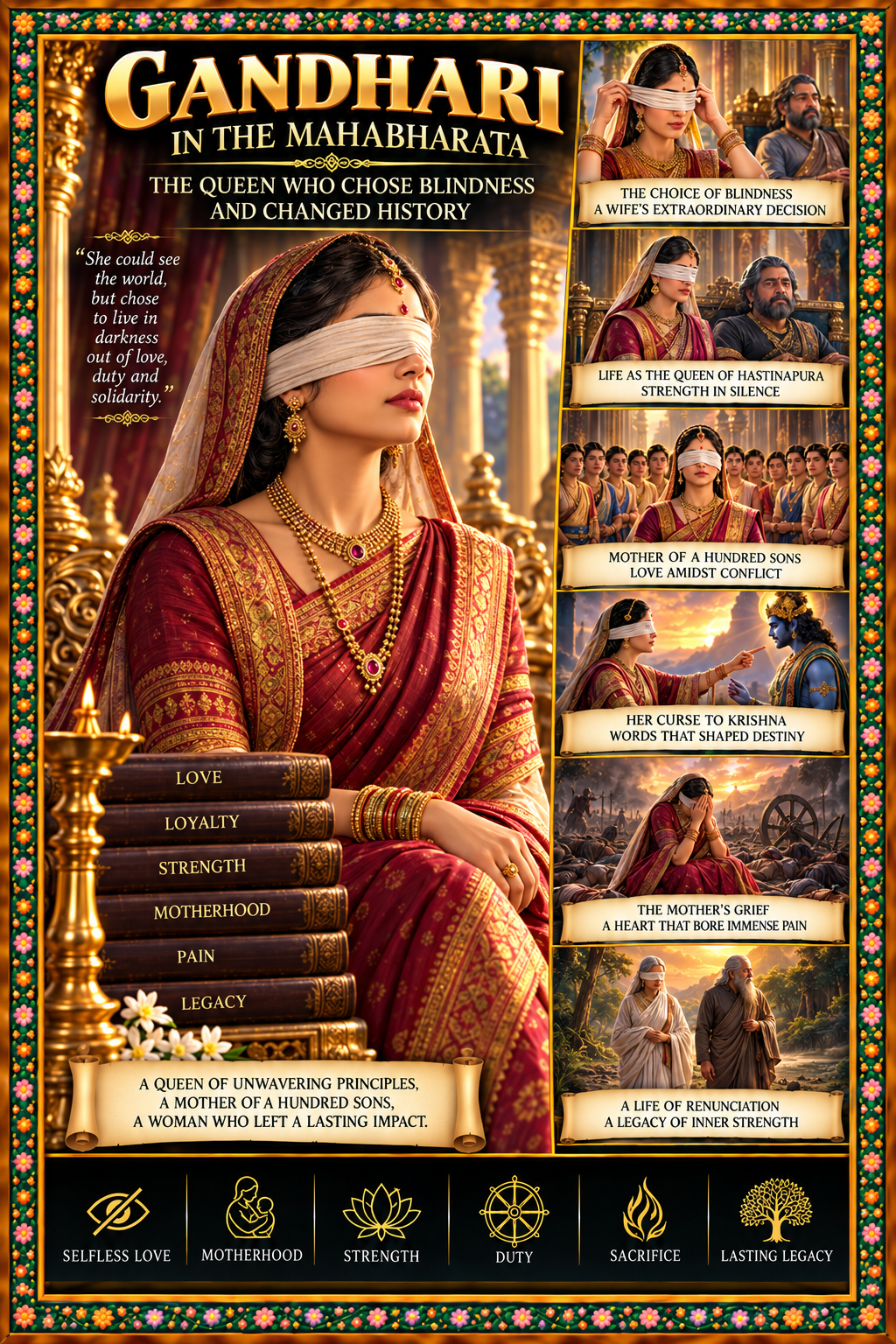
Gandhari in Mahabharata: Why She Blindfolded Herself & The Curse on Krishna’s Dynasty
The Mahabharata is filled with extraordinary characters whose decisions shaped one of the greatest epics ever written. Among them, Gandhari in the Mahabharata stands as one of the most respected and misunderstood women. She is remembered for voluntarily blindfolding herself for life, being the mother of the hundred Kauravas, and cursing Lord Krishna after the devastating Kurukshetra War. The story of Gandhari in the Mahabharata is not merely about sacrifice—it is about duty, motherhood, pain, and destiny. Gandhari’s life demonstrates how personal choices can influence generations and alter the course of history. Her unwavering devotion to her husband, her deep love for her children, and her commitment to Dharma make Gandhari in the Mahabharata one of the most inspiring and complex female characters in Indian mythology. This detailed guide explores the complete life of Gandhari in the Mahabharata, including her marriage to Dhritarashtra, the reason behind her blindfold, her role during the Kurukshetra War, her famous curse on Lord Krishna, and the timeless lessons her life continues to offer. Who Was Gandhari? Gandhari in the Mahabharata Gandhari was the princess of the Kingdom of Gandhara, ruled by King Subala. She was renowned for her beauty, wisdom, patience, and devotion to…
- Women Characters
- July 25, 2026
- 179 views
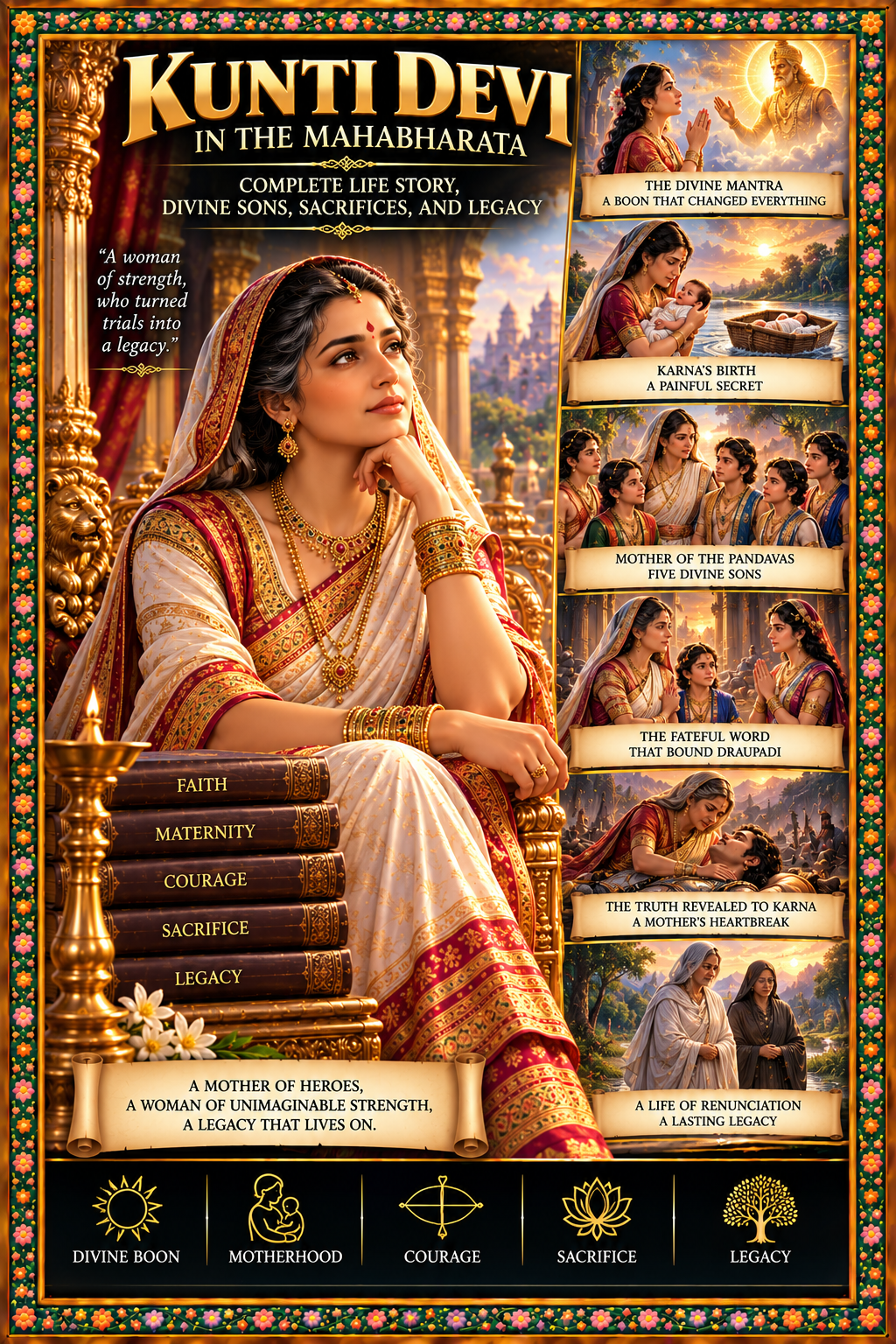
Kunti in Mahabharata: The Secret Boon of Sage Durvasa, Divine Sons & Sacrifices
Introduction – Kunti Devi in Mahabharata Kunti Devi is one of the most respected and influential women in the Mahabharata. She was not only the mother of the Pandavas but also a symbol of strength, devotion, sacrifice, wisdom, and unwavering faith in dharma. Throughout her life, she endured countless hardships yet never abandoned righteousness. Her life teaches us that courage, patience, and faith can overcome even the greatest challenges. From receiving a divine boon in her youth to witnessing the Kurukshetra War, Kunti’s journey remains one of the most inspiring stories in Hindu mythology. In this comprehensive guide by Ratnam Strategy, you’ll discover Kunti Devi’s birth, childhood, marriage, divine sons, greatest sacrifices, role in the Mahabharata, and timeless lessons. For official cultural and historical archives, visit the Ministry of Culture, Government of India. Who Was Kunti Devi? Pritha Kunti Devi was born into the Yadava dynasty as Kunti Devi.She was the daughter of King Shurasena and was later adopted by King Kuntibhoja, from whom she received the name Kunti. She was known for her humility, compassion, intelligence, and devotion to sages and elders. Her life changed forever when she served Sage Durvasa with great dedication. Birth and Early Life of…
- Festivals
- July 20, 2026
- 106 views
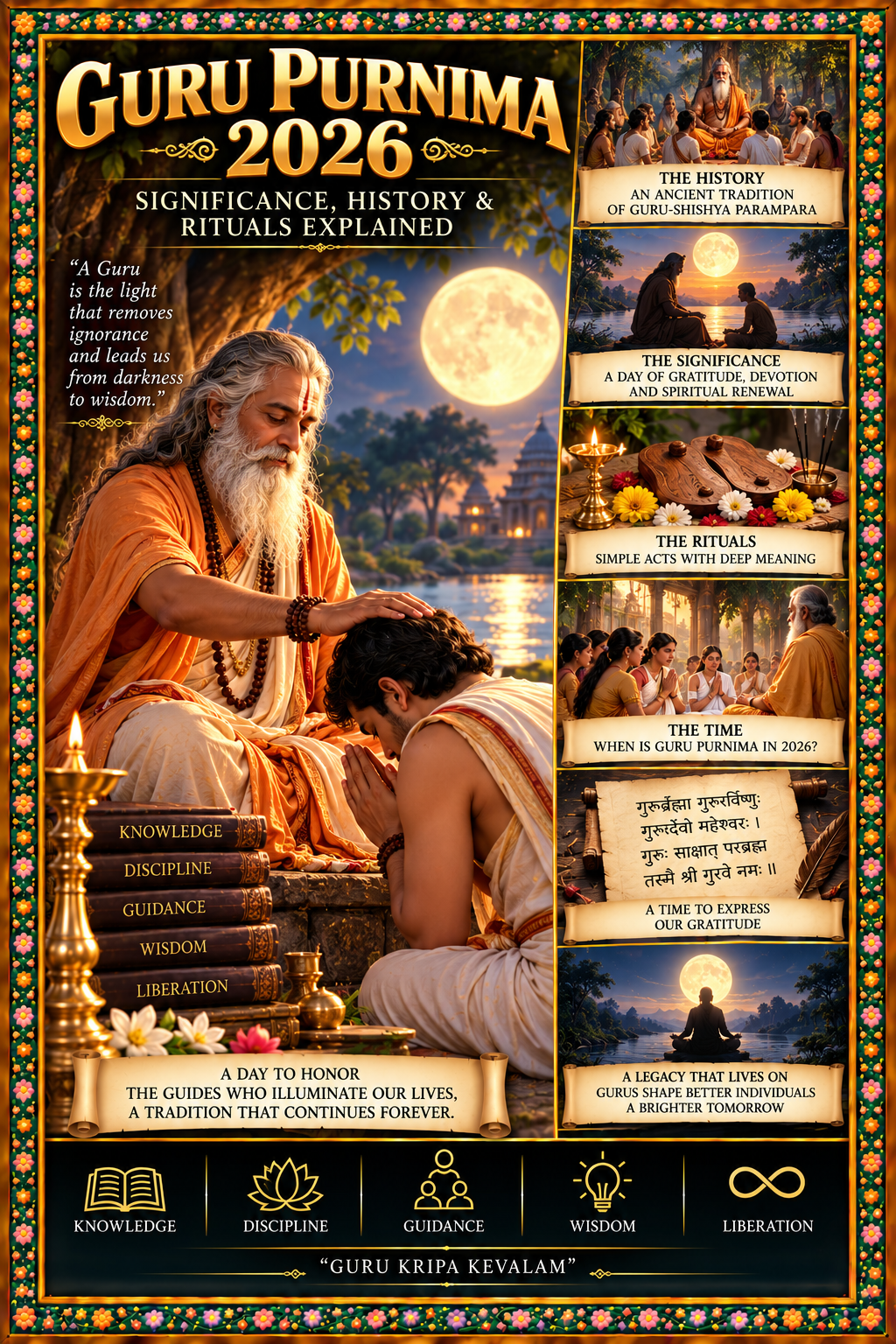
Guru Purnima: Date, Significance, Vyasa Puja Vidhi & Spiritual Importance
About the Author Raja Ratnam is a passionate researcher and writer specialising in Indian mythology and epic stories.With years of experience studying texts like the Ramayana, Mahabharata, Krishna in Mahabharata: The Divine Role of the Supreme Guide, Festivals, Guru Purnima – Significance, History, Rituals, Celebrations, and Spiritual Benefits, Navagrahas, Ketu Deva and other cultural scriptures,he brings insightful interpretations and practical lessons from these timeless stories. Raja Ratnam believes in making mythology accessible and meaningful for modern readers,helping them understand the moral, ethical, and cultural significance behind characters like Rama, Laxman, Shani Deva, and many more. Connect with the author: info@ratnamstrategy.com Introduction Guru Purnima is one of the most sacred festivals in the Hindu, Buddhist, and Jain traditions. Celebrated on the full moon day (Purnima) of the Hindu month of Ashadha, Guru Purnima is dedicated to honoring teachers, spiritual gurus, mentors, and guides who illuminate our lives with wisdom and knowledge. In Indian culture, a Guru is considered greater than even parents because while parents give birth to the body, a Guru awakens the soul. The festival reminds us to express gratitude towards those who shape our character, values, and spiritual journey. Whether your Guru is a spiritual master, a school teacher, a…

- Festivals
- July 11, 2026
- 109 views
Tholi Ekadasi (Devshayani Ekadashi): Date, Vrat Katha, Fasting Rules & Chaturmas Start
Introduction Tholi Ekadasi is one of the most sacred Ekadasis celebrated by Hindus, especially in Andhra Pradesh, Telangana, Karnataka, and other parts of South India. Known as Shayani Ekadasi, Devshayani Ekadashi, or Ashadhi Ekadashi, this auspicious day marks the beginning of Lord Vishnu’s divine yogic sleep (Yoga Nidra), which lasts for four months, known as Chaturmasya. The festival is celebrated with immense devotion as devotees observe fasting, chant the names of Lord Vishnu, read sacred scriptures, and seek divine blessings for prosperity, peace, and liberation (Moksha). In many famous Vishnu temples, including Tirumala, Srirangam, and Pandharpur, grand celebrations take place. In this detailed guide by Ratnam Strategy, you will learn everything about Tholi Ekadasi, including its significance, mythology, fasting procedure, benefits, dos and don’ts, temple celebrations, and much more. For official cultural and historical archives, visit the Ministry of Culture, Government of India. What is Tholi Ekadasi? The word Tholi means “first” in Telugu, while Ekadasi refers to the eleventh lunar day (11th Tithi) of the waxing phase (Shukla Paksha) of the Ashadha month. It is considered the first important Ekadasi after the beginning of Dakshinayana, making it one of the most auspicious fasting days dedicated to Lord Vishnu. Other…
- Women Characters
- July 4, 2026
- 161 views
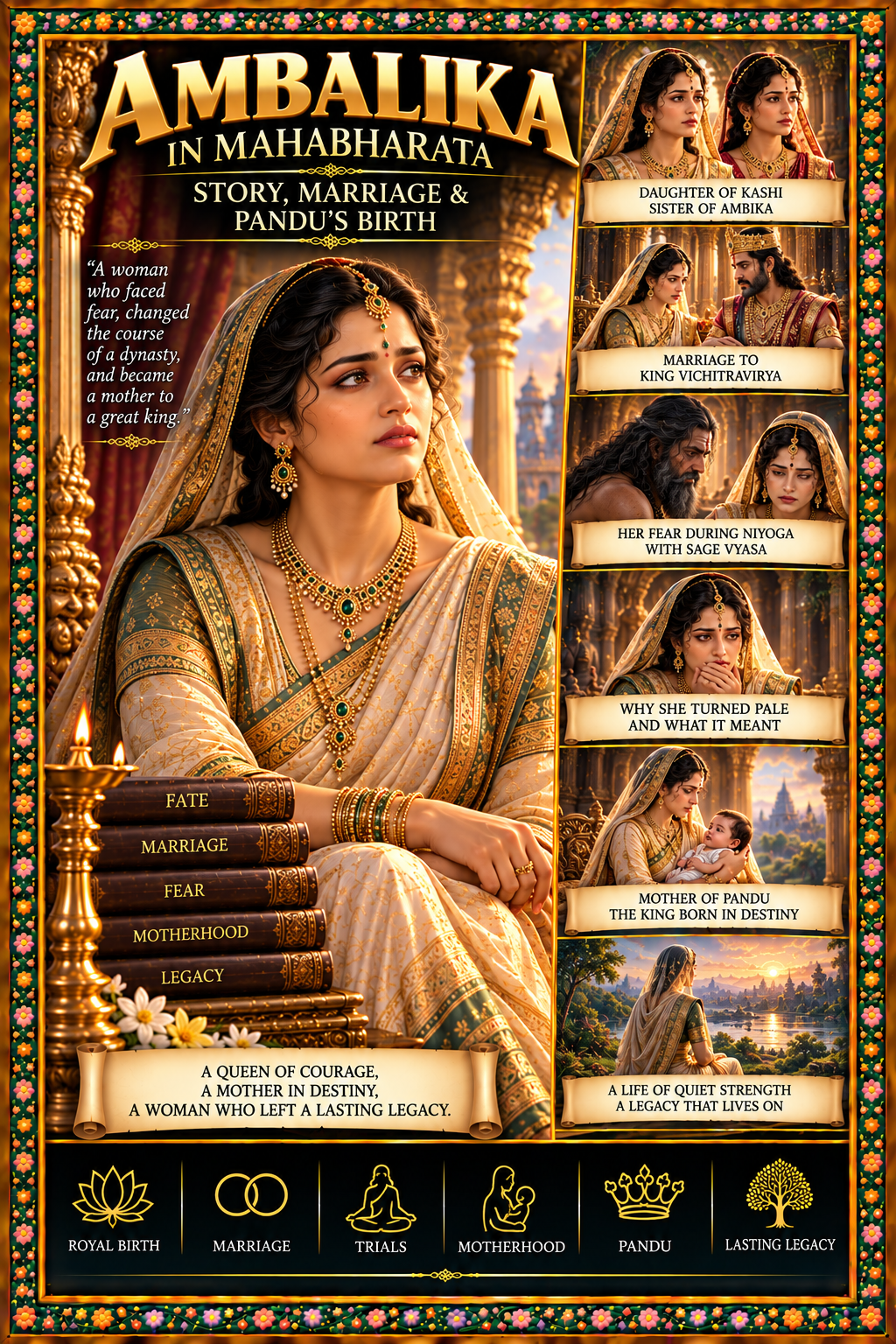
Ambalika in Mahabharata: Princess of Kashi & Mother of King Pandu
Ambalika in the Mahabharata: The Queen Who Became the Mother of Pandu The story of Ambalika in the Mahabharata is one of sacrifice, destiny, and courage. While the Mahabharata is filled with legendary warriors like Bhishma, Arjuna, Karna, and Krishna, several women quietly shaped the destiny of the Kuru dynasty. Among them, Ambalika occupies a special place because she became the mother of King Pandu, whose sons later became the famous Pandavas. The tale of Ambalika in the Mahabharata is deeply connected with the continuation of the Kuru lineage. Her life reflects the difficult choices royal women had to make for the welfare of their kingdom. Though she rarely appears in battle scenes or political debates, her role influenced the greatest war in Indian history. In this article, we will explore the complete story of Ambalika in the Mahabharata, from her birth and marriage to her motherhood, spiritual life, and lasting legacy. Who Was Ambalika? Ambalika in the Mahabharata Ambalika was one of the three princesses of the Kingdom of Kashi. She was the younger sister of Ambika and the sister of Amba. The three princesses were renowned for their extraordinary beauty, intelligence, and royal upbringing. Their lives changed forever…
- Women Characters
- June 27, 2026
- 246 views
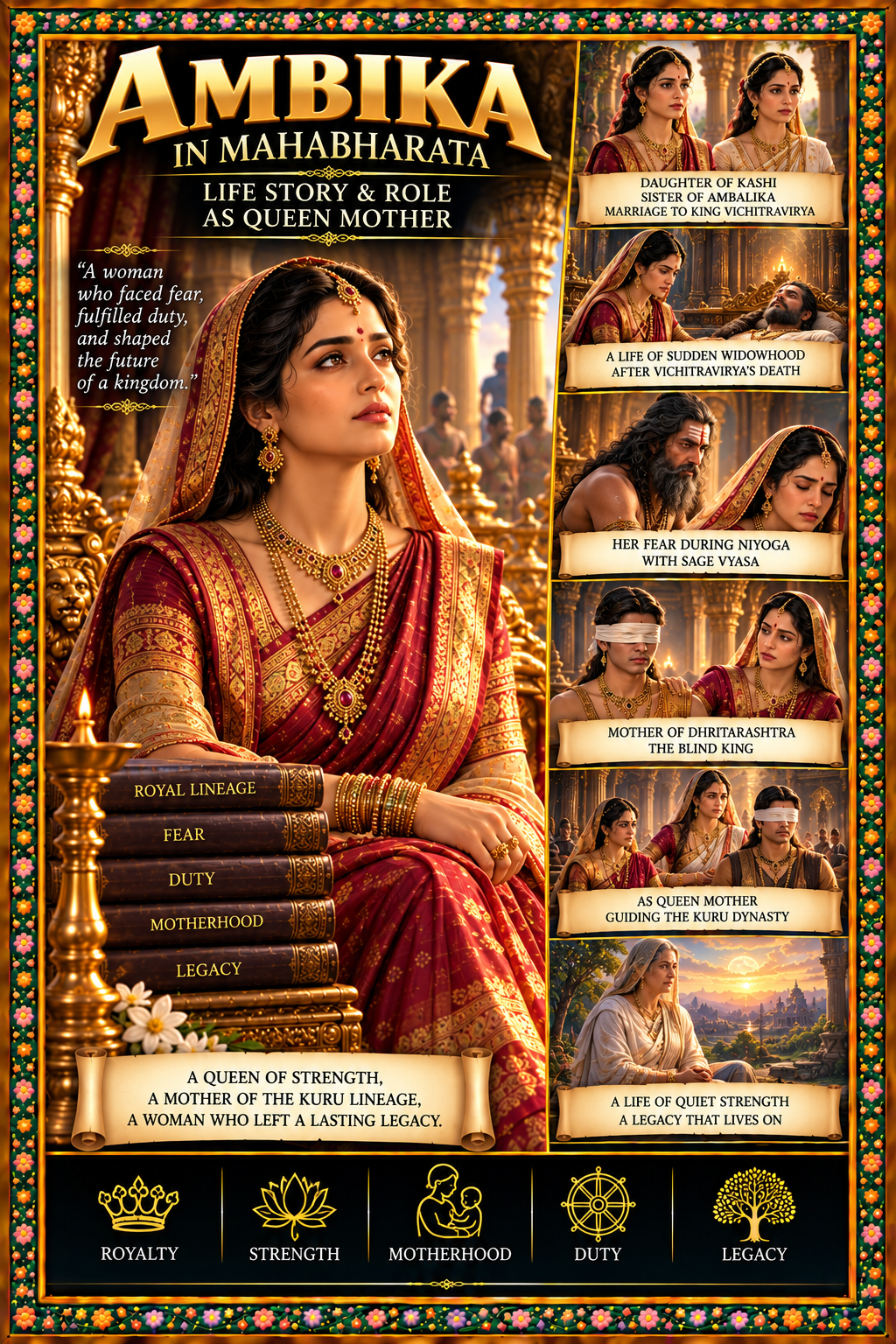
Ambika in Mahabharata: Princess of Kashi & Mother of Dhritarashtra via Niyoga
Ambika in the Mahabharata Ambika in the Mahabharata. : The Mahabharata is one of the greatest epics in world literature, filled with heroic warriors, wise sages, powerful kings, and influential women. Among the many women who shaped the destiny of the Kuru dynasty, Ambika occupies a significant place. Though she is not as widely discussed as Kunti, Gandhari, or Draupadi, Ambika played a crucial role in ensuring the continuation of the Kuru lineage. As the wife of King Vichitravirya and the mother of Dhritarashtra, Ambika became an important link in the chain of events that ultimately led to the Kurukshetra War. Her life reflects the challenges faced by royal women in ancient India and highlights the importance of duty, sacrifice, and destiny. Who Was Ambika? – Ambika in the Mahabharata. Ambika was one of the princesses of the Kingdom of Kashi. She was the daughter of the King of Kashi and the sister of Ambalika and Amba. The three sisters became famous in the Mahabharata because of the dramatic events surrounding their marriage. Ambika later became the queen of Hastinapura after marrying King Vichitravirya, a member of the Kuru dynasty. She is primarily remembered as the mother of Dhritarashtra, the…
- Women Characters
- June 20, 2026
- 235 views
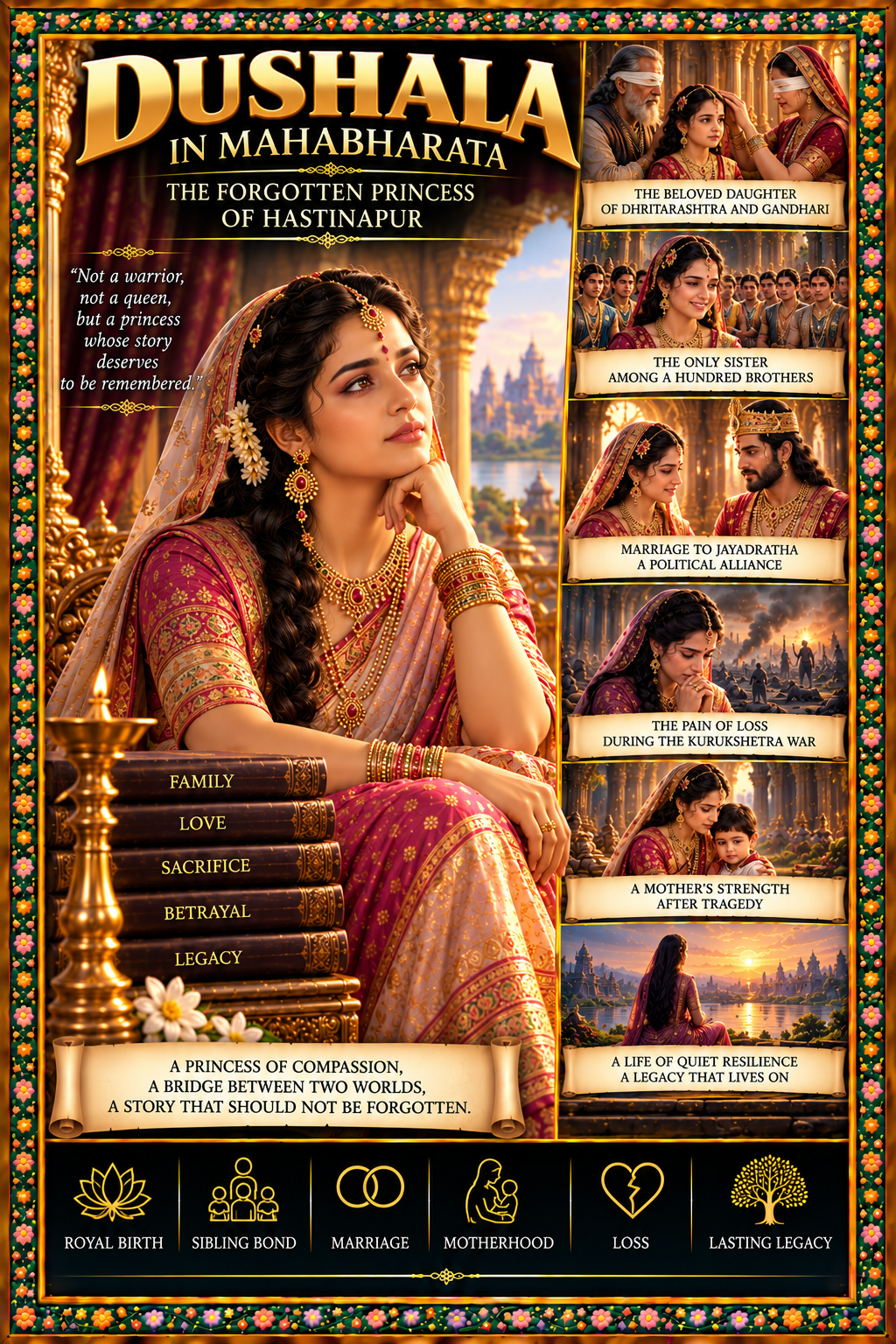
Dushala in Mahabharata: Life Story of the Only Kaurava Sister & Jayadratha’s Wife
Dushala in the Mahabharata: The Forgotten Princess of Hastinapur Dushala in the Mahabharata : The Mahabharata is filled with powerful kings, mighty warriors, wise sages, and remarkable women. While characters like Draupadi, Kunti, Gandhari, and Subhadra are frequently discussed, one important woman often remains overlooked—Dushala, the only daughter of Dhritarashtra and Gandhari. Dushala’s life reflects the emotional cost of the great war. Born into the royal family of Hastinapur, she witnessed both the glory and destruction of her lineage. Her story provides a unique perspective on family, politics, duty, and the tragic consequences of conflict. In this article, we explore Dushala’s life, marriage, role in the Mahabharata, and the lessons her story offers. For official cultural and historical archives, visit the Ministry of Culture, Government of India. Who Was Dushala?Dushala in the Mahabharata Birth and Family Background – Dushala in the Mahabharata Queen Gandhari and King Dhritarashtra had one daughter, Dushala. She was the sister of the hundred Kauravas, including Duryodhana and Dushasana. As the sole princess among one hundred brothers, Dushala was deeply loved and cherished by her family.Having grown up in Hastinapur’s royal palace, she enjoyed a rich, luxurious, and affectionate childhood. However, her life would eventually become…
- Sons of Dhritarashtra & Gandhari
- June 13, 2026
- 158 views
Vikarna in Mahabharata: The Only Kaurava Who Defended Draupadi’s Honor
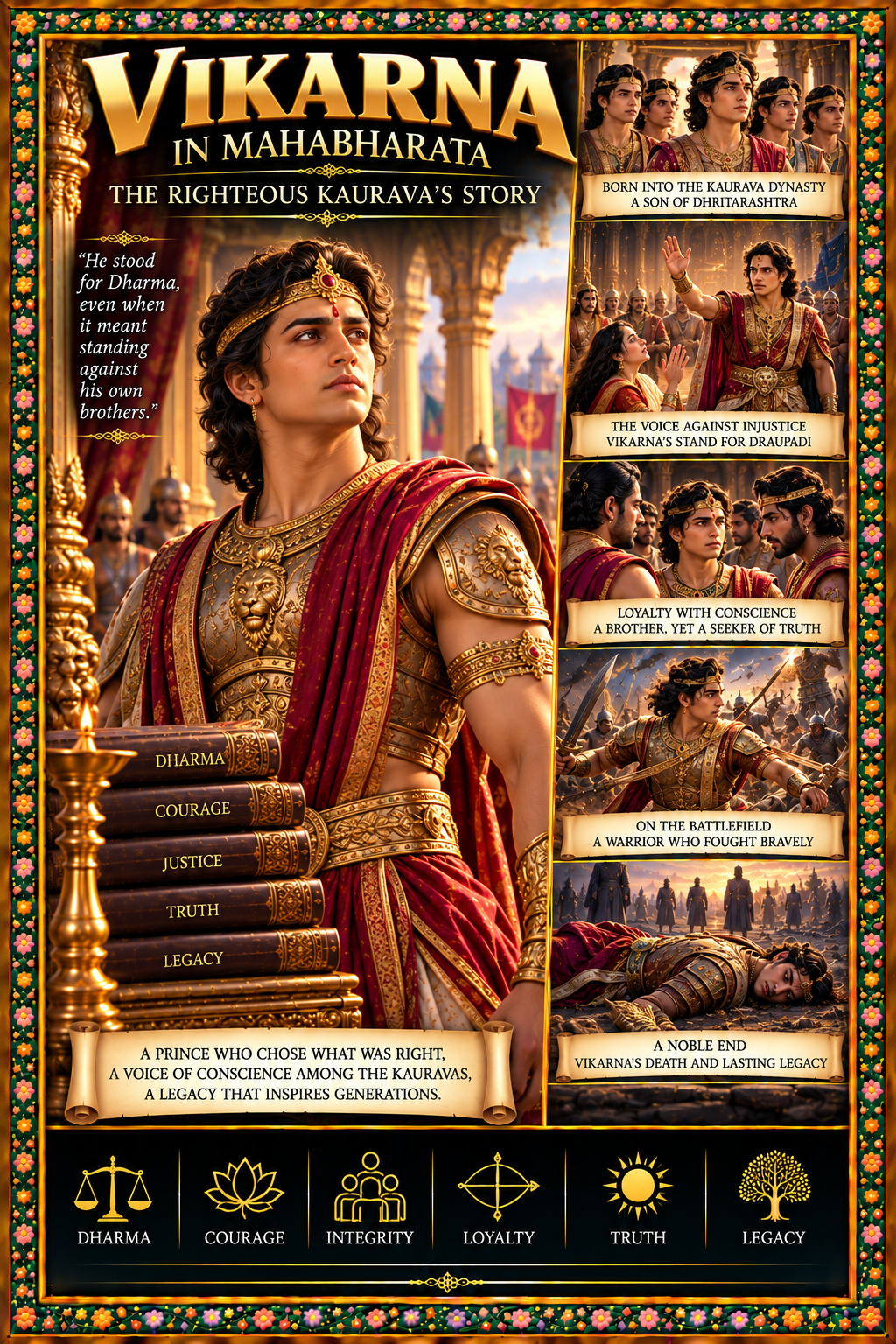
Vikarna in the Mahabharata: The Voice of Dharma Among the Kauravas .In the Mahabharata, you will find powerful kings, wise sages, and legendary warriors. Among the hundred sons of King Dhritarashtra and Queen Gandhari, one prince stands out for his sense of justice and moral courage—Vikarna. While most Kauravas blindly supported Duryodhana, Vikarna dared to question wrongdoing, even when it meant opposing his own brothers. Though often overshadowed by famous figures such as Bhishma, Karna, Arjuna, and Duryodhana, Vikarna remains one of the most respected characters in the Mahabharata. His courage to stand for righteousness during Draupadi’s humiliation in the Kuru court made him a symbol of integrity and fairness. This article explores Vikarna’s birth, character, role in the Mahabharata, moral dilemmas, participation in the Kurukshetra War, and his lasting legacy. For official cultural and historical archives, visit the Ministry of Culture, Government of India. Who Was Vikarna? Vikarna was the third son of King Dhritarashtra and Queen Gandhari. He was one of the hundred Kaurava brothers and a prince of Hastinapura. Unlike many of his brothers, Vikarna possessed a strong moral compass and a deep understanding of dharma (righteousness). He was known for his honesty, courage, and willingness to…
- Sons of Dhritarashtra & Gandhari
- June 6, 2026
- 179 views
Dushasana in Mahabharata: Story, Draupadi Vastraharan & Vow of Bhima
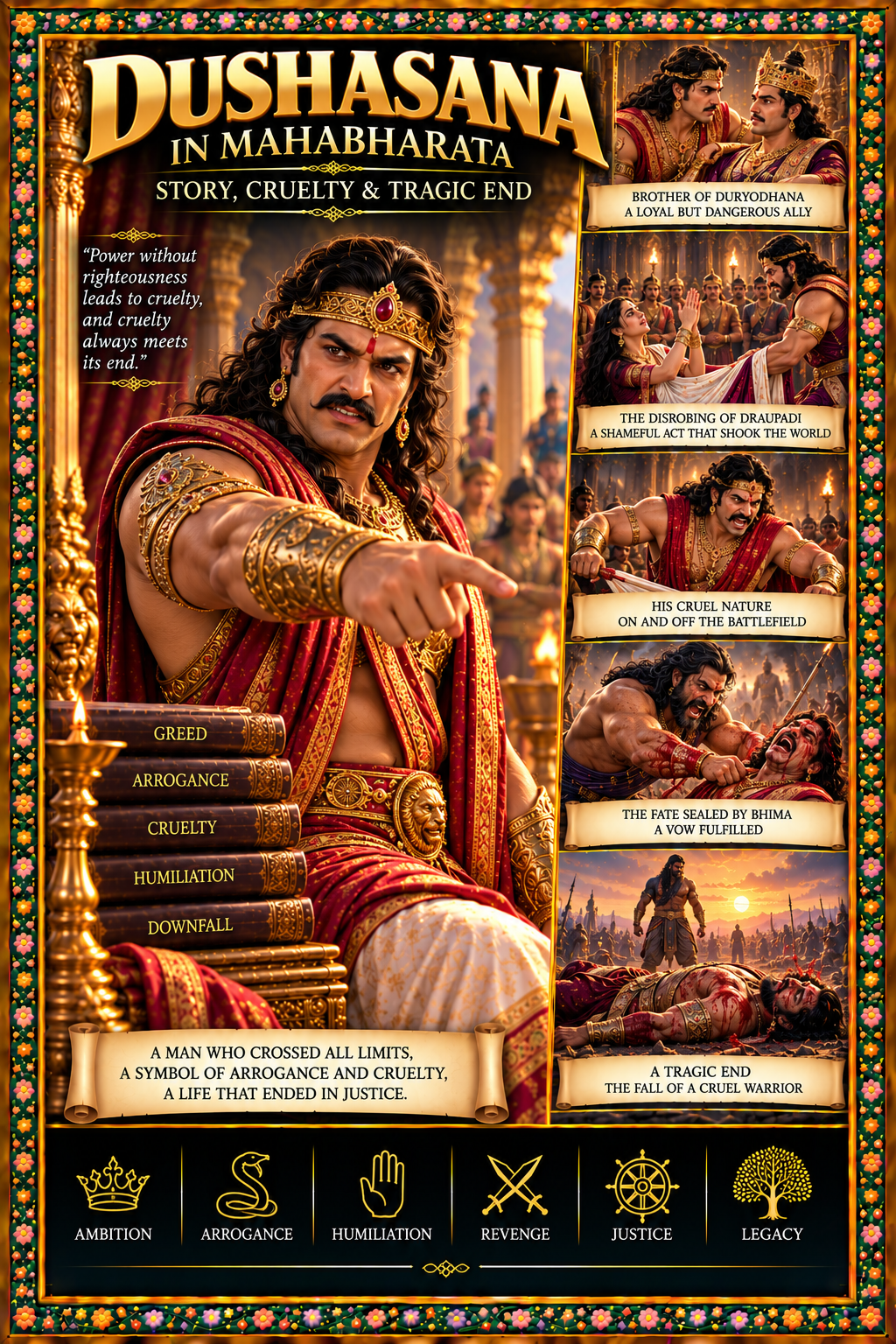
Dushasana in the Mahabharata – Dushasana in the Mahabharata Dushasana in the Mahabharata : Dushasana is one of the most infamous characters in the Mahabharata. Known as the younger brother of Duryodhana and the second son of Dhritarashtra and Gandhari, Dushasana became a symbol of arrogance, cruelty, and blind loyalty. His role in the humiliation of Draupadi remains one of the darkest moments in the epic. Although Dushasana was born into the royal Kuru dynasty, his actions led him toward destruction. His loyalty toward Duryodhana pushed him into committing terrible acts that ultimately resulted in his tragic death at the hands of Bhima during the Kurukshetra war. This article explores the complete story of Dushasana in the Mahabharata, including his birth, personality, major events, role in the war, death, and lessons from his life. Who Was Dushasana? Dushasana in the Mahabharata Dushasana was the second son of King Dhritarashtra and Queen Gandhari of Hastinapura. He was one of the 100 Kaurava brothers and the younger brother of Duryodhana. Among all the Kauravas, Dushasana was the closest supporter of Duryodhana. He obeyed his elder brother without question and actively participated in every conspiracy against the Pandavas. His name is often associated…
- Sons of Dhritarashtra & Gandhari
- May 23, 2026
- 233 views
Duryodhana in Mahabharata: Story, Character Flaws, Ambition & Death
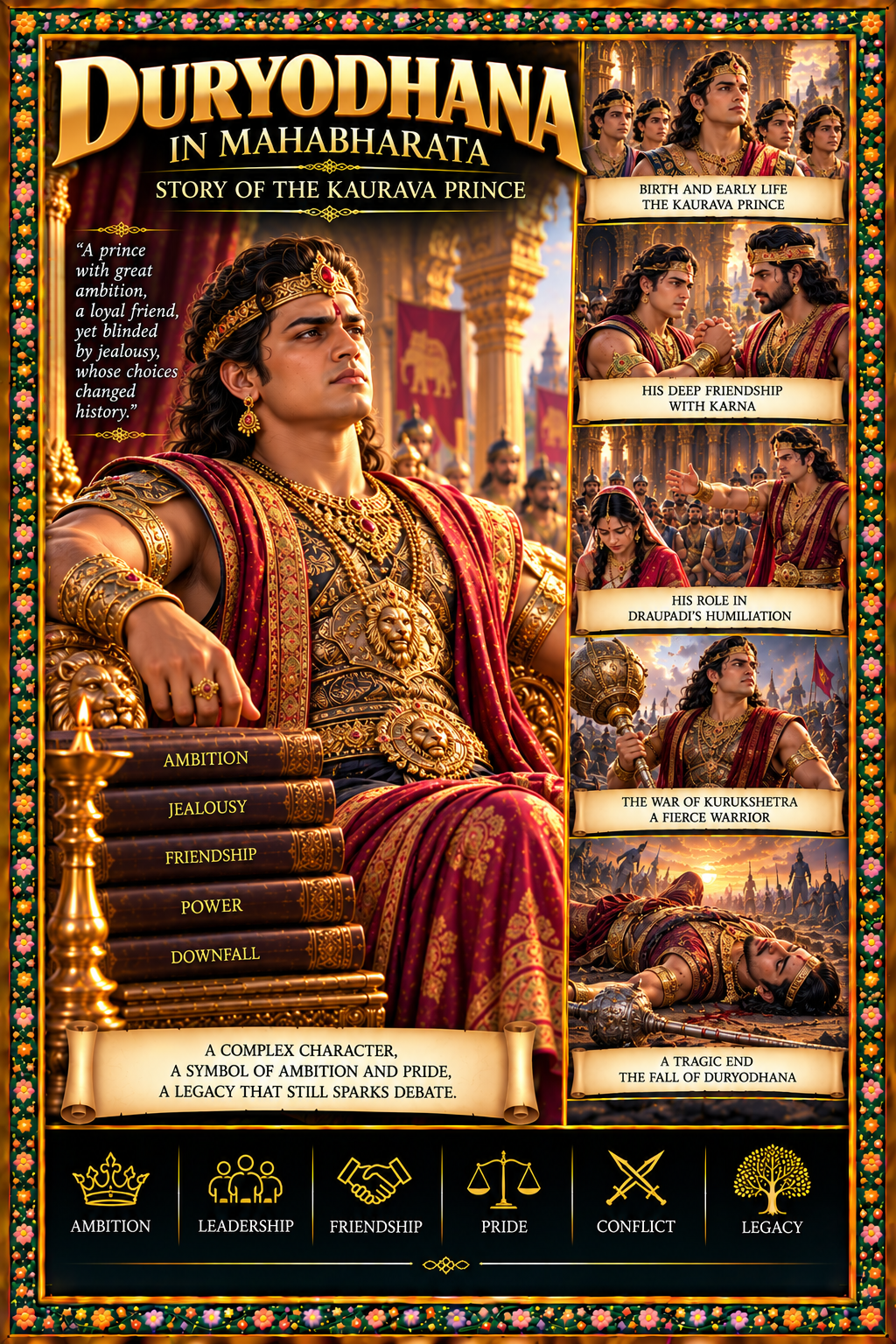
Duryodhana in Mahabharata: The Rise and Fall of a Warrior Prince Introduction : Duryodhana in Mahabharata Duryodhana in Mahabharata is one of the most powerful and controversial characters in Indian mythology. Known as the eldest son of King Dhritarashtra and Queen Gandhari, Duryodhana played a central role in shaping the events that led to the great Kurukshetra war. While often portrayed as the villain, Duryodhana was not entirely evil. His character reflects ambition, pride, loyalty, and deep-rooted insecurity. Understanding Duryodhana in Mahabharata helps us see the epic not just as a battle between good and evil, but as a complex story of human emotions and choices. For official cultural and historical archives, visit the Ministry of Culture, Government of India. Duryodhana’s Birth and Early Life – Duryodhana in Mahabharata Duryodhana was born to Dhritarashtra, the blind king of Hastinapura, and Gandhari. His birth itself was considered ominous. According to legends, strange signs appeared at the time of his birth, and wise men advised that the child should be abandoned to avoid future destruction. However, Dhritarashtra could not let go of his firstborn son. This decision later proved to be one of the key reasons for the downfall of the Kaurava…