Raja Ratnam
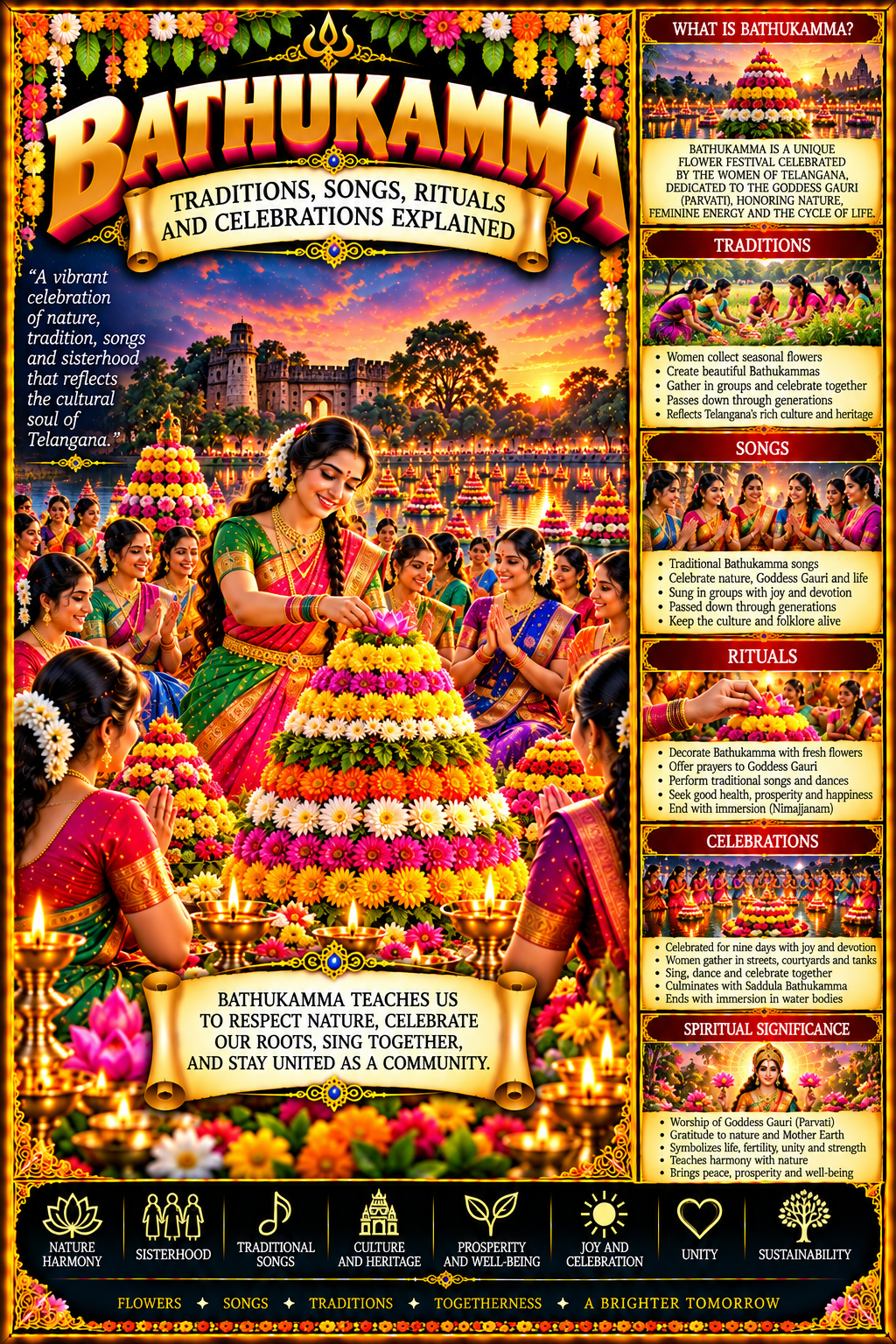
As dusk settles across the neighborhoods and village squares of Telangana, women and young girls gather in courtyards carrying tiered towers of colorful blossoms. Moving in slow, graceful circles, their rhythmic clapping keeps time with folk songs passed down through generations. Exploring Bathukamma Traditions, Songs, Rituals and Celebrations brings to life a festival created and led entirely by women. Unlike formal temple rituals, Bathukamma turns courtyards, crossways, and quiet lakesides into open spaces of song, sisterhood, and seasonal gratitude, as detailed in our exploration of why Bathukamma is celebrated in Telangana.
From the delicate assembly of sacred Bathukamma flowers and their meaning to the hauntingly beautiful refrains of folk ballads like “Bathukamma Bathukamma Uyyalo”, this sacred nine-day celebration unites women across all backgrounds. Spanning the sacred period from Mahalaya Amavasya to Durgashtami detailed in our Hindu festival calendar guide, this in-depth guide offers a comprehensive explanation of Bathukamma Traditions, Songs, Rituals and Celebrations.
According to cultural archives preserved by the official cultural portal of Telangana Tourism, Bathukamma represents the living heartbeat of Telangana’s social fabric, celebrating women as the custodians of cultural memory, ecology, and spiritual light.
Bathukamma Traditions, Songs, Rituals and Celebrations: The Cultural Heartbeat of Telangana
To truly understand Bathukamma Traditions, Songs, Rituals and Celebrations, one must look at the distinct components that make up this nine-day folk extravaganza: the sacred folk music, the circular choreography, the ceremonial daily offerings, and the final eco-friendly lake procession.
1. The Sacred Music and Folk Ballads: Oral History in Rhythm
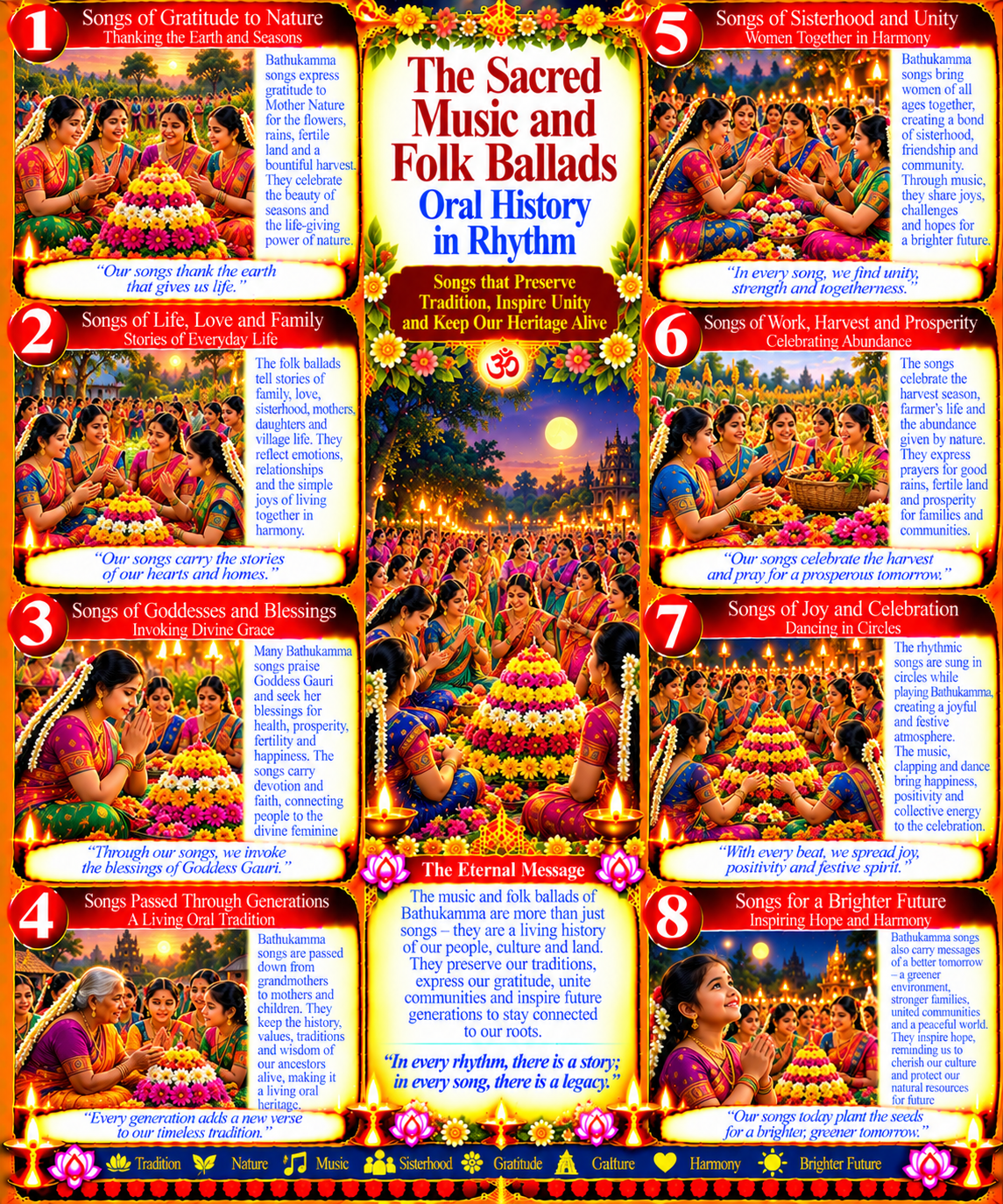
Unlike classical Carnatic kirtanas inscribed in formal palm-leaf manuscripts, Bathukamma songs are oral folk poetry passed down maternally from grandmothers to daughters across centuries. These ballads, known as Bathukamma Patalu, are structured in call-and-response meter, making them effortlessly accessible to large gatherings.
Timeless Bathukamma Folk Ballads and Their Meanings
The repertoire of Bathukamma songs encompasses diverse themes reflecting rural life, mythology, and social history:
“Bathukamma Bathukamma Uyyalo”
This is the universally beloved anthem of the festival. The recurring refrain “Uyyalo” represents a swinging cradle, tenderly singing Goddess Gauri to life and wishing that the divine mother rests happily within their village.
Poetic Structure and Synchronized Footwork
Singers alternate verses while stepping in a slow, rhythmic circular rotation, clapping their hands in syncopated beats that match the cadence of the refrain.
“Chithu Chithula Bomma” and “Kalavari Kodalu”
These narrative ballads explore the emotional reality of young brides navigating life in their in-laws’ households, longing for their maternal home (Puttillu), and seeking Goddess Gauri’s protection against marital distress.
Historical Narratives of Telangana Resistance
Several ballads chronicled in the Ministry of Culture, Government of India archives recount the heroism of Kakatiya warrior queen Rani Rudrama Devi and local peasant resistance against feudal oppression, cementing Bathukamma as an instrument of social solidarity.
2. The Circular Clapping Dance (Chappatla Nrityam)
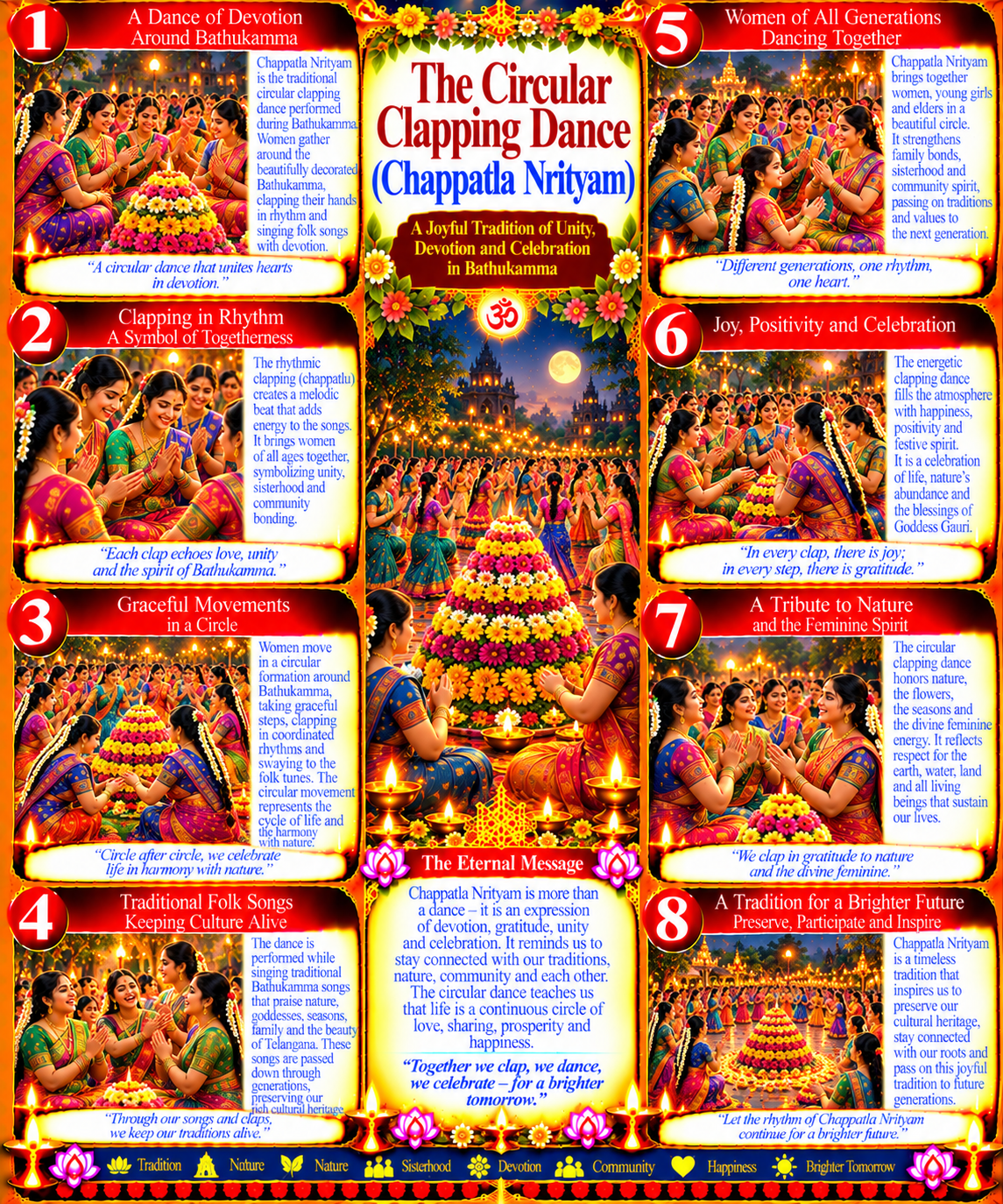
As sunset paints the sky in shades of amber and rose, women place their floral pyramids at the center of the village square (Choutra) or temple compound. Forming wide concentric circles around the flowers, they perform the mesmerizing Chappatla Nrityam (Clapping Dance):
- Rhythmic Step: Women step with their right foot forward and bend gracefully from the waist toward the floral pyramid, clapping palms firmly in front.
- Circular Rotation: Taking a rhythmic step back with the left foot, they clap outward, continuously rotating clockwise to symbolize the cyclical nature of time and creation (Samsara Chakra).
- Tempo Acceleration: The dance begins at a slow, meditative tempo (Vilambita laya) and gradually builds momentum into an energetic, joyful crescendo (Druta laya) as dusk approaches.
3. Traditional Festive Attire: Handlooms and Heirloom Jewels
Bathukamma is a showcase of Telangana’s world-renowned textile heritage. Fastidious care is taken in dressing for the evening celebrations:
Young girls wear colorful Langa Voni (traditional half-sarees) with broad zari borders, their hair plaited in braids woven with fragrant jasmine (Mallepulu). Married women and matriarchs wear opulent pure silk Pattu Sarees woven by regional weavers from Pochampally (Ikat), Gadwal, and Narayanpet, adorned with heirloom gold jewelry including the Kasulaperu (coin necklace), Vanki (armlet), and Vaddanam (waist belt).
The Nine-Day Ritual Protocol: Daily Ceremonies and Sacred Naivedyam
Documented extensively in historical archives of Bathukamma (Wikipedia), each day features unique spiritual rituals and calibrated dietary offerings (Naivedyam):
| Festival Day | Lunar Tithi | Ritual Theme | Sacred Naivedyam Offering |
|---|---|---|---|
| 1. Engili Pula Bathukamma | Mahalaya Amavasya | Ancestral Tarpan & Beginnings | Sesame seeds (Nuvvulu) & Rice flour (Biyyam Pindi) |
| 2. Atukula Bathukamma | Ashwayuja Padyami | Fresh Autumn Harvest | Flattened rice flakes (Atukulu) with Jaggery |
| 3. Muddappappu Bathukamma | Ashwayuja Vidiya | Maternal Nourishment | Boiled Lentil mash (Muddapappu) & Milk |
| 4. Nanabiyyam Bathukamma | Ashwayuja Tadiya | Seed Germination & Fertility | Wet-soaked raw rice (Nanabiyyam) with Jaggery |
| 5. Atla Bathukamma | Ashwayuja Chavithi | Physical Vitality | Mini crisp rice pancakes (Atlu) |
| 6. Aligina Bathukamma | Ashwayuja Panchami | Day of Rest & Affection | Fresh fruits and dried coconut halves |
| 7. Vepakayala Bathukamma | Ashwayuja Sashti | Purification & Health | Crisp dough balls shaped like neem fruits (Vepakayalu) |
| 8. Vennamuddala Bathukamma | Ashwayuja Sapthami | Dairy Wealth & Cow Grace | Hand-churned butter balls (Vennamuddalu) with Sesame |
| 9. Saddula Bathukamma | Ashwayuja Durgashtami | Grand Finale & Immersion | The Sacred 5 Flavored Rice Delicacies (Saddulu) |
The 5 Sacred Saddulu (Flavored Rice Dishes) of the Grand Finale
On Saddula Bathukamma, five distinct spiced rice delicacies are consecrated before Goddess Gauri:
1. Perugannam (Curd Rice) and Nuvvula Annam (Sesame Rice)
Probiotic-rich curd rice soothes the digestive tract, while roasted sesame rice provides calcium and vital essential fatty acids.
Ayurvedic Autumn Gut Balancing
Cooling curd counters late-monsoon Pitta dosha, shielding the stomach from acidity during festival feasting.
2. Chitrannam (Lemon Rice) and Pulihora (Tamarind Rice)
Vitamin-C rich fresh lime juice and turmeric-infused tamarind rice stimulate sluggish appetites and strengthen immunity against autumn fevers.
Antioxidant Action of Natural Spices
Whole roasted peanuts, curry leaves, and mustard seeds provide anti-inflammatory antioxidants that sustain bodily stamina.
3. Avala Annam (Mustard Seed Flavored Rice)
Infused with crushed black mustard seeds and cow ghee, Avala Annam produces internal warmth, balancing the body during twilight lakeside rituals.
Thermal Regulation During Evening Immersion
The natural pungency of mustard sinigrin dispels cold kapha stagnation, preventing chills after evening lake visits.
The Sacred Nimajjanam (Water Immersion) and Exchange of Maleeda
As the grand celebrations culminate, women hoist the multi-tiered floral platters upon their heads in ceremonial twilight processions toward the local lakes or temple tanks. This marks the transition toward the worship of Maa Mahagauri on Day 8 of Navratri and the triumph of the auspicious festivities of Dasara and Vijayadashami.
At the lake shore, emotional farewell songs are sung, thanking Goddess Gauri for gracing their households with abundance. Women gently slide their floral creations into the water. Lit clay lamps float serenely across the water, illuminating the lake with thousands of twinkling reflections.
Before leaving the lake, women carefully retrieve the turmeric Gouramma idol, applying the sanctified paste to their foreheads, throats, and mangalsutras. Then follows the cherished tradition of exchanging Maleeda – a sweet confectionery made by crumbling fresh rotis and kneading them with pure ghee, powdered jaggery, cardamom, and sesame. Women feed Maleeda to one another, apply red vermilion (Kumkum) to each other’s foreheads, and exchange warm blessings for marital longevity, health, and peace.
Frequently Asked Questions About Bathukamma Traditions (20 Detailed FAQs)
1. What makes Bathukamma unique compared to other Hindu festivals?
Bathukamma is entirely women-led and worships the Supreme Mother Goddess through living wild flowers rather than clay or metal idols, combining ecological water restoration with sisterhood.
2. What is the meaning of the word “Uyyalo” repeated in Bathukamma songs?
Uyyalo literally means a cradle. Repeating “Uyyalo” in folk refrains symbolizes rocking Goddess Gauri gently to sleep and waking her with maternal tenderness.
3. Why do women dance in concentric circles during Bathukamma?
The circular dance (Chappatla Nrityam) represents the eternal cosmic cycle of time, creation, and dissolution (Samsara Chakra), placing the divine floral tower at the center of existence.
4. What traditional handloom sarees are worn during Bathukamma?
Women wear handloom silk sarees indigenous to Telangana, such as Pochampally Ikat, Gadwal, and Narayanpet pattu sarees, paired with heirloom gold ornaments.
5. What is the significance of the first day, Engili Pula Bathukamma?
Observed on Mahalaya Amavasya, it marks the beginning of the festival. Flowers are gathered before morning meals or on the previous eve, honoring both ancestors and Goddess Gauri.
6. Why is there no public dance on Day 6 (Aligina Bathukamma)?
Aligina means to playfully sulk. According to legend, the Goddess rests and expects quiet devotion at home, providing women a day of rest before the demanding final days.
7. What is Saddula Bathukamma?
Saddula Bathukamma is the 9th day grand finale held on Durgashtami, featuring multi-tiered floral pyramids, 5 varieties of spiced rice (Saddulu), grand processions, and lake immersion.
8. What are the five varieties of Saddulu?
The five sacred rice dishes are Perugannam (curd rice), Chitrannam (lemon rice), Pulihora (tamarind rice), Nuvvula annam (sesame rice), and Avala annam (mustard seed rice).
9. What is Maleeda and how is it prepared?
Maleeda is a sweet prepared by crumbling whole wheat chapatis and mixing them thoroughly with pure cow ghee, grated jaggery, cardamom powder, and roasted sesame seeds.
10. Why is Maleeda exchanged among women after the lake immersion?
Exchanging Maleeda cements familial affection, sisterhood, and mutual goodwill, symbolizing the sharing of prosperity and warmth within the community.
11. What is Gouramma, and why is it made of turmeric?
Gouramma is a small conical idol representing Goddess Gauri made purely of natural turmeric paste, symbolizing purity, health, and auspicious marital blessings (Saubhagya).
12. What happens to the turmeric Gouramma after the immersion?
Women retrieve Gouramma from the water and apply the sanctified turmeric paste to their foreheads, necks, and mangalsutras for divine protection.
13. What traditional musical instruments accompany Bathukamma songs?
Traditionally, Bathukamma songs require no instrumental accompaniment other than rhythmic hand-clapping (Chappatlu), though rural processions often feature Dappu drums.
14. What themes do Bathukamma ballads explore?
Themes include sisterly love, agricultural joys and sorrows, marital adjustment, stories of Queen Rudrama Devi, and devotion to Goddess Parvati and Lord Shiva.
15. Why do married women return to their maternal home for Bathukamma?
Returning to their parents’ home (Puttillu) allows daughters to take a break from routine in-law duties and celebrate with mothers and childhood companions.
16. What is the base tray used to construct Bathukamma?
A broad circular brass or bronze platter called a Tambalam is used, lined with fresh pumpkin or lotus leaves to retain floral freshness.
17. How does the immersion ritual benefit lake ecology?
Medicinal tannins and flavonoids released from wild blossoms like Tangedu and Gunugu cleanse stagnant pond water, control mosquito larvae, and replenish wetland nutrients.
18. Can young unmarried girls participate in Bathukamma?
Yes, young girls eagerly participate, wearing colorful half-sarees (Langa Voni) and praying to Goddess Gauri for good health, wisdom, and an understanding life partner.
19. What is the historical link between the Kakatiya dynasty and Bathukamma?
The Kakatiyas patronized Bathukamma as an instrument of community cohesion and water hygiene across the thousands of interconnected agricultural lakes in Warangal.
20. What is the core philosophical message of Bathukamma celebrations?
Bathukamma teaches that divinity resides in nature, celebrating the sacred power of women to nurture life, preserve cultural roots, and protect the living environment.