Raja Ratnam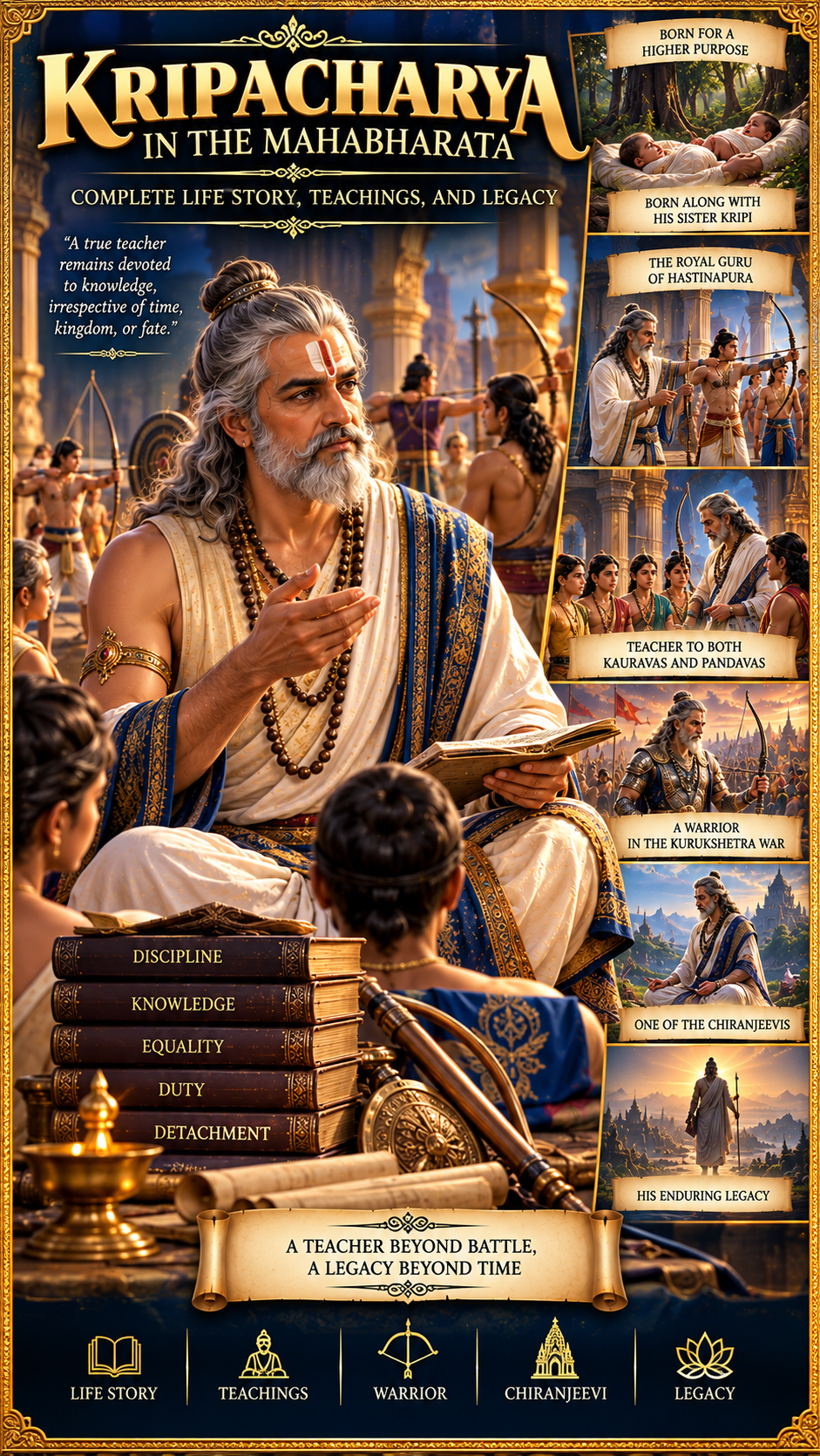
The Mahabharata is a grand tapestry of human values, heroic deeds, and ethical conflicts. Among the figures who guide the narrative, Kripacharya in the Mahabharata occupies a unique and highly respected position. Serving as the original royal preceptor (Guru) of Hastinapur, he trained the Pandava and Kaurava princes in Dhanurveda (archery) and the codes of righteous conduct before Dronacharya was appointed. As one of the few survivors of the Kurukshetra War and one of the seven immortals (Chiranjivis) in Hindu tradition, his life is a testament to longevity, wisdom, and devotion to duty.
Unlike other warriors who were driven by ambition or revenge, Kripacharya in the Mahabharata represents stability, continuity, and the preservation of Kuru traditions. His role was not to instigate conflicts, but to provide steady, wise counsel to the throne of Hastinapur across three generations of kings.
The Birth and Lineage of Kripacharya in the Mahabharata
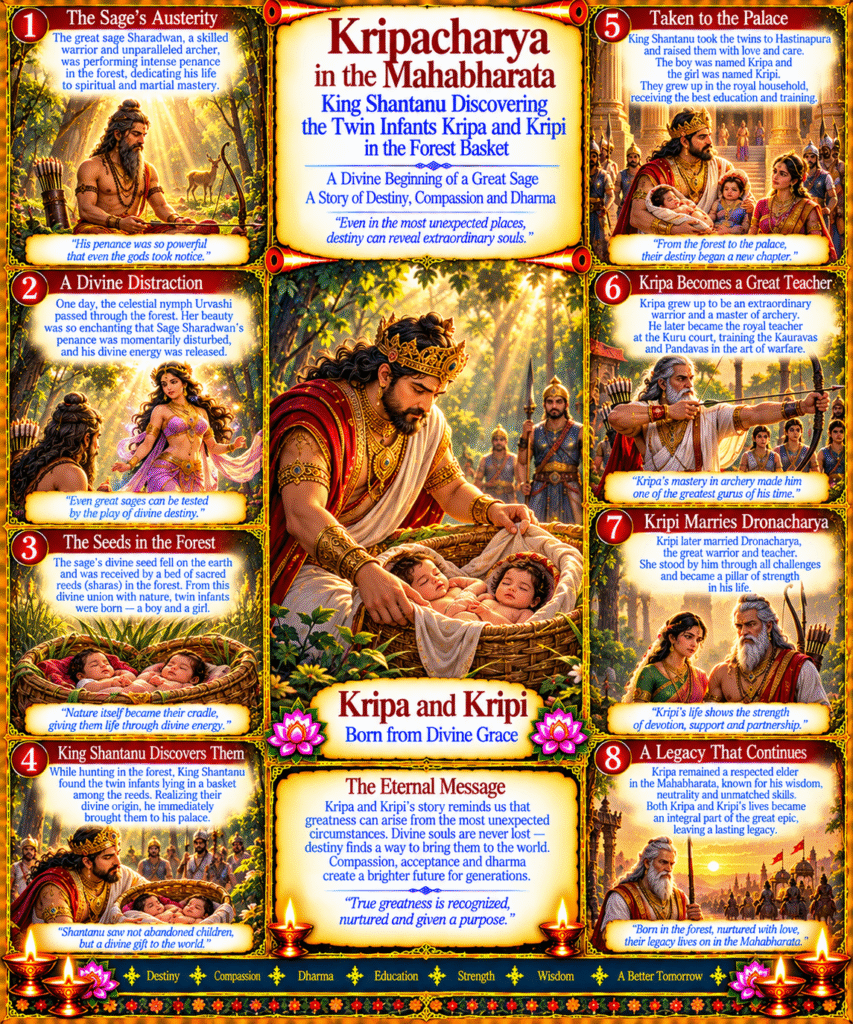
Kripacharya’s lineage begins with the great sage Gautama. His father was the sage Sharadvan, who was born with a natural talent for archery and performed intense penance to master all military arts. Alarmed by his growing power, Indra sent a beautiful Apsara named Janapadi to disrupt his meditation.
Though Sharadvan resisted the distraction, the sudden disturbance caused him to drop his bow and arrows, and his semen fell on a clump of weeds. This resulted in the birth of twin children, a boy and a girl.
King Shantanu’s Discovery of Kripa and Kripi in the Forest – Kripacharya in the Mahabharata
King Shantanu of Hastinapur was hunting in the forest when he saw the twin infants lying in a basket near a bow and arrow, wrapped in deer skin. Moved by compassion (*Kripa*), the king adopted the children and brought them to the palace.
He named the boy Kripa and the girl Kripi. Dronacharya would later marry Kripi, linking the two families of royal tutors. Sage Sharadvan later came to the palace, revealed the children’s lineage, and taught Kripa the secrets of Dhanurveda, helping him become a master archer and preceptor.
For official cultural and historical archives, visit the Ministry of Culture, Government of India.
Preceptor of the Kuru Dynasty: Teachings of Kripacharya in the Mahabharata
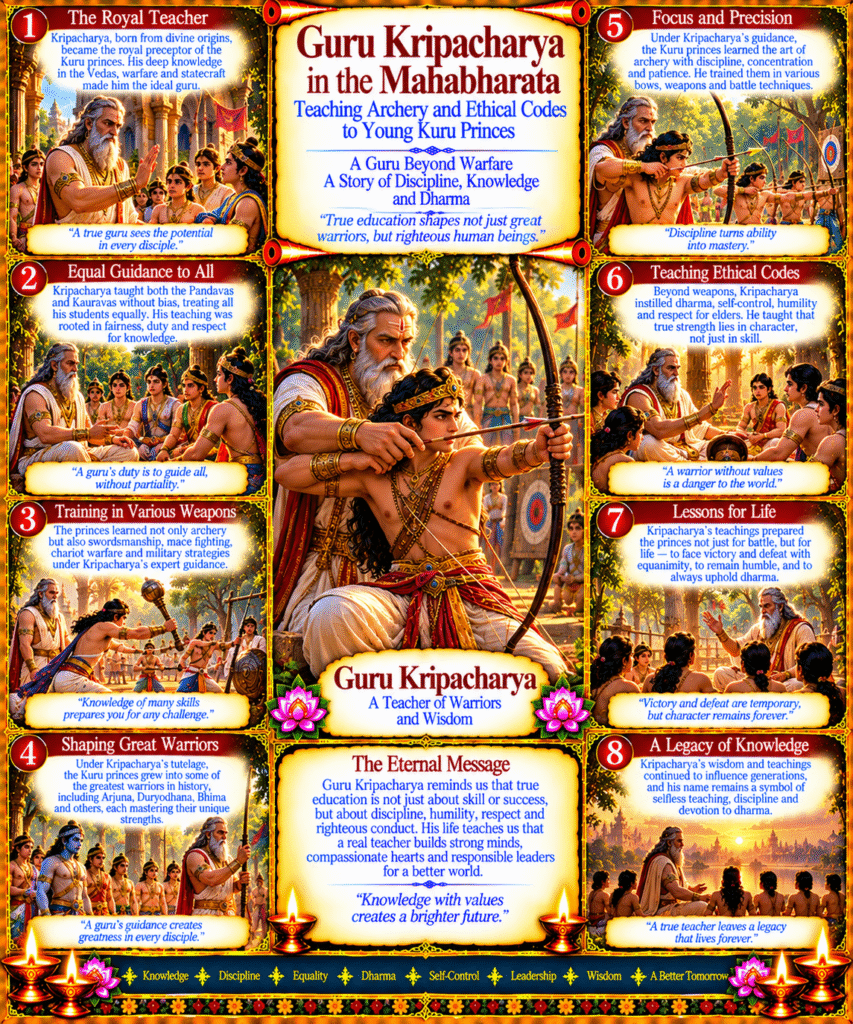
Because of his vast knowledge and lineage, Kripa was appointed as the chief priest and preceptor of the Kuru royal family, gaining the title Kripacharya (Guru Kripa).
He was the first teacher of the Pandavas and Kauravas, introducing them to the basics of archery, chariot warfare, and the ethical codes of a Kshatriya warrior.
Archery, Politics, and Ethical Rules Taught by Kripacharya in the Mahabharata
Kripacharya’s teachings focused heavily on the balance between military power and moral duty. He believed that weapons should only be used to defend righteousness (Dharma) and protect the weak.
His quiet, patient method of instruction earned him the deep respect of all the princes, particularly Yudhishthira, who valued Kripacharya’s emphasis on truth and moral stability. Even when Dronacharya took over the advanced training of the princes, Kripacharya remained a trusted advisor in the Hastinapur court.
The Great Kurukshetra War: Kripacharya in the Mahabharata’s Role
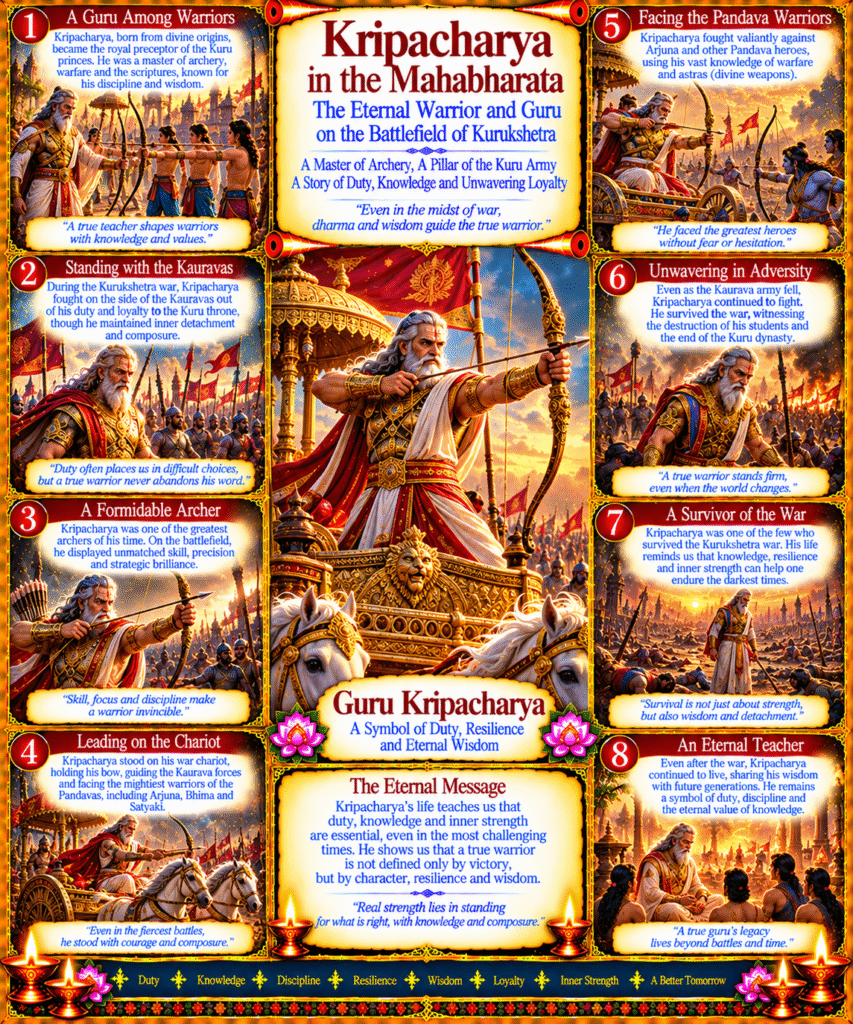
When the Kurukshetra War became inevitable, Kripacharya in the Mahabharata faced a difficult choice. Personally, he knew that the Pandavas were on the side of justice. However, his life, livelihood, and oath of loyalty were bound to the throne of Hastinapur.
As a royal preceptor, he believed it was his duty to defend the state, and therefore he chose to fight on the Kaurava side.
Fighting on the Kaurava Side and Defense of Dharma – Kripacharya in the Mahabharata
Despite his reservations about Duryodhana‘s actions, Kripacharya fought with immense courage and skill. He was one of the key commanders in the Kaurava army, defending senior warriors like Bhishma and Dronacharya.
Throughout the war, Kripacharya followed the traditional rules of combat, advising Duryodhana against using unfair methods. He was one of the few warriors who survived the devastation of the eighteen-day war, witnessing the deaths of all his students, colleagues, and family members.
The Tragic Final Night: Ashwatthama’s Plan and Kripacharya in the Mahabharata
The most controversial and tragic event associated with Kripacharya in the Mahabharata occurred on the night of the eighteenth day of the war. With Duryodhana mortally wounded, only three Kaurava warriors remained alive: Ashwatthama, Kripacharya, and Kritavarma.
Ashwatthama, consumed by grief and fury over his father Dronacharya’s death, planned a night attack on the Pandava camp to slaughter the sleeping survivors. Kripacharya initially opposed this, arguing that attacking sleeping enemies violated the laws of war and would bring eternal dishonor.
However, Ashwatthama refused to listen and ran toward the camp. Bound by loyalty to his nephew and Duryodhana’s final wishes, Kripacharya stood guard at the entrance, helping Ashwatthama execute the massacre.
Guilt, Reflection, and Survival of Kripacharya in the Mahabharata
The night massacre left Kripacharya with deep guilt. After the slaughter, the three warriors fled to the forest.
Kripacharya eventually returned to Hastinapur, expressing deep regret for his actions and seeking forgiveness from Yudhishthira, who, recognizing Kripacharya’s wisdom and the circumstances of his oath, treated him with great respect.
The Post-War Duties and Rebuilding by Kripacharya in the Mahabharata
Following the coronation of Yudhishthira, Kripacharya was re-appointed as the royal preceptor of Hastinapur.
He helped Yudhishthira rebuild the kingdom, and when the Pandavas decided to retire, Kripacharya was asked to train Arjuna‘s grandson, Parikshit, ensuring that the legacy of Dhanurveda and Kuru traditions was successfully passed to the next generation.
Chiranjivi: The Immortality of Kripacharya in the Mahabharata
According to Hindu mythology, Kripacharya in the Mahabharata is one of the Chiranjivis—the seven immortals destined to live on Earth until the end of the current epoch (Kali Yuga).
His immortality is believed to be a reward for his strict adherence to duty, his lack of personal ambition, and his role as a bridge of knowledge between generations. It is believed that in the next epoch (Mahayuga), Kripacharya will take his place as one of the Saptarishis (the seven great celestial sages), guiding humanity toward truth.
Legacy of Kripacharya in the Mahabharata
The story of Kripacharya in the Mahabharata is a lesson in resilience, loyalty, and quiet wisdom. He did not seek the spotlight, nor did he allow anger to dictate his choices. Instead, he fulfilled his duty as a teacher and advisor, surviving the greatest conflict of his era to help rebuild society and preserve knowledge for future generations.
Frequently Asked Questions (FAQs) About Kripacharya in the Mahabharata
1. Who was Kripacharya in the Mahabharata?
Kripacharya was the chief royal preceptor (Guru) of Hastinapur, who trained the Pandava and Kaurava princes in archery and ethics before Dronacharya.
2. How was Kripacharya born?
He was born along with his twin sister Kripi from the semen of the sage Sharadvan, which fell on a clump of weeds after his meditation was disrupted by an Apsara.
3. Who adopted Kripacharya and his sister Kripi?
They were discovered in the forest and adopted by King Shantanu of Hastinapur out of compassion (*Kripa*), which is why they were named Kripa and Kripi.
4. What was the relation between Dronacharya and Kripacharya?
Kripacharya’s twin sister, Kripi, was married to Dronacharya, making Dronacharya Kripacharya’s brother-in-law.
5. Why is he called Kripacharya?
He is called Kripacharya because his name was Kripa, and he became a royal preceptor (*Acharya*).
6. What did Kripacharya teach the Kuru princes?
He taught them the fundamentals of Dhanurveda (archery), chariot warfare, and the codes of righteous conduct (Dharma).
7. Why did Kripacharya fight on the Kaurava side?
He fought for the Kauravas due to his oath of loyalty to the throne of Hastinapur, which had supported him since childhood.
8. Did Kripacharya survive the Kurukshetra War?
Yes, he was one of the very few survivors on the Kaurava side, along with Ashwatthama and Kritavarma.
9. What was Kripacharya’s role in the night massacre of the Pandava camp?
Though he initially opposed Ashwatthama’s plan to attack the sleeping camp, he stood guard at the entrance to support his nephew, helping execute the slaughter.
10. Is Kripacharya immortal?
Yes, Kripacharya is one of the seven Chiranjivis (immortals) in Hindu tradition, destined to live until the end of the Kali Yuga.
11. What will be Kripacharya’s role in the next epoch?
It is believed that he will become one of the Saptarishis (seven great sages) in the next epoch.
12. What did Kripacharya do after the Kurukshetra War?
He returned to Hastinapur, was pardoned by Yudhishthira, and served as the preceptor to King Parikshit.
13. Who was Kripacharya’s father?
His father was the sage Sharadvan, a great archer and meditator.
14. What are the names of the seven Chiranjivis?
The seven immortals are Ashwatthama, King Bali, Vyasa, Hanuman, Vibhishana, Kripacharya, and Parashurama.
15. Did Kripacharya ever try to stop the war?
Yes, in the Kuru court, he repeatedly advised Duryodhana to return the Pandavas’ land and avoid war, advocating for peace.
16. How did Kripacharya react to Dronacharya’s death?
He was deeply grieved and supported Ashwatthama, though he tried to restrain his nephew’s extreme anger and unethical plans.
17. How did King Parikshit benefit from Kripacharya?
Kripacharya trained Parikshit in Dhanurveda and statecraft, preparing him to become a righteous king of Hastinapur.
18. What is the meaning of the name Kripa?
The name Kripa means “compassion,” “grace,” or “mercy.”
19. Did Kripacharya have any children?
No, Kripacharya remained a celibate throughout his life, dedicating himself to study and teaching.
20. What is the main moral lesson of Kripacharya’s life?
His life teaches that even when bound by complex duties and forced to witness tragedy, one must maintain moral stability, survive, and work to rebuild society.