Why Is Ravana Burned on Dasara? The History of Ramlila Effigies & Conquering Inner Vices

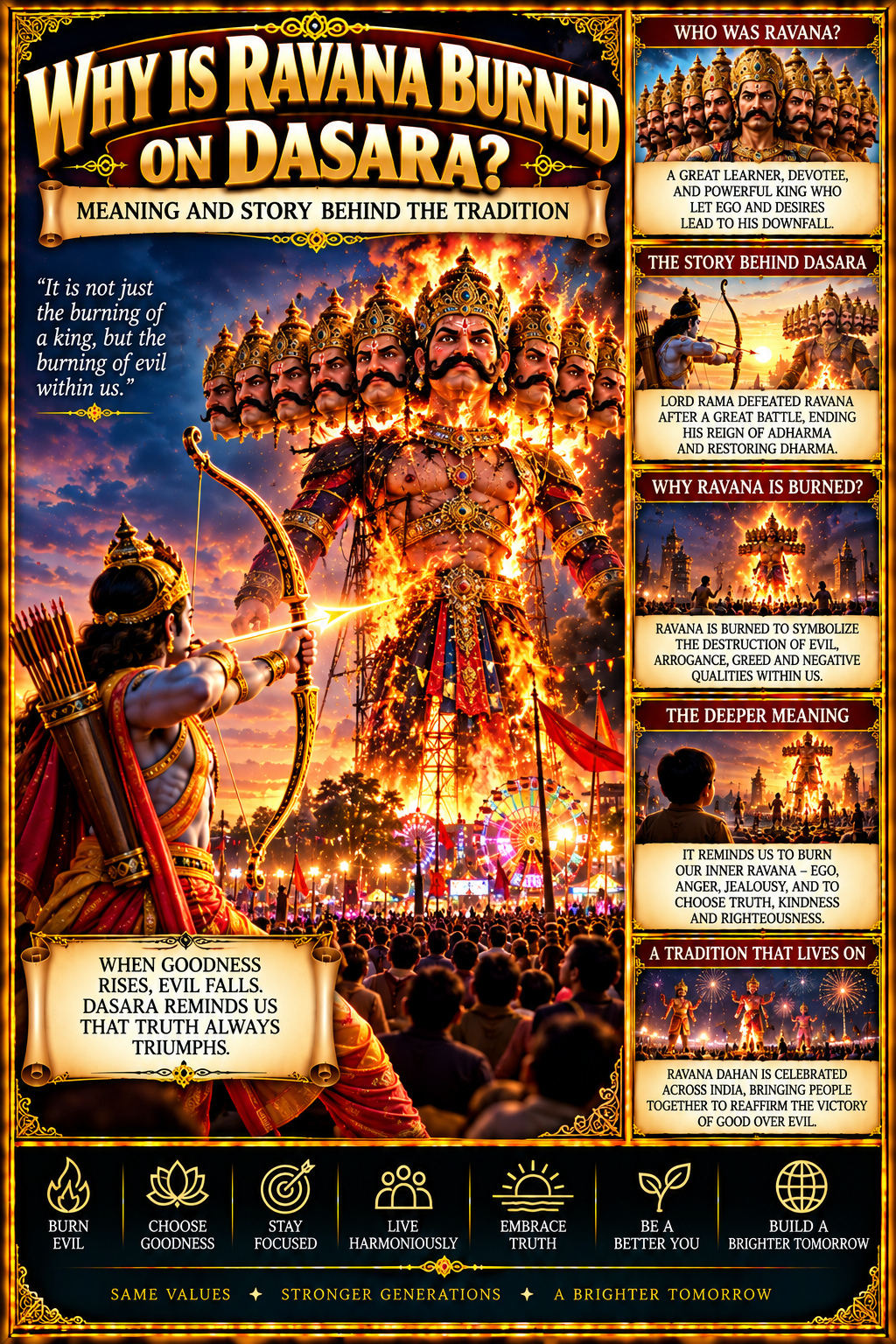
Every year on Vijayadashami, open grounds across India fill with families and excited children waiting for twilight. As fireworks crackle and cheers echo into the night sky, giant towering effigies of Ravana, Kumbhakarna, and Meghnada burst into bright flames. This ritual, known as Ravan Dahan, is one of the most beloved theatrical traditions of Dasara. While the broader religious significance of the festival is explored in our guide to why we celebrate Dussehra, this analysis examines the traditional craftsmanship of Ramlila effigies, the history of theatrical burning, and the enduring psychological call to burn our ten inner vices.

The Theatrical Heritage of Ramlila and Community Grounds

For centuries, the annual staging of the Ramlila has served as one of the world’s most vibrant community folk theater traditions. Recognized by UNESCO as an Intangible Cultural Heritage of Humanity, Ramlila enacts the life of Lord Rama over ten to twelve nights, culminating on Vijayadashami afternoon when actors portraying Rama and Lakshmana ride decorated chariots to the festival grounds to shoot burning arrows into the towering effigies.

The Craftsmanship of Giant Effigies: Bamboo, Cloth, and Fireworks

Long before festival week arrives, generational artisan families gather in open workshops across cities like Delhi, Varanasi, and Jaipur to construct the colossal effigies, often reaching fifty to one hundred feet in height:

  • Bamboo Armature: Flexible green bamboo poles are split and lashed together with coir ropes to form the ribcage, limbs, and multi-headed crown.
  • Paper Mache and Glazed Cloth: Thousands of layers of colorful paper and glazed fabrics are pasted over the armature, painting Ravana with a majestic mustache, crown, and sword.
  • Internal Pyrotechnic Chambers: Artisans carefully suspend sparklers, spinners, and sound crackers within the chest, arms, and heads, ensuring that when the arrow strikes, the effigy ignites in a breathtaking sequence from base to crown.

Conquering the Ten Inner Vices: The Psychological Allegory

In Indian philosophical thought, Ravana’s ten heads were not simply physical anomalies; they represented ten dangerous psychological impulses that can derail even the most gifted intellectual:

  • Kama (Lust & Uncontrolled Craving)
  • Krodha (Rage & Anger)
  • Moha (Delusion & Blind Attachment)
  • Lobha (Greed & Possessiveness)
  • Mada (Arrogance & Pride)
  • Matsarya (Envy & Jealousy)
  • Ahankara (Egoism)
  • Manas (Wandering Mind without Discipline)
  • Buddhi (Intellect Subverted for Wicked Ends)
  • Chitta (Willpower Bound by Selfish Desires)

When the effigy bursts into flames amid cheering crowds, the true spiritual invitation is internal. Parents and teachers remind children that we do not burn Ravana out of hatred for an ancient king; we burn the effigy as an annual personal commitment to destroy our own anger, pride, and dishonesty, allowing the light of truth to guide our actions.

Explore the Complete Dussehra & Vijayadashami Guide

Discover the complete history of Shami Puja, Ayudha Puja, and celebrations across India in our companion guide: Why Do We Celebrate Dussehra (Vijayadashami)? Story, Shami Puja & Rituals.

Frequently Asked Questions: Ravan Dahan & Effigy Burning

1. Who are the three effigies burned on Dasara?

The three effigies burned on Vijayadashami are King Ravana of Lanka, his brother Kumbhakarna (the sleeping giant), and his warrior son Meghnada (Indrajit).

2. What does burning Ravana symbolize psychologically?

It symbolizes incinerating our own inner vices – such as anger, pride, greed, and ego – reminding us that intellectual brilliance without ethical character leads to downfall.

3. What is the role of Ramlila in the Ravan Dahan ceremony?

Ramlila is the traditional ten-day community folk drama depicting the Ramayana. The final act on Vijayadashami features the actor playing Lord Rama shooting a flaming arrow to ignite the effigy.

4. How are modern festival effigies made environmentally friendly?

Many contemporary communities now craft effigies using recyclable bamboo, herbal paints, low-smoke green crackers, and biodegradable paper to reduce air and noise pollution.

5. How should parents explain Ravan Dahan to children?

Parents can explain that the dramatic flames remind us never to let anger or pride take control of our minds, teaching that honesty, kindness, and humility always triumph in the end.

  • Raja Ratnam

    Hi, I'm Raja Ratnam, based in Hyderabad, Telangana. I'm a researcher and writer with a deep passion for Indian mythology and Hindu festivals, and I created Ratnam Strategy to make the timeless stories of the Ramayana and Mahabharata accessible to modern readers. On this site you'll find detailed guides to epic characters, festival traditions, puja vidhanams, and vrat kathas, written in both English and Telugu wherever it helps readers connect more deeply with the material. Feel free to browse my latest posts, or reach out at ratnampasalapudi@gmail.com.

    Related Posts

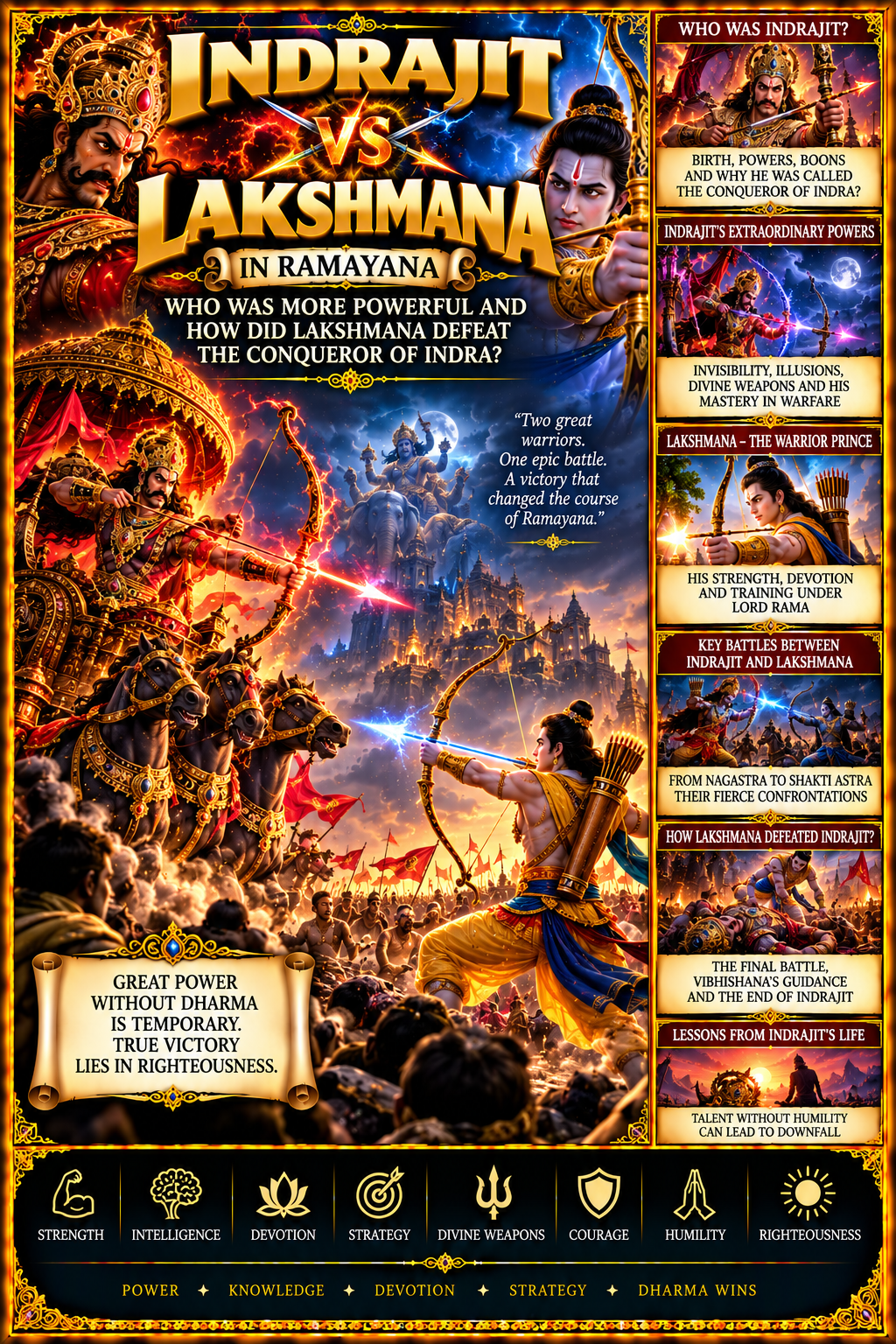
    Indrajit vs Lakshmana in Ramayana: Who Was More Powerful and How Did Lakshmana Defeat the Conqueror of Indra?

    During the epic battle of Lanka, while Lord Rama faced the ten-headed Ravana, an equally intense duel unfolded between their greatest champions: Meghnada (Indrajit), the prince who had defeated Indra through dark illusions, and Lakshmana, Rama’s loyal brother who had conquered his own sleep through fourteen years of devotion. The clash of Indrajit vs Lakshmana in Ramayana has captivated listeners for generations: when terrifying sorcery collides with quiet discipline and steadfast duty, who truly triumphs? To understand the depth of this war within a war, one must explore not just physical archery, but the metaphysical layers of destiny, divine boons, moral virtue, and the pivotal sacrifice of 14 sleepless years. For readers exploring our deep dives into Ravana in Ramayana: The Great Ruler of Lanka and the overarching epic of The Journey of Rama, Sita, and Lakshmana, this definitive comparison provides an authentic, scripture-backed analysis of the deadliest battle fought under the skies of Lanka. Who Was Meghnada? The Rise of Indrajit, the Supreme Mahamaharathi Meghnada was the eldest son of Ravana and Queen Mandodari. At the moment of his birth, his father forced the planetary deities (Navagrahas) into the eleventh house to ensure the child was immortal, invincible, and…

    Ravana in Ramayana: Complete Biography, Shiva Bhakti, Golden Lanka & Downfall

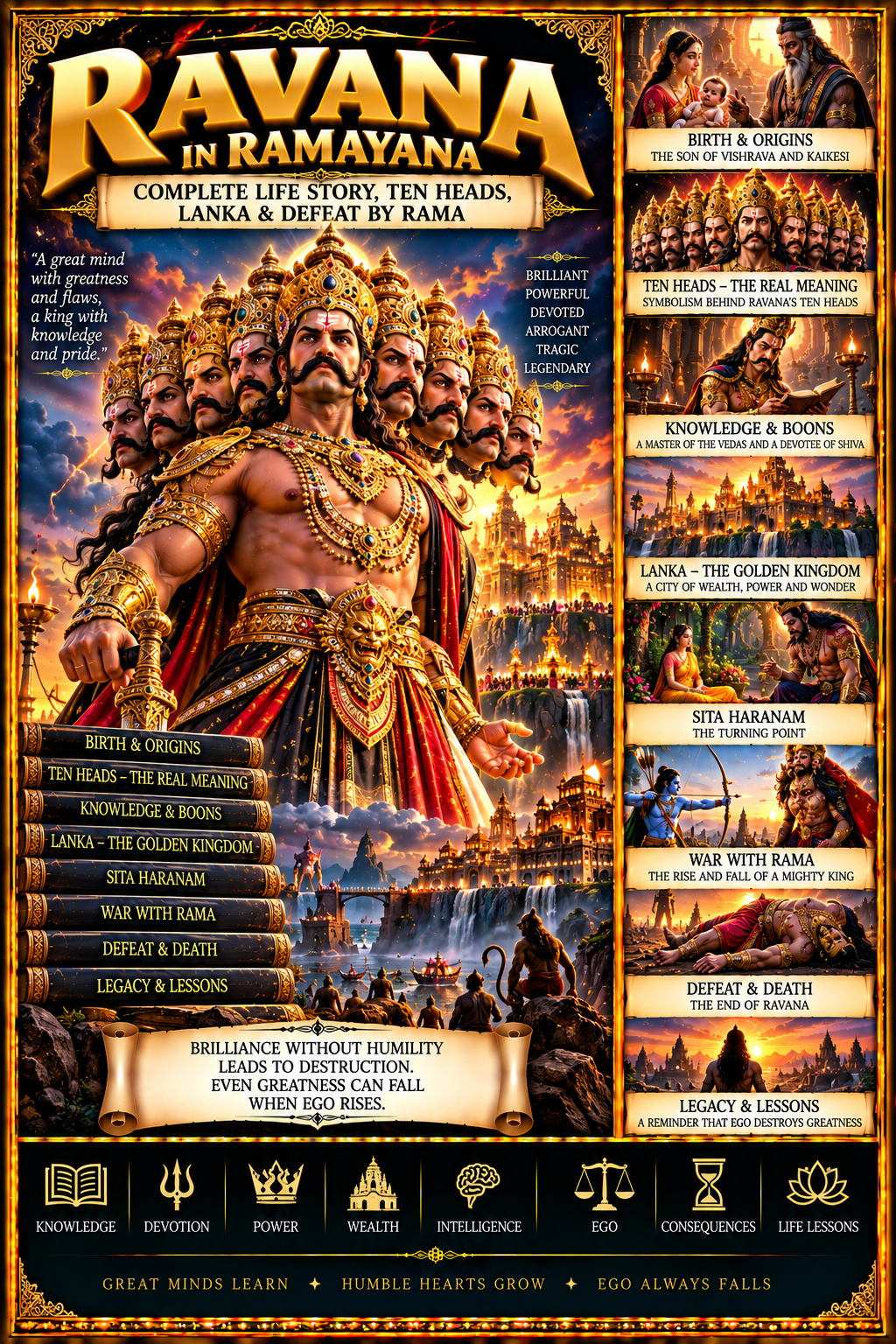
    High above the southern ocean atop Mount Trikuta stood the golden city of Lanka, ruled by a monarch of terrifying intellect and unyielding devotion. Ravana was no ordinary demon king; he was a master of the veena who composed the thunderous Shiva Tandava Stotram, a scholar who knew the four Vedas by heart, and a ruler whose golden kingdom dazzled the three worlds. Yet, despite his genius and unmatched spiritual penances, one fatal flaw sealed his doom: an uncontrolled ego that refused to listen to dharma. When he abducted Goddess Sita, he set into motion the catastrophic war that ended his golden empire at the hands of Lord Rama. Yet, despite his immense virtues, scholarship, and spiritual penance, Ravana allowed his uncontrollable ego, lust, and arrogance to govern his destiny. His unlawful abduction of Goddess Sita set into motion the final battle of Lanka and his ultimate defeat at the hands of Lord Rama. In this comprehensive guide, let us explore the complete life story of Ravana in Ramayana, his divine birth, the secret of his ten heads (Dashanana), the golden empire of Lanka, his scholars’ achievements, the epic war, and 20 detailed frequently asked questions. The Birth, Ancestry, and…

    Leave a Reply

    Your email address will not be published. Required fields are marked *

    You Missed

    Karthika Shivaratri: Awaken Your Soul Through the Grace of Lord Shiva

    Karthika Shivaratri: Awaken Your Soul Through the Grace of Lord Shiva

    How to Celebrate Karthika Shivaratri in South and North India: 10 Shiva Temples

    How to Celebrate Karthika Shivaratri in South and North India: 10 Shiva Temples

    Karthika Pournami: The Sacred Full Moon Festival of Lord Shiva and Vishnu

    Karthika Pournami: The Sacred Full Moon Festival of Lord Shiva and Vishnu

    Hanuman and Bhima: The Legendary Meeting of the Two Sons of Vayu

    Hanuman and Bhima: The Legendary Meeting of the Two Sons of Vayu

    Jwala Toranam: Significance and Legend of the Karthika Pournami Fire Ritual

    Jwala Toranam: Significance and Legend of the Karthika Pournami Fire Ritual

    Karthika Dwadashi: The Sacred Day of Lord Vishnu and Goddess Lakshmi

    Karthika Dwadashi: The Sacred Day of Lord Vishnu and Goddess Lakshmi
    Translate »