Admin
Admin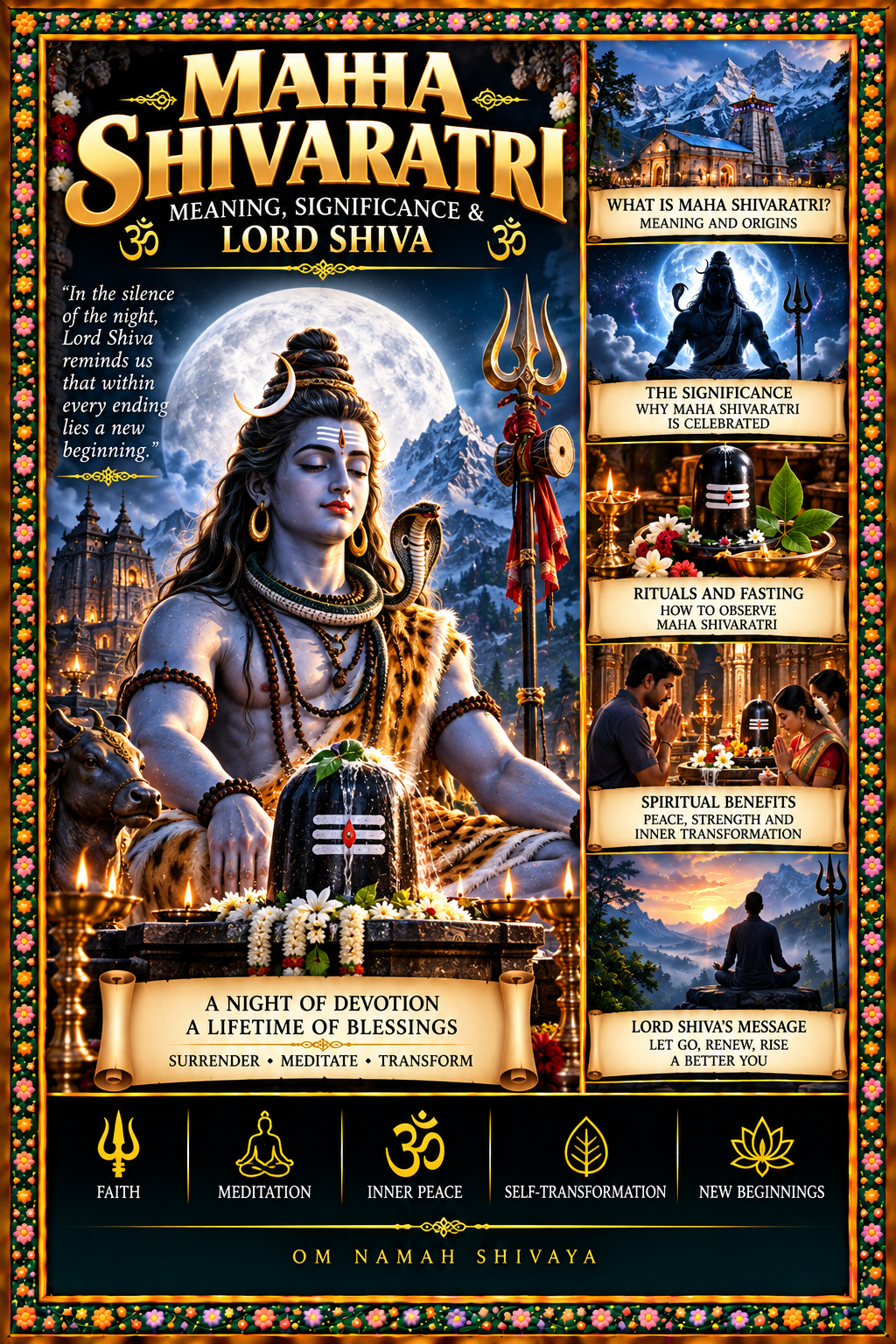
Meaning and Significance of Maha Shivaratri
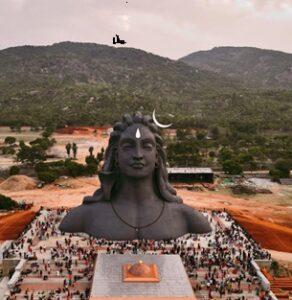
Maha Shivaratri, meaning “The Great Night of Shiva,” is one of the most sacred festivals in Hindu spirituality. It symbolizes the cosmic union of consciousness and energy, where Lord Shiva represents supreme awareness and inner transformation. Observed on the 14th night of the dark fortnight in the month of Phalguna, this night is considered spiritually powerful for self-realization and liberation.
Lord Shiva — The Auspicious One
Lord Shiva is known as Mahadeva, Bholenath, and The Destroyer—not of the world, but of ignorance and ego. He is the embodiment of stillness, compassion, renunciation, and infinite cosmic power.
Shiva is:
- The source of creation and dissolution
- The symbol of detachment and balance
- The ultimate yogi, guiding seekers toward moksha (liberation)
Why Maha Shivaratri Is Spiritually Powerful
Unlike other festivals celebrated during the day, Maha Shivaratri is observed at night. Spiritually, this night:
- Enhances inner awareness
- Awakens kundalini energy
- Helps transcend mental and emotional limitations
Ancient yogic traditions believe that on this night, planetary alignments support spiritual growth and meditation.
Shiva Marriage Day — The Sacred Union
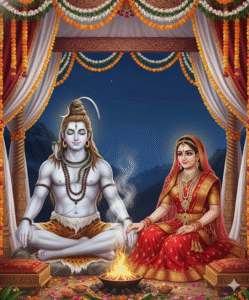
Maha Shivaratri is also celebrated as the divine marriage of Lord Shiva and Goddess Parvati. This union represents:
- Balance between masculine and feminine energies
- Harmony between material life and spiritual pursuit
- The merging of Shakti (energy) with Shiva (consciousness)
For married couples, it symbolizes marital harmony; for seekers, it represents inner completeness.
Rituals and Observances of Maha Shivaratri
Fasting (Upavasa) 🌙
Devotees observe fasting to purify body and mind. Some practice:
- Nirjala fast (without water)
- Phalahara (fruits and milk)
Fasting helps control senses and increase spiritual focus.
Night Vigil (Jagaran) 🕯️
Staying awake all night represents consciousness over ignorance. Devotees chant, meditate, and reflect on Shiva’s teachings throughout the night.
Abhishekam (Ritual Bath of Shiva Lingam) 💧
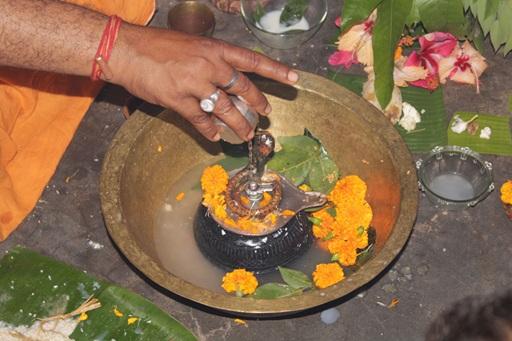
Abhishekam is the heart of Shivaratri worship. Offerings include:
- Milk (purity)
- Water (life)
- Honey (sweetness of devotion)
- Bilva leaves (sacred to Shiva)
Recitation of Shiva Stotras 📿
Popular chants include:
- Maha Mrityunjaya Mantra
- Rudram Chamakam
- Shiva Tandava Stotram
These vibrations calm the mind and elevate spiritual awareness.
Preparations for Shivaratri
Devotees prepare by:
- Cleaning homes and altars
- Wearing clean or traditional attire
- Collecting puja items (bilva leaves, milk, incense)
- Mentally committing to prayer and discipline
Preparation itself becomes an act of devotion.
Modern Spiritual Relevance of Maha Shivaratri
In today’s fast-paced world, Maha Shivaratri reminds us to:
- Pause and reflect inward
- Balance ambition with inner peace
- Let go of ego, fear, and stress
Shiva’s philosophy teaches that true strength lies in stillness, awareness, and compassion—values deeply relevant today.
Maha Shivaratri — A Night of Transformation
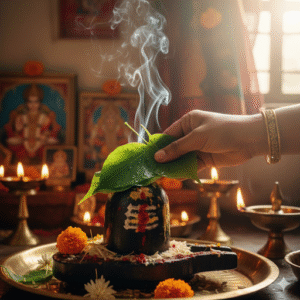
Maha Shivaratri is not just a ritual—it is a spiritual opportunity. Whether through fasting, meditation, chanting, or silent awareness, this night invites every soul to rise above limitations and connect with the infinite.
Conclusion
Maha Shivaratri goes far beyond tradition in Meaning and Significance.It is a reminder that transformation begins within. By honoring Lord Shiva, we honor clarity, balance, and spiritual awakening.
At Ratnam Strategy, we believe timeless spiritual wisdom plays a vital role in modern life—guiding individuals toward purpose, peace, and inner strength.
FAQs on Maha Shivaratri
FAQ 1: What is the meaning of Maha Shivaratri?
Maha Shivaratri means “The Great Night of Lord Shiva.” It symbolizes spiritual awakening, inner transformation, and the union of consciousness with cosmic energy.
FAQ 2: Why is Maha Shivaratri celebrated at night?
Maha Shivaratri is observed at night because it represents overcoming darkness and ignorance through awareness, meditation, and spiritual discipline.
FAQ 3: What is the spiritual significance of Maha Shivaratri?
Spiritually, Maha Shivaratri is believed to be the most powerful night for meditation, self-control, and attaining higher consciousness.
FAQ 4: Is Maha Shivaratri the marriage day of Lord Shiva?
Yes, Maha Shivaratri is widely celebrated as the divine marriage day of Lord Shiva and Goddess Parvati, symbolizing balance between energy and consciousness.
FAQ 5: Why do devotees observe fasting on Maha Shivaratri?
Fasting helps purify the body and mind, control desires, and increase focus on prayer and spiritual practices.
FAQ 6: What are the types of fasting followed on Maha Shivaratri?
Devotees follow different fasts such as:
- Nirjala (without water)
- Phalahara (fruits and milk)
- Partial fasting with one satvik meal
FAQ 7: What is Jagaran and why is it important?
Jagaran means staying awake all night in devotion. It symbolizes spiritual alertness and victory of awareness over ignorance.
FAQ 8: What is Abhishekam in Maha Shivaratri?
Abhishekam is the ritual bathing of the Shiva Lingam using sacred substances like milk, water, honey, and bilva leaves.
FAQ 9: Why are Bilva leaves offered to Lord Shiva?
Bilva leaves are sacred to Lord Shiva and symbolize purity, devotion, and the three eyes of Shiva representing wisdom.
FAQ 10: Which mantras are chanted on Maha Shivaratri?
Popular chants include:
- Maha Mrityunjaya Mantra
- Om Namah Shivaya
- Shiva Tandava Stotram
- Rudram Chamakam
FAQ 11: Can women observe Maha Shivaratri fast?
Yes, women observe Maha Shivaratri for spiritual growth, marital harmony, and blessings for family well-being.
FAQ 12: What should be offered to Lord Shiva on Shivaratri?
Devotees offer milk, water, honey, fruits, bilva leaves, incense, and lamps during Shiva puja.
FAQ 13: Is Maha Shivaratri only for devotees of Shiva?
No. Maha Shivaratri is a universal spiritual festival focusing on meditation, self-discipline, and inner peace, open to all seekers.
FAQ 14: What is the modern relevance of Maha Shivaratri?
In modern life, Maha Shivaratri encourages stress relief, mindfulness, balance, and self-reflection amid a fast-paced lifestyle.
FAQ 15: Can Maha Shivaratri be observed at home?
Yes, devotees can perform simple Shiva puja, chant mantras, meditate, and observe fasting at home with devotion.
FAQ 16: What is the importance of meditation on Maha Shivaratri?
Meditation on this night is believed to deepen awareness, calm the mind, and help align with higher consciousness.
FAQ 17: What does Lord Shiva symbolize spiritually?
Lord Shiva symbolizes destruction of ego, detachment, compassion, stillness, and supreme inner strength.
FAQ 18: Is Maha Shivaratri linked to moksha (liberation)?
Yes, Maha Shivaratri is considered highly auspicious for spiritual liberation, as Shiva represents the path to moksha.
FAQ 19: What should devotees avoid on Maha Shivaratri?
Devotees avoid anger, negative thoughts, intoxicants, and non-vegetarian food to maintain spiritual purity.
FAQ 20: What is the core message of Maha Shivaratri?
The core message of Maha Shivaratri is inner transformation, reminding us that true power lies in awareness, discipline, and self-realization.