 Raja Ratnam
Introduction
Maa Mahagauri (Day 8 of Navratri) :The eighth day of Navratri (Ashtami) is dedicated to Maa Mahagauri, the eighth manifestation of Goddess Durga. She represents purity, serenity, compassion, and forgiveness. Her name “Mahagauri” translates to “extremely fair and radiant,” symbolizing spiritual enlightenment and divine energy.
Maa Mahagauri blesses her devotees with inner peace, wisdom, and prosperity while removing sins and past karmic debts. She is worshipped widely on Durga Ashtami, which is considered one of the most sacred days of Navratri.
This day also holds special significance because many devotees perform Kanya Puja (Kumari Puja), where young girls are worshipped as embodiments of the Goddess herself.
For official cultural and historical archives, visit the Incredible India Official Tourism Authority.
The Story of Maa Mahagauri (Day 8 of Navratri)
According to legend, Maa Parvati undertook severe penance to please Lord Shiva. She performed intense tapasya in the forests, enduring harsh conditions, dust, and hardships. Due to this, her skin became dark.
Pleased by her devotion, Lord Shiva accepted her as his consort and washed away her dark complexion with the holy waters of the Ganga River. As a result, she regained her original divine radiance and came to be known as Maa Mahagauri – the Goddess of Purity.
This story symbolizes the triumph of devotion and penance, teaching that sincere efforts and dedication purify the soul.
Appearance and Symbolism
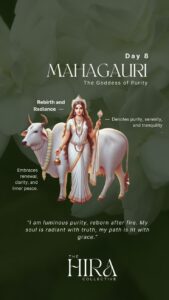
- Complexion: Radiant white, symbolizing peace and purity.
- Clothes: Adorned in white attire, representing inner calmness and truth.
- Mount (Vahana): Bull (Nandi), symbolizing strength and loyalty.
- Arms: She has four hands – holding a trident (trishul) and damaru (drum), while the other two are in Abhaya (protection) and Varada (blessing) mudras.
- Aura: She radiates calmness and benevolence, showering blessings of forgiveness and happiness.
Maa Mahagauri’s appearance reflects the qualities of serenity, purity, love, and devotion.
Mantra of Maa Mahagauri
Om Devi Mahagauryai Namah॥
Chanting this mantra removes negativity, purifies the mind, and brings peace to the devotee’s life.
Puja Vidhi Worship Method of Maa Mahagauri (Day 8 of Navratri)
Step-by-Step Rituals for Day 8:
- Morning Preparation: Wake up early, take a bath, and wear pink or sky-blue clothes (the colors associated with Day 8).
- Kalash & Idol Setup: Place the idol or image of Maa Mahagauri on a decorated altar.
- Offerings (Bhog): Coconut, milk, rice, sweets, and white-colored foods.
- Flowers: Jasmine, white lotus, or marigold flowers are offered.
- Lamp & Incense: Light a ghee lamp and dhoop.
- Chanting & Aarti: Recite Durga Saptashati, chant her mantra, and perform aarti.
- Kanya Puja: On this day, nine young girls (symbolizing Navadurga) are worshipped, offered food, and given gifts.
- Fasting: Many devotees observe fasts, breaking them only after puja or kanya puja.
Day 8 Navratri Color Guide
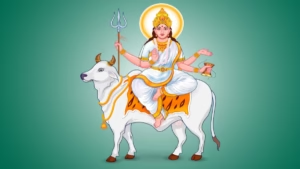
On Ashtami (Day 8), devotees traditionally wear pink or sky-blue clothes.
- Pink: Symbolizes love, harmony, and kindness.
- Blue: Represents strength, stability, and divine energy.
Wearing these colors during Maa Mahagauri’s worship enhances positive vibrations and blessings.
Spiritual Significance of Maa Mahagauri (Day 8 of Navratri) Worship
- Remover of Past Sins: She purifies the soul and removes the effects of bad karma.
- Bringer of Peace: Worship brings inner calmness and emotional stability.
- Blessings of Prosperity: Maa Mahagauri grants wealth, harmony, and happiness.
- Symbol of Forgiveness: She teaches kindness, forgiveness, and selflessness.
- Spiritual Enlightenment: Devotees progress toward liberation (moksha).
Legends Associated with Maa Mahagauri (Day 8 of Navratri)
1. Parvati’s Penance for Shiva
Her intense tapasya, which turned her dark, represents sacrifice and devotion. Her transformation into Mahagauri reflects the reward of devotion.
2. Symbol of Divine Motherhood
She is worshipped as the divine mother who forgives her children’s mistakes and showers them with unconditional love.
Offerings to Maa Mahagauri (Day 8 of Navratri)
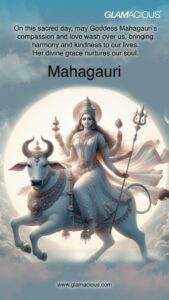
- Bhog: Coconut, rice pudding (kheer), jaggery sweets, milk, and white food items.
- Flowers: White jasmine, lotus, and hibiscus.
- Clothes: Offering white or pink cloth is considered auspicious.
- Donation: Feeding young girls and the poor holds great significance on this day.
Astrological Importance
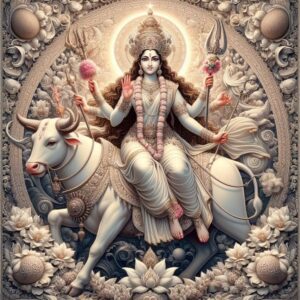
Maa Mahagauri governs Rahu (north lunar node). Worshipping her removes Rahu doshas, alleviates confusion, and strengthens clarity of thought.
Maa Mahagauri (Day 8 of Navratri) Significance
Navratri’s Ashtami is one of the most important days. Many people perform Kanya Puja, distribute prasad, and conduct grand rituals. Worshipping Maa Mahagauri on this day is said to bring peace, wealth, and divine blessings.
Conclusion : Maa Mahagauri (Day 8 of Navratri)
Maa Mahagauri embodies purity, forgiveness, and serenity. Her worship on Day 8 of Navratri removes negativity, purifies the soul, and fills life with peace and prosperity.
She teaches us to let go of hatred, embrace forgiveness, and lead a life filled with love and compassion. Just as she transformed from darkness to divine radiance, she inspires devotees to overcome struggles and achieve inner purity.
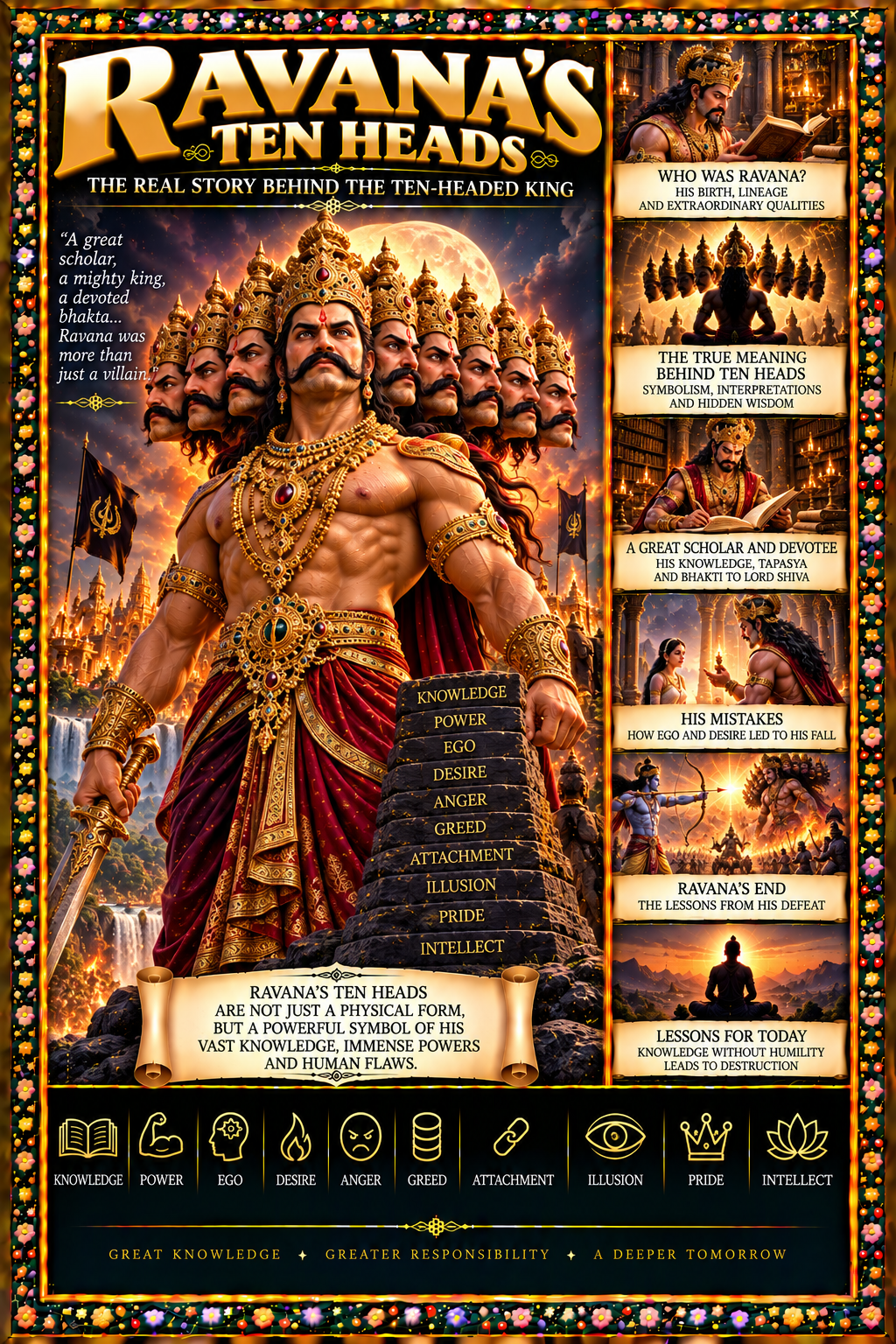
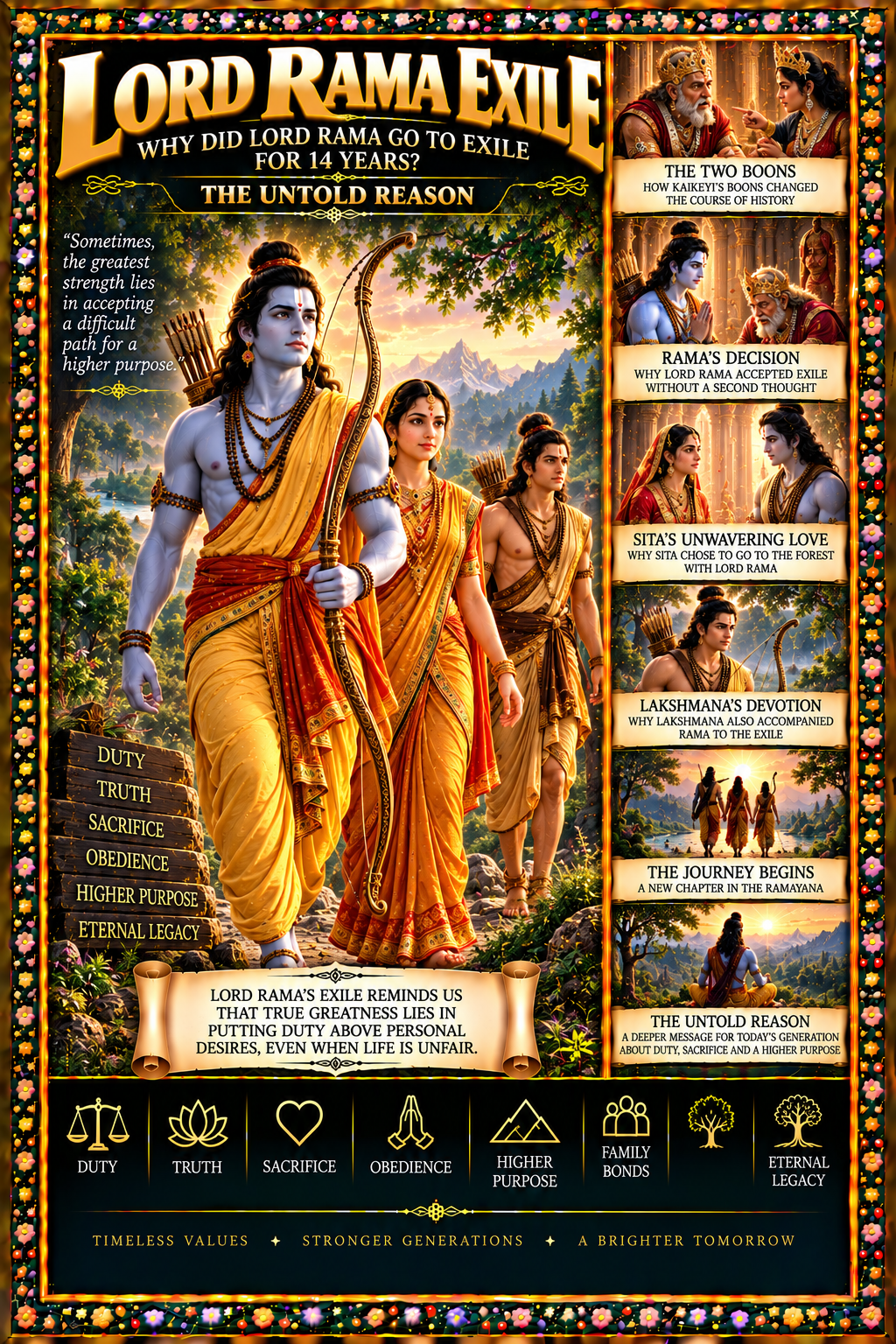
Related Sacred Topics & Cultural Heritage: For further spiritual exploration, read about Lord Rama’s ideal life story. For further spiritual exploration, read about the 14-year exile of Lord Rama. For further spiritual exploration, read about Ravana’s story in the Ramayana.
20 FAQs about Maa Mahagauri (Day 8 of Navratri)
Q1. Who is Maa Mahagauri?
A1. Maa Mahagauri is the eighth form of Goddess Durga, representing purity, peace, and forgiveness.
Q2. Why is she called Mahagauri?
A2. Because of her extremely fair and radiant complexion after her penance was rewarded by Lord Shiva.
Q3. What is Maa Mahagauri’s vahana?
A3. Her vehicle is a bull (Nandi).
Q4. What does Maa Mahagauri hold in her hands?
A4. She holds a trishul (trident), a damaru (drum), and blesses devotees with Abhaya and Varada mudras.
Q5. What is the mantra of Maa Mahagauri?
A5. “Om Devi Mahagauryai Namah॥”
Q6. What is her favorite offering?
A6. Coconut, kheer, milk, and white sweets.
Q7. What color is associated with Maa Mahagauri (Day 8 of Navratri)?
A7. Pink and sky-blue are considered auspicious colors.
Q8. What does worshipping Maa Mahagauri grant?
A8. Purity, peace, forgiveness, and prosperity.
Q9. Which planet does she govern?
A9. She governs Rahu.
Q10. What is the significance of Kanya Puja?
A10. Worshipping young girls as symbols of Navadurga brings divine blessings.
Q11. Why is she associated with peace?
A11. Her serene nature symbolizes inner calmness and forgiveness.
Q12. What does her white attire represent?
A12. Purity, truth, and simplicity.
Q13. What is the significance of Ashtami during Navratri?
A13. It is considered the most sacred day, dedicated to Maa Mahagauri.
Q14. Does she forgive sins?
A14. Yes, Maa Mahagauri is known for removing past sins and karmic burdens.
Q15. How does she help devotees spiritually?
A15. She helps devotees attain moksha and inner peace.
Q16. Why is milk offered to her?
A16. Milk symbolizes purity, and offering it pleases the Goddess.
Q17. What puja items are essential for Day 8?
A17. Coconut, white flowers, sweets, ghee lamp, and incense.
Q18. What story is associated with her?
A18. The story of Parvati’s penance for Lord Shiva and her transformation into Mahagauri.
Q19. What quality does Maa Mahagauri symbolize?
A19. She embodies purity, serenity, forgiveness, and compassion.
Q20. How does Maa Mahagauri bless devotees?
A20. By removing negativity, bringing peace, prosperity, and guiding them toward truth.

thank you very much